


Search results
Search for "oxidations" in Full Text gives 146 result(s) in Beilstein Journal of Organic Chemistry.
Photoinduced 1,2,3,4-tetrahydropyridine ring conversions
Beilstein J. Org. Chem. 2015, 11, 2166–2170, doi:10.3762/bjoc.11.234
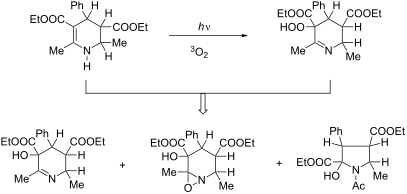
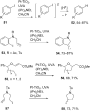
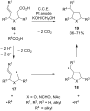
- ][5][6]. In 1944 hydroperoxides were first obtained by H. Hock [7] and R. Udris [8][9][10] as the catalytic oxidation products of cumene. Heterocyclic hydroperoxides have been less represented, although some of these constitute the best choice for selective oxidations even in nature. When the peroxy
- asymmetric oxidations. We have found a sunlight activated reaction of 1,2,3,4-tetrahydropiridine with dioxygen (3O2) producing stable heterocyclic hydroperoxide in excellent yield. The reaction has significant advantages as it uses cost-free reagents: light and dioxygen. The same reaction demonstrated the


Active site diversification of P450cam with indole generates catalysts for benzylic oxidation reactions
Beilstein J. Org. Chem. 2015, 11, 1713–1720, doi:10.3762/bjoc.11.186
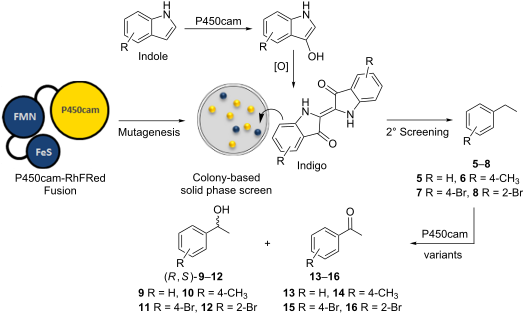
- screening a large mutant library of 16,500 clones using a simple, highly sensitive colony-based colorimetric screen against indole. These mutants showed distinct fingerprints of activity not only when screened in oxidations of substituted indoles but also for unrelated oxidations such as benzylic
- low cost starting materials [1]. One of the most attractive reagents in terms of cost and environmental impact for hydrocarbon oxidation is oxygen in the presence of a catalyst. In this context enzymatic oxidations are attractive, in particular cytochrome P450 monooxygenases (P450s or CYPs) due to
- their ability to catalyse selective C–H bond oxidations under mild conditions [2]. The soluble bacterial camphor monooxygenase P450cam (CYP101A1, EC 1.14.15.1) from Pseudomonas putida is one of the most studied P450s and has been engineered to accept a variety of non-natural substrates including aryl



Star-shaped tetrathiafulvalene oligomers towards the construction of conducting supramolecular assembly
Beilstein J. Org. Chem. 2015, 11, 1596–1613, doi:10.3762/bjoc.11.175
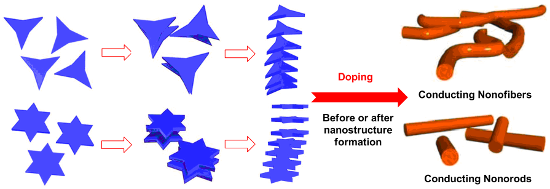
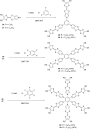
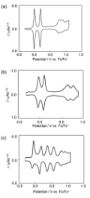
- oxidations at 0.20, 0.29, and 0.61 V correspond to the formation of 34•+, 342+, and 344+. Therefore, the redox behavior of 34 is similar to those of 28, 29, and 31. The [18]annulenes 30 and 31 formed a fibrous structure in H2O–THF 1:1, and 31 required longer time for fiber formation than 30 owing to weaker




Preparative semiconductor photoredox catalysis: An emerging theme in organic synthesis
Beilstein J. Org. Chem. 2015, 11, 1570–1582, doi:10.3762/bjoc.11.173
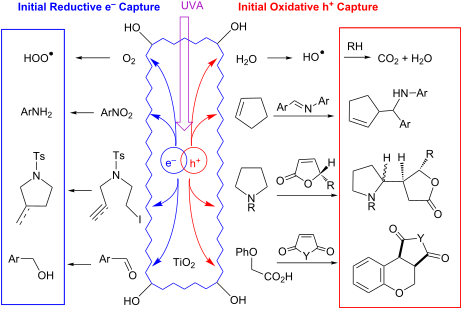
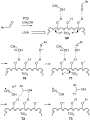
- efficient. Tubes with thin internal coatings of TiO2 have also been employed with some success (see below); research to improve their reusability is underway. Review Generation of ROS and organic oxidations When TiO2 is irradiated in the presence of moisture and atmospheric oxygen, the water acts as the
- application undergoing extensive trials is of self-cleaning garments [19] that may prove effective particularly for army wear in desert conditions. ROS generated from semiconductor photoredox catalysis (SCPC) have also been put to use in a good number of preparative oxidations so taking the place of toxic
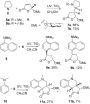
- metals (such as chromium and manganese) [20][21][22]. Many SCPC oxidations of aromatics have been reported, but of these it is perhaps the oxidation of benzene to phenol that is the most industrially significant [23][24]. Unfortunately, product selectivity is poor because the phenol itself undergoes







Tetrathiafulvalene-based azine ligands for anion and metal cation coordination
Beilstein J. Org. Chem. 2015, 11, 1379–1391, doi:10.3762/bjoc.11.149
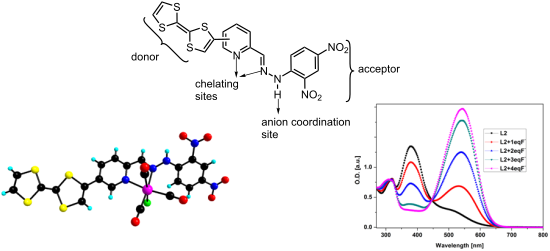
- precursors 1 and 2 as well as of ligands L1 and L2 was investigated by cyclic voltammetry (Figure 6 and Table 3). The measurements in the case of precursors 1 and 2 show two reversible oxidations at E1ox = +0.26 V, E2ox = +0.75 V and E1ox = +0.32 V, E2ox = +0.77 V vs Ag/Ag+, respectively, that are anodically
- two reversible oxidations at E1ox = +0.20 V, E2ox = +0.70 V and E1ox = +0.25 V, E2ox = +0.70 V vs Ag/Ag+, respectively) that are cathodically shifted when compared to the ones of 1 and 2 indicating that the pyridine-hydrazone group is less electron deficient than the corresponding


New tris- and pentakis-fused donors containing extended tetrathiafulvalenes: New positive electrode materials for rechargeable batteries
Beilstein J. Org. Chem. 2015, 11, 1136–1147, doi:10.3762/bjoc.11.128
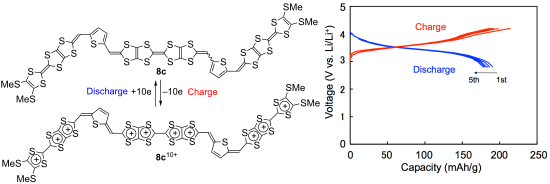
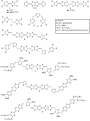
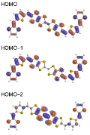
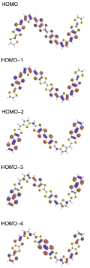
- oxidation relates to the orbital energy, the first oxidations of 5–9 might occur at lower potentials than TTPY. The energy differences between the HOMO and HOMO–1 of all the donors (0.041–0.113 eV) were smaller than that of TTPY (0.186 eV). In particular, the orbital energies of the HOMO and HOMO–1 of 8a






Advances in the synthesis of functionalised pyrrolotetrathiafulvalenes
Beilstein J. Org. Chem. 2015, 11, 1112–1122, doi:10.3762/bjoc.11.125
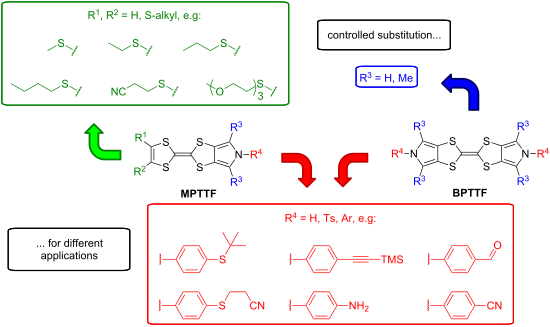
- aromaticity occurs: 2 contains a single aromatic, 6 π-electron 1,3-dithiolium system, and 3 possesses two such systems (Figure 1). These oxidations occur at low potential (E11/2 = 0.34 V and E21/2 = 0.73 V vs Ag/AgCl in MeCN [4]) and can be performed sequentially and reversibly. Additionally, both 2 and 3 are


A hybrid electron donor comprising cyclopentadithiophene and dithiafulvenyl for dye-sensitized solar cells
Beilstein J. Org. Chem. 2015, 11, 1052–1059, doi:10.3762/bjoc.11.118
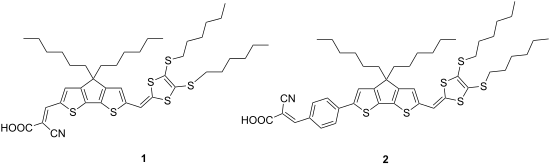
- synthesized and characterized. Both of them undergo two reversible oxidations and strongly absorb in the visible spectral region due to a photo-induced intramolecular charge-transfer (ICT) transition. To a great extent, the electronic interaction between the D and A units is affected by the presence of a
- of the reference compound 6 was carried out as well. The latter undergoes two reversible oxidations at 0.44 V and 0.75 V vs Fc+/Fc, hence at values which are lower than the oxidation potentials of the individual components DTF [24] and CPDT [25]. This observation indicates the formation of an
- electron donor and a cyanoacrylic acid either directly linked or linked through a phenyl spacer. Both of them show two reversible oxidations and strongly absorb in the visible spectral region. As evidenced by electrochemical and optical data, the electronic interaction between the D and A units is greatly


Interactions between tetrathiafulvalene units in dimeric structures – the influence of cyclic cores
Beilstein J. Org. Chem. 2015, 11, 930–948, doi:10.3762/bjoc.11.104
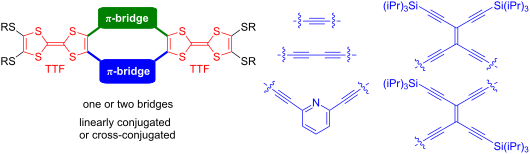
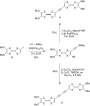
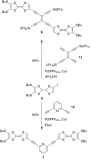
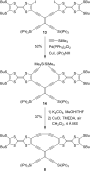
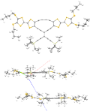
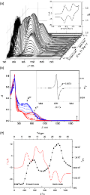
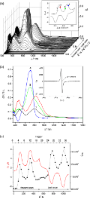
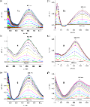
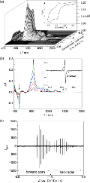
- -conjugated tetraethynylethene (TEE) spacer as in compound 1a (Figure 1), then the two TTFs behave as independent redox centres that are oxidized at the same potentials in cyclic voltammetry (two two-electron oxidations) [8][9][10]. However, by bridging the two TTFs with an additional TEE in a cyclic
- structure, as in the radiaannulene 2a, communication between the two TTFs is observed in the cyclic voltammetry experiment, and the first two-electron event showed the waves diverging from each other (two stepwise oxidations) [10]. In addition, the intermediate radical cation showed an IVCT absorption at
- slightly more difficult to oxidize owing to the presence of the electron-withdrawing alkyne system. The acyclic compounds 1a and 5–7 all undergo two reversible two-electron oxidations; that is, the two TTFs are oxidized at the same potentials when separated by butadiyne, gem- or trans-TEE, or bis







A simple and efficient method for the preparation of 5-hydroxy-3-acyltetramic acids
Beilstein J. Org. Chem. 2015, 11, 323–327, doi:10.3762/bjoc.11.37
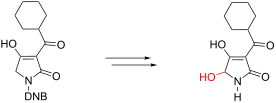
- briefly tested, but were found to produce rather mediocre yields of hydroxylated compounds. Attempted oxidations with Oxone or air gave no product at all. Our efforts to improve the yield of the desired product by variation of reaction conditions were rather fruitless, and therefore, our attention was


Photovoltaic-driven organic electrosynthesis and efforts toward more sustainable oxidation reactions
Beilstein J. Org. Chem. 2015, 11, 280–287, doi:10.3762/bjoc.11.32
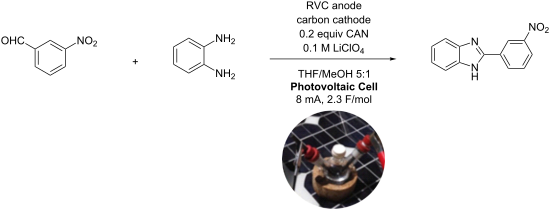
- relative oxidation potential of the various groups in solution. The group with the lowest oxidation potential is the group that will be oxidized. Chemical oxidations, however, do not have this limitation. They can be selective for one substrate based on steric effects, chirality, or other factors. For this
- less than those obtained when the overall system was more carefully controlled. Conclusion A broad range of electrochemical oxidations can be performed in a fashion that consumes only visible light and generates hydrogen gas as the only byproduct. The reactions include both direct and indirect
- , commercially available, photovoltaic cell. Electrochemical recycling of a chemical oxidant. Examples of solar-driven direct electrochemical oxidations. Overoxidation of dithioketal. Examples of solar-driven, indirect electrochemical oxidations. Solar-driven synthesis of C-glycosides. Solar-driven oxidative


The Shono-type electroorganic oxidation of unfunctionalised amides. Carbon–carbon bond formation via electrogenerated N-acyliminium ions
Beilstein J. Org. Chem. 2014, 10, 3056–3072, doi:10.3762/bjoc.10.323
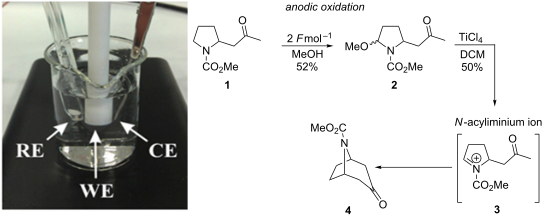
- to the C–H activation of low reactivity intermediates. In this article, containing over 100 references, we highlight the development of the Shono-type oxidations from the original direct electrolysis methods, to the use of electroauxiliaries before arriving at indirect electrolysis methodologies. We


Recent advances in the electrochemical construction of heterocycles
Beilstein J. Org. Chem. 2014, 10, 2858–2873, doi:10.3762/bjoc.10.303
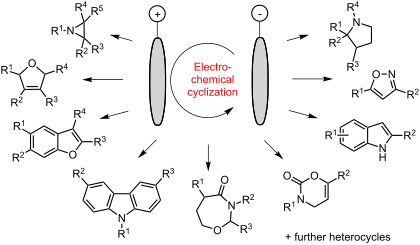
- using electron transfer mediators (Scheme 1) play an important role. With regard to selectivity, the direct method is often complementary to typical chemical oxidations and reductions, since electrochemical oxidation or reduction proceeds via discrete electron transfer steps rather than atom transfer




Electrocarboxylation: towards sustainable and efficient synthesis of valuable carboxylic acids
Beilstein J. Org. Chem. 2014, 10, 2484–2500, doi:10.3762/bjoc.10.260
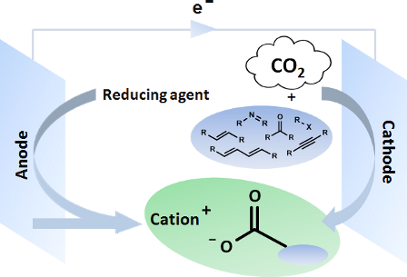
- electrocarboxylation of 1,3-butadiene (Table 1) are illustrated in Scheme 8. They are divided into three categories, with (a) the sacrificial anode dissolution, (b) the proton forming reactions and (c) the oxidations evolving other free cations. In case a stable platinum anode is used, a C5:C6:C10 product mixture is


Aryl substitution of pentacenes
Beilstein J. Org. Chem. 2014, 10, 1692–1705, doi:10.3762/bjoc.10.178
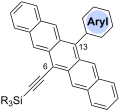
- , unfortunately, no clear trend observed for the oxidation potentials based on the substitution pattern of the aryl moieties, although both oxidations appear somewhat easier for pentacene 3f as a result of the two electron-donating methoxy groups attached to the pendent phenyl ring. Aryl-substituted pentacenes 3a




Pd/C-catalyzed aerobic oxidative esterification of alcohols and aldehydes: a highly efficient microwave-assisted green protocol
Beilstein J. Org. Chem. 2014, 10, 1454–1461, doi:10.3762/bjoc.10.149
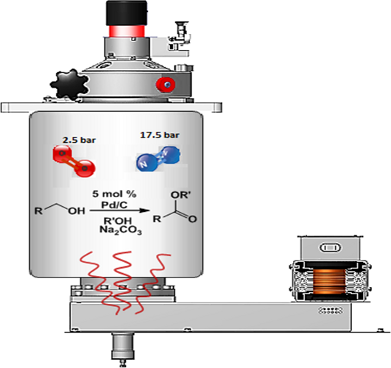
- Selective oxidations of alcohols are some of the most important transformations in organic synthesis. Therefore, reactions that employ reusable heterogeneous catalysts and molecular oxygen are highly desirable from atom economy and environmental impact point of view [1][2][3]. A number of methods have been



The Ugi four-component reaction as a concise modular synthetic tool for photo-induced electron transfer donor-anthraquinone dyads
Beilstein J. Org. Chem. 2014, 10, 1006–1016, doi:10.3762/bjoc.10.100
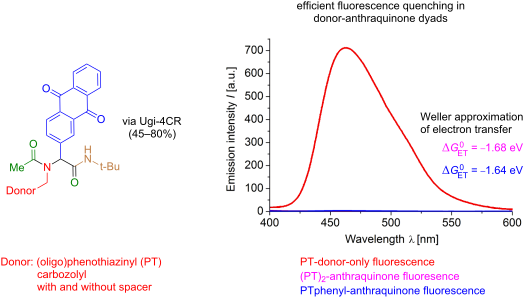
- potentials were plotted against for extrapolating the half-wave potentials E1/2 for a scan rate v = 0 mV·s−1 assuming an ideal Nernstian behavior. In the cyclic voltammograms of the phenothiazine–anthraquinone dyads 8a–d, typical for phenothiazine derivatives [41][42][78], first reversible oxidations E1/20
- -withdrawing anthraquinone moiety does not affect the first and second reversible oxidations of the phenothiazinyl moiety in the Do–Acc dyad 8c. The system 8d containing two conjugated phenothiazinyl moieties is particular since the second oxidation wave originates from the electronic coupling within the


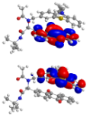

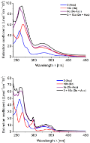

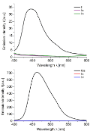
Rapid pseudo five-component synthesis of intensively blue luminescent 2,5-di(hetero)arylfurans via a Sonogashira–Glaser cyclization sequence
Beilstein J. Org. Chem. 2014, 10, 672–679, doi:10.3762/bjoc.10.60
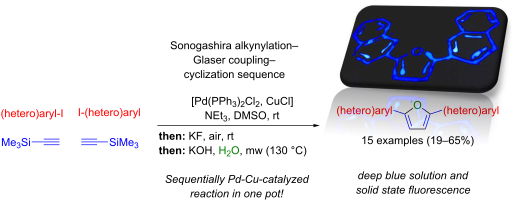
- (Table 3). Most cyclovoltammograms display reversible Nernstian one-electron oxidations in the anodic region between 1.06 and 1.25 V (vs Ag/AgCl) (Table 3). Expectedly, with increasing electron density the oxidative potential diminishes. The compounds 2f, 2g, 2l, and 2n could not be measured by cyclic




Integration of enabling methods for the automated flow preparation of piperazine-2-carboxamide
Beilstein J. Org. Chem. 2014, 10, 641–652, doi:10.3762/bjoc.10.56
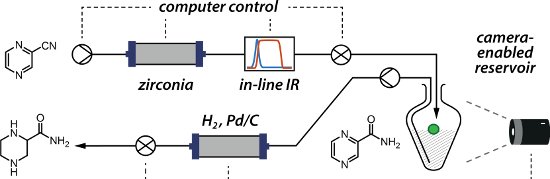
- –Ponndorf–Verley reductions [22] and Oppenauer oxidations [23] where zirconia activation is required). In fact, it seems that the extent of hydration of pyrazine-2-carbonitrile is proportional to the initial water content of the zirconium catalyst. To confirm this hypothesis, we ran a control experiment in




The Flögel-three-component reaction with dicarboxylic acids – an approach to bis(β-alkoxy-β-ketoenamides) for the synthesis of complex pyridine and pyrimidine derivatives
Beilstein J. Org. Chem. 2014, 10, 394–404, doi:10.3762/bjoc.10.37
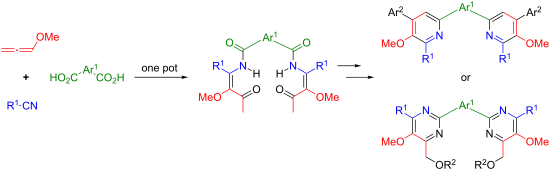
- obtained heterocycles by palladium-catalyzed couplings or by oxidations are reported. We also describe the simple synthesis of a structurally interesting macrocyclic bispyrimidine derivative incorporating a 17-membered ring, whose configuration was elucidated by DFT calculations and by subsequent reactions
- addition we exemplarily investigated subsequent transformations of these compounds either by palladium-catalyzed cross-couplings or by oxidations of the 4-methyl groups of the pyrimidine subunits. Although the yields for the crucial initial multicomponent reactions leading to the bis(β-methoxy-β


A unified approach to the important protein kinase inhibitor balanol and a proposed analogue
Beilstein J. Org. Chem. 2013, 9, 2910–2915, doi:10.3762/bjoc.9.327
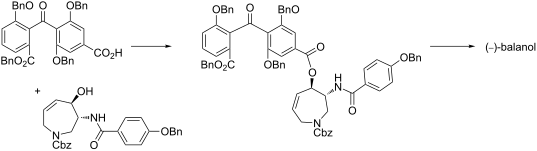
- oxidations involving the aldehyde 16 as the intermediate. Taken as a hole the described synthesis of 7 from 8 and 9 proceeded in eight linear steps in an overall yield of 22%. The synthesis of the azepine unit [31][32][33][34][35][36][37][38][39][40][41][42][43][44][45][46][47] was achieved following our


Novel supramolecular affinity materials based on (−)-isosteviol as molecular templates
Beilstein J. Org. Chem. 2013, 9, 2821–2833, doi:10.3762/bjoc.9.317
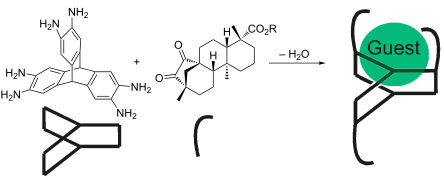
- ester substituent, the detour via protecting groups in the synthesis of alkylated triptycene 17 was subsequently avoided. Therefore, alkylated diketone 18 was synthesized, starting from (−)-isosteviol (Scheme 8). Since alkenes are known to participate in Riley oxidations as well, rendering allylic


A protecting group-free synthesis of the Colorado potato beetle pheromone
Beilstein J. Org. Chem. 2013, 9, 2374–2377, doi:10.3762/bjoc.9.273
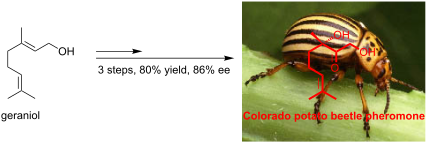
- synthesis of the Colorado potato beetle pheromone (Scheme 2). An additional challenge was the presence of an alkene in the substrate, as the orthogonality of 2-catalyzed alcohol oxidations with alkenes had not been studied. In our approach, Sharpless asymmetric epoxidation of readily available geraniol or


Elucidation of the regio- and chemoselectivity of enzymatic allylic oxidations with Pleurotus sapidus – conversion of selected spirocyclic terpenoids and computational analysis
Beilstein J. Org. Chem. 2013, 9, 2233–2241, doi:10.3762/bjoc.9.262
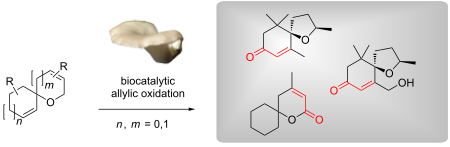
- Chemistry and Food Biotechnology, Heinrich-Buff-Ring 58, 35392 Gießen Department of Chemistry, University of Hamburg, Martin-Luther-King-Platz 6, 20146 Hamburg, Germany 10.3762/bjoc.9.262 Abstract Allylic oxidations of olefins to enones allow the efficient synthesis of value-added products from simple
- olefinic precursors like terpenes or terpenoids. Biocatalytic variants have a large potential for industrial applications, particularly in the pharmaceutical and food industry. Herein we report efficient biocatalytic allylic oxidations of spirocyclic terpenoids by a lyophilisate of the edible fungus
- developed. The oxidations follow a radical mechanism and the regioselectivity of the reaction is mainly determined by bond-dissociation energies of the available allylic CH-bonds and steric accessibility of the oxidation site. Keywords: allylic oxidation; CH-activation; chiral separation; enones; flavors


Synthesis of enantiomerically pure N-(2,3-dihydroxypropyl)arylamides via oxidative esterification
Beilstein J. Org. Chem. 2013, 9, 2129–2136, doi:10.3762/bjoc.9.250

- ][6] or (ii) catalytic oxidations with peroxides and chiral transition metal complexes [7][8][9]. The oxidative esterification of aldehydes involving oxidation followed by a C–O or C–N bond formation has received significant synthetic interest of late. Various transition metal complexes are employed





