


Search results
Search for "tin" in Full Text gives 139 result(s) in Beilstein Journal of Organic Chemistry.
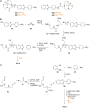
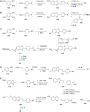
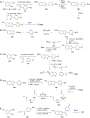
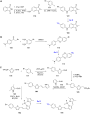
The chemistry of isoindole natural products
Beilstein J. Org. Chem. 2013, 9, 2048–2078, doi:10.3762/bjoc.9.243
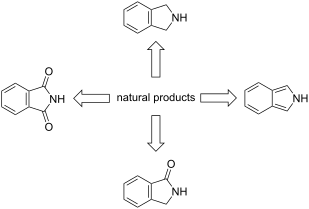
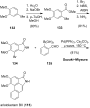
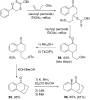
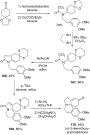
- using an intramolecular Diels–Alder reaction. The synthetic endeavor began with the conversion of dihydropyran 79 to the acetal 80 (Scheme 9). Activation of the anomeric position with tin(IV) chloride presumably led to the formation of the oxonium ion 81. This intermediate was envisioned to undergo a
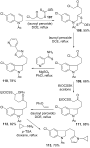
- oxalyl chloride and the Lewis acid tin(IV) chloride, a tandem cyclization (Bischler–Napieralski/Friedel–Crafts acylation reaction) was triggered to directly give 137 and 149 [122][127]. In 2006, another approach to aristoyagonine (136) was reported by the group of Couture (Scheme 20) [128]. For the












Flow Giese reaction using cyanoborohydride as a radical mediator
Beilstein J. Org. Chem. 2013, 9, 1791–1796, doi:10.3762/bjoc.9.208
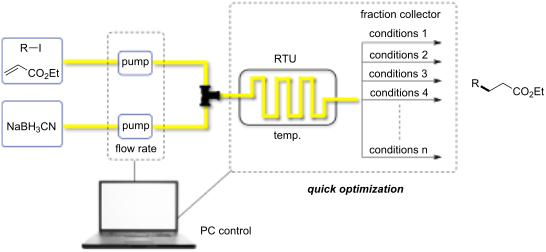
- Takahide Fukuyama Takuji Kawamoto Mikako Kobayashi Ilhyong Ryu Department of Chemistry, Graduate School of Science, Osaka Prefecture University, Sakai, Osaka 599-8531, Japan 10.3762/bjoc.9.208 Abstract Tin-free Giese reactions, employing primary, secondary, and tertiary alkyl iodides as radical
- 70 °C in combination with a residence time of 10–15 minutes gave good yields of the desired addition products. Keywords: continuous flow system; cyanoborohydride; flow chemistry; iodoalkanes; microreactor; tin-free Giese reaction; Introduction Organo halides are among the most useful precursors to
- C–C bond forming reactions or radical reduction as efficient substitutes for tin hydride reagents, whose toxicity is of great concern to organic chemists. Thus far we have demonstrated the borohydride-based tin-free Giese reactions [10] and the related radical carbonylation and hydroxymethylation


A reductive coupling strategy towards ripostatin A
Beilstein J. Org. Chem. 2013, 9, 1533–1550, doi:10.3762/bjoc.9.175
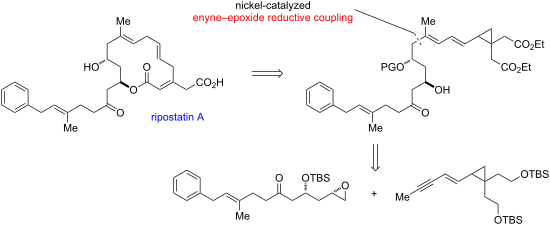
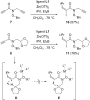
- boron enolate-based strategy using the N-acetylthiazolidinethione 58 (Scheme 14) for its high reported diastereoselectivity with aliphatic aldehydes and its avoidance of toxic tin reagents [61]. The reaction of the brightly colored 58 with but-3-enal proceeded in moderate yield, with an initial


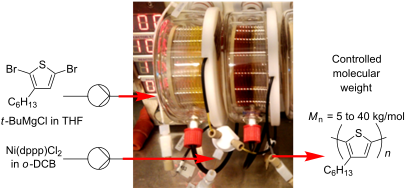
Controlled synthesis of poly(3-hexylthiophene) in continuous flow
Beilstein J. Org. Chem. 2013, 9, 1492–1500, doi:10.3762/bjoc.9.170
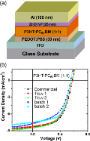
- following device geometry: ITO/PEDOT:PSS/P3HT:PC61BM (1:1)/ZnO nanoparticle/Al, where ITO = indium tin oxide, PEDOT:PSS = poly(3,4-ethylenedioxy-thiophene):poly(styrenesulfonate) and PC61BM = [6,6]-phenyl-C61-butyric acid methyl ester (Figure 5a). The P3HT:PC61BM active layer was deposited by spin coating



Cascade radical reaction of substrates with a carbon–carbon triple bond as a radical acceptor
Beilstein J. Org. Chem. 2013, 9, 1148–1155, doi:10.3762/bjoc.9.128
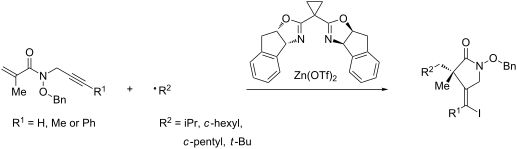
- moiety as an electron-deficient acceptor in the absence of a chiral ligand (Scheme 2). To control the rotamer population of substrates, Zn(OTf)2 was used as a Lewis acid to coordinate the hydroxamate ester functionality. The reactions were evaluated in CH2Cl2 at 20 °C under the tin-free iodine atom




C–C Bond formation catalyzed by natural gelatin and collagen proteins
Beilstein J. Org. Chem. 2013, 9, 1111–1118, doi:10.3762/bjoc.9.123
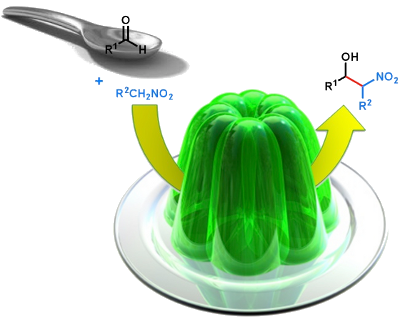
- tin plate and shielded by Pt (40 mA during 30 s for FE-SEM; film thickness ≈5 nm). Typical procedure for gelatin-catalyzed Henry reaction Nitromethane (27 μL, 0.5 mmol) was added in one portion to a 4 mL screw cap vial containing 4-nitrobenzaldehyde (15.1 mg, 0.1 mmol), PSTA gelatin (2 mg) and DMSO


Amyloid-β probes: Review of structure–activity and brain-kinetics relationships
Beilstein J. Org. Chem. 2013, 9, 1012–1044, doi:10.3762/bjoc.9.116
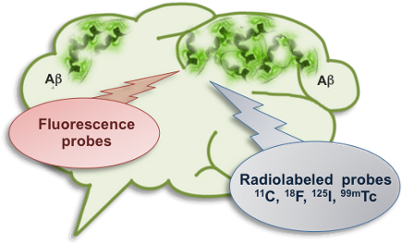
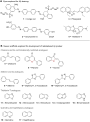
- imidazopyridine, [18F]FPPIP (142), was prepared starting from 140e. A palladium-catalyzed coupling with tributyl(vinyl)tin to give an alkene intermediate was followed by hydroboration-oxidation to give the hydroxypropyl intermediate 145, which was radiolabeled to give 142 (Scheme 10B). This compound showed good









Direct alkenylation of indolin-2-ones by 6-aryl-4-methylthio-2H-pyran-2-one-3-carbonitriles: a novel approach
Beilstein J. Org. Chem. 2013, 9, 809–817, doi:10.3762/bjoc.9.92
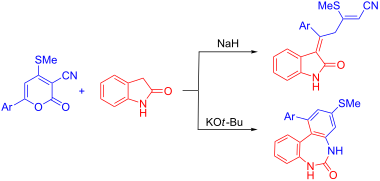
- ][28][29][30][31]. More recently, Kamijo, Yamamoto and co-workers [32] have developed a palladium-catalyzed cyclization of acetylenic aryl isocyanates in the presence of terminal alkynes. Halogenated arylpropionamides are commonly employed for the preparation of 3-alkenylindolin-2-ones involving tin


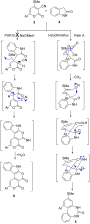


Some aspects of radical chemistry in the assembly of complex molecular architectures
Beilstein J. Org. Chem. 2013, 9, 557–576, doi:10.3762/bjoc.9.61

- [19]. Another solution is the tin-free degenerative radical transfer of xanthates and related derivatives we discovered a quarter of a century ago [20]. The simplified mechanism for the addition to an alkene is depicted in Scheme 6. The many subtle aspects embodied in the mechanism will not be


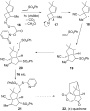


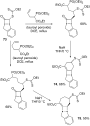









Thermotropic and lyotropic behaviour of new liquid-crystalline materials with different hydrophilic groups: synthesis and mesomorphic properties
Beilstein J. Org. Chem. 2013, 9, 425–436, doi:10.3762/bjoc.9.45
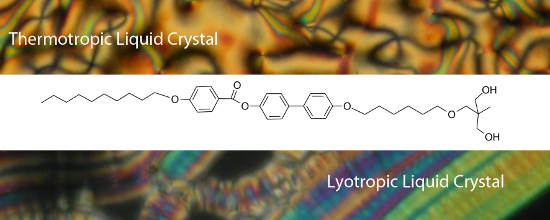
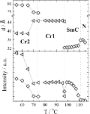
- of the glass plates are covered by indium-tin-oxide electrodes and polyimide layers unidirectionally rubbed, which ensures planar alignment of the molecules, e.g., bookshelf geometry in the smectic phase. In addition, for texture observation on samples with homeotropic alignment, free-standing films






Inter- and intramolecular enantioselective carbolithiation reactions
Beilstein J. Org. Chem. 2013, 9, 313–322, doi:10.3762/bjoc.9.36

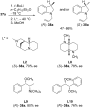
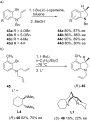
- , such as halogen–lithium exchange, tin–lithium exchange, selenium–lithium exchange or reductive lithiation [1][2][3][4][5][6][7][8]. Once the organolithium has been generated, the intramolecular carbolithiation reaction usually takes place with high stereochemical control, as a consequence of a rigid
- enantioselective deprotonation to generate a nonracemic organolithium, which adds diastereoselectively to the carbon–carbon double bond. In this context, configurationally stable secondary α-amino alkyllithiums have also been obtained by tin–lithium exchange (Scheme 12). Addition to the double bond with complete





Synthesis of diverse indole libraries on polystyrene resin – Scope and limitations of an organometallic reaction on solid supports
Beilstein J. Org. Chem. 2012, 8, 1191–1199, doi:10.3762/bjoc.8.132
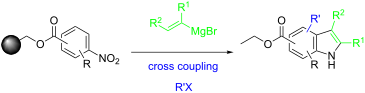
- reactions have been used to expand the utility of the Bartoli solid-phase reaction. The reaction with tributyl(vinyl)tin proceeded smoothly and gave the vinylindoles in moderate yields but good purity, in four steps (Scheme 2). We also performed a couple of Suzuki reactions on solid supports. The details
- , one equiv of the respective 7-bromo-1H-indole-6-carboxymethyl-polystyrene is suspended in DMF (0.1 mmol/mL) together with 10.0 mol % bis(triphenylphosphine)palladium(II) chloride, 15.0 equiv of lithium chloride and one equiv of triphenylphosphine. Then, three equiv of tributyl(vinyl)tin are added and


Multistep organic synthesis of modular photosystems
Beilstein J. Org. Chem. 2012, 8, 897–904, doi:10.3762/bjoc.8.102
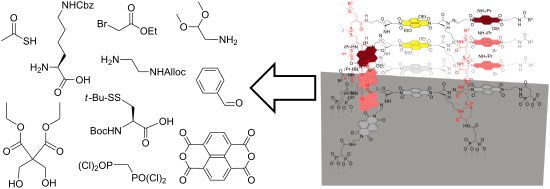
- sophisticated, probably as sophisticated as it gets with photosystems today (Figure 1) [1]. It is composed of three co-axial π-stacks that are grown from an indium tin oxide (ITO) surface. With lower frontier molecular orbital (FMO) levels, the “yellow” stacks can transport photogenerated electrons toward the
- occasional contributions to improve or innovate in the field of organic synthesis. Schematic structure of photosystem 1 on indium tin oxide (ITO, grey) with antiparallel gradients in hole (p, h+) and electron (n, e−) transporting coaxial channels. HOMO (solid) and LUMO levels (dashed) of all components


Synthesis and characterization of a novel carboxyl group containing (co)polyimide with sulfur in the polymer backbone
Beilstein J. Org. Chem. 2012, 8, 776–786, doi:10.3762/bjoc.8.88
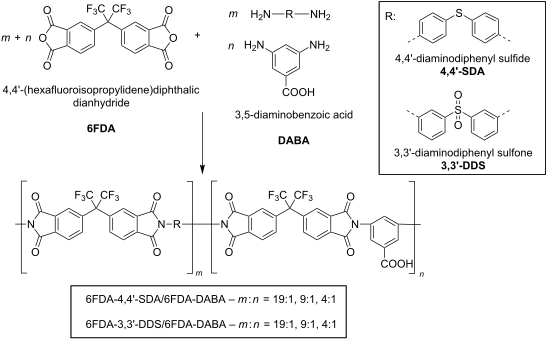
- groups to attach inorganic, high-refractive-index materials, such as ITO (indium tin oxide) or TiO2, to the polymer backbone to further improve the refractive index of such a (co)polyimide [20][21][22]. In this work, we report on the synthesis and characterization of fluorinated, DABA- and sulfur



Formation of carbohydrate-functionalised polystyrene and glass slides and their analysis by MALDI-TOF MS
Beilstein J. Org. Chem. 2012, 8, 753–762, doi:10.3762/bjoc.8.86
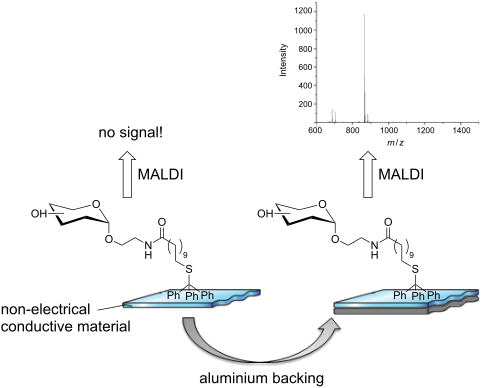
- in the mass-to-charge ratio [14]. Previous attempts to get around this issue have involved coating polymer or glass surfaces with a thin membrane of conductive material, such as gold, carbon or indium-tin oxide [15][16][17], or the addition of electron-accepting additives, such as methyl viologen


Synthesis of functionalized macrocyclic derivatives of trioxabicyclo[3.3.0]nonadiene
Beilstein J. Org. Chem. 2012, 8, 738–743, doi:10.3762/bjoc.8.83
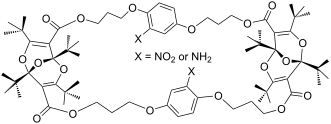
- (KBr): 3000–2800, 1720, 1619, 1535 cm−1; LC–MS m/z: 1347.8 [M + H]+; Anal. calcd for C72H102N2O22: C, 64.16; H, 7.63; N, 2.08; found: C, 63.77; H, 7.68; N, 1.95. Bis(2-amino-1,4-phenylene)macrocycle 9: A mixture of 100 mg (0.07 mmol) of 8 and 40 mg (2.4 mmol) of tin granules in 10 mL of THF was heated
- C72H102N2O22: C, 64.16; H, 7.63; N, 2.08; found: C, 64.32; H, 7.82; N, 2.07. Bis(2-amino-1,3-phenylene)macrocycle 13: The dinitro compound 11 (44 mg; 0.03 mmol) was reduced with 20 mg (1.69 mmol) of tin granules in 5 mL of THF and 150 µL of conc. HCl, as described for the reduction of 8 above. It took 3 h for


Facile synthesis of nitrophenyl 2-acetamido-2-deoxy-α-D-mannopyranosides from ManNAc-oxazoline
Beilstein J. Org. Chem. 2012, 8, 428–432, doi:10.3762/bjoc.8.48
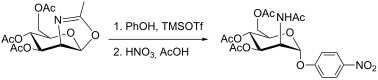
- ] affording oxazoline 3 in 75% yield. The glycosylation of phenol and p-nitrophenol with oxazoline 3 was extensively tested. We tested a large array of reaction conditions, including variation of catalyst (copper(II) chloride [12][15], 2,2-diphenyl-1-picrylhydrazyl, zinc chloride, tin(IV) chloride) and


Continuous-flow enantioselective α-aminoxylation of aldehydes catalyzed by a polystyrene-immobilized hydroxyproline
Beilstein J. Org. Chem. 2011, 7, 1486–1493, doi:10.3762/bjoc.7.172
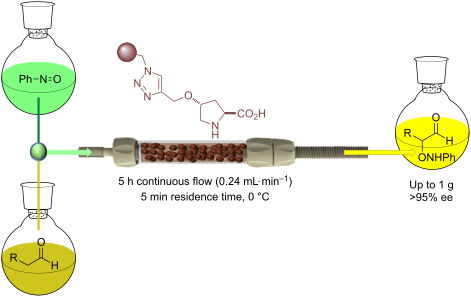
- chiral enantiopure Lewis acids as catalysts [6][7][8][9][10][11]. Worth noting is the contribution made by Yamamoto et al., who introduced the use of nitrosobenzene as an electrophilic source of oxygen in the aminoxylation of preformed tin enolates catalyzed by a chiral, silver-based Lewis acid [12


Carbamate-directed benzylic lithiation for the diastereo- and enantioselective synthesis of diaryl ether atropisomers
Beilstein J. Org. Chem. 2011, 7, 1327–1333, doi:10.3762/bjoc.7.156
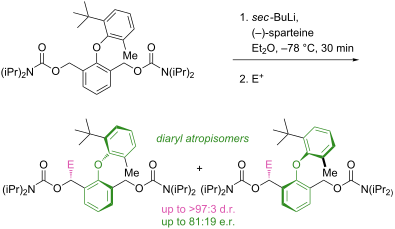
- ratios with n-BuLi in ether at −78 °C to induce tin–lithium exchange, quenching the products with either acetone or Me3SiCl (Scheme 6). The major product diastereoisomers were the same as those formed by direct deprotonation quench (Scheme 2). Importantly, in Table 3, entries 1 and 3 show that the
- enantioenriched stannane yields, after tin–lithium exchange and quench, products with conserved e.r. (Table 3, entry 4). The e.r. of the products formed by deprotonation with an alkyllithium-(−)-sparteine complex must therefore be determined during the deprotonation step, in which the alkyllithium-(−)-sparteine
- electrophilic quench step. Precedent studies suggest that electrophilic quench of benzylcarbamates is typically invertive [24]: All documented stannylations of benzyllithiums are invertive [23], and all documented tin–lithium exchanges (except one, where there is no adjacent heteroatom [31]) are retentive [23



Homoallylic amines by reductive inter- and intramolecular coupling of allenes and nitriles
Beilstein J. Org. Chem. 2011, 7, 824–830, doi:10.3762/bjoc.7.94
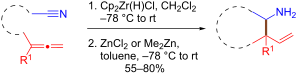
- reagent to allylzirconocenes, transient allylzinc intermediates can be successfully added to phosphoryl- and sulfonylimines to provide homoallylic amines in good yields and diastereoselectivities [15]. Of particular interest was the reaction of tin- or silicon-substituted allenes that furnish bis-metallic


Synthesis, reactivity and biological activity of 5-alkoxymethyluracil analogues
Beilstein J. Org. Chem. 2011, 7, 678–698, doi:10.3762/bjoc.7.80
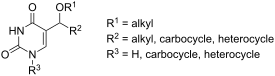
- '-deoxyuridine 128 was subjected to a Stille coupling reaction with tributyl(vinyl)tin using Pd(MeCN)2Cl2 as a catalyst (Scheme 23, reaction conditions 2). This coupling reaction was followed by the oxidation of the vinyl group of nucleoside 129 by OsO4 and acetylation of vicinal diol 130. After deprotection of
- (vinyl)tin using Pd(CH3CN)2Cl2 as a catalyst followed by oxidation with OsO4/NMO to afford the dihydroxy derivative 141 in 77% yield after two steps. The desired phosphoramidite 145 was obtained in 90% yield after acetylation of the vicinal diol 141, selective deprotection of 3',5'-hydroxyl groups (143


An overview of the key routes to the best selling 5-membered ring heterocyclic pharmaceuticals
Beilstein J. Org. Chem. 2011, 7, 442–495, doi:10.3762/bjoc.7.57
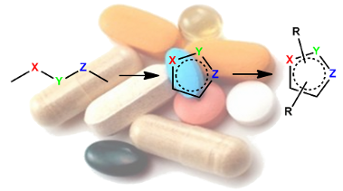
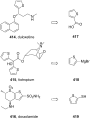
- pain relief. Two general routes have been described for the preparation of this drug. In the first route the hydrazine 149 is prepared via the reduction of diazonium salt 148 with tin(II) chloride and subjected to a Fischer indole reaction with aldehyde 150. The resulting indole is then condensed with
- antagonist candesartan (204, Atacand) is formed from an advanced diaminobenzene derivative, which in turn is prepared by a tin-mediated nitro reduction to form a highly substituted diaminobenzene (Scheme 41). This general strategy involving initial alkylation of 207 is often employed to control the
- up via diazotisation and spontaneous cyclisation of 2-ethyl-5-nitroaniline (247) using tert-butyl nitrite. The resulting indazole structure 249 can be methylated entirely regioselectively with either Meerwein’s salt, trimethyl orthoformate or dimethyl sulfate. A tin-mediated reduction of the nitro





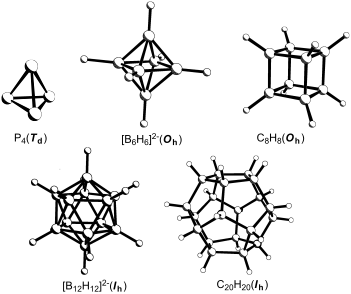
Reciprocal polyhedra and the Euler relationship: cage hydrocarbons, CnHn and closo-boranes [BxHx]2−
Beilstein J. Org. Chem. 2011, 7, 222–233, doi:10.3762/bjoc.7.30
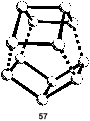
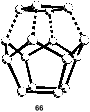
- investigated structurally and spectroscopically, and their reactivity has also been extensively investigated [42][43][44][45]. Furthermore, as shown in Scheme 16, the octastannacubane, 75, and the per-arylated decastannane, 76, a tin analogue of pentaprismane (11) have been prepared by thermolysis of hexakis






Carbasugar analogues of galactofuranosides: α-O-linked derivatives
Beilstein J. Org. Chem. 2010, 6, 1127–1131, doi:10.3762/bjoc.6.129

- intramolecular displacement by O-1. The OH-1 hydroxyl group appears to be more nucleophilic than OH-2 in 5 [9]; a benzoate protecting group was introduced at O-1 using a tin acetal method [23] to give the monobenzoate 6 with enhanced regioselectivity (Scheme 1). Only very small amounts (<5%) of the regioisomer


Formation of epoxide-amine oligo-adducts as OH-functionalized initiators for the ring-opening polymerization of ε-caprolactone
Beilstein J. Org. Chem. 2010, 6, 938–944, doi:10.3762/bjoc.6.105
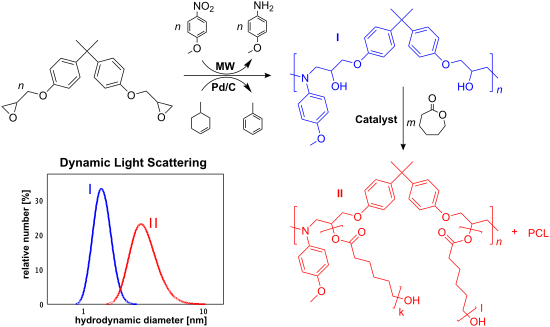
- a temperature range between −40 and 120 °C at a heating rate of 10 K min−1. For calibration, standard tin, indium and zinc samples were used. Three heating cycles were conducted. The glass-transition temperature (Tg) values are reported as the average of the second and the third heating cycle using





