Search results
Search for "ruthenium" in Full Text gives 283 result(s) in Beilstein Journal of Organic Chemistry. Showing first 200.
Synthesis and photophysical studies of a multivalent photoreactive RuII-calix[4]arene complex bearing RGD-containing cyclopentapeptides
Beilstein J. Org. Chem. 2018, 14, 1758–1768, doi:10.3762/bjoc.14.150
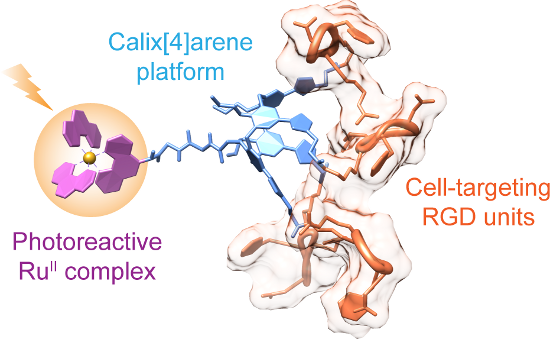
- 10.3762/bjoc.14.150 Abstract Photoactive ruthenium-based complexes are actively studied for their biological applications as potential theragnostic agents against cancer. One major issue of these inorganic complexes is to penetrate inside cells in order to fulfil their function, either sensing the
- internal cell environment or exert a photocytotoxic activity. The use of lipophilic ligands allows the corresponding ruthenium complexes to passively diffuse inside cells but limits their structural and photophysical properties. Moreover, this strategy does not provide any cell selectivity. This limitation
- is also faced by complexes anchored on cell-penetrating peptides. In order to provide a selective cell targeting, we developed a multivalent system composed of a photoreactive ruthenium(II) complex tethered to a calix[4]arene platform bearing multiple RGD-containing cyclopentapeptides. Extensive





Cobalt-catalyzed C–H cyanations: Insights into the reaction mechanism and the role of London dispersion
Beilstein J. Org. Chem. 2018, 14, 1537–1545, doi:10.3762/bjoc.14.130
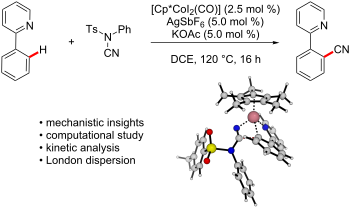
- ][10][11], London dispersion can also play a crucial role in different transition-metal-catalyzed reactions [12][13][14][15][16][17]. The C–H-rich di-1-adamantylphosphine oxide – a typical dispersion element – was experimentally found to be an excellent preligand for ruthenium- and palladium-catalyzed
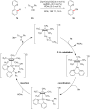
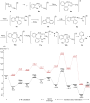
- a step-wise fashion. A similar mechanism has previously been described by McMullin, Williams, and Frost [38], as well as by Ackermann [39][40] for ruthenium-catalyzed C–H alkenylations. In the first transition state (TS1a, Figure 2), the κ2-coordination of the acetate ligand changes to a κ1





Hypervalent organoiodine compounds: from reagents to valuable building blocks in synthesis
Beilstein J. Org. Chem. 2018, 14, 1508–1528, doi:10.3762/bjoc.14.128
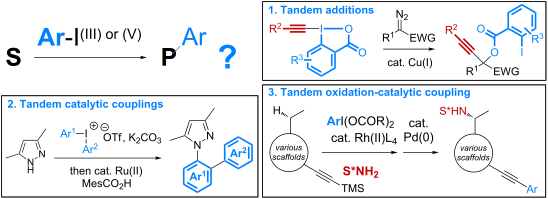
- of aryl iodide. The latter is then used for a sequential ruthenium-catalyzed ortho-C–H functionalization directed by the pyrazole group (Scheme 37) [76]. Starting from non-symmetrical diaryl-λ3-iodanes, the electron-poorest or more sterically hindered aromatic group is first transferred to the 3,5




Atom-economical group-transfer reactions with hypervalent iodine compounds
Beilstein J. Org. Chem. 2018, 14, 1263–1280, doi:10.3762/bjoc.14.108
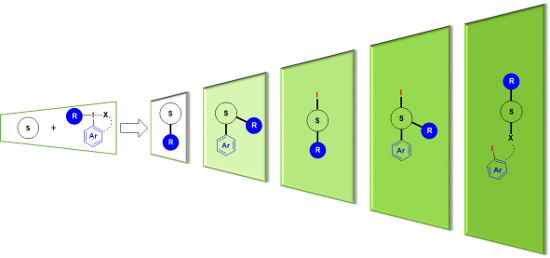
- atom-economical biphenylation of N-heterocycles was developed [33]. This method involved a direct N-arylation of pyrazoles or triazoles 12 under basic conditions, followed by a ruthenium-catalysed C–H arylation with the emerging aryl iodide (Scheme 8). Due to the fact that the first step of this






An overview of recent advances in duplex DNA recognition by small molecules
Beilstein J. Org. Chem. 2018, 14, 1051–1086, doi:10.3762/bjoc.14.93




Synthesis and stability of strongly acidic benzamide derivatives
Beilstein J. Org. Chem. 2018, 14, 523–530, doi:10.3762/bjoc.14.38
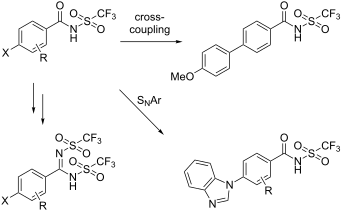
- in a ruthenium-catalyzed C–H activation reaction [36]. Most other reported transformations pass via the imidoyl chloride intermediates (equivalent to 10) to the amidine derivatives, which have been used in rearrangement reaction studies [9][37][38][39]. By these means also N,N’-bis(triflyl


Acid-catalyzed ring-opening reactions of a cyclopropanated 3-aza-2-oxabicyclo[2.2.1]hept-5-ene with alcohols
Beilstein J. Org. Chem. 2017, 13, 2888–2894, doi:10.3762/bjoc.13.281
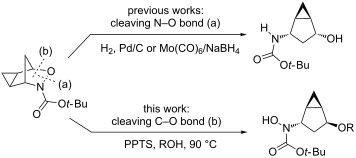
- includes the reduction to form alkane 8 [3], oxidative cleavage of the C=C bond to form 9 [4], ring-opening metathesis to form functionalized alkenes 10 and 11 [4], dihydroxylation to form diol 12 [5], ruthenium-catalyzed [2 + 2] cycloaddition with unsymmetrical alkynes to form regioisomers 13 and 14 [6


CF3SO2X (X = Na, Cl) as reagents for trifluoromethylation, trifluoromethylsulfenyl-, -sulfinyl- and -sulfonylation and chlorination. Part 2: Use of CF3SO2Cl
Beilstein J. Org. Chem. 2017, 13, 2800–2818, doi:10.3762/bjoc.13.273
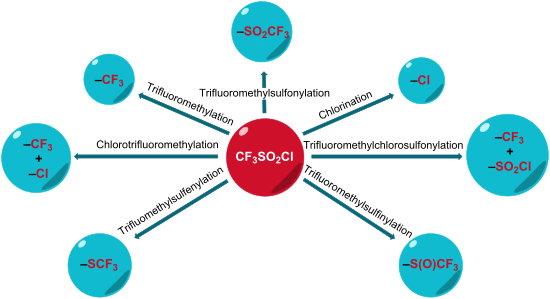
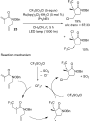
- -sulfonyl amides failed to react. Interestingly, Zhang and co-workers demonstrated that this reaction could be performed as well using bismuth oxybromide (BiOBr) nanosheets instead of a ruthenium complex as the photocatalyst (Scheme 5) [12]. The reaction unfortunately suffered from the same limitations
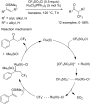
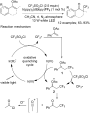
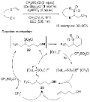
- 25). Although the regioselectivity of the reaction was overall excellent for heteroarenes, it proved to be less satisfying for substituted arenes. Further investigations allowed the authors to propose a detailed mechanism, represented in Scheme 25. After excitation of the ruthenium catalyst through
- reagent indissociable from major achievements in the field of trifluoromethylation. Indeed, early discoveries by Kamigata in the nineties using ruthenium catalysis and, more recently in 2011, by MacMillan using photoredox catalysis for the direct trifluoromethylation of the inherently reactive positions








Synthesis and supramolecular properties of regioisomers of mononaphthylallyl derivatives of γ-cyclodextrin
Beilstein J. Org. Chem. 2017, 13, 2509–2520, doi:10.3762/bjoc.13.248
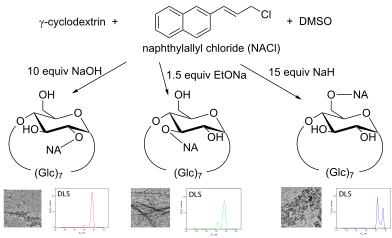
- starting material. After the deprotection, a substantial amount of the pure γ-CD was isolated as the only byproduct containing CD. Apparently, a concurrent reaction – the cleavage of allyl ether – also took place. The use of similar ruthenium complexes as catalysts for the cleavage of allyl ethers and


Asymmetric synthesis of propargylamines as amino acid surrogates in peptidomimetics
Beilstein J. Org. Chem. 2017, 13, 2428–2441, doi:10.3762/bjoc.13.240
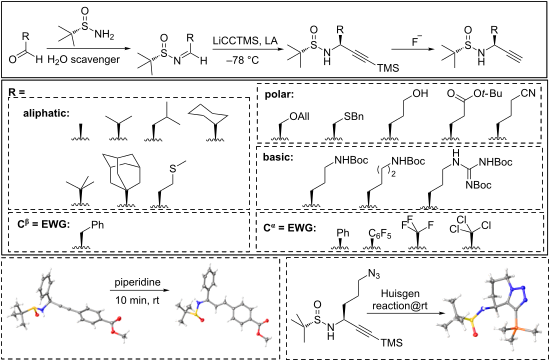
- intriguing versatility as building blocks in organic and medicinal chemistry, as their reactivity is unique. Their chemistry involves several highly selective reactions, e.g., [3 + 2] cycloadditions with azides and isoelectronic functional groups (among them the copper or ruthenium-catalyzed azide–alkyne


Is the tungsten(IV) complex (NEt4)2[WO(mnt)2] a functional analogue of acetylene hydratase?
Beilstein J. Org. Chem. 2017, 13, 2332–2339, doi:10.3762/bjoc.13.230
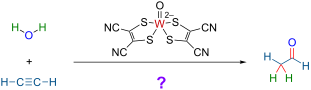
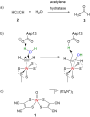
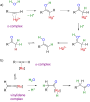
- absence of a satisfactory mechanistic proposal for the hydration reaction, we considered the possibility of a metal–vinylidene type activation mode, as it is well established for ruthenium-based alkyne hydration catalysts with anti-Markovnikov regioselectivity. To validate the hypothesis, the
- hydration (Scheme 2a), whereas alkynol cycloisomerization proceeds via rearrangement to a tungsten vinylidene complex and addition of the alcohol hydroxy group to the vinylidene α-carbon [18]. The vinylidene mechanism is related to that of ruthenium-catalyzed anti-Markovnikov hydration of terminal alkynes
- alkynes have not been reported [13] and substrate scope tests for acetylene hydratase have so far failed with higher alkynes [6]. We wished to test the potential activity and regioselectivity of complex 1 for hydration of higher terminal alkynes, as an extension to our studies of ruthenium-catalyzed anti



Homologated amino acids with three vicinal fluorines positioned along the backbone: development of a stereoselective synthesis
Beilstein J. Org. Chem. 2017, 13, 2316–2325, doi:10.3762/bjoc.13.228

- metaperiodate and ruthenium chloride (Table 2) [39][40], with the desired carboxylic acid 44 being obtained in 31% yield. Having established the conditions necessary for the conversion of the nitroaryl group in model system 41 (Table 2), the procedure could now be applied to the trifluoroalkanes 40a,b (Scheme 4
- unexpected, it was reasoned that it might still be a suitable substrate for the subsequent oxidation reaction. Accordingly, the product of the hydrogenation reaction was next treated with sodium metaperiodate and ruthenium trichloride (Scheme 4), and gratifyingly this delivered the desired trifluorinated


Synthesis of 2-aminosuberic acid derivatives as components of some histone deacetylase inhibiting cyclic tetrapeptides
Beilstein J. Org. Chem. 2017, 13, 2153–2156, doi:10.3762/bjoc.13.214

- -trimethylphenyl)-2-imidazolidinylidene)dichloro(phenylmethylene)(trichlorohexylphosphine)ruthenium, 12] in refluxing dichloromethane and the product 14a was obtained in good yield. The corresponding reaction of 11 with benzyl acrylate (13b) proceeded with similar facility, yield and isomeric composition. Although


Synthesis of substituted Z-styrenes by Hiyama-type coupling of oxasilacycloalkenes: application to the synthesis of a 1-benzoxocane
Beilstein J. Org. Chem. 2017, 13, 2122–2127, doi:10.3762/bjoc.13.209
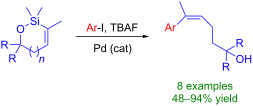
- aryl iodides are described that produce trisubstituted Z-styrenes in moderate to excellent yields. Both electron-rich and electron-poor aryl iodides are tolerated in the cross-coupling reaction. The oxasilacycloalkene coupling partners were prepared by ruthenium-catalyzed intramolecular anti


Oxidative dehydrogenation of C–C and C–N bonds: A convenient approach to access diverse (dihydro)heteroaromatic compounds
Beilstein J. Org. Chem. 2017, 13, 1670–1692, doi:10.3762/bjoc.13.162
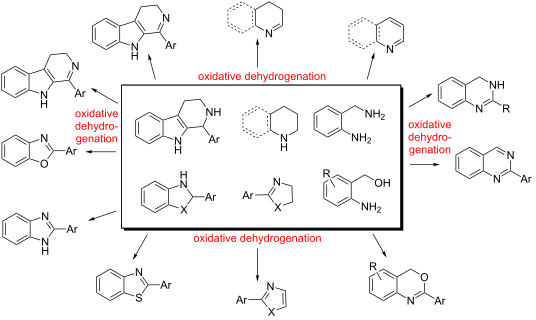
- the ring containing the nitrogen atom. The dehydrogenation strategy is an atom economical, efficient and sustainable method to access nitrogen containing heteroaromatic molecules. They can be either achieved by metals (like iridium, ruthenium, aluminum etc.) mediated processes (in absence of hydrogen
- acceptor) or via oxidative dehydrogenation in the presence of appropriate oxidants. In absence of hydrogen acceptors, post dehydrogenation the hydrogen is released as H2↑. Catalysts such as iridium pincer complexes, CuAl2O3, hydroxyapatite bound palladium and ruthenium hydride complexes have been harnessed
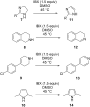
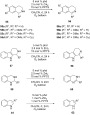
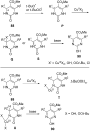
- (Scheme 24). Ruthenium catalysts have also been used under aerobic conditions for oxidative dehydrogenation of heterocycles. For example Lingayya et al. demonstrated that ruthenium chloride (p-cumene)2 [RuCl2(p-cumene)2] catalyzed tandem reaction involving oxidative dehydrogenation, cross coupling and








Chemical systems, chemical contiguity and the emergence of life
Beilstein J. Org. Chem. 2017, 13, 1551–1563, doi:10.3762/bjoc.13.155
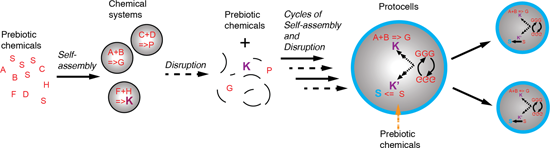
- ]. Such vesicles with associated ribozymes could eventually prove to be novel functional chemical systems. The production of fatty acids from non-amphiphilic picolylesters performed using a photochemical reaction involving a ruthenium tris(bipyridine), functioning as photosensitizer and redox catalyst
- using a mediator, rhenium bipyridine (a molecule similar to the ruthenium complex in Figure 2B). A concomitant development (complexity increase) of membranes and light/energy harvesting/conversion systems can thus be seen as a prerequisite in the evolution of the ancestral bioenergetics en route to the
- harvest light (here a ruthenium tris(bipyridine) and catalyse reactions, or polymers such RNA ribozymes that are both genotype (information component) and phenotype (catalyst). (C) The systems approach offers insight into the increased level of cooperativity necessary to grasp the complexity of living


Total syntheses of the archazolids: an emerging class of novel anticancer drugs
Beilstein J. Org. Chem. 2017, 13, 1085–1098, doi:10.3762/bjoc.13.108
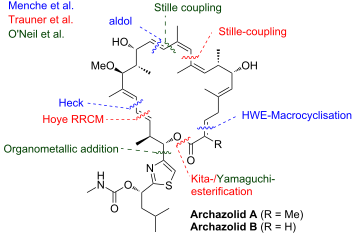
- and the subsequent HWE macrocyclization are remarkable. The Trauner group in turn effectively employed various ruthenium-catalyzed reactions, including a relay ring-closing metathesis, which demonstrates the powerfulness of such a tactic even for highly elaborate substrates with several initiation


Chemoselective synthesis of diaryl disulfides via a visible light-mediated coupling of arenediazonium tetrafluoroborates and CS2
Beilstein J. Org. Chem. 2017, 13, 903–909, doi:10.3762/bjoc.13.91
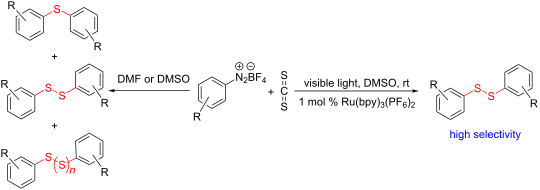
- -2,2’-bipyridine) [25][26] were used, the product yield of diphenyl disulfide (3a) was much lower compared to reactions performed in the presence of ruthenium catalysts (Table 3, entries 9–11). A plausible reaction mechanism has been proposed and is depicted in Scheme 2. We envision that the phenyl


Ultrasound-promoted organocatalytic enamine–azide [3 + 2] cycloaddition reactions for the synthesis of ((arylselanyl)phenyl-1H-1,2,3-triazol-4-yl)ketones
Beilstein J. Org. Chem. 2017, 13, 694–702, doi:10.3762/bjoc.13.68
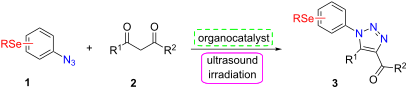
- most attractive way for their preparation is the thermal 1,3-dipolar cycloaddition of alkynes and azides, introduced by Huisgen which usually gives rise to a mixture of 1,4 and 1,5-isomers [16][17][18][19]. More recently, transition metal catalysts based on copper, ruthenium, silver and iridium salts


Transition-metal-catalyzed synthesis of phenols and aryl thiols
Beilstein J. Org. Chem. 2017, 13, 589–611, doi:10.3762/bjoc.13.58

- through an intramolecular transformation. Similar with Sun's work in 2015 [62], this conversion was also considered to proceed through an oxidation of Pd(II) to Pd(IV) by radical HO·. Under the optimum conditions, a broad scope of functional groups was well tolerated. 1.2.3 Ruthenium catalyzed C–H
- Ackermann group used another ruthenium catalyst, [RuCl2(p-cymene)]2 and developed a hydroxylation protocol for carbamates [77]. The hydroxylation occurred in DCE in the presence of PhI(OTFA)2 (Scheme 47). In intermolecular competition experiments, among amide, carbamate and ester, amide showed the highest
- hydroxy group has a great impact on the biological activities of 5-hydroxyflavonids [83]. Starting from [RuCl2(p-cymene)]2, Ag2CO3 and CF3COOH, they prepared a ruthenium complex, which could achieve the regioselective hydroxylation of flavones at 80 °C in TFA/TFAA in the presence of PhI(TFA)2 as oxidant


Effect of the ortho-hydroxy group of salicylaldehyde in the A3 coupling reaction: A metal-catalyst-free synthesis of propargylamine
Beilstein J. Org. Chem. 2017, 13, 552–557, doi:10.3762/bjoc.13.53
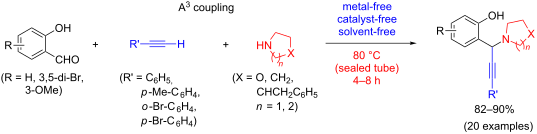
- ], mercury [26], cobalt [27], iridium [28], ruthenium [29], indium [30] etc. Other methods towards the synthesis of propargylamine include: alkynylation of imine [31][32][33], enamine [34], and Csp³–H bonds adjacent to N-atoms [35][36]. In the A3 coupling, the role of the metal catalyst is believed to


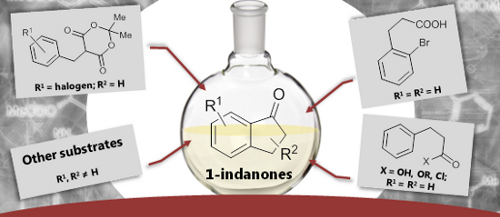
Synthesis of 1-indanones with a broad range of biological activity
Beilstein J. Org. Chem. 2017, 13, 451–494, doi:10.3762/bjoc.13.48


Adsorption of RNA on mineral surfaces and mineral precipitates
Beilstein J. Org. Chem. 2017, 13, 393–404, doi:10.3762/bjoc.13.42
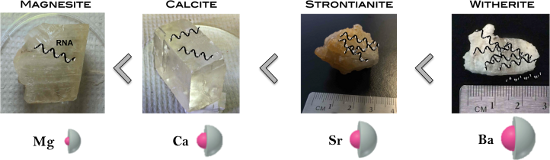
- particularly sensible using this approach. For example, iron phosphate is a well-known mineral (vivianite) and it adsorbs RNA (≈12%, Table 2). However, it does not make sense to seek the Periodic Table correlates of vivianite below iron. This would require us making and/or finding ruthenium phosphate and


Identification, synthesis and mass spectrometry of a macrolide from the African reed frog Hyperolius cinnamomeoventris
Beilstein J. Org. Chem. 2016, 12, 2731–2738, doi:10.3762/bjoc.12.269
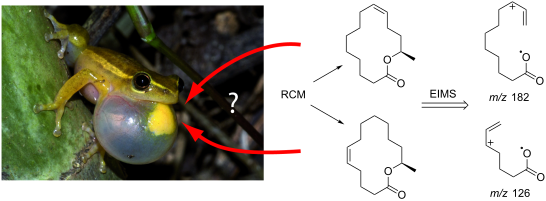
- -trimethylphenyl)-2-imidazolidinylidene)dichloro(phenylmethylene)(tricyclohexylphosphine)ruthenium reduced the isomerization, leading to an (E/Z)-mixture of 2. Finally, the (Z)-selective Grubbs catalyst 12 furnished the best results [29][30]. This catalyst yielded only the desired product (R)-2 with a (Z



Copper-catalyzed asymmetric sp3 C–H arylation of tetrahydroisoquinoline mediated by a visible light photoredox catalyst
Beilstein J. Org. Chem. 2016, 12, 2636–2643, doi:10.3762/bjoc.12.260
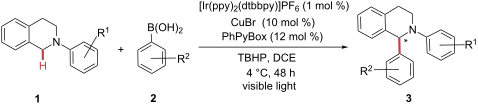
- photoredox system might help, which indeed has improved the reaction yield and enantioselectivity. Different iridium and ruthenium photoredox catalysts were evaluated and [Ir(ppy)2(dtbbpy)]PF6 was found to be the most efficient [32]. With this iridium photoredox catalyst, TBHP, and copper(I) bromide co