


Search results
Search for "Carbohydrate" in Full Text gives 310 result(s) in Beilstein Journal of Organic Chemistry. Showing first 200.
The direct oxidative diene cyclization and related reactions in natural product synthesis
Beilstein J. Org. Chem. 2016, 12, 2104–2123, doi:10.3762/bjoc.12.200
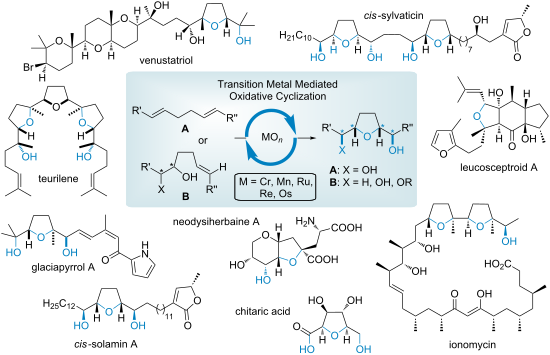
- (6) (Scheme 4). It was also possible to produce another carbohydrate using the same synthetic pathway. Thus, mono-protection of THF diol 5 followed by oxidation of the remaining free primary hydroxy group to the carboxylic acid and a final hydrogenolysis gave (+)-D-chitaric acid (7) with a yield of






p-Nitrophenyl carbonate promoted ring-opening reactions of DBU and DBN affording lactam carbamates
Beilstein J. Org. Chem. 2016, 12, 2086–2092, doi:10.3762/bjoc.12.197
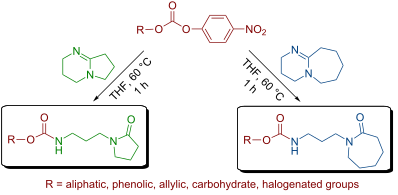
- carbohydrate–protein interactions [25], ligation and surfactant properties [26][27]. Although p-nitrophenyl carbonates were extensively utilized in these reactions, the nucleophilicity of amidine bases towards these carbonates was not encountered so far. In continuation of our interest in carbohydrates [28][29


Stereo- and regioselectivity of the hetero-Diels–Alder reaction of nitroso derivatives with conjugated dienes
Beilstein J. Org. Chem. 2016, 12, 1949–1980, doi:10.3762/bjoc.12.184
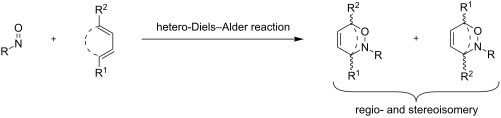
- Asymmetric (chiral) hetero-Diels–Alder reactions in a stereoselective (enantioselective or diastereoselective) manner have become very popular in the last decade. Pioneering works by Kresze and Vasella [56][94][105] using carbohydrate-based α-chloronitroso agents and Kirby [14] using acylnitroso compounds




Synthesis and NMR studies of malonyl-linked glycoconjugates of N-(2-aminoethyl)glycine. Building blocks for the construction of combinatorial glycopeptide libraries
Beilstein J. Org. Chem. 2016, 12, 1939–1948, doi:10.3762/bjoc.12.183
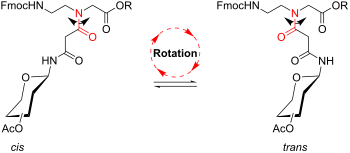
- , investigating the delicate carbohydrate–protein interactions on a molecular level is an inalienable prerequisite for a deep understanding of the fundamental cellular recognition processes involving the complex saccharides of the glycocalyx [5][6][7][8]. Unfortunately, isolation of pure carbohydrate material or


From supramolecular chemistry to the nucleosome: studies in biomolecular recognition
Beilstein J. Org. Chem. 2016, 12, 1863–1869, doi:10.3762/bjoc.12.175
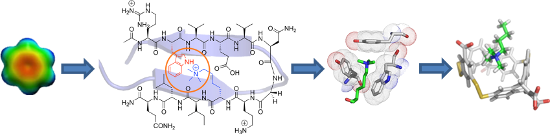
- (after Sara Butterfield) [33], Sarah–Zachtide – which investigates a carbohydrate–π interaction (after Sarah Kiehna and Zachary Laughrey) [27][28], Bobtide – which contains a cation–π interaction with KMe3 (trimethyllysine) and was the most stable β-hairpin reported at the time (after Robert Hughes) [22


Synthesis of the C8’-epimeric thymine pyranosyl amino acid core of amipurimycin
Beilstein J. Org. Chem. 2016, 12, 1765–1771, doi:10.3762/bjoc.12.165
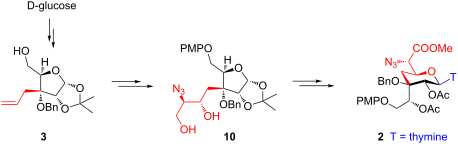
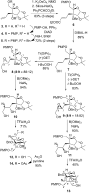
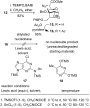
- ; carbohydrate; peptidyl nucleosides; Introduction Peptidyl nucleoside antibiotics are a class of complex molecules that encompass an extensive array of natural products [1]. The notable structural features of peptidyl nucleosides are responsible for their miscellaneous biological activities such as antitumor
- of 1 is not known. The reported methodologies are mainly focused on construction of the exigent central pyranosyl amino acid fragment with or without the C3’-branched chain and nucleobase, frequently using carbohydrate substrate [6][7][8][9][10][11][12][13][14][15]. In a non-carbohydrate approach
- , Garner and co-workers have exploited a cycloaddition pathway between a poly-oxygenated diene and Garner’s aldehyde for constructing the carbohydrate core of amipurimycin [9]. Recently, Datta and co-workers reported the first synthesis of a fully-functionalized thymine analogue of amipurimycin, utilizing






Automated glycan assembly of a S. pneumoniae serotype 3 CPS antigen
Beilstein J. Org. Chem. 2016, 12, 1440–1446, doi:10.3762/bjoc.12.139
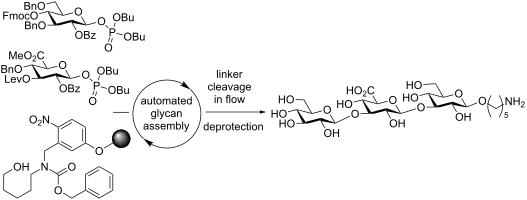
- serotype 3 oligosaccharides have been developed and were applied to other uronic acid containing carbohydrate structures [21][22]. The first method uses only glucose building blocks to assemble oligosaccharides and introduces the C6 carboxylic acid moieties via a late-stage oxidation. Using this method
- conclusion, we have developed an efficient method for the synthesis of S. pneumoniae serotype 3 CPS structures. The products of these syntheses are currently used in the development of synthetic carbohydrate conjugate vaccines. Disaccharide repeating unit of the S. pneumoniae serotype 3 CPS. Building blocks


Mutagenic activity of quaternary ammonium salt derivatives of carbohydrates
Beilstein J. Org. Chem. 2016, 12, 1434–1439, doi:10.3762/bjoc.12.138
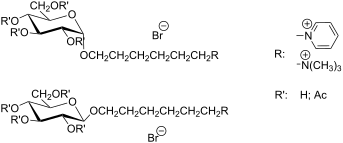
- . The polymers (oligosaccharides) of D-glucose found, for example, in wood (cellulose) and D-glucosamine present in shells of crabs and insects (chitin), are the widely known ones [1][2]. Another class of carbohydrate biopolymer derivatives – D-ribose and 2-deoxy-D-ribose – constitutes the backbone of
- observations on the pronounced mutagenic activity of QAS derivatives with two carbon atom spacers dividing the sugar moiety and the ammonium group [22], we investigated the mutagenic activity of newly synthesized QAS with a carbohydrate spacer containing six carbon atoms. Two different bacterial mutagenicity
- containing a carbohydrate moiety with a two-carbon atom linker in the Vibrio harveyi bioluminescence assay. Here, we provide evidence for the mutagenic potential of corresponding QAS–carbohydrate derivatives with a longer, six-carbon atom linker. This suggests that the introduction of a longer hydrocarbon


A robust synthesis of 7,8-didemethyl-8-hydroxy-5-deazariboflavin
Beilstein J. Org. Chem. 2016, 12, 912–917, doi:10.3762/bjoc.12.89
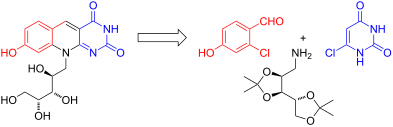
- carbohydrate chemistry and might then allow purification and characterization of intermediate products. While we were following the synthetic approach by Yoneda et al. with a protected ribose derivative, Foss and co-workers were obviously facing the same preparative problem. To our surprise and delight (that


Synthesis and in vitro cytotoxicity of acetylated 3-fluoro, 4-fluoro and 3,4-difluoro analogs of D-glucosamine and D-galactosamine
Beilstein J. Org. Chem. 2016, 12, 750–759, doi:10.3762/bjoc.12.75
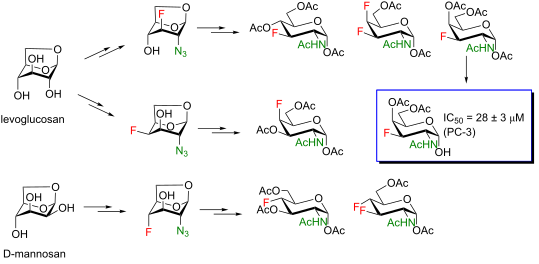
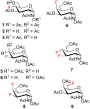
- Background: Derivatives of D-glucosamine and D-galactosamine represent an important family of the cell surface glycan components and their fluorinated analogs found use as metabolic inhibitors of complex glycan biosynthesis, or as probes for the study of protein–carbohydrate interactions. This work is



Elucidation of a masked repeating structure of the O-specific polysaccharide of the halotolerant soil bacteria Azospirillum halopraeferens Au4
Beilstein J. Org. Chem. 2016, 12, 636–642, doi:10.3762/bjoc.12.62
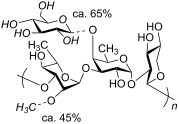
- carbohydrate and glycolipid parts [15] followed by fractionation of the released water-soluble carbohydrate portion by Sephadex G-50 Superfine size-exclusion chromatography. It was demonstrated that the OPS contained 2-O-methyl-6-deoxyhexose, L-rhamnose (Rha), D-fucose (Fuc), D-xylose (Xyl), and D-glucose (Glc


Biosynthesis of α-pyrones
Beilstein J. Org. Chem. 2016, 12, 571–588, doi:10.3762/bjoc.12.56
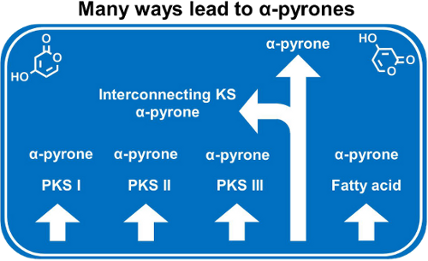
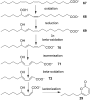
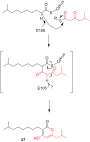
- a ppyS homologue. However, instead of the syntenic genomic region where pseudomonads usually harbor the ppyS homologue, it appeared that the gene has inserted between genes belonging to carbohydrate metabolism in P. putida BW11M1. An in-frame deletion mutant of the ppyS homologue was constructed and






A selective and mild glycosylation method of natural phenolic alcohols
Beilstein J. Org. Chem. 2016, 12, 524–530, doi:10.3762/bjoc.12.51
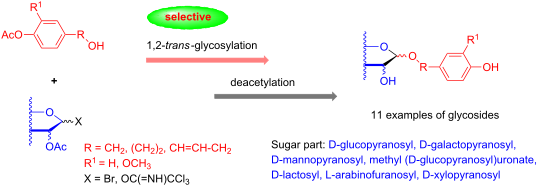
- an iodobromonium ion) results in a carbohydrate-derived oxocarbonium ion that functions as the reactive intermediate [35]. In the first step, acceptor 6b and glucopyranosyl bromide 13 as the donor were selected and tested in the presence of the above mentioned promoters (see Table 1, entries 1–4) in


Recent advances in N-heterocyclic carbene (NHC)-catalysed benzoin reactions
Beilstein J. Org. Chem. 2016, 12, 444–461, doi:10.3762/bjoc.12.47
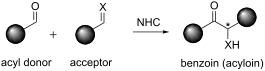
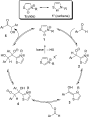
- influence of these catalysts on the diastereoselectivity of the reaction was also studied using NMR techniques. An NHC-catalysed intramolecular benzoin condensation of carbohydrate-derived dialdehydes has been applied for the construction of carbocyclic sugars. Diastereoselective benzoin reactions of manno
- enals and β-oxo sulfones. Intramolecular benzoin condensation of carbohydrate-derived dialdehydes. Enantioselective intramolecular benzoin reactions of N-tethered keto-aldehydes. Asymmetric cross-benzoin reactions promoted by camphor-derived catalysts. NHC-Brønsted base co-catalysis in a benzoin–Michael



Self and directed assembly: people and molecules
Beilstein J. Org. Chem. 2016, 12, 391–405, doi:10.3762/bjoc.12.42
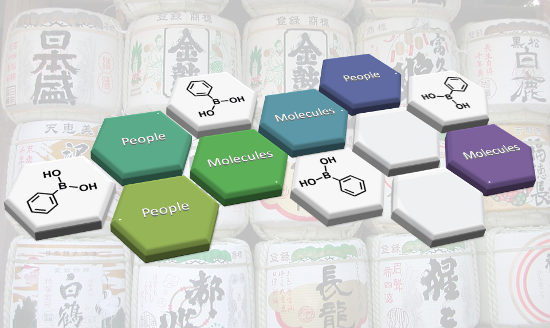
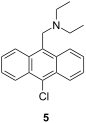
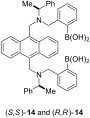
- group were developing carbohydrate receptors from what looked like simple molecules requiring just one or two steps to synthesize. Therefore, while working with the late Takaaki Harada, we developed a simple colorimetric system able to “read-out” the chirality of sugars. The system we developed used the






Natural products from microbes associated with insects
Beilstein J. Org. Chem. 2016, 12, 314–327, doi:10.3762/bjoc.12.34
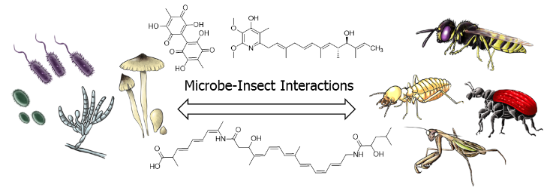
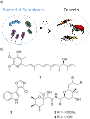
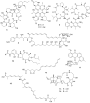
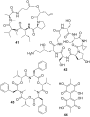
- monophyletic termite subfamily Macrotermitinae propagates a basidiomycete fungal cultivar Termitomyces, which serves as a major food source for the termite colony [90]. The domestication of Termitomyces facilitates an increase in carbohydrate decomposition capacity relative to that of other higher termites [91





Spiro-fused carbohydrate oxazoline ligands: Synthesis and application as enantio-discrimination agents in asymmetric allylic alkylation
Beilstein J. Org. Chem. 2016, 12, 166–171, doi:10.3762/bjoc.12.18
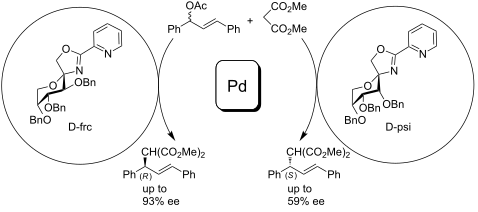
- benchmark test for selectivity, the palladium-catalyzed asymmetric addition of dimethyl malonate to 1,3-diphenylallyl acetate was often used in the literature for testing the scope of carbohydrate derived ligands for this purpose [9][10][11][12][13]. For instance, Kunz and Gläser have demonstrated the
- stereo-differentiating potential of carbohydrate ligands in this type of reaction where their gluco-PHOX ligand, derived from glucosamine, resulted in a high enantiomeric excess of up to 98% [14]. Recently, Vidal et al. reported on a spiro-bis(isooxazoline) ligand A (Figure 1) [15] prepared via 1,3
- substitution product only in traces. The authors attributed the inefficiency of ligand A to the cleavage of the spiro moiety resulting in the formation of thermodynamically more stable aromatic isoxazole B (Figure 1). As part of our ongoing research program towards the design of carbohydrate derived ligands




Exploring architectures displaying multimeric presentations of a trihydroxypiperidine iminosugar
Beilstein J. Org. Chem. 2015, 11, 2631–2640, doi:10.3762/bjoc.11.282

- glycosidases. Keywords: dendrimers; glycosidase inhibitors; iminosugars; multivalency; piperidine alkaloids; Introduction Iminosugars are well-known naturally occurring glycomimetics with a nitrogen atom replacing the endocyclic oxygen, mainly recognized as inhibitors of carbohydrate-processing enzymes
- (glycosidases) [1][2]. In quite sharp contrast the multivalent effect, widely investigated in the field of carbohydrate–lectin interactions [3], has remained essentially unexplored concerning glycosidase inhibition up to 2010. Indeed, the first examples of multivalent iminosugars gave disappointing results in




Synthesis of bi- and bis-1,2,3-triazoles by copper-catalyzed Huisgen cycloaddition: A family of valuable products by click chemistry
Beilstein J. Org. Chem. 2015, 11, 2557–2576, doi:10.3762/bjoc.11.276
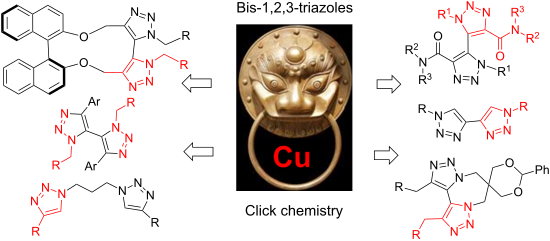
- mild conditions without the Cu(І). Notably, the CuAAC reaction between the terminal alkyne of 36 and various azides provided the desired bistriazoles 37 in good yield (Scheme 14). Bistriazoles have potential application in the synthesis of surfactants after introducing the carbohydrate moiety. In 2012




Versatile synthesis and biological evaluation of novel 3’-fluorinated purine nucleosides
Beilstein J. Org. Chem. 2015, 11, 2509–2520, doi:10.3762/bjoc.11.272
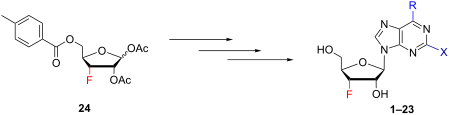
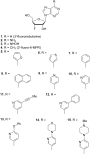
- ’-difluorocytidine has been routinely utilized to treat solid tumors [30]. However, 3’-fluorine-modified nucleosides have not been well-studied because of the challenges associated with the synthesis of modified carbohydrate moieties [31][32][33][34][35]. As a result, 3’-fluoro-6-heterocyclic-substituted purine
- the protecting groups [35]. Compound 2 has also been synthesized starting from xylofuranoside by manipulating the protecting groups on the carbohydrate moiety [36]. De Clercq and co-workers [37] developed a protocol for the synthesis of 3’-fluororibofuranose in 10 steps, and it requires epoxide



Biocatalysis for the application of CO2 as a chemical feedstock
Beilstein J. Org. Chem. 2015, 11, 2370–2387, doi:10.3762/bjoc.11.259
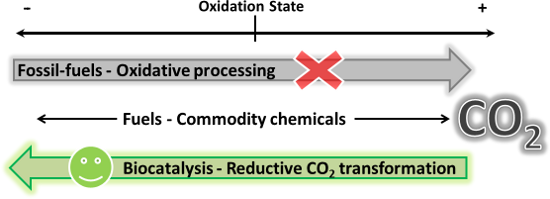
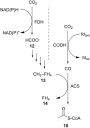
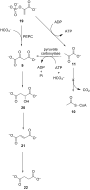
- (RuBisCO). The glycerate 2 is subsequently phosphorylated with ATP for the production of 1,3-bisphosphoglycerate (3), which is in turn reduced with NADPH to 3-phosphoglyceraldehyde (4). For every six equivalents of the aldehyde 4, one is diverted to carbohydrate biosynthesis, while the other five are used






Synthesis of D-fructose-derived spirocyclic 2-substituted-2-oxazoline ribosides
Beilstein J. Org. Chem. 2015, 11, 2289–2296, doi:10.3762/bjoc.11.249
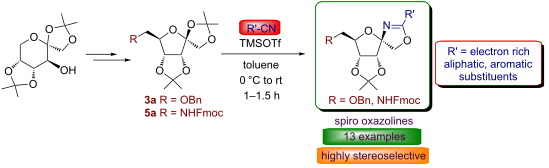
- in toluene through nucleophilic addition of electron-rich nitriles to the oxacarbenium ion intermediate of 1,2;3,4-di-O-isopropylidene-β-D-psicofuranose derivatives with concomitant intramolecular trapping of the C2 hydroxymethyl group on the electrophilic nitrilium carbon. These carbohydrate-derived
- carbohydrate chemistry, they are versatile intermediates in the synthesis of N-linked glycoproteins [20][21][22]. In the context of carbohydrate chemistry, there are two possible regioisomers for glycooxazolines. Firstly, the C1 O-linked 1,2-glycooxazolines (Figure 1, 5) are formed by intramolecular
- applied them to the synthesis of α(1→5)-arabinan [38]. Thus, the exploration of carbohydrate-based oxazolines [39][40] has been limited to serve as glycosyl donors or as intermediates for N-glycan synthesis. Although, a few pyranose-based oxazoline frameworks are known [41], the corresponding furanoid


Coupling of α,α-difluoro-substituted organozinc reagents with 1-bromoalkynes
Beilstein J. Org. Chem. 2015, 11, 2145–2149, doi:10.3762/bjoc.11.231

- , unique stereoelectronic properties of the CF2-unit may be exploited in conformational analysis [3][4][5], carbohydrate and peptide research [6][7], and reaction engineering [8][9]. Typically, the difluoromethylene fragment is created by deoxyfluorination, which requires harsh or hazardous conditions [10


Synthesis, antimicrobial and cytotoxicity evaluation of new cholesterol congeners
Beilstein J. Org. Chem. 2015, 11, 1922–1932, doi:10.3762/bjoc.11.208
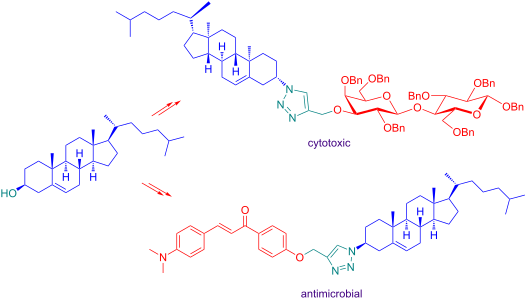
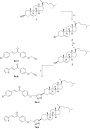
- pharmacophoric conjugates through CuAAC. Basically, these conjugates included cholesterol and 1,2,3-triazole moieties, while the third, the pharmacophore, was either a chalcone, a lipophilic residue or a carbohydrate tag. These compounds were successfully prepared in good yields and characterized by NMR, MS and




Towards inhibitors of glycosyltransferases: A novel approach to the synthesis of 3-acetamido-3-deoxy-D-psicofuranose derivatives
Beilstein J. Org. Chem. 2015, 11, 1547–1552, doi:10.3762/bjoc.11.170

- simulate the shape and functionality of the natural substrates in the ground and/or the transition state (TS) of the enzymatic reaction [14]. In the case of GTs inhibitors, the carbohydrate mimetics that imitate the TS of the enzymatic reactions should exhibit a higher inhibition activity than the natural
- carbohydrate substrates [9][16]. Investigations of the catalytic mechanism of inverting glycosyltransferases [18] and N-acetylglucosaminyltransferase I [19] by employing ab initio calculations resulted in the design of inhibitors based on carbohydrate mimetics that simulate the transition state of the





