Search results
Search for "arene" in Full Text gives 281 result(s) in Beilstein Journal of Organic Chemistry. Showing first 200.
Imide arylation with aryl(TMP)iodonium tosylates
Beilstein J. Org. Chem. 2018, 14, 1034–1038, doi:10.3762/bjoc.14.90
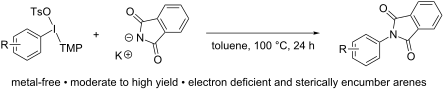
- , transition metals feature prominently in such methods, but even recent examples employ stoichiometric metal mediators [4]. Metal-free methods by classic SNAr are also attractive, but only possible on very electron-deficient arene substrates [5]. Diaryliodonium salts are useful reagents for metal-free aryl


One-pot synthesis of diaryliodonium salts from arenes and aryl iodides with Oxone–sulfuric acid
Beilstein J. Org. Chem. 2018, 14, 849–855, doi:10.3762/bjoc.14.70

- –m in lower yields. Similar reactions of 3,5-bis(trifluoromethyl)iodobenzene (1d) with benzene and mesitylene formed the corresponding iodonium salts 3n and 3o in moderate yields. With electron-deficient arenes 2 such as chlorobenzene (2e) and benzene, an excess of sulfuric acid and arene was used to

Phosphodiester models for cleavage of nucleic acids
Beilstein J. Org. Chem. 2018, 14, 803–837, doi:10.3762/bjoc.14.68
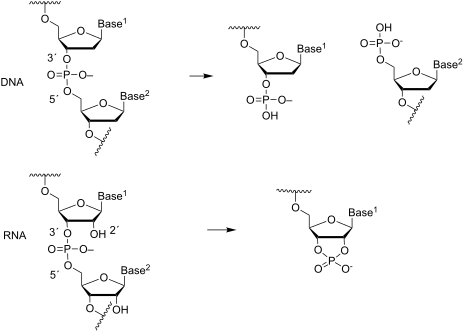
- by calix[4]arene derivatives 7 bearing the guanidine groups at the upper rim and O-(2-ethoxyethyl) groups at the lower rim [80]. The role of the latter groups was to improve solubility to hydroxylic solvents and to rigidify the calixarene system into the so-called cone conformation. HPNP (1) was used
- hydroxy function on phosphorus (Scheme 8). Similar results were obtained on using diphenylmethane as a scaffold 8 (Figure 8) [81]. A cyclohexylidene or adamantylidene substituent on the methylene carbon moderately enhanced the catalytic activity. Interestingly, the calix[4]arene-based agent 7 catalyzed



Chlorination of phenylallene derivatives with 1-chloro-1,2-benziodoxol-3-one: synthesis of vicinal-dichlorides and chlorodienes
Beilstein J. Org. Chem. 2018, 14, 796–802, doi:10.3762/bjoc.14.67
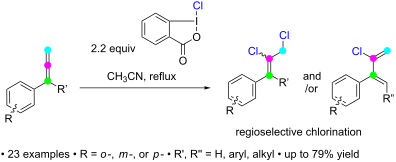
- ) on the arene also deviated from the expected reaction course. These reactions failed to fully consume the starting materials 2u and 2v, even upon prolonged heating, which we discovered to be the result of 1b being also consumed through over-chlorination. 4-Methoxy derivative 2u gave trichloride 5u in
- as resulting from the stabilization of radical intermediates gained upon methoxy substitution [51], which permitted further chlorination of either the methyl or arene groups. To gain insight into the reaction mechanism we carried out two key control experiments. First, to test for rearrangement


Cobalt-catalyzed directed C–H alkenylation of pivalophenone N–H imine with alkenyl phosphates
Beilstein J. Org. Chem. 2018, 14, 709–715, doi:10.3762/bjoc.14.60
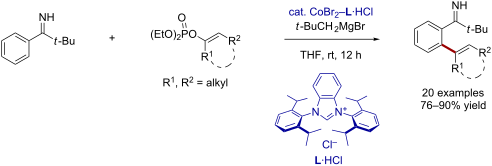
- , directing group-assisted arene C–H activation reactions have been extensively studied over the last few decades to offer a broad array of atom and step-economical methods for the synthesis of functionalized aromatic compounds [1][2][3][4][5][6]. Among various C–H transformations, the introduction of alkenyl
- (e.g., acrylates), and is challenging with unactivated and multisubstituted alkenes [11]. The hydroarylation of alkynes does not allow for the introduction of cycloalkenyl groups because of the unavailability of the corresponding alkynes. In light of such limitations, a coupling between arene
- ) from ketones [13][14][15][16][17]. Over the last several years, we and others have developed a series of directed arene C–H functionalization reactions with organic electrophiles under low-valent cobalt catalysis [18][19][20][21]. In particular, our group and the Ackermann group have independently


Carbohydrate inhibitors of cholera toxin
Beilstein J. Org. Chem. 2018, 14, 484–498, doi:10.3762/bjoc.14.34
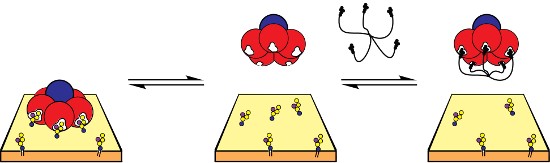
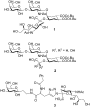
- , indicating that the central cyclic peptide core probably has an expanded ring conformation. Garcia-Hartjes et al. synthesised and evaluated the GM1os linked calix[5]arene molecule 31 as shown in Figure 12, and found that compound 31 displayed 100,000 times more potency as compared to GM1os derivatives having
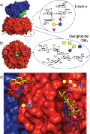
- inhibitor designed and synthesised by Pieters, and Bernardi et al. Cyclic inhibitors synthesised by Kumar et al. for CT. The star-shaped inhibitors reported by Fan, Hol and co-workers. Differently sized cyclic decavalent peptide core designed by Zhang et al. Calix[5]arene core-based pentavalent inhibitor




Synthesis of fluoro-functionalized diaryl-λ3-iodonium salts and their cytotoxicity against human lymphoma U937 cells
Beilstein J. Org. Chem. 2018, 14, 364–372, doi:10.3762/bjoc.14.24
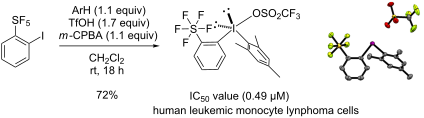
- [65][66]. This synthesis was achieved by treating iodide 7 with the respective arene, m-CPBA, and trifluoromethanesulfonic acid at room temperature. The desired diaryliodonium salts 3p, 4b, 5a and 6a were obtained in good yields (72%, 86%, 81% and 92%, respectively) (Scheme 2). The newly synthesized
- for 1 h before the addition of 7 (1.0 equiv) and CH2Cl2 (6.0 mL/mmol ArI) in a round-bottomed flask. The solution was cooled to 0 °C followed by the dropwise addition of TfOH (1.7 equiv). The resulting mixture was stirred at room temperature for 2 h. It was then cooled to 0 °C and the arene (1.1 equiv


One-pot sequential synthesis of tetrasubstituted thiophenes via sulfur ylide-like intermediates
Beilstein J. Org. Chem. 2018, 14, 243–252, doi:10.3762/bjoc.14.16
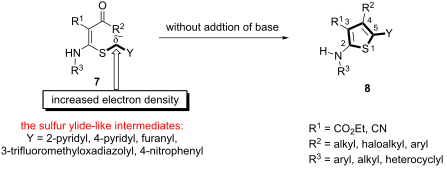
- effect of the amine might be attributed to the resonance structures of imidazole (Table 1, entry 11) [72]. To determine the influence of substituents on the phenyl group, various arene(methyl)sulfanes 7l–p were tested (Table 1, entries 12–16,). Simple phenyl and electron-donating compounds 7l and 7m did
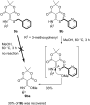
- -pot sequential synthesis of the trisubstituted 5-(pyridine-2-yl)thiophenes 8a. Substrate: amalonitrile; b5,5-dimethylcyclohexane-1,3-dione. The substitution reaction with MeOH. Examination of N,S-acetals substituted with a heterocycle (7aa–k) or an arene (7l–p). 1H NMR studies of Meldrum’s acid-based


Progress in copper-catalyzed trifluoromethylation
Beilstein J. Org. Chem. 2018, 14, 155–181, doi:10.3762/bjoc.14.11
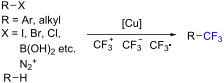
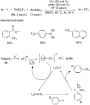
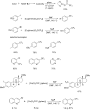
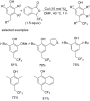
- corresponding hydroxylated arene) was readily removable by extraction or column chromatography. Later, the group of Beller [42] described another example of copper-catalyzed trifluoromethylation reactions of aryl- and vinylboronic acids with CF3SO2Na as the trifluoromethyl source (Scheme 23). The
- groups were tolerated in these conditions, such as sulfonate, nitro, ester, amide, ether, and even unprotected hydroxy groups. In addition, arene rings bearing chloro and iodo groups did not interfere with the transformation, which promised further conversion at the halogenated positions. It was notable










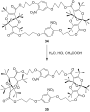
From dipivaloylketene to tetraoxaadamantanes
Beilstein J. Org. Chem. 2018, 14, 1–10, doi:10.3762/bjoc.14.1

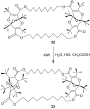
- of the bisdioxines becomes severely hindered in cyclic derivatives, so that the 38-membered ring compound 32 requires microwave heating at 170 °C to form tetraoxaadamantane 33, and the catenated compound 36 and calix[6]arene derivative 37 did not form tetraoxaadamantanes. The reaction mechanisms of
- -butylcalix[6]arene moiety in 37 (Figure 3), which is obtained from the bisdioxine diacid dichloride 12 and calixarene [42]. The wider upper rim is clearly seen in the X-ray structure and the compound demonstrates a pronounced ability to extract Cs+ ions from water into chloroform by forming endohedral
- 38-membered ring 32 requires forcing conditions to form a tetraoxaadamantane, and compounds 36 and 37 did not form tetraoxaadamantanes at all. Bistetraoxaadamantane derivatives. Cyclic bisdioxine derivative not forming a tetraoxaadamantane due to reduced cavity size. The bisdioxine-calix[6]arene





Quinone-catalyzed oxidative deformylation: synthesis of imines from amino alcohols
Beilstein J. Org. Chem. 2017, 13, 2895–2901, doi:10.3762/bjoc.13.282
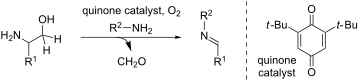
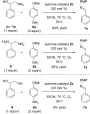
- scope of this methodology by employing a range of 1,2-amino alcohol substrates 1 (Table 2). As reported in Table 1, the reaction involving phenylglycinol gave the desired N-PMP imine (7a) in 85% yield (Table 2, entry 1). ortho-Substitution of the arene is reasonably well-tolerated, as 2



CF3SO2X (X = Na, Cl) as reagents for trifluoromethylation, trifluoromethylsulfenyl-, -sulfinyl- and -sulfonylation and chlorination. Part 2: Use of CF3SO2Cl
Beilstein J. Org. Chem. 2017, 13, 2800–2818, doi:10.3762/bjoc.13.273
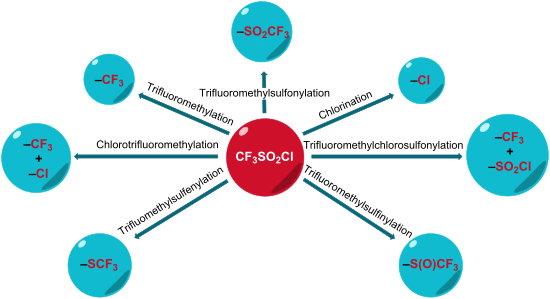
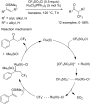
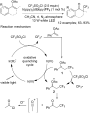
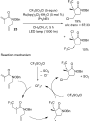
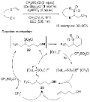
- visible light irradiation, a first SET reduction of CF3SO2Cl occurred, ultimately leading to the formation of the stabilised trifluoromethyl radical after releasing SO2 and chloride anion. This electron deficient radical was then added on the most electron-rich position of the arene substrate to yield








CF3SO2X (X = Na, Cl) as reagents for trifluoromethylation, trifluoromethylsulfenyl-, -sulfinyl- and -sulfonylation. Part 1: Use of CF3SO2Na
Beilstein J. Org. Chem. 2017, 13, 2764–2799, doi:10.3762/bjoc.13.272
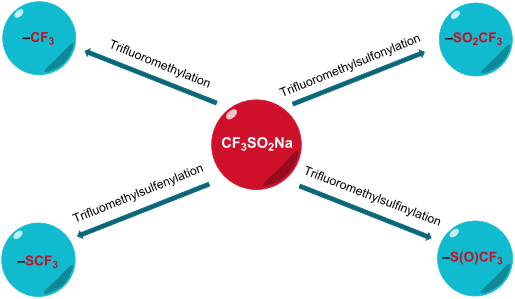
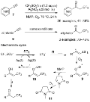
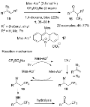
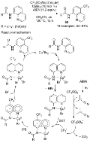
- . In the case of unsymmetrical biaryl substrates, mixtures of regioisomers at C4 and C5 were obtained (Scheme 48). In the reaction mechanism, PIFA played a dual role in the activation of the arene via a π-complex and in the generation of the CF3 radical from CF3SO2Na. More recently, Maruoka and co



















Binding abilities of a chiral calix[4]resorcinarene: a polarimetric investigation on a complex case of study
Beilstein J. Org. Chem. 2017, 13, 2698–2709, doi:10.3762/bjoc.13.268
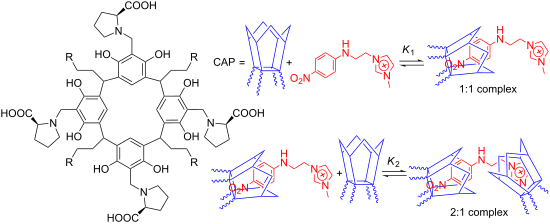
- (with methyl groups in place of the n-propyl groups at the methylene bridges), an average pKa value as large as 6.3 ± 1 per arene subunit has been estimated from titration curves, under the hypothesis that the four subunits behave equivalently [32]. In the latter case, the deprotonation of phenol groups
- progressive deprotonation, and the consequent presence of an increasing negative charge, are reasonable. It is worth recalling here that the cone conformation of the resorcinarene scaffold is stabilized by the possible formation of a hydrogen-bond network between pairs of phenol groups on adjacent arene units
- , a carbonyl band of fair intensity appears at 1727 cm−1, similar to the one expected for an undissociated carboxylic group. In turn, extensive hydrogen bonding affects the flexibility of the macrocycle scaffold, as well as the possible double free rotation of the arene–CH2–proline single bond–single




Syntheses, structures, and stabilities of aliphatic and aromatic fluorous iodine(I) and iodine(III) compounds: the role of iodine Lewis basicity
Beilstein J. Org. Chem. 2017, 13, 2486–2501, doi:10.3762/bjoc.13.246
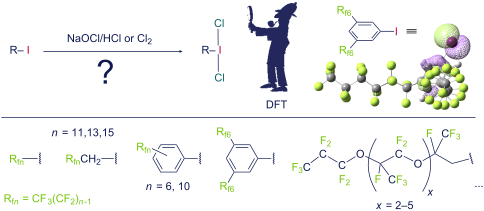
- "spacers" that electronically insulate the arene ring from the perfluoroalkyl groups, have been previously isolated [17]. As described below, the pursuit of the preceding objectives has met with both success and some unanticipated speed bumps, for which parallel computational studies have provided valuable
- -tagged arene C6H5CH2CH2CH2Rf8 gives a 49.5:50.5 CF3C6F11/toluene partition coefficient. Values for doubly tagged analogs fall into the range (90.7–91.2):(9.3–8.8) (o, m, p-isomers), and that for the triply tagged species 1,3,5-C6H3(CH2CH2CH2Rf8)3 is >99.7:<0.3 [30]. As noted above, longer perfluoroalkyl
- with at least two Rfn substituents per arene ring. Given the ready isolation of the dinitro-substituted aryliodine(III) dichloride II-Me in Scheme 1 [31], this was seen as a surefire objective. However, this was not to be, so the results in this and the following section are presented in inverse



One-pot syntheses of blue-luminescent 4-aryl-1H-benzo[f]isoindole-1,3(2H)-diones by T3P® activation of 3-arylpropiolic acids
Beilstein J. Org. Chem. 2017, 13, 2340–2351, doi:10.3762/bjoc.13.231
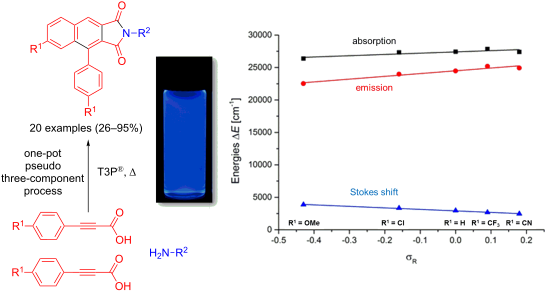
- use of phenylpropiolic acid chloride and phenylpropiolic acid as starting materials [45], and as well oxidative arene–alkyne cyclization with dichloro-5,6-dicyano-benzoquinone (DDQ) [46]. Based upon our experience in using propylphosphonic acid anhydride (T3P®) [47] as a condensation agent for in situ




Phosphonic acid: preparation and applications
Beilstein J. Org. Chem. 2017, 13, 2186–2213, doi:10.3762/bjoc.13.219
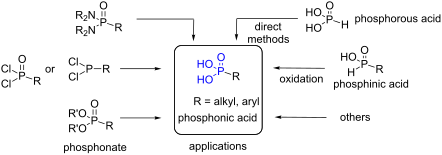
- dendrimers 67 [192]. The use of BrSiMe3 was also applied to diverse organometallic compounds as exemplified in Figure 20. This procedure was applicable to compounds featuring CpFe(CO)2 68 [193] or ferrocenyl 69 [194][195] moieties but also to palladium or platinium pincer complexes 70 [196] or arene–chrome


p-tert-Butylthiacalix[4]arenes functionalized by N-(4’-nitrophenyl)acetamide and N,N-diethylacetamide fragments: synthesis and binding of anionic guests
Beilstein J. Org. Chem. 2017, 13, 1940–1949, doi:10.3762/bjoc.13.188
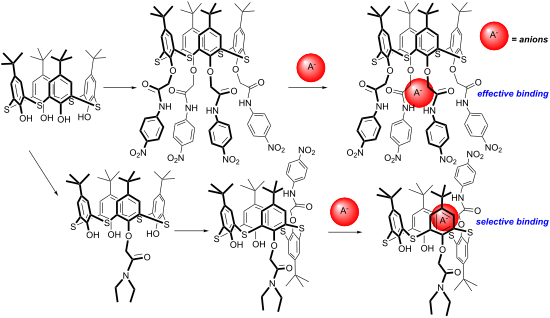
- receptors for F−, CH3CO2− and H2PO4− ions, which based on the synthesized thiacalix[4]arenes, have been obtained. It was shown that p-tert-butylthiacalix[4]arene tetrasubstituted at the lower rim by N-(4’-nitrophenyl)acetamide moieties bonded to the anions studied with association constants within the range
- receptor. In contrast to the 1,3-disubstituted macrocycle containing two N-(4’-nitrophenyl)acetamide moieties, the 1,2-disubstituted thiacalix[4]arene, which contains only one such fragment and a N,N-diethylacetamide moiety, selectively binds F− anions. Keywords: anion binding; synthesis; thiacalixarenes
- type of anion is needed. (Thia)calix[4]arene derivatives are a favorable platform for the design of such structures [24][25][26][27][28][29][30][31][32][33][34]. Due to their macrocyclic nature and the possibility to modify them in three different ways (upper and lower rims and bridge fragments), they


Synthesis of benzannelated sultams by intramolecular Pd-catalyzed arylation of tertiary sulfonamides
Beilstein J. Org. Chem. 2017, 13, 1932–1939, doi:10.3762/bjoc.13.187
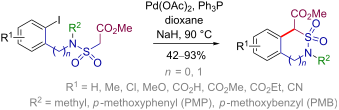
- , the tertiary analogue 5 underwent cyclization smoothly and rapidly (1 h) under the same conditions to furnish the benzannelated sultam 6 in 78% yield (Scheme 2). Thus, in order to enable the preparation of arene-annelated tertiary sultams of type 6 along this route, an effective and versatile access
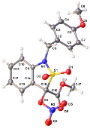
- approach to arene-annelated sultams. Pd-catalyzed cyclization of (2-iodophenyl)sulfonamides 3 and 5. Preparation of 4-methoxybenzyl-protected methyl 2-(N-o-iodoarylsulfamoyl)acetates 8. Reagents and conditions A: MeO2CCH2SO2Cl (2a), Py, MeCN, 60 °C, 48 h; conditions B: MeO2CCH2SO2Cl (2a), PhNEt2, CH2Cl2
- , rt, 20 h; conditions C: EtO2CCH(Me)SO2Cl (2b), Py, MeCN, 60 °C, 48 h. Synthesis of arene-annelated sultams 10 by Pd-catalyzed intramolecular arylation of a C–H acidic methylene group. Palladium-catalyzed transformation of N-(2-iodophenyl)-N-(4-methoxybenzyl-benzylsulfonamide 12. Ar = 4-MeOC6H4; a




Mechanochemical synthesis of small organic molecules
Beilstein J. Org. Chem. 2017, 13, 1907–1931, doi:10.3762/bjoc.13.186
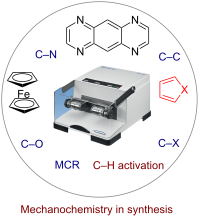
- ], carbon–heteroatom [41][42], metal–ligand coordination bonds [43], non-covalent interactions such as hydrogen bonds or π–π arene stacking interactions [44], etc. are popularly known in literature. In this review the efforts are given towards documentation of various mechanochemical reactions like organic
- palladium-catalyzed site selective mechanochemical dehydrogenative C–H/C–H arylation between oxime and arene moiety for the construction of Csp2–Csp2 bond with high para-selectivity of arene component via LAG. Using 10 mol % of Pd(OAc)2, 2.0 equiv of Na2S2O8 and 1.0 equiv TfOH the biaryls were synthesized
- using dioxazolone as the amide source under ball milling conditions (Scheme 54). Using 5 mol % of Rh catalyst, 20 mol % of AgSbF6 and 20 mol % of AgOAc they have successfully achieved up to 99% of ortho-amidation product with diversely substituted arene moiety [186]. Recently Bolm and co-workers


Iodoarene-catalyzed cyclizations of N-propargylamides and β-amidoketones: synthesis of 2-oxazolines
Beilstein J. Org. Chem. 2017, 13, 1823–1827, doi:10.3762/bjoc.13.177
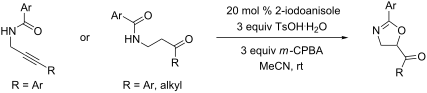
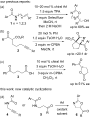
- studied with various arylamide and alkyne substituents. All functional groups were well tolerated apart from an alkyne terminated with an alkyl substituted arene which led to a diminished yield of product, i.e., 6g. The mechanism of this cyclization is proposed to proceed though activation of the alkyne






An effective Pd nanocatalyst in aqueous media: stilbene synthesis by Mizoroki–Heck coupling reaction under microwave irradiation
Beilstein J. Org. Chem. 2017, 13, 1717–1727, doi:10.3762/bjoc.13.166
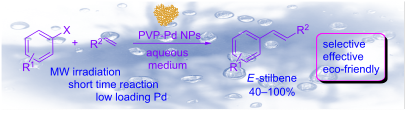
- yields. When an ortho-substituted arene, 1g, was used, product 9 was obtained in only moderate yield compared with para-substituted stilbene 8 synthesized under the same conditions (entries 6 and 7, Table 2). This behavior can be explained by the steric hindrance caused by the methylene group in ortho


Oxidative dehydrogenation of C–C and C–N bonds: A convenient approach to access diverse (dihydro)heteroaromatic compounds
Beilstein J. Org. Chem. 2017, 13, 1670–1692, doi:10.3762/bjoc.13.162
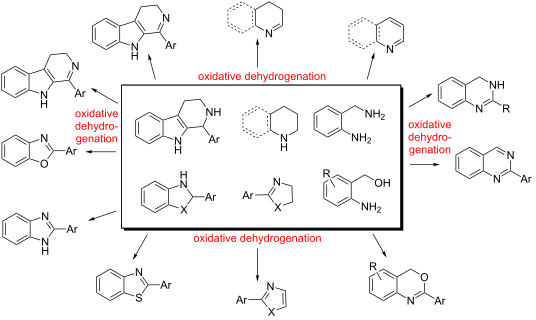
- quinazolinones. A putative mechanism involved the homolysis of DTBP to generate tert-butoxide radicals, which in turn abstracts a proton radical from the methyl(hetero)arene to facilitate the formation of a benzylic radical. The benzylic radical couples with o-aminobenzylamide to generate H. It then interacts


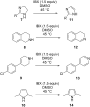


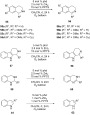


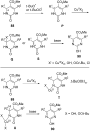


Sustainable synthesis of 3-substituted phthalides via a catalytic one-pot cascade strategy from 2-formylbenzoic acid with β-keto acids in glycerol
Beilstein J. Org. Chem. 2017, 13, 1425–1429, doi:10.3762/bjoc.13.139
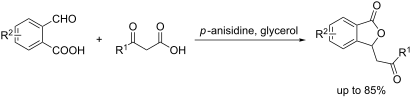
- limitations of this one-pot cascade aldol/cyclization system. Typical results are shown in Scheme 2. The annulation proceeded smoothly with β-keto acids 2 bearing diverse arene substituents to provide the corresponding isobenzofuran-1(3H)-ones in moderate to excellent yields. For para-substituted β-keto acids



Regioselective (thio)carbamoylation of 2,7-di-tert-butylpyrene at the 1-position with iso(thio)cyanates
Beilstein J. Org. Chem. 2017, 13, 1032–1038, doi:10.3762/bjoc.13.102
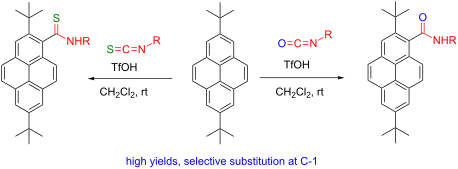
- .) [1][2][3][4][5][6][7]. Since 1 is an electron-rich arene, aromatic electrophilic substitution seems to be the simplest method for this purpose, and a plethora of substituted pyrenes have been synthesized in this way [1]. As is shown in Figure 1, the most reactive in such reactions are positions 1, 3
- with the arene ring of the protonated aromatic iso(thio)cyanate during formation of the Wheland complex, which may direct the electrophilic attack partly to the 4-position of the pyrene moiety. To the best of our knowledge, the reaction reported here is the first example of a C1-selective substitution