


Search results
Search for "cancer cells" in Full Text gives 172 result(s) in Beilstein Journal of Organic Chemistry.
The regulation and biosynthesis of antimycins
Beilstein J. Org. Chem. 2013, 9, 2556–2563, doi:10.3762/bjoc.9.290
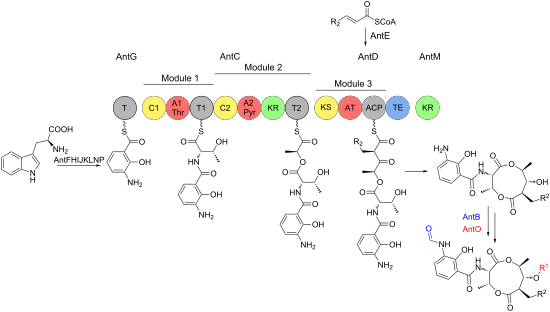
- over-produced in cancer cells that are resistant to apoptosis-inducing chemotherapy agents, so antimycins have great potential as anticancer drugs used in combination with existing chemotherapeutics. Here we review what is known about antimycins, the regulation of the ant gene cluster and the unusual
- study the structure and function of cytochromes [27]. More recently antimycins have been shown to be potent and selective inhibitors of the mitochondrial Bcl-2/Bcl-xL-related anti-apoptotic proteins [28]. Over-production of Bcl-2/Bcl-xL-related proteins in cancer cells confers resistance to multiple
- inhibits the respiratory chain, but still promotes apoptosis in cells over-producing Bcl-2-related proteins [29]. This suggests antimycin derivatives could be used alongside traditional apoptosis-inducing chemotherapeutics to block drug resistance and kill cancer cells [30]. Therefore, there is significant


Flow synthesis of a versatile fructosamine mimic and quenching studies of a fructose transport probe
Beilstein J. Org. Chem. 2013, 9, 2022–2027, doi:10.3762/bjoc.9.238
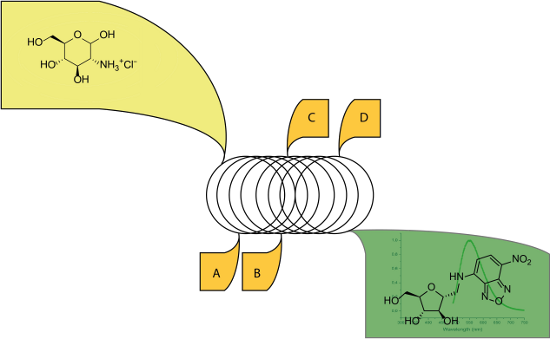
- in fructose exhibit increased rates of metabolic disorders and aggressive cancers [1][2]. Since the landmark reports from Warburg [3], researchers have recognized that cancer cells/tissues consume more carbohydrates than normal tissues, fueling rapid growth and proliferation [4]. While cancer cells
- fewer tissues [2]. We are developing probes that are selectively transported by Glut5. Using design principles gleaned from the Holman group [13][14][15] as well as other fructose analogue research [16], we synthesized NBDM [17] and demonstrated that this probe is transported into cancer cells known to


Design and synthesis of tag-free photoprobes for the identification of the molecular target for CCG-1423, a novel inhibitor of the Rho/MKL1/SRF signaling pathway
Beilstein J. Org. Chem. 2013, 9, 966–973, doi:10.3762/bjoc.9.111
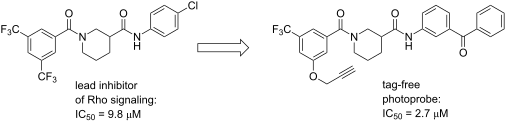
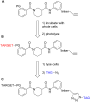
- photolabeling studies with 24 were undertaken in PC-3 prostate cancer cells. Intact cells were treated with 0.3 µM 24 for 30 min. To facilitate the identification of specifically labeled proteins, a parallel competition experiment was also performed by treating cells with 0.3 µM 24 and a large excess (10 µM) of
- with the most potent photoprobe 24 in whole prostate cancer cells was successful at detecting specific binding to one or more proteins at 24 kDa. Future work will focus on identifying the labeled protein(s). We first plan to repeat the photolabeling study with 24 and tag the labeled proteins by
- prostate cancer migration. A. Cellular migration determined by wound assay. PC-3 prostate cancer cells were grown to confluence in 12-well plates and a scratch was made with a 200 µL pipette. Images were taken at the beginning of the experiment and after 24 h in DMEM containing 0.5% FBS and the indicated




The conjugation of nonsteroidal anti-inflammatory drugs (NSAID) to small peptides for generating multifunctional supramolecular nanofibers/hydrogels
Beilstein J. Org. Chem. 2013, 9, 908–917, doi:10.3762/bjoc.9.104
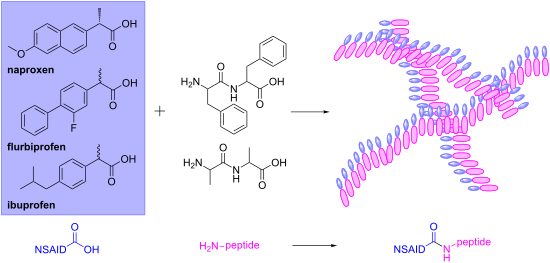
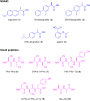
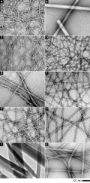
- and hydrogels. Besides being used for three-dimensional cell cultures [32], supramolecular hydrogels also find applications in typing [33] and against bacteria [34][35][36][37][38], and in enzyme assays [23][39], catalysis [40], and inhibiting cancer cells [41][42][43][44]. These successful examples





Synthesis and evaluation of cell-permeable biotinylated PU-H71 derivatives as tumor Hsp90 probes
Beilstein J. Org. Chem. 2013, 9, 544–556, doi:10.3762/bjoc.9.60
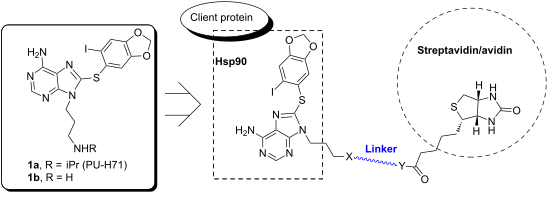
- purpose of identifying compounds capable of permeating cancer-cell membranes, binding selectively to intracellular oncogenic Hsp90 in live cancer cells, and able to trap and isolate Hsp90 bound to tumor-specific onco-client proteins. Because the biotin tag enables pull-down experiments through subsequent
- live cancer cells and bind to oncogenic Hsp90 Having shown that each of the prepared biotinylated molecules retained good affinity for Hsp90, we next evaluated these compounds in two functional read-outs that together measure that the probe has entered a live cancer cell and once inside the cell, has
- iPr (on derivative 2f) exhibited distinct behaviors, with only 2g appearing to be substantially taken up by the cancer cell. Requirement 3: Bind concomitantly to Hsp90 and streptavidin Having identified which compounds were capable or not of permeating live cancer cells, we next wanted to determine


A peptidic hydrogel that may behave as a “Trojan Horse”
Beilstein J. Org. Chem. 2013, 9, 417–424, doi:10.3762/bjoc.9.44
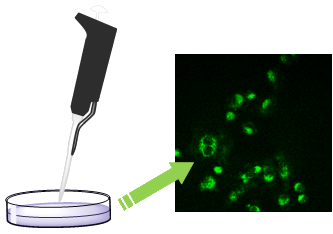
- collected some information on the ability of fluorescent hydrogels 6–9 to cross the cellular membrane of the cancer cells, by means of confocal microscopy (Figure 4). It is worth mentioning that gel 6 is made of B, while gels 7–9 are made of A, doped with one of the dansyl containing compounds B–D. IGROV-1


From bead to flask: Synthesis of a complex β-amido-amide for probe-development studies
Beilstein J. Org. Chem. 2013, 9, 260–264, doi:10.3762/bjoc.9.31
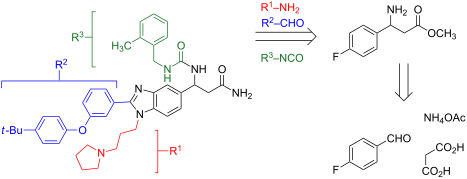
- that modulates the activity of cyclin kinases [13][14][15]. One function of p21 is that it acts downstream of p53 to repair DNA-damaged cells and may function to convey anti-apoptotic activity to cancer cells (Figure 1) [13]. As such, an inhibitor of p21 could sensitize malignant cells to DNA-damaging



Cyclodextrin-based nanosponges as drug carriers
Beilstein J. Org. Chem. 2012, 8, 2091–2099, doi:10.3762/bjoc.8.235
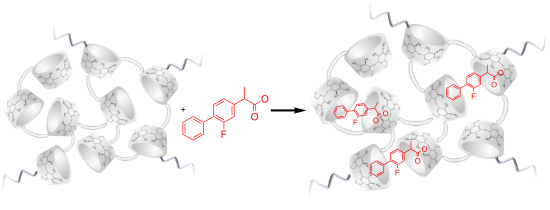
- that delivery of paclitaxel via nanosponges increased the amount of paclitaxel entering cancer cells and lowered the IC50 of paclitaxel, thereby enhancing its pharmacological effect [36]. Sustained delivery system Modified-release dosage forms offer a number of advantages over the conventional release


Regioselective synthesis of 7,8-dihydroimidazo[5,1-c][1,2,4]triazine-3,6(2H,4H)-dione derivatives: A new drug-like heterocyclic scaffold
Beilstein J. Org. Chem. 2012, 8, 1584–1593, doi:10.3762/bjoc.8.181
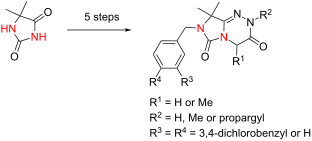
- system (CNS), including anxiety, convulsions and cognitive disorders [7]. Novel fused 1,2,4-triazine-4(6H)-ones 2 showed selective cytotoxicity at micromolar concentrations against a wide range of cancer cells [1][8], while other derivatives of 2 exhibited analgesic [9], antibacterial, and antiviral


Control over molecular motion using the cis–trans photoisomerization of the azo group
Beilstein J. Org. Chem. 2012, 8, 1071–1090, doi:10.3762/bjoc.8.119
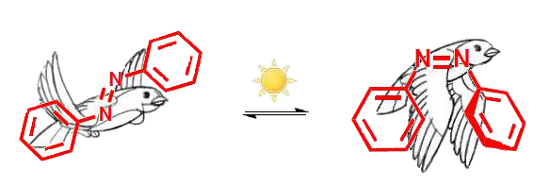
- , which is housed inside. The LAMs (CPT) were incubated for 3 h with cancer cells in darkness. These cells are irradiated for 5 min at 0.1 W∙cm−2 at λ = 413 nm, where both isomers have the same extinction coefficient promoting a continuous exchange between both trans–cis isomers, and then they were


Synthetic glycopeptides and glycoproteins with applications in biological research
Beilstein J. Org. Chem. 2012, 8, 804–818, doi:10.3762/bjoc.8.90
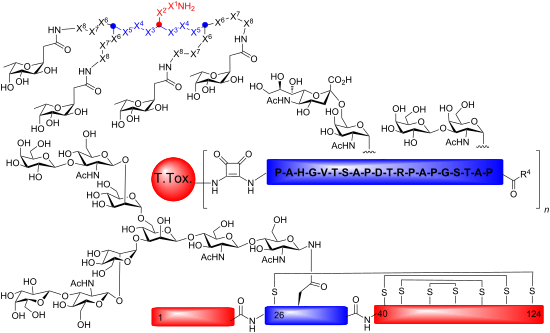
- present in the vaccines. FACS analysis with serum antibodies induced by the MUC1 vaccines 7–10 showed that they all recognize MCF-7 breast-cancer cells. The serum from mice immunized with vaccine 9 was further evaluated through mammary carcinoma tissue-staining experiments. A gradual increase of the


Natural product biosyntheses in cyanobacteria: A treasure trove of unique enzymes
Beilstein J. Org. Chem. 2011, 7, 1622–1635, doi:10.3762/bjoc.7.191
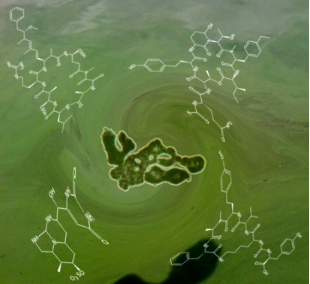
- toxicity to cancer cells grown on solid agar as well as in the case of in vivo mouse models [51]. The corresponding hybrid PKS/NRPS pathway was identified through a single-cell genome-amplification approach and features a PKS-type loading module and nine extension modules (four PKS and five NRPS) [52


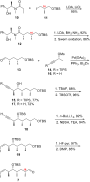
Efficient syntheses of 25,26-dihydrodictyostatin and 25,26-dihydro-6-epi-dictyostatin, two potent new microtubule-stabilizing agents
Beilstein J. Org. Chem. 2011, 7, 1372–1378, doi:10.3762/bjoc.7.161
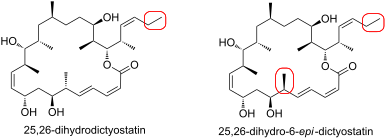
- comparable to (−)-dictyostatin and discodermolide. Each compound also inhibited the growth of cell lines resistant to paclitaxel and epothilone B at low nanomolar concentrations, synergized with paclitaxel in MDA-MB-231 human breast cancer cells, and had anti-angiogenic activity in transgenic zebra fish




Fine-tuning alkyne cycloadditions: Insights into photochemistry responsible for the double-strand DNA cleavage via structural perturbations in diaryl alkyne conjugates
Beilstein J. Org. Chem. 2011, 7, 813–823, doi:10.3762/bjoc.7.93
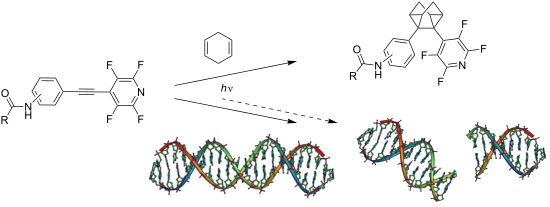
- lysine (C-lysine conjugates in Figure 1) displayed a combination of unique properties such as the ability to cause true double-strand (ds) DNA cleavage [24], amplification of ds cleavage dramatically at the lower pH of cancer cells [25], as well as the ability to recognize terminal phosphate monoester



Application of the diastereoselective photodeconjugation of α,β-unsaturated esters to the synthesis of gymnastatin H
Beilstein J. Org. Chem. 2011, 7, 151–155, doi:10.3762/bjoc.7.21
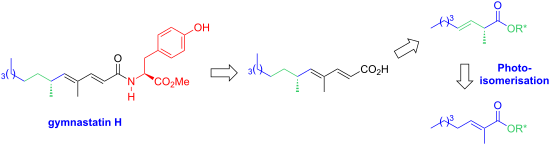
- exhibit antibacterial activity and cytotoxities against cultured P388 cancer cells. Interestingly, the same acid chain with an R-configuration has been identified in other structures like dankastatins [11] isolated from the same source, aranorosin (11) isolated from Pseudoarachniotus roseus [12] and


Palladium- and copper-mediated N-aryl bond formation reactions for the synthesis of biological active compounds
Beilstein J. Org. Chem. 2011, 7, 59–74, doi:10.3762/bjoc.7.10
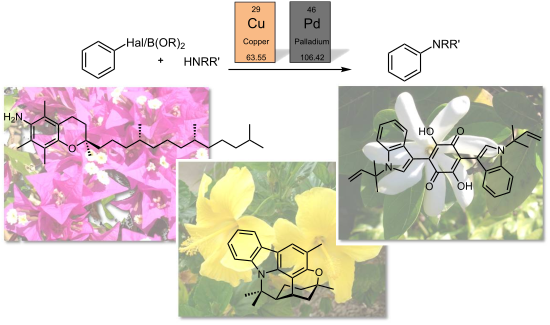
- , ortho-substituted arylboronic reagents were unreactive. Although the coupling resulted only in moderate yields, a new anti-cancer drug candidate with improved potency on human pancreatic cancer cells, compared to gemcitabine (114), was obtained [80]. Conclusion Palladium- and copper-mediated N


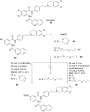


Total synthesis of (±)-coerulescine and (±)-horsfiline
Beilstein J. Org. Chem. 2010, 6, 876–879, doi:10.3762/bjoc.6.103

- against human breast cancer cells. This work led to intense interest in the total synthesis of these alkaloids and their derivatives. Despite previous intensive studies, the total synthesis of coerulescine (1) and horsfiline (2) remain attractive targets for demonstrating the efficacy of newer synthetic


(Pseudo)amide-linked oligosaccharide mimetics: molecular recognition and supramolecular properties
Beilstein J. Org. Chem. 2010, 6, No. 20, doi:10.3762/bjoc.6.20
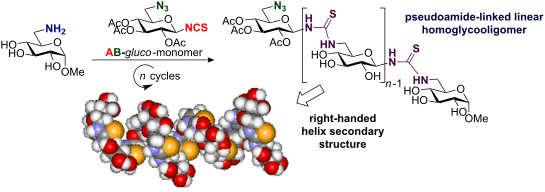
- scaffolds by investigating their structural and functional impact. Currently, oligosaccharides are known to have functions in a broad variety of cell–cell interactions related to invading bacteria, viruses and cancer cells [1][2][3][4] and to play central roles in post-translational modifications of
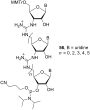
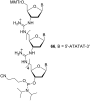
- telomer replacement in cancer cells is by inhibiting the telomerase enzyme by blocking the telomeric RNA 11-base template (5′-CUAACCCAAC-3′). For this purpose, Bruice and co-workers [107] prepared complementary DNG (5′-GATTGGGATTG-3′) to telomeric RNA complex. Binding studies demonstrated that the DNG



A short stereoselective synthesis of (+)-(6R,2′S)-cryptocaryalactone via ring- closing metathesis
Beilstein J. Org. Chem. 2009, 5, No. 14, doi:10.3762/bjoc.5.14
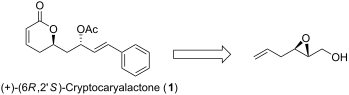
- the sub-classes of these 5,6-dihydro-2H-pyran-2-one compounds is the styryl lactones which possess a styryl moiety side chain. The styryl moiety of goniothalamin has been shown to be of importance for its cytotoxic effect on different cancer cells as well as its antimicrobial, larvicidal activity and


Recent progress on the total synthesis of acetogenins from Annonaceae
Beilstein J. Org. Chem. 2008, 4, No. 48, doi:10.3762/bjoc.4.48
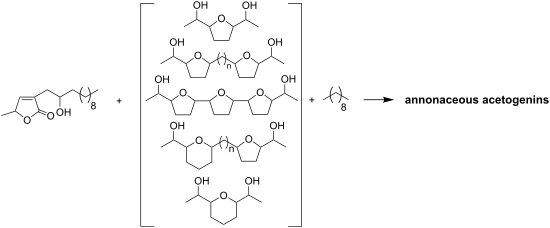
- [41]. Total synthesis of mosin B Mosin B (94) is a mono-THF acetogenin isolated by McLaughlin’s group [47] from the bark of Annona squamosa and shows selective cytotoxic activity against the human pancreatic tumor cell line, pancreatic cancer cells (PACA-2) (ED50 = 2.5 × 10⁻⁴ µg/mL), with a potency


Cimicifoetisides A and B, two cytotoxic cycloartane triterpenoid glycosides from the rhizomes of Cimicifuga foetida, inhibit proliferation of cancer cells
Beilstein J. Org. Chem. 2007, 3, No. 3, doi:10.1186/1860-5397-3-3
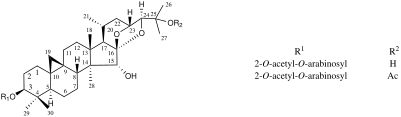
- cytotoxicity against rat EAC (Ehrlich ascites carcinoma) and MDA-MB-A231 (human breast cancer) cells with IC50 values of 0.52 and 6.74 μM for 1, and 0.19 and 10.21 μM for 2, suggesting their potential for further investigation as anti-cancer agents. 1. Background Black cohosh (Cimicifuga racemosa (L.) Nutt


Colchitaxel, a coupled compound made from microtubule inhibitors colchicine and paclitaxel
Beilstein J. Org. Chem. 2006, 2, No. 13, doi:10.1186/1860-5397-2-13
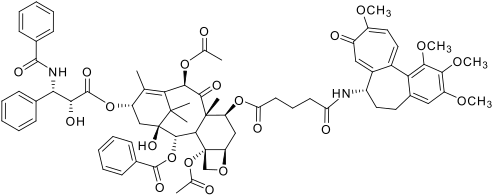
- classification methods, we showed that cells could be classified by reference to a database of known normal and cancerous cell phenotypes. Promoters caused loss of properties specific to normal cells and gain of properties of cancer cells. Other compounds, including colchicine, had a similar effect. Colchicine
- shifted their shape phenotype to one resembling that of cancer cells [16]. When supplied along with paclitaxel, however, colchicine shifted the phenotype to one resembling normal cells [17]. Similar combinations of microtubule inhibitors, made up of docetaxel with microtubule depolymerizing agent, 5
- the properties of cancer cells. Experimental General Analytical Procedures Paclitaxel was obtained from Dabur, Inc., India. Colchicine was purchased from Acros Organics (Ceel, Belgium). Both were judged >97% pure after assessment by NMR, HPLC, and verification of m.p. All melting points were obtained





