


Search results
Search for "gold" in Full Text gives 324 result(s) in Beilstein Journal of Organic Chemistry. Showing first 200.
A practical and efficient approach to imidazo[1,2-a]pyridine-fused isoquinolines through the post-GBB transformation strategy
Beilstein J. Org. Chem. 2017, 13, 817–824, doi:10.3762/bjoc.13.82
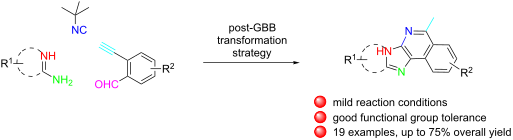
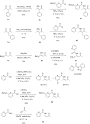
- synthesis of the biologically intriguing imidazo[1,2-a]pyridine-fused isoquinoline systems from readily available starting materials was achieved through the Groebke–Blackburn–Bienaymé reaction followed by a gold-catalyzed cyclization strategy. The synthetic approach is characterized by mild reaction
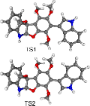
- acetylene unit may then undergo a sequential 6-exo-dig cyclization/retro-ene reaction to form the desired imidazo[1,2-a]pyridine-fused isoquinoline 6a. The cyclization reaction could be realized with the aid of silver or gold catalysts [51][52]. With this idea in mind, we commenced our studies by


Fluorescent carbon dots from mono- and polysaccharides: synthesis, properties and applications
Beilstein J. Org. Chem. 2017, 13, 675–693, doi:10.3762/bjoc.13.67
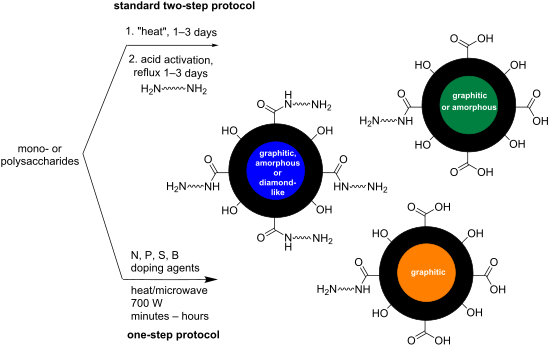
- then effectively coupled to hyaluronate (a long-chain polymer containing repeating disaccharide units of glucuronate-β1->3-N-acetylglucosamine) stabilised gold nanoparticles (AuNPs) and used as a sensitive and selective probe to monitor hyaluronidase enzymatic activity, which is an enzyme that breaks


Sulfamide chemistry applied to the functionalization of self-assembled monolayers on gold surfaces
Beilstein J. Org. Chem. 2017, 13, 648–658, doi:10.3762/bjoc.13.64
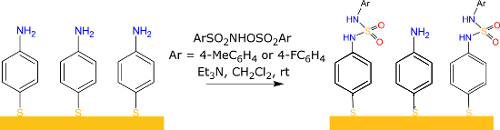
- Surface, UMR CNRS 7197, 4 place Jussieu, 75005 Paris, France Université de Nantes, CNRS, CEISAM, UMR 6230, Faculté des Sciences et des Techniques, rue de la Houssinière, BP 92208, 44322 Nantes Cedex 3, France 10.3762/bjoc.13.64 Abstract Aniline-terminated self-assembled monolayers (SAMs) on gold surfaces
- contact angle (WCA) measurements, Fourier-transform infrared reflection absorption spectroscopy (IRRAS) and X-ray photoelectron spectroscopy (XPS). Keywords: gold surfaces; hydrolysis; IRRAS; reversibility; SAM; sulfamide; XPS; Introduction Self-assembled monolayers (SAMs) have raised considerable
- interest in the past decades because of their potential applications in various areas such as biomaterials, tissue engineering, biosensors and electronics [1][2][3]. The seminal work of Nuzzo and Allara on the adsorption of disulfides on gold surface has triggered numerous research activities in the




Fast and efficient synthesis of microporous polymer nanomembranes via light-induced click reaction
Beilstein J. Org. Chem. 2017, 13, 558–563, doi:10.3762/bjoc.13.54
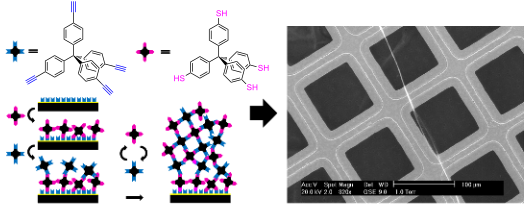
- well as the molecular structures of the reactants used in the described reaction. We repeated the described reaction cycle 20 times to obtain CMPs thin films on functionalized gold wafers. Characterization of CMP thin films We characterized the reaction using infrared reflection absorption spectroscopy
- (methyl methacrylate) (PMMA). Upon substrate dissolution, we transferred the PMMA stabilized CMP thin film to a fresh gold substrate. After drying, we dissolved the PMMA layer in acetone, leaving only the CMP thin film. We then investigated the thickness of the film by an atomic force microscope (AFM
- -methylpropan-1-one), iodine and potassium iodide were purchased from Sigma-Aldrich. TPM-SH [30] and TPM-alkyne [31] were synthesized as described in the literature. Substrates: The sacrificial substrate consists of a 150 nm gold film on mica. For analytical measurements, we transferred the membrane to a Si(100


Effect of the ortho-hydroxy group of salicylaldehyde in the A3 coupling reaction: A metal-catalyst-free synthesis of propargylamine
Beilstein J. Org. Chem. 2017, 13, 552–557, doi:10.3762/bjoc.13.53
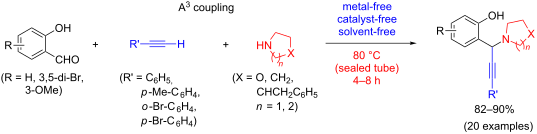
- known as A3 coupling reaction, remains the most common and straightforward method for the synthesis of propargylamine. The A3 coupling reaction is reported under transition-metal-catalyzed conditions using copper [12][17][18][19], gold [17][20][21], silver [17][22], zinc [17][23], nickel [24], iron [25


Synthesis of 1-indanones with a broad range of biological activity
Beilstein J. Org. Chem. 2017, 13, 451–494, doi:10.3762/bjoc.13.48


Computational methods in drug discovery
Beilstein J. Org. Chem. 2016, 12, 2694–2718, doi:10.3762/bjoc.12.267
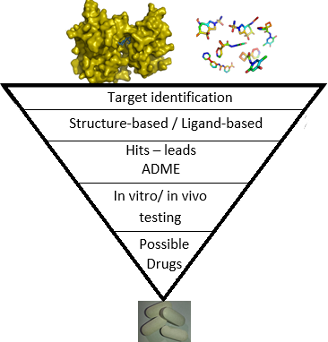
- poses by looking at steric overlaps was published in the 1980s [129]. Ever since then many docking algorithms have been developed [130][131][132][133][134][135]. Popular molecular docking programs include Glide [131], Fred [136], AutoDock3 [137], AutoDock Vina [134], GOLD [138] and FlexX [139
- function that combines knowledge-based and empirical scoring functions [134]. GOLD uses a force-field based scoring function and allows the ligand to be fully flexible. It allows target side chain flexibility to be taken into account. FlexX is an incremental fragment-based docking algorithm where the



From betaines to anionic N-heterocyclic carbenes. Borane, gold, rhodium, and nickel complexes starting from an imidazoliumphenolate and its carbene tautomer
Beilstein J. Org. Chem. 2016, 12, 2673–2681, doi:10.3762/bjoc.12.264
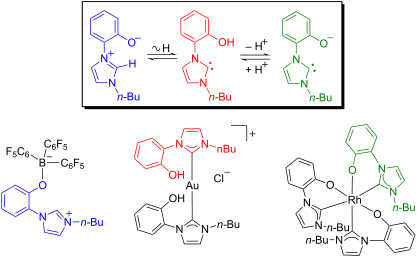
- .12.264 Abstract The mesomeric betaine imidazolium-1-ylphenolate forms a borane adduct with tris(pentafluorophenyl)borane by coordination with the phenolate oxygen, whereas its NHC tautomer 1-(2-phenol)imidazol-2-ylidene reacts with (triphenylphosphine)gold(I) chloride to give the cationic NHC complex [Au
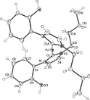
- adduct displays two different conformers in the unit cell which differ inter alia in the torsion angles around the Nimidazole–Cphenol bonds [−53.32(16)° vs 114.12(13)°] and the Cphenyl–O bonds [49.43(17)° vs −15.29(18)°] (Figure 2). A gold complex of the N-heterocyclic carbene tautomer 6B can be obtained
- on reaction with (triphenylphosphine)gold(I) chloride in boiling anhydrous THF under a nitrogen atmosphere, under which conditions the colorless gold complex [Au(6B)2][Cl] (9) is formed in 60% yield (Scheme 1). The protons of the OH resonate at δ = 10.34 ppm in DMSO-d6, and the 13C NMR chemical shift




Efficient mechanochemical synthesis of regioselective persubstituted cyclodextrins
Beilstein J. Org. Chem. 2016, 12, 2364–2371, doi:10.3762/bjoc.12.230
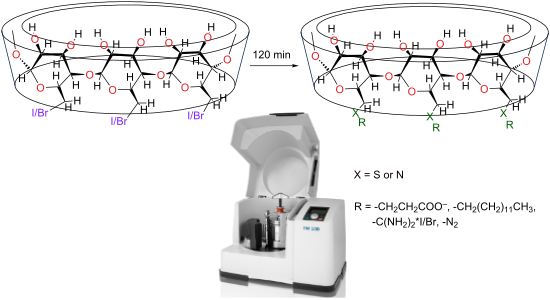
- well as solvent impurities increase synthesis and purification costs and time. Selectively per-6-thiolated CDs are also used in gold nanoparticle chemistry, particularly in electrochemical sensors [17]. Thiourea (TU) is one of the best precursors of those CDs because as the halogen is exchanged to the


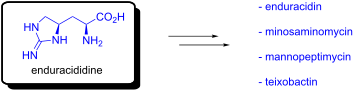
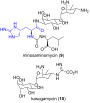
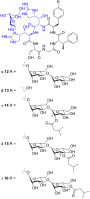
Enduracididine, a rare amino acid component of peptide antibiotics: Natural products and synthesis
Beilstein J. Org. Chem. 2016, 12, 2325–2342, doi:10.3762/bjoc.12.226
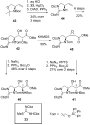
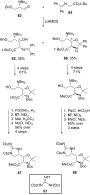
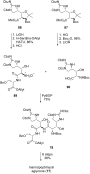
- reaction site and poor compatibility of the cyclic guanidine motif with Lewis acids. Initial attempts to glycosylate cyclic guanidine 91 using an array of donors under Lewis acidic or basic conditions failed to provide access to N-mannosylguanidine 92 (Scheme 18). However, gold(I) mediated [71] N







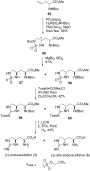

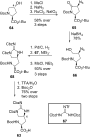

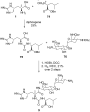



Tunable microwave-assisted method for the solvent-free and catalyst-free peracetylation of natural products
Beilstein J. Org. Chem. 2016, 12, 2222–2233, doi:10.3762/bjoc.12.214
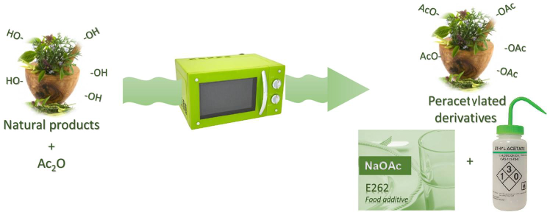
- carrier gas) and by an DSQ II mass detector. Chromatography was performed using a Thermo Scientific Dionex Ultimate 3000 RS, injecting directly onto a Thermo Scientific Hypersil Gold C18 column (50 × 2.1 mm, 1.9 µm particle size), equilibrated in 95% solvent A (0.1% aqueous solution of formic acid), 5


Thiophene-forming one-pot synthesis of three thienyl-bridged oligophenothiazines and their electronic properties
Beilstein J. Org. Chem. 2016, 12, 2055–2064, doi:10.3762/bjoc.12.194
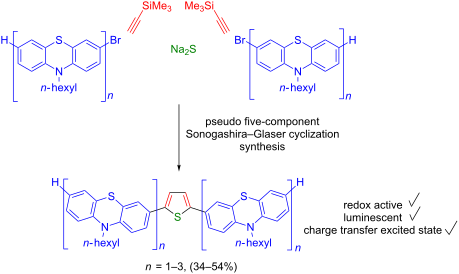
- to form self-assembled monolayers on gold [69][70][71] as well as on zinc and iron oxide surfaces [72]. Conceptually, thienyl-bridged oligophenothiazines can be considered as a novel type of structurally well-defined electron-rich oligophenothiazine–thiophene hybrids (Figure 1). Thereby, the strong


Varioloid A, a new indolyl-6,10b-dihydro-5aH-[1]benzofuro[2,3-b]indole derivative from the marine alga-derived endophytic fungus Paecilomyces variotii EN-291
Beilstein J. Org. Chem. 2016, 12, 2012–2018, doi:10.3762/bjoc.12.188
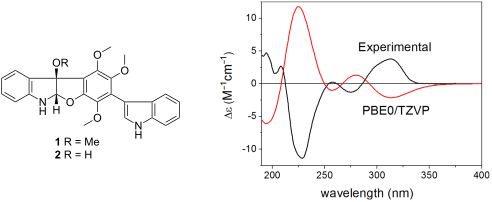
- an Optical Activity AA-55 polarimeter. UV spectra were measured by a Lengguang Gold S54 photometer. ECD data were collected using JASCO J-715 or J-810 spectropolarimeters. NMR data were recorded on a Bruker Avance 500 MHz spectrometer with TMS as internal standard. Low and high resolution ESI-mass



Organic chemistry meets polymers, nanoscience, therapeutics and diagnostics
Beilstein J. Org. Chem. 2016, 12, 1638–1646, doi:10.3762/bjoc.12.161
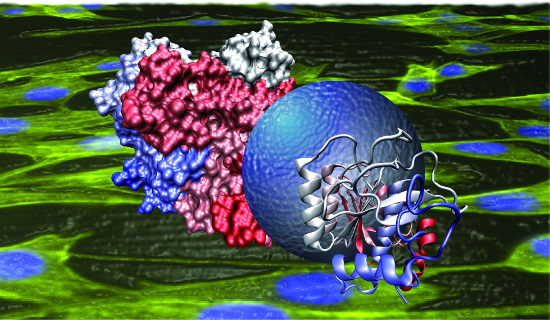
- when we demonstrated very efficient DNA transfection (i.e., gene delivery) using gold nanoparticles [55]. In later work we improved on our gene delivery vehicles [56], demonstrated the delivery of siRNA [57] and enzymes [58] using nanoparticle assemblies. All of these systems (as well as essentially
- organs – after shooting them into mice [74]. More recently, we bought an inductively coupled plasma (ICP) mass spectrometer that allows us to quantify elements. We have used ICP together with LDI to determine the stability of quantum dots [75] and gold nanoparticles in cells [76]. Once again, a tribute
- breakthrough occurred at the Fall 2006 ACS meeting where the ever-charming Uwe Bunz and I had the simultaneous inspiration of using Uwe's highly fluorescent poly(phenylene ethynelene) "molecular wire" polymers as transducers. These polymers would be quenched by the gold core of the nanoparticles while bound




Beta-hydroxyphosphonate ribonucleoside analogues derived from 4-substituted-1,2,3-triazoles as IMP/GMP mimics: synthesis and biological evaluation
Beilstein J. Org. Chem. 2016, 12, 1476–1486, doi:10.3762/bjoc.12.144
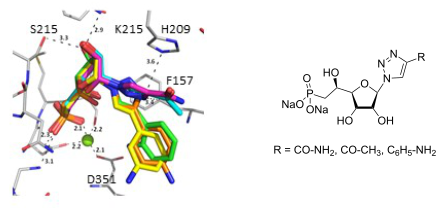
- which they block the enzyme activity. For this purpose, a SAR study was carried out by molecular docking. Attempts to make a direct correlation between the inhibitory activity and the gold-computed docking score (Table 2) were unsuccessful. Indeed, all compounds exhibited a similar score with a value


Stereodynamic tetrahydrobiisoindole “NU-BIPHEP(O)”s: functionalization, rotational barriers and non-covalent interactions
Beilstein J. Org. Chem. 2016, 12, 1453–1458, doi:10.3762/bjoc.12.141
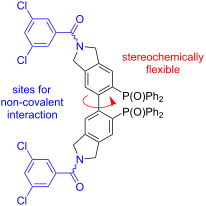
- ][6], palladium [7][8], platinum [9][10] and gold [11][12][13] in combination with chiral co-ligands or counter ions that are used after alignment of the ligand’s axial chirality. One major advantage of stereodynamic ligands is that there is no need for separate preparation of one ligand enantiomer as


3,6-Carbazole vs 2,7-carbazole: A comparative study of hole-transporting polymeric materials for inorganic–organic hybrid perovskite solar cells
Beilstein J. Org. Chem. 2016, 12, 1401–1409, doi:10.3762/bjoc.12.134
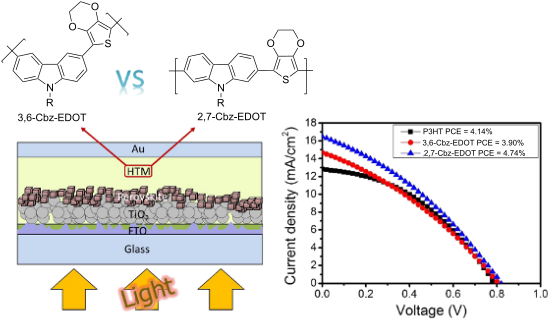
- transporting materials were deposited by spin-coating a solution of P3HT, 3,6-Cbz-EDOT, or 2,7-Cbz-EDOT in chlorobenzene (7.82 g L−1). All hole-transporting layers were dried in the dark. The thickness of the hole-transporting layers was about 30 nm. Finally, gold (80 nm) was thermally evaporated on the top of


Synthesis of 2-substituted tetraphenylenes via transition-metal-catalyzed derivatization of tetraphenylene
Beilstein J. Org. Chem. 2016, 12, 1302–1308, doi:10.3762/bjoc.12.122
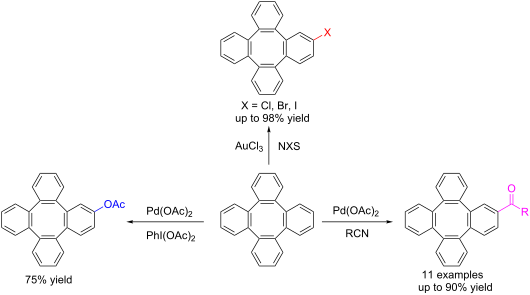
- acetoxylation a highly interesting reaction. The Sanford and Wang group, respectively, developed a highly efficient palladium and gold-catalyzed direct acetoxylation of arenes with iodobenzene diacetate [48][49]. Based on these excellent works, we surveyed the reaction conditions for the acetoxylation of
- halogenation of tetraphenylene attracted our attention. The Wang group reported an efficient and mild protocol for a gold-catalyzed direct C–H halogenation of arenes with N-halosuccinimides [56][57]. Therefore, we initially investigated the chlorination of tetraphenylene by subjecting it to Wang’s conditions


Synthesis of highly functionalized 2,2'-bipyridines by cyclocondensation of β-ketoenamides – scope and limitations
Beilstein J. Org. Chem. 2016, 12, 1170–1177, doi:10.3762/bjoc.12.112
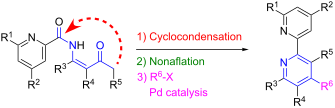
- amide and but-3-yn-2-one (as an equivalent of 3-oxobutanal) using methanol as solvent in a sealed tube [29]. Disappointingly, the maximum yield for compound 3h was only 22%. Many attempts to improve this result – including gold catalysis [30] – either led to lower yields or no conversion at all [31]. We




Chiral cyclopentadienylruthenium sulfoxide catalysts for asymmetric redox bicycloisomerization
Beilstein J. Org. Chem. 2016, 12, 1136–1152, doi:10.3762/bjoc.12.110
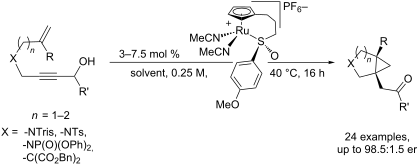
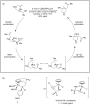
- rhodium first undergoes oxidative cyclization with the vinylcyclopropane prior to alkyne insertion. The asymmetric enyne cycloisomerization reaction has been shown to be instrumental in the construction of medicinal chemistry targets. For example, the Fürstner group realized that gold catalysis would be
- bicycloisomerization reaction (vide infra). Unlike ruthenium and palladium enyne cycloisomerization, which operate via metallacycle formation or hydrometallation, gold acts as a π-acid, increasing the electrophilicity of the alkyne by η2 coordination. The pendant alkene cyclizes on the alkyne, and the resulting
- tertiary carbocation is trapped by a gold carbenoid intermediate to form the fused cyclopropane. While there had been reports of utilizing chiral ruthenium complexes for asymmetric catalysis prior to our studies [30][31][32][33][34][35][36][37][38][39][40], there had previously been no reported examples of




The synthesis of functionalized bridged polycycles via C–H bond insertion
Beilstein J. Org. Chem. 2016, 12, 985–999, doi:10.3762/bjoc.12.97
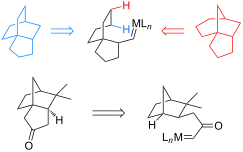
- cyclopropene 97 reacted [93][94] to form the same products as the hydrazone 96 did directly when heated to 140 °C. Gold The work by the May group was soon followed by gold-promoted carbene/alkyne cascades. These cascades rely on Zhang’s discovery that the use of pyridine N-oxides allow for the formation of
- gold ketocarbenes 104 from alkynes (Scheme 22) [95]. Those carbenes are then capable of further transformations, including C–H bond insertion and the reaction with other alkynes. Notably, this approach avoids the use of unstable diazo compounds. The Zhang group also demonstrated that the gold carbenes
- generated from alkynes can produce bridged bicycles from C–H bond insertion (Scheme 23) [96]. This was first implemented by transannular insertion via 107 to give the bicyclo[3.2.1]octane 108. The diastereoselectivity of the process was not reported. Again, dual gold catalysts were used with a pyridinium




Syntheses of dibenzo[d,d']benzo[2,1-b:3,4-b']difuran derivatives and their application to organic field-effect transistors
Beilstein J. Org. Chem. 2016, 12, 805–812, doi:10.3762/bjoc.12.79
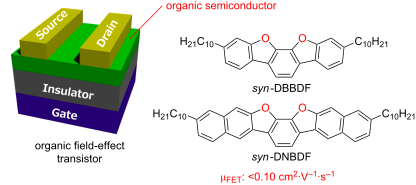
- substrates were used to evaluate the effect of the substrate structure on the device performance. The gold source/drain electrodes were deposited on the thin films. The channel width and length were 500 μm and 50 μm, respectively. Both syn-DBBDF- and syn-DNBDF-based OFETs demonstrated typical p-type




Gold-catalyzed direct alkynylation of tryptophan in peptides using TIPS-EBX
Beilstein J. Org. Chem. 2016, 12, 745–749, doi:10.3762/bjoc.12.74
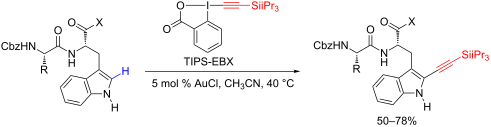
- is highly attractive, but the use of a carbon linker is usually required. Herein, we report the gold-catalyzed direct alkynylation of tryptophan in peptides using the hypervalent iodine reagent TIPS-EBX (1-[(triisopropylsilyl)ethynyl]-1,2-benziodoxol-3(1H)-one). The reaction proceeded in 50–78% yield
- under mild conditions and could be applied to peptides containing other nucleophilic and aromatic amino acids, such as serine, phenylalanine or tyrosine. Keywords: alkynes; C–H functionalization; gold catalysis; hypervalent iodine; peptides; Introduction Alkynes have always been important building
- the modification of biomolecules without the need for non-natural amino acids. However, the multiple functional groups present in biomolecules make such a process highly challenging. Based on our previous work on the alkynylation of indoles using TIPS-EBX (1a) and a gold catalysis [37][38], we



From steroids to aqueous supramolecular chemistry: an autobiographical career review
Beilstein J. Org. Chem. 2016, 12, 684–701, doi:10.3762/bjoc.12.69
- departments in the US carry out faculty searches, I now appreciate that I had struck gold. I never saw the letters that John, Jim and Neville wrote, but they must have said some nice things. And so I went through the interview process at the University of New Orleans and did well enough to get an offer. I had




The aminoindanol core as a key scaffold in bifunctional organocatalysts
Beilstein J. Org. Chem. 2016, 12, 505–523, doi:10.3762/bjoc.12.50
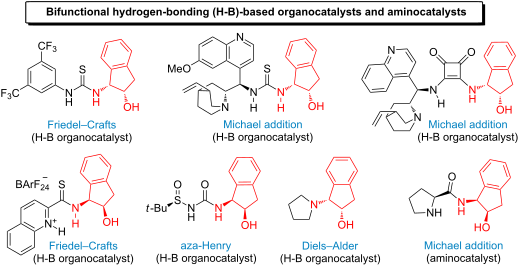
- formation of a hydrogen bond with the indolic proton. In the second catalytic cycle, the intermediates 9 would react to give an intramolecular Friedel–Crafts alkylation. The alkyne moiety of 9 would be previously activated by a gold complex in the presence of p-toluenesulfonic acid hydrate as the additive
- Friedel–Crafts alkylation, which involves the hydrogen-bonding catalyst ent-6 and gold catalysis and leads to the tetracyclic indoles 8. One-pot multisequence process that allows the synthesis of interesting compounds 14. The pharmacologically active compound 15 can be obtained from the properly





