


Search results
Search for "indoles" in Full Text gives 240 result(s) in Beilstein Journal of Organic Chemistry. Showing first 200.
A new paradigm for designing ring construction strategies for green organic synthesis: implications for the discovery of multicomponent reactions to build molecules containing a single ring
Beilstein J. Org. Chem. 2016, 12, 2420–2442, doi:10.3762/bjoc.12.236
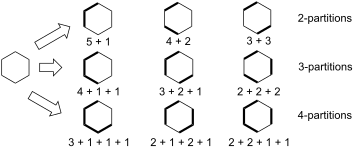
- showed that benzimidazoles, Biginelli adducts, dihydropyridines, furans, pyrans, pyridinones, and thiophenes had a high representation of intrinsic greenness; whereas, a high proportion of MCRs producing chromene-4-ones, coumarins, indoles, and pyrazoles had low probabilities of achieving intrinsic








An effective one-pot access to polynuclear dispiroheterocyclic structures comprising pyrrolidinyloxindole and imidazothiazolotriazine moieties via a 1,3-dipolar cycloaddition strategy
Beilstein J. Org. Chem. 2016, 12, 2240–2249, doi:10.3762/bjoc.12.216

- regio- and diastereoselective one-pot method for the synthesis of new polynuclear dispiroheterocyclic systems with five stereogenic centers (dispiro[imidazo[4,5-e]thiazolo[3,2-b]-1,2,4-triazine-6,3′-pyrrolidine-2′,3′′-indoles]) comprising pyrrolidinyloxindole and imidazo[4,5-e]thiazolo[3,2-b]-1,2,4
- which the phenyl substituents are directed (anti-exo). Conclusion In summary, a simple, general, and efficient one-pot method for the construction of previously unknown substituted dispiro[imidazo[4,5-e]thiazolo[3,2-b]-1,2,4-triazine-6,3′-pyrrolidine-2′,3′′-indoles] was developed. This method is based


Microwave-assisted cyclizations promoted by polyphosphoric acid esters: a general method for 1-aryl-2-iminoazacycloalkanes
Beilstein J. Org. Chem. 2016, 12, 2026–2031, doi:10.3762/bjoc.12.190
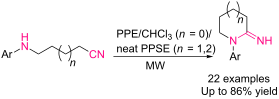
- ][26][27][28], indoles and 3,4-dihydroisoquinolines [23][29]. Microwave-assisted organic reactions proceed in general faster, with higher yields and more efficiently than those performed under conventional heating [30][31][32][33][34][35][36][37][38]. This technology has found interesting applications


Scope and limitations of a DMF bio-alternative within Sonogashira cross-coupling and Cacchi-type annulation
Beilstein J. Org. Chem. 2016, 12, 2005–2011, doi:10.3762/bjoc.12.187

- alternative to DMF, Cyrene. In addition, we have shown the capacity for extension of the utility of this new solvent towards enabling the cascade synthesis of functionalised indoles and benzofurans via a Cacchi-type annulation. Perhaps more importantly, we have documented some of the limitations of the use of


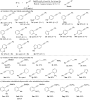

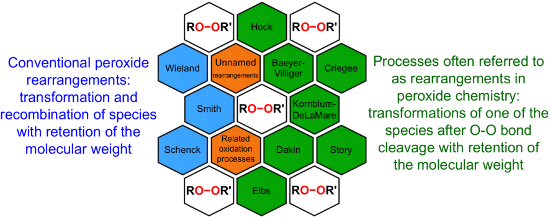
Rearrangements of organic peroxides and related processes
Beilstein J. Org. Chem. 2016, 12, 1647–1748, doi:10.3762/bjoc.12.162
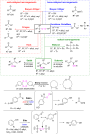
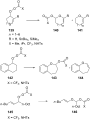
- synthesis of 2,3-disubstituted furans 210 (Scheme 60) [330]. The benzannulation of indoles 211 can be performed with γ-carbonyl tert-butyl peroxides 212 catalyzed by trifluoromethanesulfonic acid to give carbazoles 213. The key step of this approach is based on the acid-catalyzed rearrangement of tert-butyl











Synergistic chiral iminium and palladium catalysis: Highly regio- and enantioselective [3 + 2] annulation reaction of 2-vinylcyclopropanes with enals
Beilstein J. Org. Chem. 2016, 12, 1340–1347, doi:10.3762/bjoc.12.127
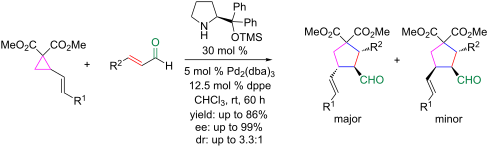
- the reaction with highly active dipolarophiles, such as electrophilic C=O [35], e.g., aldehydes [36][37][38], ketones [38][39], and imines [40], and nucleophilic enol ethers [38][41], enamides [42], and indoles [43]. Nonetheless, the reactions with the α,β-unsaturated aldehydes and ketones face


Conjugate addition–enantioselective protonation reactions
Beilstein J. Org. Chem. 2016, 12, 1203–1228, doi:10.3762/bjoc.12.116
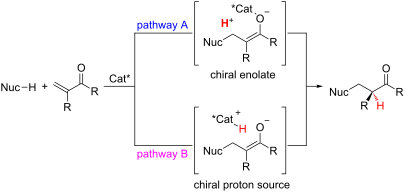
- for the synthesis of biologically active molecules, including natural products and drugs. The Reisman group has reported a Friedel–Crafts conjugate addition–enantioselective protonation for the synthesis of tryptophans 17 from 2-substituted indoles 14 and methyl 2-acetamidoacrylate (15) using
- enol ethers [20][21]. Electron-rich and neutral indoles were efficient substrates for the reaction; however, electron-poor indoles showed attenuated reactivity even when 1.6 equivalents of SnCl4 were employed (60–63% yield, 96:4 to 96.5:3.5 er). Indoles lacking substitution at the 2-position (R1 = H
- protonation of vinyl ketones. Using primary amine catalyst (S,S)-119, the authors were able to catalyze the Friedel–Crafts addition of indoles 117 to vinyl ketones 118 followed by enantioselective protonation (Scheme 27) [52]. During optimization it was found that addition of a weak acid, 2-naphthoic acid


Catalytic asymmetric synthesis of biologically important 3-hydroxyoxindoles: an update
Beilstein J. Org. Chem. 2016, 12, 1000–1039, doi:10.3762/bjoc.12.98
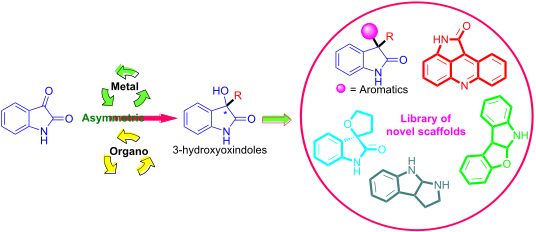
- group described the first chiral imidodiphosphoric acid-catalyzed enantioselective Friedel–Crafts reactions of indoles and pyrroles with 3-hydroxy-3-indolyloxindoles, giving the 3,3-diaryloxindoles in excellent yields (99% yield) and with excellent enantioselectivities (98% ee) at low catalyst loading
- the 3-position of indoles, while Shi et al. reported that they obtained regioisomers when 3-methylindoles were used (Scheme 49) [66], indicating that the 3-methyl group was important for the observed regioselectivity. Shi et al. established a chiral CPA-catalyzed asymmetric allylation of 3
- . Differently, treatment of 3-indolylmethanols with Nazarov reagents with TfOH in MeCN led to the generation of indoles through a cascade reaction in an (E/Z)-selective mode. These unusual reactions may serve as stereoselective and chemodivergent methods for accessing indole-containing scaffolds. Shi and co




A convenient route to symmetrically and unsymmetrically substituted 3,5-diaryl-2,4,6-trimethylpyridines via Suzuki–Miyaura cross-coupling reaction
Beilstein J. Org. Chem. 2016, 12, 835–845, doi:10.3762/bjoc.12.82
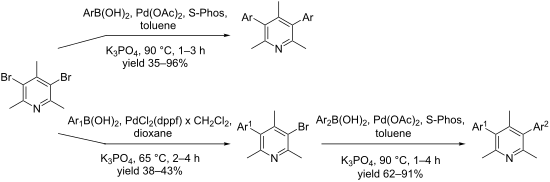
- teams in the construction of polyarylated benzenes [56], pyridines [57][58][59][60], thiophenes [61][62], quinoxalines [63], pyrazoles [64] pyrroles [65], pyrimidines [66][67], benzofuranes [68], imidazo[1,2-a]pyridines [69], diaryl/heteroaryl methanes [70], and indoles [71], bearing differently




Gold-catalyzed direct alkynylation of tryptophan in peptides using TIPS-EBX
Beilstein J. Org. Chem. 2016, 12, 745–749, doi:10.3762/bjoc.12.74
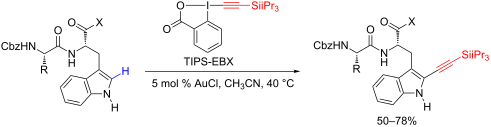
- the modification of biomolecules without the need for non-natural amino acids. However, the multiple functional groups present in biomolecules make such a process highly challenging. Based on our previous work on the alkynylation of indoles using TIPS-EBX (1a) and a gold catalysis [37][38], we
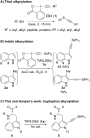
- wondered if this transformation could be extended to tryptophan-containing peptides. Even if the reaction gave C3-alkynylation for C3-unsubstituted indoles, we demonstrated that C2-alkynylation could be achieved on skatole (2a, Scheme 1B) [37]. Very recently, Hansen et al. indeed reported a modified
- . Conclusion In conclusion, our work combined with the results of Hansen and co-workers has demonstrated that the gold-catalyzed alkynylation of indoles could be extended to tryptophan in peptides. When considering the scarcity of methods allowing the modification of tryptophan under mild conditions without



Iridium/N-heterocyclic carbene-catalyzed C–H borylation of arenes by diisopropylaminoborane
Beilstein J. Org. Chem. 2016, 12, 654–661, doi:10.3762/bjoc.12.65

- ) system. Results and Discussion On the basis of a superior reactivity of indoles in several C–H borylation reactions [7][8][9], we initially examined the borylation of indole 2 with aminoborane 1g using an iridium catalyst under forcing conditions (140 °C, 15 h). Although all the attempts to isolate an
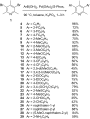
- regioselectivity (99:1) (Table 1, entry 12). Having optimized the conditions, we next explored the scope of Ir/ICy-catalyzed borylation of heteroarene substrates using 1g (Table 2). Functionalized indoles, such as those containing methoxy, fluoro, bromo and chloro substituents, all underwent the borylation to form
- instability of 11-B during isolation (Table 2, entry 8). Our protocol was able to borylate non-benzofused five-membered heteroarenes. Pyrrole 12 was much less reactive than indoles, and required neat conditions to obtain a modest yield of the borylated product 12-B (Table 2, entry 9). Thiophene (13) afforded


The aminoindanol core as a key scaffold in bifunctional organocatalysts
Beilstein J. Org. Chem. 2016, 12, 505–523, doi:10.3762/bjoc.12.50
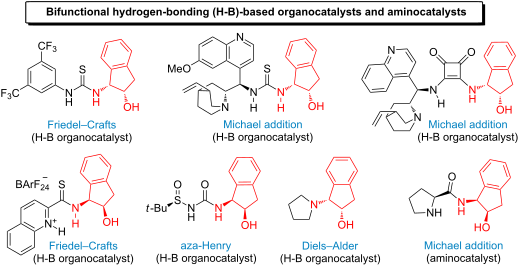
- -type alkylation reaction of indoles To the best of our knowledge, the first example of an aminoindanol-containing bifunctional organocatalyst was reported by Ricci and co-workers in 2005 [18]. In this pioneering study, the authors used the easily prepared cis-(1R,2S)-aminoindanol-based thiourea
- derivative 4 to develop the first organocatalytic enantioselective Friedel–Crafts (F–C) alkylation of indoles, employing nitroalkenes as versatile electrophiles. In the presence of catalyst 4, the differently functionalized indole derivatives 2 reacted with aryl and alkyl nitroalkenes 3 in dichloromethane at
- of incorporating this scaffold into diverse organocatalysts. In 2008, Seidel’s group published a new example of an asymmetric addition of indoles to nitroalkenes, employing a novel catalyst design [24]. The authors envisioned that a protonated 2-pyridyl substituent could increase the acidity of the


(Thio)urea-mediated synthesis of functionalized six-membered rings with multiple chiral centers
Beilstein J. Org. Chem. 2016, 12, 462–495, doi:10.3762/bjoc.12.48
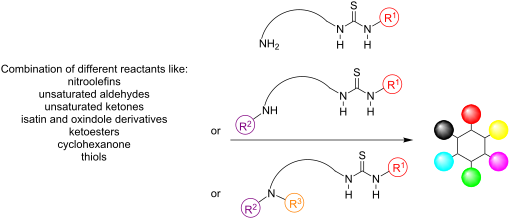
- the reaction conditions the yields of products 231 were 71–91%. Barbas and co-workers reported the synthesis of carbazole spiro-oxindole derivatives, in a Diels–Alder reaction in very short reaction time (10 min). The reagents were the substituted indoles 233, benzylidene oxindolinones 234 and the


Cupreines and cupreidines: an established class of bifunctional cinchona organocatalysts
Beilstein J. Org. Chem. 2016, 12, 429–443, doi:10.3762/bjoc.12.46
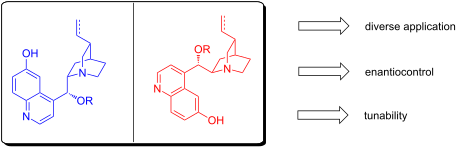
- easy to make from the corresponding cinchona alkaloids, making them attractive compounds for methodologists to have within their catalyst arsenal. They seem particularly suited to catalysis with systems that have an aromatic ring next to a five-membered ring – e.g., indoles, indenones, isatin etc


Study on the synthesis of the cyclopenta[f]indole core of raputindole A
Beilstein J. Org. Chem. 2016, 12, 334–342, doi:10.3762/bjoc.12.36

- quaternary center was to be formed. Ideally, anellation of a cyclopentane would be possible at an indole with an intact enamine partial structure (B, Scheme 1). Such an approach seemed possible, because we had already cyclized 6-prenoylindole to a mixture of cyclopenta[f]- and -[g]indoles in a Nazarov-type
- had not taken place. At this point, we abandoned our attempts of assembling the cyclopenta[f]indole unit of raputindole A (1) starting from Boc-protected indoles. None of the investigated bisindolylpentenones 8, 24, or 26 could be cyclized to a cyclopentaindole. At least, we learned how to synthesize
- , which points at a shielding effect of the TIPS group towards the indole 7-position. Since the SnCl4-mediated cyclization yields with indoles were much lower than those obtained with benzene derivatives, we investigated the behavior of indolines which lack the reactive enamine moiety. We also abandoned




Recent advances in copper-catalyzed C–H bond amidation
Beilstein J. Org. Chem. 2015, 11, 2209–2222, doi:10.3762/bjoc.11.240

- applicable for the synthesis of 2-amino-1-methylindoles 37 via C–H amidation of indoles 36 by employing benzene as the medium (Scheme 11). While the authors proposed that the mechanism in the selective C-2 amidation of N-methylindoles resulted from a classical oxidative addition/reductive elimination Cu(III
- heterocycle, the pyrimidine ring was disclosed as useful DG in copper-catalyzed C–H activation. As reported by Shen and co-workers [60], the C–H bond in indoles 47 and benzenes 48 could be effectively activated with copper in the presence of DGs such as pyrimidin-2-yl, pyridine-2-yl or benzoyl to provide
- , the reaction of allylic substrates 70 gave N-allylsulfonamides 71. The catalytic approach was also well tolerable to the intramolecular version for the synthesis of indoles 74 and cyclic sulfonamides 75 by using 72 and 73 as starting materials, respectively (Scheme 18). The intramolecular version of




Photoinduced 1,2,3,4-tetrahydropyridine ring conversions
Beilstein J. Org. Chem. 2015, 11, 2166–2170, doi:10.3762/bjoc.11.234
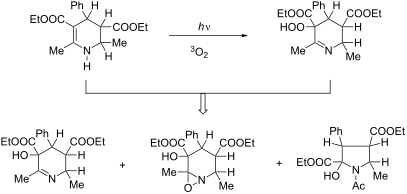
- attention has been paid to organic aromatic or heterocyclic hydroperoxides, probably due to their low thermal stability and high reactivity. Stable organic hydroperoxides were isolated in the early 1950s as products of autoxidation as well as catalytic oxygenation of indoles and tetrahydrocarbazoles [3][4


C–H bond halogenation catalyzed or mediated by copper: an overview
Beilstein J. Org. Chem. 2015, 11, 2132–2144, doi:10.3762/bjoc.11.230
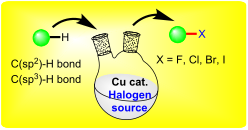
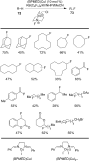
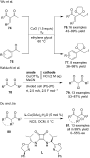
- -halogenated phenols 41/42 in good to excellent yield and regioselectivity. In addition, the C-3 chlorination of indoles 43 and C-4 chlorination of imidazole (45) were also achieved under the standard reaction conditions to provide products 44 and 46, respectively (Scheme 16). Because of the attractive


Synthesis of constrained analogues of tryptophan
Beilstein J. Org. Chem. 2015, 11, 1997–2006, doi:10.3762/bjoc.11.216
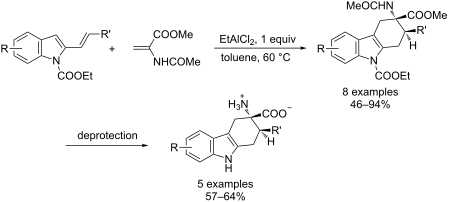
- library of compounds bearing the free amino acid function at C-3 and pertaining to the class of constrained tryptophan analogues. Keywords: constrained tryptophans; Diels–Alder; indoles; tetrahydrocarbazoles; unnatural amino acids; Introduction With the term of “unnatural” amino acids, a plethora of
- -acetamidoacrylate (2) and its congeners with cyclic/acyclic dienes and azadienes occur under conventional heating or microwave irradiation [24]. Moreover, the use of titanium tetrachloride as Lewis acidic promoter has been reported [25]. Finally, simple functionalization reactions of indoles with 2 are reported in
- Lewis acid, only EtAlCl2 is able to trigger the reaction toward the formation of the desired cycloadducts 3/3'. Similarly, Piersanti and co-workers reported the unique capability of EtAlCl2, with respect to related hard Lewis acids, to activate 2 toward the nucleophilic addition of indoles [29]. They


Synthesis of quinoline-3-carboxylates by a Rh(II)-catalyzed cyclopropanation-ring expansion reaction of indoles with halodiazoacetates
Beilstein J. Org. Chem. 2015, 11, 1944–1949, doi:10.3762/bjoc.11.210
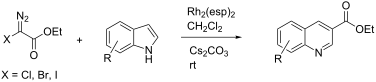
- Magnus Morten Martin Hennum Tore Bonge-Hansen Department of Chemistry, University of Oslo, P.O. Box 1033 Blindern, NO-0315 Oslo, Norway 10.3762/bjoc.11.210 Abstract In this letter, we report a novel synthesis of ethyl quinoline-3-carboxylates from reactions between a series of indoles and
- indole moiety is found in a large number of bioactive natural products [1][2] and pharmaceutical compounds [3][4] and there has been a large synthetic effort going into the search for mild, efficient and selective procedures for the derivatization of indoles. One of the most efficient approaches is the
- transition metal-catalyzed C–H functionalization by diazo compounds [5][6][7][8]. The reactions of indoles with electrophilic metal-bound carbenes, or carbenoids, generated from diazo compounds, takes place under mild reaction conditions. The reaction has been studied for the three principle classes of


Active site diversification of P450cam with indole generates catalysts for benzylic oxidation reactions
Beilstein J. Org. Chem. 2015, 11, 1713–1720, doi:10.3762/bjoc.11.186
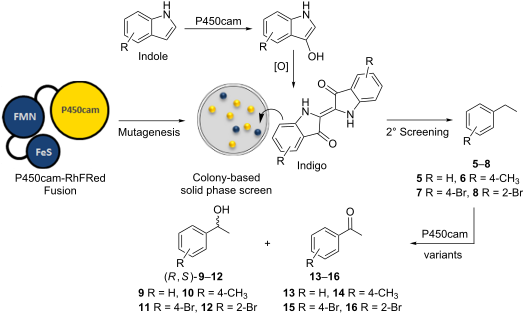
- screening a large mutant library of 16,500 clones using a simple, highly sensitive colony-based colorimetric screen against indole. These mutants showed distinct fingerprints of activity not only when screened in oxidations of substituted indoles but also for unrelated oxidations such as benzylic
- library parent Tyr96Phe to the pool of 93 new variants gave a total of 94 for further screening. Investigation of P450cam activity toward a panel of substituted indoles To begin exploring the substrate range of this new population, library I (Phe87/Phe96) variants were tested with a small panel of
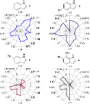
- substituted indoles 1–4. Using a solid-phase screen as before, the level of colour formation in colonies was assessed visually, generating ‘fingerprints’ of activity as summarised in Figure 2 (also see Figure S1, Supporting Information File 1). The fingerprints show that variations in the configuration of the


SmI2-mediated dimerization of indolylbutenones and synthesis of the myxobacterial natural product indiacen B
Beilstein J. Org. Chem. 2015, 11, 1700–1706, doi:10.3762/bjoc.11.184
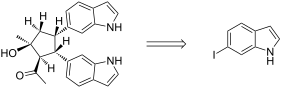
- , confirming its antimicrobial activity. The E-configuration of the chloroalkene moiety of indiacen B was confirmed by X-ray analysis. Keywords: biological evaluation; heterocycles; indoles; natural products; total synthesis; Introduction Indole alkaloids prenylated at the benzene ring are found in tropical
- -methylbuta-1,3-dien-1-yl)indole [7]. All enamine positions of the indole units are unsubstituted. As part of our program on the total synthesis of prenylated indole alkaloids [8][9][10][11], we considered it interesting to access indoles substituted only at the benzene ring and to conduct initial studies on
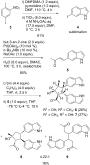
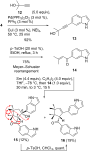
- - or 4-iodinated indoles reported [16][17][18][19][20]. Having natural product 5 in hand, we wondered whether and which intra or intermolecular C–C coupling would occur under reductive conditions and whether or not such a reaction could run without participation of the indole enamine moiety. After





Fates of imine intermediates in radical cyclizations of N-sulfonylindoles and ene-sulfonamides
Beilstein J. Org. Chem. 2015, 11, 1649–1655, doi:10.3762/bjoc.11.181
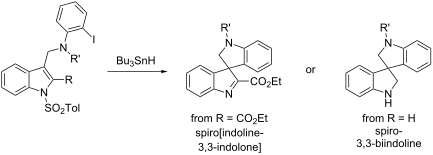
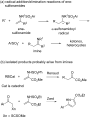
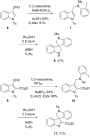
- ; radical cyclization; radical fragmentation; spiro-indoles; Introduction Radical additions and cyclizations of ene-sulfonamides are useful reactions in a number of settings. The primary products of these reactions, α-sulfonamidoyl radicals, are often thought to undergo elimination reactions of sulfonyl





Deproto-metallation of N-arylated pyrroles and indoles using a mixed lithium–zinc base and regioselectivity-computed CH acidity relationship
Beilstein J. Org. Chem. 2015, 11, 1475–1485, doi:10.3762/bjoc.11.160
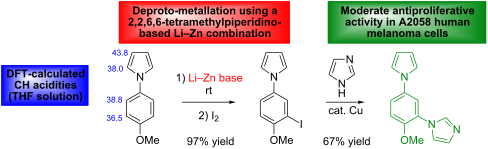
- , Centre de Diffractométrie X, Institut des Sciences Chimiques de Rennes, UMR 6226, CNRS-Université de Rennes 1, Bâtiment 10B, Campus de Beaulieu, 35042 Rennes, France 10.3762/bjoc.11.160 Abstract The synthesis of N-arylated pyrroles and indoles is documented, as well as their functionalization by
- deprotonative metallation using the base in situ prepared from LiTMP and ZnCl2·TMEDA (1/3 equiv). With N-phenylpyrrole and -indole, the reactions were carried out in hexane containing TMEDA which regioselectively afforded the 2-iodo derivatives after subsequent iodolysis. With pyrroles and indoles bearing N
- using the DFT B3LYP method in order to rationalize the experimental results. Keywords: CH acidity; indoles; iodolysis; mixed lithium–zinc bases; pyrroles; Introduction Pyrrole occurs in very important natural products such as tetrapyrrolic (linear) bilirubinoids, and (cyclic) porphyrins and corrins




A new and convenient synthetic way to 2-substituted thieno[2,3-b]indoles
Beilstein J. Org. Chem. 2015, 11, 1000–1007, doi:10.3762/bjoc.11.112
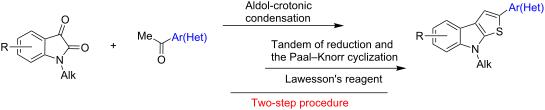
- , 620002, Russia 10.3762/bjoc.11.112 Abstract A short and robust approach for the synthesis of 2-(hetero)aryl substituted thieno[2,3-b]indoles from easily available 1-alkylisatins and acetylated (hetero)arenes has been advanced. The two-step procedure includes the “aldol-crotonic” type of condensation of
- –Knorr cyclization, thus affording tricyclic thieno[2,3-b]indoles. Keywords: aldol-crotonic condensation; isatin; Lawesson’s reagent; methyl ketones; Paal–Knorr reaction; thieno[2,3-b]indole; Introduction 8H-Thieno[2,3-b]indole is a fused heterocyclic system, which has attracted a considerable
- inhibitors of acetylcholine esterase and butyrylcholine esterase [5], compounds of this series exhibit as well anti-tuberculosis [6] and anti-inflammatory activities [7]. Another promising area for the use of thieno[2,3-b]indoles, as electron-rich heteroaromatics, is the design of photo- and electroactive





