


Search results
Search for "nickel" in Full Text gives 246 result(s) in Beilstein Journal of Organic Chemistry. Showing first 200.
Pd(OAc)2/Ph3P-catalyzed dimerization of isoprene and synthesis of monoterpenic heterocycles
Beilstein J. Org. Chem. 2017, 13, 1807–1815, doi:10.3762/bjoc.13.175
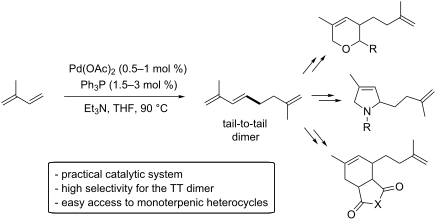
- , titanium-, zirconium-, iron-, cobalt-, vanadium- or aluminum-based Ziegler-type catalysts lead mostly to the linear tail-to-head 2-TH dimer 2,6-dimethyl-1,3,6-octatriene (alloocimene) [27], and the use of nickel catalysts allows the preparation of the tail-to-tail dimer 2-TT (2,7-dimethyl-1,3,7-octatriene


Ni nanoparticles on RGO as reusable heterogeneous catalyst: effect of Ni particle size and intermediate composite structures in C–S cross-coupling reaction
Beilstein J. Org. Chem. 2017, 13, 1796–1806, doi:10.3762/bjoc.13.174
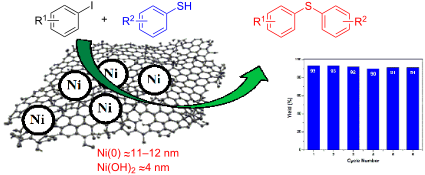
- , Jadavpur, Kolkata 700032, India. Fax: +91 33 24730957; Tel: +91 33 23223403 10.3762/bjoc.13.174 Abstract The present work demonstrates the C–S cross-coupling reaction between aryl halides and thiols using nickel nanoparticles (Ni NPs) supported on reduced graphene oxide (Ni/RGO) as a heterogeneous
- first palladium-catalyzed arylation of thiols was reported by Migita and co-workers in 1980 [5], and soon after Cristau and co-workers developed a nickel-catalyzed route for C–S cross-coupling reactions [6]. Other metals such as copper [7], cobalt [8], iron [9], rhodium [10], manganese [11], indium [12
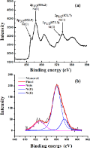
- peak related to the nickel oxide (NiO). The intensity ratio of the D over the G band was found to be 1.03, which is similar to that of Ni/RGO-40 before used in the C−S coupling reaction (Figure 2a). The powder XRD of Ni/RGO-40, recovered after the first cycle, was also recorded and is shown in Figure 3




Phosphazene-catalyzed desymmetrization of cyclohexadienones by dithiane addition
Beilstein J. Org. Chem. 2017, 13, 762–767, doi:10.3762/bjoc.13.75
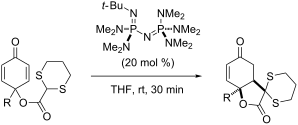
- of the dithiane moiety via Raney nickel-promoted desulfurization (Scheme 5). To observe any substrate conversion, it was necessary to use a hydrogen atmosphere. Under those conditions, though the dithiane function was removed, degradation occurred. Conclusion In conclusion, we have developed a
- tethered nucleophile. Scope of the transformation. Convex facial additions. Attempted oxidative deacylation. Attempted desulfurization with Raney nickel. Carbonyl deprotection conditions. Supporting Information Supporting Information File 247: Experimental procedures, characterization data and copies of




Fluorinated cyclohexanes: Synthesis of amine building blocks of the all-cis 2,3,5,6-tetrafluorocyclohexylamine motif
Beilstein J. Org. Chem. 2017, 13, 728–733, doi:10.3762/bjoc.13.72
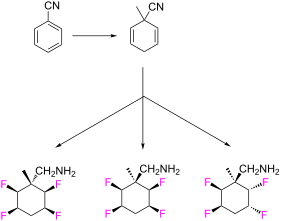
- formamide 12 in 78% yield, a compound also confirmed by X-ray crystallography [20]. Ultimately treatment of nitrile 11a with nickel boride generated in situ from nickel chloride and sodium borohydride, resulted in its full reduction to amine 5a in 50% yield (Scheme 2) [21][22]. The analogous protocol was
- nickel boride delivered amine 5b in 65% yield as a crystalline solid and an analogous reduction of 11c generated the racemic amine 5c as a colourless liquid. The structure of 11b was confirmed by X-ray structure analysis (Scheme 3). Amines 5a and 5b were reacted with terephthaloyl chloride as a means of



Conjecture and hypothesis: The importance of reality checks
Beilstein J. Org. Chem. 2017, 13, 620–624, doi:10.3762/bjoc.13.60
- universal common ancestor (LUCA) may have originated in hydrothermal vents. The iron-sulfur chemistry proposed for hydrothermal vents was tested by Huber and Wächtershäuser [15][16] who simulated vent conditions with boiling mixtures of iron and nickel sulfides to which various reactants were added. They
- vent conditions by injecting a solution of potassium phosphate, sodium silicate and sodium sulfide (pH 11) into a second solution of ferrous chloride, sodium bicarbonate and nickel chloride (pH 5). The aim was to determine whether carbon dioxide (present as 10 mM sodium bicarbonate) can be reduced
Transition-metal-catalyzed synthesis of phenols and aryl thiols
Beilstein J. Org. Chem. 2017, 13, 589–611, doi:10.3762/bjoc.13.58

- succeeded in a Nickel catalyzed thiolation of aryl iodides with thiourea in DMF. Aryl iodides firstly reacted with thiourea in the presence of bis(triethylphosphine)nickel(II) chloride and sodium cyanoborohydride as catalyst precusor, and afforded aryl isothiuronium iodide, which could be further converted


Effect of the ortho-hydroxy group of salicylaldehyde in the A3 coupling reaction: A metal-catalyst-free synthesis of propargylamine
Beilstein J. Org. Chem. 2017, 13, 552–557, doi:10.3762/bjoc.13.53
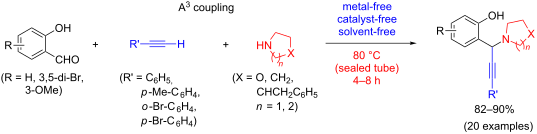
- known as A3 coupling reaction, remains the most common and straightforward method for the synthesis of propargylamine. The A3 coupling reaction is reported under transition-metal-catalyzed conditions using copper [12][17][18][19], gold [17][20][21], silver [17][22], zinc [17][23], nickel [24], iron [25


Synthesis of 1-indanones with a broad range of biological activity
Beilstein J. Org. Chem. 2017, 13, 451–494, doi:10.3762/bjoc.13.48
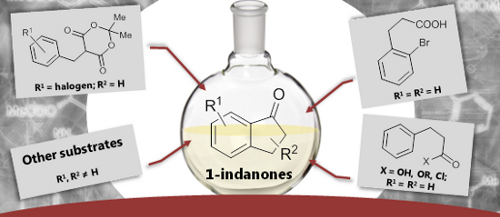
- using lithium, nickel and palladium catalysts (Scheme 15). A general mechanism illustrating the role of transition metal complexes and CO in this reaction is shown in Scheme 15. Cyclic esters were also used in the syntheses of 1-indanones. Thus, by adding β-propiolactone to aluminum chloride in benzene
- obtained from the reaction of o-phthalaldehyde (86) with acetophenone 87 (Scheme 28). Iron(III) complexes of 88a–d turned out to be promising candidates for potential photovoltaic or luminescence applications. An intramolecular hydroacylation, catalyzed by nickel(0)/N-heterocyclic carbenes leading to the
- ., cyclopentenone 239) with alkynes in the presence of nickel and aluminum complexes [108]. This [2 + 2 + 2] cycloaddition run with a high regioselectivity and led mostly to meta isomers. The authors used, as catalytic systems, the following complexes: Ni(acac)2, Ni(cod)2, Me3Al, Me2Al(OPh), MeAl(OPh)2 and Al(OPh)3


The reductive decyanation reaction: an overview and recent developments
Beilstein J. Org. Chem. 2017, 13, 267–284, doi:10.3762/bjoc.13.30
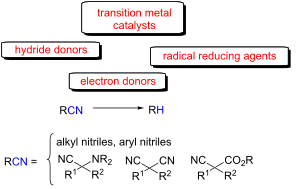
- charge on the carbon adjacent to the cyano group [76][77]. Transition-metal-catalyzed reductive decyanation Hydrogenation of α-aminonitriles The decyanation of α-aminonitriles with hydrogen present in an excess of Raney nickel was described by Husson and co-workers on oxazolidine derivatives [83][84
- ]. The authors logically proposed that the decyanation occurred via the reduction of an iminium ion intermediate. The hydrogenation of α-aminonitriles catalyzed by nickel nanoparticles results in reductive decyanation and yields 29–31. The colloid solution of nickel is prepared in situ via reduction of
- alkyl cyanides lead to a complex mixture. Nickel-catalyzed reductive decyanation Maiti et al. established that the Ni(acac)2 complex (acac = acetylacetonate) of PCy3 (Cy, cyclohexyl) in combination with TMDS (tetramethyldisiloxane) as hydride source can catalyze the reductive decyanation efficiently


Extrusion – back to the future: Using an established technique to reform automated chemical synthesis
Beilstein J. Org. Chem. 2017, 13, 65–75, doi:10.3762/bjoc.13.9
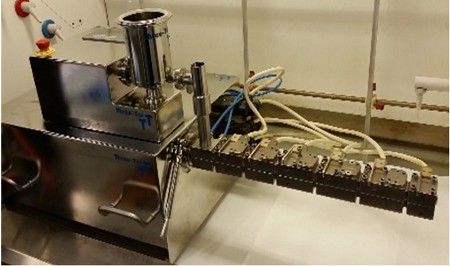
- prepared in batch. PXRD analysis also indicated that highly crystalline materials were produced from the extrusion process, prior to any post process purification [2]. Two discrete metal complexes have been synthesised by extrusion, involving the reaction between salenH2 and nickel acetate dihydrate as
- well as the reaction between triphenylphosphine and nickel thiocyanate, both in the presence of stoichiometric amounts of MeOH (Figure 6) [2]. High-quality products were obtained, as determined by 1H NMR spectroscopy, PXRD analysis (which gave sharp diffraction patterns, indicating high crystallinity


From betaines to anionic N-heterocyclic carbenes. Borane, gold, rhodium, and nickel complexes starting from an imidazoliumphenolate and its carbene tautomer
Beilstein J. Org. Chem. 2016, 12, 2673–2681, doi:10.3762/bjoc.12.264
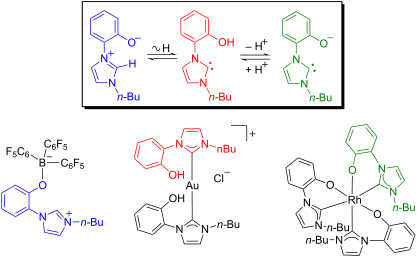
- taken in the anion detection mode show the peak of 10 as base peak at m/z = 627. The anionic N-heterocyclic carbene 7 also forms a rhodium and a nickel complex (Scheme 2). The colorless rhodium complex [Rh(7)3] 11 was prepared on reaction of the tautomeric mixture 6A/B with either chlorido(1,5
- the determined dihedral angles for C1–N2–C10–C15, C21–N22–C30–C35, and C41–N42–C50–C55 are 26.371(5)°, 18.939(5)°, and −33.008(5)°, respectively. The carbenes are twisted by approximately 28.1° to 37.0° in relation to the Rh–Ccarbene bonds. The reaction of 6A/6B with bis(triphenylphosphine)nickel(II
- ) chloride at reflux temperature resulted in the formation of the nickel complex [Ni(7)2] (12, Scheme 2). Single crystals were obtained by slow evaporation of 12 from EtOAc/MeOH. The X-ray analysis shows two independent nickel complexes which are connected via hydrogen bonds to two water molecules (Figure 5




Facile synthesis of a 3-deazaadenosine phosphoramidite for RNA solid-phase synthesis
Beilstein J. Org. Chem. 2016, 12, 2556–2562, doi:10.3762/bjoc.12.250
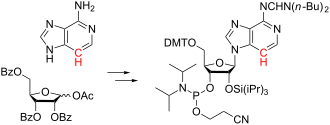
- . Only when treated with hydrazine, nucleophilic substitution was observed and after reduction with Raney nickel the desired 3-deazaadenosine was isolated. Our own attempts towards direct ammonolysis failed as well. Additionally, the limited commercial availability of hydrazine and its inconvenience in
- . c) Anhydrous hydrazine, steam bath, 1 h, not isolated. d) Raney nickel, water, reflux, 1 h. Synthesis of c3A described by Montgomery et al. in 1977 [23]. The final step, displacement of the 2-chlorine atom by a hydrogen atom, remains problematic [24][25][26]. a) 1,2,3,5-Tetraacetyl-ß-D-ribofuranose


Et3B-mediated and palladium-catalyzed direct allylation of β-dicarbonyl compounds with Morita–Baylis–Hillman alcohols
Beilstein J. Org. Chem. 2016, 12, 2402–2409, doi:10.3762/bjoc.12.234
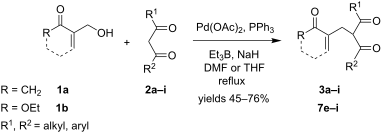
- reaction, is a non-toxic byproduct. However, the poor ability of the hydroxy moiety, as a leaving group, has limited the use of the allyl alcohols as substrates. Correlatively, some efforts have been made in this direction by the use of transition metals such as copper [6], nickel [7], ruthenium (I, II) [8


Palladium-catalyzed ring-opening reactions of cyclopropanated 7-oxabenzonorbornadiene with alcohols
Beilstein J. Org. Chem. 2016, 12, 2189–2196, doi:10.3762/bjoc.12.209

- ). Syn-stereoisomeric products 2 and 3 can be obtained using rhodium [14], palladium [15], or nickel [16] catalysts with an arene nucleophile and when palladium [17] or nickel [18] are used with an alkyl nucleophile. Recently, it was shown that the syn-stereoisomeric product 4 could be obtained through


Comparing blends and blocks: Synthesis of partially fluorinated diblock polythiophene copolymers to investigate the thermal stability of optical and morphological properties
Beilstein J. Org. Chem. 2016, 12, 2150–2163, doi:10.3762/bjoc.12.205
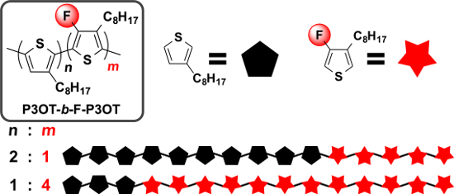
- microwave vial charged with dichloro(1,3-bis(diphenylphosphino)propane)nickel (2.27 mg, 0.5 mol %) was added Grignard solution freshly prepared from 2,5-dibromo-3-octylthiophene (2.25 mL, 0.28 M in THF), and the reaction mixture was stirred at 40 °C for 1 h. GPC analysis of an aliquot quenched with methanol
- ) 7.05 (s, 1H), 2.94–2.85 (m, 1.8H), 2.85–2.77 (m, 0.9H), 1.90–1.66 (m, 3H), 1.56–1.35 (m, 15H), 1.03–0.90 (m, 4.2H); 19F NMR (376 MHz, TCE-d2, 403 K, δ) −122.94 (s). Synthesis of P3OT-b-F-P3OT 1:4 In a sealed dry 2–5 mL microwave vial charged with dichloro(1,3-bis(diphenylphosphino)propane)nickel (2.27


Cross-linked cyclodextrin-based material for treatment of metals and organic substances present in industrial discharge waters
Beilstein J. Org. Chem. 2016, 12, 1826–1838, doi:10.3762/bjoc.12.172
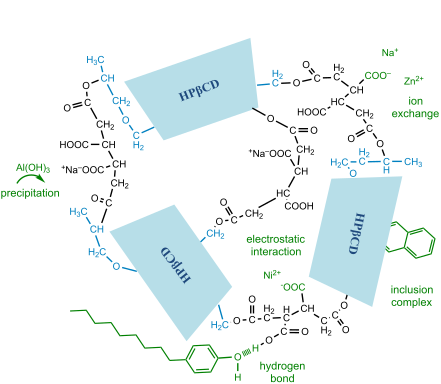
- their own treatment plants, generally physicochemical decontamination steps, the DWs still contain non-negligible amounts of pollutants. Among them, metals (in particular chromium, nickel and zinc) are commonly found at concentrations in the range of milligrams per liter, and organic molecules, such as


Conjugate addition–enantioselective protonation reactions
Beilstein J. Org. Chem. 2016, 12, 1203–1228, doi:10.3762/bjoc.12.116
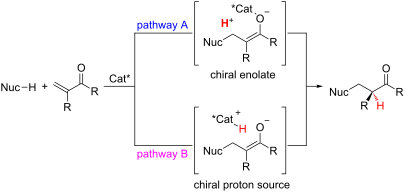
- :36.5 to 67.5:32.5 er). To demonstrate the utility of the transformation, the sulfur–carbon bond of 26a was reduced using Raney nickel to access (S)-naproxen (27), an anti-inflammatory drug (Scheme 6b). Inspired by the work of Pracejus, Tan and colleagues applied their C2-symmetric guanidine catalyst 30
- –enantioselective protonation using α,β-unsaturated nitriles has remained unexplored for substrates other than methacrylonitrile. The Togni lab has explored using ferrocenyl tridentate nickel(II) and palladium(II) complexes as chiral Lewis acid catalysts for the hydrophosphination and hydroamination of
- methacrylonitrile (Figure 4) [70][71][72][73][74]. Other researchers have reported platinum [75], nickel [76], and zirconium [77] catalysts for the hydrophosphination and hydroamination of methacrylonitrile; however, these examples provided product with significantly lower enantioselectivity. In 2004, the Togni lab


Synthesis of β-arylated alkylamides via Pd-catalyzed one-pot installation of a directing group and C(sp3)–H arylation
Beilstein J. Org. Chem. 2016, 12, 1122–1126, doi:10.3762/bjoc.12.108
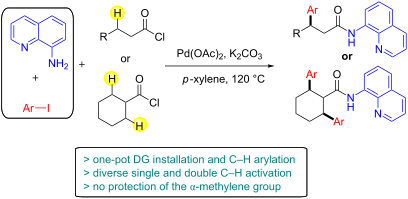
- employing different transition metal catalysts such as palladium, nickel, and iron have provided enriched routes for the synthesis of structurally diverse amides, a two step process involving the operation in installing the AQ to the substrate has been required [41][42][43][44][45][46][47][48][49][50


From steroids to aqueous supramolecular chemistry: an autobiographical career review
Beilstein J. Org. Chem. 2016, 12, 684–701, doi:10.3762/bjoc.12.69
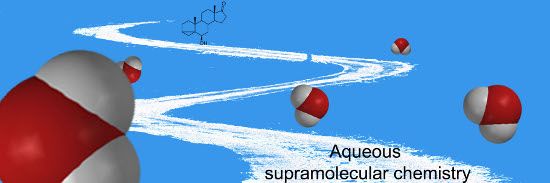
- first step, the unoptimized desulfurization of 2-thio-6-methyluracil using Raney-Nickel to form 6-methyl-4-hydroxypyrimidine (Scheme 2). It turned out I was a wiz at this organic synthesis lark (as Derek liked to say). I took the yield from 73% to quantitative by doing what organic chemists do, changing




Copper-mediated arylation with arylboronic acids: Facile and modular synthesis of triarylmethanes
Beilstein J. Org. Chem. 2016, 12, 496–504, doi:10.3762/bjoc.12.49
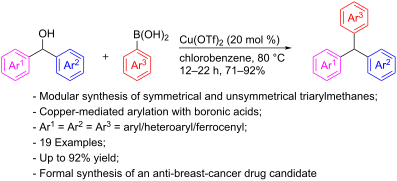
- report a copper(II) triflate-catalyzed modular synthesis of triarylmethanes by employing diarylmethanols 9 and arylboronic acids 10. It is advantageous to employ a base metal catalyst such as copper(II) triflate instead of palladium [55][56] or nickel (Ni) [57] catalysts and to avoid the use of phosphine


Rhodium, iridium and nickel complexes with a 1,3,5-triphenylbenzene tris-MIC ligand. Study of the electronic properties and catalytic activities
Beilstein J. Org. Chem. 2015, 11, 2584–2590, doi:10.3762/bjoc.11.278
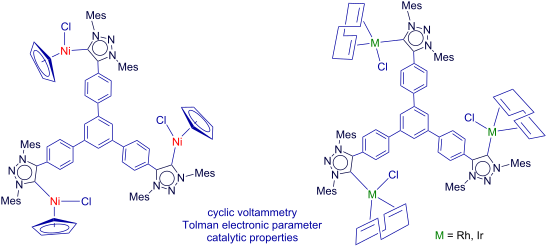
- , Portugal 10.3762/bjoc.11.278 Abstract The coordination versatility of a 1,3,5-triphenylbenzene-tris-mesoionic carbene ligand is illustrated by the preparation of complexes with three different metals: rhodium, iridium and nickel. The rhodium and iridium complexes contained the [MCl(COD)] fragments, while
- the nickel compound contained [NiCpCl]. The preparation of the tris-MIC (MIC = mesoionic carbene) complex with three [IrCl(CO)2] fragments, allowed the estimation of the Tolman electronic parameter (TEP) for the ligand, which was compared with the TEP value for a related 1,3,5-triphenylbenzene-tris
- addition reaction of arylboronic acids to α,β-unsaturated ketones. Keywords: arylation of unsaturated ketones; mesoionic carbenes; nickel; iridium; rhodium; Introduction Highly symmetrical poly-NHCs are a very interesting type of ligands, because they allow the preparation of a variety of supramolecular


Half-sandwich nickel(II) complexes bearing 1,3-di(cycloalkyl)imidazol-2-ylidene ligands
Beilstein J. Org. Chem. 2015, 11, 2171–2178, doi:10.3762/bjoc.11.235
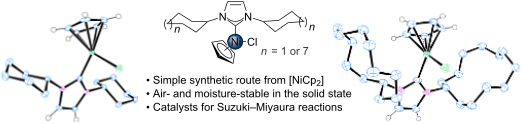
- Johnathon Yau Kaarel E. Hunt Laura McDougall Alan R. Kennedy David J. Nelson WestCHEM Department of Pure and Applied Chemistry, University of Strathclyde, Thomas Graham Building, 295 Cathedral Street, Glasgow G1 1XL, UK 10.3762/bjoc.11.235 Abstract Two new nickel catalysts have been prepared
- using a convenient procedure where nickelocene, the NHC·HBF4 salts, and [Et4N]Cl were heated in THF using microwave irradiation. The resulting [NiCl(Cp)(NHC)] complexes are air- and moisture stable in the solid state, and represent two new members of this valuable and practical class of nickel catalysts
- -coupling; N-heterocyclic carbenes; nickel; Introduction Nickel catalysis is currently an area of great interest, due to the potential for nickel to replace palladium in some catalytic processes, as well as its ability to perform a much wider range of reactions [1]. Nickel complexes bearing N-heterocyclic


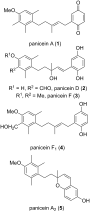
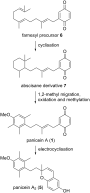
Total synthesis of panicein A2
Beilstein J. Org. Chem. 2015, 11, 1991–1996, doi:10.3762/bjoc.11.215
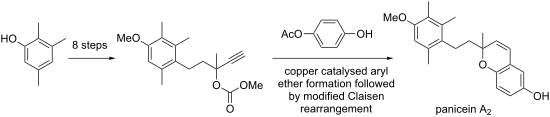
- . to provide ketone 12 in 66% yield [8]. The selective reduction of the olefin in α,β-unsaturated ketone 12 was then attempted using the Raney nickel catalyst under hydrogen as previously reported [8]; unfortunately no product 13 was formed. Following this, a range of conditions were employed to reduce



Synthesis and structures of ruthenium–NHC complexes and their catalysis in hydrogen transfer reaction
Beilstein J. Org. Chem. 2015, 11, 1786–1795, doi:10.3762/bjoc.11.194
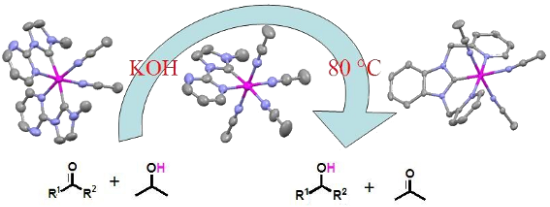
- corresponding nickel–NHC complexes with [Ru(p-cymene)2Cl2]2 in refluxing acetonitrile solution. The crystal structures of three complexes determined by X-ray analyses show that the central Ru(II) atoms are coordinated by pyrimidine- or pyridine-functionalized N-heterocyclic carbene and acetonitrile ligands
- (1), [RuL1(CH3CN)4](PF6)2 (2) and [RuL2(CH3CN)3](PF6)2 (3) The ruthenium–NHC complexes 1 and 2 were synthesized by using the corresponding nickel–NHC complexes as the carbene transfer agent [36]. The reaction of imidazolium salt HL1(PF6) (L1 = 3-methyl-1-(pyrimidine-2-yl)imidazolylidene) with Raney
- nickel afforded the nickel–NHC complexes which were not isolated [30]. The subsequent reaction of the generated nickel–NHC complexes with a quarter equivalent of [Ru(p-cymene)Cl2]2 in refluxing acetonitrile solution afforded bis-NHC complex [Ru(L1)2(CH3CN)2](PF6)2 (1) in a yield of 76% (Scheme 1). When a


The simple production of nonsymmetric quaterpyridines through Kröhnke pyridine synthesis
Beilstein J. Org. Chem. 2015, 11, 1781–1785, doi:10.3762/bjoc.11.193

- asymmetrical analogues. Various coupling methodologies have also been developed: (i) the Ullmann reaction with copper powder at high temperature [9]; (ii) coupling of 6-halo-2,2’-bipyridines in the presence of nickel reagents [16][17], some of which are chiral [18][19]; and (iii) a Stille-based synthetic





