


Search results
Search for "standards" in Full Text gives 194 result(s) in Beilstein Journal of Organic Chemistry.
Metal-mediated aminocatalysis provides mild conditions: Enantioselective Michael addition mediated by primary amino catalysts and alkali-metal ions
Beilstein J. Org. Chem. 2013, 9, 155–165, doi:10.3762/bjoc.9.18
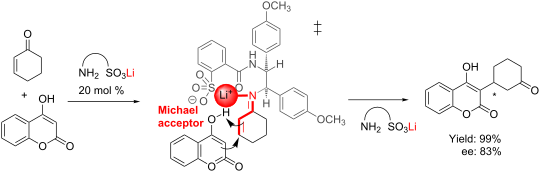
- mixture was subjected to column chromatography without quenching, and all yields were determined as isolated yields. The ee’s were established by chiral HPLC according to racemic standards and literature data [23]. 4-Hydroxy-3-(3-oxo-1-phenylbutyl)coumarin (warfarin). 1H and 13C NMR data were found to be



Influence of cyclodextrin on the solubility and the polymerization of (meth)acrylated Triton® X-100
Beilstein J. Org. Chem. 2012, 8, 2176–2183, doi:10.3762/bjoc.8.245
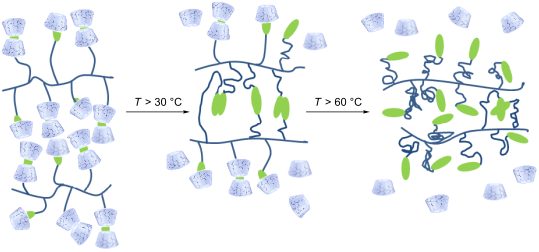
- /min. For detection a Viscotek VE 3500 RI detector was used. The system was calibrated with polystyrene standards within a molecular range from 575 to 3,114,000 g/mol. On a Mettler Toledo DSC 822 instrument the DSC measurements were determined in a range of −50 to 200 °C at the heating rate of 10 °C


Synthesis of a derivative of α-D-Glcp(1->2)-D-Galf suitable for further glycosylation and of α-D-Glcp(1->2)-D-Gal, a disaccharide fragment obtained from varianose
Beilstein J. Org. Chem. 2012, 8, 2142–2148, doi:10.3762/bjoc.8.241

- incorporation. Synthetic oligosaccharide fragments related to varianose are useful as potential substrates or standards for characterization of the α-galactofuranosyl transferases. In this paper we report a straightforward procedure for the synthesis of α-D-Glcp(1→2)-D-Gal (1) and the use of this compound to
- a good model for studies on the GlfTα. The constitutive oligosaccharides could be used as substrates or as standards for the identification of the products. A pentasaccharide fragment containing both, α and β-galactofuranosyl residues was synthesized by Bay and Lowary [18]. The two possible


New enzymatically polymerized copolymers from 4-tert-butylphenol and 4-ferrocenylphenol and their modification and inclusion complexes with β-cyclodextrin
Beilstein J. Org. Chem. 2012, 8, 2118–2123, doi:10.3762/bjoc.8.238
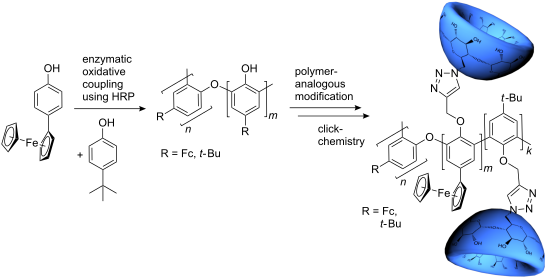
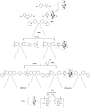
- polystyrene standards in a range of 575 to 3,114,000 g/mol. Toluene was used as the internal standard. Dynamic light scattering (DLS) experiments were carried out with a Malvern Zetasizer Nano ZS ZEN 3600 at a temperature of 20 °C. The particle size distribution was derived from a deconvolution of the


![[Graphic 2]](/bjoc/content/inline/1860-5397-8-238-i3.png?max-width=637&scale=0.59091) ).
).

Chemical modification allows phallotoxins and amatoxins to be used as tools in cell biology
Beilstein J. Org. Chem. 2012, 8, 2072–2084, doi:10.3762/bjoc.8.233
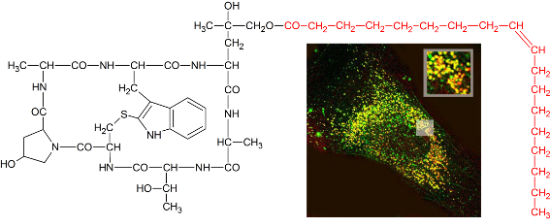
- with the matrix solution and 0.7 µL of this mixture was dried onto the stainless-steel sample holder. Matrix solutions were usually α-cyano-4-hydroxycinnamic acid [dissolved at 10 mg/mL in 50% acetonitrile, 50% 0.1% TFA (all % v/v)]. Spectra were calibrated by using near-external standards consisting




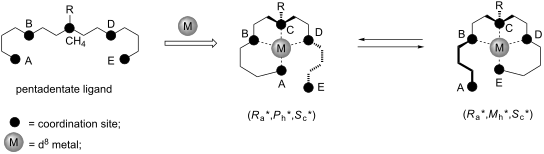
Design and synthesis of quasi-diastereomeric molecules with unchanging central, regenerating axial and switchable helical chirality via cleavage and formation of Ni(II)–O and Ni(II)–N coordination bonds
Beilstein J. Org. Chem. 2012, 8, 1920–1928, doi:10.3762/bjoc.8.223
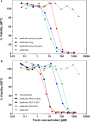
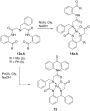
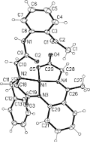
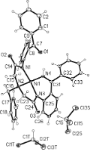
- internal standards. High-resolution mass spectra (HRMS) were recorded on a JEOL HX110A instrument. Optical rotations were measured on a JASCO P-1010 polarimeter. Melting points (mp) are uncorrected and were obtained in open capillaries. All reagents and solvents, unless otherwise stated, are commercially


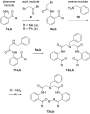

Synthesis and characterization of low-molecular-weight π-conjugated polymers covered by persilylated β-cyclodextrin
Beilstein J. Org. Chem. 2012, 8, 1505–1514, doi:10.3762/bjoc.8.170
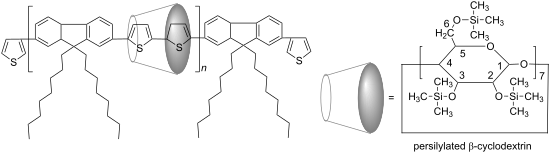
- determined by gel-permeation chromatography (GPC) analysis, using polystyrenes as standards and CH2Cl2 as eluent. GPC data are listed in Table 1 and shown in Figure S2 and Figure S3 in the Supporting Information File 1. On the basis of the molecular weight, the numbers of repeat units for PDOF-BTc and PDOF
- . The molecular weights of copolymers were determined by gel permeation chromatography (GPC) in CH2Cl2 by using a Water Associates 440 instrument and polystyrene calibrating standards. Differential scanning calorimetry (DSC) was performed with a Mettler Toledo DSC-12E calorimeter with two repeated



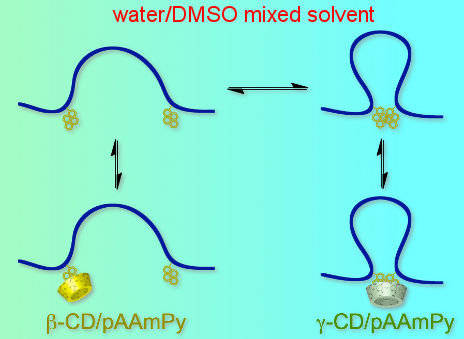
Interaction of cyclodextrins with pyrene-modified polyacrylamide in a mixed solvent of water and dimethyl sulfoxide as studied by steady-state fluorescence
Beilstein J. Org. Chem. 2012, 8, 1312–1317, doi:10.3762/bjoc.8.150
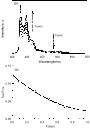
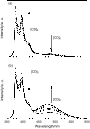
- Standards). 1H NMR spectra were measured on a JEOL JNM-ECA500 spectrometer by using a mixed solvent of DMSO-d6 and D2O (1/1, v/v) as a solvent, and chemical shifts were referenced to the solvent value (i.e., 2.49 ppm for DMSO). Steady-state fluorescence spectra for 0.04 g L−1 pAAmPy at varying xDMSO from 0



Partial thioamide scan on the lipopeptaibiotic trichogin GA IV. Effects on folding and bioactivity
Beilstein J. Org. Chem. 2012, 8, 1161–1171, doi:10.3762/bjoc.8.129
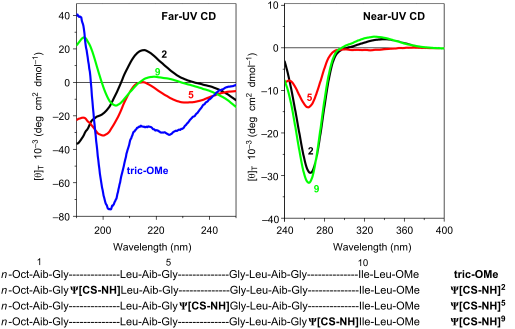
- Peptide antibacterial activity was tested against Gram-positive and Gram-negative bacteria by the standardized disk diffusion Bauer–Kirby method [75] using the Müller–Hinton culture medium at pH 7.2–7.4 as recommended by the National Committee for Clinical Laboratory Standards [76]. The antibacterial


Algicidal lactones from the marine Roseobacter clade bacterium Ruegeria pomeroyi
Beilstein J. Org. Chem. 2012, 8, 941–950, doi:10.3762/bjoc.8.106
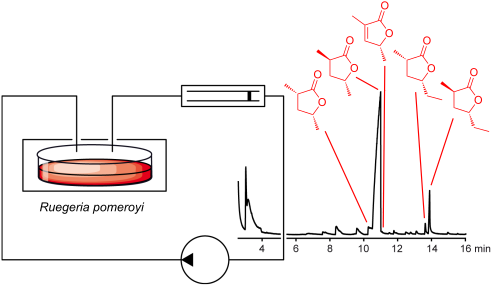
- bacteria of the Roseobacter clade and also from various other species [25], were readily identified according to their mass spectra and by comparison with synthetic standards. However, the volatiles 7–11, including the main compound 8, could not immediately be identified by their mass spectra alone. The
- in the volatile fraction of R. pomeroyi. The structures of these lactones have been unambiguously assigned by comparison to synthetic standards. In agar diffusion assays the synthetic lactones showed specific activity against algae, but not against bacteria or fungi, suggesting that the lactones may


The use of glycoinformatics in glycochemistry
Beilstein J. Org. Chem. 2012, 8, 915–929, doi:10.3762/bjoc.8.104
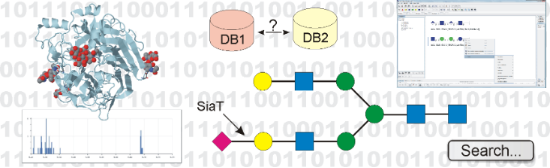
- that structures that have not been observed before or that are missing from the database will not be identified this way. This problem also applies to programs that use experimental MSn data of oligosaccharide standards to assign MSn fragments of larger glycans, such as GLYCH [129] or MSn FragLib [140

Chemo-enzymatic modification of poly-N-acetyllactosamine (LacNAc) oligomers and N,N-diacetyllactosamine (LacDiNAc) based on galactose oxidase treatment
Beilstein J. Org. Chem. 2012, 8, 712–725, doi:10.3762/bjoc.8.80
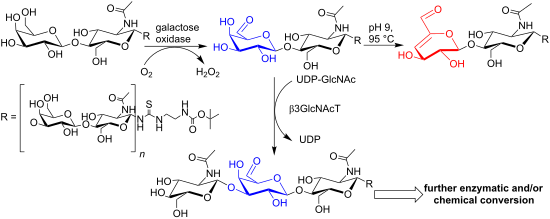
- analysed by analytical reversed-phase HPLC applying method A and assigned by comparison to defined standards [45]. Concentration was determined by integration of the peak area and calculated against a linear calibration regression of GlcNAc–linker–t-Boc. Synthesis and isolation of LacDiNAc-t-Boc LacDiNAc-t




Volatile organic compounds produced by the phytopathogenic bacterium Xanthomonas campestris pv. vesicatoria 85-10
Beilstein J. Org. Chem. 2012, 8, 579–596, doi:10.3762/bjoc.8.65
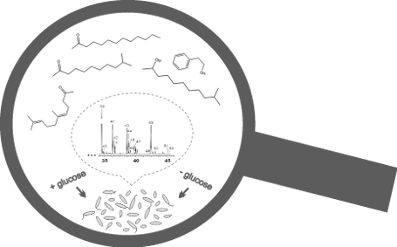
- (38) (small amounts of which were found to be present among the natural volatiles), retention indices with methylketones as reference standards were calculated. Corresponding data published for methyl-branched hydrocarbons and increment calculations strongly suggested iso-branching for the main
- commercially available or specifically synthesized reference compounds (co-injection). Synthetic 10-methylundecan-2-one and 9-methylundecan-2-one served as standards for the structure assignments of other branched-chain methyl ketones on the basis of their mass spectra and retention indices. Cultivation on
- . Electron ionization (EI) mass spectra were taken at 70 eV. The mass range was m/z = 40–280. Compounds were identified by using available reference compounds and the library of the National Institute of Standards and Technology (NIST147) for the comparison of mass spectra, retention times and Kovats indices


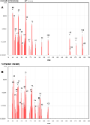


Azobenzene dye-coupled quadruply hydrogen-bonding modules as colorimetric indicators for supramolecular interactions
Beilstein J. Org. Chem. 2012, 8, 486–495, doi:10.3762/bjoc.8.55
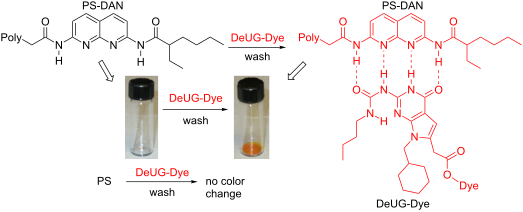
- as a control polymer and purified by dissolving in CH2Cl2 and precipitating out with MeOH. PS and PS-DAN were characterized by SEC with THF as eluent, with PS molecular weight standards. The loading of the DAN unit was determined by 1H NMR (Table 1). Poly(butyl acrylate) (PBA) and 2-ureido-4(1H
- )-pyrimidone (UPy) modified poly(butyl acrylate) (PBA-UPy) were prepared and characterized by THF SEC against PS standards according to a known procedure [57]. The loading of the UPy units, determined by 1H NMR, is listed in Table 1. PS and DAN-modified PS were obtained as white powders whereas PBA and UPy


Synthesis of fluorinated maltose derivatives for monitoring protein interaction by 19F NMR
Beilstein J. Org. Chem. 2012, 8, 448–455, doi:10.3762/bjoc.8.51
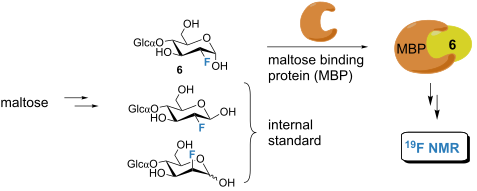
- -type 2-F-maltose isomers), which serve as internal standards, to rule out nonspecific binding and interactions, and thus increasing the reliability of this method. The 2-F-maltose reporter system was used to study the ligand binding affinity to MBP. “Fine tuning” by the regioselective fluorination of


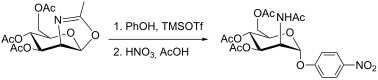
Facile synthesis of nitrophenyl 2-acetamido-2-deoxy-α-D-mannopyranosides from ManNAc-oxazoline
Beilstein J. Org. Chem. 2012, 8, 428–432, doi:10.3762/bjoc.8.48
- Avance III 400 MHz spectrometer (400.13 MHz for 1H, 100.55 MHz for 13C at 30 °C) and a Bruker Avance III 600 MHz spectrometer (600.23 MHz for 1H, 150.93 MHz for 13C at 30 °C) in CD3OD or CDCl3 (Sigma-Aldrich). Residual signals of the deuterated solvents were used as internal standards (for CD3OD δH 3.330


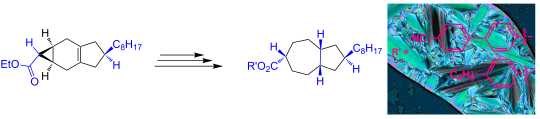
Perhydroazulene-based liquid-crystalline materials with smectic phases
Beilstein J. Org. Chem. 2012, 8, 403–410, doi:10.3762/bjoc.8.44
- using the residual nondeuterated solvent as internal standards (CDCl3: 1H: δ 7.26; 13C: δ 77.00). IR: Nicolet 320 FT-IR and Bruker Tensor 27 spectrometer. Samples were prepared either as KBr pellets or as thin films. UV: In acetonitrile and methanol with a Beckman UV 5230 or a HP 8452A Diode Array


Synthesis of mesomeric betaine compounds with imidazolium-enolate structure
Beilstein J. Org. Chem. 2012, 8, 390–397, doi:10.3762/bjoc.8.42
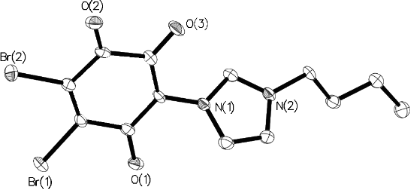
- used. The system was calibrated with polystyrene standards with a molecular range from 580 Da to 1186 kDa. Synthesis of 2,3-dibromo-5-(1-butyl-1H-imidazol-3-ium-3-yl)-1,4-benzoquinone-6-olate (3) Tetrabromo-1,4-benzoquinone (p-bromanil, 1) (0.845 g, 2 mmol) was dissolved in 45 mL of acetonitrile at 60




Conserved and species-specific oxylipin pathways in the wound-activated chemical defense of the noninvasive red alga Gracilaria chilensis and the invasive Gracilaria vermiculophylla
Beilstein J. Org. Chem. 2012, 8, 283–289, doi:10.3762/bjoc.8.30
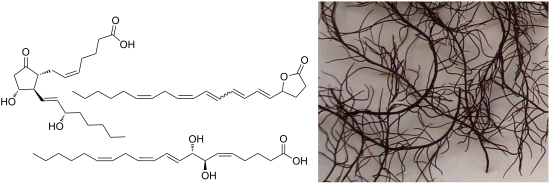
- same procedure was followed in the absence of the labeled fatty acid. Quantitative analysis. The extracted or commercially available compounds were used to create three calibration standards for each analyte, covering the concentration range detected in the extract from wounded algae. A calibration
- comparison of the obtained NMR and MS spectra by co-injection with authentic standards [3]. Stereochemistry of PGE2 was verified with CD spectroscopy in comparison with an authentic standard. Spectroscopic data of 5. 5-((1E,3E,5E,7Z,10Z)-hexadeca-1,3,5,7,10-pentaenyl)dihydrofuran-2(3H)-one (5) was obtained


(How) does 1,3,5-triethylbenzene scaffolding work? Analyzing the abilities of 1,3,5-triethylbenzene- and 1,3,5-trimethylbenzene-based scaffolds to preorganize the binding elements of supramolecular hosts and to improve binding of targets
Beilstein J. Org. Chem. 2012, 8, 1–10, doi:10.3762/bjoc.8.1
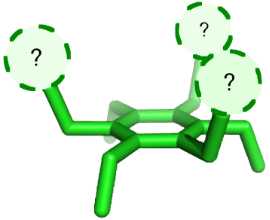
- repeating these calculations at the HF/6-31G* level of theory (Table 4). This method, although simple by modern standards, is suitable for conformational analysis and allowed us to calculate the relatively large systems (below) in a short time. Seven conformations including the lowest four conformations


Novel fatty acid methyl esters from the actinomycete Micromonospora aurantiaca
Beilstein J. Org. Chem. 2011, 7, 1697–1712, doi:10.3762/bjoc.7.200
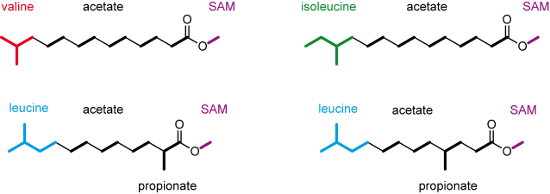
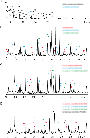
- comparison to library spectra and subsequent GC–MS analysis of synthetic standards. Mass spectra of unbranched FAMEs (for mass spectrum of methyl dodecanoate see Figure 5A) are characterised by fragment ions at m/z = 74 (McLafferty rearrangement, Scheme 2), m/z = 87 (β-cleavage), and [M − 31]+ (loss of OMe




Synthesis and characterization of new diiodocoumarin derivatives with promising antimicrobial activities
Beilstein J. Org. Chem. 2011, 7, 1688–1696, doi:10.3762/bjoc.7.199
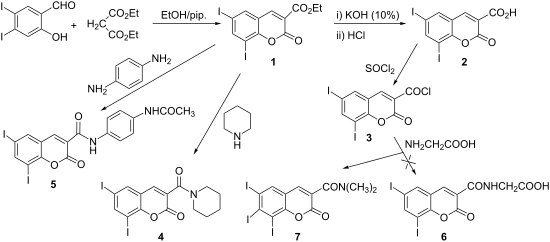
- , compared with the standards ampicillin and calforan. In addition, compounds 2 and 5 in the series were found to be inactive against Escherichia coli (NCTC-10410), while compound 11 was inactive against Serratia marcescens (IMRU-70). An investigation of the structure–activity relationship (SAR) revealed


A practical two-step procedure for the preparation of enantiopure pyridines: Multicomponent reactions of alkoxyallenes, nitriles and carboxylic acids followed by a cyclocondensation reaction
Beilstein J. Org. Chem. 2011, 7, 962–975, doi:10.3762/bjoc.7.108

- obtained from the solvent purification system MB-SPS-800 (M. Braun). Products were purified by flash chromatography on silica gel (230–400 mesh, Merck). Unless otherwise stated, yields refer to analytically pure samples. Internal standards: for 1H NMR CDCl3 (δ = 7.26 ppm), TMS (δ = 0.00 ppm), CD3OD (δ


Intraannular photoreactions in pseudo-geminally substituted [2.2]paracyclophanes
Beilstein J. Org. Chem. 2011, 7, 658–667, doi:10.3762/bjoc.7.78

- Kieselgel 60 (70–230 mesh). IR: Perkin–Elmer 1420 or Nicolet 320 FT–IR spectrometer. 1H and 13C NMR: Bruker AC 200 (1H) and 50.3 MHz (13C) in CDCl3, internal standards: TMS, δ = 0 ppm for 1H, CHCl3, δ = 77.05 ppm for 13C spectroscopy. UV–vis: Beckman UV 5230 or Hitachi U 3300. The samples were degassed by


Gold-catalyzed naphthalene functionalization
Beilstein J. Org. Chem. 2011, 7, 653–657, doi:10.3762/bjoc.7.77
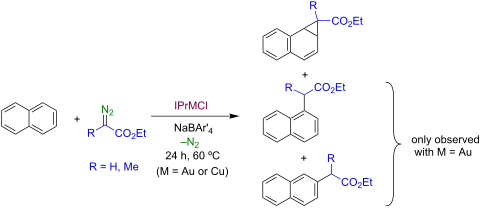
- ), NaBAr'4 and ethyl 2-diazopropionate were prepared by literature procedures [12][13][14][15][16]. 1H and 13C NMR spectra were recorded on a Varian Mercury 400 spectrometer in CDCl3 as solvent, with chemical shifts (δ) referenced to internal standards. General catalytic experiment Complex 1 (0.025 mmol





