


Search results
Search for "anilines" in Full Text gives 214 result(s) in Beilstein Journal of Organic Chemistry. Showing first 200.
Practical synthesis of indoles and benzofurans in water using a heterogeneous bimetallic catalyst
Beilstein J. Org. Chem. 2013, 9, 1426–1431, doi:10.3762/bjoc.9.160
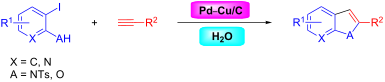
- ) with variously N-protected-2-iodoanilines gave contrasted results. Indeed, excellent yields of the corresponding indoles were obtained with anilines bearing mesyl, tosyl or Boc protecting groups (compounds 3–5), while only an uncyclized product was obtained with acetate (compound 7). The free indole
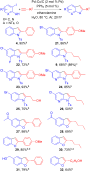
- acceptable yields. The Sonogashira alkynylation–cyclization sequence was successfully applied to a variety of alkynes and iodo-anilines (Scheme 5). As a general comment, aromatic alkynes consistently furnished a high yield of the corresponding indoles whatever the nature of the electrophile (compounds 4, 21
- with aryl acetylenes suggesting a strong halide effect and a sensitivity of the Pd–X bond under our reaction conditions. Indeed, the coupling of aryl acetylenes with bromo-anilines and bromo-phenols showed lower conversion compared to the iodo-congeners. We further evaluated the potential of our Pd–Cu


Palladium-catalyzed synthesis of N-arylated carbazoles using anilines and cyclic diaryliodonium salts
Beilstein J. Org. Chem. 2013, 9, 1202–1209, doi:10.3762/bjoc.9.136
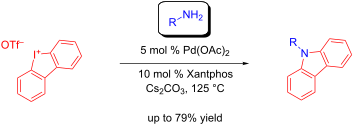
- The direct synthesis of N-arylated carbazoles through a palladium-catalyzed amination of cyclic iodonium salts with anilines is described. In particular, electron-poor aniline derivatives reacted smoothly with only 5 mol % of Pd(OAc)2 as catalyst to give the desired products in up to 71% yield
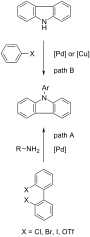
- present an alternative Pd-catalyzed method for the construction of N-substituted carbazoles based on a stable, cyclic iodonium salt and electron-deficient anilines [24][25]. In the initial C–N bond-forming step of this cascade reaction, a ring opening of the cyclic iodonium salt through the amine is
- isolated yield. After we had gained a better understanding about byproduct formation, we decided to explore various substituted anilines under our optimized reaction conditions (Figure 3). Electron-rich p-toluidine (2b) gave the corresponding carbazole 3b in only 45% yield. Comparable results were obtained




An aniline dication-like transition state in the Bamberger rearrangement
Beilstein J. Org. Chem. 2013, 9, 1073–1082, doi:10.3762/bjoc.9.119
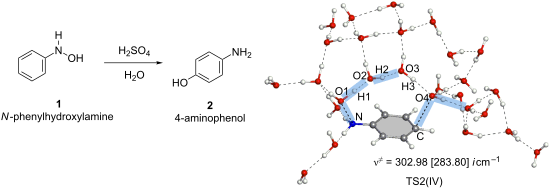
- ) geometries were obtained and are shown in Figure 7. Their activation energies were calculated to be +28.52 kca/mol and +29.57 kcal/mol relative to the energy of Int1(V), respectively. These similar values indicate that both 2- and 4-Cl-substituted anilines may be formed almost equally according to the normal


Design and synthesis of tag-free photoprobes for the identification of the molecular target for CCG-1423, a novel inhibitor of the Rho/MKL1/SRF signaling pathway
Beilstein J. Org. Chem. 2013, 9, 966–973, doi:10.3762/bjoc.9.111
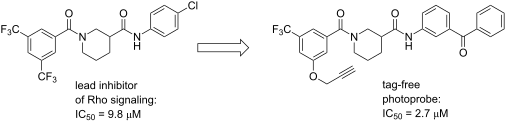
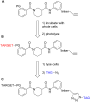
- acid (4) was reacted with substituted anilines 5 under standard EDC-mediated amidation conditions, followed by TFA-catalyzed deprotection to afford amides 6. A subsequent second amidation with benzoic acids 7 afforded final bis(amide) analogues 8. We also synthesized a model azide (Scheme 2). Synthesis




Synthesis of functionalized spiro[indoline-3,4’-pyridines] and spiro[indoline-3,4’-pyridinones] via one-pot four-component reactions
Beilstein J. Org. Chem. 2013, 9, 846–851, doi:10.3762/bjoc.9.97
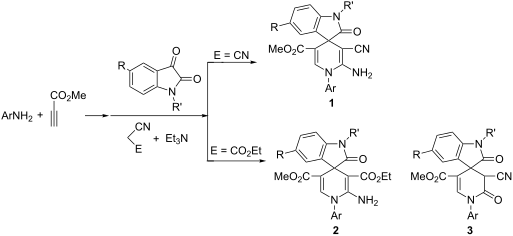
- separation process, only the main product was separated from the reaction mixtures by column chromatography. The other product was not separated or structurally characterized. The results are listed in Table 2. It is interesting to find that anilines bearing p-chloro, m-chloro or p-bromo groups afforded
- -methylaniline and aniline itself gave spiro[indoline-3,4’-pyridinones] 3a–3j as the main products (Table 2, entries 9–18). Thus, it seems that anilines with electron-withdrawing groups preferably give spiro[indoline-3,4’-pyridines] 2, while anilines with electron-donating groups preferably produce spiro
- attacked the ester group to give spiro[indoline-3,4’-pyridinones] 3 with the elimination of ethanol. In this reaction process, the reasons that anilines with electron-withdrawing groups preferably attack the cyano group and anilines with electron-donating groups preferably attack the ester group are not


Intramolecular carbonickelation of alkenes
Beilstein J. Org. Chem. 2013, 9, 710–716, doi:10.3762/bjoc.9.81
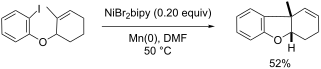
- a benzofuran or an indole core. Our first study involved the cyclization of allyl moieties such as allyl ether 1a or N-allyl protected anilines 1b–c, easily prepared by quantitative allylation of o-iodophenol and o-iodoanilines using allyl bromide in DMF (Scheme 1). Following the protocol optimized


Kinetics and mechanism of the anilinolysis of aryl phenyl isothiocyanophosphates in acetonitrile
Beilstein J. Org. Chem. 2013, 9, 615–620, doi:10.3762/bjoc.9.68
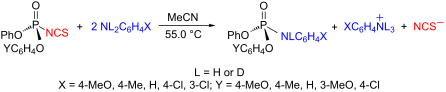
- Hasi Rani Barai Hai Whang Lee Department of Chemistry, Inha University, Incheon 402-751, Korea 10.3762/bjoc.9.68 Abstract Kinetic studies on the reactions of Y-aryl phenyl isothiocyanophosphates with substituted X-anilines and deuterated X-anilines were carried out in acetonitrile at 55.0 °C. The
- free-energy relationships with X in the nucleophiles were biphasic concave upwards with a break region between X = H and 4-Cl, giving unusual positive ρX and negative βX values with less basic anilines (X = 4-Cl and 3-Cl). A stepwise mechanism with rate-limiting bond breaking for more basic anilines
- and with rate-limiting bond formation for less basic anilines is proposed based on the positive and negative ρXY values, respectively. The deuterium kinetic isotope effects involving deuterated anilines (XC6H4ND2) showed primary normal and secondary inverse DKIEs for more basic and less basic anilines


A one-pot catalyst-free synthesis of functionalized pyrrolo[1,2-a]quinoxaline derivatives from benzene-1,2-diamine, acetylenedicarboxylates and ethyl bromopyruvate
Beilstein J. Org. Chem. 2013, 9, 510–515, doi:10.3762/bjoc.9.55
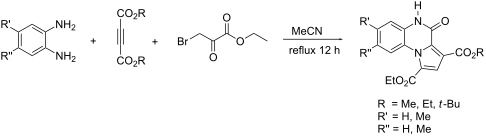
- )anilines with alkynes to form 4,5-dihydropyrrolo[1,2-a]quinoxalines [23][24]. Kobayashi and co-workers have described the Lewis acid catalyzed cyclization of 1-(2-isocyanophenyl)pyrroles to give pyrrolo[1,2-a]quinoxalines in good yields; however, the isocyanide substrates required multistep synthesis [25


Synthesis of spiro[dihydropyridine-oxindoles] via three-component reaction of arylamine, isatin and cyclopentane-1,3-dione
Beilstein J. Org. Chem. 2013, 9, 8–14, doi:10.3762/bjoc.9.2
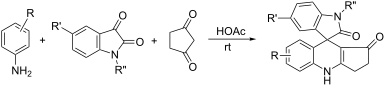
- Table 1. From these results we could see that only anilines with electron-donating alkyl and alkoxy groups reacted smoothly. When anilines with electron-withdrawing p-chloro, p-bromo, m-nitro, or p-nitro groups were used in this three-component reaction, no expected spiro[dihydropyridine-oxindole] could


Palladium-catalyzed C–N and C–O bond formation of N-substituted 4-bromo-7-azaindoles with amides, amines, amino acid esters and phenols
Beilstein J. Org. Chem. 2012, 8, 2004–2018, doi:10.3762/bjoc.8.227
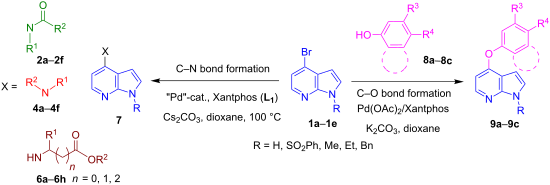
- amine counterpart under high reaction temperatures, preferably under heating to more than 180 °C or through the use of microwave irradiation, results in the amino-7-azaindole in moderate to low yield [5][7]. Primary alkylamines or anilines under similar reaction conditions provided the displacement


Organocatalytic C–H activation reactions
Beilstein J. Org. Chem. 2012, 8, 1374–1384, doi:10.3762/bjoc.8.159
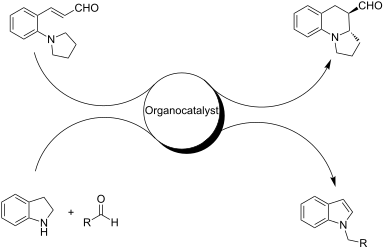
- ]. One well-known example of the “tert-amino effect” is the cyclization of N,N-dialkyl-substituted anilines with imines to generate cyclic aminals. The groups of Seidel and Akiyama independently reported mild organocatalytic approaches to cyclic aminals involving aminobenzaldehydes and primary amines [10





Synthesis of diverse indole libraries on polystyrene resin – Scope and limitations of an organometallic reaction on solid supports
Beilstein J. Org. Chem. 2012, 8, 1191–1199, doi:10.3762/bjoc.8.132
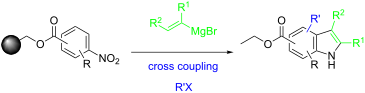
- } (Figure 4). Interestingly, even with substoichiometric amounts considerable formation of indoles was observed. Very common byproducts are anilines [45][46][47]. It should be noted at this point that the anilines are more prone to cleavage during the Bartoli reaction, and this led to a high purity (albeit


Highly selective synthesis of (E)-alkenyl-(pentafluorosulfanyl)benzenes through Horner–Wadsworth–Emmons reaction
Beilstein J. Org. Chem. 2012, 8, 1185–1190, doi:10.3762/bjoc.8.131
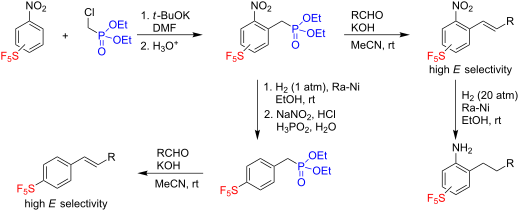
- good yields and high stereoselectivities. Follow-up transformations of the primary products provided (E)-1-alkenyl-(pentafluorosulfanyl)benzenes and 2-(2-arylethyl)-(pentafluorosulfanyl)anilines. Keywords: Horner–Wadsworth–Emmons reaction; pentafluorosulfanyl group; phosphonates; sulfurpentafluoride
- nitrogen [18] nucleophiles, and the oxidative nucleophilic substitution with Grignard and alkyllithium reagents [19]. Reduction of the nitro group in 1 or 2 to (pentafluorosulfanyl)anilines followed by acylation, SEAr halogenation or diazotization (with follow-up reactions) has also been described [11][20
- Raney nickel did not provide full conversion to the respective anilines. Furthermore, the reaction mixtures contained products 7 and 8. At higher pressure (20 atm), complete nitro group and C=C reduction of stilbenes 5 and 6 to compounds 7 and 8, respectively, took place (Table 4). Several other


Synthesis of a library of tricyclic azepinoisoindolinones
Beilstein J. Org. Chem. 2012, 8, 1091–1097, doi:10.3762/bjoc.8.120
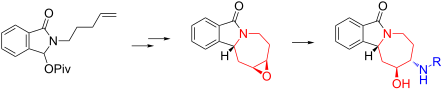
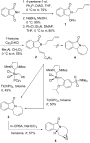
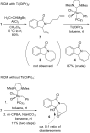
- ]. Co(ClO4)2 hexahydrate could also be used in place of ZnI2, but was generally less efficient (Table 1). Anilines with electron-withdrawing (CF3, CN, CO2Et), electron-donating (OCH3), and halogen substituents (F, Cl, Br) in ortho-, meta- and para-positions were used (Figure 5). Furthermore






Regioselective chlorination and bromination of unprotected anilines under mild conditions using copper halides in ionic liquids
Beilstein J. Org. Chem. 2012, 8, 744–748, doi:10.3762/bjoc.8.84
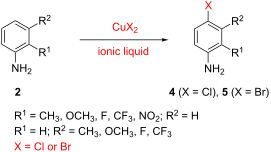
- Science, Shanghai, 201620, China 10.3762/bjoc.8.84 Abstract By using ionic liquids as solvents, the chlorination or bromination of unprotected anilines at the para-position can be achieved in high yields with copper halides under mild conditions, without the need for potentially hazardous operations such
- procedures. Regioselectivity with electron-rich substrates such as aniline will predominantly produce para- and ortho-substitutions. However, chlorination or bromination of aniline derivatives is often performed with protected anilines. This increases both the cost of synthesis and the environmental impact
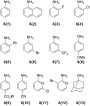
- -substituted anilines excellent results were obtained in terms of isolated yields of the desired 4-Cl products, which ranged from 85–96% (Table 2, entries 1–9, see Supporting Information File 1). The substitutions ranged from electron-donating substituents, such as the methoxy group, to electron-withdrawing


Double N-arylation reaction of polyhalogenated 4,4’-bipyridines. Expedious synthesis of functionalized 2,7-diazacarbazoles
Beilstein J. Org. Chem. 2012, 8, 253–258, doi:10.3762/bjoc.8.26
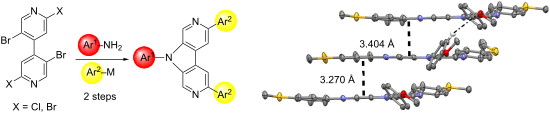
- obtained in this reaction (Table 1, entries 1–6). Aniline 6g bearing an electron withdrawing trifluoromethyl group led to a low yield of 3g (Table 1, entry 7) whereas no cyclized product was observed with other electron-deficient anilines 6h–j and carbamate 7 (Figure 1). Other methods to react 7 with
- use of the palladium-catalyzed double N-arylation of electron-rich anilines as the key reaction, the diazacarbazoles were regioselectively generated. Crystal structure determination shows that these molecules interact mainly through π–π stacking. The reported synthesis should widen the use of


A general and facile one-pot process of isothiocyanates from amines under aqueous conditions
Beilstein J. Org. Chem. 2012, 8, 61–70, doi:10.3762/bjoc.8.6
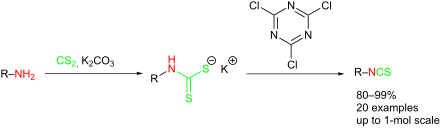
- – were employed, a significant amount of 1,3-diphenylthiourea (2-2) was formed; this resulted in the low selectivity for N-phenyl dithiocarbamate (2-1) (Table 1, entry 1 and 2) despite a high conversion observed for the anilines. When weaker bases – such as NH4OH, Na2CO3 and NaHCO3 – were used, the


Imidazole as a parent π-conjugated backbone in charge-transfer chromophores
Beilstein J. Org. Chem. 2012, 8, 25–49, doi:10.3762/bjoc.8.4
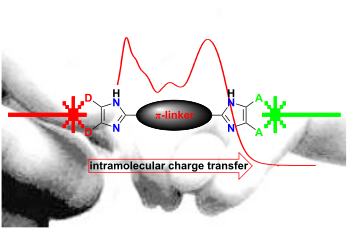
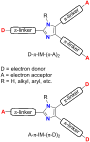
- inexpensive and readily available compounds (Scheme 1). Typical representatives of benzimidazole-derived D-π-A systems are shown in Figure 11. In 2004, Carella, Centore, and co-workers [25] reported the synthesis and further application of nitrobenzimidazole-derived anilines 35 and 36. These two compounds




PEG-embedded KBr3: A recyclable catalyst for multicomponent coupling reaction for the efficient synthesis of functionalized piperidines
Beilstein J. Org. Chem. 2011, 7, 1334–1341, doi:10.3762/bjoc.7.157
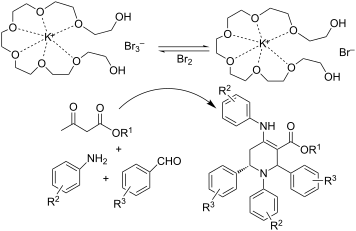
- conditions (see Experimental). The reaction proceeded efficiently and afforded a high product yield under mild reaction conditions. These successful results prompted us to extend the scope of the reaction with a variety of aldehydes, substituted anilines and β-keto esters under identical reaction conditions
- . The results of these experiments are summarized in Table 1. In all cases we achieved moderate to high yields of the products, which were identified by comparing their physical and spectral properties with those of authentic samples. Among the various anilines, the reaction was found to be faster with
- anilines having electron donating groups, whereas the reaction was found to be slow with aniline, which contains an electron-withdrawing group (Table 1, entry 12). Similarly the reaction was found to be very slow in the case when both aniline and aldehyde were substituted with electron-withdrawing groups


Synthesis of enantiomerically enriched (R)-13C-labelled 2-aminoisobutyric acid (Aib) by conformational memory in the alkylation of a derivative of L-alanine
Beilstein J. Org. Chem. 2011, 7, 1304–1309, doi:10.3762/bjoc.7.152
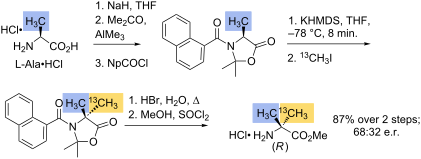
- to make mixtures containing detectable quantities of unequal pairs of diastereoisomeric derivatives. We have previously made isotopically labelled anilines [6] for related studies on oligo-urea foldamers [7][8][9]. Achiral quaternary amino acids such as Aib and its substituted congeners are powerful


Functionalization of heterocyclic compounds using polyfunctional magnesium and zinc reagents
Beilstein J. Org. Chem. 2011, 7, 1261–1277, doi:10.3762/bjoc.7.147
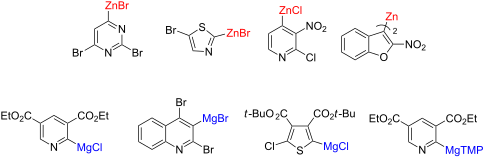
- followed by an iodination with iodine and Ag2SO4 furnishes the tetrasubstituted aniline 125. Protection of the free amino-group followed by a Negishi-reaction provides the scaffold 126 in 80% yield (Scheme 20). Successive magnesiations at the positions 5 and 3 of the tetrasubstituted anilines 126 with


Meta-metallation of N,N-dimethylaniline: Contrasting direct sodium-mediated zincation with indirect sodiation-dialkylzinc co-complexation
Beilstein J. Org. Chem. 2011, 7, 1234–1248, doi:10.3762/bjoc.7.144

- and Discussion The original direct meta-zincation reaction. In comparison to tertiary amides and O-carbamates, anilines are relatively modest metallation directing groups [19][29]. Activation of N,N-dimethylaniline transpires primarily from the acidifying effect of the N atom; the coordination effect
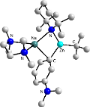
- keeping with conventional metallation chemistry exhibits ortho-deprotonated anilines. The instability of 3 at ambient temperatures is reflected in its deprotonation of toluene under mild conditions and following co-complexation with the dialkyl zinc, a mixture of two products were isolated from the



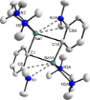


Reductive amination with zinc powder in aqueous media
Beilstein J. Org. Chem. 2011, 7, 1095–1099, doi:10.3762/bjoc.7.125

- detected, probably due to minor stabilization of aminoalkyl–radical intermediates involved in the reduction step. Additional examples (entries i to l) were explored with different combinations of isomeric hydroxybenzaldehydes and amines showing the successful reactivity of anilines and the compatibility of


Novel synthesis of pseudopeptides bearing a difluoromethyl group by Ugi reaction and desulfanylation
Beilstein J. Org. Chem. 2011, 7, 1070–1074, doi:10.3762/bjoc.7.123

- group (PhS) with Bu3SnH/AIBN according to our previous research, and the desired difluoromethyl-containing pseudopeptide was successfully obtained [27]. To demonstrate the scope of the method, several different substituted anilines, substituted benzaldehydes, isocyanides and this novel difluorinated
- difluoromethyl-containing pseudopeptides (3a–m and 4a–m) in good yields (Table 1). Conclusion In summary, we have developed a novel and efficient protocol for the synthesis of CF2H-containing pseudopeptides by Ugi reaction of substituted anilines, benzaldehyde, isocyanides and the novel building block 2,2


Multicomponent reaction access to complex quinolines via oxidation of the Povarov adducts
Beilstein J. Org. Chem. 2011, 7, 980–987, doi:10.3762/bjoc.7.110
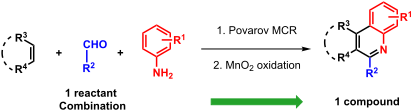
- through the Povarov MCR (the interaction of anilines, aldehydes and activated olefin inputs under acid catalysis) [4][5][6][7][8]. Interestingly, this process allows cyclic enol ethers and enamines to be used as electron-rich alkenes, leading to heterocycle-fused tetrahydroquinolines, usually as a mixture
- , anilines and activated alkenes in a short sequence, involving Povarov MCR and oxidation steps. Experimental General 1H and 13C NMR spectra were recorded on a Varian Mercury 400 spectrometer. Unless otherwise stated, NMR spectra were recorded in CDCl3 solution with TMS as an internal reference. Data for 1H





