


Search results
Search for "metal complexes" in Full Text gives 276 result(s) in Beilstein Journal of Organic Chemistry. Showing first 200.
Spiro-fused carbohydrate oxazoline ligands: Synthesis and application as enantio-discrimination agents in asymmetric allylic alkylation
Beilstein J. Org. Chem. 2016, 12, 166–171, doi:10.3762/bjoc.12.18
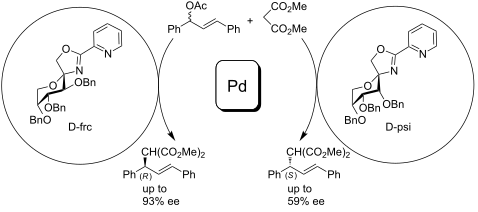
- metal complexes that enable asymmetric catalysis over the past decades, and an array of highly efficient privileged ligands for metal-catalyzed enantioselective syntheses have been derived from carbohydrates so far [1][2][3][4][5][6]. However, the enantioselective construction of C–C bonds, especially


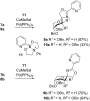


Versatile deprotonated NHC: C,N-bridged dinuclear iridium and rhodium complexes
Beilstein J. Org. Chem. 2016, 12, 117–124, doi:10.3762/bjoc.12.13
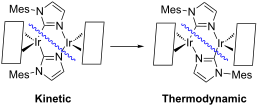
- bond [7][8], which favored the synthesis of new NHCs and to their use as ligands in transition metal complexes. The latter complexes were usually obtained by an easy replacement of a phosphine by the new NHC ligand, displaying a very high stability under many catalytic conditions. Furthermore, NHCs
- ], substrate recognition [29] and/or biological systems [30][31]. Among the synthetic methodologies to access to pNHC metal complexes [32][33][34][35][36][37][38][39][40], recently N-arylimine functionalized pNHC iridium complexes were obtained using excess of [Ir(cod)(µ-Cl)]2 [41], and next deprotonation of


N-Methylphthalimide-substituted benzimidazolium salts and PEPPSI Pd–NHC complexes: synthesis, characterization and catalytic activity in carbon–carbon bond-forming reactions
Beilstein J. Org. Chem. 2016, 12, 81–88, doi:10.3762/bjoc.12.9
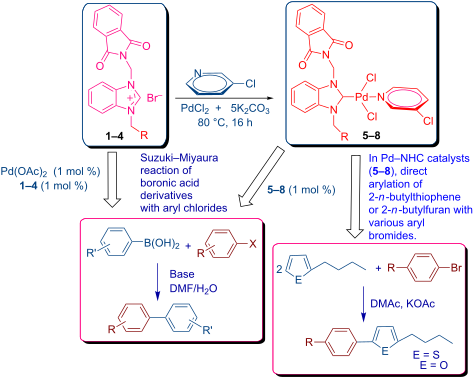
- been major advances in the design and synthesis of metal complexes containing N-heterocyclic carbene ligands in the last two decades, and they had a wide range of applications in different fields, particularly in homogeneous/heterogeneous catalysis [3][4][5][6][7][8] and bioorganometallic chemistry [9
- -chloropyridine ligand in the 1H and 13C{1H} NMR spectra. For the 1H NMR spectra of the metal complexes, sharp peaks in the lower field belonging to the benzimidazolium salts (NCHN) were not observed between δ 10 and 12 ppm. The FTIR data clearly indicated the presence of ν(CN) at 1508.2, 1446.5, 1394.4 and
- against the calculated values of m/z 636.84, 691.84 and 574.95, respectively. Unfortunately, we were unable to yield a proper single crystal from these compounds for X-ray diffraction. Unlike the salts, the metal complexes showed absorbance in UV–vis experiments. Absorption spectroscopy studies The


Recent advances in metathesis-derived polymers containing transition metals in the side chain
Beilstein J. Org. Chem. 2015, 11, 2747–2762, doi:10.3762/bjoc.11.296
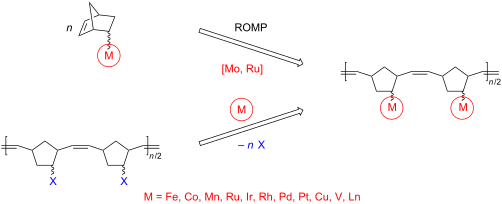
- as prepared by controlled living ring-opening metathesis polymerization (ROMP) of the respective metal-incorporating monomers. Ferrocene- and other metallocene-modified polymers, macromolecules including metal-carbonyl complexes, polymers tethering early or late transition metal complexes, etc. are


Iron complexes of tetramine ligands catalyse allylic hydroxyamination via a nitroso–ene mechanism
Beilstein J. Org. Chem. 2015, 11, 2549–2556, doi:10.3762/bjoc.11.275
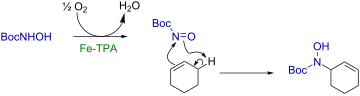
- investigations suggest the reaction proceeds via nitroso–ene reaction of the oxidised hydroxylamine and the alkene. Results and Discussion Synthesis of metal complexes The tetramine ligands TPA (1), BPMEN (2) and (R,R′)-PDP (3) were synthesised following literature procedures [48][50][51], then combined with


Easy access to heterobimetallic complexes for medical imaging applications via microwave-enhanced cycloaddition
Beilstein J. Org. Chem. 2015, 11, 2202–2208, doi:10.3762/bjoc.11.239
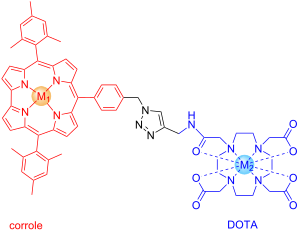
- forming highly stable transition metal complexes making them efficient delivery vehicles for radioisotopes. The radioactive 64Cu2+-porphyrin is known to be extremely stable. Shi et al. [19] have described an easy and efficient radiolabeling of the porphyrin macroring with 64Cu. Mukai et al. [20] have


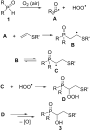
Aerobic addition of secondary phosphine oxides to vinyl sulfides: a shortcut to 1-hydroxy-2-(organosulfanyl)ethyl(diorganyl)phosphine oxides
Beilstein J. Org. Chem. 2015, 11, 1985–1990, doi:10.3762/bjoc.11.214
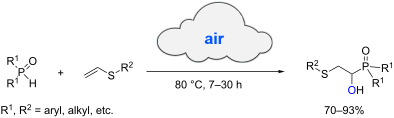
- building blocks for organic synthesis and interesting ligands for metal complexes. The results obtained contribute to the basic chemistry of both phosphine oxides and vinyl sulfides. ORTEP drawing (30% thermal ellipsoid) of phosphine oxide 3d. A CIF file with the crystallographic data is available as


Synthesis and structures of ruthenium–NHC complexes and their catalysis in hydrogen transfer reaction
Beilstein J. Org. Chem. 2015, 11, 1786–1795, doi:10.3762/bjoc.11.194
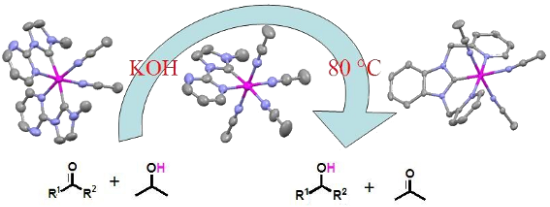
- carbenes (NHCs) have been recognized as a class of strong donating ligands which can stabilize various metal complexes of catalytic importance. Transition metal complexes bearing NHCs are more stable to air, moisture, heat, and tolerant toward oxidation compared to phosphine ligands [1][2][3][4][5][6][7
- [8][9][10][11][12][13][14][15][16] have been reported. In the family of metal complexes supported by functionalized NHCs, ruthenium complexes have long been a research focus on various applications such as catalysis and photochemistry [17][18][19][20][21][22][23][24][25][26]. However, the majority of


A facile synthetic route to benzimidazolium salts bearing bulky aromatic N-substituents
Beilstein J. Org. Chem. 2015, 11, 1656–1666, doi:10.3762/bjoc.11.182
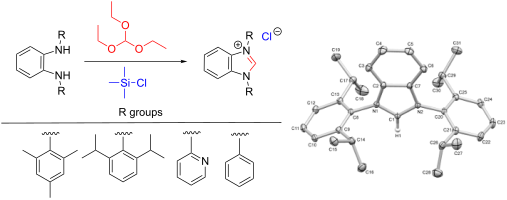
- can be tuned and, based on these properties, they possess great electronic flexibility. These ligands or catalysts reached a prominent position in the mentioned fields of chemistry. It is noteworthy that on the material’s side NHC-type carbene–borane adducts and metal complexes of them can also be
- ] salts for two reasons: we wished to find a faster way to access them and it seemed advantageous to aim preferentially at the synthesis of benzimidazolium chlorides than at [BF4]− salts, since in case the carbene will be generated in “in situ” reactions in the presence of metal complexes, the lower


Preparative semiconductor photoredox catalysis: An emerging theme in organic synthesis
Beilstein J. Org. Chem. 2015, 11, 1570–1582, doi:10.3762/bjoc.11.173
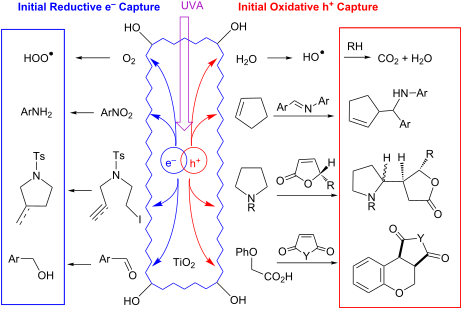
- , uncommon reaction sequences. Homogeneous PRCs form one class that encompasses soluble organic dyes [1] as well as transition metal complexes; particularly those of Ru and Ir. Study of the latter markedly escalated from 2008 thanks to papers from the groups of MacMillan [2], Yoon [3] and Stephenson [4]. The







Ruthenium indenylidene “1st generation” olefin metathesis catalysts containing triisopropyl phosphite
Beilstein J. Org. Chem. 2015, 11, 1520–1527, doi:10.3762/bjoc.11.166
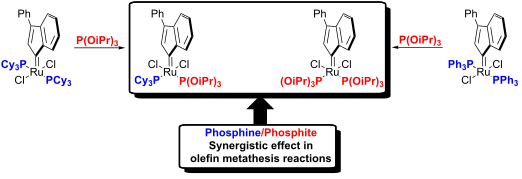
- shorten or provide alternative synthetic pathways for the synthesis of natural products displaying complex chemical structures [5][6][7][8][9]. Ru-based pre-catalysts are known to be more air-, moisture- and functional-group tolerant compared to early transition metal complexes [10][11][12][13]. In


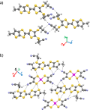
Tetrathiafulvalene-based azine ligands for anion and metal cation coordination
Beilstein J. Org. Chem. 2015, 11, 1379–1391, doi:10.3762/bjoc.11.149
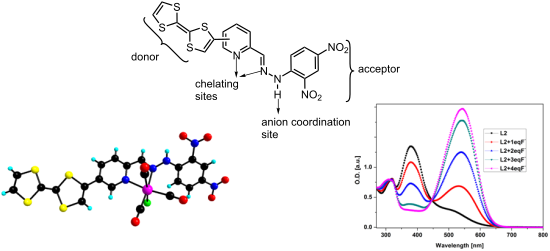
- devoted to the association of a binding or coordinating unit to the redox-active TTF moiety. This strategy has led for example, in solid state, to the preparation of electroactive metal complexes that combine magnetic and electrical properties [12][13][14][15][16][17]. In solution, TTF-based redox
- spectrum observed for other anions. Synthesis and crystal structure of a neutral rhenium complex Few metal complexes based on ruthenium cations have been previously prepared with dinitrophenylazine type ligands [48][49]. These reports indicate that the pyridinedinitrophenylazine type ligands are good
- candidates for the formation of metal complexes. We have therefore investigated the complexation of L1 and L2 with various metal cations and we succeeded in the crystallization of a neutral rhenium metal complex with ligand L2. Thus, the equimolar reaction between L2 and the [Re(CO)5Cl] precursor performed


New palladium–oxazoline complexes: Synthesis and evaluation of the optical properties and the catalytic power during the oxidation of textile dyes
Beilstein J. Org. Chem. 2015, 11, 1175–1186, doi:10.3762/bjoc.11.132
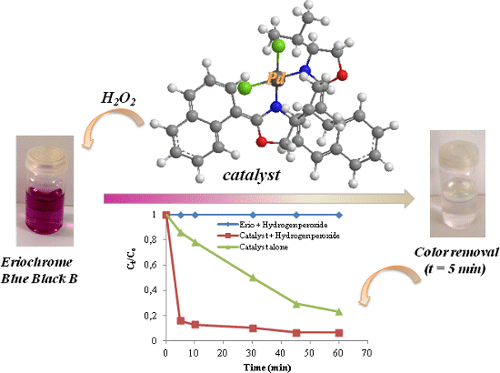
- , and carcinogenic [15][16]. That’s why many unconventional methods and techniques have been investigated and a number of studies have been developed [17][18][19]. In particular, attention has been focused on the synthesis of supports having metal complexes in their structures due to their capacities


A hybrid electron donor comprising cyclopentadithiophene and dithiafulvenyl for dye-sensitized solar cells
Beilstein J. Org. Chem. 2015, 11, 1052–1059, doi:10.3762/bjoc.11.118
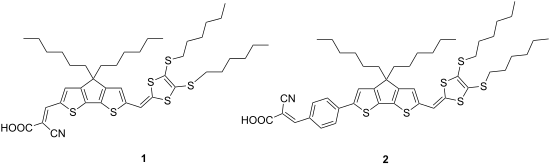
- ]. Although devices with the most commonly used dyes based on polypyridyl transition-metal complexes show excellent photovoltaic performances with high power conversion efficiencies of over 11% [4], metal-free organic dyes have significant advantages in several aspects. These comprise for example large molar


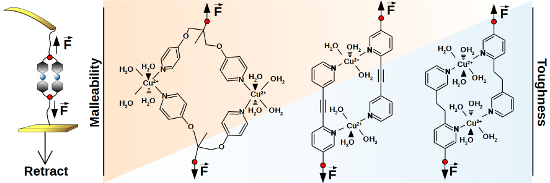
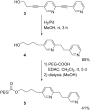
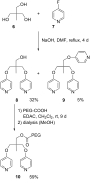
Mechanical stability of bivalent transition metal complexes analyzed by single-molecule force spectroscopy
Beilstein J. Org. Chem. 2015, 11, 817–827, doi:10.3762/bjoc.11.91




Multivalent polyglycerol supported imidazolidin-4-one organocatalysts for enantioselective Friedel–Crafts alkylations
Beilstein J. Org. Chem. 2015, 11, 730–738, doi:10.3762/bjoc.11.83
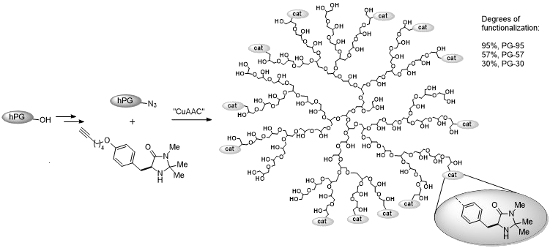
- properties. Hyperbranched polymers like polytriallylsilane or polyglycerol have been used in a wide range of transformations including aldol condensations [22], Suzuki cross-couplings [23] and Diels–Alder reactions [24], to name a few, with metal complexes as catalytically active principle. The advent of
- organocatalysis has allowed for selective C–C bond formation by using small organic molecules [25][26][27][28][29][30][31]. In contrast to metal complexes, chiral or achiral organocatalysts are easily attached on supports. They do not suffer from metal leaching and they can be reused more readily [32][33][34][35


Self-assembly of heteroleptic dinuclear metallosupramolecular kites from multivalent ligands via social self-sorting
Beilstein J. Org. Chem. 2015, 11, 693–700, doi:10.3762/bjoc.11.79
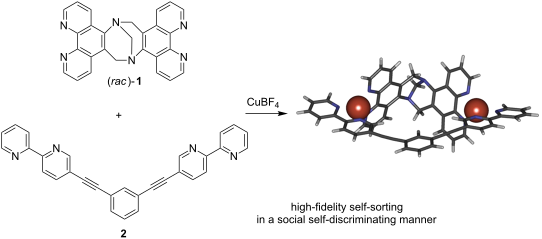
- social self-sorting manner as evidenced by NMR spectroscopy and mass spectrometry. Keywords: metal complexes; multivalency; self-assembly; self-sorting; supramolecular chemistry; Tröger's base; Introduction Self-assembly of defined aggregates from multicomponent mixtures through self-sorting effects
- cage-like homoleptic metal complexes is (almost) prevented when they are mixed with a suitable transition metal ion. As the metal ions we chose copper(I) ions which prefer a tetrahedral coordination sphere by two chelating ligands with N-donor centers such as 2,2'-bipyridines or 1,10-phenanthrolines
- characterization of the metal complexes: [Cu(H3CCN)4]BF4 (6.3 mg, 20 µmol) were dissolved in DMSO-d6 (1 mL). This solution (500 µL) were added to (rac)-1 (4.26 mg, 10 µmol) and the remaining 500 µL of the solution were added to 2 (4.34 mg, 10 µmol), respectively. The resulting solutions were characterized by NMR


TTFs nonsymmetrically fused with alkylthiophenic moieties
Beilstein J. Org. Chem. 2015, 11, 628–637, doi:10.3762/bjoc.11.71
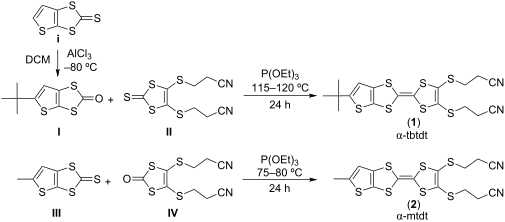
- derivatives have been reported in the last 40 years and many have been at the basis of several conducting, superconducting and other important electronic materials [2][3][4][5][6]. Bisdithiolene–transition metal complexes with square planar structures can be seen as inorganic TTF analogues, in which a
- transition metal replaces the central double bond. They have similar frontier orbitals to TTF and have been also at the basis of several electronic materials [7]. An additional connection between the TTF derivatives and the bisdithiolene–transition metal complexes was recently provided by complexes with
- converted to transition metal complexes based on extended thiophene/TTF-fused dithiolene ligands. They were obtained by cross-coupling reactions between alkylated thio and oxo compounds. The incorporation of these alkyl groups in the thiophenic ring is expected to increase the solubility of these TTFs and





Photocatalytic nucleophilic addition of alcohols to styrenes in Markovnikov and anti-Markovnikov orientation
Beilstein J. Org. Chem. 2015, 11, 568–575, doi:10.3762/bjoc.11.62
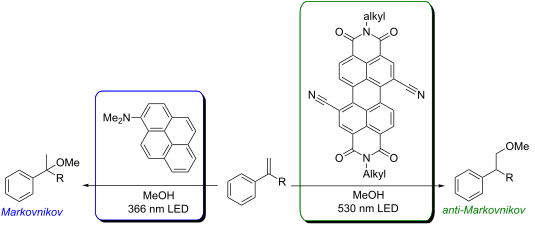
- light sources, the research field of photoredox catalysis has tremendously grown over the past decade [1][2][3][4][5][6][7]. Transition metal complexes, mainly [Ru(bpy)3]2+ [7], were most often used as photocatalysts, whereas the potential of organic compounds and dyes has not yet been fully exploited
- their potential and versatile applicability in chemical syntheses. Their non-photochemical counterparts require acids, bases or transition metal complexes as catalysts [10]. The first examples of photochemical olefin aminations were reported by Cookson et al. [11] and Kawanisi et al. [12] in the 1960s


Cross-dehydrogenative coupling for the intermolecular C–O bond formation
Beilstein J. Org. Chem. 2015, 11, 92–146, doi:10.3762/bjoc.11.13
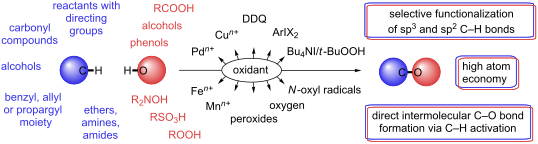
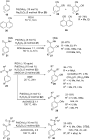
- the hydrogen transfer catalyzed by transition metal complexes. In these reactions, compounds with a double bond or a C–Hal bond act as oxidants (hydrogen acceptors). Examples of these reactions with aldehydes or primary alcohols as C–H reagents are given in Table 2. Crotononitrile, acetone, and benzyl






An improved procedure for the preparation of Ru(bpz)3(PF6)2 via a high-yielding synthesis of 2,2’-bipyrazine
Beilstein J. Org. Chem. 2015, 11, 61–65, doi:10.3762/bjoc.11.9
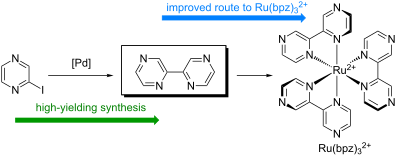
- couplings [13][14], and photooxygenation reactions [15][16]. Similarly, Zheng has reported oxidatively initiated indole synthesis [17] and [3 + 2] cycloaddition [18][19] reactions using photocatalyst 2. Finally, a variety of transition metal complexes bearing bipyrazyl ligands have been prepared and
- of bpz. An improved synthesis of this ligand would be useful both in the context of the growing interest in photoredox catalysis as well as other organometallic and inorganic applications of bpz-supported transition metal complexes. Our optimization studies for the reductive coupling of 2


A facile synthesis of functionalized 7,8-diaza[5]helicenes through an oxidative ring-closure of 1,1’-binaphthalene-2,2’-diamines (BINAMs)
Beilstein J. Org. Chem. 2015, 11, 9–15, doi:10.3762/bjoc.11.2
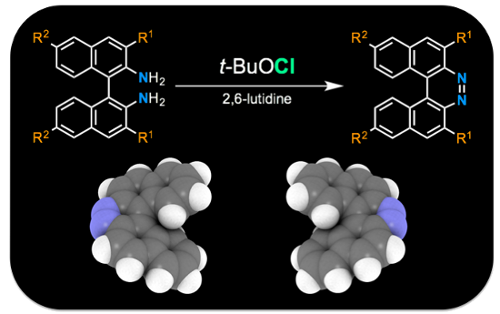
- metal complexes through the coordination at the diazene unit [15][16][17]. Taking 7,8-diaza[5]helicene as an example, conventional methodologies of preparing such compounds (Scheme 2) involve i) reductive coupling of 2-nitronaphthalenes using strong reductants like Zn dust [1][18] and PH3 [19], ii


Recent advances in the electrochemical construction of heterocycles
Beilstein J. Org. Chem. 2014, 10, 2858–2873, doi:10.3762/bjoc.10.303
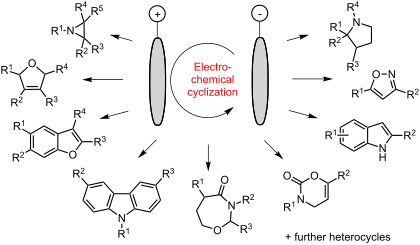
- polymer films. In the context of heterocycle synthesis, a number of mediators based on organic molecules, inorganic salts and metal complexes have been used recently and their use will be discussed later on the basis of the relevant examples. 1 Intramolecular cyclizations 1.1 Anodic olefin coupling The




A novel 4-aminoantipyrine-Pd(II) complex catalyzes Suzuki–Miyaura cross-coupling reactions of aryl halides
Beilstein J. Org. Chem. 2014, 10, 2821–2826, doi:10.3762/bjoc.10.299
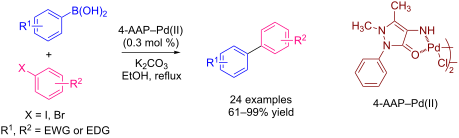
- are tolerated. Keywords: 4-aminoantipyrine; arylboronic acids; biaryls; cross-coupling; palladium(II) complex; Introduction The sp2–sp2 carbon–carbon bond formation through cross-coupling reactions catalyzed by metal complexes has emerged as a powerful tool in organic synthesis [1][2][3][4][5][6
- -free catalysts for SM coupling reactions. Transition metal complexes that have shown a wide range of biological activity are those containing the pyrazolone derivative 4-aminoantipyrine (4-amino-1,5-dimethyl-2-phenyl-1H-pyrazol-3(2H)-one, or simply “4-AAP”) [18]. Pyrazoles, in general, are one of the
- complexes of 4-AAP have shown anti-inflammatory, analgesic, antiviral, antipyretic, antirheumatic and antimicrobial activity [20][21]. Despite the potential biological importance of 4-AAP, the catalytic activity of its transition metal complexes for C–C bond formation have not yet been investigated. Herein


Host–guest-driven color change in water: influence of cyclodextrin on the structure of a copper complex of poly((4-hydroxy-3-(pyridin-3-yldiazenyl)phenethyl)methacrylamide-co-dimethylacrylamide)
Beilstein J. Org. Chem. 2014, 10, 2480–2483, doi:10.3762/bjoc.10.259
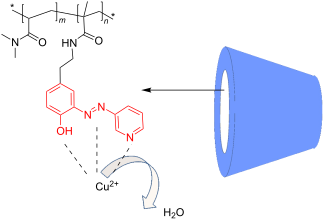
- ions and CD in aqueous media under respect of color change. Findings The aim of this work was to synthesize the polymerizable azo dye N-(4-hydroxy-3-(pyridin-3-yldiazenyl)phenethyl)methacrylamide (5) which should potentially be able to form stable azo–metal complexes in aqueous solutions. Therefore
- -copper complexes in aqueous media. In result we could show that supramolecular structures and metal complexes open up a wide field for the development of novel stimuli-responsive polymer materials. We thus described that the simple addition of copper and γ-CD to a poly((4-hydroxy-3-(pyridin-3-yldiazenyl





