Search results
Search for "nucleophilicity" in Full Text gives 294 result(s) in Beilstein Journal of Organic Chemistry. Showing first 200.
Transition-metal-catalyzed synthesis of phenols and aryl thiols
Beilstein J. Org. Chem. 2017, 13, 589–611, doi:10.3762/bjoc.13.58

- chemical properties, such as acidity and nucleophilicity, and thus to some extent, the synthetic methods could be developed analogously to each other. In this context, it is valuable to compare their existing synthetic methods for better understanding, so as to inspire organic chemists to invent new


Studies directed toward the exploitation of vicinal diols in the synthesis of (+)-nebivolol intermediates
Beilstein J. Org. Chem. 2017, 13, 571–578, doi:10.3762/bjoc.13.56
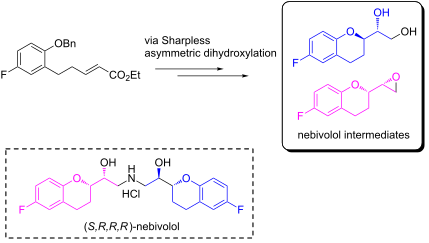
- nucleophilic attack of the phenolic hydroxy group; instead it reacted with water during the work-up process. This different outcome of this reaction compared to Borhan’s results might be attributed to the lower nucleophilicity of phenols compared to alcohols. Previously, Panda and co-worker converted


Continuous N-alkylation reactions of amino alcohols using γ-Al2O3 and supercritical CO2: unexpected formation of cyclic ureas and urethanes by reaction with CO2
Beilstein J. Org. Chem. 2017, 13, 329–337, doi:10.3762/bjoc.13.36
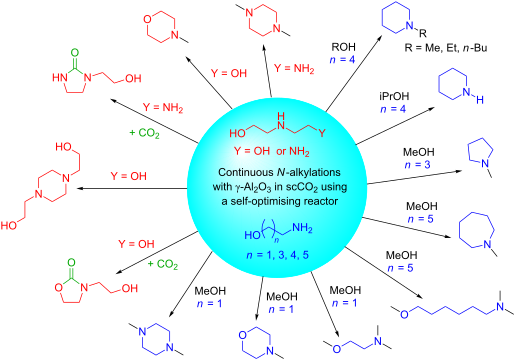
- expected to produce high selectivity for the corresponding imidazolidinone 16 via the incorporation of CO2. The competing oxazolidinone formation should be limited as the nucleophilicity of nitrogen is more than that of the oxygen. Furthermore, the formation of dimers were expected to be supressed as 16


Regiochemistry of cyclocondensation reactions in the synthesis of polyazaheterocycles
Beilstein J. Org. Chem. 2017, 13, 257–266, doi:10.3762/bjoc.13.29
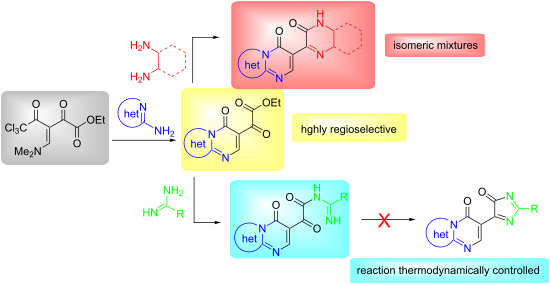
- be a reason for the decrease in the N1 nucleophilicity. Nevertheless, the HOMO coefficient values found for the substituted 1,2-phenylenediamine were lower than those found for 1,2-phenylenediamine (8d) without a substituent. Similarly, for 8b smaller HOMO coefficients are obtained than for the


Total synthesis of a Streptococcus pneumoniae serotype 12F CPS repeating unit hexasaccharide
Beilstein J. Org. Chem. 2017, 13, 164–173, doi:10.3762/bjoc.13.19
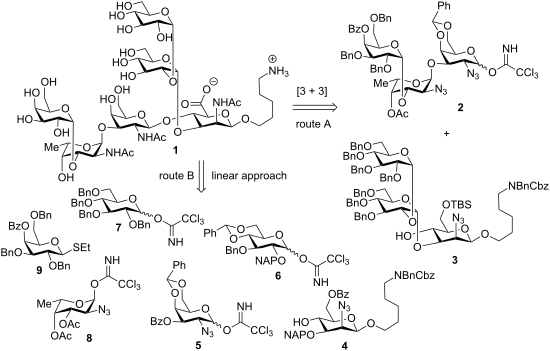
- the repeating unit hexasaccharide 1 was envisioned. The union of trisaccharides 2 and 3 (Scheme 1, route A) was identified as the key step. The outcome of this late-stage block coupling was deemed risky considering the poor nucleophilicity of the C4 hydroxy group of the β-mannosazide in 3 combined
- ether protecting group 38 was recovered. The undesired outcome of this coupling step likely resulted from the poor nucleophilicity of 3 rather than a lack of reactivity of trisaccharide glycosylating agent 2, as demonstrated by an experiment in which model monosaccharide 37 [29] also failed to react
- protected mannosazide 4 was successfully glycosylated using building blocks 5 or 37 to yield the corresponding disaccharide in 21% and 37% yield, respectively. The failure of the [3 + 3] coupling to produce hexasaccharide 36 was apparently a result of the poor nucleophilicity of the C4 hydroxy group in 3


Chemical probes for competitive profiling of the quorum sensing signal synthase PqsD of Pseudomonas aeruginosa
Beilstein J. Org. Chem. 2016, 12, 2784–2792, doi:10.3762/bjoc.12.277
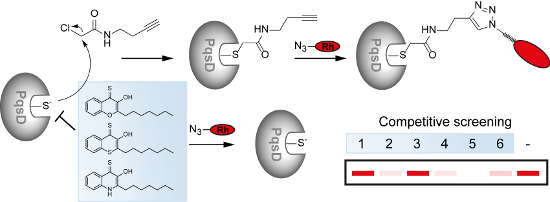
- findings are surprising, as all three reactive groups are known to bind to cysteines which indicate a fine-tuned nucleophilic reactivity of the active site cysteine Cys112. The fine-tuned nucleophilicity towards our probes is supported by calculations of a mechanistic model where Cys112 is activated by



Enzymatic synthesis and phosphorolysis of 4(2)-thioxo- and 6(5)-azapyrimidine nucleosides by E. coli nucleoside phosphorylases
Beilstein J. Org. Chem. 2016, 12, 2588–2601, doi:10.3762/bjoc.12.254
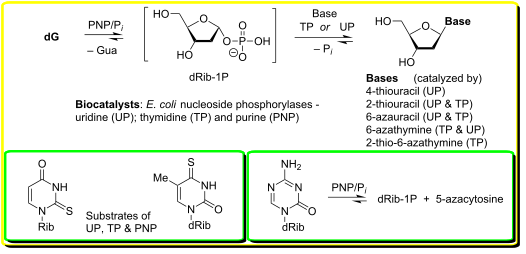
- possible to overcome the barrier of 9 kcal/mol required to activate the substrate. At the same time, the corresponding sp2 structures 8b and 8c are characterized by the highest partial charges of the N-1 atoms (−0.202/−0.214 e) reflecting the nucleophilicity of these atoms that attack the electrophilic C-1
- satisfactorily. On the contrary, UP is not able to catalyze the nucleophilic attack of the structure 8c of 2SaThy owing probably to the lower nucleophilicity of the N-1 nitrogen atom (−0.109 e) compared to 2SUra for which the partial charge of −0.146 e of the N-1 atom was calculated (Table 1). With respect to E


Thiazol-4-one derivatives from the reaction of monosubstituted thioureas with maleimides: structures and factors determining the selectivity and tautomeric equilibrium in solution
Beilstein J. Org. Chem. 2016, 12, 2563–2569, doi:10.3762/bjoc.12.251
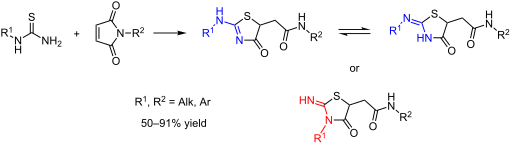
- sets of insufficiently resolved signals of other protons. The presence of two forms follows from the 13C NMR spectra as well. Taking into account the differences in nucleophilicity between the unsubstituted and phenyl-substituted nitrogen atoms of thiourea 1a, the phenyl group in compounds 3a,b is more
- had no effect on the regioselectivity of the addition to maleimide 2 forming thiazolidines 3h–k (Table 1). Although alkyl groups generally increase the nucleophilicity of the adjacent nitrogen atom as compared to the unsubstituted one, the methyl-substituted thiazoldine 3k having the methyl group
- (ratio 4k:3k after 2 h was 1:0.9, after 4 h it changed to 1:2.4). Whereas the formation of the isomer 4k corresponds to the relative nucleophilicity of the nitrogen atoms of thiourea 1f, the isomer 3k seems to be more thermodynamically stable. The choice of the solvent turned out to be crucial for the


Methylenelactide: vinyl polymerization and spatial reactivity effects
Beilstein J. Org. Chem. 2016, 12, 2378–2389, doi:10.3762/bjoc.12.232
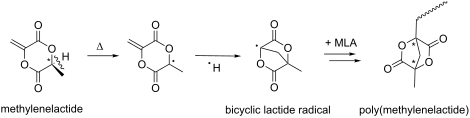
- attack of the thiol takes place. This can be clearly seen in the 1H NMR spectra (Figures S18 and S19, Supporting Information File 1). Thioacetic acid was used as a potential chain-transfer agent due to its lower nucleophilicity. However, a complete thiol-Michael addition can be seen in Figure 8 (not full


Efficient mechanochemical synthesis of regioselective persubstituted cyclodextrins
Beilstein J. Org. Chem. 2016, 12, 2364–2371, doi:10.3762/bjoc.12.230
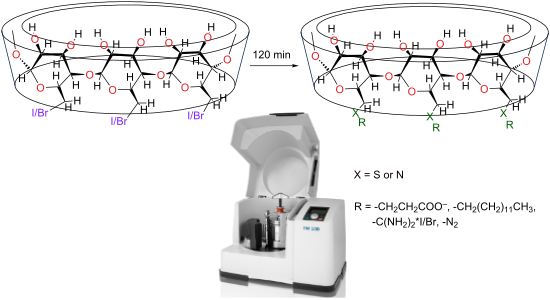
- per-6-halogenated CDs. The preparation is also carried out in a polar aprotic solvent, as in case of the azide exchange, while byproducts may also be similar despite the higher nucleophilicity of sulfur. The reaction under classic conditions usually requires large TU excess. Various per-6-alkylthio-β


Isosorbide and dimethyl carbonate: a green match
Beilstein J. Org. Chem. 2016, 12, 2256–2266, doi:10.3762/bjoc.12.218
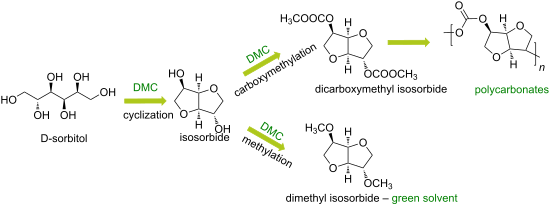
- with the presence of four oxygen atoms all in β position to each other that enhance the nucleophilicity of the hydroxy groups. Conclusion Among the top chemical opportunities from biorefinery carbohydrates D-sorbitol is a platform chemical of considerable interest that has led to intensive research in
- base. This result was ascribed to the neighbouring effect of the oxygen situated all in β-position to each other that most probably enhances the nucleophilicity of the corresponding hydroxy group. Furthermore the amphoteric catalyst hydrotalcite was extremely efficient in the synthesis of DMI when


Superelectrophilic activation of 5-hydroxymethylfurfural and 2,5-diformylfuran: organic synthesis based on biomass-derived products
Beilstein J. Org. Chem. 2016, 12, 2125–2135, doi:10.3762/bjoc.12.202
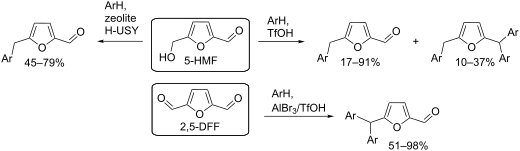
- temperature for 1–24 h gives rise to 5-arylmethylfurfurals (yields of 17–91%) and 2-arylmethyl-5-(diarylmethyl)furans (yields of 10–37%). The formation of these two types of reaction products depends on the nucleophilicity of the arene. The same reactions under the action of acidic zeolites H-USY in high
- compounds were formed by hydroxyalkylation due to the interaction of species A with arenes (see related reactions [34][35][36][37][38]). The polymethylated arenes possess a sufficient π-nucleophilicity for the reaction with the protonated aldehyde group of the intermediates generated from 1a in TfOH
- (Table 4, entries 20–23). Under the superacidic conditions the substrates anisole and veratrole may be protonated at the oxygen atoms [33], thus leading to a decreased π-nucleophilicity of these arenes. It should be noted that in the case of zeolites we explored CS2 as low coordinating solvent to avoid


p-Nitrophenyl carbonate promoted ring-opening reactions of DBU and DBN affording lactam carbamates
Beilstein J. Org. Chem. 2016, 12, 2086–2092, doi:10.3762/bjoc.12.197
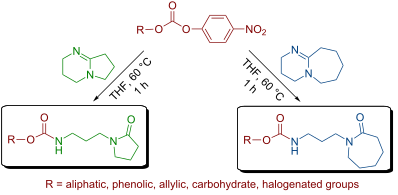
- nucleophiles towards halo derivatives of main group elements where the DBU and DBN bicyclic rings remained unaffected [10][11]. Later in 1994, Lammers et al. observed the nucleophilicity of amidine bases with 4-halo-3,5-dimethyl-1-nitro-1H-pyrazole and their subsequent ring opening leading to the lactam
- carbohydrate–protein interactions [25], ligation and surfactant properties [26][27]. Although p-nitrophenyl carbonates were extensively utilized in these reactions, the nucleophilicity of amidine bases towards these carbonates was not encountered so far. In continuation of our interest in carbohydrates [28][29
- with DBU under the same conditions as described above, giving 6b and 7b in 82% and 87% yield, and 8b as a mixture of α and β anomers in 48% yield. Encouraged by these results, we turned to evaluate the nucleophilicity of DBN towards p-nitrophenyl carbonate derivatives (Scheme 2). Next, the reaction of


Microwave-assisted cyclizations promoted by polyphosphoric acid esters: a general method for 1-aryl-2-iminoazacycloalkanes
Beilstein J. Org. Chem. 2016, 12, 2026–2031, doi:10.3762/bjoc.12.190
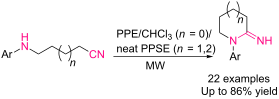
- considerably lower nucleophilicity of the arylamino group, procedures for N-alkyl or N-unsubstituted 2-iminoazacycloalkanes are usually not suitable for the synthesis of N-aryl derivatives. Ethyl polyphosphate (PPE) and trimethylsilyl polyphosphate (PPSE) are mild irreversible dehydrating agents of the Lewis


Synthesis of pyrrolo[2,1-f][1,2,4]triazin-4(3H)-ones: Rearrangement of pyrrolo[1,2-d][1,3,4]oxadiazines and regioselective intramolecular cyclization of 1,2-biscarbamoyl-substituted 1H-pyrroles
Beilstein J. Org. Chem. 2016, 12, 1780–1787, doi:10.3762/bjoc.12.168
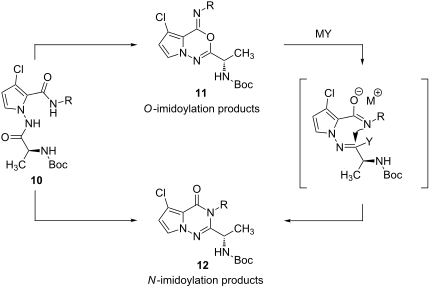
- to 12a, the mechanism of the nucleophile-induced cyclization is proposed after considering Hart’s research on the synthesis of fumiquinazolines [22]. It was shown that the nucleophilicity of the N-acylnitrenium ion was increased when the oxygen ion was stabilized by counter ions such as lithium and


Rearrangements of organic peroxides and related processes
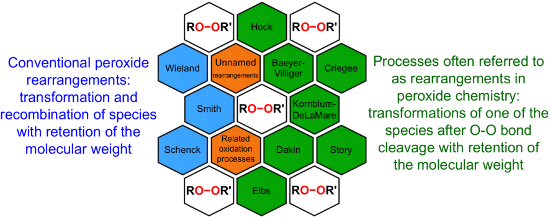
Beilstein J. Org. Chem. 2016, 12, 1647–1748, doi:10.3762/bjoc.12.162



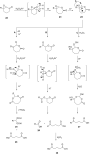


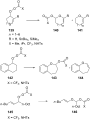


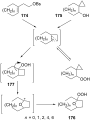


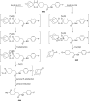


Catalytic Chan–Lam coupling using a ‘tube-in-tube’ reactor to deliver molecular oxygen as an oxidant
Beilstein J. Org. Chem. 2016, 12, 1598–1607, doi:10.3762/bjoc.12.156
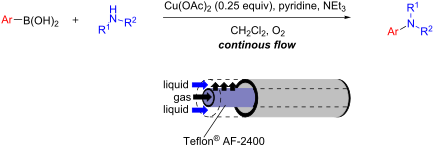
- of 26% (28, Scheme 2). It is not yet clear as to why such a low conversion and isolated yield was obtained although the reduced nucleophilicity and higher potential for coordination of the triazole to the copper catalyst might inhibit catalyst turnover and account for this. Alternatively, using 3
- reactor blocking. Other substrates proved unreactive. In the case of starting materials 41–43 the reduced nucleophilicity of these substrates might account for the lack of conversion. By comparison, all three substrates (41–43) also failed to react under batch conditions using 2 equiv of Cu(OAc)2, 2 equiv


On the cause of low thermal stability of ethyl halodiazoacetates
Beilstein J. Org. Chem. 2016, 12, 1590–1597, doi:10.3762/bjoc.12.155

- nucleophilicity can be inferred from the NBO charges. Based only on NBO charges, halodiazoacetates may be expected to be even less nucleophilic than diethyl diazomalonate (see Supporting Information File 2 for the numbers). All of the investigated diazo compounds thermally extrude N2 to initially form a singlet
- temperature for 30 min. The solvent was removed and the crude product was purified by silica gel chromatography (5% EtOAc/hexane) to give 123 mg (0.457 mmol, 67%) of ethyl 1-bromo-2-phenylcyclopropanecarboxylate as a colorless oil. Relative stability and nucleophilicity of non-stabilized (R = H, alkyl) diazo
- halodiazoacetates (red color). Relative nucleophilicity of halodiazoacetates (red color). Synthesis of ethyl halodiazoacetates [11]. Proposed rate determining step for the thermal decomposition of 2a–c. Reaction conditions and half-lives (t1/2) of 2a–c. Cyclopropanation of styrenes with 2a–c. Supporting


On the mechanism of imine elimination from Fischer tungsten carbene complexes
Beilstein J. Org. Chem. 2016, 12, 1322–1333, doi:10.3762/bjoc.12.125
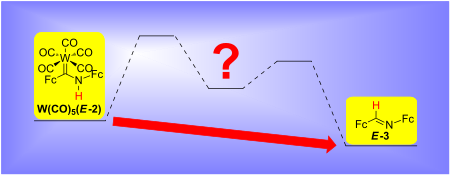
- diferrocenyl derivative Cr(CO)5(E-2) from bulky Fc-NH2 [40][41] requires the presence of a base to increase the nucleophilicity of Fc-NH2 by deprotonation. In the presence of base, Cr(CO)5(E-2) decomposes readily in solution at room temperature releasing E-1,2-diferrocenylimine [43] E-3 (Scheme 1a) [27]. Base




Conjugate addition–enantioselective protonation reactions
Beilstein J. Org. Chem. 2016, 12, 1203–1228, doi:10.3762/bjoc.12.116
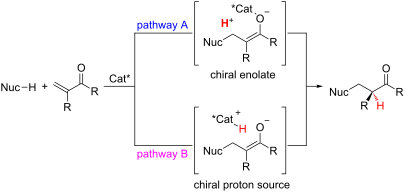
- cyclic N-benzyloxycarbonyl acrylamides 75 and 77 in moderate to good yields and high enantioselectivity (Scheme 18a,b). Due to their attenuated nucleophilicity, electron-deficient amines were unreactive under the standard reaction conditions. Addition of 0.5 equivalents of free amine was found to be


Recent advances in C(sp3)–H bond functionalization via metal–carbene insertions
Beilstein J. Org. Chem. 2016, 12, 796–804, doi:10.3762/bjoc.12.78

- selectivity. The factors governing the reactivity and site-selectivity of metal–carbene C–H insertion include: 1) the electrophilicity of the metal–carbene bond; 2) the nucleophilicity of the targeted C–H bond; 3) the steric bulk of the ligand around the metal; 4) the steric bulk of the substituents around


Interactions of cyclodextrins and their derivatives with toxic organophosphorus compounds
Beilstein J. Org. Chem. 2016, 12, 204–228, doi:10.3762/bjoc.12.23
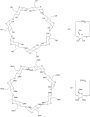
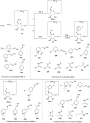
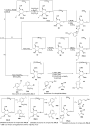
- hydrogen bonding between the secondary OH groups of the CD and the reactive site of the guest. Indeed, such interactions increase the nucleophilicity of the secondary hydroxy groups and facilitate their attack onto the phosphorus atom. Indeed, when the para-nitrophenoxy moiety is deeply included into the






Scope and limitations of the dual-gold-catalysed hydrophenoxylation of alkynes
Beilstein J. Org. Chem. 2016, 12, 172–178, doi:10.3762/bjoc.12.19
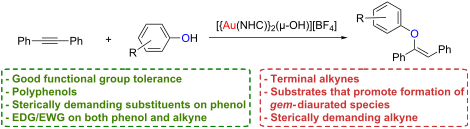
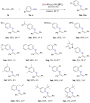
- nucleophilicity decreases and an increase in catalyst loading is needed in order to maintain relatively short reaction times (3ai and 3al) [31]. The steric hindrance on the phenol was studied next. Increasing it, with either allyl (3am) or tert-butyl (3an) groups on the ortho-position also required 1 mol % of




Spiro-fused carbohydrate oxazoline ligands: Synthesis and application as enantio-discrimination agents in asymmetric allylic alkylation
Beilstein J. Org. Chem. 2016, 12, 166–171, doi:10.3762/bjoc.12.18
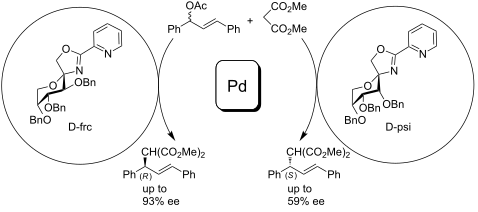
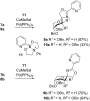
- ester 11 as boron source (Scheme 2) [22][23][24]. 2-Pyridineboronic acid 11 was chosen due to its increased nucleophilicity compared to other boron sources like pinacol boronic esters or MIDA boronates [25][26]. The cross coupling proceeded smoothly in THF and gave ligands 9 and 10 in good yields




Catalytic asymmetric formal synthesis of beraprost
Beilstein J. Org. Chem. 2015, 11, 2654–2660, doi:10.3762/bjoc.11.285
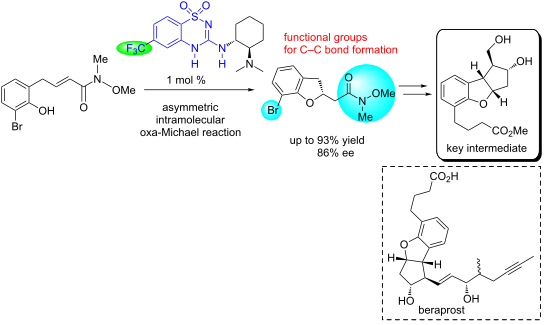
- condensation followed by diazo-transfer reaction. The chiral dihydrobenzofuran scaffold (5 or 6) could be synthesized by asymmetric intramolecular oxa-Michael reaction (AIOM) of α,β-unsaturated amides 7 or 8. Such reactions are generally considered to be challenging due to low nucleophilicity of the oxygen