Search results
Search for "photophysical" in Full Text gives 270 result(s) in Beilstein Journal of Organic Chemistry. Showing first 200.
Synthesis of mono-functionalized S-diazocines via intramolecular Baeyer–Mills reactions
Beilstein J. Org. Chem. 2018, 14, 2799–2804, doi:10.3762/bjoc.14.257

- difficult to achieve. On this account, bridged azobenzenes (diazocines), would be more suitable as photoswitches in pharmacologically active compounds [8]. Besides their superior photophysical properties, diazocines are more stable in the cis configuration and could therefore be administered in their


Photocatalyic Appel reaction enabled by copper-based complexes in continuous flow
Beilstein J. Org. Chem. 2018, 14, 2730–2736, doi:10.3762/bjoc.14.251
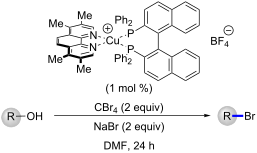
- conversion of an alcohol to bromide involved screening a wide variety of structurally varied complexes. Our group has previously demonstrated that the nature of each ligand influences the physical and photophysical properties as well as catalytic activity of the resulting catalyst (Figure 2) [27]. A library




Transition metal-free oxidative and deoxygenative C–H/C–Li cross-couplings of 2H-imidazole 1-oxides with carboranyl lithium as an efficient synthetic approach to azaheterocyclic carboranes
Beilstein J. Org. Chem. 2018, 14, 2618–2626, doi:10.3762/bjoc.14.240

- ][19][20][21], as well as unique photophysical properties [22][23][24][25][26]. Thus, the development of effective approaches to azaheterocyclic carboranes is currently considered to be one of the most important synthetic challenges. At present, there are three main synthetic strategies in the design


Applications of organocatalysed visible-light photoredox reactions for medicinal chemistry
Beilstein J. Org. Chem. 2018, 14, 2035–2064, doi:10.3762/bjoc.14.179
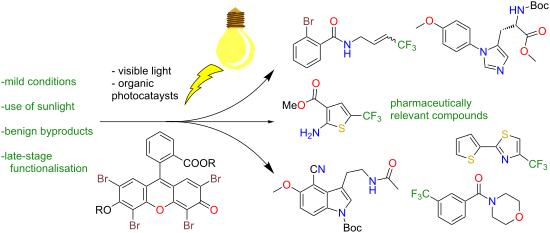
- photophysical overview. There are several factors that affect the ability of an organic molecule to act as a photocatalyst. In a typical organocatalysed photoredox reaction, the photocatalyst transitions from a singlet ground state (S0) to a long-lived and relatively stable excited state, either a singlet
- some basic data of these photocatalysts are presented, to serve as an easy reference to the reader, with respect to their structure, electrochemical and photophysical properties. Figure 3 shows the structures of the various compounds that are used on multiple occasions as photocatalysts in the


A self-assembled photoresponsive gel consisting of chiral nanofibers
Beilstein J. Org. Chem. 2018, 14, 1994–2001, doi:10.3762/bjoc.14.174
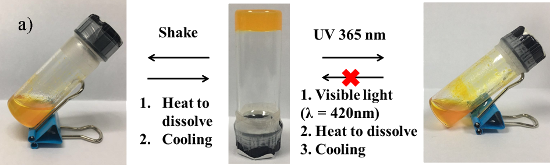
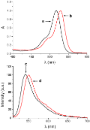
- formation of supramolecular structure. To investigate the potential photoresponsiveness of compound 3, the UV–vis absorption spectrum was measured to trace photochemical and photophysical properties of the solution of compound 3 (1.0 × 10⁻⁵ M in chloroform). As shown in Figure 2, the azobenzene trans-isomer


Rational design of boron-dipyrromethene (BODIPY) reporter dyes for cucurbit[7]uril
Beilstein J. Org. Chem. 2018, 14, 1961–1971, doi:10.3762/bjoc.14.171
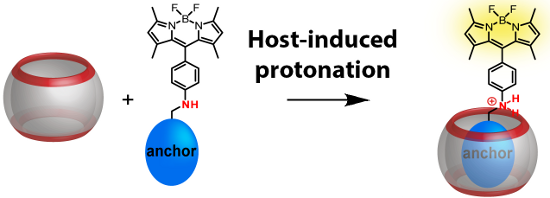
- host-induced protonation and thus to a fluorescence increase. The possibility to tune binding affinities and pKa values is demonstrated and it is shown that, in combination with the beneficial photophysical properties of BODIPYs, several new applications of host–dye reporter pairs can be implemented
- quenching by photoinduced electron transfer (PET), whereas the protonated form was brightly fluorescent [31]. We report herein the synthesis and photophysical characterization of BODIPY derivatives with an aniline substituent in the meso-position to which different anchor groups have been attached, and we
- . Synthesis of BODIPY derivatives. Photophysical properties of the synthesized BODIPY derivatives.a Properties of the CB7–BODIPY host–guest complexes.a Supporting Information Supporting Information File 472: Experimental details and supporting figures. Acknowledgements Financial support from the DFG (HE





Synthesis and characterization of π–extended “earring” subporphyrins
Beilstein J. Org. Chem. 2018, 14, 1956–1960, doi:10.3762/bjoc.14.170
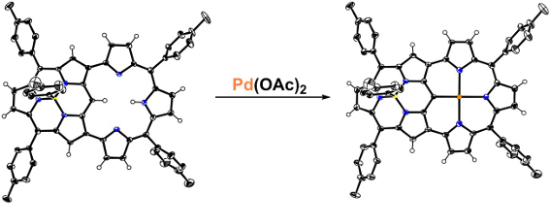
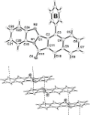
- further red-shifted and more intense. This work extends the research of “earring” porphyrins to “earring” subporphyrins. Investigations on their photophysical properties and further functionalization are underway. Partial 1H NMR spectrum of 3. X-ray crystal structures of 3: a) top view; b) side view


Synthesis of 9-arylalkynyl- and 9-aryl-substituted benzo[b]quinolizinium derivatives by Palladium-mediated cross-coupling reactions
Beilstein J. Org. Chem. 2018, 14, 1871–1884, doi:10.3762/bjoc.14.161
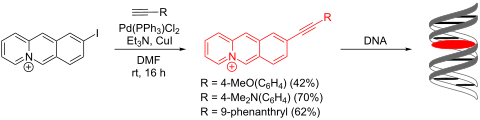
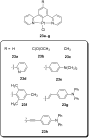
- since they were proposed to have ideal photophysical and DNA-binding properties. Herein, we present the successful Suzuki–Miyaura and Sonogashira coupling reactions of benzo[b]quinolizinium substrates. In addition, the absorption and emission properties of the novel arylalkynylbenzo[b]quinolizinium
- protocol for Pd-mediated reactions may be employed for other base-sensitive substrates as well. The photophysical properties as well as the DNA-binding properties of the (arylethynyl)benzo[b]quinolizinium derivatives were studied. It was demonstrated that derivatives 2a–d bind to duplex and quadruplex DNA


Synthesis and photophysical studies of a multivalent photoreactive RuII-calix[4]arene complex bearing RGD-containing cyclopentapeptides
Beilstein J. Org. Chem. 2018, 14, 1758–1768, doi:10.3762/bjoc.14.150
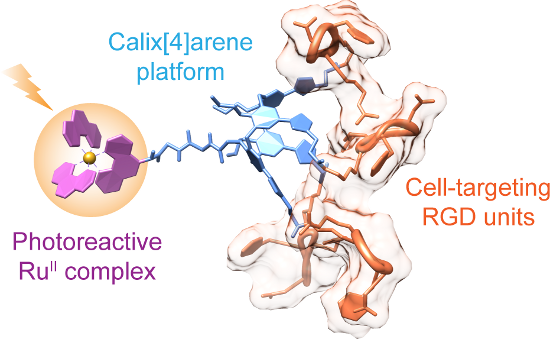
- internal cell environment or exert a photocytotoxic activity. The use of lipophilic ligands allows the corresponding ruthenium complexes to passively diffuse inside cells but limits their structural and photophysical properties. Moreover, this strategy does not provide any cell selectivity. This limitation
- photophysical and photochemical characterizations of this Ru(II)–calixarene conjugate as well as the study of its photoreactivity in the presence of guanosine monophosphate have been achieved. The results show that the ruthenium complex should be able to perform efficiently its photoinduced cytotoxic activity
- platform. The photophysical properties of this RuII–calixarene conjugate were thus examined and compared to those of the reference complex [Ru(TAP)2phen]2+. Results and Discussion Synthesis of RuII-calixarene conjugate 9 For the synthesis of the target multivalent system, the strategy relies on the





Metal-free formal synthesis of phenoxazine
Beilstein J. Org. Chem. 2018, 14, 1491–1497, doi:10.3762/bjoc.14.126
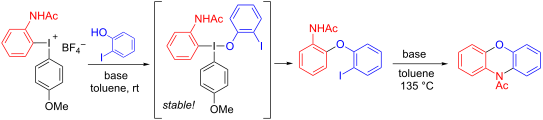
- fused between two benzene rings. A range of compounds with interesting biological or photophysical properties contain the phenoxazine core, where the amine moiety is either functionalized or oxidized to the corresponding imine [1][2][3][4]. Phenoxazine derivatives can display antitumor activity [5][6][7


Recent advances in phosphorescent platinum complexes for organic light-emitting diodes
Beilstein J. Org. Chem. 2018, 14, 1459–1481, doi:10.3762/bjoc.14.124
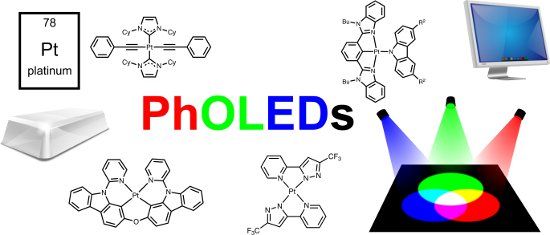
- design that underpins the successful achievement of improved photophysical features and enhanced device performances will be highlighted. Special emphasis will be devoted to those recent systems that have been employed as triplet emitters in efficient PhOLEDs. Keywords: cyclometalating ligands
- ; electroluminescence; OLED; phosphorescence; platinum complexes; Introduction Photoactive TMCs have attracted enormous attention in the last two decades because of their peculiar photophysical and rich redox properties, which make them appealing from both fundamental research and technological applications points of
- enriches the photophysical features displayed by TMCs when compared to classical organic luminophors. Indeed, apart from ligand centred (LC) and intraligand charge transfer (ILCT) states, admixing of the metal and ligand orbitals close to the frontier region results in excited states featuring a certain






An overview of recent advances in duplex DNA recognition by small molecules
Beilstein J. Org. Chem. 2018, 14, 1051–1086, doi:10.3762/bjoc.14.93




Two novel blue phosphorescent host materials containing phenothiazine-5,5-dioxide structure derivatives
Beilstein J. Org. Chem. 2018, 14, 869–874, doi:10.3762/bjoc.14.73
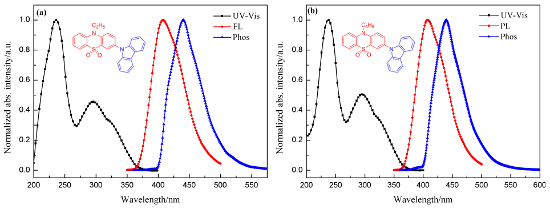
- -dioxide (CEPDO) and 10-butyl-3-(9H-carbazol-9-yl)-10H-phenothiazine-5,5-dioxide (CBPDO) were synthesized and characterized. The photophysical, electrochemical and thermal properties were systematically investigated. CEPDO and CBPDO not only have a high triplet energy but also show a bipolar behavior
- time, the photophysical properties, electrochemical properties and their thermal stability were studied and the expected results were obtained. Results and Discussion Synthesis and theoretical calculations The synthesis route for CEPDO and CBPDO is shown in Scheme 1. The detailed synthesis procedures
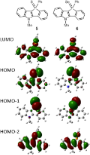
- electron-withdrawing ability of the phenothiazine-5,5-dioxide unit, thus realized the orbital separation of hole and electron transport in the same molecule. This indicated CEPDO and CBPDO have bipolar characteristic. Photophysical properties Figure 2 presents the UV–vis absorption, photoluminescence and


D–A–D-type orange-light emitting thermally activated delayed fluorescence (TADF) materials based on a fluorenone unit: simulation, photoluminescence and electroluminescence studies
Beilstein J. Org. Chem. 2018, 14, 672–681, doi:10.3762/bjoc.14.55
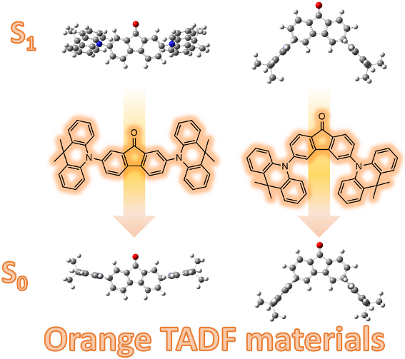
- vibronic structure [7]. The ΔEST of 1 and 2 are 0.19 and 0.09 eV, respectively, indicating that compound 2 may have a much more efficient RISC process than 2 [19][20] (Table 3). To gain a further understanding of the photophysical properties of 1 and 2 in solid state, two doped films in 4,4’-dicarbazolyl
- ability to reduce the efficiency roll-off, which comes to the same conclusion with the analysis of their photophysical properties. Conclusion In summary, two novel D–A–D-type orange-emitting TADF materials, namely 2,7-bis(9,9-dimethylacridin-10(9H)-yl)-9H-fluoren-9-one (27DACRFT, 1) and 3,6-bis(9,9
- other TADF materials based on carbonyl acceptor [27][28]. According to the DFT and TD-DFT simulation and photophysical characterization, 2 shows a smaller singlet–triplet energy difference (ΔEST) and a larger radiative rate constant (kr) to give reduced internal conversion, promoted RISC process, and


Enhanced quantum yields by sterically demanding aryl-substituted β-diketonate ancillary ligands
Beilstein J. Org. Chem. 2018, 14, 664–671, doi:10.3762/bjoc.14.54
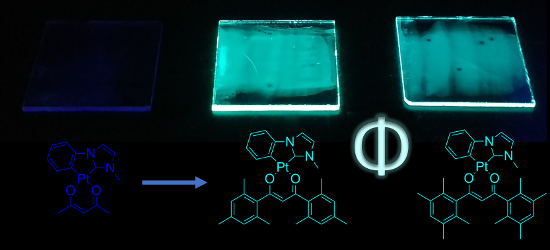
- ][39][40][41]. We herein present the synthesis and photophysical properties of two new C^C* cyclometalated platinum complexes. Both are based on the original 3-methyl-1-phenylimidazolium (MPIM) ligand system which together with the acac auxiliary ligand showed only a very low quantum yield of 7%. We
- -focus sealed tube Mo Kα 0.71073 Å at a temperature of 100(2) K. The absorption corrections were carried out using numerical methods. The structure was solved by direct methods (XP) and refined by full matrix least squares based on F2 (SHELXL2014). Photophysical characterization Absorption spectra of all


Recent advances on organic blue thermally activated delayed fluorescence (TADF) emitters for organic light-emitting diodes (OLEDs)
Beilstein J. Org. Chem. 2018, 14, 282–308, doi:10.3762/bjoc.14.18
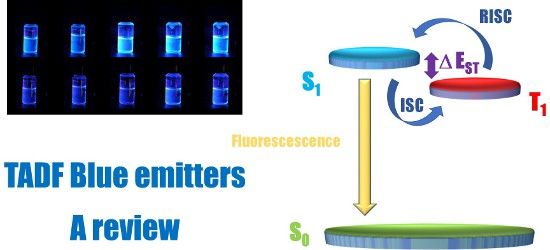
- noticed that the photophysical properties and the geometry of molecules that are suspected to be TADF emitters are often investigated by theoretical calculations prior to synthesis, optimizing the chance to get suitable energy levels and the desired ΔEST. This strategy was notably applied to the design of
- , an analogue of T9, i.e., T12, differing by the removal of a phenyl ring between the carbazole and the triazine units proved once again the crucial role of the oscillator strength in the photophysical properties [51]. Notably, major differences in the separation of their HOMO and LUMO energy levels
- substitution pattern of the carbazole unit on the photophysical properties. While maintaining the same number of carbazole units on the emitter and by varying the substitution pattern of the carbazole core, only a weak influence on the EL characteristics was evidenced [55]. In fact, performances only varied by




Synthesis and spectroscopic properties of β-meso directly linked porphyrin–corrole hybrid compounds
Beilstein J. Org. Chem. 2018, 14, 187–193, doi:10.3762/bjoc.14.13
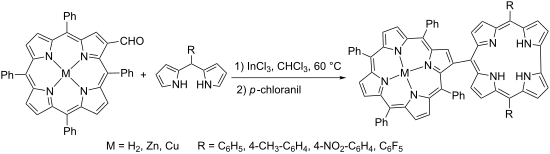
- ], subporphyrin [27] and expanded porphyrins [28][29][30] were prepared and their photophysical and electrochemical properties were characterized. Among these compounds, corroles, contracted porphyrin analogues [31][32][33], assumed an important place in porphyrin chemistry due to their small cavities, trianionic
- condensation reaction of meso-substituted dipyrromethanes with β-formylated meso-tetraphenylporphyrins. Spectroscopic and photophysical properties of the new hybrid structures have been determined. Higher quantum yields of some of the synthesized hybrid compounds indicate that these compounds can be considered
- –corrole hybrid derivatives. *100 mol % of AlCl3 was used as a catalyst. Optimization of the reaction conditions. Photophysical properties of hybrid compounds. Supporting Information Supporting Information File 34: General experimental information, experimental details on the synthesis of products 4 and


Fluorescent nucleobase analogues for base–base FRET in nucleic acids: synthesis, photophysics and applications
Beilstein J. Org. Chem. 2018, 14, 114–129, doi:10.3762/bjoc.14.7
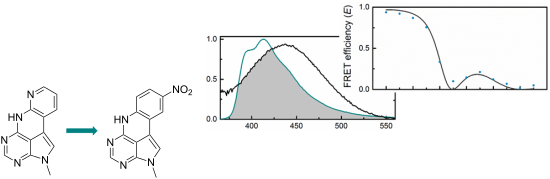
- complemented with among others the adenine analogue FRET pair, qAN1–qAnitro, increasing the flexibility of the methodology. Here we present the design, synthesis, photophysical characterization and use of such base analogues. They enable a higher control of the FRET orientation factor, κ2, have a different
- dealing with the synthesis of the key players of base–base FRET, i.e., the base analogue donor and acceptor molecules, the second one dealing with their photophysical properties and the third one dealing with their application in studying nucleic acid-containing systems. Synthesis of fluorescent base
- protection groups is paramount as an extensive use adds additional steps as well as complexity to the synthesis. The design and synthesis of fluorescent nucleobase analogues (FBAs) add on additional challenges such as obtaining features that introduce useful photophysical properties, for example, extended






Halogen-containing thiazole orange analogues – new fluorogenic DNA stains
Beilstein J. Org. Chem. 2017, 13, 2902–2914, doi:10.3762/bjoc.13.283
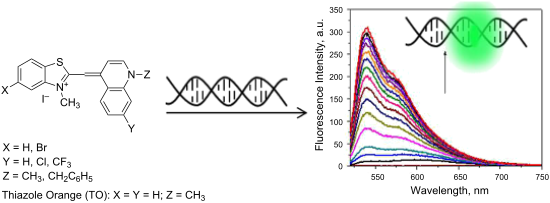
- atoms (connected directly to the chromophore or as side groups) on the molar absorptivity and the fluorescence intensity of a series of new TO analogues. Photophysical properties of a series of TO analogues that have fluoro- or trifluoromethyl groups connected to the heterocyclic end groups of the
- chromophores have been studied by Armitage and co-workers [42][43]. According to these studies the fluorination of the symmetrical [42] and unsymmetrical [43] cyanine dyes results in reduced aggregation and significantly improved the photostability and photophysical properties of the dyes. The authors [43
- for the success of the reaction because of the CH-acidity of the benzyl fragment, which otherwise leads to the possibility of side reactions if trimethylamine or other less hindered basic reagents are employed. Photophysical properties Absorption The longest wavelength absorption maxima of the studied




Pyrene–nucleobase conjugates: synthesis, oligonucleotide binding and confocal bioimaging studies
Beilstein J. Org. Chem. 2017, 13, 2521–2534, doi:10.3762/bjoc.13.249
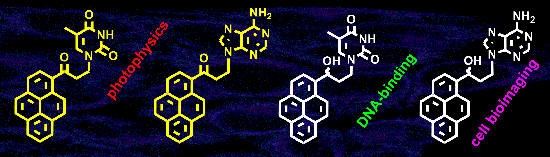
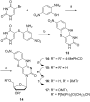
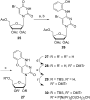
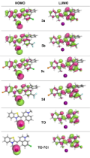
- synthesis, DFT calculations, photophysical characterization, oligonucleotide binding studies, and confocal microscopy studies of the novel pyrene–nucleobase conjugates 2–5 (nucleobase = thymine (2 and 4), and adenine (3 and 5)). Our compounds represent a simple bifunctional design combining the fluorescent
- structure of 2 and full list of bond lengths and angles are given in Supporting Information File 1 (Table S3, Table S4, and Figure S6). Photophysical characterization and DFT calculations UV–vis absorption and fluorescence properties of pyrene–nucleobase conjugates 2–5 were characterized in dichloromethane
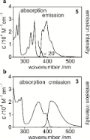
- at ambient temperature. The absorption and emission spectra of the adenine derivatives 3 and 5 are reproduced in Figure 4. The photophysical properties of 5 (Figure 4a) resemble the properties of unsubstituted pyrene [30]. In the low energy UV and blue spectral region between 250 and 400 nm, three




One-pot syntheses of blue-luminescent 4-aryl-1H-benzo[f]isoindole-1,3(2H)-diones by T3P® activation of 3-arylpropiolic acids
Beilstein J. Org. Chem. 2017, 13, 2340–2351, doi:10.3762/bjoc.13.231
- are often prepared by condensation of acid anhydrides and amines [34]. Their applications are widespread, ranging from pharmaceutically active compounds [35] to agrochemicals [36] and fluorophores [37]. The characteristic photophysical properties of 1,8- and 2,3-naphthalene imides render the substance
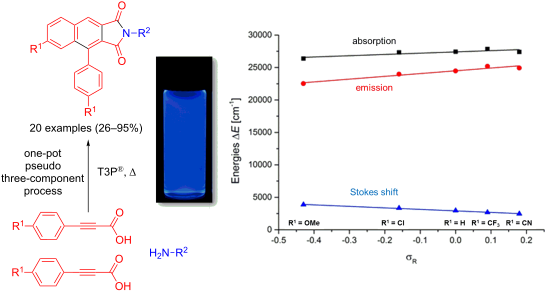
- -dihydro-1H-benzo[f]isoindolyl moiety in 6 are absolutely planar. Photophysical properties The pseudo three-component synthesis of 1H-benzo[f]isoindole-1,3(2H)-diones 4 furnishes a substance library with electronically diverse substitution patterns and already upon eyesight several derivatives are
- reaction in the sense of a consecutive pseudo three-component process evolved. The resulting 4-aryl-1H-benzo[f]isoindole-1,3(2H)-diones are interestingly blue to greenish-blue emissive upon excitation of the longest wavelength absorption bands. The photophysical characterization by absorption and emission




Synthesis and photophysical properties of novel benzophospholo[3,2-b]indole derivatives
Beilstein J. Org. Chem. 2017, 13, 2304–2309, doi:10.3762/bjoc.13.226
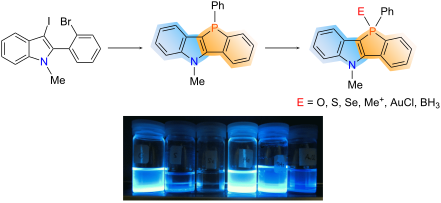
- ; photophysical property; Introduction The chemistry of phospholes, fully unsaturated five-membered heterocyclic rings containing a phosphorus element, has drawn much attention in terms of the development of synthetic methods and elucidation of its spectroscopic properties for applications in organic field
- contrast, these angles around the phosphorus atom were 291.05° for 3, and 305.46° and 304.75° for 4. These facts indicate that the nitrogen atoms are sp2-hybridized, and the phosphorus center adopts pyramidal for 3 and tetrahedral geometry for 4. The photophysical properties of the benzophospholo[3,2-b
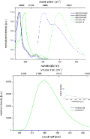
- ]indoles were evaluated using UV absorption and fluorescence spectroscopy in CH2Cl2. The spectra are shown in Figure 3, and the photophysical data are shown in Table 2. The functionalized phosphole derivatives 4–8 showed absorption maxima (λabs) at 299–307 nm and a broad absorption at ≈355 nm. In contrast


Regioselective (thio)carbamoylation of 2,7-di-tert-butylpyrene at the 1-position with iso(thio)cyanates
Beilstein J. Org. Chem. 2017, 13, 1032–1038, doi:10.3762/bjoc.13.102
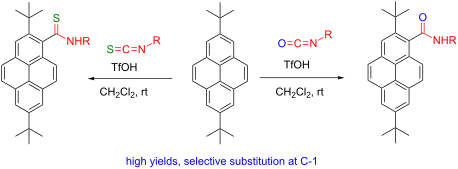
- photophysical properties [4][10][13][14][15][16][17][18][19][20], we thought it would be of interest to study its reactivity in the above reaction (and to extend its scope for isocyanates). An additional reason for such a study was the fact that thioamides (and amides) are versatile starting materials in the




Ultrasound-promoted organocatalytic enamine–azide [3 + 2] cycloaddition reactions for the synthesis of ((arylselanyl)phenyl-1H-1,2,3-triazol-4-yl)ketones
Beilstein J. Org. Chem. 2017, 13, 694–702, doi:10.3762/bjoc.13.68
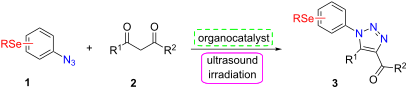
- ][40][41][42][43], photophysical properties [44][45][46][47][48][49] and interesting biological activities [50][51][52]. An interesting class of molecules are the selanyl-1,2,3-triazoles [53][54][55][56][57][58][59][60][61] which can present some biological applications. As example, 4-phenyl-1


Novel β-cyclodextrin–eosin conjugates
Beilstein J. Org. Chem. 2017, 13, 543–551, doi:10.3762/bjoc.13.52
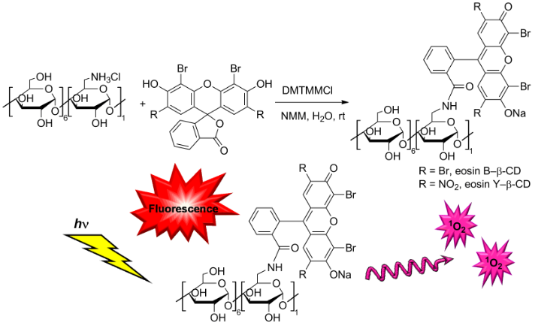
- conditions, is rather polydisperse and differently sized populations can be detected. The strong aggregation character of 4–β-CD can remarkably influence the spectroscopic and photophysical properties of the conjugate. UV–vis spectroscopic and photophysical properties of eosin–β-CD conjugates Preliminary
- preservation of the photophysical properties of the dye. In fact, this molecular hybrid exhibits satisfactory fluorescence and 1O2 photogeneration quantum yields making it a suitable candidate for biomedical research studies in the field of imaging and PDT applications. The possibility to exploit the CD cavity