Search results
Search for "selective" in Full Text gives 1592 result(s) in Beilstein Journal of Organic Chemistry. Showing first 200.
Investigation of a bimetallic terbium(III)/copper(II) chemosensor for the detection of aqueous hydrogen sulfide
Beilstein J. Org. Chem. 2024, 20, 2818–2826, doi:10.3762/bjoc.20.237

- for the detection of both gaseous and/or aqueous H2S are shown in Figure 1 [12][16][17]. These sensors all function via the copper sequestration mechanism, where upon addition of hydrogen sulfide to the quenched bimetallic species, luminescence modulation occurs. In our quest for highly selective
- are highly selective to HS−(aq) ions and are thus suitable for environmental or biological studies where interfering anions may be present. Gaseous H2S studies of [Tb.1·3Cu]3+ We aimed to further investigate the luminescence response of Tb3+ analogues upon exposure to hydrogen sulfide gas, building


Copper-catalyzed yne-allylic substitutions: concept and recent developments
Beilstein J. Org. Chem. 2024, 20, 2739–2775, doi:10.3762/bjoc.20.232
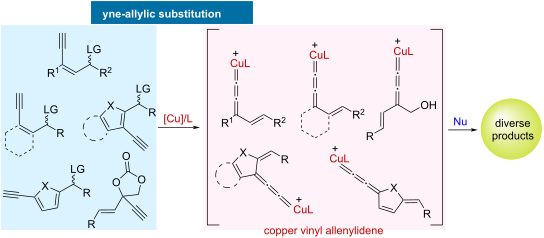
- nucleophiles (Scheme 1b). However, to achieve a highly selective yne-allylic substitution, a range of challenges must be addressed. First, how to achieve the regioselectivity under the coexistence of alkenyl and alkynyl units; second, how to realize the enantioselectivity control that is remote from the
- and yne-allylic substitution. Challenges in achieving highly selective yne-allylic substitution. Yne-allylic substitutions using indoles and pyroles. Yne-allylic substitutions using amines. Yne-allylic substitution using 1,3-dicarbonyls. Postulated mechanism via copper acetylide-bonded allylic cation








Synthesis of fluoroalkenes and fluoroenynes via cross-coupling reactions using novel multihalogenated vinyl ethers
Beilstein J. Org. Chem. 2024, 20, 2691–2703, doi:10.3762/bjoc.20.226

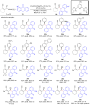
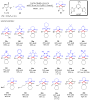
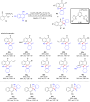
- blocks. When using them as nucleophilic reagents [15][16][17][18][19][20], the reaction between anion species, such as fluorine-containing Horner–Wadsworth–Emmons reagents, and carbonyl compounds led to E-selective olefination (Scheme 1A) [15]. On the other hand, some reactions with electrophilic


A review of recent advances in electrochemical and photoelectrochemical late-stage functionalization classified by anodic oxidation, cathodic reduction, and paired electrolysis
Beilstein J. Org. Chem. 2024, 20, 2500–2566, doi:10.3762/bjoc.20.214
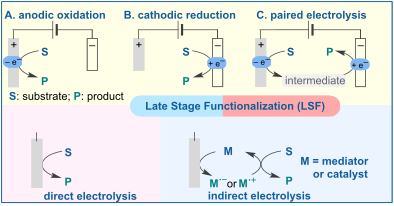
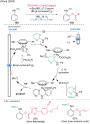
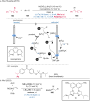
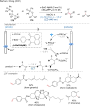
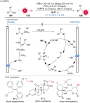
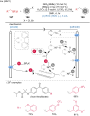
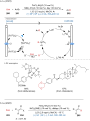
- amination: Direct and selective CH-aminations and amidations are challenging reactions. In this context, the regioselective sulfonamidation of (hetero)aromatic groups was achieved by the Lei group via dehydrogenative aryl C–H/N–H cross-coupling [9]. A crucial step in this transformation is the generation of
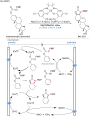
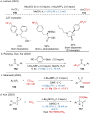
- alternative to the harsh Pummerer rearrangement. Methanol played a crucial role in achieving the desired transformation and it was suggested to promote the self-assembly of reagents 24 and 25 for the formation of 27, which allows the selective abstraction of H+ from the less sterically hindered side
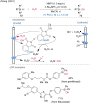
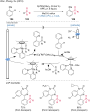
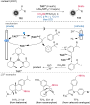
- atomoxetine, metaxalone, and tadalafil. Mechanistically, thiophenol is oxidized at the anode to the corresponding radical by SET, then dimerizes into a disulfide, which is further oxidized into an intermediate cation radical, yielding a highly electrophilic species. Subsequently, a selective anisole attack
























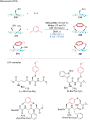


Visible-light-mediated flow protocol for Achmatowicz rearrangement
Beilstein J. Org. Chem. 2024, 20, 2493–2499, doi:10.3762/bjoc.20.213
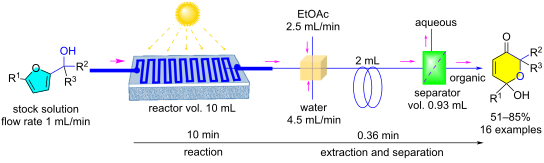
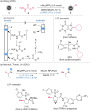
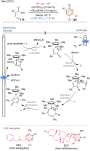
- towards investigating for the selective elimination of the waste solvent using an integrated one-flow work-up procedure to generate 3a with maximum practicality. Initially, the individual stages of the liquid–liquid extraction was achieved using the droplet micro fluidic method for extracting the compound



Facile preparation of fluorine-containing 2,3-epoxypropanoates and their epoxy ring-opening reactions with various nucleophiles
Beilstein J. Org. Chem. 2024, 20, 2421–2433, doi:10.3762/bjoc.20.206
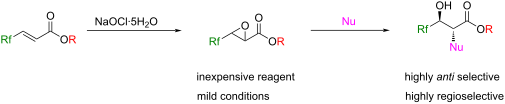
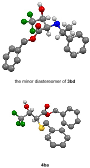
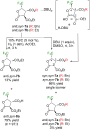
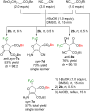
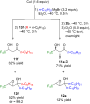
- mainly afford 2-substituted 3-hydroxyesters usually in a highly anti selective manner. Keywords: α,β-unsaturated esters; epoxyesters; fluorine; Grignard-based cuprates; nucleophiles; Introduction Fluorine-containing compounds have been utilized in diverse fields due to their special character
- ) Grignard-based cuprates. These processes usually yielded the addition products along with the epoxy ring opening at the 2 position via the SN2 mechanism, affording 3-Rf-3-hydroxyesters with the incorporation of a variety of substituents at the 2-position in a highly anti-selective fashion. We believe that





Efficient one-step synthesis of diarylacetic acids by electrochemical direct carboxylation of diarylmethanol compounds in DMSO
Beilstein J. Org. Chem. 2024, 20, 2392–2400, doi:10.3762/bjoc.20.203
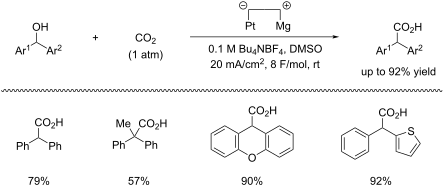
- used as substrate, selective C–O bond cleavage, followed by fixation of carbon dioxide, occurred at the benzylic C(sp3)–O bond rather than the C(sp2)–O bond on the phenyl ring to give the corresponding diphenylacetic acid 2h in 45% yield. Not only a secondary alcohol but also a tertiary alcohol was


Asymmetric organocatalytic synthesis of chiral homoallylic amines
Beilstein J. Org. Chem. 2024, 20, 2349–2377, doi:10.3762/bjoc.20.201
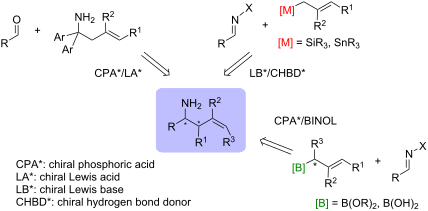
- directly to the unprotected chiral (S,Z)-homoallylic amines 38 in high yields and with an excellent retention of the enantiopurity (Scheme 8B). The method remains the only direct Z-selective crotylation to attain enantioenriched unprotected homoallylic amines, and the only example of an effective kinetic
- boroxine with dramatically increased reactivity towards C=N electrophiles. Because of the small steric size of the (BO2) group, the reaction is highly selective towards (E)-α-trifluoromethyl homoallylic amine 44, which otherwise is difficult to obtain in a regiospecific manner. It has to be noted though
- . Optimisation of the catalysts structure revealed that the 3-phenanthrylpyrrolidine derivative provided superior yields and selectivities. Notably, the isomeric 9-phenanthrylpyrrolidines remained selective but gave noticeably lower yields. The methyl group, geminal to the phenanthryl, plays an important part in




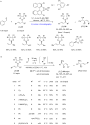


Improved deconvolution of natural products’ protein targets using diagnostic ions from chemical proteomics linkers
Beilstein J. Org. Chem. 2024, 20, 2323–2341, doi:10.3762/bjoc.20.199
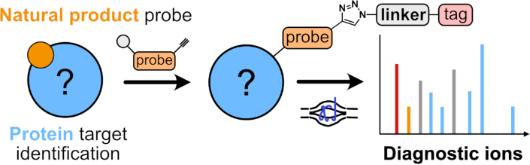
- , the linkers were proposed and designed to mainly facilitate the enrichment of the probe–protein or probe–peptide conjugates and their selective release after enrichment. In this review we would like to highlight the fragmentation properties of the different linkers and resulting ions as the valuable
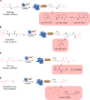
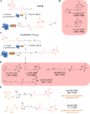
- synthesis. The higher-energy collisional dissociation (HCD) releases the characteristic reporter ion at m/z 126.1277. In case the electron-transfer dissociation (ETD) is used the DMP-tag yields the reporter ion at m/z 114.1275. Of note, although ETD is more selective towards fragmentation of the peptide
- -down of the probe-modified proteins [94]. The biotin-containing linker is introduced into the probe–protein conjugate via a selective bioorthogonal reaction. The main advantage of the biotin-based linkers is the possibility to apply stringent wash steps, due to the almost irreversible non-covalent




Hydrogen-bond activation enables aziridination of unactivated olefins with simple iminoiodinanes
Beilstein J. Org. Chem. 2024, 20, 2305–2312, doi:10.3762/bjoc.20.197
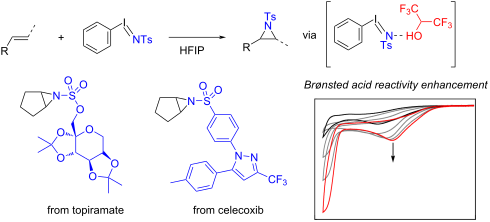
- the potential for chemical non-innocence of fluorinated alcohol solvents in NGT catalysis. Keywords: aziridination; electrochemistry; H-bond activation; hypervalent iodine; nitrene transfer; Introduction Hypervalent iodine reagents find widespread application in selective oxidation chemistry due to


Catalysing (organo-)catalysis: Trends in the application of machine learning to enantioselective organocatalysis
Beilstein J. Org. Chem. 2024, 20, 2280–2304, doi:10.3762/bjoc.20.196
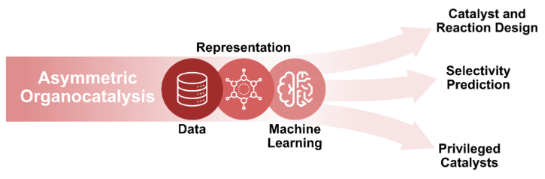
- . However, careful consideration has to be paid towards combining different reactions, as mechanistic transferability has to be ensured. Furthermore, the usage of ML to identify general catalysts demonstrate that the application of modern ML tools is not limited to predicting selective catalysts. 4 ML for
- substituent and the substrate is key for stereoinduction, they designed new catalyst structures maximising the predicted selectivity. The predictions were experimentally validated confirming that their model can be used to guide the design of highly selective catalysts (Figure 15B). 4.2 High-throughput
- screening approaches [107][144][145][146][147]. Thereby, experimental efforts can be focused on the most promising candidates predicted by the model. Denmark and co-workers utilised such an approach to design highly selective catalysts for a peptide-catalysed annulation reaction [68]. Using conformer


Deuterated reagents in multicomponent reactions to afford deuterium-labeled products
Beilstein J. Org. Chem. 2024, 20, 2270–2279, doi:10.3762/bjoc.20.195
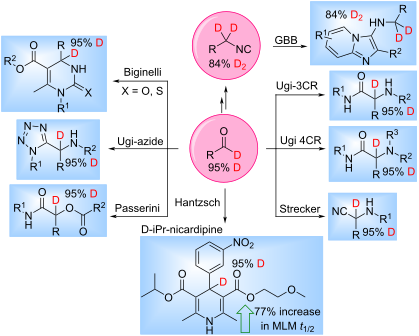
- selective deuteration of often metabolically soft benzylic C–H sites. Lastly and most importantly, preliminary surrogate metabolic stability studies on site selective [D1]-DHPs suggest these novel deuterated analogs may afford increased exposure in an in vivo setting. The methodology is likely to have wide


Selective hydrolysis of α-oxo ketene N,S-acetals in water: switchable aqueous synthesis of β-keto thioesters and β-keto amides
Beilstein J. Org. Chem. 2024, 20, 2225–2233, doi:10.3762/bjoc.20.190

- Haifeng Yu Wanting Zhang Xuejing Cui Zida Liu Xifu Zhang Xiaobo Zhao College of Chemistry, Baicheng Normal University, Baicheng, Jilin 137000, China 10.3762/bjoc.20.190 Abstract An eco-friendly selective hydrolysis of chain α-oxo ketene N,S-acetals in water for the switchable synthesis of β-keto
- dithioacetals and nitroethane/amines [72][73]. As part of our continuous research in this context, more recently we investigated the selective hydrolysis of α-oxo ketene N,S-acetals in water to gain an environmentally compliant synthetic method for β-keto thioesters and β-keto amides (Scheme 1c). Herein, we
- report our findings. Results and Discussion At the outset of our studies, to optimize the reaction conditions for the selective synthesis of β-keto thioesters and β-keto amides, we explored the hydrolysis reaction of (E)-3-(ethylthio)-1-phenyl-3-(phenylamino)prop-2-en-1-one (1a, 0.25 mmol, 70.8 mg) in



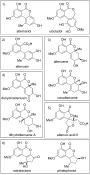
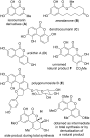
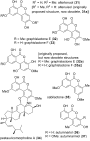
Natural resorcylic lactones derived from alternariol
Beilstein J. Org. Chem. 2024, 20, 2171–2207, doi:10.3762/bjoc.20.187
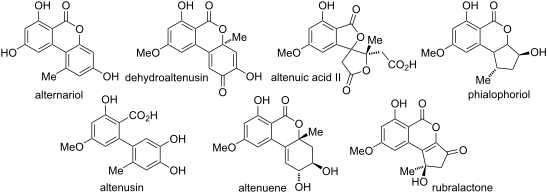
- aggregation, attracting interest for the treatment of Alzheimer’s disease [240], was a selective agonist of the farnesoid X receptor FXR (EC50: 3.2 µM) [241], and displayed remarkable neuroprotective effects against oxidative injuries by acting as potent activator of nuclear factor erythroid-derived 2-like 2




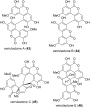


Factors influencing the performance of organocatalysts immobilised on solid supports: A review
Beilstein J. Org. Chem. 2024, 20, 2129–2142, doi:10.3762/bjoc.20.183
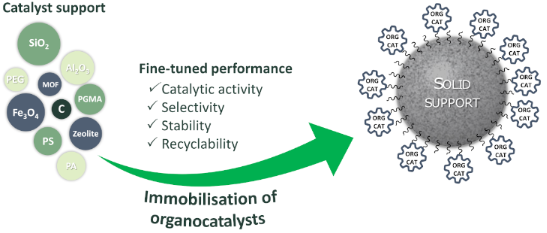
- ]. An advantage of dendrimer-supported organocatalysts are their enzyme-like properties [111][112]. Selective binding and cooperative catalysis can give the catalyst high selectivity and activity. Interactions between the support and other components The interaction between the solid support and the


Efficacy of radical reactions of isocyanides with heteroatom radicals in organic synthesis
Beilstein J. Org. Chem. 2024, 20, 2114–2128, doi:10.3762/bjoc.20.182
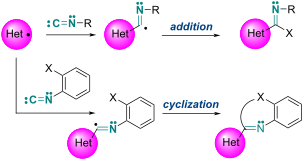
- ] because isocyanide is susceptible to multiple imidoylation [9][10][11], whereas carbon monoxide is less susceptible to multiple carbonylation. Therefore, precise control of the reaction is required for selective formation of the monoimidoylation product. Regarding the radical reaction of isocyanides, the
- imine 6’ (96%), which underwent [2 + 2] cycloaddition with methoxyketene to afford β-lactam derivative 7 (79%) (Scheme 4). Selective replacement of the PhSe group of 7 with a 3-butanonyl group (34%) and the subsequent intramolecular Horner–Emmons reaction successfully led to carbacephem skeleton 8 (96
- hope that this Perspective will help in the development of such new reactions. Resonance structures and reactivity of carbon monoxide. Resonance structures and reactivity of isocyanides. Possible three pathways of the E• formation for imidoylation. Radical addition of thiols to isocyanides. Selective


Computational toolbox for the analysis of protein–glycan interactions
Beilstein J. Org. Chem. 2024, 20, 2084–2107, doi:10.3762/bjoc.20.180


Diastereoselective synthesis of highly substituted cyclohexanones and tetrahydrochromene-4-ones via conjugate addition of curcumins to arylidenemalonates
Beilstein J. Org. Chem. 2024, 20, 2016–2023, doi:10.3762/bjoc.20.177
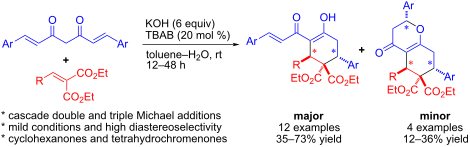
- treatment of Alzheimer's disease [3][4]. Likewise, RL91 and BHMPC are active for selective cell growth inhibition of the resistant lines (Figure 1) [5][6]. Their synthesis mainly involves a cascade Michael–aldol reaction between enones and suitable Michael donors such as β-ketosulfones, β-diketones, or


Allostreptopyrroles A–E, β-alkylpyrrole derivatives from an actinomycete Allostreptomyces sp. RD068384
Beilstein J. Org. Chem. 2024, 20, 1981–1987, doi:10.3762/bjoc.20.174
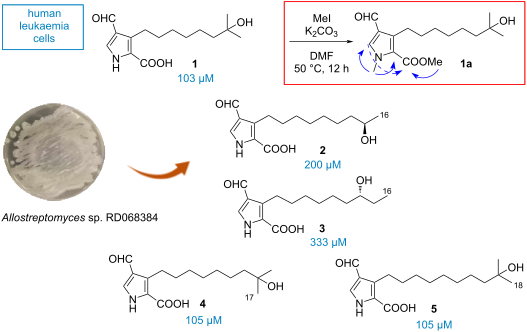
- , copolymerized β-alkylpyrroles are among the most investigated organic materials for their enhanced physical and electrochemical properties [4][5]. Accordingly, chemists have focused on developing selective synthetic strategies for the construction of β-alkylpyrroles [1]. While the pyrrole nucleus is featured in


Radical reactivity of antiaromatic Ni(II) norcorroles with azo radical initiators
Beilstein J. Org. Chem. 2024, 20, 1967–1972, doi:10.3762/bjoc.20.172
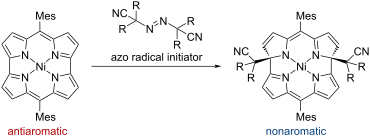
- through denitrogenation of AIBN, is closer to the HOMO level of Ni(II) norcorrole 1 (−4.68 eV) rather than its LUMO (−3.16 eV). This result explains the selective addition of the electrophilic isobutyronitrile radical to the distal α-position of the pyrrole unit. The calculated molecular orbital


A new platform for the synthesis of diketopyrrolopyrrole derivatives via nucleophilic aromatic substitution reactions
Beilstein J. Org. Chem. 2024, 20, 1933–1939, doi:10.3762/bjoc.20.169
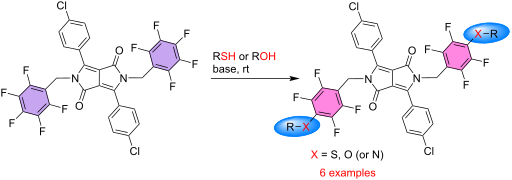
- . Furthermore, the reaction with 4-(acetylamino)benzenethiol led to the selective formation of the disubstituted compound 3c in 53% yield. Phenols are less nucleophilic than thiols and, depending on the substitution pattern, a stronger base is often required to generate the corresponding alkoxide, which is the
- the protons of the N–CH2C6F5 and N–CH2C6F4XR groups, respectively. All 19F NMR spectra confirmed the selective substitution of the 4-fluorine atoms (in one or in two rings) by the disappearance of the signal corresponding to the resonance of those atoms. Mass spectra of compounds 3a–f, 4a, 4d and 4f


Novel oxidative routes to N-arylpyridoindazolium salts
Beilstein J. Org. Chem. 2024, 20, 1906–1913, doi:10.3762/bjoc.20.166
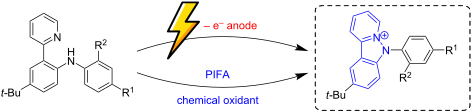
- diphenylamines yielding N,N-diarylbenzidines and N,N-diaryldihydrophenazines were reported in [21]. By varying the reaction conditions and additional substituents in the phenyl rings, a possibility for the selective oxidation of ortho-(2-pyridyl)diphenylamine to the corresponding nitroxide, as well as the
- the post-electrolysis mixture. Instead, a complex mixture of products was obtained. It looks as if the oxidation is non-selective; not a single reaction path dominates. This is typical for diarylamines containing electron-withdrawing substituents in both rings; commonly, electrochemical oxidation


2-Heteroarylethylamines in medicinal chemistry: a review of 2-phenethylamine satellite chemical space
Beilstein J. Org. Chem. 2024, 20, 1880–1893, doi:10.3762/bjoc.20.163
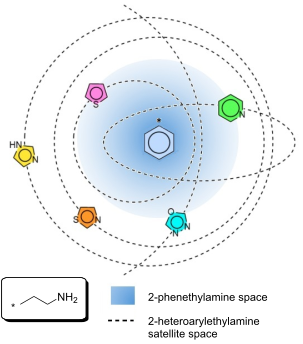
- De Esch et al. [55] and by Kazuta el al. [56]. The primary aim was the design of a new class of highly H3-selective agonists lacking H4 affinity by restricting the flexibility of the aminoethyl chain. Previous structure–activity exercises demonstrated an impact on selectivity upon introducing a
- studies. Thiazoles: 2-Thiazolylethylamine was characterized as a more selective and potent histamine H1 agonist [70]. Based on this, Govoni et al. [71] analyzed the pharmacological profile of several histamine H1 antagonists, with a section covering thiazole-based compounds. 2-(Thiazol-4-yl)ethylamine (99




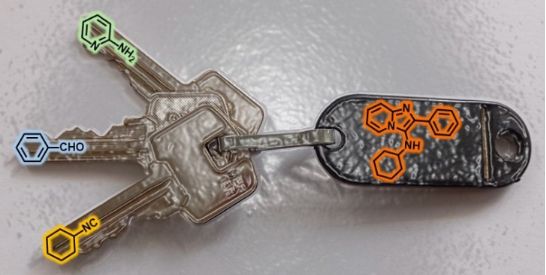
The Groebke–Blackburn–Bienaymé reaction in its maturity: innovation and improvements since its 21st birthday (2019–2023)
Beilstein J. Org. Chem. 2024, 20, 1839–1879, doi:10.3762/bjoc.20.162
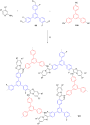
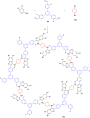
- compatibility of the GBB reaction with typical KTGS conditions, such as aqueous solvent at near-physiological pH and high dilution, and the achievement of selective ligand amplification. First, molecular modeling studies were carried out to verify that building blocks and intermediates could bind the target
- cyclophanyl-imidazole-based library of ligands. The synthesis of ligands based on the [2.2]paracyclophane (PCP) moiety, thanks to its structural features and inherent planar chirality upon selective substitution, has been recently reviewed by the same author [46]. Starting from 4-formylcyclophane 37, a GBB
- multistep procedure, however, by employing 3,6-diamino-1,2,4-triazin-5-one 44 as amidine derivative, 46 could be simply obtained through a GBB-3CR. The amino group in position 3 was opportunely protected to drive the GBB reaction to the selective formation of 45. Microwave heating appeared to be beneficial






Discovery of antimicrobial peptides clostrisin and cellulosin from Clostridium: insights into their structures, co-localized biosynthetic gene clusters, and antibiotic activity
Beilstein J. Org. Chem. 2024, 20, 1800–1816, doi:10.3762/bjoc.20.159

- . Lanthipeptide biosynthetic genes have undergone complex evolutionary processes that have produced chemically diverse active peptides [11][12]. These genes are predominantly found in bacteria and have evolved through selective pressures driven by competition for resources and defense against predators [13]. The