Search for "trifluoroacetic acid" in Full Text gives 315 result(s) in Beilstein Journal of Organic Chemistry. Showing first 200.
Beilstein J. Org. Chem. 2017, 13, 938–951, doi:10.3762/bjoc.13.95
Graphical Abstract
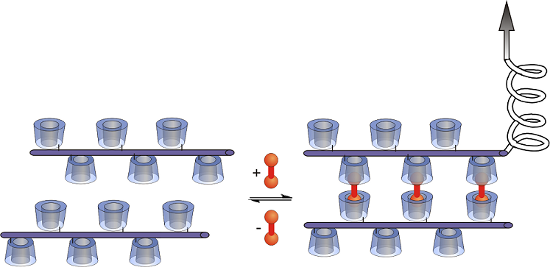
Figure 1: Interaction of a shape-persistent CD polymer with ditopic guests.
Figure 2: Schematic representation of tip and surface modifications realized in this study (bottom). Blue lin...
Scheme 1: Synthesis of the CD polymer. a) conc. HNO3, reflux, 6 d; b) tert-butanol, cat. H2SO4, MgSO4, CH2Cl2...
Figure 3: Absorption spectra of monomer 7 (solid red line) and polymer 8 (solid blue line) in water. Emission...
Figure 4: Positive linear MALDI–TOF spectrum of polymer 8 using HABA/TMG2 matrix.
Figure 5: SANS data for polymer 8 and fit by cylindrical model (solid line).
Scheme 2: Ditopic and monotopic guest molecules.
Figure 6: Solubility of polymer 8 in the presence of ditopic connector 9 (black graph) and 1-aminoadamantane ...
Scheme 3: Synthesis of amino functionalized polymer 12.
Figure 7: Characteristic force curves recorded during retraction of the AFM tip from the surface. Four functi...
Figure 8: Graphical summary of experimental results for the four configurations of CD attachment introduced i...
Figure 9: (a) Detail of the end of a force curve for a polymer-functionalized tip retracted from a polymer-fu...
Figure 10: Characteristic result of a friction experiment for a polymer-functionalized tip sliding on a surfac...
Beilstein J. Org. Chem. 2017, 13, 612–619, doi:10.3762/bjoc.13.59
Graphical Abstract
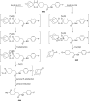
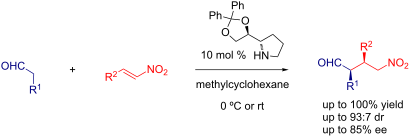
Figure 1: Strategy for the preparation of 2-substituted pyrrolidines C.
Scheme 1: Synthesis of the new organocatalyst OC1.
Scheme 2: Synthesis of new organocatalyst OC2.
Scheme 3: Synthesis of new organocatalyst OC3.
Scheme 4: Synthesis of new organocatalysts OC4–OC10.
Scheme 5: Synthesis of new organocatalyst OC11.
Beilstein J. Org. Chem. 2017, 13, 451–494, doi:10.3762/bjoc.13.48
Graphical Abstract
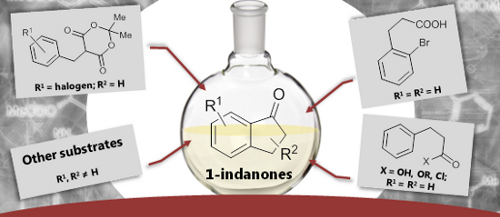
Figure 1: Biologically active 1-indanones and their structural analogues.
Figure 2: Number of papers about (a) 1-indanones, (b) synthesis of 1-indanones.
Scheme 1: Synthesis of 1-indanone (2) from hydrocinnamic acid (1).
Scheme 2: Synthesis of 1-indanone (2) from 3-(2-bromophenyl)propionic acid (3).
Scheme 3: Synthesis of 1-indanones 5 from 3-arylpropionic acids 4.
Scheme 4: Synthesis of kinamycin (9a) and methylkinamycin C (9b).
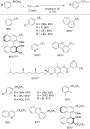
Scheme 5: Synthesis of trifluoromethyl-substituted arylpropionic acids 12, 1-indanones 13 and dihydrocoumarin...
Scheme 6: Synthesis of 1-indanones 16 from benzoic acids 15.
Scheme 7: Synthesis of 1-indanones 18 from arylpropionic and 3-arylacrylic acids 17.
Scheme 8: The NbCl5-induced one-step synthesis of 1-indanones 22.
Scheme 9: Synthesis of biologically active 1-indanone derivatives 26.
Scheme 10: Synthesis of enantiomerically pure indatraline ((−)-29).
Scheme 11: Synthesis of 1-indanone (2) from the acyl chloride 30.
Scheme 12: Synthesis of the mechanism-based inhibitors 33 of coelenterazine.
Scheme 13: Synthesis of the indane 2-imidazole derivative 37.
Scheme 14: Synthesis of fluorinated PAHs 41.
Scheme 15: Synthesis of 1-indanones 43 via transition metal complexes-catalyzed carbonylative cyclization of m...
Scheme 16: Synthesis of 6-methyl-1-indanone (46).
Scheme 17: Synthesis of 1-indanone (2) from ester 48.
Scheme 18: Synthesis of benzopyronaphthoquinone 51 from the spiro-1-indanone 50.
Scheme 19: Synthesis of the selective endothelin A receptor antagonist 55.
Scheme 20: Synthesis of 1-indanones 60 from methyl vinyl ketone (57).
Scheme 21: Synthesis of 1-indanones 64 from diethyl phthalate 61.
Scheme 22: Synthesis of 1-indanone derivatives 66 from various Meldrum’s acids 65.
Scheme 23: Synthesis of halo 1-indanones 69.
Scheme 24: Synthesis of substituted 1-indanones 71.
Scheme 25: Synthesis of spiro- and fused 1-indanones 73 and 74.
Scheme 26: Synthesis of spiro-1,3-indanodiones 77.
Scheme 27: Mechanistic pathway for the NHC-catalyzed Stetter–Aldol–Michael reaction.
Scheme 28: Synthesis of 2-benzylidene-1-indanone derivatives 88a–d.
Scheme 29: Synthesis of 1-indanone derivatives 90a–i.
Scheme 30: Synthesis of 1-indanones 96 from o-bromobenzaldehydes 93 and alkynes 94.
Scheme 31: Synthesis of 3-hydroxy-1-indanones 99.
Scheme 32: Photochemical preparation of 1-indanones 103 from ketones 100.
Scheme 33: Synthesis of chiral 3-aryl-1-indanones 107.
Scheme 34: Photochemical isomerization of 2-methylbenzil 108.
Scheme 35: Synthesis of 2-hydroxy-1-indanones 111a–c.
Scheme 36: Synthesis of 1-indanone derivatives 113 and 114 from η6-1,2-dioxobenzocyclobutene complex 112.
Scheme 37: Synthesis of nakiterpiosin (117).
Scheme 38: Synthesis of 2-alkyl-1-indanones 120.
Scheme 39: Synthesis of fluorine-containing 1-indanone derivatives 123.
Scheme 40: Synthesis of 2-benzylidene and 2-benzyl-1-indanones 126, 127 from the chalcone 124.
Scheme 41: Synthesis of 2-bromo-6-methoxy-3-phenyl-1-indanone (130).
Scheme 42: Synthesis of combretastatin A-4-like indanones 132a–s.
Figure 3: Chemical structures of investigated dienones 133 and synthesized cyclic products 134–137.
Figure 4: Chemical structures of 1-indanones and their heteroatom analogues 138–142.
Scheme 43: Synthesis of 2-phosphorylated and 2-non-phosphorylated 1-indanones 147 and 148 from β-ketophosphona...
Scheme 44: Photochemical synthesis of 1-indanone derivatives 150, 153a, 153b.
Scheme 45: Synthesis of polysubstituted-1-indanones 155, 157.
Scheme 46: Synthesis of 1-indanones 159a–g from α-arylpropargyl alcohols 158 using RhCl(PPh3)3 as a catalyst.
Scheme 47: Synthesis of optically active 1-indanones 162 via the asymmetric Rh-catalyzed isomerization of race...
Scheme 48: Mechanism of the Rh-catalyzed isomerization of α-arylpropargyl alcohols 161 to 1-indanones 162.
Figure 5: Chemical structure of abicoviromycin (168) and its new benzo derivative 169.
Scheme 49: Synthesis of racemic benzoabicoviromycin 172.
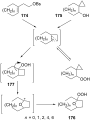
Scheme 50: Synthesis of [14C]indene 176.
Scheme 51: Synthesis of indanone derivatives 178–180.
Scheme 52: Synthesis of racemic pterosin A 186.
Scheme 53: Synthesis of trans-2,3-disubstituted 1-indanones 189.
Scheme 54: Synthesis of 3-aryl-1-indanone derivatives 192.
Scheme 55: Synthesis of 1-indanone derivatives 194 from 3-(2-iodoaryl)propanonitriles 193.
Scheme 56: Synthesis of 1-indanones 200–204 by cyclization of aromatic nitriles.
Scheme 57: Synthesis of 1,1’-spirobi[indan-3,3’-dione] derivative 208.
Scheme 58: Total synthesis of atipamezole analogues 211.
Scheme 59: Synthesis of 3-[4-(1-piperidinoethoxy)phenyl]spiro[indene-1,1’-indan]-5,5’-diol hydrochloride 216.
Scheme 60: Synthesis of 3-arylindan-1-ones 219.
Scheme 61: Synthesis of 2-hydroxy-1-indanones 222.
Scheme 62: Synthesis of the 1-indanone 224 from the THP/MOM protected chalcone epoxide 223.
Scheme 63: Synthesis of 1-indanones 227 from γ,δ-epoxy ketones 226.
Scheme 64: Synthesis of 2-hydroxy-2-methylindanone (230).
Scheme 65: Synthesis of 1-indanone derivatives 234 from cyclopropanol derivatives 233.
Scheme 66: Synthesis of substituted 1-indanone derivatives 237.
Scheme 67: Synthesis of 7-methyl substituted 1-indanone 241 from 1,3-pentadiene (238) and 2-cyclopentenone (239...
Scheme 68: Synthesis of disubstituted 1-indanone 246 from the siloxydiene 244 and 2-cyclopentenone 239.
Scheme 69: Synthesis of 5-hydroxy-1-indanone (250) via the Diels–Alder reaction of 1,3-diene 248 with sulfoxid...
Scheme 70: Synthesis of halogenated 1-indanones 253a and 253b.
Scheme 71: Synthesis of 1-indanones 257 and 258 from 2-bromocyclopentenones 254.
Scheme 72: Synthesis of 1-indanone 261 from 2-bromo-4-acetoxy-2-cyclopenten-1-one (260) and 1,2-dihydro-4-viny...
Scheme 73: Synthesis of 1-indanone 265 from 1,2-dihydro-7-methoxy-4-vinylnaphthalene (262) and bromo-substitut...
Scheme 74: Synthesis of 1-indanone 268 from dihydro-3-vinylphenanthrene 266 and 4-acetoxy-2-cyclopenten-1-one (...
Scheme 75: Synthesis of 1-indanone 271 from phenylselenyl-substituted cyclopentenone 268.
Scheme 76: Synthesis of 1-indanone 272 from the trienone 270.
Scheme 77: Synthesis of the 1-indanone 276 from the aldehyde 273.
Scheme 78: Synthesis of 1-indanones 278 and 279.
Scheme 79: Synthesis of 1-indanone 285 from octa-1,7-diyne (282) and cyclopentenone 239.
Scheme 80: Synthesis of benz[f]indan-1-one (287) from cyclopentenone 239 and o-bis(dibromomethyl)benzene (286)....
Scheme 81: Synthesis of 3-methyl-substituted benz[f]indan-1-one 291 from o-bis(dibromomethyl)benzene (286) and...
Scheme 82: Synthesis of benz[f]indan-1-one (295) from the anthracene epidioxide 292.
Scheme 83: Synthesis of 1-indanone 299 from homophthalic anhydride 298 and cyclopentynone 297.
Scheme 84: Synthesis of cyano-substituted 1-indanone derivative 301 from 2-cyanomethylbenzaldehyde (300) and c...
Scheme 85: Synthesis of 1-indanone derivatives 303–305 from ketene dithioacetals 302.
Scheme 86: Synthesis of 1-indanones 309–316.
Scheme 87: Mechanism of the hexadehydro-Diels–Alder (HDDA) reaction.
Scheme 88: Synthesis of 1-indenone 318 and 1-indanones 320 and 321 from tetraynes 317 and 319.
Scheme 89: Synthesis of 1-indanone 320 from the triyn 319.
Scheme 90: Synthesis 1-indanone 328 from 2-methylfuran 324.
Scheme 91: Synthesis of 1-indanones 330 and 331 from furans 329.
Scheme 92: Synthesis of 1-indanone 333 from the cycloadduct 332.
Scheme 93: Synthesis of (S)-3-arylindan-1-ones 335.
Scheme 94: Synthesis of (R)-2-acetoxy-1-indanone 338.
Figure 6: Chemical structures of obtained cyclopenta[α]phenanthrenes 339.
Scheme 95: Synthesis of the benzoindanone 343 from arylacetaldehyde 340 with 1-trimethylsilyloxycyclopentene (...
Beilstein J. Org. Chem. 2016, 12, 2523–2534, doi:10.3762/bjoc.12.247
Graphical Abstract
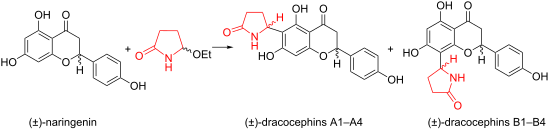
Figure 1: Structures of (±)-naringenin, (±)-dracocephins A1–A4 and B1–B4 with the indication of the absolute ...
Scheme 1: Proposed biosynthetic route to dracocephins A and B.
Scheme 2: Synthesis of (±)-5-ethoxypyrrolidine-2-one ((±)-9).
Scheme 3: Synthesis of (±)-dracocephins A and B (±)-2a–d and (±)-3a–d and the elution order of stereoisomers ...
Figure 2: a) Chiral HPLC–UV and HPLC–ECD traces of dracocephins A (2a–d) using Chiralpak IC column with the e...
Figure 3: Structure and population of the low-energy CAM-B3LYP/TZVP PCM/CHCl3 conformers (>2%) of (R)-1.
Figure 4: Experimental HPLC–ECD spectrum of (R)-naringenin ((R)-1) compared with the Boltzmann-weighted ECD s...
Figure 5: Structure and population of the low-energy CAM-B3LYP/TZVP PCM/MeCN conformers (>2%) of (2R,5’’R)-2d....
Figure 6: Structure and population of the low-energy CAM-B3LYP/TZVP PCM/MeCN conformers (>2%) of (2R,5’’S)-2a....
Figure 7: Experimental HPLC-ECD spectra of (2R,5’’S)-2a (second eluted stereoisomer) and (2R,5’’R)-2d (fourth...
Figure 8: Experimental HPLC–ECD spectra of (2R,5’’S)-2a and (2R,5’’R)-2d compared with the Boltzmann-weighted...
Figure 9: a) Chiral HPLC–UV and HPLC–ECD traces of dracocephins B1–B4 3a–d using a Chiralpak IC column with t...
Figure 10: Structure and population of the low-energy CAM-B3LYP/TZVP PCM/MeCN conformers (>2%) of (2R,5’’R)-3c....
Figure 11: Structure and population of the low-energy CAM-B3LYP/TZVP PCM/MeCN conformers (>2%) of (2R,5’’S)-3b....
Figure 12: Experimental HPLC-ECD spectra of 3b (first eluted stereoisomer) and 3c (third eluted stereoisomer) ...
Figure 13: Experimental HPLC-ECD spectra of 3b and 3c compared with the Boltzmann-weighted ECD spectra compute...
Figure 14: Proposed mechanism for the formation of dracocephins A and B (2a–d and 3a–d) starting from (±)-9.
Beilstein J. Org. Chem. 2016, 12, 2462–2470, doi:10.3762/bjoc.12.240
Graphical Abstract
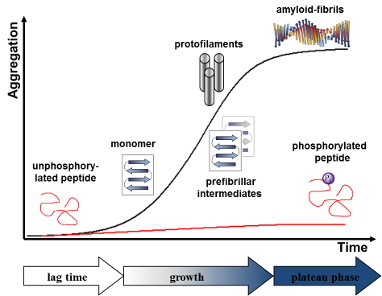
Scheme 1: Helical wheel projection of two parallel helical strands and primary structure of KFM6. The recogni...
Figure 1: a) Time-dependent CD spectra and b) corresponding CD-minimum plot for random coil (black) and β-she...
Figure 2: ThT-binding assay of of 15 µM KFM6 in 50 mM Tris/HCl buffer with 10 mM MgCl2 at pH 7.5, 24 °C, and ...
Figure 3: a) TEM micrograph of 15 µM KFM6 in 50 mM Tris/HCl buffer with 10 mM MgCl2 at pH 7.5 and 24 °C. The ...
Figure 4: a) Enzymatic phosphorylation of 15 µM KFM6 in time-dependent CD-minimum plots. Addition of both 200...
Beilstein J. Org. Chem. 2016, 12, 2093–2098, doi:10.3762/bjoc.12.198
Graphical Abstract
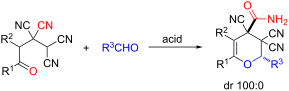
Scheme 1: An exclusive approach to 3,4-dihydro-2H-pyran-4-carboxamides from non-pyran sources.
Scheme 2: Known approach to pyran derivatives based on ketonitriles 1.
Figure 1: The molecular structure of 2a with atom-numbering scheme. Displacement ellipsoids are drawn at the ...
Scheme 3: Plausible reaction pathways for 3,4-dihydro-2H-pyran-4-carbxamides 2 formation.
Beilstein J. Org. Chem. 2016, 12, 1772–1777, doi:10.3762/bjoc.12.166
Graphical Abstract
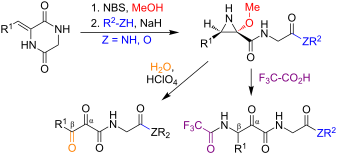
Scheme 1: Summary of the work described in this paper.
Scheme 2: Synthesis of aziridines 2.
Figure 1: NOE effects in compound 2f.
Scheme 3: Mechanistic proposal accounting for the chemo- and diastereoselective formation of aziridines 2.
Scheme 4: Transformation of aziridines 2 into β-trifluoroacetamido-α-ketoamides 6.
Scheme 5: Two mechanistic proposals explaining the formation of compounds 6.
Scheme 6: Transformation of aziridines 2 into vicinal tricarbonyl compounds 11 and transformation of the latt...
Scheme 7: Mechanistic proposal for the transformation of aziridines 2 into compounds 11.
Beilstein J. Org. Chem. 2016, 12, 1647–1748, doi:10.3762/bjoc.12.162
Graphical Abstract
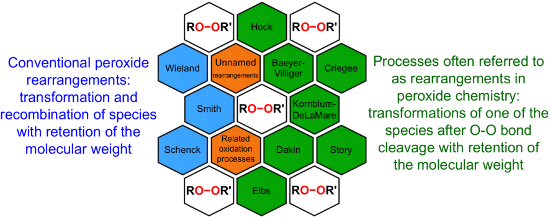
Figure 1: The named transformations considered in this review.
Scheme 1: The Baeyer–Villiger oxidation.
Scheme 2: The general mechanism of the peracid-promoted Baeyer–Villiger oxidation.
Scheme 3: General mechanism of the Lewis acid-catalyzed Baeyer–Villiger rearrangement.
Scheme 4: The theoretically studied mechanism of the BV oxidation reaction promoted by H2O2 and the Lewis aci...
Scheme 5: Proton movements in the transition states of the Baeyer–Villiger oxidation.
Scheme 6: The dependence of the course of the Baeyer–Villiger oxidation on the type of O–O-bond cleavage in t...
Scheme 7: The acid-catalyzed Baeyer–Villiger oxidation of cyclic epoxy ketones 22.
Scheme 8: Oxidation of isophorone oxide 29.
Scheme 9: Synthesis of acyl phosphate 32 from acyl phosphonate 31.
Scheme 10: Synthesis of aflatoxin B2 (36).
Scheme 11: The Baeyer–Villiger rearrangement of ketones 37 to lactones 38.
Scheme 12: Synthesis of 3,4-dimethoxybenzoic acid (40) via Baeyer–Villiger oxidation.
Scheme 13: Oxone transforms α,β-unsaturated ketones 43 into vinyl acetates 44.
Scheme 14: The Baeyer–Villiger oxidation of ketones 45 using diaryl diselenide and hydrogen peroxide.
Scheme 15: Baeyer–Villiger oxidation of (E)-2-methylenecyclobutanones.
Scheme 16: Oxidation of β-ionone (56) by H2O2/(BnSe)2 with formation of (E)-2-(2,6,6-trimethylcyclohex-1-en-1-...
Scheme 17: The mechanism of oxidation of ketones 58a–f by hydrogen peroxide in the presence of arsonated polys...
Scheme 18: Oxidation of ketone (58b) by H2O2 to 6-methylcaprolactone (59b) catalyzed by Pt complex 66·BF4.
Scheme 19: Oxidation of ketones 67 with H2O2 in the presence of [(dppb}Pt(µ-OH)]22+.
Scheme 20: The mechanism of oxidation of ketones 67 in the presence of [(dppb}Pt(µ-OH)]22+ and H2O2.
Scheme 21: Oxidation of benzaldehydes 69 in the presence of the H2O2/MeReO3 system.
Scheme 22: Oxidation of acetophenones 72 in the presence of the H2O2/MeReO3 system.
Scheme 23: Baeyer–Villiger oxidation of 2-adamantanone (45c) in the presence of Sn-containing mesoporous silic...
Scheme 24: Aerobic Baeyer–Villiger oxidation of ketones 76 using metal-free carbon.
Scheme 25: A regioselective Baeyer-Villiger oxidation of functionalized cyclohexenones 78 into a dihydrooxepin...
Scheme 26: The oxidation of aldehydes and ketones 80 by H2O2 catalyzed by Co4HP2Mo15V3O62.
Scheme 27: The cleavage of ketones 82 with hydrogen peroxide in alkaline solution.
Scheme 28: Oxidation of ketones 85 to esters 86 with H2O2–urea in the presence of KHCO3.
Scheme 29: Mechanism of the asymmetric oxidation of cyclopentane-1,2-dione 87a with the Ti(OiPr)4/(+)DET/t-BuO...
Scheme 30: The oxidation of cis-4-tert-butyl-2-fluorocyclohexanone (93) with m-chloroperbenzoic acid.
Scheme 31: The mechanism of the asymmetric oxidation of 3-substituted cyclobutanone 96a in the presence of chi...
Scheme 32: Enantioselective Baeyer–Villiger oxidation of cyclic ketones 98.
Scheme 33: Regio- and enantioselective Baeyer–Villiger oxidation of cyclic ketones 101.
Scheme 34: The proposed mechanism of the Baeyer–Villiger oxidation of acetal 105f.
Scheme 35: Synthesis of hydroxy-10H-acridin-9-one 117 from tetramethoxyanthracene 114.
Scheme 36: The Baeyer–Villiger oxidation of the fully substituted pyrrole 120.
Scheme 37: The Criegee rearrangement.
Scheme 38: The mechanism of the Criegee reaction of a peracid with a tertiary alcohol 122.
Scheme 39: Criegee rearrangement of decaline ethylperoxoate 127 into ketal 128.
Scheme 40: The ionic cleavage of 2-methoxy-2-propyl perester 129.
Scheme 41: The Criegee rearrangement of α-methoxy hydroperoxide 136.
Scheme 42: Synthesis of enol esters and acetals via the Criegee rearrangement.
Scheme 43: Proposed mechanism of the transformation of 1-hydroperoxy-2-oxabicycloalkanones 147a–d.
Scheme 44: Transformation of 3-hydroxy-1,2-dioxolanes 151 into diketone derivatives 152.
Scheme 45: Criegee rearrangement of peroxide 153 with the mono-, di-, and tri-O-insertion.
Scheme 46: The sequential Criegee rearrangements of adamantanes 157a,b.
Scheme 47: Synthesis of diaryl carbonates 160a–d from triarylmethanols 159a–d through successive oxygen insert...
Scheme 48: The synthesis of sesquiterpenes 162 from ketone 161 with a Criegee rearrangement as one key step.
Scheme 49: Synthesis of trans-hydrindan derivatives 164, 165.
Scheme 50: The Hock rearrangement.
Scheme 51: The general scheme of the cumene process.
Scheme 52: The Hock rearrangement of aliphatic hydroperoxides.
Scheme 53: The mechanism of solvolysis of brosylates 174a–c and spiro cyclopropyl carbinols 175a–c in THF/H2O2....
Scheme 54: The fragmentation mechanism of hydroperoxy acetals 178 to esters 179.
Scheme 55: The acid-catalyzed rearrangement of phenylcyclopentyl hydroperoxide 181.
Scheme 56: The peroxidation of tertiary alcohols in the presence of a catalytic amount of acid.
Scheme 57: The acid-catalyzed reaction of bicyclic secondary alcohols 192 with hydrogen peroxide.
Scheme 58: The photooxidation of 5,6-disubstituted 3,4-dihydro-2H-pyrans 196.
Scheme 59: The oxidation of tertiary alcohols 200a–g, 203a,b, and 206.
Scheme 60: Transformation of functional peroxide 209 leading to 2,3-disubstitued furans 210 in one step.
Scheme 61: The synthesis of carbazoles 213 via peroxide rearrangement.
Scheme 62: The construction of C–N bonds using the Hock rearrangement.
Scheme 63: The synthesis of moiety 218 from 217 which is a structural motif in the antitumor–antibiotic of CC-...
Scheme 64: The in vivo oxidation steps of cholesterol (219) by singlet oxygen.
Scheme 65: The proposed mechanism of the rearrangement of cholesterol-5α-OOH 220.
Scheme 66: Photochemical route to artemisinin via Hock rearrangement of 223.
Scheme 67: The Kornblum–DeLaMare rearrangement.
Scheme 68: Kornblum–DeLaMare transformation of 1-phenylethyl tert-butyl peroxide (225).
Scheme 69: The synthesis 4-hydroxyenones 230 from peroxide 229.
Scheme 70: The Kornblum–DeLaMare rearrangement of peroxide 232.
Scheme 71: The reduction of peroxide 234.
Scheme 72: The Kornblum–DeLaMare rearrangement of endoperoxide 236.
Scheme 73: The rearrangement of peroxide 238 under Kornblum–DeLaMare conditions.
Scheme 74: The proposed mechanism of rearrangement of peroxide 238.
Scheme 75: The Kornblum–DeLaMare rearrangement of peroxides 242a,b.
Scheme 76: The base-catalyzed rearrangements of bicyclic endoperoxides having electron-withdrawing substituent...
Scheme 77: The base-catalyzed rearrangements of bicyclic endoperoxides 249a,b having electron-donating substit...
Scheme 78: The base-catalyzed rearrangements of bridge-head substituted bicyclic endoperoxides 251a,b.
Scheme 79: The Kornblum–DeLaMare rearrangement of hydroperoxide 253.
Scheme 80: Synthesis of β-hydroxy hydroperoxide 254 from endoperoxide 253.
Scheme 81: The amine-catalyzed rearrangement of bicyclic endoperoxide 263.
Scheme 82: The base-catalyzed rearrangement of meso-endoperoxide 268 into 269.
Scheme 83: The photooxidation of 271 and subsequent Kornblum–DeLaMare reaction.
Scheme 84: The Kornblum–DeLaMare rearrangement as one step in the oxidation reaction of enamines.
Scheme 85: The Kornblum–DeLaMare rearrangement of 3,5-dihydro-1,2-dioxenes 284, 1,2-dioxanes 286, and tert-but...
Scheme 86: The Kornblum–DeLaMare rearrangement of epoxy dioxanes 290a–d.
Scheme 87: Rearrangement of prostaglandin H2 292.
Scheme 88: The synthesis of epicoccin G (297).
Scheme 89: The Kornblum–DeLaMare rearrangement used in the synthesis of phomactin A.
Scheme 90: The Kornblum–DeLaMare rearrangement in the synthesis of 3H-quinazolin-4-one 303.
Scheme 91: The Kornblum–DeLaMare rearrangement in the synthesis of dolabriferol (308).
Scheme 92: Sequential transformation of 3-substituted 2-pyridones 309 into 3-hydroxypyridine-2,6-diones 311 in...
Scheme 93: The Kornblum–DeLaMare rearrangement of peroxide 312 into hydroxy enone 313.
Scheme 94: The Kornblum–DeLaMare rearrangement in the synthesis of polyfunctionalized carbonyl compounds 317.
Scheme 95: The Kornblum–DeLaMare rearrangement in the synthesis of (Z)-β-perfluoroalkylenaminones 320.
Scheme 96: The Kornblum–DeLaMare rearrangement in the synthesis of γ-ketoester 322.
Scheme 97: The Kornblum–DeLaMare rearrangement in the synthesis of diterpenoids 326 and 328.
Scheme 98: The synthesis of natural products hainanolidol (331) and harringtonolide (332) from peroxide 329.
Scheme 99: The synthesis of trans-fused butyrolactones 339 and 340.
Scheme 100: The synthesis of leucosceptroid C (343) and leucosceptroid P (344) via the Kornblum–DeLaMare rearra...
Scheme 101: The Dakin oxidation of arylaldehydes or acetophenones.
Scheme 102: The mechanism of the Dakin oxidation.
Scheme 103: A solvent-free Dakin reaction of aromatic aldehydes 356.
Scheme 104: The organocatalytic Dakin oxidation of electron-rich arylaldehydes 358.
Scheme 105: The Dakin oxidation of electron-rich arylaldehydes 361.
Scheme 106: The Dakin oxidation of arylaldehydes 358 in water extract of banana (WEB).
Scheme 107: A one-pot approach towards indolo[2,1-b]quinazolines 364 from indole-3-carbaldehydes 363 through th...
Scheme 108: The synthesis of phenols 367a–c from benzaldehydes 366a-c via acid-catalyzed Dakin oxidation.
Scheme 109: Possible transformation paths of the highly polarized boric acid coordinated H2O2–aldehyde adduct 3...
Scheme 110: The Elbs oxidation of phenols 375 to hydroquinones.
Scheme 111: The mechanism of the Elbs persulfate oxidation of phenols 375 affording p-hydroquinones 376.
Scheme 112: Oxidation of 2-pyridones 380 under Elbs persulfate oxidation conditions.
Scheme 113: Synthesis of 3-hydroxy-4-pyridone (384) via an Elbs oxidation of 4-pyridone (382).
Scheme 114: The Schenck rearrangement.
Scheme 115: The Smith rearrangement.
Scheme 116: Three main pathways of the Schenck rearrangement.
Scheme 117: The isomerization of hydroperoxides 388 and 389.
Scheme 118: Trapping of dioxacyclopentyl radical 392 by oxygen.
Scheme 119: The hypothetical mechanism of the Schenck rearrangement of peroxide 394.
Scheme 120: The autoxidation of oleic acid (397) with the use of labeled isotope 18O2.
Scheme 121: The rearrangement of 18O-labeled hydroperoxide 400 under an atmosphere of 16O2.
Scheme 122: The rearrangement of the oleate-derived allylic hydroperoxides (S)-421 and (R)-425.
Scheme 123: Mechanisms of Schenck and Smith rearrangements.
Scheme 124: The rearrangement and cyclization of 433.
Scheme 125: The Wieland rearrangement.
Scheme 126: The rearrangement of bis(triphenylsilyl) 439 or bis(triphenylgermyl) 441 peroxides.
Scheme 127: The oxidative transformation of cyclic ketones.
Scheme 128: The hydroxylation of cyclohexene (447) in the presence of tungstic acid.
Scheme 129: The oxidation of cyclohexene (447) under the action of hydrogen peroxide.
Scheme 130: The reaction of butenylacetylacetone 455 with hydrogen peroxide.
Scheme 131: The oxidation of bridged 1,2,4,5-tetraoxanes.
Scheme 132: The proposed mechanism for the oxidation of bridged 1,2,4,5-tetraoxanes.
Scheme 133: The rearrangement of ozonides.
Scheme 134: The acid-catalyzed oxidative rearrangement of malondialdehydes 462 under the action of H2O2.
Scheme 135: Pathways of the Lewis acid-catalyzed cleavage of dialkyl peroxides 465 and ozonides 466.
Scheme 136: The mechanism of the transformation of (tert-butyldioxy)cyclohexanedienones 472.
Scheme 137: The synthesis of Vitamin K3 from 472a.
Scheme 138: Proposed mechanism for the transformation of 478d into silylated endoperoxide 479d.
Scheme 139: The rearrangement of hydroperoxide 485 to form diketone 486.
Scheme 140: The base-catalyzed rearrangement of cyclic peroxides 488a–g.
Scheme 141: Synthesis of chiral epoxides and aldols from peroxy hemiketals 491.
Scheme 142: The multistep transformation of (R)-carvone (494) to endoperoxides 496a–e.
Scheme 143: The decomposition of anthracene endoperoxide 499.
Scheme 144: Synthesis of esters 503 from aldehydes 501 via rearrangement of peroxides 502.
Scheme 145: Two possible paths for the base-promoted decomposition of α-azidoperoxides 502.
Scheme 146: The Story decomposition of cyclic diperoxide 506a.
Scheme 147: The Story decomposition of cyclic triperoxide 506b.
Scheme 148: The thermal rearrangement of endoperoxides A into diepoxides B.
Scheme 149: The transformation of peroxide 510 in the synthesis of stemolide (511).
Scheme 150: The possible mechanism of the rearrangement of endoperoxide 261g.
Scheme 151: The photooxidation of indene 517.
Scheme 152: The isomerization of ascaridole (523).
Scheme 153: The isomerization of peroxide 525.
Scheme 154: The thermal transformation of endoperoxide 355.
Scheme 155: The photooxidation of cyclopentadiene (529) at a temperature higher than 0 °C.
Scheme 156: The thermal rearrangement of endoperoxides 538a,b.
Scheme 157: The transformation of peroxides 541.
Scheme 158: The thermal rearrangements of strained cyclic peroxides.
Scheme 159: The thermal rearrangement of diacyl peroxide 551 in the synthesis of C4-epi-lomaiviticin B core 553....
Scheme 160: The 1O2 oxidation of tryptophan (554) and rearrangement of dioxetane intermediate 555.
Scheme 161: The Fe(II)-promoted cleavage of aryl-substituted bicyclic peroxides.
Scheme 162: The proposed mechanism of the Fe(II)-promoted rearrangement of 557a–c.
Scheme 163: The reaction of dioxolane 563 with Fe(II) sulfate.
Scheme 164: Fe(II)-promoted rearrangement of 1,2-dioxane 565.
Scheme 165: Fe(II) cysteinate-promoted rearrangement of 1,2-dioxolane 568.
Scheme 166: The transformation of 1,2-dioxanes 572a–c under the action of FeCl2.
Scheme 167: Fe(II) cysteinate-promoted transformation of tetraoxane 574.
Scheme 168: The CoTPP-catalyzed transformation of bicyclic endoperoxides 600a–d.
Scheme 169: The CoTPP-catalyzed transformation of epoxy-1,2-dioxanes.
Scheme 170: The Ru(II)-catalyzed reactions of 1,4-endoperoxide 261g.
Scheme 171: The Ru(II)-catalyzed transformation as a key step in the synthesis of elyiapyrone A (610) from 1,4-...
Scheme 172: Peroxides with antimalarial activity.
Scheme 173: The interaction of iron ions with artemisinin (616).
Scheme 174: The interaction of FeCl2 with 1,2-dioxanes 623, 624.
Scheme 175: The mechanism of reaction 623 and 624 with Fe(II)Cl2.
Scheme 176: The reaction of bicyclic natural endoperoxides G3-factors 631–633 with FeSO4.
Scheme 177: The transformation of terpene cardamom peroxide 639.
Scheme 178: The different ways of the cleavage of tetraoxane 643.
Scheme 179: The LC–MS analysis of interaction of tetraoxane 646 with iron(II)heme 647.
Scheme 180: The rearrangement of 3,6-epidioxy-1,10-bisaboladiene (EDBD, 649).
Scheme 181: Easily oxidized substrates.
Scheme 182: Biopathway of synthesis of prostaglandins.
Scheme 183: The reduction and rearrangements of isoprostanes.
Scheme 184: The partial mechanism for linoleate 658 oxidation.
Scheme 185: The transformation of lipid hydroperoxide.
Scheme 186: The acid-catalyzed cleavage of the product from free-radical oxidation of cholesterol (667).
Scheme 187: Two pathways of catechols oxidation.
Scheme 188: Criegee-like or Hock-like rearrangement of the intermediate hydroperoxide 675 in dioxygenase enzyme...
Scheme 189: Carotinoides 679 cleavage by carotenoid cleavage dioxygenases.
Beilstein J. Org. Chem. 2016, 12, 1557–1565, doi:10.3762/bjoc.12.150
Graphical Abstract
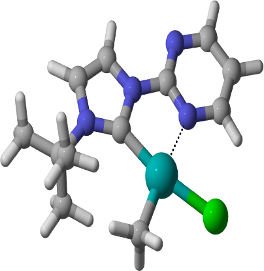
Scheme 1: Synthesis of the monomethylpalladium(II) complexes 9–11 (in DCM) and 12 (in CH3CN).
Figure 1: Possible isomers.
Figure 2: ORTEP [39] style plot of complex 9 in the solid state. Thermal ellipsoids are given at the 50% probabil...
Figure 3: ORTEP [39] style plot of complex 12 in the solid state. Thermal ellipsoids are drawn at the 50% probabi...
Scheme 2: Synthesis of complex 13.
Figure 4: ORTEP [39] style plot of complex 13 in the solid state. Thermal ellipsoids are drawn at the 50% probabi...
Scheme 3: Possible pathways of methyl trifluoroacetate formation starting from complex 13.
Scheme 4: Synthesis of complex 14 by conversion of complex 13 with iodobenzene bistrifluoroacetate.
Scheme 5: Synthesis of the [((pym)^(NHC-R))PdII(CH3)2] complex 15.
Beilstein J. Org. Chem. 2016, 12, 1302–1308, doi:10.3762/bjoc.12.122
Graphical Abstract
Figure 1: Tetraphenylene and its saddle-shaped structure.
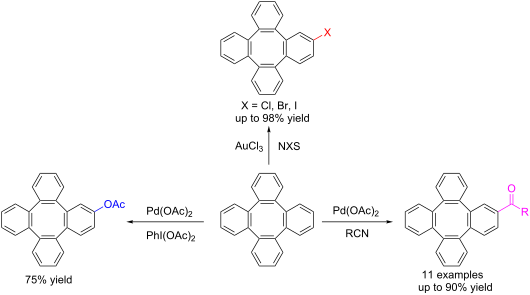
Scheme 1: The Pd(OAc)2-catalyzed reaction of nitriles with tetraphenylene (1).
Beilstein J. Org. Chem. 2016, 12, 1269–1301, doi:10.3762/bjoc.12.121
Graphical Abstract
Scheme 1: The Biginelli condensation.
Scheme 2: The Biginelli reaction of β-ketophosphonates catalyzed by ytterbium triflate.
Scheme 3: Trimethylchlorosilane-mediated Biginelli reaction of diethyl (3,3,3-trifluoropropyl-2-oxo)phosphona...
Scheme 4: Biginelli reaction of dialkyl (3,3,3-trifluoropropyl-2-oxo)phosphonate with trialkyl orthoformates ...
Scheme 5: p-Toluenesulfonic acid-promoted Biginelli reaction of β-ketophosphonates, aryl aldehydes and urea.
Scheme 6: General Kabachnik–Fields reaction for the synthesis of α-aminophosphonates.
Scheme 7: Phthalocyanine–AlCl catalyzed Kabachnik–Fields reaction of N-Boc-piperidin-4-one with diethyl phosp...
Scheme 8: Kabachnik–Fields reaction of isatin with diethyl phosphite and benzylamine.
Scheme 9: Magnetic Fe3O4 nanoparticle-supported phosphotungstic acid-catalyzed Kabachnik–Fields reaction of i...
Scheme 10: The Mg(ClO4)2-catalyzed Kabachnik–Fields reaction of 1-tosylpiperidine-4-one.
Scheme 11: An asymmetric version of the Kabachnik–Fields reaction for the synthesis of α-amino-3-piperidinylph...
Scheme 12: A classical Kabachnik–Fields reaction followed by an intramolecular ring-closing reaction for the s...
Scheme 13: Synthesis of (S)-piperidin-2-phosphonic acid through an asymmetric Kabachnik–Fields reaction.
Scheme 14: A modified diastereoselective Kabachnik–Fields reaction for the synthesis of isoindolin-1-one-3-pho...
Scheme 15: A microwave-assisted Kabachnik–Fields reaction toward isoindolin-1-ones.
Scheme 16: The synthesis of 3-arylmethyleneisoindolin-1-ones through a Horner–Wadsworth–Emmons reaction of Kab...
Scheme 17: An efficient one-pot method for the synthesis of ethyl (2-alkyl- and 2-aryl-3-oxoisoindolin-1-yl)ph...
Scheme 18: FeCl3 and PdCl2 co-catalyzed three-component reaction of 2-alkynylbenzaldehydes, anilines, and diet...
Scheme 19: Three-component reaction of 6-methyl-3-formylchromone (75) with hydrazine derivatives or hydroxylam...
Scheme 20: Three-component reaction of 6-methyl-3-formylchromone (75) with thiourea, guanidinium carbonate or ...
Scheme 21: Three-component reaction of 6-methyl-3-formylchromone (75) with 1,4-bi-nucleophiles in the presence...
Scheme 22: One-pot three-component reaction of 2-alkynylbenzaldehydes, amines, and diethyl phosphonate.
Scheme 23: Lewis acid–surfactant combined catalysts for the one-pot three-component reaction of 2-alkynylbenza...
Scheme 24: Lewis acid catalyzed cyclization of different Kabachnik–Fields adducts.
Scheme 25: Three-component synthesis of N-arylisoquinolone-1-phosphonates 119.
Scheme 26: CuI-catalyzed three-component tandem reaction of 2-(2-formylphenyl)ethanones with aromatic amines a...
Scheme 27: Synthesis of 1,5-benzodiazepin-2-ylphosphonates via ytterbium chloride-catalyzed three-component re...
Scheme 28: FeCl3-catalyzed four-component reaction for the synthesis of 1,5-benzodiazepin-2-ylphosphonates.
Scheme 29: Synthesis of indole bisphosphonates through a modified Kabachnik–Fields reaction.
Scheme 30: Synthesis of heterocyclic bisphosphonates via Kabachnik–Fields reaction of triethyl orthoformate.
Scheme 31: A domino Knoevenagel/phospha-Michael process for the synthesis of 2-oxoindolin-3-ylphosphonates.
Scheme 32: Intramolecular cyclization of phospha-Michael adducts to give dihydropyridinylphosphonates.
Scheme 33: Synthesis of fused phosphonylpyrans via intramolecular cyclization of phospha-Michael adducts.
Scheme 34: InCl3-catalyzed three-component synthesis of (2-amino-3-cyano-4H-chromen-4-yl)phosphonates.
Scheme 35: Synthesis of phosphonodihydropyrans via a domino Knoevenagel/hetero-Diels–Alder process.
Scheme 36: Multicomponent synthesis of phosphonodihydrothiopyrans via a domino Knoevenagel/hetero-Diels–Alder ...
Scheme 37: One-pot four-component synthesis of 1,2-dihydroisoquinolin-1-ylphosphonates under multicatalytic co...
Scheme 38: CuI-catalyzed four-component reactions of methyleneaziridines towards alkylphosphonates.
Scheme 39: Ruthenium–porphyrin complex-catalyzed three-component synthesis of aziridinylphosphonates and its p...
Scheme 40: Copper(I)-catalyzed three-component reaction towards 1,2,3-triazolyl-5-phosphonates.
Scheme 41: Three-component reaction of acylphosphonates, isocyanides and dialkyl acetylenedicarboxylate to aff...
Scheme 42: Synthesis of (4-imino-3,4-dihydroquinazolin-2-yl)phosphonates via an isocyanide-based three-compone...
Scheme 43: Silver-catalyzed three-component synthesis of (2-imidazolin-4-yl)phosphonates.
Scheme 44: Three-component synthesis of phosphonylpyrazoles.
Scheme 45: One-pot three-component synthesis of 3-carbo-5-phosphonylpyrazoles.
Scheme 46: A one-pot two-step method for the synthesis of phosphonylpyrazoles.
Scheme 47: A one-pot method for the synthesis of (5-vinylpyrazolyl)phosphonates.
Scheme 48: Synthesis of 1H-pyrrol-2-ylphosphonates via the [3 + 2] cycloaddition of phosphonate azomethine yli...
Scheme 49: Three-component synthesis of 1H-pyrrol-2-ylphosphonates.
Scheme 50: The classical Reissert reaction.
Scheme 51: One-pot three-component synthesis of N-phosphorylated isoquinolines.
Scheme 52: One-pot three-component synthesis of 1-acyl-1,2-dihydroquinoline-2-phosphonates and 2-acyl-1,2-dihy...
Scheme 53: Three-component reaction of pyridine derivatives with ethyl propiolate and dialkyl phosphonates.
Scheme 54: Three-component reactions for the phosphorylation of benzothiazole and isoquinoline.
Scheme 55: Three-component synthesis of diphenyl [2-(aminocarbonyl)- or [2-(aminothioxomethyl)-1,2-dihydroisoq...
Scheme 56: Three-component stereoselective synthesis of 1,2-dihydroquinolin-2-ylphosphonates and 1,2-dihydrois...
Scheme 57: Diphosphorylation of diazaheterocyclic compounds via a tandem 1,4–1,2 addition of dimethyl trimethy...
Scheme 58: Multicomponent reaction of alkanedials, acetamide and acetyl chloride in the presence of PCl3 and a...
Scheme 59: An oxidative domino three-component synthesis of polyfunctionalized pyridines.
Scheme 60: A sequential one-pot three-component synthesis of polysubstituted pyrroles.
Scheme 61: Three-component decarboxylative coupling of proline with aldehydes and dialkyl phosphites for the s...
Scheme 62: Three-component domino aza-Wittig/phospha-Mannich sequence for the phosphorylation of isatin deriva...
Scheme 63: Stereoselective synthesis of phosphorylated trans-1,5-benzodiazepines via a one-pot three-component...
Scheme 64: One-pot three-component synthesis of phosphorylated 2,6-dioxohexahydropyrimidines.
Beilstein J. Org. Chem. 2016, 12, 1229–1235, doi:10.3762/bjoc.12.117
Graphical Abstract
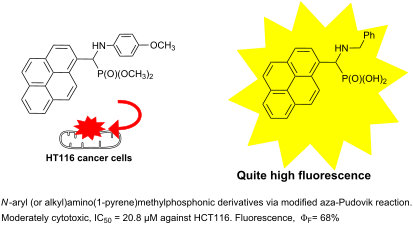
Scheme 1: Synthesis of aminophosphonates 3Aa–j, 3Ba–e, 3Ca–d, 3Cg, aminophosphonic acids 4a, 4c and hydroxyph...
Figure 1: Normalized electronic absorption and emission spectra of 3Aj and pyrene in chloroform (c = 1 μM).
Figure 2: Emission spectra of compound 3Aj in various solvents. The spectra are normalized at ≈378 nm (pyrene...
Figure 3: IC50 values of studied compounds.
Beilstein J. Org. Chem. 2016, 12, 963–968, doi:10.3762/bjoc.12.95
Graphical Abstract
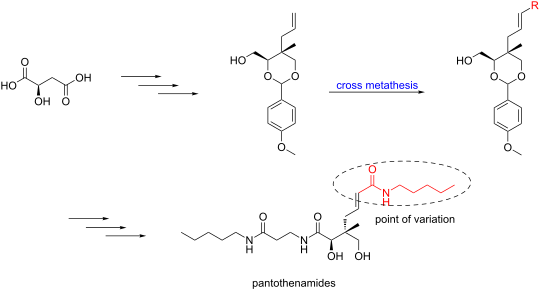
Figure 1: Chemical structures of N-pentylpantothenamide (1) and of its methyl allyl derivative 2.
Figure 2: Structure of Grubbs’ catalysts used in this study.
Scheme 1: From (R)-malic acid to allyl derivatives 8 and 9 tested in cross-metathesis. Details are provided i...
Scheme 2: Synthesis of compounds 10c and 10d.
Scheme 3: Synthesis of 16.
Figure 3: In vitro antiplasmodial activity of compound 16 in growth medium containing pantetheinase (open sym...
Beilstein J. Org. Chem. 2016, 12, 745–749, doi:10.3762/bjoc.12.74
Graphical Abstract
Figure 1: Functionalization of natural peptides and proteins: state of the art.
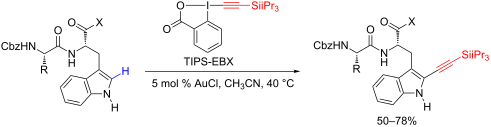
Scheme 1: Alkynylation with EBX reagents.
Scheme 2: Alkynylation of tryptophan-containing peptides.
Beilstein J. Org. Chem. 2016, 12, 636–642, doi:10.3762/bjoc.12.62
Graphical Abstract
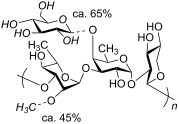
Scheme 1: Structures of the OPS from A. halopraeferens Au4 and oligosaccharides obtained from the OPS by Smit...
Beilstein J. Org. Chem. 2016, 12, 154–165, doi:10.3762/bjoc.12.17
Graphical Abstract
Scheme 1: Synthesis of 1-4; only the isolated and characterized complexes are shown.
Figure 1: Solid state structure of complexes 2a and 2b as retrieved from single crystal X-ray diffraction.
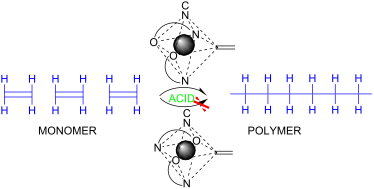
Figure 2: Time/conversion plot for the polymerization of 5 by preinitiators 1–4 in the presence of HCl ([5]:[...
Figure 3: 1H NMR spectrum in the low-field region of the active species for complexes 4 and M32.
Scheme 2: Energetics of 2a and 2b protonation in kcal/mol.
Figure 4: Reaction pathway of the transformation of 2b to HovII (energies in kcal/mol; main distances in Å).
Figure 5: DTA-TGA measurements for polymerizations of DCPD with catalysts 1b and 2b; Reaction conditions: [ca...
Beilstein J. Org. Chem. 2016, 12, 139–143, doi:10.3762/bjoc.12.15
Graphical Abstract
Scheme 1: Overall strategy.
Scheme 2: Boc-protected aminoalcohols used as inputs in a diastereoselective Ugi reaction.
Beilstein J. Org. Chem. 2016, 12, 22–28, doi:10.3762/bjoc.12.4
Graphical Abstract
Figure 1: Examples of valuable 1,2-oxyamino-containing molecules.
Scheme 1: Strategies for intermolecular olefin oxyamination.
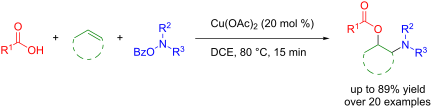
Scheme 2: Examples of carboxylic acids in the olefin oxyamination reaction. Reaction conditions: 1 (1.2 mmol,...
Scheme 3: Examples of O-benzoylhydroxylamines in the olefin oxyamination reaction. Reaction conditions: 1a (1...
Beilstein J. Org. Chem. 2015, 11, 2671–2676, doi:10.3762/bjoc.11.287
Graphical Abstract
Figure 1: All cis-hexafluoro- 1 and tetrafluorocyclohexanes 2 and 3 result in facially polarised ring motifs ...
Scheme 1: Preparation of benzoic acids 11–13; i. HIO4·2H2O (50%), AcOH, H2SO4, I2, H2O, 70 °C 24 h, 92%.; ii....
Scheme 2: Synthesis of benzaldehyde derivatives 14 and 15: i. Pd(PPh3)4, Bu3SnH, THF, CO (1 atm), 50 °C, 2–3 ...
Figure 2: X-ray structure of aldehyde 15. CCDC number 1432193.
Scheme 3: Olefination reactions of 15 and the X-ray structure of 17 (CCDC number 1432194): i. Zn, TiCl4, THF,...
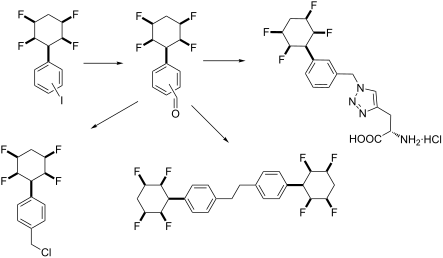
Scheme 4: Reactions from aldehyde 15: i. NaBH4, THF, 20 °C, 1 h, 98%.; ii. HI (57%), CHCl3, 30 h, 95%; iii. Bu...
Scheme 5: Reactions of benzyl azide 21; i. 24, Cu(OAc)2, Na ascorbate, t-BuOH, H2O, 20 °C, 16 h, 72%; ii. HCl...
Scheme 6: Reactions of aldehyde 14: i. NaBH4, THF, rt, 1 h, 98%.; ii. HI (57%), CHCl3, 30 h, 94%; iii. Bu4NN3...
Beilstein J. Org. Chem. 2015, 11, 2661–2670, doi:10.3762/bjoc.11.286
Graphical Abstract
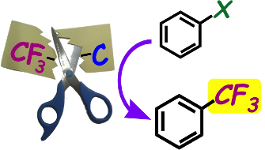
Scheme 1: Trifluoromethylation using trifluoroacetate.
Scheme 2: Decarboxylative pentafluoroethylation and its application.
Scheme 3: Trifluoromethyation with trifluoroacetate in a flow system.
Scheme 4: Trifluoromethylation of 4-bromotoluene by [(NHC)Cu(TFA)].
Scheme 5: Trifluoromethylation of aryl iodides with small amounts of Cu and Ag2O. aThe yield was determined b...
Scheme 6: C–H trifluoromethylation of arenes using trifluoroacetic acid.
Scheme 7: CF3Cu generated from chlorofluoroacetate and CuI.
Scheme 8: [18F]Trifluoromethyation with difluorocarbenes for PET. aRadiochemical yield determined by HPLC.
Scheme 9: Trifluoromethylation with trifluoroacetate and copper iodide.
Scheme 10: Preparation of trifluoromethylcopper from trifluoromethyl ketone.
Scheme 11: Trifluoromethylation of aryl iodides. aIsolated yield. b1 equivalent each of CF3Cu reagent and 1,10...
Scheme 12: Pentafluoroethylation of aryl bromides. aYield was determined by 19F NMR analysis using benzotriflu...
Scheme 13: Perfluoroalkylation reactions of arylboronic acids. aIsolated yield. bDMF was used instead of tolue...
Scheme 14: Trifluoromethylation with silylated hemiaminal of fluoral.
Scheme 15: Catalytic trifluoromethylation with a fluoral derivative.
Scheme 16: The scope of Cu-catalyzed aromatic trifluoromethylation. The yield was determined by 19F NMR analys...
Scheme 17: Plausible mechanism of Cu-catalyzed aromatic trifluoromethylation [53].
Beilstein J. Org. Chem. 2015, 11, 2202–2208, doi:10.3762/bjoc.11.239
Graphical Abstract
Figure 1: Selected ligands for the copper(I)-catalyzed Huisgen cycloaddition.
Scheme 1: Structure of different bimetallic complexes 5–7.
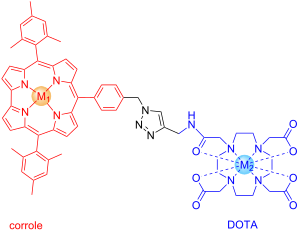
Scheme 2: Synthesis of 8a,b and 9a–d. (i) for 8a: THF, N2, Cu(OAc)2·H2O, rt 15 min; for 8b: GaCl3 0.114 M in ...
Scheme 3: Synthesis of 10a,b and 12a,b. (i) For 10a: Milli-Q water, Gd(NO3)3·5H2O, 50 °C, 17 h, pH 8.0; for 1...
Beilstein J. Org. Chem. 2015, 11, 2021–2028, doi:10.3762/bjoc.11.219
Graphical Abstract
Figure 1: Formation of substituted aziridine.
Figure 2: Various strategies for the formation of 2H-azirine.
Scheme 1: Attempted reaction for the synthesis of 3a.
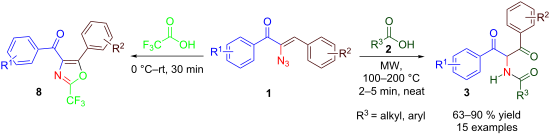
Figure 3: Synthesis of α-amido-1,3-diketone (3a–o). Reaction conditions: α-azidochalcone 1 (1.0 equiv) and ca...
Scheme 2: Plausible mechanism.
Scheme 3: Attempted reaction with acid derivatives.
Scheme 4: Oxazole formation from 3.
Figure 4: Possible isomers for 7.
Scheme 5: Oxazole formation.
Figure 5: Synthesis of highly substituted 2-(trifluoromethyl)oxazoles (8a–e). Reaction conditions: α-azidocha...
Scheme 6: Mechanism for the formation of 8.
Beilstein J. Org. Chem. 2015, 11, 1541–1546, doi:10.3762/bjoc.11.169
Graphical Abstract
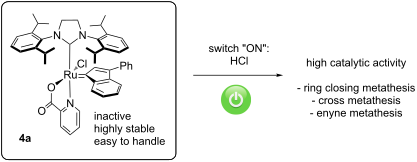
Scheme 1: Synthesis of [NHC(picolinate)RuCl(indenylidene)] complexes 2 and 4a.
Scheme 2: Synthesis of complex 4a and 4b from (SIPr)(pyridine)RuCl2(indenylidene) (5).
Figure 1: Solid-state structure of complex 4a from single crystal X-ray diffraction. Hydrogens have been omit...
Figure 2: Olefin metathesis profiles in response to TFA equivalents.
Figure 3: Comparison of olefin metathesis profiles for catalysts 2, 4a and 4b after activation with 150 equiv...
Figure 4: Influence of various acids for the activation of 4a in the RCM of DEDAM.
Beilstein J. Org. Chem. 2015, 11, 1352–1359, doi:10.3762/bjoc.11.145
Graphical Abstract
Scheme 1: Chemical structures of the conjugates (nucleobase–amino acids–saccharide (NAS)), and nucleopeptides...
Scheme 2: The representative synthesis route of conjugates NAS (1, including solid-phase peptide synthesis an...
Figure 1: TEM images of (A) solution of 1 + 8; (B) hydrogel of 5 + 8; (C) solution of 7 + 8. Each component i...
Figure 2: (A) Strain sweep and (B) frequency sweep of the solution of 1 + 8, the hydrogel of 5 + 8, and the s...
Figure 3: Compounds remained after incubating with proteinase K (3.2 U/mL) for 24 h at 37 °C. (A) Each conjug...
Figure 4: Cell viability of HeLa cells incubated with (A) 1, (B) 2, (C) 3, (D) 4, (E) 5, (F) 6, (G) 7, (H) 8 ...
Figure 5: Cell viability of PC12 cells incubated with (A) 1, (B) 2, (C) 3, (D) 4, (E) 5, (F) 6, (G) 7, (H) 8 ...
Figure 6: Cell viability of (A) HeLa and (B) PC12 cells incubated with 5 + 8 at different concentrations.
Beilstein J. Org. Chem. 2015, 11, 1274–1331, doi:10.3762/bjoc.11.142
Graphical Abstract
Figure 1: General representation of cyclophanes.
Figure 2: cyclophanes one or more with heteroatom.
Figure 3: Metathesis catalysts 12–17 and C–C coupling catalyst 18.
Figure 4: Natural products containing the cyclophane skeleton.
Figure 5: Turriane family of natural products.
Scheme 1: Synthesis of [3]ferrocenophanes through Mannich reaction. Reagents and conditions: (i) excess HNMe2...
Scheme 2: Synthesis of cyclophanes through Michael addition. Reagents and conditions: (i) xylylene dibromide,...
Scheme 3: Synthesis of normuscopyridine analogue 37 through an oxymercuration–oxidation strategy. Reagents an...
Scheme 4: Synthesis of tribenzocyclotriyne 39 through Castro–Stephens coupling reaction. Reagents and conditi...
Scheme 5: Synthesis of cyclophane 43 through Glaser–Eglinton coupling. Reagents and conditions: (i) 9,10-bis(...
Scheme 6: Synthesis of the macrocyclic C-glycosyl cyclophane through Glaser coupling. Reagents and conditions...
Scheme 7: Synthesis of cyclophane-containing complex 49 through Glaser–Eglinton coupling reaction. Reagents a...
Scheme 8: Synthesis of cyclophane 53 through Glaser–Eglinton coupling. Reagents and conditions: (i) K2CO3, ac...
Figure 6: Cyclophanes 54–56 that have been synthesized through Glaser–Eglinton coupling.
Figure 7: Synthesis of tetrasubstituted [2.2]paracyclophane 57 and chiral cyclophyne 58 through Eglinton coup...
Scheme 9: Synthesis of cyclophane through Glaser–Hay coupling reaction. Reagents and conditions: (i) CuCl2 (1...
Scheme 10: Synthesis of seco-C/D ring analogs of ergot alkaloids through intramolecular Heck reaction. Reagent...
Scheme 11: Synthesis of muscopyridine 73 via Kumada coupling. Reagents and conditions: (i) 72, THF, ether, 20 ...
Scheme 12: Synthesis of the cyclophane 79 via McMurry coupling. Reagents and conditions: (i) 75, decaline, ref...
Scheme 13: Synthesis of stilbenophane 81 via McMurry coupling. Reagents and conditions: (i) TiCl4, Zn, pyridin...
Scheme 14: Synthesis of stilbenophane 85 via McMurry coupling. Reagents and conditions: (i) NBS (2 equiv), ben...
Figure 8: List of cyclophanes prepared via McMurry coupling reaction as a key step.
Scheme 15: Synthesis of paracyclophane by cross coupling involving Pd(0) catalyst. Reagents and conditions: (i...
Scheme 16: Synthesis of the cyclophane 112 via the pinacol coupling and 113 by RCM. Reagents and conditions: (...
Scheme 17: Synthesis of cyclophane derivatives 122a–c via Sonogoshira coupling. Reagents and conditions: (i) C...
Scheme 18: Synthesis of cyclophane 130 via Suzuki–Miyaura reaction as a key step. Reagents and conditions: (i)...
Scheme 19: Synthesis of the mycocyclosin via Suzuki–Miyaura cross coupling. Reagents and conditions: (i) benzy...
Scheme 20: Synthesis of cyclophanes via Wurtz coupling reaction Reagents and conditions: (i) PhLi, Et2O, C6H6,...
Scheme 21: Synthesis of non-natural glycophanes using alkyne metathesis. Reagents and conditions: (i) G-I (12)...
Figure 9: Synthesis of cyclophanes via ring-closing alkyne metathesis.
Scheme 22: Synthesis of crownophanes by cross-enyne metathesis. Reagents and conditions: (i) G-II (13), 5 mol ...
Scheme 23: Synthesis of (−)-cylindrocyclophanes A (156) and (−)-cylindrocyclophanes F (155). Reagents and cond...
Scheme 24: Synthesis of cyclophane 159 derivatives via SM cross-coupling and RCM. Reagents and conditions: (i)...
Scheme 25: Sexithiophene synthesis via cross metathesis. Reagents and conditions: (i) 161, Pd(PPh3)4, K2CO3, T...
Scheme 26: Synthesis of pyrrole-based cyclophane using enyne metathesis. Reagents and conditions: (i) Se, chlo...
Scheme 27: Synthesis of macrocyclic derivatives by RCM. Reagents and conditions: (i) G-I/G-II, CH2Cl2, 0.005 M...
Scheme 28: Synthesis of enantiopure β-lactam-based dienyl bis(dihydrofuran) 179. Reagents and conditions: (i) ...
Scheme 29: Synthesis of a [1.1.6]metaparacyclophane derivative 183 via SM cross coupling. Reagents and conditi...
Scheme 30: Synthesis of a [1.1.6]metaparacyclophane derivative 190 via SM cross coupling. Reagents and conditi...
Scheme 31: Template-promoted synthesis of cyclophanes involving RCM. Reagents and conditions: (i) acenaphthene...
Scheme 32: Synthesis of [3.4]cyclophane derivatives 200 via SM cross coupling and RCM. Reagents and conditions...
Figure 10: Examples for cyclophanes synthesized by RCM.
Scheme 33: Synthesis of the longithorone C framework assisted by fluorinated auxiliaries. Reagents and conditi...
Scheme 34: Synthesis of the longithorone framework via RCM. Reagents and conditions: (i) 213, NaH, THF, rt, 10...
Scheme 35: Synthesis of floresolide B via RCM as a key step. Reagents and conditions: (i) G-II (13, 0.1 equiv)...
Scheme 36: Synthesis of normuscopyridine (223) by the RCM strategy. Reagents and condition: (i) Mg, THF, hexen...
Scheme 37: Synthesis of muscopyridine (73) via RCM. Reagents and conditions: (i) 225, NaH, THF, 0 °C to rt, 1....
Scheme 38: Synthesis of muscopyridine (73) via RCM strategy. Reagents and conditions: (i) NaH, n-BuLi, 5-bromo...
Scheme 39: Synthesis of pyridinophane derivatives 223 and 245. Reagents and conditions: (i) PhSO2Na, TBAB, CH3...
Scheme 40: Synthesis of metacyclophane derivatives 251 and 253. Reagents and conditions: (i) 240, NaH, THF, rt...
Scheme 41: Synthesis of normuscopyridine and its higher analogues. Reagents and conditions: (i) alkenyl bromid...
Scheme 42: Synthesis of fluorinated ferrocenophane 263 via a [2 + 2] cycloaddition. Reagents and conditions: (...
Scheme 43: Synthesis of [2.n]metacyclophanes 270 via a [2 + 2] cycloaddition. Reagents and conditions: (i) Ac2...
Scheme 44: Synthesis of metacyclophane 273 by a [2 + 2 + 2] co-trimerization. Reagents and conditions: (i) [Rh...
Scheme 45: Synthesis of paracyclophane 276 via a [2 + 2 + 2] cycloaddition reaction. Reagents and conditions: ...
Scheme 46: Synthesis of cyclophane 278 via a [2 + 2 + 2] cycloaddition reaction. Reagents and conditions: (i) ...
Scheme 47: Synthesis of cyclophane 280 via a [2 + 2 + 2] cycloaddition. Reagents and conditions: (i) [(Rh(cod)(...
Scheme 48: Synthesis of taxane framework by a [2 + 2 + 2] cycloaddition. Reagents and conditions: (i) Cp(CO)2 ...
Scheme 49: Synthesis of cyclophane 284 and 285 via a [2 + 2 + 2] cycloaddition reaction. Reagents and conditio...
Scheme 50: Synthesis of pyridinophanes 293a,b and 294a,b via a [2 + 2 + 2] cycloaddition. Reagents and conditi...
Scheme 51: Synthesis of pyridinophanes 296 and 297 via a [2 + 2 + 2] cycloaddition. Reagents and conditions: (...
Scheme 52: Synthesis of triazolophane by a 1,3-dipolar cycloaddition. Reagents and conditions: (i) propargyl b...
Scheme 53: Synthesis of glycotriazolophane 309 by a click reaction. Reagents and conditions: (i) LiOH, H2O, Me...
Figure 11: Cyclophanes 310 and 311 prepared via click chemistry.
Scheme 54: Synthesis of cyclophane via the Dötz benzannulation. Reagents and conditions: (i) THF, 100 °C, 12 h...
Scheme 55: Synthesis of [6,6]metacyclophane by a Dötz benzannulation. Reagents and conditions: (i) THF, 100 °C...
Scheme 56: Synthesis of cyclophanes by a Dötz benzannulation. Reagents and conditions: (i) THF, 65 °C, 3 h; (i...
Scheme 57: Synthesis of muscopyridine (73) via an intramolecular DA reaction of ketene. Reagents and condition...
Scheme 58: Synthesis of bis[10]paracyclophane 336 via Diels–Alder reaction. Reagents and conditions: (i) DMAD,...
Scheme 59: Synthesis of [8]paracyclophane via DA reaction. Reagents and conditions: (i) maleic anhydride, 3–5 ...
Scheme 60: Biomimetic synthesis of (−)-longithorone A. Reagents and conditions: (i) Me2AlCl, CH2Cl2, −20 °C, 7...
Scheme 61: Synthesis of sporolide B (349) via a [4 + 2] cycloaddition reaction. Reagents and conditions: (i) P...
Scheme 62: Synthesis of the framework of (+)-cavicularin (352) via a [4 + 2] cycloaddition. Reagents and condi...
Scheme 63: Synthesis of oxazole-containing cyclophane 354 via Beckmann rearrangement. Reagents and conditions:...
Scheme 64: Synthesis of cyclophanes 360a–c via benzidine rearrangement. Reagents and conditions: (i) 356a–d, K2...
Scheme 65: Synthesis of cyclophanes 365a–c via benzidine rearrangement. Reagents and conditions: (i) BocNHNH2,...
Scheme 66: Synthesis of metacyclophane 367 via Ciamician–Dennstedt rearrangement. Reagents and conditions: (i)...
Scheme 67: Synthesis of cyclophane by tandem Claisen rearrangement and RCM as key steps. Reagents and conditio...
Scheme 68: Synthesis of cyclophane derivative 380. Reagents and conditions: (i) K2CO3, CH3CN, allyl bromide, r...
Scheme 69: Synthesis of metacyclophane via Cope rearrangement. Reagents and conditions: (i) MeOH, NaBH4, rt, 1...
Scheme 70: Synthesis of cyclopropanophane via Favorskii rearrangement. Reagents and conditions: (i) Br2, CH2Cl2...
Scheme 71: Cyclophane 389 synthesis via photo-Fries rearrangement. Reagents and conditions: (i) DMAP, EDCl/CHCl...
Scheme 72: Synthesis of normuscopyridine (223) via Schmidt rearrangement. Reagents and conditions: (i) ethyl s...
Scheme 73: Synthesis of crownophanes by tandem Claisen rearrangement. Reagents and conditions: (i) diamine, Et3...
Scheme 74: Attempted synthesis of cyclophanes via tandem Claisen rearrangement and RCM. Reagents and condition...
Scheme 75: Synthesis of muscopyridine via alkylation with 2,6-dimethylpyridine anion. Reagents and conditions:...
Scheme 76: Synthesis of cyclophane via Friedel–Craft acylation. Reagents and conditions: (i) CS2, AlCl3, 7 d, ...
Scheme 77: Pyridinophane 418 synthesis via Friedel–Craft acylation. Reagents and conditions: (i) 416, AlCl3, CH...
Scheme 78: Cyclophane synthesis involving the Kotha–Schölkopf reagent 421. Reagents and conditions: (i) NBS, A...
Scheme 79: Cyclophane synthesis involving the Kotha–Schölkopf reagent 421. Reagents and conditions: (i) BEMP, ...
Scheme 80: Cyclophane synthesis by coupling with TosMIC. Reagents and conditions: (i) (a) ClCH2OCH3, TiCl4, CS2...
Scheme 81: Synthesis of diaza[32]cyclophanes and triaza[33]cyclophanes. Reagents and conditions: (i) DMF, NaH,...
Scheme 82: Synthesis of cyclophane 439 via acyloin condensation. Reagents and conditions: (i) Na, xylene, 75%;...
Scheme 83: Synthesis of multibridged binuclear cyclophane 442 by aldol condensation. Reagents and conditions: ...
Scheme 84: Synthesis of various macrolactones. Reagents and conditions: (i) iPr2EtN, DMF, 77–83%; (ii) TBDMSCl...
Scheme 85: Synthesis of muscone and muscopyridine via Yamaguchi esterification. Reagents and conditions: (i) 4...
Scheme 86: Synthesis of [5]metacyclophane via a double elimination reaction. Reagents and conditions: (i) LiBr...
Figure 12: Cyclophanes 466–472 synthesized via Hofmann elimination.
Scheme 87: Synthesis of cryptophane via Baylis–Hillman reaction. Reagents and conditions: (i) methyl acrylate,...
Scheme 88: Synthesis of cyclophane 479 via double Chichibabin reaction. Reagents and conditions: (i) excess 478...
Scheme 89: Synthesis of cyclophane 483 via double Chichibabin reaction. Reagents and conditions: (i) 481, OH−;...
Scheme 90: Synthesis of cyclopeptide via an intramolecular SNAr reaction. Reagents and conditions: (i) TBAF, T...
Scheme 91: Synthesis of muscopyridine (73) via C-zip ring enlargement reaction. Reagents and conditions: (i) H...
Figure 13: Mechanism of the formation of compound 494.
Scheme 92: Synthesis of indolophanetetraynes 501a,b using the Nicholas reaction as a key step. Reagents and co...
Scheme 93: Synthesis of cyclophane via radical cyclization. Reagents and conditions: (i) cyclododecanone, phen...
Scheme 94: Synthesis of (−)-cylindrocyclophanes A (156) and (−)-cylindrocyclophanes F (155). Reagents and cond...
Scheme 95: Cyclophane synthesis via Wittig reaction. Reagents and conditions: (i) LiOEt (2.1 equiv), THF, −78 ...
Figure 14: Representative examples of cyclophanes synthesized via Wittig reaction.
Scheme 96: Synthesis of the [6]paracyclophane via isomerization of Dewar benzene. Reagents and conditions: (i)...