


Search results
Search for "carbonyl compounds" in Full Text gives 275 result(s) in Beilstein Journal of Organic Chemistry. Showing first 200.
One-pot four-component sequential synthesis of S-alkyl dithiocarbamates using lipase as a biocatalyst
Beilstein J. Org. Chem. 2026, 22, 1048–1056, doi:10.3762/bjoc.22.83
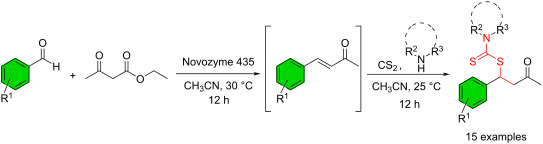
- (CS2), and amines. Initially, α,β-unsaturated carbonyl compounds, serving as Michael acceptors, were generated from aldehydes and ethyl acetoacetate through a decarboxylative Knoevenagel reaction under mild conditions, using lipase as a biocatalyst. These intermediates then sequentially undergo a


Synthesis of novel 1,2,4-oxadiazole-isoxazoline hybrids and their in silico potential with adenosine receptors
Beilstein J. Org. Chem. 2026, 22, 1033–1047, doi:10.3762/bjoc.22.82
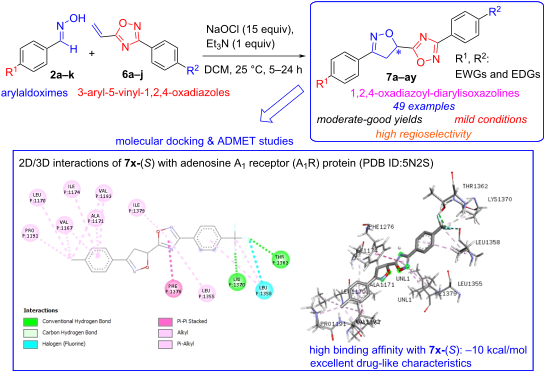
- , such as sulfisoxazole, oxacillin, and acivicin, have been clinically utilized for many years [21][22][23][24][25][26][27][28] (Figure 1). The synthesis of 1,2,4-oxadiazole derivatives can be achieved through various efficient methods, such as the cyclocondensation of amidoximes with carbonyl compounds


Rh(III)-catalyzed chelation-assisted C–H activation/annulation of 2-arylimidazolines with cyclic diazo-1,3-dicarbonyl compounds: a novel approach to tetracyclic annulated derivatives of 2,3-dihydroimidazo[2,1-a]isoquinoline
Beilstein J. Org. Chem. 2026, 22, 997–1003, doi:10.3762/bjoc.22.78
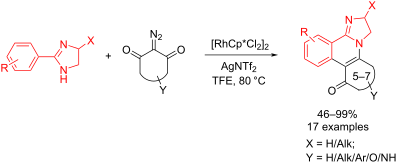
- methylene group of the dimedone moiety at 4.18 ppm with both protons from the methylene group of the imidazoline moiety at 2.55 and 3.60 ppm was observed for the major isomer 4g. Next, the scope of suitable diazo carbonyl compounds was examined. In addition to dimedone, 1,3-cyclohexanedione and its 5-phenyl


Recent advances in copper-catalyzed direct hydroamination of alkenes with (hetero)aromatic amines
Beilstein J. Org. Chem. 2026, 22, 925–947, doi:10.3762/bjoc.22.73
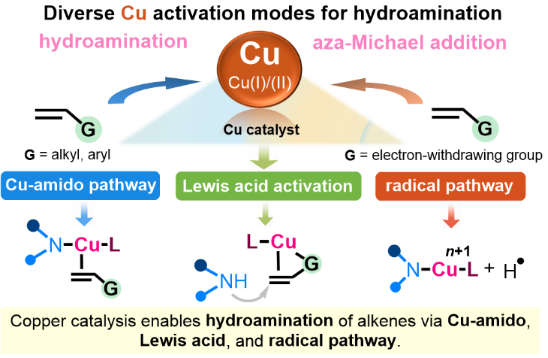
- ]. Hydroamination simultaneously forms C–N and C–H bonds from simple and readily available starting materials without prefunctionalization. When applied to electron-deficient alkenes such as α,β-unsaturated carbonyl compounds, nitroalkenes, or vinyl sulfones, this transformation is often categorized as an aza
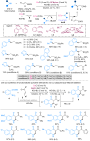
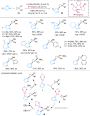
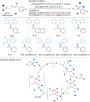
- , and α,β-unsaturated carbonyl compounds, to afford the corresponding β-amino products 3 in excellent yields (up to 99%). This method exhibited high functional group tolerance on aromatic amine substrates, including those with electron-donating and electron-withdrawing substituents, without
- carbonyl compounds 5 to form the β-amino ketone intermediates, which subsequently underwent base-mediated intramolecular cyclization using KOt-Bu and air oxidation of the resulting 2,3-dihydro-4(1H)-quinolinone intermediates 7 in the presence of HCl to yield functionalized quinolin-4(1H)-one derivatives 6







Synthesis of heterocycles based on azomethine ylides from α-amino acids (or amines) and carbonyl compounds
Beilstein J. Org. Chem. 2026, 22, 705–741, doi:10.3762/bjoc.22.55
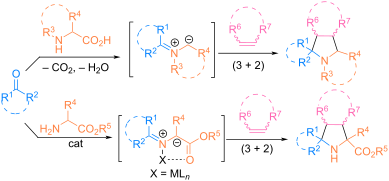
- derivatives with multiple chiral centers under high regio- and stereocontrol. Currently, strategies using azomethine ylides based on imino esters or α-amino acids with a variety of cyclic and acyclic carbonyl compounds dominate. Enantioselective (3 + 2) cycloaddition reactions of azomethine ylides obtained
- acid or its ester (Scheme 1). In both cases, condensation of amino acids with carbonyl compounds occurs; however, in the first case, decarboxylation occurs with the in situ formation of azomethine ylides, which subsequently undergo cycloaddition to unsaturated substrates. The advantage of the first
- multicomponent one-pot (3 + 2) cycloaddition reactions involving azomethine ylides from isatins and amino acids [21][35]. The main feature of this review is that we have attempted to consider all currently known systems for generating azomethine ylides based on carbonyl compounds and amino acid derivatives (or


Continuous-flow carbonyl hydrogenation under subatmospheric to atmospheric hydrogen pressure enabled by robust heterogeneous Pt–Fe catalysts
Beilstein J. Org. Chem. 2026, 22, 575–582, doi:10.3762/bjoc.22.43
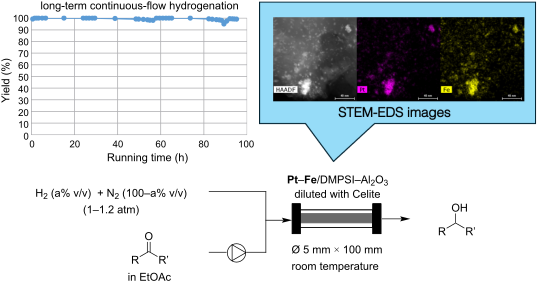
- , National Institute of Advanced Industrial Science and Technology (AIST), 1-1-1 Higashi, Tsukuba, Ibaraki 305-8565, Japan Department of Chemistry, School of Science, The University of Tokyo, 7-3-1 Hongo, Bunkyo-ku, Tokyo 113-0033, Japan 10.3762/bjoc.22.43 Abstract The reduction of carbonyl compounds
- : bimetallic nanostructure; carbonyl reduction; continuous-flow reaction; heterogeneous catalyst; subatmospheric hydrogen; Introduction The reduction of carbonyl compounds, ketones and aldehydes to alcohols is a fundamental and important reaction in organic synthesis that can provide valuable chemicals such
- demonstrated the robustness of Pt‒Fe/DMPSi‒Al2O3 under continuous-flow hydrogenation conditions and showed that a simple heat treatment process for regenerating the catalytic activity is adaptable for practical use of this continuous-flow system. Continuous-flow hydrogenation of carbonyl compounds under


Synthesis of tricyclic fused pyrrolidine nitroxides from 2-alkynylpyrrolidine-1-oxyls
Beilstein J. Org. Chem. 2026, 22, 344–351, doi:10.3762/bjoc.22.22

- group, respectively. The elemental analyses data and high-resolution mass spectra (HRMS) of 6a,b were in agreement with the assigned structure. Oxidation of propargyl alcohols is another way to α,β-acetylenic carbonyl compounds [31]. Mild oxidation of propargyl alcohol 2c with activated manganese




Base-promoted deacylation of 2-acetyl-2,5-dihydrothiophenes and their oxygen-mediated hydroxylation
Beilstein J. Org. Chem. 2026, 22, 192–204, doi:10.3762/bjoc.22.13
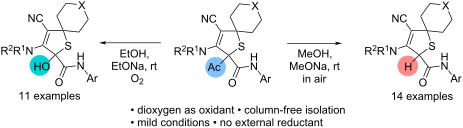
- 1A) [15][16]. Oxidative rearrangements of carbonyl compounds are based on Dakin [17] and Baeyer–Villiger reactions [18] and their modifications. Cyclic and acyclic ketones were oxidized to afford lactones and esters, accordingly, involving catalytic reactions with hydrogen peroxide [19][20][21][22




Mechanistic insights into hydroxy(tosyloxy)iodobenzene-mediated ditosyloxylation of chalcones: a DFT study
Beilstein J. Org. Chem. 2025, 21, 2703–2715, doi:10.3762/bjoc.21.208
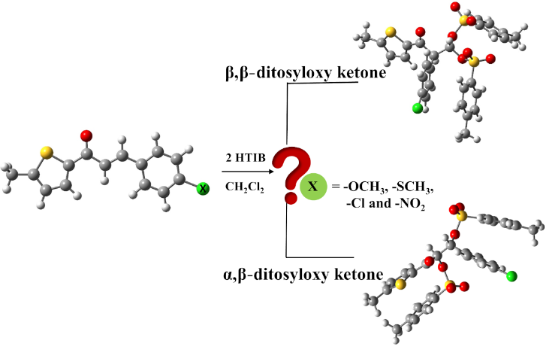
- of the hydroxy(tosyloxy)iodobenzene (HTIB)-mediated conversion of chalcones (α,β-unsaturated carbonyl compounds) to ditosyloxy ketones is investigated. Here, at β-carbon of the chalcone, an aryl group with a para-substituent is present. Our study focuses on investigating the effect of different
- -substituents; α,β-unsaturated carbonyl compounds; Introduction Hypervalent iodine compounds exhibit a range of bonding patterns which making these compounds powerful reagents or catalysts for a number of organic transformations [1][2][3][4] – oxidation of alcohols [5], epoxidation of alkenes [6], oxidative
- -mediated ditosyloxylation of α,β-unsaturated carbonyl compounds (chalcones) bearing an aryl group at β-position (compound A) leading to formation of two possible products, that are: α-arylated β,β-ditosyloxy-substituted carbonyl compound (compound B – geminal product) and β-arylated α,β-ditosyloxy


Visible-light-driven NHC and organophotoredox dual catalysis for the synthesis of carbonyl compounds
Beilstein J. Org. Chem. 2025, 21, 2584–2603, doi:10.3762/bjoc.21.200
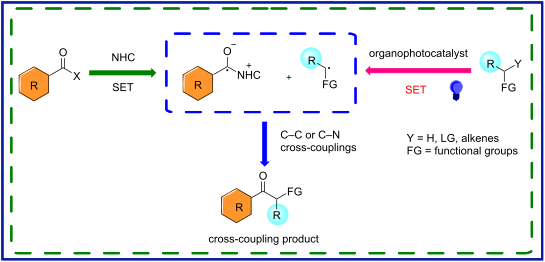
- chemistry. In particular, dual catalysis combining N-heterocyclic carbenes (NHCs) with organophotocatalysts (e.g., 4CzIPN, eosin Y, rhodamine, 3DPAFIPN, Mes-Acr-Me+ClO4−) has emerged as a powerful photocatalytic strategy for efficiently constructing a wide variety of carbonyl compounds via radical cross
- carbonyl compounds and pharmaceutically relevant intermediates. Moreover, this catalytic system operates under green and sustainable conditions, tolerating a broad range of functional groups and substrate scope, and utilizes low-cost, atom-economical, non-toxic starting materials. Keywords: dual catalysis
- ][2][3][4][5][6]. Recently developed photocatalysis affords sustainable, regioselective green methods for producing a wide range of functionalized carbonyl compounds and their related bioactive chiral intermediates under mild conditions, employing dual organic photoredox catalysis [7][8][9][10][11





C2 to C6 biobased carbonyl platforms for fine chemistry
Beilstein J. Org. Chem. 2025, 21, 2103–2172, doi:10.3762/bjoc.21.165
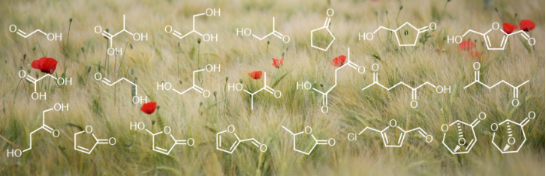
- biomass shows how renewable carbon sources can replace non-renewable chemicals in important industrial processes [18][19][20]. Many, if not most, biobased platform molecules contain carbonyl groups. Carbonyl compounds have unique electrophilic and nucleophilic reactivity which make them central players in
- organic synthesis. Therefore, synthetic chemists can base strategies on the existing reactivity of carbonyl compounds for defining novel routes converting biobased platform molecules containing carbonyl groups to prepare fine organic chemicals [21][22]. Following this approach, researchers can obtain


Systematic pore lipophilization to enhance the efficiency of an amine-based MOF catalyst in the solvent-free Knoevenagel reaction
Beilstein J. Org. Chem. 2025, 21, 1854–1863, doi:10.3762/bjoc.21.144
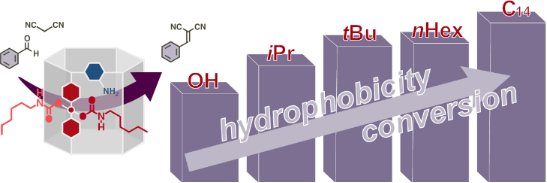
- of carbonyl compounds, such as aldehydes or ketones, with active methylene compounds [37]. The resulting α,β-unsaturated carbonyl products can then be further elaborated to form natural products, therapeutic agents, polymers, pesticides, and insecticides [38], which have important applications in the


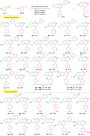
Fe-catalyzed efficient synthesis of 2,4- and 4-substituted quinolines via C(sp2)–C(sp2) bond scission of styrenes
Beilstein J. Org. Chem. 2025, 21, 1799–1807, doi:10.3762/bjoc.21.142
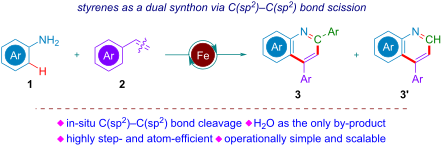
- promising industrial relevance. Oxidative cleavage of alkenes to yield carbonyl compounds is one of the key transformations in synthetic organic chemistry [41][42]. Over the past two decades, this field has witnessed significant advancements, primarily through the use of organic oxidants and transition




Influence of the cation in hypophosphite-mediated catalyst-free reductive amination
Beilstein J. Org. Chem. 2025, 21, 1661–1670, doi:10.3762/bjoc.21.130
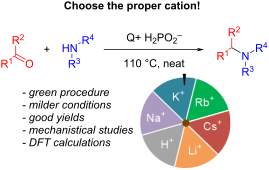
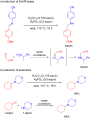
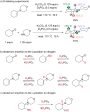
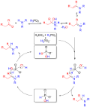
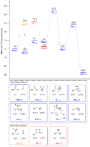
- issue is a fundamentally important factor. In the present work, the reactivity of the hypophosphites of alkali metals (Li, K, Rb, and Cs) in reductive amination was explored for the first time. A set of secondary and tertiary amines was synthesized from various types of carbonyl compounds and amines
- has shown clear influence of the cation in the hypophosphite salt on the effectiveness of the reductive amination. The acidity of the reaction media was a key factor affecting the equilibrium in the interaction between carbonyl compounds and amines. Intermediately acidic media is the optimal for the
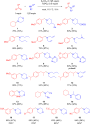
- substrate scope of the developed synthetic approach was investigated. Aromatic and aliphatic carbonyl compounds reacted with primary and secondary amines. The reductive amination efficiently proceeded with both cyclic and acyclic secondary amines. Steric hindrance in ortho-position in carbonyl compound 13


Oxetanes: formation, reactivity and total syntheses of natural products
Beilstein J. Org. Chem. 2025, 21, 1324–1373, doi:10.3762/bjoc.21.101
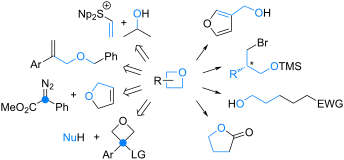
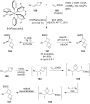
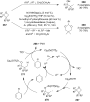
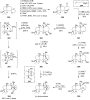
- (Corey–Chaykovsky reaction), oxetanes can also be conveniently prepared from carbonyl compounds using a larger excess (>2 equiv) of the carbanion. However, harsh reaction conditions should be avoided as using 6 equiv of the ylide 105 with respect to the oxetane and elevated temperatures (120–130 °C) can








Synthesis of β-ketophosphonates through aerobic copper(II)-mediated phosphorylation of enol acetates
Beilstein J. Org. Chem. 2025, 21, 1192–1200, doi:10.3762/bjoc.21.96
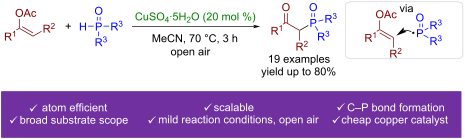
- precursors of α-substituted carbonyl compounds that have been recently applied as coupling partners for radical functionalization with the formation of C–C [63][64][65][66] and C–Het [67][68][69][70] bonds. The ready availability of enol acetates from the corresponding carbonyl compounds in just one
- reactions leading to the corresponding unfunctionalized carbonyl compounds. To date, only the Xu group reported oxidative phosphorylation of enol acetates with dialkyl H-phosphonates and Mn(acac)3 as an oxidant (Scheme 1b) [71]. However, the reported approach is limited by an excess of manganese salt, long


Recent total synthesis of natural products leveraging a strategy of enamide cyclization
Beilstein J. Org. Chem. 2025, 21, 999–1009, doi:10.3762/bjoc.21.81
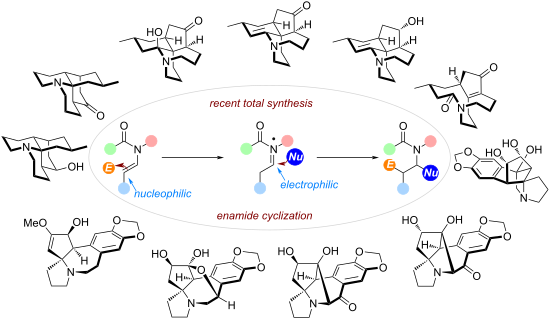
- first report by Stork in the 1950s [1][2][3]. Compared with enols, enamines benefit from the lone pair of electrons on the nitrogen atom, which enhances the nucleophilicity of the alkene, enabling it to react with a broad range of electrophiles. This activation mode of carbonyl compounds has been so




4-(1-Methylamino)ethylidene-1,5-disubstituted pyrrolidine-2,3-diones: synthesis, anti-inflammatory effect and in silico approaches
Beilstein J. Org. Chem. 2025, 21, 817–829, doi:10.3762/bjoc.21.65

- forms 3a’–e’ will be attacked by methylamine (4) to yield the tetrahedral intermediate 6 and then, the intramolecular proton transfer will lead to intermediate 7. It has been proven that Schiff’ bases show normally higher reactivity than the corresponding carbonyl compounds towards nitrogen-containing


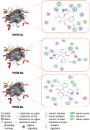
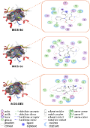
Origami with small molecules: exploiting the C–F bond as a conformational tool
Beilstein J. Org. Chem. 2025, 21, 680–716, doi:10.3762/bjoc.21.54
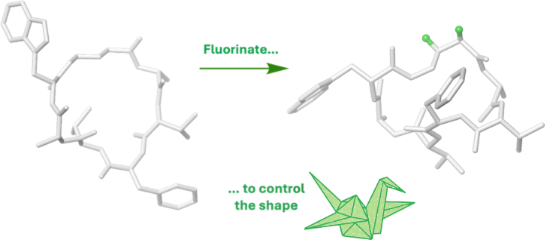
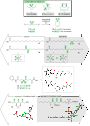
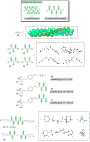
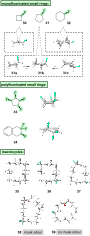
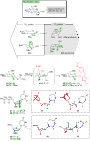
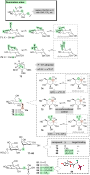
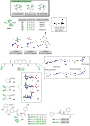
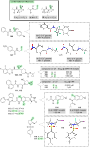
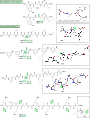
- scaffolds – alkanes – then we will progress to ethers, alcohols, sugars, amines (and their derivatives), carbonyl compounds, peptides, and finally sulfur-containing compounds. By arranging the material in this way, we hope that newcomers to the field might be able to readily envisage ways to apply these
- reduction of the H-bond-donor acidity of the hydroxy group of 58. (See section 6, which focuses on carbonyl compounds, for a further explanation of the predicted conformation of 58.) Finally, two structural variations on the hydroxy group should be mentioned. First, if the hydroxy group is acylated (i.e


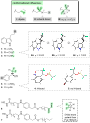






Sequential two-step, one-pot microwave-assisted Urech synthesis of 5-monosubstituted hydantoins from L-amino acids in water
Beilstein J. Org. Chem. 2025, 21, 596–600, doi:10.3762/bjoc.21.46
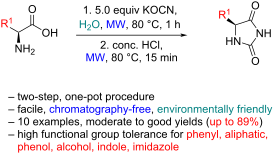
- antibacterial [1], antiviral [2], anticancer [3], anti-inflammatory [4], and anticonvulsant [5]. Hydantoins were traditionally accessed from amino acids by conversion to urea derivatives followed by cyclization (Urech reaction) or from carbonyl compounds through the cyanohydrin intermediate (Bucherer–Bergs) [6


Asymmetric synthesis of β-amino cyanoesters with contiguous tetrasubstituted carbon centers by halogen-bonding catalysis with chiral halonium salt
Beilstein J. Org. Chem. 2025, 21, 547–555, doi:10.3762/bjoc.21.43
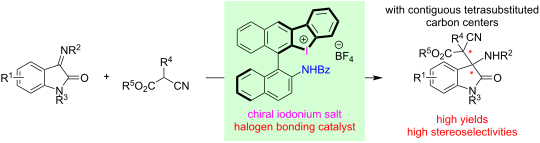
- -workers developed chiral amine 1 with an electron-deficient iodine atom, which catalyzed the Mannich reaction in excellent yields and enantioselectivities [17]. In 2020, Huber and co-workers reported the bis(iodoimidazolium) 2-catalyzed Mukaiyama–aldol reaction of carbonyl compounds with enol silyl ethers


Vinylogous functionalization of 4-alkylidene-5-aminopyrazoles with methyl trifluoropyruvates
Beilstein J. Org. Chem. 2025, 21, 533–540, doi:10.3762/bjoc.21.41
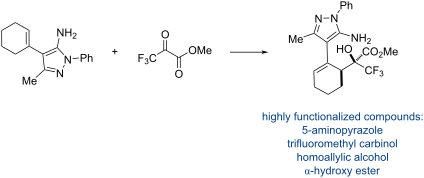
- compounds is a significant and important reaction for the selective synthesis of homoallylic alcohols in an efficient and sustainable way [2][3]. As carbonyl compounds, alkyl trifluoropyruvates [4][5] are an interesting class of compounds that have been used in addition reactions of different nucleophiles
- properties along a C=C double bond [1]. This effect has been established to be very advantageous to expand the range of reactions of different functional groups that can be coupled efficiently through a conjugated π-system. In this context, the addition reaction of vinylogous nucleophiles to carbonyl



Photomechanochemistry: harnessing mechanical forces to enhance photochemical reactions
Beilstein J. Org. Chem. 2025, 21, 458–472, doi:10.3762/bjoc.21.33
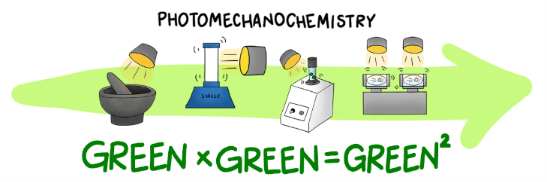
- exposing fresh material to light. In 2016, König and co-workers exploited rod milling to develop a photomechanochemical approach for the riboflavin tetraacetate (RFTA)-catalyzed photocatalytic oxidation of alcohols to the corresponding carbonyl compounds upon irradiation with five LEDs (λ = 455 nm) [69
- benefits of the photomechanochemical approach in the field of synthesis [77]. Specifically, they developed photomechanochemical conditions for the atom-transfer-radical addition (ATRA) of sulfonyl chlorides to alkenes, pinacol coupling of carbonyl compounds, decarboxylative acylation, and photocatalyzed [2




Three-component reactions of conjugated dienes, CH acids and formaldehyde under diffusion mixing conditions
Beilstein J. Org. Chem. 2025, 21, 262–269, doi:10.3762/bjoc.21.18
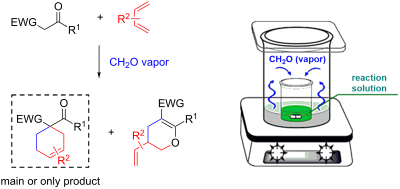
- various CH acid derivatives and conjugated dienes (cyclopentadiene, 1,3-cyclohexadiene, 2,3-dimethylbutadiene and isoprene), leading to [4 + 2]-cycloaddition adducts (Scheme 1). It should be noted that in previous works describing three-component reactions of carbonyl compounds, conjugated dienes and


Multicomponent reactions driving the discovery and optimization of agents targeting central nervous system pathologies
Beilstein J. Org. Chem. 2024, 20, 3151–3173, doi:10.3762/bjoc.20.261
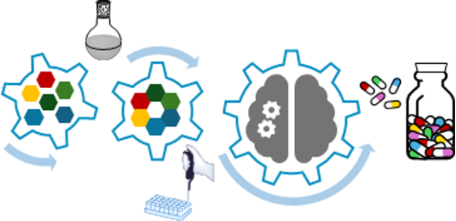
- a multicomponent reaction to obtain SIRT2 inhibitors (Scheme 12). The authors suggest a Knoevenagel condensation approach between isatin derivatives and ethyl cyanoacetate, followed by a Michael addition with C–H activated carbonyl compounds and intramolecular cyclization [50]. They synthesized 45





