


Search results
Search for "carbonyl reduction" in Full Text gives 19 result(s) in Beilstein Journal of Organic Chemistry.
Continuous-flow carbonyl hydrogenation under subatmospheric to atmospheric hydrogen pressure enabled by robust heterogeneous Pt–Fe catalysts
Beilstein J. Org. Chem. 2026, 22, 575–582, doi:10.3762/bjoc.22.43
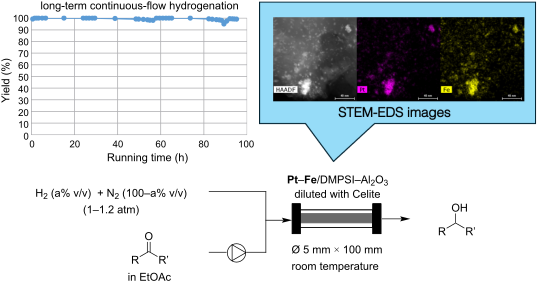
- : bimetallic nanostructure; carbonyl reduction; continuous-flow reaction; heterogeneous catalyst; subatmospheric hydrogen; Introduction The reduction of carbonyl compounds, ketones and aldehydes to alcohols is a fundamental and important reaction in organic synthesis that can provide valuable chemicals such
- atmospheric pressure hydrogen conditions. In this article, we report the development of a continuous-flow carbonyl reduction system that achieves high performance and a wide substrate scope under atmospheric or subatmospheric hydrogen pressure and ambient temperature using Pt–Fe bimetallic heterogeneous


Chemoenzymatic synthesis of the cardenolide rhodexin A and its aglycone sarmentogenin
Beilstein J. Org. Chem. 2025, 21, 2637–2644, doi:10.3762/bjoc.21.204
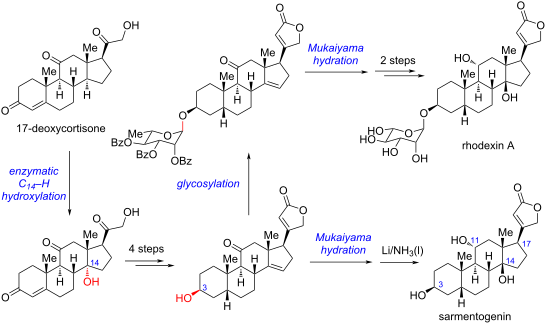
- aglycone sarmentogenin in 7 steps from 17-deoxycortisone. The synthesis features a scalable enzymatic C14–H α-hydroxylation, a Bestmann ylide-enabled one-step construction of the butenolide motif, a late stage Mukaiyama hydration, and a stereoselective C11 carbonyl reduction. Keywords: cardiac glycosides
- -carbonyl reduction by dissolved lithium metal in liquid NH3 solution, and the C11 α-hydroxylated intermediate 13 was obtained as a single diastereoisomer in 54% yield. Lastly, as expected, a Co(acac)2-catalyzed Mukaiyama hydration of 13 afforded the desired natural product sarmentogenin (2) in 69% yield
- Bestmann ylide-enabled one-step construction of the butenolide motif, a late-stage Mukaiyama hydration, and a stereoselective C11 carbonyl reduction. We believe this chemoenzymatic synthetic strategy will inspire future endeavors towards the practical synthesis of complex steroids and other bioactive



Photochemical reduction of acylimidazolium salts
Beilstein J. Org. Chem. 2025, 21, 1973–1983, doi:10.3762/bjoc.21.153
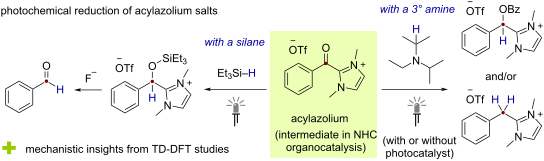
- species C benefitting from additional stabilization by virtue of electron delocalization onto the NHC-derived azolium ring [17][18][19][20]. Similarly, the cationic azolium fragment in acylazolium salts can effectively lower the carbonyl reduction potential relative to the starting material with single
- carboxylic acid derivatives involving hydrogen-atom transfer have not been reported despite the fundamental importance of carbonyl reduction processes in organic synthesis [46]. Here, we report the results of our investigation into such reactions using an acylazolium salt derived from benzoic acid as a model
- spectrum also indicating the presence of significant amounts of the imidazolium salt IMeH+ (characteristic C2–H signal at δ = 8.94 ppm; 28%) and benzoate species (BzO−, ortho-C–H signals at δ = 7.98 ppm; 50%). To confirm the photocatalytic nature of the novel carbonyl reduction process, a series of control


Chemo-enzymatic total synthesis: current approaches toward the integration of chemical and enzymatic transformations
Beilstein J. Org. Chem. 2024, 20, 1693–1712, doi:10.3762/bjoc.20.151
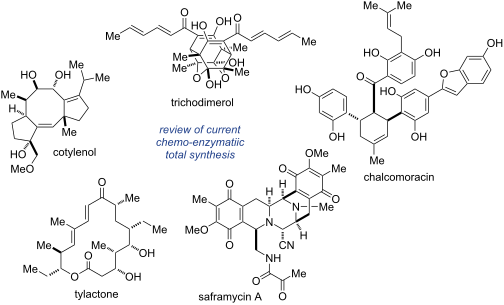
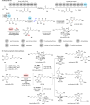
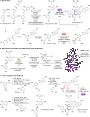
- -ketoreductase (KR) and dehydratase (DH) domains, sequentially catalyze the carbonyl reduction and dehydration of the extended polyketide chains to provide thioester 62 connecting to the ACP domain of module 3. TylGII then iterates similar conversions including carbon chain extension reaction, carbonyl reduction




Synthesis of 2-benzyl N-substituted anilines via imine condensation–isoaromatization of (E)-2-arylidene-3-cyclohexenones and primary amines
Beilstein J. Org. Chem. 2024, 20, 1468–1475, doi:10.3762/bjoc.20.130
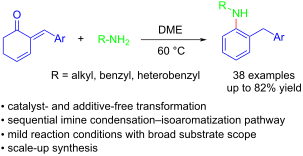
- additives in the petrochemical industry [3]. Besides, 2-benzylanilines also serve as valuable building blocks in synthetic chemistry [4]. The classical route to this kind of aniline derivatives usually starts from parent anilines, which undergo Friedel–Crafts reaction with acyl halides followed by carbonyl
- reduction. This electrophilic aromatic substitution usually needs harsh reaction conditions, tedious synthetic procedures and sometimes encounters the trouble of separating positional isomers caused by orientation or steric effects of the pre-existed amino group on the aryl moiety. Nevertheless, anilines


(Bio)isosteres of ortho- and meta-substituted benzenes
Beilstein J. Org. Chem. 2024, 20, 859–890, doi:10.3762/bjoc.20.78
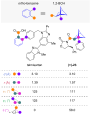
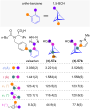
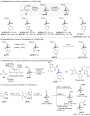
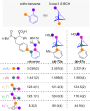
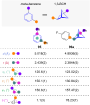
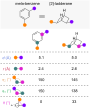
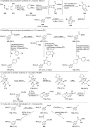
- . Fessard, Salomé and co-workers used this approach to synthesise a small collection of 2-oxo-BCHs including 42 and 44 (Scheme 4A) [40]. These could then be used as precursors for ortho-benzene isosteric 1,2-BCHs (Scheme 4B) [40]. Carbonyl reduction of 42a yielded alcohol (±)-45a. From 42b, Wittig














Group 13 exchange and transborylation in catalysis
Beilstein J. Org. Chem. 2023, 19, 325–348, doi:10.3762/bjoc.19.28
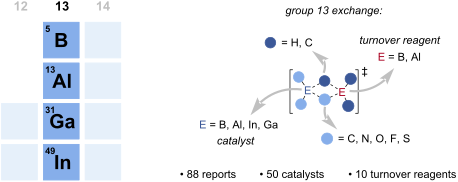
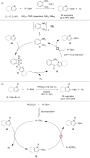
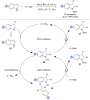
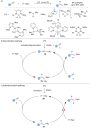
- gallium hydride, Goicoechea showed the catalytic hydroboration of ketones and CO2 with HBpin. This was also proposed to proceed by carbonyl reduction and Ga‒O/B‒H exchange (Scheme 24c) [116]. Schneider has shown that a mixture of Ga0, AgOTf, and 18-crown-6 catalysed the allylation of acetals, ketals, or
- transformations using group 13 exchange from alkene functionalisation to carbonyl reduction. The subtle differences in reactivity of the group 13 catalysts were used to enable unique catalytic reactivity and/or reaction chemo- or stereoselectivity, including cases where the stoichiometric reaction was rendered










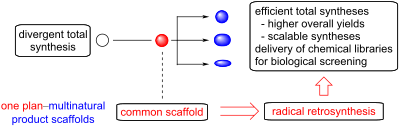
Combining the best of both worlds: radical-based divergent total synthesis
Beilstein J. Org. Chem. 2023, 19, 1–26, doi:10.3762/bjoc.19.1
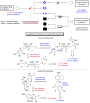
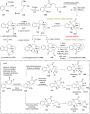
- generation of radicals from carbonyl reduction [18] but also manganese(III) acetate as a convenient one-electron oxidant [19]. The next twenty years, the field continued to flourish mainly by way of the decipherment of hydrogen atom transfer (HAT) mechanisms, which led to the establishment of several








Total synthesis of grayanane natural products
Beilstein J. Org. Chem. 2022, 18, 1707–1719, doi:10.3762/bjoc.18.181
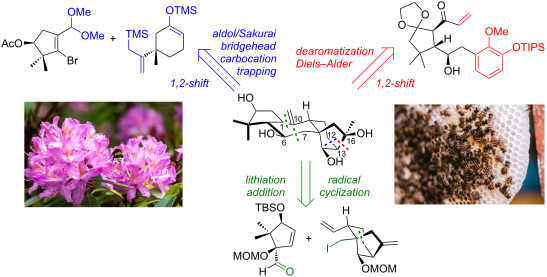
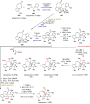
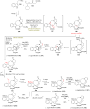
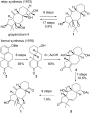
- carbonyl reduction and TBS deprotection afforded principinol E in 53% yield over 4 steps. For the synthesis of rhodomollein XX, addition of methyllithium to 54 followed by Mukaiyama hydration using Mn(dpm)3 afforded 62. To access rhodomollein XX, an additional oxidation state at the C2 position was




Combination of multicomponent KA2 and Pauson–Khand reactions: short synthesis of spirocyclic pyrrolocyclopentenones
Beilstein J. Org. Chem. 2020, 16, 200–211, doi:10.3762/bjoc.16.23
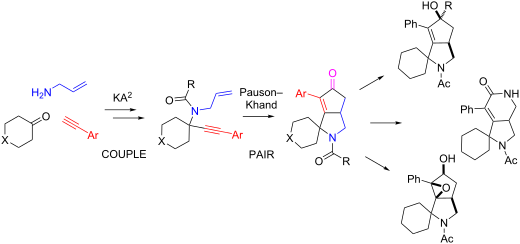
- chemoselective carbonyl reduction to obtain the corresponding allylic alcohol derivative 36 was achieved in 92% under Luche reduction conditions employing NaBH4/CeCl3 in MeOH/DCM, resulting in the selective synthesis of the syn-alcohol, as a consequence of the formation of the equatorial alcohol favored by




Application of chiral 2-isoxazoline for the synthesis of syn-1,3-diol analogs
Beilstein J. Org. Chem. 2019, 15, 1840–1847, doi:10.3762/bjoc.15.179
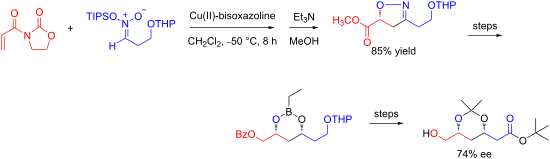
- could be prepared from enantiomerically pure β-hydroxy ketones through β-hydroxy-directed carbonyl reduction following Evans’ [3] or Prasad’s [4][5][6][7][8][9][10][11] method. The Narasaka–Prasad reduction of a δ-hydroxy-β-keto esters derived from β-hydroxy esters [12][13][14][15][16][17][18][19][20


A chemoenzymatic synthesis of ceramide trafficking inhibitor HPA-12
Beilstein J. Org. Chem. 2019, 15, 490–496, doi:10.3762/bjoc.15.42
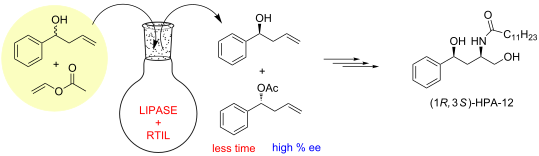
- (1R,3S)-HPA-12 (2) used the chiral pool approach [15][16], crystallization-induced asymmetric transformation [17], diastereoselective reduction of γ-aryl-γ-oxo-β-amino alcohol [18], cycloaddition of oxime with alkenes [19], enantioselective carbonyl reduction followed by an organocatalyzed α-amination


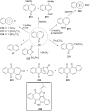
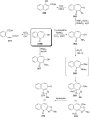
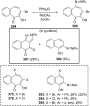
One hundred years of benzotropone chemistry
Beilstein J. Org. Chem. 2018, 14, 1120–1180, doi:10.3762/bjoc.14.98








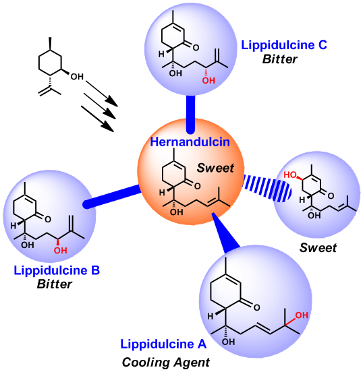
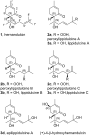
Stereoselective synthesis of hernandulcin, peroxylippidulcine A, lippidulcines A, B and C and taste evaluation
Beilstein J. Org. Chem. 2015, 11, 2117–2124, doi:10.3762/bjoc.11.228
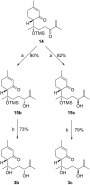
- stereoselective carbonyl reduction protocol [36] using (S)-MeCBS as catalyst (1.2 equiv) in CH2Cl2, and in the presence of an over stoichiometric amount of the Me2S.BH3 complex (Scheme 4). After column chromatography, the reduced product 15b ([α]D −1.6° (c 0.8, CHCl3)) was obtained in a good yield of 80%. Thus



Structure/affinity studies in the bicyclo-DNA series: Synthesis and properties of oligonucleotides containing bcen-T and iso-tricyclo-T nucleosides
Beilstein J. Org. Chem. 2014, 10, 1840–1847, doi:10.3762/bjoc.10.194
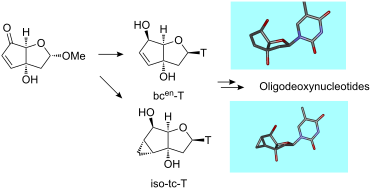
- , compound 1 was subjected to carbonyl reduction which occurred with high stereoselectivity from the less hindered, convex side of the bicyclic system, resulting in alcohol 2 along with traces of its epimer. To increase the stereoselectivity of the upcoming cyclopropanation reaction it seemed appropriate to



Bifunctional dendrons for multiple carbohydrate presentation via carbonyl chemistry
Beilstein J. Org. Chem. 2014, 10, 1686–1691, doi:10.3762/bjoc.10.177
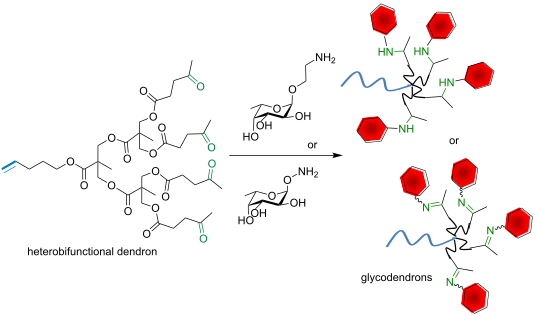
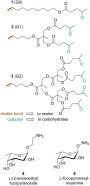
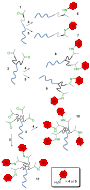
- in the presence of NaCNBH3 (Scheme 3). The reaction afforded the desired glycosylated dendron 6 in 27% yield. The very low yield was ascribed to the competing carbonyl reduction to the corresponding alcohol 16 as a byproduct. The same reaction on the G1 dendron 2 gave an even more complex mixture of



Catalysis: transition-state molecular recognition?
Beilstein J. Org. Chem. 2010, 6, 1026–1034, doi:10.3762/bjoc.6.117
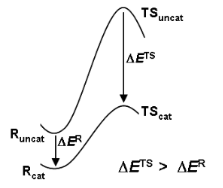
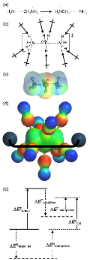
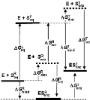
- . In March 1991, at a workshop held under the auspices of the Science and Engineering Research Council’s Molecular Recognition Initiative, I presented a paper on theoretical modelling of transition states for biochemical processes, which included a computational model for carbonyl reduction catalysed





Chemoselective reduction of aldehydes by ruthenium trichloride and resin- bound formates
Beilstein J. Org. Chem. 2008, 4, No. 53, doi:10.3762/bjoc.4.53
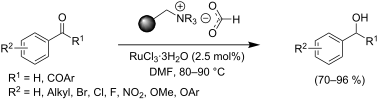
- as hydrocarbons [4], primary and secondary alcohols [5][6], and formic acid and its salts [7][8][9][10][11] have been used as the hydrogen source. Besides the use of Rh, Ir, Ni and Pd metals in CTH, carbonyl reduction using the combination of Ru(II)-ligand complexes and propan-2-ol in the presence of


Hydrogenation of aromatic ketones, aldehydes, and epoxides with hydrogen and Pd(0)EnCat™ 30NP
Beilstein J. Org. Chem. 2006, 2, No. 15, doi:10.1186/1860-5397-2-15
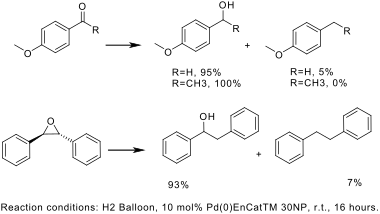
- effectively be reduced using Pd(0)EnCat™ 30NP under conventional catalytic hydrogenation conditions of H2 (atmospheric pressure) with good selectivity and conversions [20]. Results and discussion The results obtained using different conditions for the carbonyl reduction of 4-methoxybenzaldehyde and 4




