


Search results
Search for "hydrogen bonds" in Full Text gives 455 result(s) in Beilstein Journal of Organic Chemistry. Showing first 200.
Amino acid-based surfactants: sustainable synthesis and antimicrobial mechanisms
Beilstein J. Org. Chem. 2026, 22, 1067–1085, doi:10.3762/bjoc.22.85
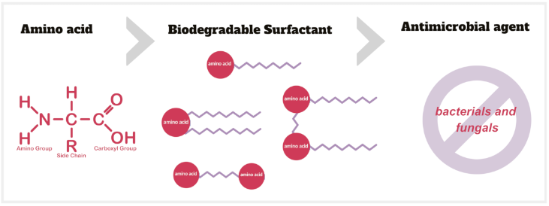
- interaction is reinforced by hydrogen bonds, anchoring the surfactant to the membrane. In Gram-positive bacteria, the absence of a complex outer membrane allows direct access, while in Gram-negatives, the physical barrier of the outer membrane reduces efficacy, requiring highly soluble and charged surfactants


Synthesis of novel 1,2,4-oxadiazole-isoxazoline hybrids and their in silico potential with adenosine receptors
Beilstein J. Org. Chem. 2026, 22, 1033–1047, doi:10.3762/bjoc.22.82
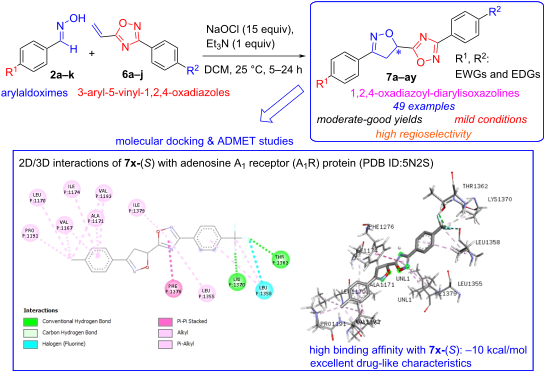
- 7x, the S-enantiomers of 7j, and the S-enantiomers of 7aw shared similar binding modes, dominated by strong alkyl, π-alkyl, and π–π stacking interactions. Specifically, the S-enantiomers of 7x and 7j formed conventional hydrogen bonds with Lys1370, whereas the R-enantiomer of 7x exhibited π–σ
- –σ interactions with Ile1397. Moreover, the co-crystallized reference ligand exhibited a lower binding affinity (−8.3 kcal/mol) compared with all synthesized 7a–ay derivatives. Its imidazolopyrimidine core was found to form conventional hydrogen bonds with the Ile1174 residue, along with π–π stacking
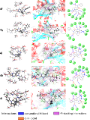
- compounds (7x-(S), 7x-(R), 7j-(S), 7aw-(S), 7aw-(R), 7ah-(S)) and reference (co-crystallized) ligand with A1 adenosine receptor. Green arrows: conventional hydrogen bonds; pink region: alkyl connections; light pink region: pi-alkyl connections; blue region: halogen interactions; light green region: carbon


Site-specific labelling of native peptides and proteins: chemical and enzymatic strategies
Beilstein J. Org. Chem. 2026, 22, 857–881, doi:10.3762/bjoc.22.67
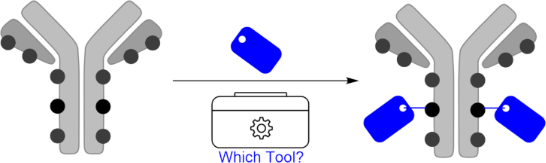
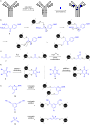
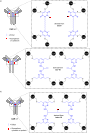
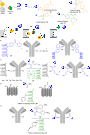
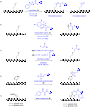
- complementary pairs, such as disulfide bonds (cystine), salt bridges, hydrogen bonds, and cation–π interactions. Among these, disulfide bonds between cysteine residues are the most widely used for native-sequence protein labelling, due to their unique nucleophilicity and low abundance. Therapeutically relevant








Unsymmetrical sulfoxides with sterically hindered catechol fragment: synthesis, structure, electrochemical properties, and antiradical activity
Beilstein J. Org. Chem. 2026, 22, 828–837, doi:10.3762/bjoc.22.65
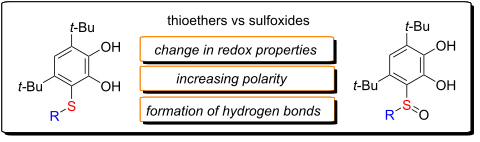
- reaction products ranges from 42 to 89%. The crystal structures of catechol sulfoxides with isopropyl, cyclopentyl, adamantyl, benzyl and 1-naphthyl moieties were established by single-crystal X-ray analysis. The possibility of forming intra- and intermolecular hydrogen bonds has been shown for these
- presence of the readily oxidizable catechol core. The presence of a redox-active catechol moiety adjacent to the sulfoxide group can significantly influence the formation of intra- and intermolecular hydrogen bonds and affect the O–H bond dissociation energy, which in turn may substantially impact the
- adamantyl substituent at the sulfur atom, no pronounced effect of the S=O group on the Epox1 value is displayed. This behavior may be explained by a compensatory effect arising from the formation of intramolecular O–H···O=S hydrogen bonds, which results in a partial shift of electron density from the


Knoevenagel condensation of 4,5- and 1,8-diazafluorenes
Beilstein J. Org. Chem. 2026, 22, 803–812, doi:10.3762/bjoc.22.62
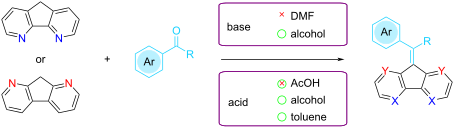
- is effectively solvating ions via the formation of hydrogen bonds [24], thus promoting the dissociation of the ion pair and increasing the nucleophilicity of the diazafluorenyl anion, which becomes capable of interacting with less active aldehydes. Acidic conditions As the reaction yields under basic




Design, synthesis, and biological evaluation of FXR/ASK1 dual-target modulators
Beilstein J. Org. Chem. 2026, 22, 771–781, doi:10.3762/bjoc.22.59
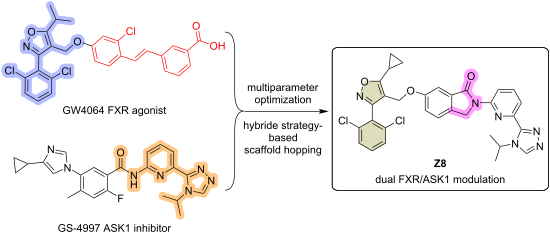
- moieties of Z8 formed hydrogen bonds with the key residues ARG-331 and HIS-447, respectively. Similarly, in the ASK1 binding pocket, the isoxazole, carbonyl, and triazole groups of Z8 engaged in hydrogen bonding with residues GLY-759, VAL-757, and LYS-709, respectively. Notably, the binding sites of Z8


Synthesis and biological evaluation of new brassinosteroid analogs with C-22 benzoate function
Beilstein J. Org. Chem. 2026, 22, 753–762, doi:10.3762/bjoc.22.57
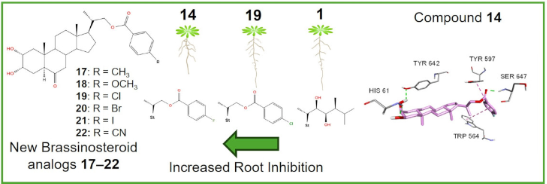
- = steroidal skeleton of the structure. Binding modes of compound 19 into BRI1–BAK1 heterodimer. Hydrogen bonds are represented in green segmented lines. π–π stacking is represented by dark pink segmented lines. Hydrophobic interactions are represented by pink segmented lines. Synthesis of compounds 23–28 and


Synthesis of heterocycles based on azomethine ylides from α-amino acids (or amines) and carbonyl compounds
Beilstein J. Org. Chem. 2026, 22, 705–741, doi:10.3762/bjoc.22.55
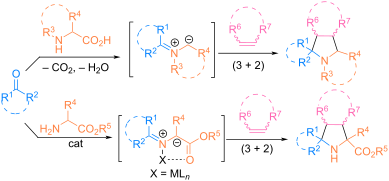
- 144 were obtained in high yields (up to 95%) and excellent stereoselectivity (up to 99% ee). The used catalyst L22 can effectively activate cyclohexenone through the formation of an iminium cation and promote the formation of hydrogen bonds between the catalyst and the dipole [96]. The Shi group has


Synthesis and uranyl(VI) extraction performance of a calix[4]pyrrole–tetrahydroxamic acid receptor
Beilstein J. Org. Chem. 2026, 22, 486–494, doi:10.3762/bjoc.22.36
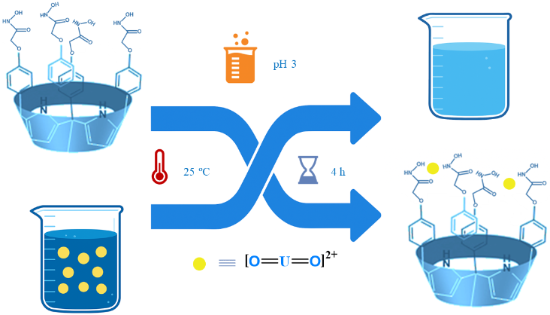
- for their anion chelation capability achieved through the formation of hydrogen bonds with the pyrrolic units [19][20][21][22]. Subsequent studies have demonstrated that the introduction of additional chelation sites via extension of the phenolic groups of PCP can yield anionic receptors, ditopic


Cone p-aminocalix[4]arenes enriched with ‘clickable’ alkyne or azide functionalities
Beilstein J. Org. Chem. 2026, 22, 399–415, doi:10.3762/bjoc.22.28
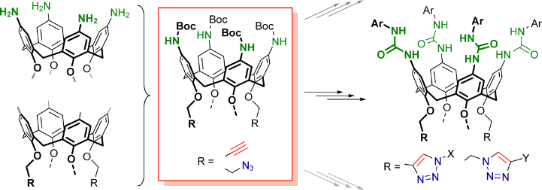
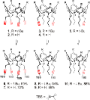
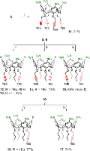
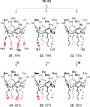
- . In aprotic media, these compounds, referred to as ‘tetraureacalix[4]arenes’, assemble into well-defined homo- or heterodimeric capsules, which are held together by cyclic belts of hydrogen bonds between interpenetrated urea groups from two molecules and are able to include a single neutral molecule
- pairs of distal triazole groups, and C4v-symmetric tetraureas 47 and 50. Due to the phenomenon of supramolecular chirality caused by the direction of hydrogen bonds in the capsules [100], tetraureacalixarenes of the first type should form two regioisomeric homodimers possessing C1-symmetry or a single
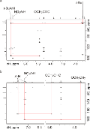
- present in a ratio of ≈1:1. The ratio of the isomers cannot be easily obtained from the spectrum except by analyzing the group of the most downfield-shifted signals corresponding to the half of the urea NHs involved in hydrogen bonds. According to the symmetry features discussed above, this group of






Design, synthesis and biological evaluation of 2,5-diaryloxazolo[4,5-d]pyrimidin-7-ylamines as selective cytotoxic agents against HeLa cells
Beilstein J. Org. Chem. 2026, 22, 390–398, doi:10.3762/bjoc.22.27
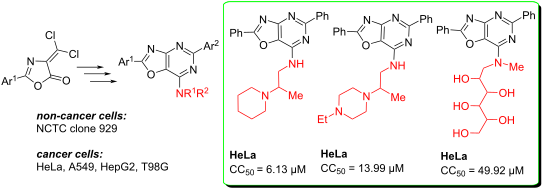
- regulation of the cell life cycle [8]. On the contrary, oxazolo[4,5-d]pyrimidines represent a poorly studied class of compounds because of limited access to this scaffold [9]. An in silico study showed that both isomeric forms of oxazolopyrimidines can form stable complexes due to hydrogen bonds between a


Spirobarbiturates with a pyrrolizidine moiety: synthesis, structure and biological evaluation
Beilstein J. Org. Chem. 2026, 22, 274–288, doi:10.3762/bjoc.22.20
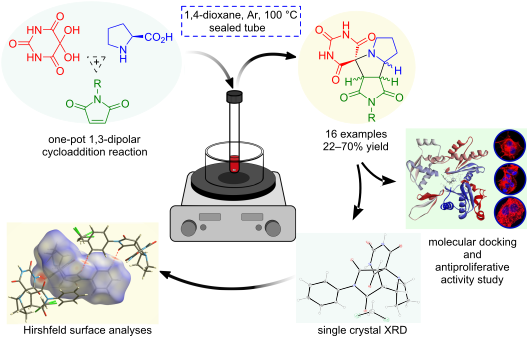
- (Figure 2). Both compounds crystallize as racemates, Figure 3 displaying their unit cell fragments. In 4b, the two enantiomers are connected through weak hydrogen bonds (N–H···O 2.612 Å) between the barbiturate rings. In contrast, compound 4c exhibits classical hydrogen bonding (N–H···O 1.878 Å) linking
- contacts: the barbiturate ring forms hydrogen bonds with water molecules through C=O···H–O and N–H···O–H interactions; the amide group of the barbiturate ring is engaged in a C=O···H–N hydrogen bond with the carbonyl oxygen of the maleimide fragment; additionally, a C=O···H–CH2 contact is observed between
- ), including O···H–N hydrogen bonds between barbiturate rings and O···H–Ph contacts involving maleimide carbonyl oxygens and phenyl ring hydrogens. The crystal structure of adduct 4c includes a molecule of dichloromethane. Due to the disorder of the dichloromethane molecule, the exact distances of the




Conformational analysis of difluoromethylornithine: factors influencing its gas-phase and bioactive conformations
Beilstein J. Org. Chem. 2026, 22, 237–243, doi:10.3762/bjoc.22.17
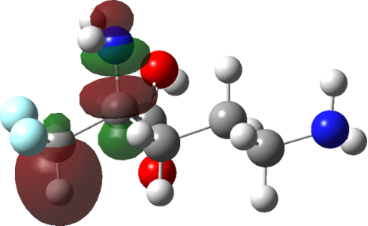
- , the NH₂ group forms a hydrogen bond with ASP183, and the carboxylate interacts with ASN130 (Figure 3), with additional hydrogen bonds to water molecules. Consequently, intermolecular interactions dominate and override the intramolecular forces responsible for the gauche effect in the isolated molecule
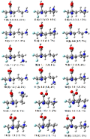
- . This is consistent with the relative strength of hydrogen bonds (5–40 kcal mol−1) compared with typical hyperconjugative interactions [20]. Finally, because neutral amino acids dominate in the gas phase whereas zwitterions prevail in solution [21][22][23][24], the zwitterionic form of DFMO was examined




Improved synthesis and physicochemical characterization of the selective serotonin 2A receptor agonist 25CN-NBOH
Beilstein J. Org. Chem. 2026, 22, 175–184, doi:10.3762/bjoc.22.11
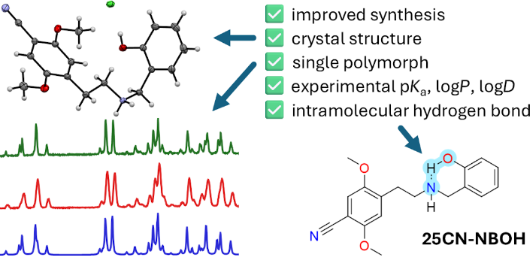
- solid form Crystals of 1·HCl were grown from an ethanolic solution, and the crystal structure was determined by single-crystal X-ray diffraction (SCXRD, Figure 2). As seen in Figure 2a, 1·HCl adopts a twisted U shape and is involved in three hydrogen bonds. Therein, the ammonium N atom interacts with
- two different chloride ions, and the phenol OH moiety interacts with another chloride ion. The triclinic crystal packing (Figure 2b) reveals alternating layers, a polar layer with the observed hydrogen bonds, and a hydrophobic layer with van-der-Waals interactions and π–π-stacking (distance 4 Å
- , oxygen atoms red, and chloride ion green. b) The crystal packing reveals alternating layers, a polar layer with hydrogen bonds (black dashed lines), and a hydrophobic layer with π–π-stacking (grey dashed lines). SCXRD and XRPD spectra of different preparations of 1·HCl. Blue: SCXRD spectrum of 1·HCl. Red


Asymmetric Mannich reaction of aromatic imines with malonates in the presence of multifunctional catalysts
Beilstein J. Org. Chem. 2026, 22, 151–157, doi:10.3762/bjoc.22.8
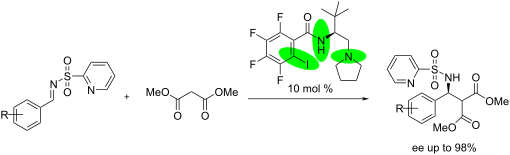
- led to the use of multifunctional catalysts of “homocooperativity,” where multiple units of the same catalyst perform different but complementary roles [17]. These catalysts employing noncovalent interactions via hydrogen bonds and also possess Lewis basic and π–π-interaction sites have been highly
- Mannich reaction between a 2-sulfonylpyridine protected imine and a malonate (Scheme 1). The pyridine-containing protecting group was chosen considering our catalyst design. We envisioned that halogen bond (XB) will complement hydrogen bonds to activate an imine towards the nucleophilic attack of the
- strengthened via hydrogen-bond-assisted halogen bonding [26][30]. Similarly, hydrogen bonds with the amidic proton are also possible. The direct effect of a specific interaction could not be determined based on the obtained data. The network of noncovalent interactions formed stabilizes the complex between the


Highly electrophilic, gem- and spiro-activated trichloromethylnitrocyclopropanes: synthesis and structure
Beilstein J. Org. Chem. 2026, 22, 123–130, doi:10.3762/bjoc.22.5
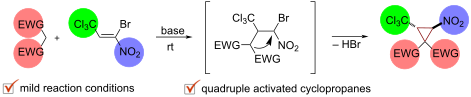
- independent molecules. Note that crystals 2, 3, 9a and 9b have a relatively high density (dcalc/g cm−3 1.739, 1.748, 1.595 and 1.567) for crystals that do not contain heavy atoms. In the absence of hydrogen bonds in the crystals of 2, 3, 9a and 9b, multiple specific interactions of the types such as lone
- (electron) pair – the π-system of the nitro group, and bonds of the Cl···O, Cl···N, C–H···X (X = Cl, O, N) are realized, which are shown in Figures S47–S57 in Supporting Information File 1. The energy of such interactions can be comparable with the energy of “classical” hydrogen bonds [47]. Conclusion In


Competitive cyclization of ethyl trifluoroacetoacetate and methyl ketones with 1,3-diamino-2-propanol into hydrogenated oxazolo- and pyrimido-condensed pyridones
Beilstein J. Org. Chem. 2025, 21, 2716–2729, doi:10.3762/bjoc.21.209
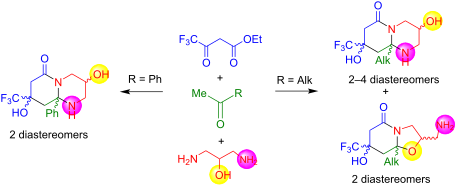
- the OH group. The crystal packing of single crystals 4att, 4atc, 4acc, 4act, 4dct is ordered by intermolecular hydrogen bonds linking O–H groups and heteroatoms O/N of neighboring molecules (see Table S8 in Supporting Information File 1); N–H groups of the hexahydropyrimidine ring and a carbonyl
- hexahydrooxazolopyridone 5ctt is ordered by intermolecular hydrogen bonds of the NH2 group with the hydroxy and carbonyl functions of two other molecules (Figure 3b). The OH substituent of the piperidone ring is in the trans-configuration relative to O(4) atom. In the oxazolidine ring, the CH2NH2 group occupies a pseudo
- -equatorial position and is in the trans-position toward the Bu group. The single crystal structure of the bicycle 5ctc is ordered by intermolecular hydrogen bonds between the hydroxy group and the amino group as well as between the amino group and fluorine of the CF3 substituent of the neighboring molecule


Thiazolidinones: novel insights from microwave synthesis, computational studies, and potentially bioactive hybrids
Beilstein J. Org. Chem. 2025, 21, 2618–2636, doi:10.3762/bjoc.21.203
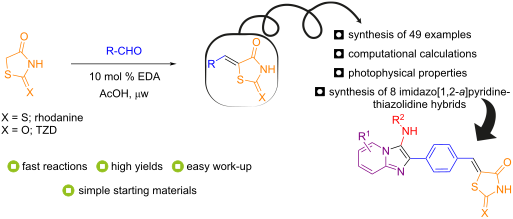
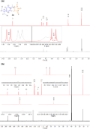
- interactions are observed in both compounds forming dimer-like structures. The compounds show hydrogen bonds between N1–H1···O1’ with a distance of 2.06 Å in 3n (Figure 4b) and 1.98 Å in 4n (Figure S250b in Supporting Information File 1). The anomaly observed in the NMR spectra may be attributed to
- : a) 1H NMR spectra (600 MHz, DMSO-d6) with expansions, and b) 13C NMR spectra (151 MHz, DMSO-d6) with expansions. a) Molecular structure of 3n with crystallographic labeling (50% probability displacement). b) Perspective views of intermolecular hydrogen bonds (dotted lines) of 3n. (‘) symmetry






Efficient solid-phase synthesis and structural characterization of segetalins A–H, J and K
Beilstein J. Org. Chem. 2025, 21, 2612–2617, doi:10.3762/bjoc.21.202
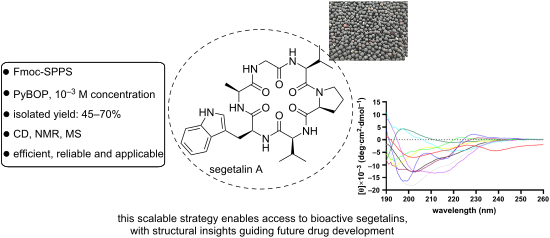
- stability of intramolecular hydrogen bonds in the peptide backbone, thereby promoting the formation of stable secondary structures (such as α-helices or β-sheets) in cyclic peptides. Spectra acquired in H2O, 0.01×PBS, and 30% TFE (Table S1, Supporting Information File 1) demonstrate: (i) definitive β-sheet


Isoorotamide-based peptide nucleic acid nucleobases with extended linkers aimed at distal base recognition of adenosine in double helical RNA
Beilstein J. Org. Chem. 2025, 21, 2513–2523, doi:10.3762/bjoc.21.193
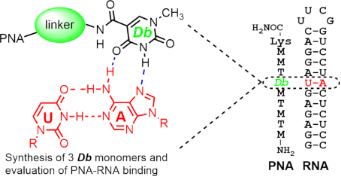
- and ultimately forming Hoogsteen hydrogen bonds with adenosine. Three new monomers were prepared and incorporated into PNAs that were screened against matched RNA hairpins using UV thermal melting and isothermal titration calorimetry experiments. Two of the three PNA oligonucleotides that contained
- possible base pairs (G–C, A–U, C–G, and U–A). Notably, each synthetic nucleobase takes advantage of favorable hydrogen bonding interactions to the proximal nucleobase in the Watson–Crick base pair. Strong binding has been reported for purine recognition given the propensity for two Hoogsteen hydrogen bonds
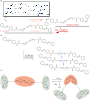
- PNA oligomer with the N-(2-aminoethyl)glycine backbone (in red); (b) Representative monocyclic synthetic nucleobase triples through Hoogsteen hydrogen bonding (blue dashed lines). Watson–Crick hydrogen bonds are in red (dashed lines). Representative extended nucleobase triples through Hoogsteen


Rotaxanes with integrated photoswitches: design principles, functional behavior, and emerging applications
Beilstein J. Org. Chem. 2025, 21, 2345–2366, doi:10.3762/bjoc.21.179

- form selective hydrogen bonds between the carbonyl oxygen of the fumaramide unit and the N–H groups of benzylic amide rings. Upon isomerization to the cis isomer, the hydrogen-bonding interactions are weakened, enabling the macrocycle to migrate to a second recognition station [61]. Despite their


Discovery of cytotoxic indolo[1,2-c]quinazoline derivatives through scaffold-based design
Beilstein J. Org. Chem. 2025, 21, 2062–2071, doi:10.3762/bjoc.21.161
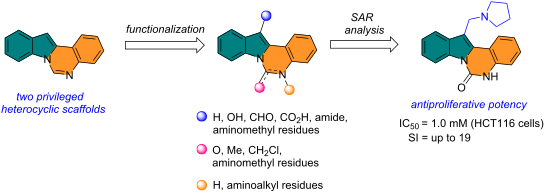
- . Such compounds can intercalate into nucleic acids, primarily through π–π stacking interactions with nitrogenous bases. The introduction of side chains with terminal amino groups enhances binding to oligonucleotides via additional ionic interactions and hydrogen bonds. The indolo[1,2-c]quinazolin-6(5H


Solar thermal fuels: azobenzene as a cyclic photon–heat transduction platform
Beilstein J. Org. Chem. 2025, 21, 2036–2047, doi:10.3762/bjoc.21.159
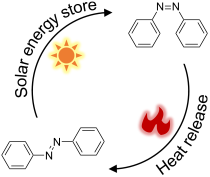
- [46] (“High-energy, stable and recycled molecular solar thermal storage materials using AZO/graphene hybrids by optimizing hydrogen bonds” by W. Luo et al., Nanoscale, vol. 7, © 2015); permission conveyed through Copyright Clearance Center, Inc. This content is not subject to CC BY 4.0. Conjugated
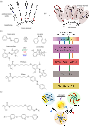
- azobenzene polymer solar thermal fuels: (a) Photoisomerization and thermally induced reverse isomerization of diacetylene monomers. The inset depicts the crystal structure of diacetylene monomer (n = 6, X = N–H) with dashed lines indicating intermolecular hydrogen bonds. Figure 4a was used with permission of




Photoswitches beyond azobenzene: a beginner’s guide
Beilstein J. Org. Chem. 2025, 21, 1808–1853, doi:10.3762/bjoc.21.143
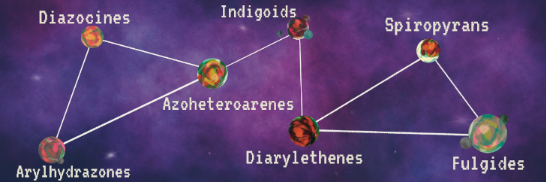
- the time within 50% of the metastable isomer is thermally converted to the stable one [3]. It depends on the photoswitch class, solvent, substitution pattern, and temperature. For some photoswitch classes, proton exchange and intramolecular hydrogen bonds are known to accelerate the thermal relaxation
- weaken the hydrogen bonds between N–H and the ester moieties of the rotor and the stator. The Cigáň group focused on the synthesis of benzoylpyridine hydrazones with different substitutions in the rotor benzene [97]. The p-NMe2 group causes red-shift of both absorption maxima of the E- and Z-isomer




Thermodynamics and polarity-driven properties of fluorinated cyclopropanes
Beilstein J. Org. Chem. 2025, 21, 1742–1747, doi:10.3762/bjoc.21.137
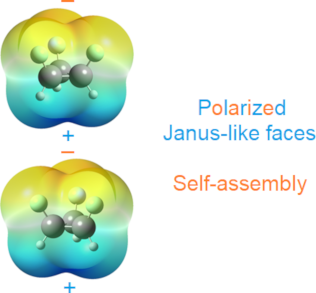
- electrostatically complementary negative and positive faces. These interactions are mediated through electrostatic hydrogen bonds. This "Janus-like" polarity also facilitates interactions with ions, particularly sodium and chloride. These findings contribute valuable insights for the rational design of drugs and
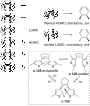
- and side views of two 1.2.3-c.c. molecules interacting, with an H···F distance of 2.70 Å. (c) QTAIM plot illustrating bond paths between hydrogen and fluorine atoms, indicative of electrostatic hydrogen bonds. Calculated complexes of 1.2.3-c.c. with Na+ (top) and Cl− (bottom). Standard Gibbs free





