


Search results
Search for "separation" in Full Text gives 886 result(s) in Beilstein Journal of Organic Chemistry. Showing first 200.
Amino acid-based surfactants: sustainable synthesis and antimicrobial mechanisms
Beilstein J. Org. Chem. 2026, 22, 1067–1085, doi:10.3762/bjoc.22.85
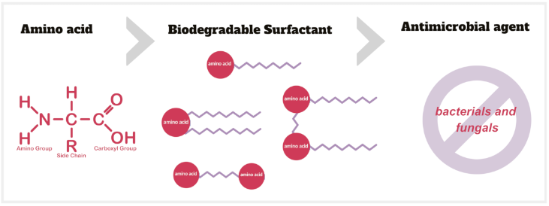
- large-scale applicability. Purification is commonly achieved by acid–base extraction, selective precipitation, salt formation, and crystallization, while chromatographic techniques are mainly restricted to laboratory-scale studies [38]. Scalable processes preferentially rely on phase separation and


Synthesis of functionalized, 13-alkyl-substituted coralyne derivatives and investigation of their interactions with duplex and abasic site-containing DNA
Beilstein J. Org. Chem. 2026, 22, 1057–1066, doi:10.3762/bjoc.22.84
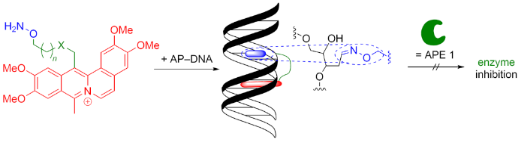
- leads to DNA cleavage or inhibition of AP-site processing, a series of experiments was performed with a fluorescence-based AP-site cleavage assay (Figure 3A) [48]. In this assay, cleavage of the AP site results in separation of a fluorophore–quencher pair, leading to an increase in the fluorescence


Semisynthesis, characterisation, and antibacterial evaluation of a novel lecanoric acid-derived amide library
Beilstein J. Org. Chem. 2026, 22, 1023–1032, doi:10.3762/bjoc.22.81
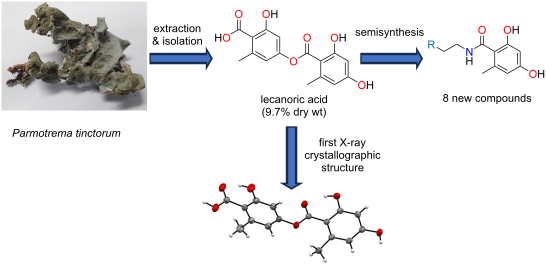
- cartridge, and subjected to phenyl semi-preparative RP-HPLC separation. Isocratic conditions of 20% MeOH (0.1% TFA)/80% H2O (0.1% TFA) were initially run for 1 min, followed by a linear gradient to 90% MeOH (0.1% TFA)/10% H2O (0.1% TFA) for 119 min at a flow rate of 9 mL/min. One hundred and twenty


The role of spacer length and flexibility in peptide self-assembly
Beilstein J. Org. Chem. 2026, 22, 986–996, doi:10.3762/bjoc.22.77
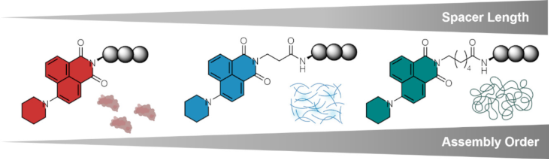
- this co-solvent composition due to the formation of substantially larger aggregates that undergo rapid transverse relaxation. The pronounced aggregation of these conjugates is further evidenced by inspection of the corresponding NMR tubes, where clear solid–liquid phase separation was observed


Novel macrocycles: from synthesis to supramolecular function
Beilstein J. Org. Chem. 2026, 22, 982–985, doi:10.3762/bjoc.22.76
- molecular separation [26][27][28]. Their practical relevance is further highlighted by their incorporation into commercial products and technologies, including the household deodorizer Febreze [29], novel cyclodextrin-based adsorbent DEXSORB [30], diagnostic devices [31], and drug-delivery platforms [32]. A
- cells. In addition to its intrinsic biological activity, the nanoassembled platform may also serve as a carrier for combination therapies by encapsulating additional therapeutic agents. Macrocyclic chemistry is proving equally vital for environmental sustainability and separation science. For instance
- extraction efficiency even when flooded with competing anions. Furthermore, by evaluating the recyclability and solvent stability of covalent versus noncovalent immobilization, the study offers key design rules for building durable separation materials. While solid-supported systems demonstrate the
Electrochemical reduction of unsaturated carbon–carbon bonds via 3d transition-metal catalysis
Beilstein J. Org. Chem. 2026, 22, 955–981, doi:10.3762/bjoc.22.75
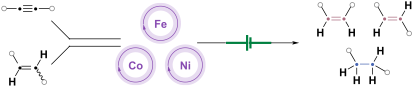
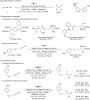
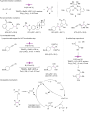
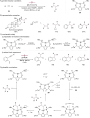
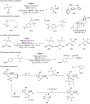
- spatially separated to prevent undesired interactions between reactive intermediates. Although such separation improves selectivity and mechanistic control, it may also introduce increased cell resistance and mass transport limitations. Consequently, the choice of cell configuration is closely tied to the








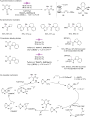
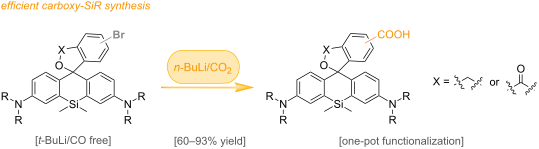
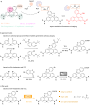
A practical CO2-mediated synthesis of 5,6-carboxylated silicon-rhodamines for targeted probe development
Beilstein J. Org. Chem. 2026, 22, 915–924, doi:10.3762/bjoc.22.72
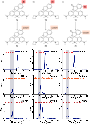
- substrates (Figure 3). Direct HPLC analysis of the crude reaction mixtures at 640 nm revealed clear separation between substrates and products. The retention times of 1a, 1b, and 1c were 8.5, 7.5, and 7.4 min, respectively, whereas those of the corresponding carboxylated products 3a, 3b, and 3c were 5.2, 4.4
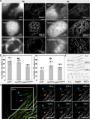
- ). Specifically, at 20 s, two neighboring mitochondria marked by the white arrow were in a twined state. By 490 s, they gradually unfastened, followed by further separation at 510 s. At 570 s, the twined state reappeared, whereas at 900 s, a clearly unfastened state was again observed, followed by gradual re



Cascade transformation of 2-(diazoacetyl)-2H-azirines to 2-aroyl-3-hydroxy-1H-pyrroles via condensation with aromatic aldehydes
Beilstein J. Org. Chem. 2026, 22, 897–904, doi:10.3762/bjoc.22.70
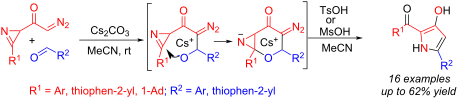
- reaction mixture obtained as a result of the reaction of azirine 1a with 4-fluorobenzaldehyde (2a) is treated with TsOH after separation of cesium carbonate, 2-benzoyl-3-hydroxypyrrole 5a is obtained as a product. Since only two examples of pyrroles 5 containing 2-aroyl and 3-hydroxy groups have been
- mixture containing 4a (after separation of Cs2CO3) with TsOH at 100 °C or MsOH at 25 °C, with the acid clearly acting as a catalyst. Other protic acids, such as aq HCl, aq HI, and TFA, as well as a Lewis acid (FeCl3), also facilitated the conversion of 4a to 5a. Meanwhile, resinification of the reaction


Synthetic study of vic-bromination of diarylacetylenes, easy purification and separation
Beilstein J. Org. Chem. 2026, 22, 795–802, doi:10.3762/bjoc.22.61
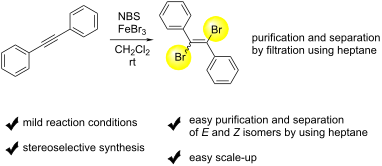
- -osaka, Osaka 577-0056, Japan 10.3762/bjoc.22.61 Abstract E-Selective bromination for diphenylacetylene was established by using the combination of NBS and FeBr3 in CH2Cl2. In addition, easy purification and separation from the crude product were found. When the crude product was treated with heptane
- , the E isomer could be recovered as a solid material by utilizing the difference in solubility. On the other hand, the Z isomer could be removed by filtration while remaining in solution. Keywords: bromination; diarylacetylenes; green chemistry; purification and separation; stereoselective reaction
- interested in the selective synthesis of the E isomer of 1,2-dibromo-1,2-diphenylethylene, together with simple purification and separation toward process chemistry, because the compound is an attractive synthetic intermediate for further transformations. During the course of our studies, we have found that

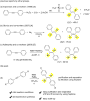


Synthesis of heterocycles based on azomethine ylides from α-amino acids (or amines) and carbonyl compounds
Beilstein J. Org. Chem. 2026, 22, 705–741, doi:10.3762/bjoc.22.55
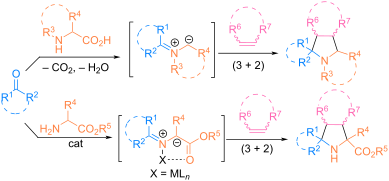
- racemic 2-hexalicene iminoester 49 to C60 fullerene 50 (Scheme 23). During the reaction, two diastereomeric helicenepyrrolidino[3.4:1.2][60]fullerenes 51a and 51b are formed with a good enantiomeric excess. Further separation of the two diastereomers using column chromatography allows one to obtain


Anti-invasive and cytotoxic evaluation of a (+)-pinoresinol-based semisynthetic library against glioblastoma
Beilstein J. Org. Chem. 2026, 22, 691–704, doi:10.3762/bjoc.22.54
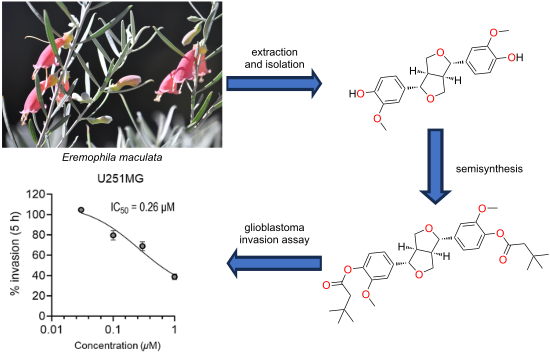
- used for semipreparative HPLC separations. A Thermo BetaSil C18 column (5 μm, 100 Å, 150 × 21.2 mm), Luna C18 HPLC column (5 μm, 100 Å, 150 × 21.2 mm), or a BetaSil phenyl HPLC column (5 μm, 100 Å, 250 × 21.2 mm) was used for semipreparative HPLC separation. Merck silica gel 60 F254 precoated aluminium



Harnessing light energy with molecules
Beilstein J. Org. Chem. 2026, 22, 680–682, doi:10.3762/bjoc.22.52
- . Photoinduced charge separation is a key process in the development of systems for artificial photosynthesis, photovoltaics, and photocatalysis. Kobayashi and co-workers [19] studied in detail the excited-state dynamics of donor–acceptor dyads based on perylene and phenothiazine, in which triphenylamine units
- and a phenyl spacer were introduced to modulate donor strength and spatial separation. The work underscores the crucial role of excited-state structural relaxation in tuning photoinduced charge separation. In another study, Kerzig and co-workers [20] show how polyaza[7]helicene can function as a
Melifoliox B, a novel phloroglucin derivative isolated from Melicope barbigera (Rutaceae) and synthesis of new oxidation products from melifoliones A and B
Beilstein J. Org. Chem. 2026, 22, 535–546, doi:10.3762/bjoc.22.39
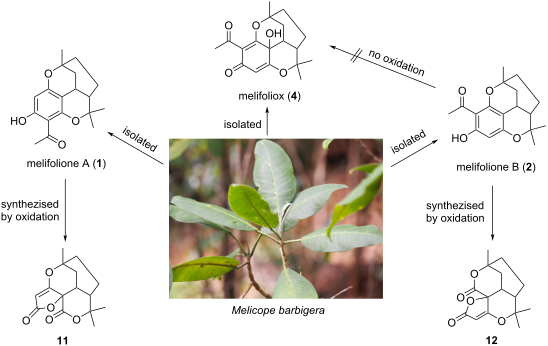
- showed consumption of the educts after 30 min. Saturated aqueous solutions of Na2S2O3, Na2CO3 and NaCl (each 20 mL) were added together with ethyl acetate (50 mL) to generate two phases. After separation of the organic layer and subsequent extraction of the aqueous phase with ethyl acetate (3 × 20 mL


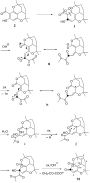

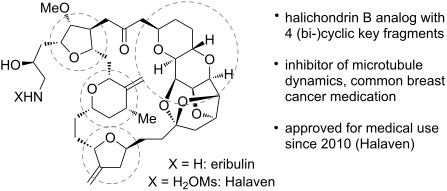
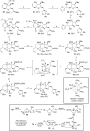
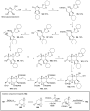
Modern synthetic pathways towards eribulin and its subunits
Beilstein J. Org. Chem. 2026, 22, 495–526, doi:10.3762/bjoc.22.37








A facile and practical method for the synthesis of trans-(±)-taxifolin and its derivatives via Darzens reaction
Beilstein J. Org. Chem. 2026, 22, 443–450, doi:10.3762/bjoc.22.31
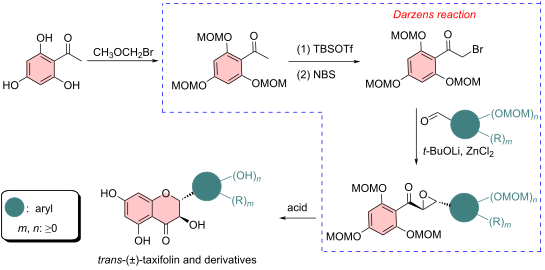
- Pharmacy, Shenzhen Technology University, Shenzhen 518118, China 10.3762/bjoc.22.31 Abstract The synthesis of racemic trans-taxifolin (trans-(±)-taxifolin) and its derivatives and subsequent chiral separation is the most prevalent chemical method to obtain enantiomerically pure taxifolin and its
- followed by chiral separation [16][19][20][21][22][23][24][25][26][27][28][29][30], which represents a relatively easily operated and controlled protocol. What is more important for this method is that it enables the synthesis of taxifolin derivatives, facilitating the exploration of their pharmacological


Synthesis and stereochemical analysis of dynamic planar chiral oxa[7]orthocyclophene
Beilstein J. Org. Chem. 2026, 22, 436–442, doi:10.3762/bjoc.22.30

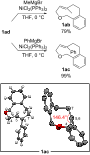
- chiral column at 25 °C (Figure 3) [17]. In sharp contrast to 1ab and 1ad, the HPLC analysis of 1ac showed a plateau between the peaks of the enantiomers at 25 °C, indicating that the interconversion of the enantiomers proceeds on the separation time scale (Figure 4) [18]. The interconversion plateau was
- effect of the phenyl group with the distorted alkene for a jump-rope rotation-type ring-flip (Figure 5) [10]. Enantioenriched samples of compounds 1ab and 1ad were obtained by HPLC separation using preparative scale chiral columns. We evaluated the stereochemical stability of 1ab and 1ad at 25 °C using
- oxacyclophene can be transformed into central chirality without loss of enantiomeric purity. For example, (S)-1ab obtained by chiral HPLC separation using an OJ-H column was treated with m-CPBA, in which (S)-1ab was smoothly consumed at 0 °C within 30 minutus to afford epoxide 8 in 61% yield (Scheme 4). HPLC




Cone p-aminocalix[4]arenes enriched with ‘clickable’ alkyne or azide functionalities
Beilstein J. Org. Chem. 2026, 22, 399–415, doi:10.3762/bjoc.22.28
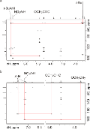
- simply washing of a solution of calixarene 47 in CDCl3 with water solved the issue. Indeed, the 1H NMR spectrum of the sample obtained after separation of the aqueous phase turned out to be easily interpretable (Figure 6d) and contained a set of signals from homodimer 472 similar to those in the spectrum






Electrosynthetic access to unsymmetrical oxaza[8]helicenes with high chiral stability and strong circularly polarized luminescence (CPL)
Beilstein J. Org. Chem. 2026, 22, 372–382, doi:10.3762/bjoc.22.25
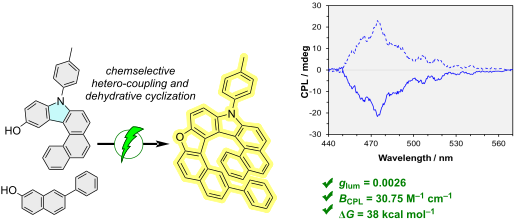
- ) relative to their oxaza[7]helicene analogues (<25 kcal/mol). After chiral HPLC separation, the enantiomers display mirror-image CD and strong solution CPL, with |glum| up to 2.6 × 10⁻³ and fluorescence brightness up to 30.75 M−1 cm−1. Keywords: chemoselectivity; chiroptical; circular dichroism
- ]. Chiroptical features The higher enantiomerization barriers of (P/M)-5a and (P/M)-5b enabled complete separation of their enantiomers by HPLC using a Daicel Chiralpak IA column (see Supporting Information File 1). Despite the rapid enantiomerization of (P/M)-6a and (P/M)-6b, we were able to separate the two
- analyses reveal that these oxaza[8]helicenes retain the aromatic character of the π‐framework while exhibiting significantly enhanced configurational stability compared to their oxaza[7] congeners, with enantiomerization barriers of up to ≈38 kcal mol−1. After chiral separation, the enantiomers display




Configuration–packing synergy enabling integrated crystalline-state RTP and amorphous-state TADF
Beilstein J. Org. Chem. 2026, 22, 224–236, doi:10.3762/bjoc.22.16
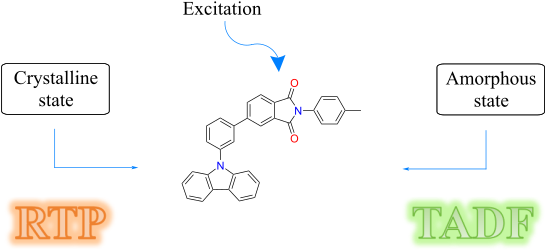
- construct a twisted D–π–A molecular backbone. This molecular backbone achieves, on the one hand, frontier orbital spatial decoupling through donor–acceptor separation, reducing ΔEST and enabling TADF activation in amorphous environments. On the other hand, it retains the n→π* characteristics of the carbonyl
- 62.54°. These significant angles result in a distinctly twisted molecular framework, which plays a crucial role in spatially separating the donor (carbazole) and acceptor (phthalimide) segments of the molecule. This twisting and separation of the donor and acceptor parts of the molecule are critical for
- localized on the carbazole donor unit, while the lowest unoccupied molecular orbital (LUMO) is mainly concentrated on the phthalimide acceptor unit, as illustrated in Figure 1b and 1c. This significant separation of the HOMO and LUMO indicates a substantial frontier-orbital decoupling between the donor and


Thiazolidinones: novel insights from microwave synthesis, computational studies, and potentially bioactive hybrids
Beilstein J. Org. Chem. 2025, 21, 2618–2636, doi:10.3762/bjoc.21.203
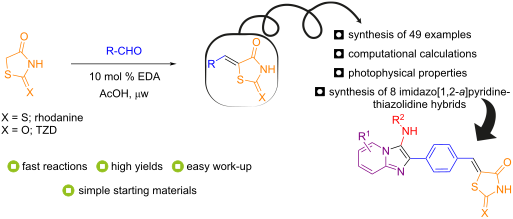
- greater charge separation in the excited state, which is more stabilized in polar solvents, typical of compounds that undergo an ICT upon excitation [86]. The use of EtOAc showed a hypochromic effect with a decrease in fluorescence emission. Similar results for chlorinated solvents (CH2Cl2, CHCl3) were






Recent advances in total synthesis of illisimonin A
Beilstein J. Org. Chem. 2025, 21, 2571–2583, doi:10.3762/bjoc.21.199
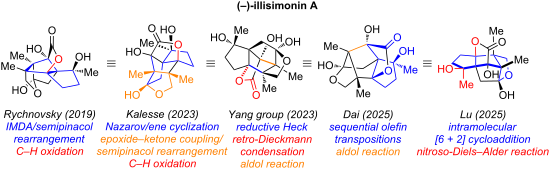
- product. They resolved racemic intermediate 27 by derivatization with (S)-1-(1-naphthyl)ethyl isocyanate, followed by separation of the resulting diastereomers via silica gel chromatography (Scheme 3). By converting diastereomer 32 to (−)-illisimonin A, the absolute configuration of the natural product






Ex-situ generation of gaseous nitriles in two-chamber glassware for facile haloacetimidate synthesis
Beilstein J. Org. Chem. 2025, 21, 2465–2469, doi:10.3762/bjoc.21.188
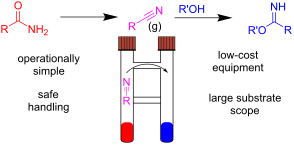
- were obtained when using purification by “dry column vacuum chromatography” [28], which allowed separation of anomers. In the seminal paper by Schmidt [29] dichloroacetimidates were also synthesized. They were described as too unreactive to be viable alternatives to the trichloro analogs. The synthesis


The high potential of methyl laurate as a recyclable competitor to conventional toxic solvents in [3 + 2] cycloaddition reactions
Beilstein J. Org. Chem. 2025, 21, 2389–2415, doi:10.3762/bjoc.21.184
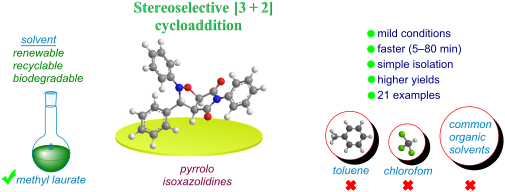
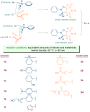
- of hexane and dried in open air. The resulting mixture of isomers was subjected to direct NMR analysis, without any additional purification or separation steps. Versatile compounds via cycloaddition reactions. a) Radar view of the physical properties of methyl laurate. b) Oral toxicity values of






Rotaxanes with integrated photoswitches: design principles, functional behavior, and emerging applications
Beilstein J. Org. Chem. 2025, 21, 2345–2366, doi:10.3762/bjoc.21.179

- length. These modifications enabled large-amplitude shuttling motions and created sufficient spatial separation, ensuring the macrocycle resides exclusively at one recognition site at a time [55]. Dithienylethene Dithienylethene photoswitches undergo an electrocyclic reaction, forming a closed-ring
- for applications in anion transport, extraction, and separation technologies. Conclusion and Perspectives The development of photoswitchable rotaxanes has mainly focused on controlling the position and movement of the macrocycle along the axle. Consequently, the vast majority of systems reported to


A chiral LC–MS strategy for stereochemical assignment of natural products sharing a 3-methylpent-4-en-2-ol moiety in their terminal structures
Beilstein J. Org. Chem. 2025, 21, 2243–2249, doi:10.3762/bjoc.21.171
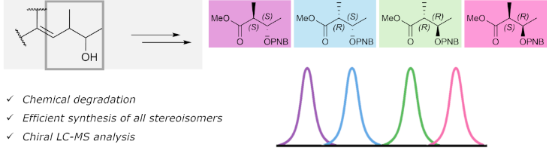
- –MS detection of the MPO-derived fragment and to achieve a separation of four candidate stereoisomers. To this end, methylation of commercially available methyl acetoacetate (2) and subsequent reduction of the ketone carbonyl group was carried out to prepare a mixture of four stereoisomers of methyl 3
- -hydroxy-2-methylbutanoate (3) [25][26]. We then explored LC–MS conditions for their separation. In our initial trial, the stereoisomeric mixture of 3 was successfully separated by preparative high performance liquid chromatography (HPLC) using a chiral column (data not shown). However, each stereoisomer
- complete separation of the stereoisomers was not achieved, the corresponding peaks exhibited improved resolution compared to those of 4 (Figure S2, Supporting Information File 1). To further enhance separation, the p-nitrobenzoyl (PNB) ester 6 was prepared (Scheme 1B). After repeated trials with several





