


Search results
Search for "quality factor" in Full Text gives 124 result(s) in Beilstein Journal of Nanotechnology.
Competitive helical bands and highly efficient diode effect in F/S/TI/S/F hybrid structures
Beilstein J. Nanotechnol. 2026, 17, 15–23, doi:10.3762/bjnano.17.2
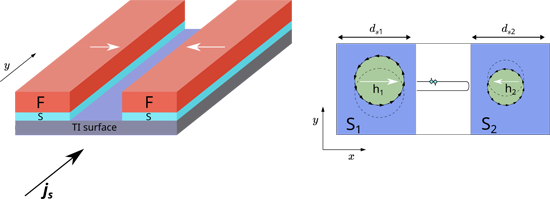
- ]. Finally, we observe repeated sign-changing behavior of the quality factor in Figure 5. This may reflect the competitive nature of the S1 and S2 behavior in the nonreciprocal supercurrent. Conclusion We have examined the superconducting diode effect in a F/S/TI/S/F hybrid structure. It has been shown that


![[Graphic 16]](/bjnano/content/inline/2190-4286-17-2-i31.svg?max-width=637&scale=1.18182)
![[Graphic 17]](/bjnano/content/inline/2190-4286-17-2-i32.svg?max-width=637&scale=1.18182)


Multifrequency AFM integrating PeakForce tapping and higher eigenmodes for heterogeneous surface characterization
Beilstein J. Nanotechnol. 2025, 16, 2077–2085, doi:10.3762/bjnano.16.142
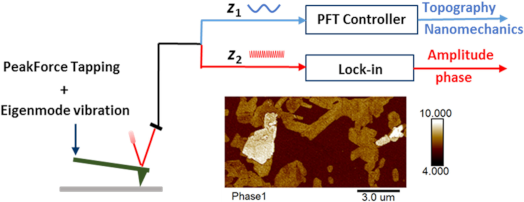
- include topographic step-like distortions and sudden phase-contrast inversions arising from bistable transitions between co-existing oscillation states, which complicate data interpretation [13][14][15][16][17]. Additionally, operational complexity escalates in liquid environments, where low-quality
- factor (Q) cantilever dynamics amplify noise and demand meticulous parameter tuning [18]. To overcome these limitations, PeakForce tapping mode (PFT) was developed. It employs vertical probe oscillations at subresonant frequencies (0.5–8 kHz) to establish quasi-static tip–sample contact [18][19]. Unlike


Mechanical property measurements enabled by short-term Fourier-transform of atomic force microscopy thermal deflection analysis
Beilstein J. Nanotechnol. 2025, 16, 1952–1962, doi:10.3762/bjnano.16.136
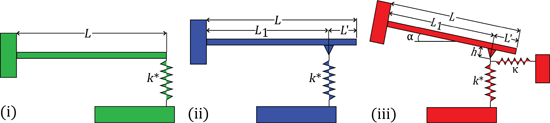
- and stored. Subsequently, for each window generated, the resonant peak of the first normal mode was fitted using Equation 1, where f is the frequency, T is the temperature, kB = 1.3806 × 10⁻²³ m2·kg·s−2·K−1 is Boltzmann’s constant, Qn is the quality factor of the cantilever for the n-th mode, Dn is
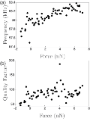
- a function of normal force during the in-contact period of the force curve. A sub-linear variation is observed with increasing applied normal force. Figure 3b shows the variation of the quality factor with normal force, simultaneously determined with the frequency of the first normal oscillatory
- parameters against the necessary frequency resolution to accurately fit the resonant peak of the first normal oscillation mode of the AFM cantilever. The resonance mode was fitted to a Lorentz peak to extract its center frequency and quality factor at each time point, providing similar information as to what




Low-temperature AFM with a microwave cavity optomechanical transducer
Beilstein J. Nanotechnol. 2025, 16, 1873–1882, doi:10.3762/bjnano.16.130
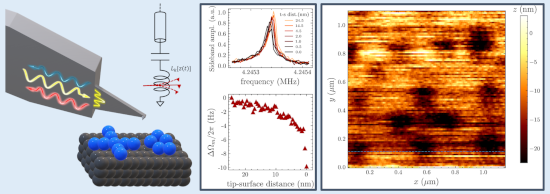
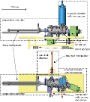
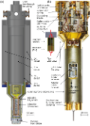
- the AFM’s suspension system is roughly 1 Hz, with a quality factor of roughly 2. Mechanical oscillation of the tip causes phase modulation of the reflected microwave pump, detected as motional sidebands in the signal spectrum. Measuring the microwave response at a sideband, the detection responsivity
- in the literature [28][29][30]. The main limitation to the internal quality factor of our microwave resonators is the highly disordered low-stress Si–N layer, which causes significant dielectric losses [31]. As discussed above, the figure of merit of a displacement detector should be evaluated with


Few-photon microwave fields for superconducting transmon-based qudit control
Beilstein J. Nanotechnol. 2025, 16, 1580–1591, doi:10.3762/bjnano.16.112
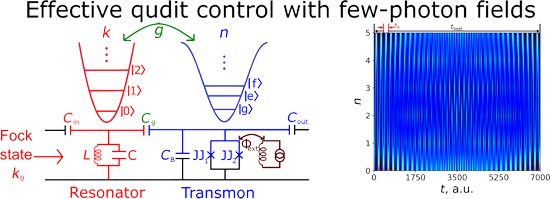
- under study is described in more detail, followed by a theoretical description of the Fock-based control of the qudit states and a discussion of possible practical implementations. Results Model description The system under consideration consists of a high-quality superconducting resonator (the quality
- factor is about 105–106 and depends mainly on the external coupling Cin/out) connected to a transmon [34] by a capacitance Cg (see Figure 1). The resonator in this system is a quantum harmonic oscillator with a fully equidistant energy spectrum described by the bosonic ladder operators and , and the


Tendency in tip polarity changes in non-contact atomic force microscopy imaging on a fluorite surface
Beilstein J. Nanotechnol. 2025, 16, 944–950, doi:10.3762/bjnano.16.72
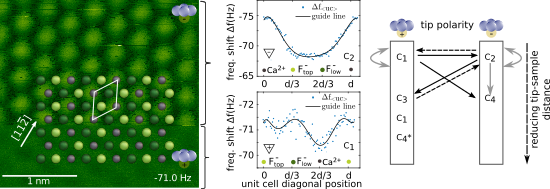
- -ordered CaF2(111) [24][25], see [26] for further preparation details. RT experiments were performed with a UHV 750 AFM system (RHK, Troy, MI USA) operated at a base pressure of 7.0 × 10⁻¹¹ mbar. An Ar+ ion-sputtered silicon cantilever with an eigenfrequency of around 300 kHz and a quality factor of 22000


Signal generation in dynamic interferometric displacement detection
Beilstein J. Nanotechnol. 2024, 15, 1070–1076, doi:10.3762/bjnano.15.87
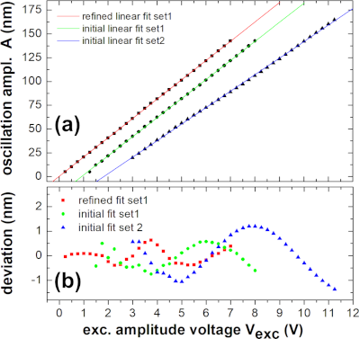
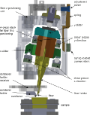
- and a quality factor of Q = 9000. After transfer of the cantilever, which is glued to a cantilever holder, the cantilever is mechanically firmly attached to the AFM scan head, while the optical fiber and the sample are approached to the cantilever and the tip by piezoelectric motors for coarse motion


Stiffness calibration of qPlus sensors at low temperature through thermal noise measurements
Beilstein J. Nanotechnol. 2024, 15, 580–602, doi:10.3762/bjnano.15.50
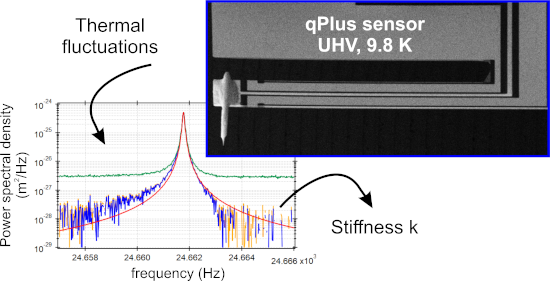
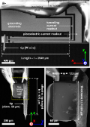
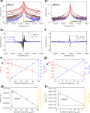
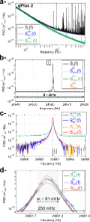
- and enables the use of small oscillation amplitudes (A1 ≃ 50 pm), which render the probe highly sensitive to the short-range regime of interatomic forces. (ii) Their high quality factor (Q, ≃105 in a LT UHV system), which renders the PLL highly sensitive to the frequency tracking. (iii) Their
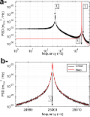
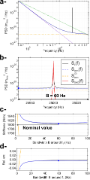
- frequency fn, quality factor Qn, and stiffness kn), and the summation represents all eigenmodes of the probe. Under the assumption of thermal equilibrium, the thermal noise-induced deflection of each eigenmode follows the equipartition theorem, such that: Upon proper normalization of the solution functions
- , but it is maintained in the units. A large part of the thermal fluctuations stems from the probe’s fundamental eigenmode. Thus, it is interesting to compare (f) to the formal expression of the one-sided rms tn-PSD of an equivalent SHO (resonance frequency f1, quality factor Q1, and stiffness k1

Unveiling the nature of atomic defects in graphene on a metal surface
Beilstein J. Nanotechnol. 2024, 15, 416–425, doi:10.3762/bjnano.15.37
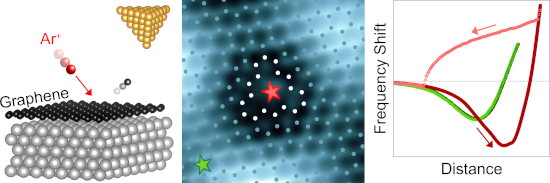
- of an oscillating piezoelectric tuning fork sensor [37][38] (resonance frequency: 30.5 kHz, quality factor: 45000, amplitude: 50 pm) were mapped at constant height for topographic images. The vertical force between tip and sample was extracted from distance-dependent measurements of the resonance


Design, fabrication, and characterization of kinetic-inductive force sensors for scanning probe applications
Beilstein J. Nanotechnol. 2024, 15, 242–255, doi:10.3762/bjnano.15.23
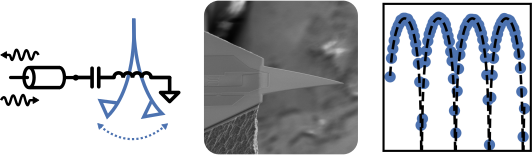
- (KIMEC) sensors. A force sensor designed specifically for scanning probe microscopy must have a sharp tip that is readily positioned and scanned over a surface. We operate the sensor near a mechanical resonance with a high quality factor Q for enhanced responsivity to force. The mechanical resonator is a
- comes the spring constant k, which should match the maximum tip–surface force gradient. For a given k, the mechanical resonant frequency is set by meff, A larger mechanical resonant frequency gives a larger integration bandwidth for a given mechanical quality factor Qm = ωm/γm. However, increasing ωm
- excitation and read-out, the microwave resonator is coupled to the transmission line with impedance Z0 = 50 Ω, giving a measured (total) quality factor Qtot, where Qint and Qext are the internal and external quality factors of the microwave resonator. We introduce a shunt inductor with inductance Ls in order



A bifunctional superconducting cell as flux qubit and neuron
Beilstein J. Nanotechnol. 2023, 14, 1116–1126, doi:10.3762/bjnano.14.92
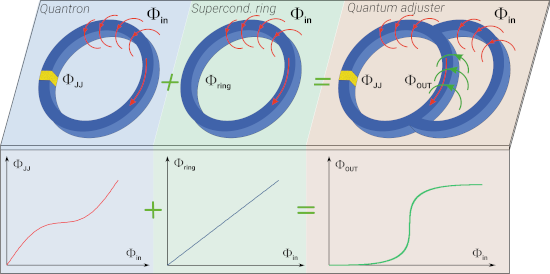
- operating temperatures. For example, the dark blue region in Figure 4b is only suitable for T ∼ 0.1 K. Note that for the parameters used and a Josephson junction quality factor of Q ∼ 105, the relaxation time is tr ∼ 1 μs. From this rough estimate it can be seen that in the future, adiabatic cells of tuning



Observation of multiple bulk bound states in the continuum modes in a photonic crystal cavity
Beilstein J. Nanotechnol. 2023, 14, 544–551, doi:10.3762/bjnano.14.45
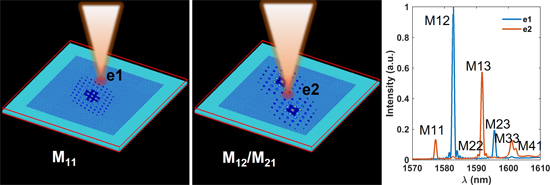
- 1c at which is larger than 104. ANSYS simulations of the same device could yield more accurate Qr values of each mode, but only at computational cost that is too high for normal computers. The lower quality factor of the fabricated samples compared to the simulations in Figure 1c is due to the


A distributed active patch antenna model of a Josephson oscillator
Beilstein J. Nanotechnol. 2023, 14, 151–164, doi:10.3762/bjnano.14.16
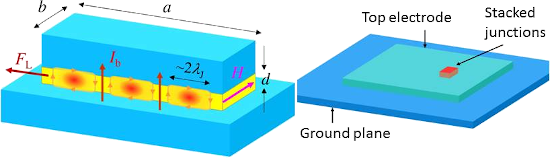
- ][29][30][31][32]. FFOs exhibit sharp emission maxima at the Fiske steps [9][12][13]. Such a conditional emission indicates that several additional and equally important phenomena (apart from the ac-Josephson effect) are involved in FFO operation [10]. The excitation of high-quality factor, Q ≫ 1
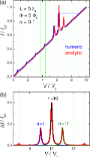
- Large-amplitude case The described above perturbative approach is valid only for small amplitudes. Simulations in Figure 2a are made for an underdamped JJ, α = 0.1. In this case the quality factor of high-order cavity modes is large, and |gn| is not small. Since ϕ appears within the sin η term in
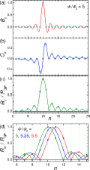
- analysis by introducing the total quality factor, Qtot, of the cavity mode with parallel dissipative and radiative channels, Here, Qdis is associated with all possible dissipative losses, such as QP resistance in the JJ as well as surface resistance in electrodes and dielectric losses while Qrad represents


Intermodal coupling spectroscopy of mechanical modes in microcantilevers
Beilstein J. Nanotechnol. 2023, 14, 123–132, doi:10.3762/bjnano.14.13
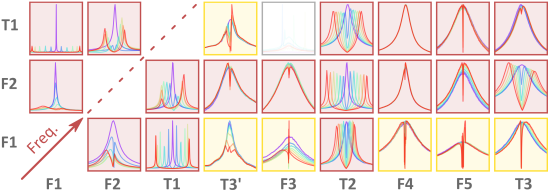
- or not in these purely mechanical interactions and provide a spectroscopy map of intermodal coupling. The coupling presented so far, using a red sideband signal, has two ways for manifesting itself, namely sideband cooling, where the mode of interest has its quality factor reduced alongside its
- effective temperature, and mode splitting, where two hybridized eigenmodes replace the original. The latter is useful in estimating the coupling strength, but the former is more applicable to AFM. It can not only control the quality factor of cantilevers, but it can also reduce the thermal noise of the


Observation of collective excitation of surface plasmon resonances in large Josephson junction arrays
Beilstein J. Nanotechnol. 2022, 13, 1578–1588, doi:10.3762/bjnano.13.132
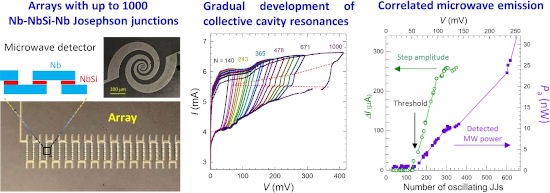
- can be seen from Figure 7a and Figure 7c, there is practically no emission at this most prominent step with V(N = 1000) = 389 mV, which corresponds to fJ ≃ 188 GHz, even when all N = 1000 JJs are active. This is not surprising because a non-emitting cavity mode is expected to have the highest quality
- factor due to the lack of radiative losses [19]. Therefore, this step is large because it is non-emitting. Figure 8c shows the data for a secondary resonance from Figure 7a with a lower voltage and fJ ≃ 182 GHz. In Figure 8d, we plot the step amplitude, ΔI (olive, left axis), and the detected (absorbed




Double-layer symmetric gratings with bound states in the continuum for dual-band high-Q optical sensing
Beilstein J. Nanotechnol. 2022, 13, 1408–1417, doi:10.3762/bjnano.13.116
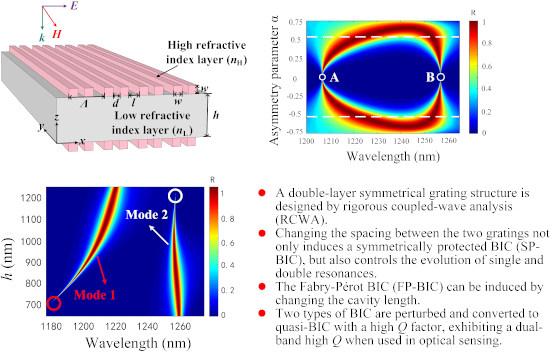
- achieved with the highest sensitivity of 453 nm/RIU and a maximum figure of merit (FOM) of 9808. Such dual-band high-Q resonator is expected to have promising applications in multi-wavelength sensing and nonlinear optics. Keywords: bound states in the continuum; dual band; high quality factor; localized


Studies of probe tip materials by atomic force microscopy: a review
Beilstein J. Nanotechnol. 2022, 13, 1256–1267, doi:10.3762/bjnano.13.104
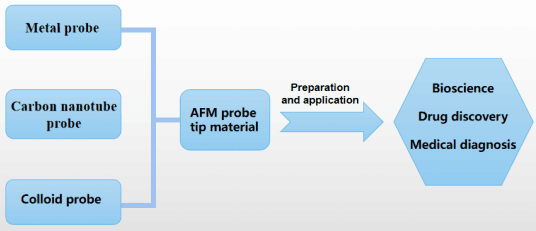
- in Equation 1. In this method, Chighizola et al. verified that adding a large colloid at the end of a topless cantilever beam increased the quality factor and significantly reduced the resonant frequency. This type of probe can better simulate a single-mode spring-mass system. Although some
A cantilever-based, ultrahigh-vacuum, low-temperature scanning probe instrument for multidimensional scanning force microscopy
Beilstein J. Nanotechnol. 2022, 13, 1120–1140, doi:10.3762/bjnano.13.95
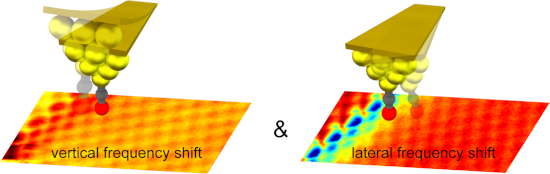
- ). These noise sources all limit the minimally measurable rms z-derivative of the z-component of the force, as given by the expressions: where ki, fi, Qi, and Arms,i are the stiffness, free resonance frequency, quality factor, and rms oscillation amplitude of the i-th cantilever oscillation mode (different
- from the measured first mode flexural resonance frequency f1 using: The expressions for the minimally measurable force derivative (Equation 1 and Equation 2) arising from thermal and deflection sensor noise, respectively, reveal that a high quality factor (for a low thermal noise) and a low modal
- at a reasonably high resonance (several tens or hundreds of kilohertz) is best obtained with microfabricated thin cantilevers. A low cantilever thickness is further beneficial for the support loss quality factor (which is one of the relevant energy loss terms describing different mechanisms





Comparing the performance of single and multifrequency Kelvin probe force microscopy techniques in air and water
Beilstein J. Nanotechnol. 2022, 13, 922–943, doi:10.3762/bjnano.13.82
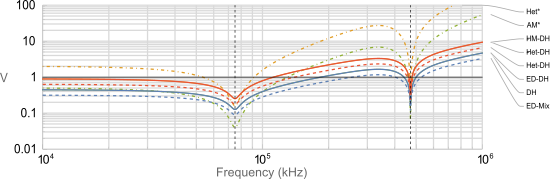
- in the response of the lever proportional to the quality factor of that mode, Qn, where n is the mode number [36][55]. KPFM techniques can be applied off resonance (ω ≠ ωn), where ∝ 1/kn, where kn is the spring constant of the n-th eigenmode. More generally, KPFM techniques are applied at, or close
- constant, T is the temperature, Nd is the detector noise, and ωn, kn, and Qn are, respectively, the resonance frequency, spring constant, and quality factor of the n-th eigenmode (n = 1, 2). The corresponding gain at a given frequency is then defined as We note that more complex expressions for the
Direct measurement of surface photovoltage by AC bias Kelvin probe force microscopy
Beilstein J. Nanotechnol. 2022, 13, 712–720, doi:10.3762/bjnano.13.63
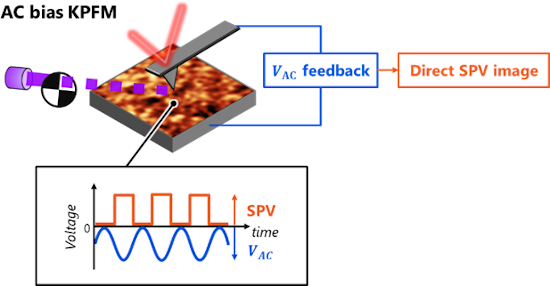
- was arranged in front of a photodetector of the OBD system to suppress the influence of the UV light on the deflection sensor. We used a commercial Ir-coated Si cantilever (NANOSENSORS, SD-T7L100) with a resonant frequency f0 of 913 kHz, a spring constant k of 650 N/m, and a quality factor Q of 7748


Tunable high-quality-factor absorption in a graphene monolayer based on quasi-bound states in the continuum
Beilstein J. Nanotechnol. 2022, 13, 675–681, doi:10.3762/bjnano.13.59
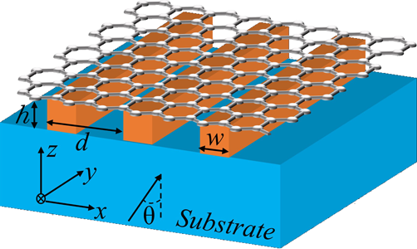
- continuum in the subwavelength dielectric grating. The physical origin of the absorption with high quality factor is examined by investigating the electromagnetic field distributions. Interestingly, we found that the proposed absorber possesses high spatial directivity and performs similar to an antenna
- shift as the background refractive index changes [14]. Narrow-band absorbers have attracted attention in practical applications due to the absorption with high quality factor (Q-factor), which is beneficial to improve the sensing performance. Up to now, many strategies for improving the Q-factor have


Quantitative dynamic force microscopy with inclined tip oscillation
Beilstein J. Nanotechnol. 2022, 13, 610–619, doi:10.3762/bjnano.13.53
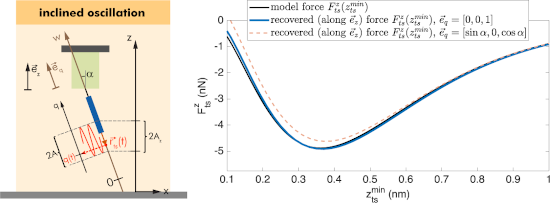
- [18], and modal sensor quality factor Q0. This equation of motion is a one-dimensional differential equation depending on the tip–sample force component following the description in [3][15][16]. The vectorial tip–sample force can generally be expressed by the sum of an even, and an odd, component


![[Graphic 38]](/bjnano/content/inline/2190-4286-13-53-i79.svg?max-width=637&scale=1.18182) and the axis w....
and the axis w....


Topographic signatures and manipulations of Fe atoms, CO molecules and NaCl islands on superconducting Pb(111)
Beilstein J. Nanotechnol. 2022, 13, 1–9, doi:10.3762/bjnano.13.1
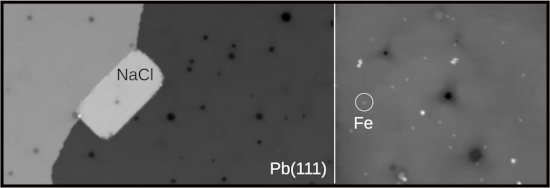
- [47] operated in the frequency-modulation mode (resonance frequency f0 ≈ 25 kHz, spring constant k ≈ 1800 N/m, quality factor Q ≈ 14000, and oscillation amplitude A ≈ 0.5 Å). The tip mounted to the qPlus sensor consists of a 25 μm-thick PtIr wire, shortened and sharpened with a focused ion beam. A


Cantilever signature of tip detachment during contact resonance AFM
Beilstein J. Nanotechnol. 2021, 12, 1286–1296, doi:10.3762/bjnano.12.96
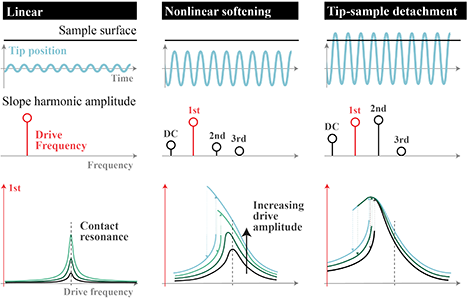
- parameter results allow for the calculation of the sample stiffness ksample and the mass per unit length ρA. Next, combining the latter term with the quality factor Q of the first contact mode, the linear viscous cantilever damping is defined as: Remaining system parameters relating to the tip–sample


Reconstruction of a 2D layer of KBr on Ir(111) and electromechanical alteration by graphene
Beilstein J. Nanotechnol. 2021, 12, 432–439, doi:10.3762/bjnano.12.35
- a constant amplitude and controlled by the frequency shift. Bimodal AFM was used to combine the first flexural resonance (frequency of f1 ≈ 165 kHz, amplitude of A1 = 2–8 nm and a typical quality factor of Q1 = 30,000) or the second flexural resonance (frequency of f2 ≈ 1 MHz, amplitude of A2 = 200
- –800 pm and a typical quality factor of Q2 = 10,000) with the torsional resonance detection (frequency of ft ≈ 1.5 MHz, amplitude of At = 20–80 pm and a typical quality factor of Qt = 100,000) [50][52]. Kelvin probe force microscopy (KPFM) was performed in FM-KPFM mode by applying a DC compensation and





