Search results
Search for "exfoliation" in Full Text gives 114 result(s) in Beilstein Journal of Nanotechnology.
On the use of Raman spectroscopy to characterize mass-produced graphene nanoplatelets
Beilstein J. Nanotechnol. 2023, 14, 509–521, doi:10.3762/bjnano.14.42
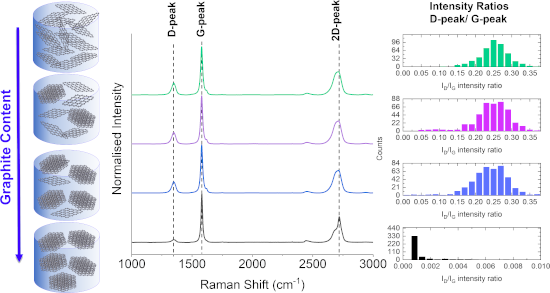
- analysis is carried out on the averaged spectrum from all locations. This is then used to characterize the “quality” of the graphene produced, in particular the level of exfoliation for top-down manufactured materials. However, these have generally been developed using samples prepared with careful
- individual spectra, the limits of the published metrics can be tested, and recommendations can be made for improved Raman analysis approaches. Methods Rather than using commercial GNP products, we produced a dispersion by sonication-assisted liquid-phase exfoliation, using graphite (Sigma-Aldrich, UK
- of Raman spectroscopy to identify the presence of graphite in a GNP sample, of more relevance is the question of identifying unexfoliated sediment. In typical top-down exfoliation processes, the yield of few-layer graphene or graphene nanoplatelets is very small, often less than 1 wt %. Hence, there


Bismuth-based nanostructured photocatalysts for the remediation of antibiotics and organic dyes
Beilstein J. Nanotechnol. 2023, 14, 291–321, doi:10.3762/bjnano.14.26
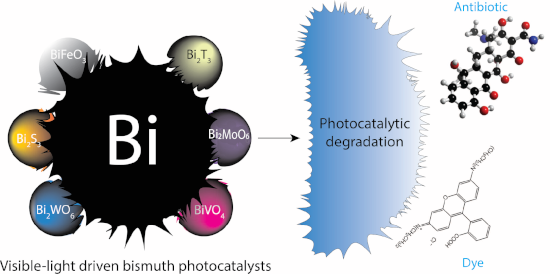
- techniques have been developed to synthesise 3-D Bi-based nanostructures with different morphologies, including solvothermal/hydrothermal and sol–gel processes, mechanical exfoliation, solid-state reactions, chemical vapour deposition, and microwave-assisted techniques [106]. These 3-D photocatalysts have


Liquid phase exfoliation of talc: effect of the medium on flake size and shape
Beilstein J. Nanotechnol. 2023, 14, 68–78, doi:10.3762/bjnano.14.8
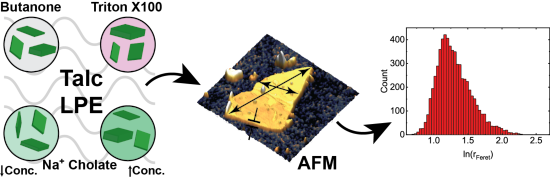
- Horizonte – MG, 31270-901, Brazil Campus Ouro Preto, Instituto Federal de Minas Gerais, R. Pandiá Calógeras, 898, Ouro Preto – MG, 35400-000, Brazil 10.3762/bjnano.14.8 Abstract Industrial applications of nanomaterials require large-scale production methods, such as liquid phase exfoliation (LPE
- ). Regarding this, it is imperative to characterize the obtained materials to tailor parameters such as exfoliation medium, duration, and mechanical energy source to the desired applications. This work presents results of statistical analyses of talc flakes obtained by LPE in four different media. Talc is a
- phyllosilicate that can be exfoliated into nanoflakes with great mechanical properties. Sodium cholate at two different concentrations (below and at the critical micelar concentration), butanone, and Triton-X100 were employed as exfoliation medium for talc. Using recent published statistical analysis methods



Efficient liquid exfoliation of KP15 nanowires aided by Hansen's empirical theory
Beilstein J. Nanotechnol. 2022, 13, 788–795, doi:10.3762/bjnano.13.69
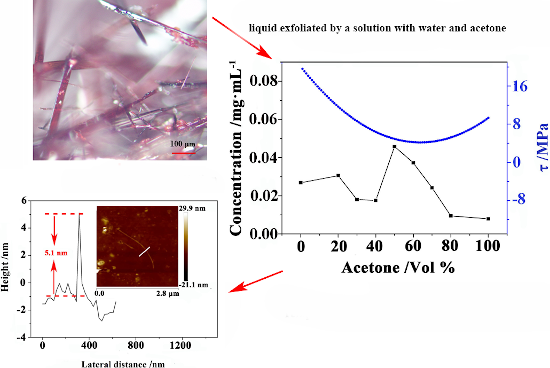
- temperature measurements of KP15 nanodevices. Keywords: Hansen's empirical theory; KP15; liquid exfoliation; nanodevices; nanowires; Raman; semiconductors; Introduction Low-dimensional materials have drawn significant attention in recent years. So far, not only new composite materials with excellent
- is beneficial for the development of high-performance nanodevices. Searching effective synthesis routes for nanoscale KP15 has become an urgent issue. Liquid-phase exfoliation is one of the most straightforward methods to prepare low-dimensional materials at a low cost and with simple processes and
- high flexibility. In this case, the surface of bulk materials is peeled off or corroded by physical or chemical reactions in a liquid medium, and finally low-dimensional materials are obtained. Based on the Hansen's empirical theory, the exfoliation efficiency of low-dimensional materials can be


A nonenzymatic reduced graphene oxide-based nanosensor for parathion
Beilstein J. Nanotechnol. 2022, 13, 730–744, doi:10.3762/bjnano.13.65
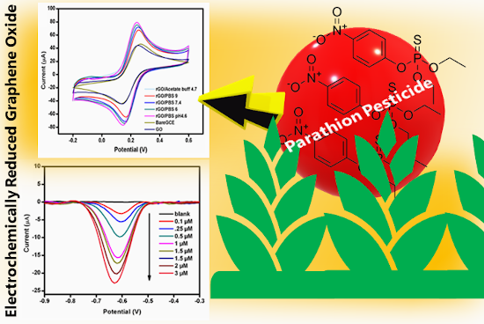
- transparency due to the exfoliation of stacking layers of GO. This suggests an increased surface area due to delamination of graphene layers (thickness of about one to a few layers) by electrochemical reduction. The high-resolution TEM of ERGO shows a d-spacing of 0.413 nm (Figure 3E), indicating a reduced
- indicates that the effective electroactive surface area of ERGO has been improved by ≈71.14% due to exfoliation of graphene sheets. Electrochemical impedance spectroscopy was performed to investigate the electron transfer capability of ERGO (Figure 4B). Supporting Information File 1, Table S3 depicts the


Reliable fabrication of transparent conducting films by cascade centrifugation and Langmuir–Blodgett deposition of electrochemically exfoliated graphene
Beilstein J. Nanotechnol. 2022, 13, 666–674, doi:10.3762/bjnano.13.58
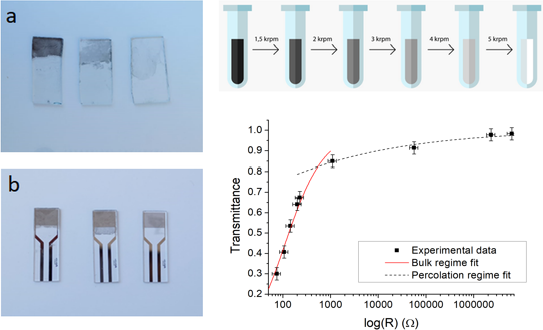
- Physics, University of Belgrade, Mike Petrovića Alasa 12–14, 11351 Belgrade, Serbia 10.3762/bjnano.13.58 Abstract Electrochemical exfoliation is an efficient and scalable method to obtain liquid-phase graphene. Graphene in solution, obtained through electrochemical exfoliation or other methods, is
- no exfoliation experience to make use of widely available graphene materials. Keywords: 2D materials; cascade centrifugation; graphene; Langmuir–Blodgett deposition; transparent conductors; Introduction The interest in graphene and other 2D materials keeps growing, especially since the initial
- ) [3][4][5][6][7], epitaxial growth on different substrates [8][9], and the chemical reduction of graphene oxide (GO) [10][11]. In 2008, production of graphene by liquid-phase exfoliation (LPE) of graphite through sonication of graphite powder in N-methylpyrrolidone (NMP) was first proposed by Coleman


Local stiffness and work function variations of hexagonal boron nitride on Cu(111)
Beilstein J. Nanotechnol. 2021, 12, 559–565, doi:10.3762/bjnano.12.46
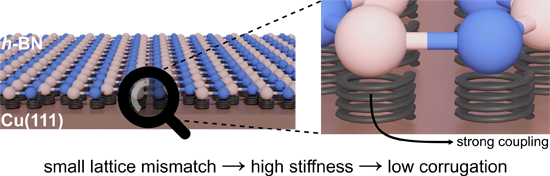
- -BN/Cu(111) substrate. Keywords: decoupling layers; hexagonal boron nitride; local stiffness; Moiré superstructure; work function variation; Introduction Two-dimensional hexagonal boron nitride (h-BN) is among the list of materials that garnered tremendous interest following the exfoliation of mono


ZnO and MXenes as electrode materials for supercapacitor devices
Beilstein J. Nanotechnol. 2021, 12, 49–57, doi:10.3762/bjnano.12.4
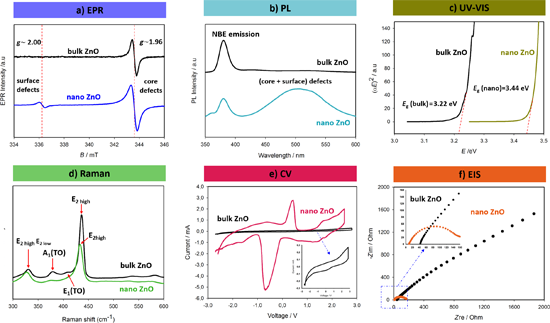
- density of 1.04 × 10⁻² Wh·cm−3 [29]. Lin et al. synthesized titanium carbide Ti3C2 through exfoliation of the ternary carbide Ti3AlC2 and used it as electrode material in a supercapacitor. A maximum capacitance of 117 F·g−1 was reported in this research with high cycle stability and good capacitance
Nanomechanics of few-layer materials: do individual layers slide upon folding?
Beilstein J. Nanotechnol. 2020, 11, 1801–1808, doi:10.3762/bjnano.11.162
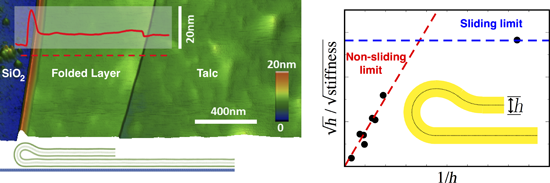
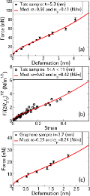
- materials, also called “2D materials”, after exfoliation, eventually creating folded edges across the resulting flakes. We investigate the adhesion and flexural properties of single-layered and multilayered 2D materials upon folding in the present work. This is accomplished by measuring and modeling
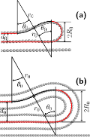
- material where it folds over itself during the exfoliation process. Our method is based on AFM measurements of the geometry and mechanical response of folded edges, and on the fitting of the experimental data by an analytical continuum model parameterized solely by α, κ, and the total thickness d of the
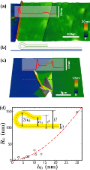
- exfoliated onto a silicon oxide substrate (blue shades). During the exfoliation/deposition processes, such a talc flake folds over itself, creating a well-defined folded edge, shown in orange shades. Figure 1b shows a schematic drawing of the morphology of the fold in Figure 1a. This is the morphology of the

![[Graphic 5]](/bjnano/content/inline/2190-4286-11-162-i8.svg?max-width=637&scale=1.18182) =
= ![[Graphic 6]](/bjnano/content/inline/2190-4286-11-162-i9.svg?max-width=637&scale=1.18182) as a function of 1/h for the nine measured talc samples. h is a directly measured ...
as a function of 1/h for the nine measured talc samples. h is a directly measured ...
A few-layer graphene/chlorin e6 hybrid nanomaterial and its application in photodynamic therapy against Candida albicans
Beilstein J. Nanotechnol. 2020, 11, 1054–1061, doi:10.3762/bjnano.11.90
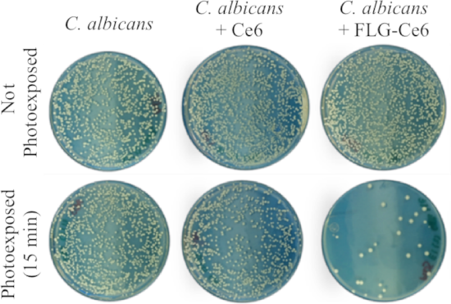
- Discussion The liquid phase exfoliation of graphite was first carried out in toxic, non-biocompatible solvents due to the match in the surface energy of graphene and the solvents [33]. However, the interest in using graphene for biological applications has led to the development of new synthetic techniques
- , such as the exfoliation of graphene assisted by molecules that display amphiphilic properties [34][35]. These molecules are intercalated between the graphene sheets, conferring stability and solubility in media in which graphene by itself is not soluble. In 2016, Hernández et al. [36] reported the
- synthesis of FLG by the exfoliation of graphite in water and phosphate buffer saline (PBS) using Ce6 as the stabilizing molecule. The π–π stacking interactions between FLG and Ce6 allows the stabilization of FLG in biocompatible media. Following this methodology, a FLG-Ce6 hybrid nanomaterial was prepared


Microwave-induced electric discharges on metal particles for the synthesis of inorganic nanomaterials under solvent-free conditions
Beilstein J. Nanotechnol. 2020, 11, 1019–1025, doi:10.3762/bjnano.11.86
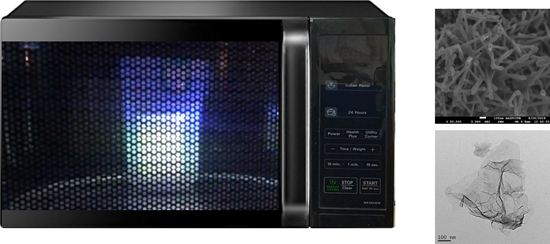
- . However, the choice of graphite or g-C3N4 has shown little to no difference in the synthesis of nanoparticles. We have also studied exfoliation of graphite and graphite oxide (GO) under microwave irradiation in the presence of Zn metal. We have observed exfoliation of graphite into few-layered graphene
- . We have also seen a partial rolling of graphene sheets into nanoscrolls (Figure 5a,b). The formation of ultrasmall nanoparticles of ZnO along with graphene was detected (see Figure S8 in Supporting Information File 1). In the case of GO exfoliation, we have observed the formation of nanosheets of
- Cu. (a, b) TEM images of few-layered graphene partially rolled into nanoscrolls synthesized by irradiating graphite with microwaves in the presence of Zn metal for 30 s. (c) TEM image of graphite oxide after exfoliation trough microwave irradiation in the presence of Zn metal for 30 s and (d) the


Measurement of electrostatic tip–sample interactions by time-domain Kelvin probe force microscopy
Beilstein J. Nanotechnol. 2020, 11, 911–921, doi:10.3762/bjnano.11.76
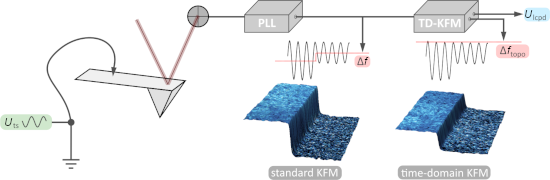
- exfoliation from bulk graphite [32][33] and deposited on a piece of Si/SiO2. Measurements were carried out using an Asylum Research Cypher AFM connected to a Zurich Instruments HF2 lock-in amplifier. Figure 3 shows the results of the open-loop controller. During the FM-AFM measurement the tip voltage was


Light–matter interactions in two-dimensional layered WSe2 for gauging evolution of phonon dynamics
Beilstein J. Nanotechnol. 2020, 11, 782–797, doi:10.3762/bjnano.11.63
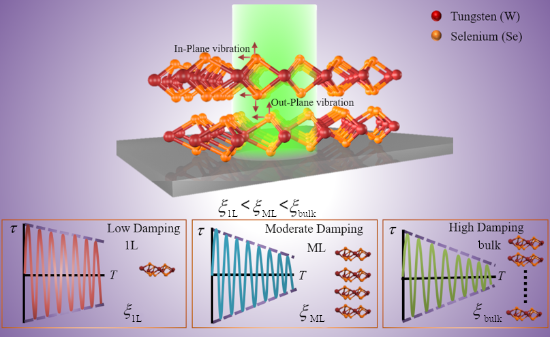
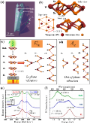
- , ML and bulk samples, were mechanically exfoliated on top of SiO2/Si substrates (SiO2 thickness = 270 nm) using the scotch tape method [1][30][31]. The mechanical exfoliation process used in this study is similar to the one reported in our earlier work [30]. Prior to the exfoliation procedure, the
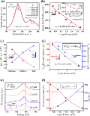
- sapphire substrate is used compared to SiO2/Si substrates [24]. As the SiO2/Si susbstrate and the preparation method (mechanical exfoliation) remained the same for 1L and bulk WSe2 used in our study, this may be the reason why the intensity of the Raman mode remained unchanged even in bulk WSe2. Moreover
Hexagonal boron nitride: a review of the emerging material platform for single-photon sources and the spin–photon interface
Beilstein J. Nanotechnol. 2020, 11, 740–769, doi:10.3762/bjnano.11.61




Exfoliation in a low boiling point solvent and electrochemical applications of MoO3
Beilstein J. Nanotechnol. 2020, 11, 662–670, doi:10.3762/bjnano.11.52
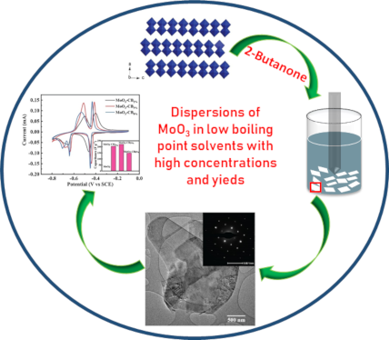
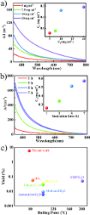
- in areas such as energy storage devices, electronic devices and catalysis. To efficiently utilize the properties of MoO3 arising from its two-dimensional nature exfoliation is necessary. In this work, the exfoliation of MoO3 is carried out in 2-butanone for the first time. The achieved concentration
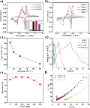
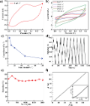
- of the dispersion is about 0.57 mg·mL−1 with a yield of 5.7%, which are the highest values reported to date. These high values of concentration and yield can be attributed to a favorable matching of energies involved in exfoliation and stabilization of MoO3 nanosheets in 2-butanone. Interestingly
- mV·s−1. Keywords: 2-butanone; liquid-phase exfoliation; low-boiling point solvent; molybdenum trioxide (MoO3); supercapacitors; Introduction The advent of graphene has opened a new area of research in the field of two-dimensional materials [1]. The extraordinary properties of graphene have led

Electrochemically derived functionalized graphene for bulk production of hydrogen peroxide
Beilstein J. Nanotechnol. 2020, 11, 432–442, doi:10.3762/bjnano.11.34
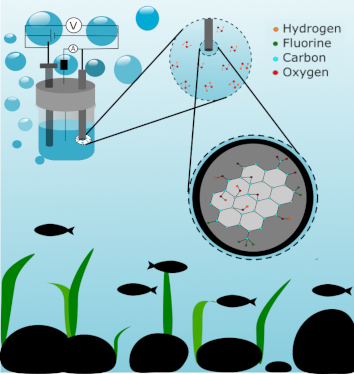
- the role of C=O groups in graphene towards sustainable peroxide formation. We demonstrate a versatile single-step electrochemical exfoliation of graphite to graphene with a controllable degree of oxygen functionalities and thickness, leading to the formation of large quantities of functionalized
- of our previous works, different halogenated graphene materials were developed via a single-step electrochemical exfoliation (EE) method [42]. It was found that such a method can produce graphene with varying degrees of oxygen functionalities [43]. Here we explore the possibility of functional groups
- to control graphene toward the electrochemical production of H2O2 in alkaline medium, and the amount of peroxide generated is quantified using a spectroscopic technique. A large amount of H2O2 is found to be formed via such simple modification of the exfoliation parameters, and the details are


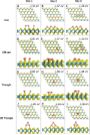
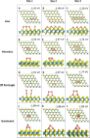
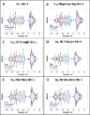
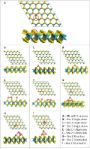
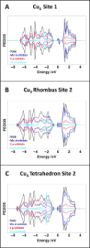
DFT calculations of the structure and stability of copper clusters on MoS2
Beilstein J. Nanotechnol. 2020, 11, 391–406, doi:10.3762/bjnano.11.30
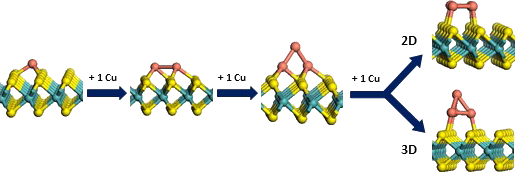
- character of Cu nanoclusters is preserved. Keywords: copper (Cu); density functional theory (DFT); 2D materials; molybdenum disulfide (MoS2); thin film nucleation; Introduction Since the successful exfoliation of monolayers of graphene by Novoselov et al., 2D materials have gained a large interest in a
- exfoliation. However, the scalability of CVD and ALD processes makes 2D materials grown via these methods more realistic for a wider range of applications [4]. Transition metal dichalcogenides (TMDs) are of particular interest as they exhibit a large variety of properties. TMDs such as MoS2 are intrinsic
Simple synthesis of nanosheets of rGO and nitrogenated rGO
Beilstein J. Nanotechnol. 2020, 11, 68–75, doi:10.3762/bjnano.11.7
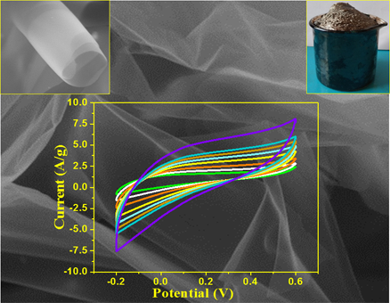
- the carbon sheet, which lead to a disruption of the conjugated network and the flow of charge carriers is reduced by several orders of magnitude [10]. Up to now, several methods including chemical vapor deposition [11][12][13], arc discharge [14], aerosol pyrolysis [15], mechanical exfoliation [1


Improvement of the thermoelectric properties of a MoO3 monolayer through oxygen vacancies
Beilstein J. Nanotechnol. 2019, 10, 2031–2038, doi:10.3762/bjnano.10.199
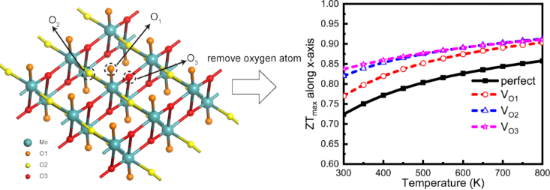
- materials show a better thermoelectric performance than bulk materials [14]. Few-layer MoO3 nanosheets have already been experimentally synthesized by exfoliation similar to graphene [12][13][15][16]. Theoretical research has proved that few-layer MoO3 possesses a markedly high carrier mobility above 3000


Optimization and performance of nitrogen-doped carbon dots as a color conversion layer for white-LED applications
Beilstein J. Nanotechnol. 2019, 10, 2004–2013, doi:10.3762/bjnano.10.197
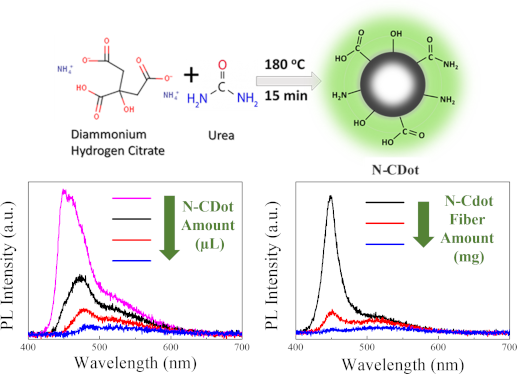
- exfoliation of graphite [47]. The obtained CDots showed a broad band emission due to their heterogeneity in particle size and surface-functional groups. The authors explored the potential of CDots as UV-to-visible color converters using a 365 nm UV chip and could generate white light with CIE color


Remarkable electronic and optical anisotropy of layered 1T’-WTe2 2D materials
Beilstein J. Nanotechnol. 2019, 10, 1745–1753, doi:10.3762/bjnano.10.170
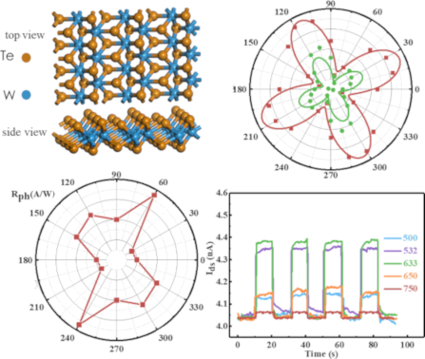
- and the possibility to open up new ways for applications of 2D materials for light polarization detection. Keywords: 1T’-WTe2; 2D material; anisotropic; light polarization; optoelectrical; Introduction The first exfoliation of graphene [1] attracted extensive interest in 2D materials such as black
- novel device concepts by utilizing its angle-resolved and wavelength-dependent properties. Methods Exfoliation and characterization of 1T’-WTe2 flakes The 1T’-WTe2 single crystals were purchased from XianFeng Nano Corporation. A blue film was used to exfoliate 1T’-WTe2 onto the N++-doped Si substrate
- 1T’-WTe2 flake. Identification of the lattice anisotropy of an exfoliated 1T’-WTe2 flake. a) AFM image of the 1T’-WTe2 flake transferred onto a Si/SiO2 substrate by mechanical exfoliation. The heights of zone 1 and zone 2 are 16.36 nm and 5.25 nm, respectively. b) ADRDM results of the same WTe2 flake


Rapid thermal annealing for high-quality ITO thin films deposited by radio-frequency magnetron sputtering
Beilstein J. Nanotechnol. 2019, 10, 1511–1522, doi:10.3762/bjnano.10.149
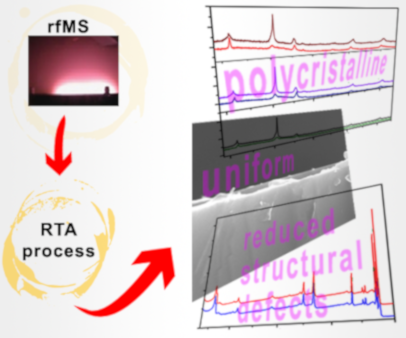
- min. Then, they were cooled down to room temperature at a rate of 20 °C/s. Time control of the RTA process allowed us to avoid exfoliation of the film from the substrate. The thickness of the films was also experimentally verified after deposition using interference microscopy in order to verify the


Flexible freestanding MoS2-based composite paper for energy conversion and storage
Beilstein J. Nanotechnol. 2019, 10, 1488–1496, doi:10.3762/bjnano.10.147
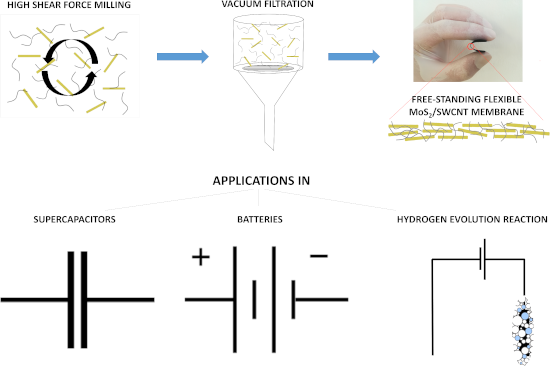
- %. This degree of oxidation is lower than in the case of chemically exfoliated MoS2, which is possibly due to a slightly lower degree of exfoliation [39]. Additionally, no oxidation was observed for sulfur as only states originating from sulfides were identified in the S 2p spectrum (Figure 3b) [40]. The
- approximately −0.195 V vs RHE and is capable of reaching current densities as high as 100 mA·cm−2. Additionally, we treated the material with n-butyllithium to further enhance the HER activity. The resulting material exhibited a lower onset potential, however, the exfoliation of MoS2 sheets resulted in a loss


Electronic properties of several two dimensional halides from ab initio calculations
Beilstein J. Nanotechnol. 2019, 10, 823–832, doi:10.3762/bjnano.10.82
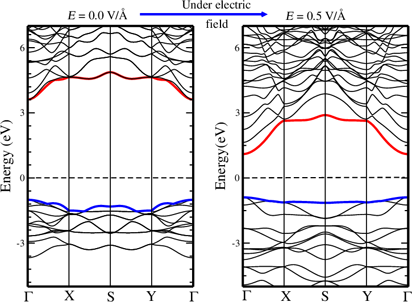
- theory; electronic properties; halide monolayers; Introduction The discovery of graphene [1] by exfoliation [2] opened a new era in several domains of science. Graphene has attracted great attention due to its unique properties [3] and because it offers many advantages in comparison with more common
- among experimentalists. Since bulk crystals are known to exist for some of them, mechanical exfoliation can be attempted to isolate one or few layers, and then to explore their electronic and optical properties. If successful, devices such as transistors, based on these monolayers could be fabricated


Tungsten disulfide-based nanocomposites for photothermal therapy
Beilstein J. Nanotechnol. 2019, 10, 811–822, doi:10.3762/bjnano.10.81
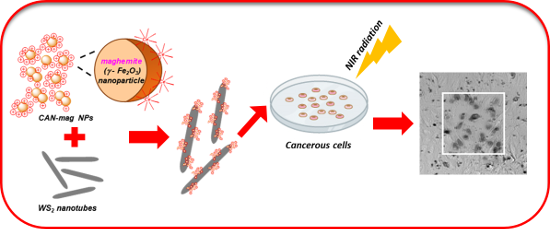
- steps that might cause massive breakage or exfoliation of the nanotubes. For this reason, we aimed for preparation conditions that would allow composite formation without damaging the nanotubes. Electron microscopy images (Figure 2) show that WS2 nanotubes maintained their general shape after