


Search results
Search for "ammonia" in Full Text gives 153 result(s) in Beilstein Journal of Nanotechnology.
Selective gas detection using Mn3O4/WO3 composites as a sensing layer
Beilstein J. Nanotechnol. 2019, 10, 1423–1433, doi:10.3762/bjnano.10.140
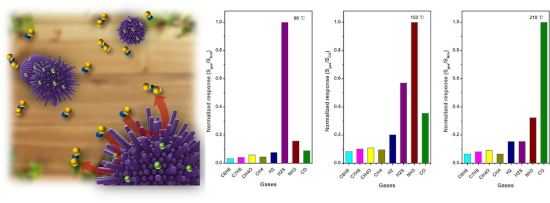
- between the two metal oxides. The sensor based on the Mn3O4/WO3 composite with 3 atom % Mn showed a high selective response to hydrogen sulfide (H2S), ammonia (NH3) and carbon monoxide (CO) at working temperatures of 90 °C, 150 °C and 210 °C, respectively. The demonstrated superior selectivity opens the
- surface oxygen species and conduction band, finally resulting in a higher response. However, an excess amount of Mn3O4 has a negative influence on the response of the gas sensor because of the decrease of the effective reaction areas between WO3 and ammonia molecules [36]. Ultimately, we found that the 3
- atom % Mn3O4/WO3 composites have the best ammonia sensing performance. Conclusion In summary, WO3 and Mn3O4/WO3 composites with different concentrations of Mn were prepared and characterized. Their selective gas sensing properties were investigated, and the measurement results show that the gas sensors


Gas sensing properties of individual SnO2 nanowires and SnO2 sol–gel nanocomposites
Beilstein J. Nanotechnol. 2019, 10, 1380–1390, doi:10.3762/bjnano.10.136
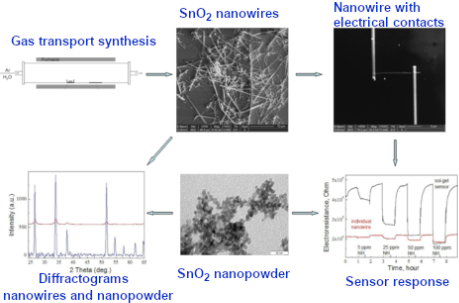
- sensor response due to the unlikelihood of sample recrystallization. The results from the ammonia detection experiments showed that the ratio of the sensor response to the surface area exhibits similar values for both the individual nanowire and nanopowders-based sensor materials. Keywords: gas sensors
- Virgili (Tarragona, Spain). The preliminary results concerning this publication were discussed at Eurosensors conferences [32][33]. The present work presents a comparative study of the material properties of SnO2 devices prepared by different methods and by using ammonia as a reference gas for the
- assessment of their sensing characteristics. The use of ammonia in recent works is due to the strong interest in this gas as a marker for stomach diseases and to our collaboration with a company producing suitable measurement instruments in Russia (St. Petersburg). Experimental Material synthesis and




A silver-nanoparticle/cellulose-nanofiber composite as a highly effective substrate for surface-enhanced Raman spectroscopy
Beilstein J. Nanotechnol. 2019, 10, 1270–1279, doi:10.3762/bjnano.10.126
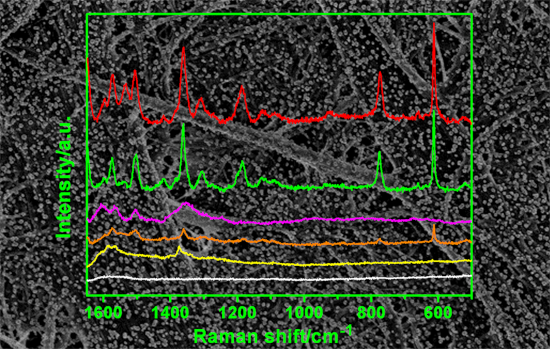
- Silver nitrate (AgNO3), β-ᴅ-glucose and concentrated ammonia were bought from Sinopharm Chemical Reagent Co., Ltd. (Shanghai, China); sodium hydrate (NaOH) was purchased from Shanghai Titanchem Co., Ltd. (Shanghai, China); Rhodamine 6G (R6G, 98.5%) was obtained from J&K Chemical Ltd. (Shanghai, China


Green fabrication of lanthanide-doped hydroxide-based phosphors: Y(OH)3:Eu3+ nanoparticles for white light generation
Beilstein J. Nanotechnol. 2019, 10, 1200–1210, doi:10.3762/bjnano.10.119
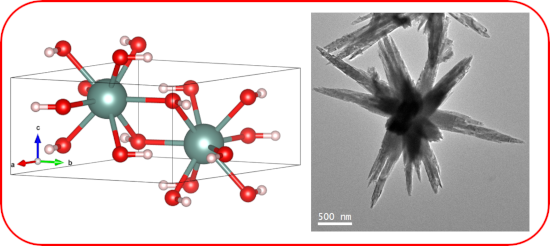
- degrades into ammonia that acts as hydroxide source. In this study, HMTA was replaced with LiOH, and Y(OH)3:Eu3+ crystals were obtained through the interaction of OH− ions released from LiOH with Y3+ ions from the yttrium source in water at room temperature. Even at 5 min, Y(OH)3:7.5% Eu3+ crystals were
- process where there is more time to act on these particular crystals. The crystal growth mechanism is summarized and illustrated in Scheme 1. Compared to HMTA, which decomposes into ammonia and releases OH− ions slowly, LiOH is able to give OH− ions through complete dissociation directly to the reaction



Photoactive nanoarchitectures based on clays incorporating TiO2 and ZnO nanoparticles
Beilstein J. Nanotechnol. 2019, 10, 1140–1156, doi:10.3762/bjnano.10.114
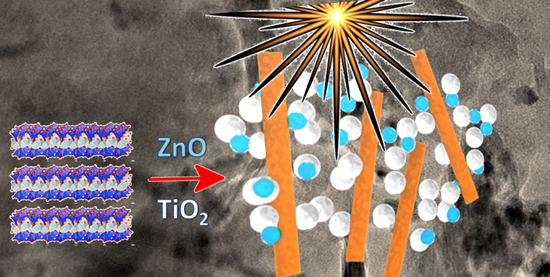
- for the removal of ammonia from wastewater (Table 1) [161]. Also, TiO2–ZnO@clay nanoarchitectures derived from a smectite (Cloisite®30B) have been also prepared by sol–gel reactions involving the delamination of the silicate. The resulting materials show good photocatalytic activity for the



CuInSe2 quantum dots grown by molecular beam epitaxy on amorphous SiO2 surfaces
Beilstein J. Nanotechnol. 2019, 10, 1103–1111, doi:10.3762/bjnano.10.110
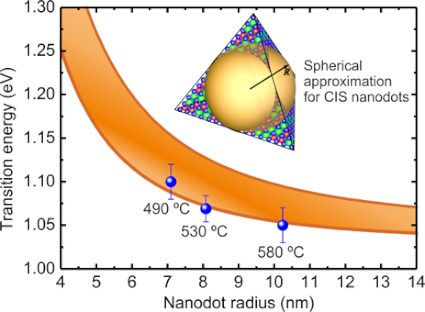
- passivation layer was deposited on top of the samples. CdS was deposited by conventional chemical bath deposition (CBD) with a solution of 1.1 M ammonia, 0.100 M thiourea, and 0.003 M cadmium acetate [36]. The solution is mixed in a beaker at room temperature, and the samples are immersed into the beaker


Scavenging of reactive oxygen species by phenolic compound-modified maghemite nanoparticles
Beilstein J. Nanotechnol. 2019, 10, 1073–1088, doi:10.3762/bjnano.10.108
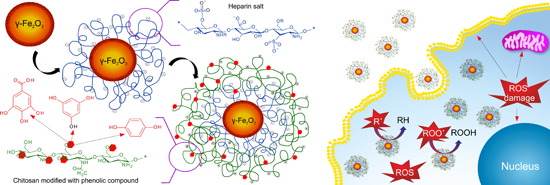
- functional groups. In this study, magnetite (Fe3O4) nanoparticles were synthetized by coprecipitation of iron(II) chloride and iron(III) chloride with ammonia and subsequently oxidized with hydrogen peroxide under mild acidic conditions. The resulting maghemite (γ-Fe2O3) has the benefit of higher chemical





Synthesis of MnO2–CuO–Fe2O3/CNTs catalysts: low-temperature SCR activity and formation mechanism
Beilstein J. Nanotechnol. 2019, 10, 848–855, doi:10.3762/bjnano.10.85
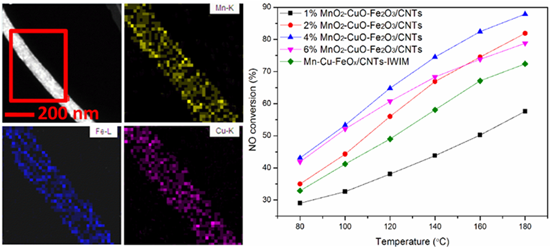
- reducibility is lower compared with that of 4% MnO2–CuO–Fe2O3/CNTs. Ammonia temperature-programmed desorption analysis The chemisorption and activation of NH3 on the surface acid sites of a catalyst are generally viewed as the primary processes in the SCR of NO. Therefore, ammonia temperature-programmed




Hydrophilicity and carbon chain length effects on the gas sensing properties of chemoresistive, self-assembled monolayer carbon nanotube sensors
Beilstein J. Nanotechnol. 2019, 10, 565–577, doi:10.3762/bjnano.10.58
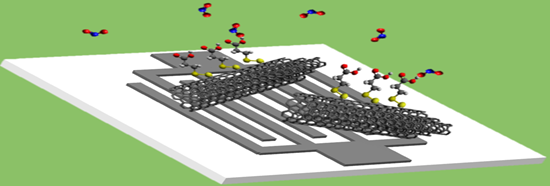
- candidates for integration into different types of transducers such as chemoresistors, resonant gravimetric or field effect devices, only to cite a few applications. Bare carbon nanotubes have been employed to detect gases such as nitrogen dioxide [7], ammonia [8], oxygen [9] or ethanol [10]. However


Ceria/polymer nanocontainers for high-performance encapsulation of fluorophores
Beilstein J. Nanotechnol. 2019, 10, 522–530, doi:10.3762/bjnano.10.53
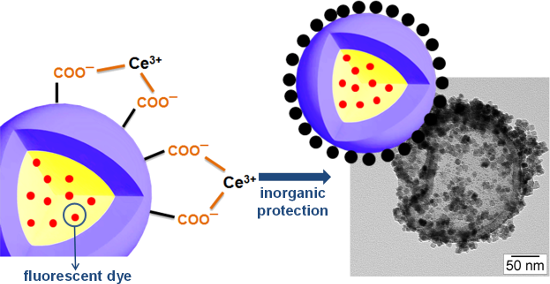
- , ≥99.0%) acrylic acid (AA, Sigma-Aldrich, 99%), hexadecane (Sigma-Aldrich, 99.0%), tetrahydrofuran (THF, Sigma-Aldrich, ≥99.9%), cerium(III) nitrate hexahydrate (Sigma-Aldrich, 99.99%), sodium hydroxide (Sigma-Aldrich, ≥97.0%), ammonia solution (28% aqueous solution, VWR), sodium dodecyl sulfate (SDS
- , the pH value of the dispersion was adjusted to pH 10 with a 28% ammonia solution. Then 5 mmol of metal salt per gram of dispersion nanocapsules was added and the dispersion was stirred for 2 h to allow for the binding of cerium ions to the surface of the capsules. Cerium(III) nitrate hexahydrate was


Site-specific growth of oriented ZnO nanocrystal arrays
Beilstein J. Nanotechnol. 2019, 10, 274–280, doi:10.3762/bjnano.10.26
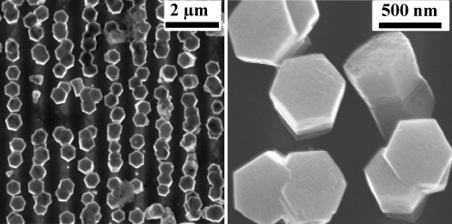
- and trisodium citrate as additional reagents to grow the twinned ZnO NCs. The growth method they adopted involves multiple steps and is quite time consuming as zinc acetate dihydrate and ammonia solution containing citrates is initially kept at 90 °C for one hour in a Teflon-lined autoclave and


Wet chemistry route for the decoration of carbon nanotubes with iron oxide nanoparticles for gas sensing
Beilstein J. Nanotechnol. 2019, 10, 105–118, doi:10.3762/bjnano.10.10
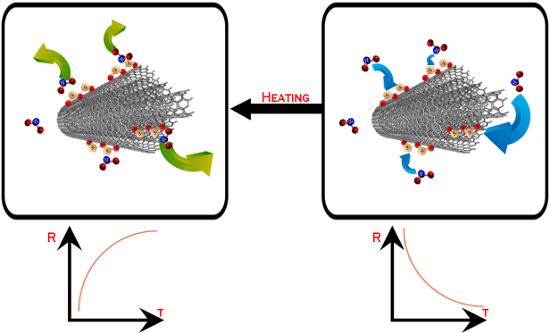
- CNTs and iron oxide have been also used for sensing ammonia and NOx [22][23]. Among those gases NO2 is considered one of the most dangerous air pollutants occurring both indoors, due to using of gas stoves, and outdoors from fuel powered motor vehicles and power plants especially in long-term exposure




Colloidal chemistry with patchy silica nanoparticles
Beilstein J. Nanotechnol. 2018, 9, 2989–2998, doi:10.3762/bjnano.9.278
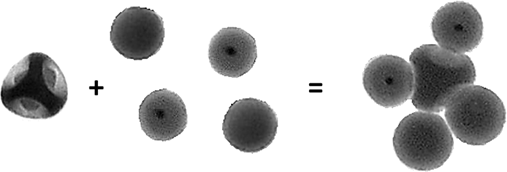
- nanoparticles; valence; Introduction The molecular world is essentially based on the covalent bonding of atoms displaying valences of 1, 2 (sp), 3 (sp2), 4 (sp3) and, to a lesser extent, 5 (sp3d) and 6 (sp3d2). The molecules of water, ammonia and methane, in which the valence orbitals of the central atom adopt
- %), methacryloxypropylyltriethoxysilane (MPS, Aldrich, 98%), (3-aminopropyl)triethoxysilane (APTES, Aldrich, 99%), triethylamine (TEA, Sigma-Aldrich, 99%), sodium persulfate (Sigma-Aldrich, 99%), Symperonic® NP30 (Aldrich), sodium dodecylsulfate (SDS, Sigma-Aldrich, >90%), tetraethoxysilane (TEOS, Sigma-Aldrich, 99%), ammonia (30% in
- under continuous magnetic stirring with a solution of deionized water and ammonia, at a volume ratio of 93.8/5/1.2 for absolute ethanol, water and ammonia, respectively. 18.3 μL of TEOS were added and the reaction mixture was stirred for 12 h at 20 ± 2 °C. Upon completion of the growth of silica shell


Ternary nanocomposites of reduced graphene oxide, polyaniline and hexaniobate: hierarchical architecture and high polaron formation
Beilstein J. Nanotechnol. 2018, 9, 2936–2946, doi:10.3762/bjnano.9.272
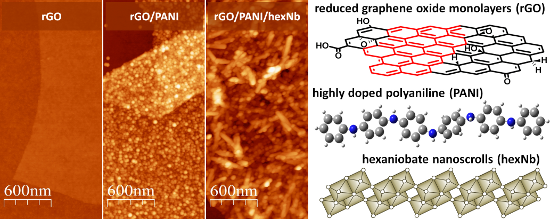
- sonication (less than 10 μm) [34][35][42][43][44][67]. Reduced graphene oxide was prepared by chemical reduction of GO in 0.25 mg·mL−1 dispersions with hydrazine and ammonia solution at 25 °C for 7 days. The resulting rGO dispersion presents suitable stability for the preparation of the nanocomposites. This


Layered calcium phenylphosphonate: a hybrid material for a new generation of nanofillers
Beilstein J. Nanotechnol. 2018, 9, 2906–2915, doi:10.3762/bjnano.9.269
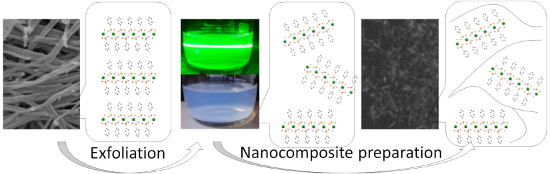
- (PhP), calcium chloride (CaCl2), ammonia solution, propan-2-ol (all Sigma-Aldrich); CHS-EPOXY 520 (Spolchemie, a. s., Czech Republic) – a low molecular weight epoxy resin based on bisphenol A; Jeffamine D230 and Jeffamine D2000 (Huntsman International LLC) – polyether amines were used. BYK 9076 – an
- concentrated aqueous ammonia solution. Then, 50 mL of CaCl2 solution (5.5 g, 5 × 10⁻² mol) was added: a) at once (sample denoted as CaPhP_a); b) "drop by drop" (CaPhP_d); and c) in several portions (CaPhP_s). A white precipitate was formed immediately in all cases. Then, the reaction mixture was diluted by 50
- mL of distilled water and stirred at medium speed (≈250 rpm) for 30 minutes. The precipitate formed was collected by filtration, washed with water until neutral pH to remove the remaining ammonia, and dried at room temperature. To obtain a fine powder it was possible to grind dried material in a


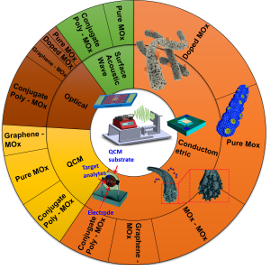
Graphene-enhanced metal oxide gas sensors at room temperature: a review
Beilstein J. Nanotechnol. 2018, 9, 2832–2844, doi:10.3762/bjnano.9.264
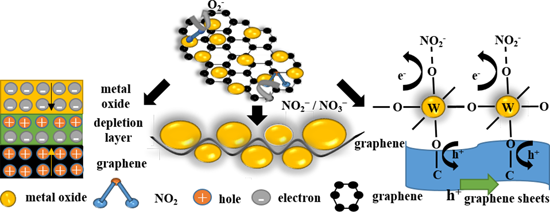
- affected the sensor at low humidity levels. However, the response of the composite sensor increased with increasing humidity at high humidity levels. At low humidity levels, ammonia and water molecules competed for adsorption, which reduces the sensing performance of NH3. As humidity levels increased
- , ammonia adsorbed on the surface of sensor by dissolving into water, leading to the higher response. This is quite different from the usual opinion that sensitivity will decrease at high humidity levels. Zhang et al. [47] synthesized CuO nanoflowers via hydrothermal method, then CuO and rGO were deposited



Improved catalytic combustion of methane using CuO nanobelts with predominantly (001) surfaces
Beilstein J. Nanotechnol. 2018, 9, 2526–2532, doi:10.3762/bjnano.9.235
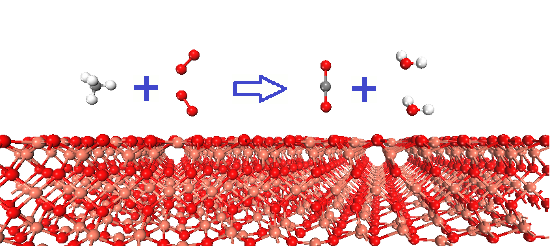
- are needed to improve the thermal stability of such nanostructures as they tend to aggregate after high temperature treatment. Experimental Synthesis of CuO nanowires and nanobelts For a typical sample, 1 g of Cu(NO3)2 was dissolved in 100 mL distilled water and 30 mL ammonia solution (NH3·H2O, 0.15


Droplet-based synthesis of homogeneous magnetic iron oxide nanoparticles
Beilstein J. Nanotechnol. 2018, 9, 2413–2420, doi:10.3762/bjnano.9.226
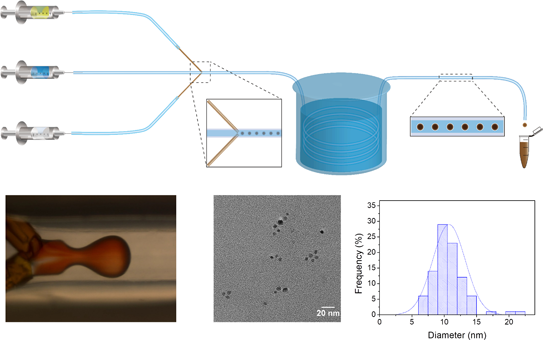
- solution was an aqueous solution of 4 M ammonia (Alfa Aesar, USA). The solutions were separately injected through the two fused silica capillaries of the droplet generator using syringe pumps with identical flowrates. Mineral oil (M5904, Sigma-Aldrich USA) with 0.075 vol % Triton X-100 (Samchun Chemical
- reaction and in our droplet device. In droplet synthesis and in batch synthesis, mixing of the iron chloride precursor solution with the ammonia leads to the immediate formation of a dark brown precipitate. For both methods, the same reagent concentrations and reaction times were chosen. Following both


Electrospun one-dimensional nanostructures: a new horizon for gas sensing materials
Beilstein J. Nanotechnol. 2018, 9, 2128–2170, doi:10.3762/bjnano.9.202
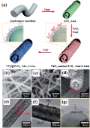
- . Furthermore, these sensors exhibit an excellent selectivity to acetone compared to other target gases, including ethanol, acetic acid, dimethylformamide (DMF) and ammonia [11][193]. Cho et al. [190] have synthesized Pt, Cu and La NPs (3–5 nm) to surface functionalize ZnO NFs using protein (apoferrtin (AF
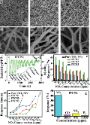
- similar sensitivity to acetone. ZnO–SnO2 hollow NF based sensors show excellent selectivity to ethanol as compared with acetone, ammonia, glacial acetic acid, DMF, and formaldehyde [222]. A ZnO shell grown on SnO2 NFs by a hydrothermal method exhibits a response of 392.29 toward 100 ppm of ethanol at 200






Metal-free catalysis based on nitrogen-doped carbon nanomaterials: a photoelectron spectroscopy point of view
Beilstein J. Nanotechnol. 2018, 9, 2015–2031, doi:10.3762/bjnano.9.191
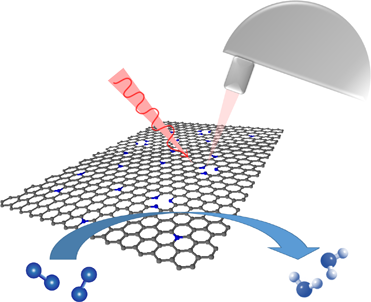
- studies on the oxidation of oxalic acid on charcoal containing nitrogen and iron [7]. In 1966, activated carbon, heated at high temperatures in the presence of ammonia, was used in the cathode of a fuel cell showing an enhanced activity for the electrochemical reduction of oxygen [8]. However, a metal
- -synthetic treatments. The most common technique for doping during the synthesis is chemical vapor deposition (CVD), similar to the synthesis of the pristine material [36][69][70], albeit using nitrogen-containing precursors such as benzylamine [71], acetonitrile [72][73], phthalocyanines [74][75] or ammonia
- responsible for the high catalytic performance in the ORR, although they reported a lower efficiency compared to commercial Pt catalysts. Remarkably, Luo and co-workers succeeded to synthesize graphene dope with purely pyridinic N by CVD of hydrogen, ethylene and ammonia on Cu foils [104], with nitrogen




Controllable one-pot synthesis of uniform colloidal TiO2 particles in a mixed solvent solution for photocatalysis
Beilstein J. Nanotechnol. 2018, 9, 1715–1727, doi:10.3762/bjnano.9.163
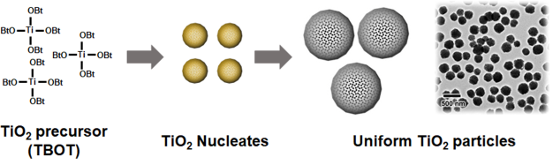
- particles were prepared via a sol–gel reaction of titanium alkoxide in a mixed solvent solution in the presence of a surfactant and an aqueous ammonia solution. The desired amount of hydroxypropylcellulose (HPC) was dissolved in a solution of ethanol and acetonitrile with different volume ratios under
- vigorous stirring. After completely dissolving the HPC, aqueous ammonia (0.8 mL) was added to the solution. After stirring for 10 min, a solution of tetrabutyl titanate (TBOT) with the desired amount in a mixture of ethanol and acetonitrile was quickly injected into the above solution. The total volume of




Light extraction efficiency enhancement of flip-chip blue light-emitting diodes by anodic aluminum oxide
Beilstein J. Nanotechnol. 2018, 9, 1602–1612, doi:10.3762/bjnano.9.152
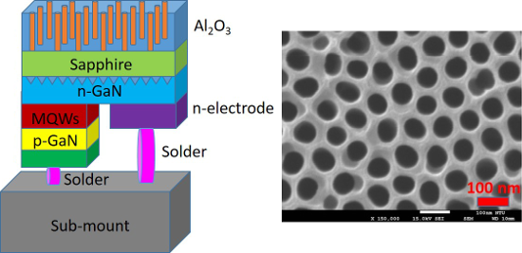
- deposition apparatus. An inductively coupled plasma etcher was used to prepare periodic arrays with a depth of 1.5 μm on the PSS. Trimethylgallium, trimethylindium, ammonia, bicyclopentadienyl magnesium, and silane served as the precursors of Ga, In, N, Mg, and Si, respectively. The epitaxial structure of


Surface characterization of nanoparticles using near-field light scattering
Beilstein J. Nanotechnol. 2018, 9, 1228–1238, doi:10.3762/bjnano.9.114
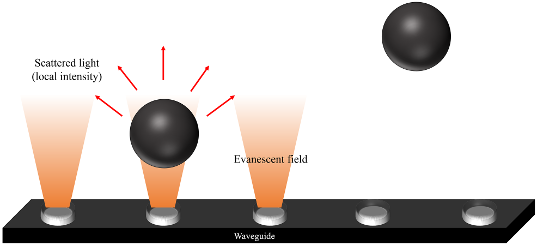
- ]. Synthesis of interpolymer complexed (IPC)-SPIOs One mmol FeCl2 was added dropwise to 2 mmol FeCl3 in 50 mL DI water under magnetic stirring [26][52][53][54]. The solution was heated to 80 °C, and 30 mL of 1 M NH4OH solution was added dropwise. After adding ammonia, the mixture was left for 5 h to approach




Surface-plasmon-enhanced ultraviolet emission of Au-decorated ZnO structures for gas sensing and photocatalytic devices
Beilstein J. Nanotechnol. 2018, 9, 771–779, doi:10.3762/bjnano.9.70
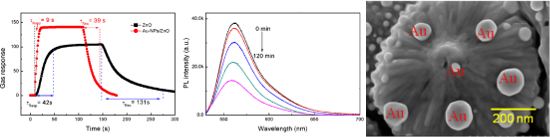
- (MEA) were added into a flask containing water (100 mL). The pH was adjusted with ammonia solution. The substrate had to be placed upright in solution. Synthesis was performed at 90 °C for 3 h, with magnetic stirring, and the final pH was typically 10.8–11. After cooling to room temperature, the sub




A review of carbon-based and non-carbon-based catalyst supports for the selective catalytic reduction of nitric oxide
Beilstein J. Nanotechnol. 2018, 9, 740–761, doi:10.3762/bjnano.9.68
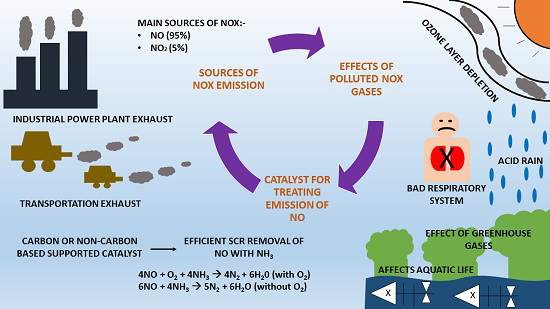
- catalyst supports for nitric oxide (NO) removal through selective catalytic reduction (SCR) with ammonia are examined in this review. A number of carbon-based materials, such as carbon nanotubes (CNTs), activated carbon (AC), and graphene (GR) and non-carbon-based materials, such as Zeolite Socony Mobil–5
- gasoline engines. In the SCR of NO, a reducing agent must be introduced into the system in order to successfully convert NO into nitrogen (N2), inert gases such as ammonia (NH3), and urea [5]. The reaction system reduces the Gibbs free energy values initiated by the reducing agent; the introduction of
- starts by initially dissolving a certain amount of metal chemical forms into a homogenous solution. An ammonia solution is then added gradually to the earlier mixture until the pH reaches 10. Then, the slurry is filtered, washed, and dried overnight in the oven before undergoing the activation procedure



