


Search results
Search for "crystallinity" in Full Text gives 347 result(s) in Beilstein Journal of Nanotechnology. Showing first 200.
Nanoarchitectonics with cetrimonium bromide on metal nanoparticles for linker-free detection of toxic metal ions and catalytic degradation of 4-nitrophenol
Beilstein J. Nanotechnol. 2024, 15, 1312–1332, doi:10.3762/bjnano.15.106
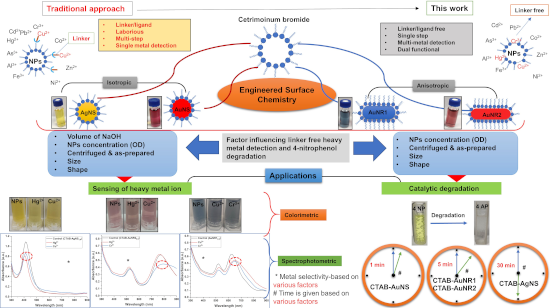
- is attributed to the CH2 scissoring mode and indicates close-packing of the methylene chains [42]. However, for CTAB-AgNS, CTAB-AuNS, CTAB-AuNR1, and CTAB-AuNR2, the peak splits into two parts with different intensities because of crystallinity loss in the hydrocarbon regions or the morphology of the




The role of a tantalum interlayer in enhancing the properties of Fe3O4 thin films
Beilstein J. Nanotechnol. 2024, 15, 1253–1259, doi:10.3762/bjnano.15.101

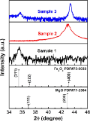
- [24][25]. Besides, there was nearly no oxygen diffusion from the Fe3O4 film into the MgO layer, resulting in higher crystallinity and improved grain size as seen in the XRD patterns. Surface properties obtained from Figure 1 are summarized in Table 1. The crystal structures of the Fe3O4 samples on


Effect of wavelength and liquid on formation of Ag, Au, Ag/Au nanoparticles via picosecond laser ablation and SERS-based detection of DMMP
Beilstein J. Nanotechnol. 2024, 15, 1054–1069, doi:10.3762/bjnano.15.86

- ]. The properties of NPs, such as size, shape, crystallinity, productivity, and composition, can be influenced by several experimental parameters during synthesis [4][6][7][8][9][10]. The impact of laser parameters, such as pulse duration, wavelength, repetition rate, and fluence, and of the liquid


Atomistic insights into the morphological dynamics of gold and platinum nanoparticles: MD simulations in vacuum and aqueous media
Beilstein J. Nanotechnol. 2024, 15, 995–1009, doi:10.3762/bjnano.15.81
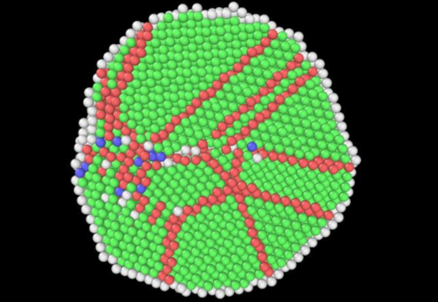
- possess a higher level of crystallinity than the gold counterparts under the same conditions because of the stronger cohesive forces that drive the crystallization process. This observation is also supported by the simulated X-ray powder diffraction patterns of the nanomaterials. The larger NPs have a
- for NPs is the consistency in their shape, surface characteristics, and crystallinity. Nevertheless, developing straightforward and widely applicable approaches to crystallize or melt NPs uniformly, with precise control, remains a significant challenge [25]. For instance, it has been shown that atomic
- number density distribution, but they are not as sharp as in the case of the large NPs. Moreover, the height of the peaks is much smaller compared to those for the large NPs. This feature reflects a lower degree of crystallinity for the small relative to the large NPs and the fact that the nanomaterials


Intermixing of MoS2 and WS2 photocatalysts toward methylene blue photodegradation
Beilstein J. Nanotechnol. 2024, 15, 817–829, doi:10.3762/bjnano.15.68
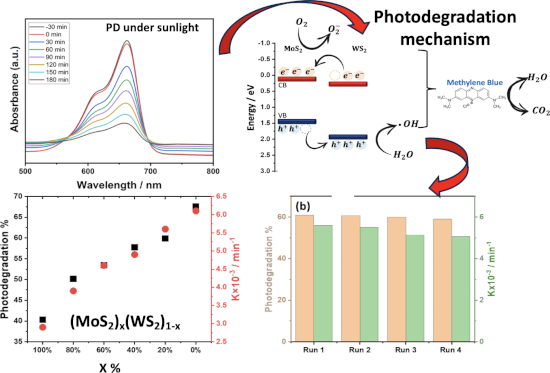
- , respectively. The XRD diagram depicted in Figure 2c reveals the combination of peaks arising from both 2H-MoS2 and 2H-WS2, confirming the successful intermixing of the MoS2/WS2 composite. The sharp shape of the diffraction peaks suggests a very good crystallinity of the fabricated materials. The recurring


Electrospun polysuccinimide scaffolds containing different salts as potential wound dressing material
Beilstein J. Nanotechnol. 2024, 15, 781–796, doi:10.3762/bjnano.15.65
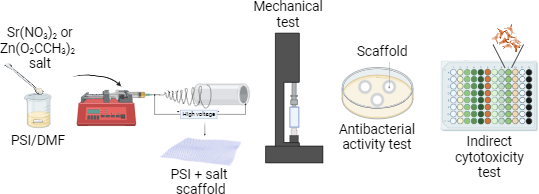
- also observed that the presence of strontium salt significantly increased the Young’s modulus. Nevertheless, the reason of this effect of adding strontium still needs to be clarified. Our hypothesis is that the presence of the salt increases the crystallinity of the fibers, which indicates that the



Green synthesis of biomass-derived carbon quantum dots for photocatalytic degradation of methylene blue
Beilstein J. Nanotechnol. 2024, 15, 755–766, doi:10.3762/bjnano.15.63
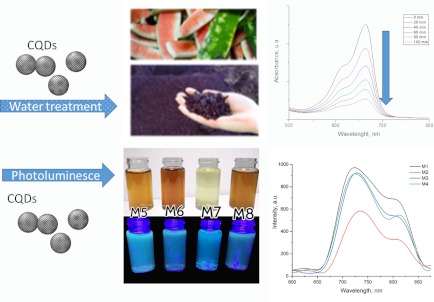
- ) which promotes the inclusion of heteroatoms into the CQDs. All the prepared CQDs samples presented an intensity ratio (ID/IG) around 1.0, which corresponds to a poor crystallinity in the CQDs and, as a consequence, a high relative content of defects. Photoluminescence spectra Investigating the


Gold nanomakura: nanoarchitectonics and their photothermal response in association with carrageenan hydrogels
Beilstein J. Nanotechnol. 2024, 15, 678–693, doi:10.3762/bjnano.15.56

- . Also, the photothermal responses of the nanoparticles in association with k-CG hydrogels were assessed, indicating their potential in biomedical applications. Furthermore, characterization such as zeta potential, crystallinity, and surface functionalization were investigated through ZetaSizer, X-ray
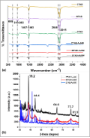
- shown in Figure 5a [25]. We also observed no peaks in the region of (1500–2000) cm−1, which suggested that there were no double bonds formed such as C=C, C=O and C=N. The crystallinity of synthesized anisotropic gold nanoparticles with surfactants of different carbon tail lengths was explored using XRD






Laser synthesis of nanoparticles in organic solvents – products, reactions, and perspectives
Beilstein J. Nanotechnol. 2024, 15, 638–663, doi:10.3762/bjnano.15.54
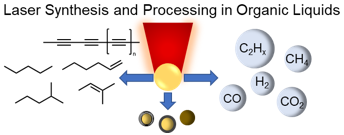
- reactions are needed. Furthermore, properties such as surface structure or crystallinity can be tailored by adjusting experimental conditions while retaining the initial chemical composition of the educt material [13]. LSPC can be classified into the method variants of laser ablation in liquid (LAL), laser





Exfoliation of titanium nitride using a non-thermal plasma process
Beilstein J. Nanotechnol. 2024, 15, 631–637, doi:10.3762/bjnano.15.53
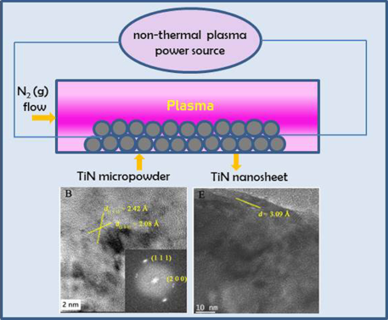
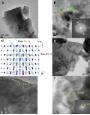
- detailed view of the materials structure, revealing that it retained some crystallinity, typical of 2D nanofilms. This retention of crystalline structure was further confirmed by fast Fourier transform (FFT) analysis. Notably, the d-spacing of the (200) crystal plane increased from 2.08 to 3.09 Å (as
- width at half maximum (FWHM) of the Raman spectra and a decrease in peak intensity, all indicative of reduced crystallinity and the presence of internal stress (as detailed in Table 1) [25]. The Raman spectra are shown only up to 800 cm−1 because no other bands were observed at higher wavenumbers. This
- results, collectively reinforcing that the non-thermal plasma method was effective in preserving the bulk chemical composition and structure, albeit with slight alterations in the crystallinity and the extent of internal stress. Conclusion We have successfully produced titanium nitride nanosheets by a non



Photocatalytic degradation of methylene blue under visible light by cobalt ferrite nanoparticles/graphene quantum dots
Beilstein J. Nanotechnol. 2024, 15, 475–489, doi:10.3762/bjnano.15.43
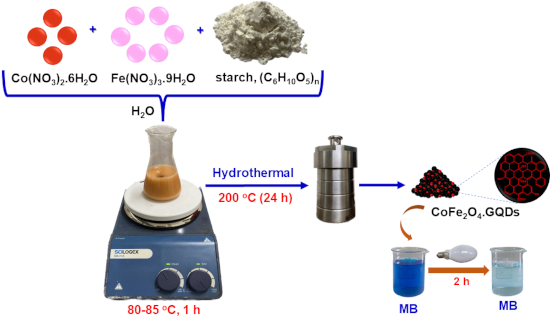
- samples prepared at 180 and 200 °C. No signals for GQDs can be observed because of the low crystallinity, high dispersion, and small amount of GQDs in CF/GQDs. The peak of the (222) plane is related to the octahedral sites, while the peaks at the (220) and (422) planes are attributed to the tetrahedral




Potential of a deep eutectic solvent in silver nanoparticle fabrication for antibiotic residue detection
Beilstein J. Nanotechnol. 2024, 15, 426–434, doi:10.3762/bjnano.15.38
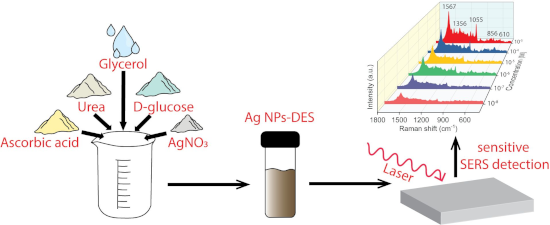
- characterization and apparatus The absorbance properties of the sample were recorded using a V-730 UV–vis–NIR spectrophotometer supplied by JASCO, Japan. The crystallinity of the Ag NPs-DES thin film was determined using a D8 Advance diffractometer, Bruker, UK, with a Ni-filtered Cu Kα X-ray source. To evaluate


Investigating ripple pattern formation and damage profiles in Si and Ge induced by 100 keV Ar+ ion beam: a comparative study
Beilstein J. Nanotechnol. 2024, 15, 367–375, doi:10.3762/bjnano.15.33
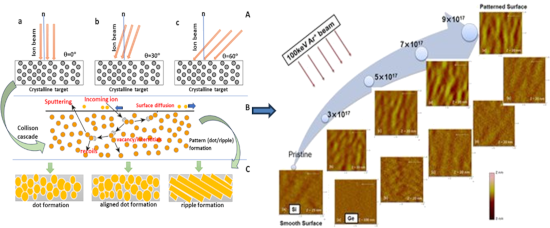
- found that the samples were still crystalline as seen in Figure 3A and Figure 3B for Si and Ge, respectively with corresponding d-spacing and selected area electron diffraction (SAED) pattern. It was observed that Ge exhibits higher crystallinity as compared to that of Si, even after irradiation at 9
- of the electron beam rather than the range of the ion beam. The d-spacing found for Si was 0.31 nm and for Ge was 0.34 nm. The SAED pattern clearly shows a good diffraction pattern for Ge indicating that crystallinity remained intact for Ge even after irradiation at a higher ion fluence than that
- for Ge(111) and Si(111) targets before and after ion irradiation with 100 keV Ar+ ions at various ion fluences from 3 to 9 × 10¹⁷ ions/cm2. The crystallinity of the investigated target was determined by the comparison of the aligned spectrum with the random spectra (black). For the pristine Si and Ge


Controllable physicochemical properties of WOx thin films grown under glancing angle
Beilstein J. Nanotechnol. 2024, 15, 350–359, doi:10.3762/bjnano.15.31
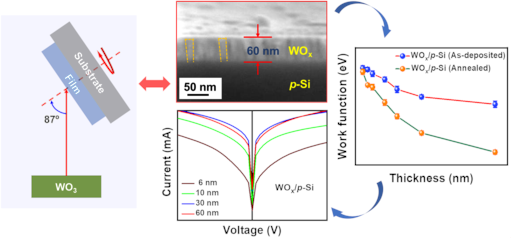
- , film crystallinity and compositional variations in such films can also be adjusted as a function of the growth angle [27][28], making GLAD a promising approach to yield nanostructured (NS) films [29][30][31]. Electronic devices consisting of multilayers often require information on surface
- bias voltage was applied to the p-Si substrates, whereas the WOx films were kept grounded. The crystallinity of the WOx films was examined using X-ray diffraction (XRD) (Bruker) under Bragg–Brentano geometry (θ–2θ) in an angular window of 2θ = 20° to 80°. The chemical composition of the WOx films was
- crystallinity after vacuum annealing might also play a role in determining the work function [45]. XRD measurements were carried out on the 60 nm thick film to investigate any possible change in the crystallinity due to vacuum annealing. The XRD data (Figure 5) of a 60 nm-thick NS-WOx film reveals an amorphous


CdSe/ZnS quantum dots as a booster in the active layer of distributed ternary organic photovoltaics
Beilstein J. Nanotechnol. 2024, 15, 144–156, doi:10.3762/bjnano.15.14
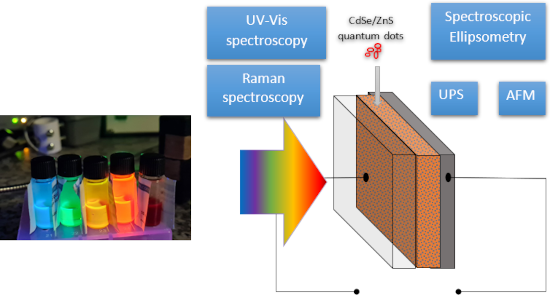
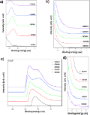
- . The donor–acceptor mixture is dominant in the system. Therefore, the peaks of the QD dopant are not visible. At the same time, it should be noted that in mixtures with quantum dots (except QD480), the clarity of the peaks increases, which may suggest an increase in the degree of crystallinity
- . Increased molecular order and increasing crystallinity of the system were positively correlated with changes in device performance [51]. Ultraviolet photoelectron spectroscopy We obtained survey spectra for the materials under consideration (Figure 9a,b). Figure 9c illustrates the obtained valence spectrum




Assessing phytotoxicity and tolerance levels of ZnO nanoparticles on Raphanus sativus: implications for widespread adoptions
Beilstein J. Nanotechnol. 2024, 15, 115–125, doi:10.3762/bjnano.15.11
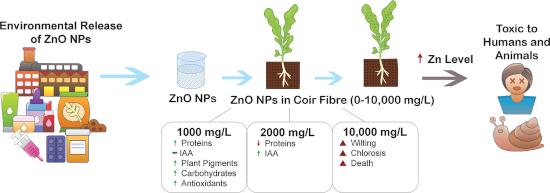
- synthesized ZnO NPs was in accordance with the literature in terms of peak positions and relative intensity [22][23]. The sharp diffraction peaks and primary strong angles indicated the good crystallinity of the prepared crystals [24][25]. Furthermore, the obtained patterns confirmed that no other


Berberine-loaded polylactic acid nanofiber scaffold as a drug delivery system: The relationship between chemical characteristics, drug-release behavior, and antibacterial efficiency
Beilstein J. Nanotechnol. 2024, 15, 71–82, doi:10.3762/bjnano.15.7
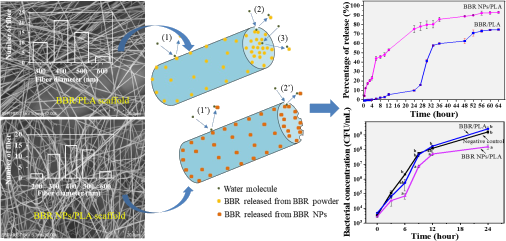
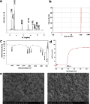
- separation during the electrospinning process [17][38][39], leading to the formation of a BBR-rich phase on the surface of nanofibers. The crystallinity of the PLA pellet and electrospun nanofiber scaffolds were examined by X-ray diffraction (XRD) analysis (Figure 3B). The XRD pattern of the PLA pellet shows


A combined gas-phase dissociative ionization, dissociative electron attachment and deposition study on the potential FEBID precursor [Au(CH3)2Cl]2
Beilstein J. Nanotechnol. 2023, 14, 1178–1199, doi:10.3762/bjnano.14.98
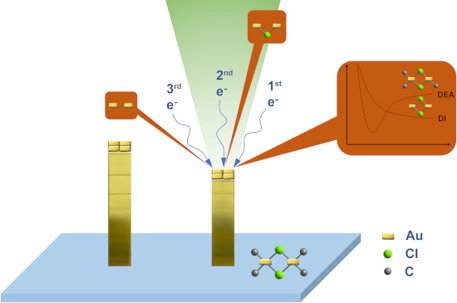
- between the (111) planes of a face-centered cubic (FCC) gold nanoparticle [39][40]. The crystallinity of the gold nanoparticles was also investigated by using selected area electron diffraction (SAED) pattern shown in Figure 2c. The relatively bright circular patterns indicate polycrystallinity of the



Properties of tin oxide films grown by atomic layer deposition from tin tetraiodide and ozone
Beilstein J. Nanotechnol. 2023, 14, 1085–1092, doi:10.3762/bjnano.14.89
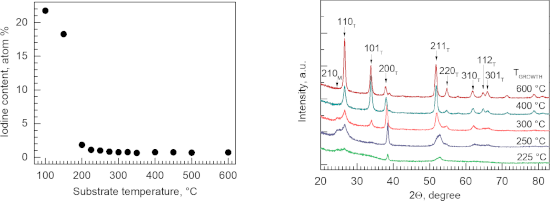
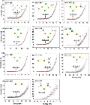
- stoichiometric SnO2 as the major phase at temperatures higher than 300 °C. Film structure Increasing the deposition temperature increased the crystallinity of films, as can be seen in Figure 8. Diffractograms of all crystalline films revealed the presence of tetragonal SnO2 (PDF Card 01-071-5324). Depositions


Dual-heterodyne Kelvin probe force microscopy
Beilstein J. Nanotechnol. 2023, 14, 1068–1084, doi:10.3762/bjnano.14.88
- to this, they are very promising for the use in many applications, such as LEDs, solar cells, and photodetectors. Reducing their size down to the nanoscale by synthesizing colloidal nanocrystals in solution can allow high control over the perovskite crystallinity and access to various morphologies




Nanoarchitectonics of photothermal materials to enhance the sensitivity of lateral flow assays
Beilstein J. Nanotechnol. 2023, 14, 988–1003, doi:10.3762/bjnano.14.82
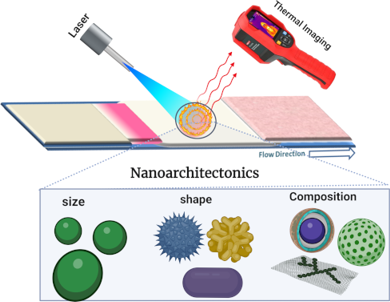
- nanoparticles. COF–CuSe can also increase the photothermal conversion efficiency up to 26%, which is higher than that of COF-Fe3O4 [36]. Nanoarchitectonics of photothermal materials The photon-to-heat conversion efficiency of nanomaterials depends on intrinsic factors, such as shape, size, crystallinity, and


Upscaling the urea method synthesis of CoAl layered double hydroxides
Beilstein J. Nanotechnol. 2023, 14, 927–938, doi:10.3762/bjnano.14.76
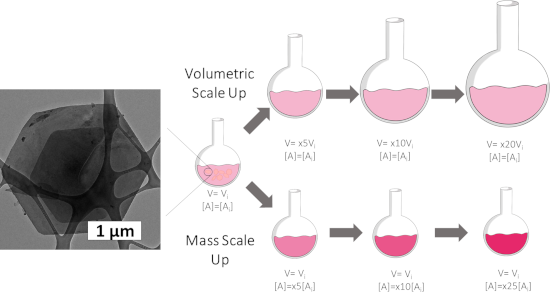
- development of efficient and reproducible large-scale synthesis processes. Unfortunately, reliable methods that allow for the production of large quantities of two-dimensional LDHs with well-defined morphologies and high crystallinity are very scarce. In this work, we carry out a scale-up of the urea-based
- alkalinization rate, which (mainly) controls the nucleation and growth processes, and therefore particle size, morphology, and crystallinity [33][36][37]. Attempts to upscale the production of LDHs included incrementing the concentration of the reactants [38][39], the use of large-scale reactors [40][41], byway
- co-precipitation, and mechanochemical approaches [27]. Although these methods can produce materials on a large scale, they are very limited in providing materials with controlled morphology, size, or crystallinity [42]. This issue can be partially solved using continuous flow techniques [43][44]. Yet


Nanostructured lipid carriers containing benznidazole: physicochemical, biopharmaceutical and cellular in vitro studies
Beilstein J. Nanotechnol. 2023, 14, 804–818, doi:10.3762/bjnano.14.66
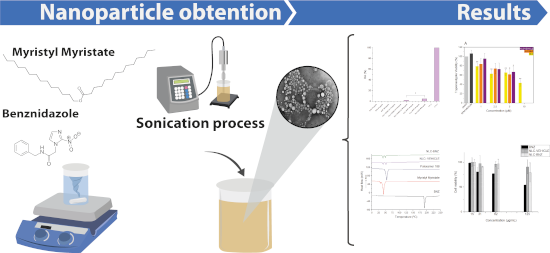
- thermograms are shown in Figure 2, whereas the melting temperature (Tm), the enthalpy of fusion (ΔHf), and crystallinity index (CI) are presented in Table 1. Whereas BNZ showed an endothermic peak at its melting point (191.2 °C) [23], the formulation showed two endothermic peaks in the range of 40–50 °C
- 5 mg of the dry sample after freeze drying the formulations was used. Scans were run in the range from 0 to 250 °C at a heating rate of 10 °C/min. The degree of crystallinity (% crystallinity index, CI) was calculated using the following equation [55]: where ΔHNLC and ΔHbulk material are the melting
- to identify significant differences against the control group. *p < 0.05, **p < 0.01. Thermal properties of benznidazole (BNZ), myristyl myristate, poloxamer 188, and nanoparticles (NLC-VEHICLE and NLC-BNZ). Abbreviations: Tm, melting temperature; ΔHf, fusion enthalpy; CI (%), crystallinity index


Control of morphology and crystallinity of CNTs in flame synthesis with one-dimensional reaction zone
Beilstein J. Nanotechnol. 2023, 14, 741–750, doi:10.3762/bjnano.14.61
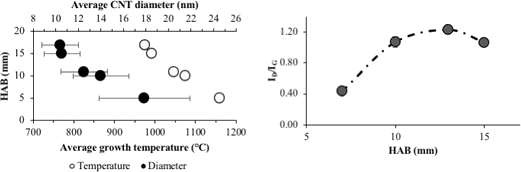
- flame is conducted regarding the morphology and crystallinity of the as-grown nanotubes. The premixed burner configuration created a flame that is stabilized through axisymmetric stagnation flow through sintered metal with one-dimensional geometry, different from a conventional co-flow flame. The
- radial directions but significantly different in the vertical direction. 17.3% variation in temperature in the axial direction successfully led to 44% and 66% variation in CNT diameter and crystallinity, respectively. The morphology control capability demonstrated in the present study is important for
- CNT functionalization for energy storage, nanosensor, and nanocomposite applications, where diameter and crystallinity are influential properties that govern the overall performance of the components. Keywords: carbon nanotubes; crystallinity; flame synthesis; morphology; one-dimensional flame


The microstrain-accompanied structural phase transition from h-MoO3 to α-MoO3 investigated by in situ X-ray diffraction
Beilstein J. Nanotechnol. 2023, 14, 692–700, doi:10.3762/bjnano.14.55
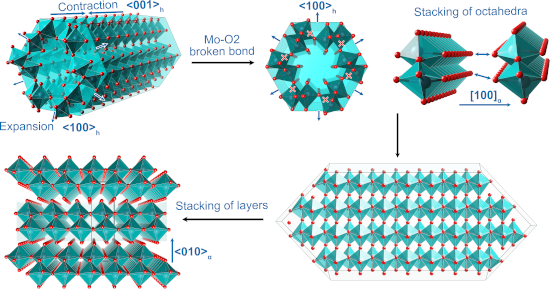
- 1147.0 (↓ 20.5%), indicating the improvement of the crystallinity of the h-MoO3 phase through annealing. When h-MoO3 transformed into α-MoO3 (i.e., the mass fraction increased from 2.2% to 86%), the corresponding microstrain increased sharply from 1147.0 to 2246.9 (↑ 95.9%), indicating that the h-MoO3→α





