


Search results
Search for "heterostructures" in Full Text gives 138 result(s) in Beilstein Journal of Nanotechnology.
The role of convolutional neural networks in scanning probe microscopy: a review
Beilstein J. Nanotechnol. 2021, 12, 878–901, doi:10.3762/bjnano.12.66
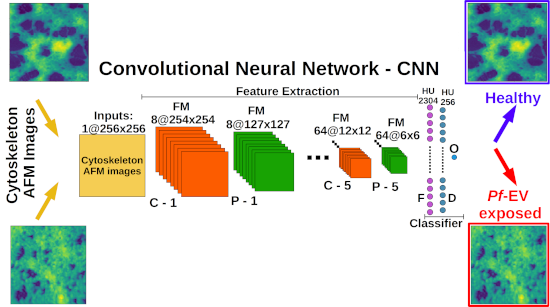
- crystals (van der Waals heterostructures, graphene, hBN, MoS2, and WTe2) was demonstrated. The detection algorithm enables real-time detection of the 2D materials (running for 200 ms on a 1024 × 1024 optical image) and is insensitive to variations in microscopy conditions such as illumination and color







Recent progress in magnetic applications for micro- and nanorobots
Beilstein J. Nanotechnol. 2021, 12, 744–755, doi:10.3762/bjnano.12.58
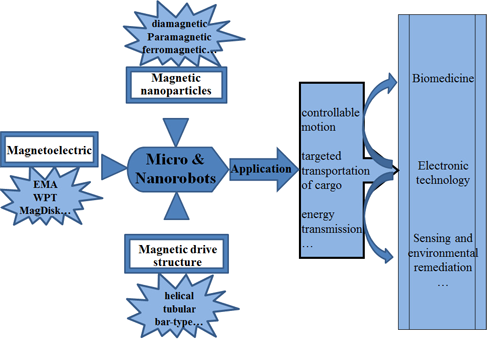
- with different magnetisms with applications in, for example, energy-saving logic, sensors, environmental remediation, and data storage [52]. Chen et al. [53] studied compensated magnetic heterostructures containing ferrimagnetic CoGd alloys and antiferromagnetic IrMn layers. The terahertz emission from


Electromigration-induced formation of percolating adsorbate islands during condensation from the gaseous phase: a computational study
Beilstein J. Nanotechnol. 2021, 12, 694–703, doi:10.3762/bjnano.12.55
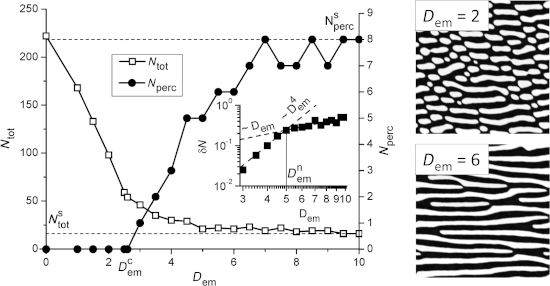
- observed on silicon substrates [12][13]. Strong effects of EM were manifested in the processes of evolution of vanadium surface morphology [14], and in the epitaxial growth of semiconductor heterostructures [15]. It was found that at low deposition temperatures the growth of surface structures occurs




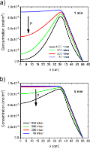
![[Graphic 29]](/bjnano/content/inline/2190-4286-12-55-i36.svg?max-width=637&scale=1.18182) on the adsorption coefficient α ...
on the adsorption coefficient α ...

Nanoporous and nonporous conjugated donor–acceptor polymer semiconductors for photocatalytic hydrogen production
Beilstein J. Nanotechnol. 2021, 12, 607–623, doi:10.3762/bjnano.12.50
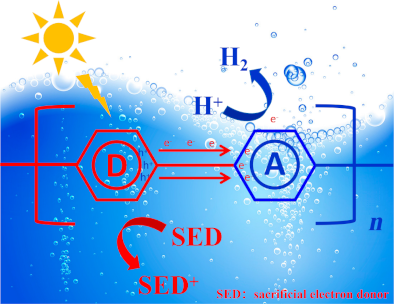
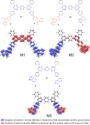
- ranges is an efficient strategy to extend the light-responsive region and offer enough thermodynamic driving force compared to single semiconductors. Besides, molecular heterostructures produced by two covalently bonded polymers could be a promising strategy because of effective charge carrier separation




Properties of graphene deposited on GaN nanowires: influence of nanowire roughness, self-induced nanogating and defects
Beilstein J. Nanotechnol. 2021, 12, 566–577, doi:10.3762/bjnano.12.47
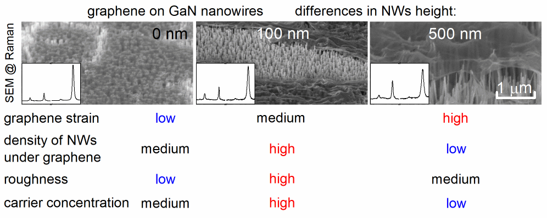
- nanowires impact graphene properties such as roughness, strain, and carrier concentration as well as density and type of induced defects. Tracing the manifestation of those interactions is important for the application of novel heterostructures. A detailed analysis of Raman spectra of graphene deposited on
- interesting experimental material to study [1][2][3]. Importantly, it is a promising material for new kinds of low-dimensional transistors, gas sensors, ultra-capacitors, electrodes for solar cells, and for van der Waals heterostructures. In order to construct these devices, an interaction between graphene
- morphology substantially modify graphene properties. A novel approach of graphene-based nanostructures are van der Waals heterostructures in which graphene is transferred onto another material with a different morphology and electronic properties [5]. However, in those kinds of structures several aspects




Local stiffness and work function variations of hexagonal boron nitride on Cu(111)
Beilstein J. Nanotechnol. 2021, 12, 559–565, doi:10.3762/bjnano.12.46
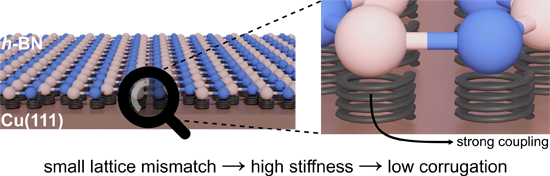
- materials at the nanoscale. In this work, we study hexagonal boron nitride (h-BN), an atomically thin 2D layer, that is van der Waals-coupled to a Cu(111) surface. The system is of interest as a decoupling layer for functional 2D heterostructures due to the preservation of the h-BN bandgap and as a template


Reconstruction of a 2D layer of KBr on Ir(111) and electromechanical alteration by graphene
Beilstein J. Nanotechnol. 2021, 12, 432–439, doi:10.3762/bjnano.12.35
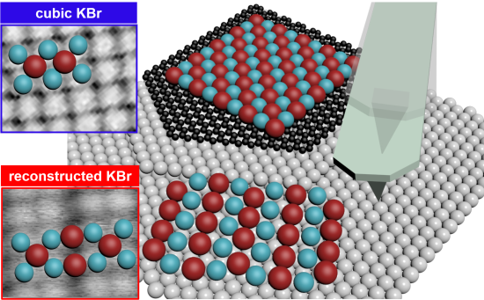
- , electromagnetic, and other attractive physical properties [1][2]. Their structures can be usually tailored or modified at the nanoscale [3][4]. One type of modification is the fabrication of 2D layered heterostructures, which have been the subject of intensive scientific research in recent years [5][6][7]. The
- topological insulator Bi2Se3 can be used, for example, for the fabrication of 2D layered heterostructures with graphene. Thus, systems can be created to study the unusual interaction of Dirac fermions, opening up new possibilities for novel electronic and spintronic devices [5]. Another famous 2D insulator is
- halide heterostructures, the top KBr film on NaCl(100) exhibits a superstructure with square islands, while the stretched NaCl film on KBr(100) grows flat with rectangular islands, clearly indicating a stronger interaction between the adlayer and the substrate in these examples [35]. In contrast to these


Spontaneous shape transition of MnxGe1−x islands to long nanowires
Beilstein J. Nanotechnol. 2021, 12, 366–374, doi:10.3762/bjnano.12.30
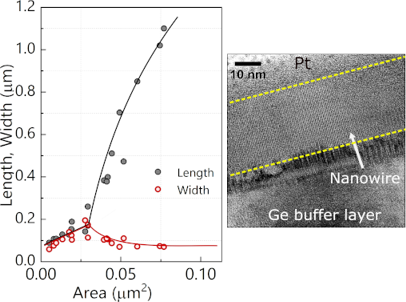
- spintronic applications. However, to achieve a reliable injection and detection of spin-polarized electrons in spintronic devices, appropriate heterostructures between semiconductors and magnetic alloys [9][10] need to be formed. Hence, a tailored growth process that preserves the injection efficiency and


ZnO and MXenes as electrode materials for supercapacitor devices
Beilstein J. Nanotechnol. 2021, 12, 49–57, doi:10.3762/bjnano.12.4
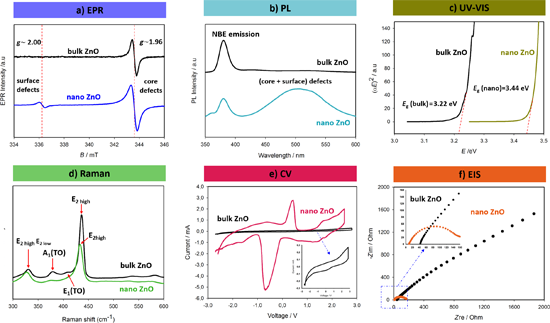
- capacitance of 392.2 F·g−1 was measured at 5 mV·s−1 from 3D MXene-rGO with 20% graphene [23]. Zhu et al. proposed a way to intercalate organic cations into T3C2Tx to acquire carbon–MXene heterostructures. Due to intercalation and calcination processes, the interlayer space is increased, which leads to and
The influence of an interfacial hBN layer on the fluorescence of an organic molecule
Beilstein J. Nanotechnol. 2020, 11, 1663–1684, doi:10.3762/bjnano.11.149
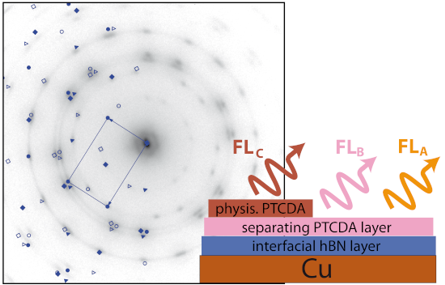
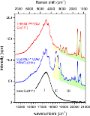
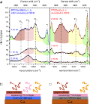
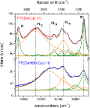
- ]. Specifically, the use of 2DMs in layered heterostructures has been promoted [2][3]. Here, one challenge lies in the understanding of not only the processes in the individual materials, but also of those that occur at the interfaces between layers of different materials. Advantageously, some 2DMs can be grown





Controlling the proximity effect in a Co/Nb multilayer: the properties of electronic transport
Beilstein J. Nanotechnol. 2020, 11, 1336–1345, doi:10.3762/bjnano.11.118
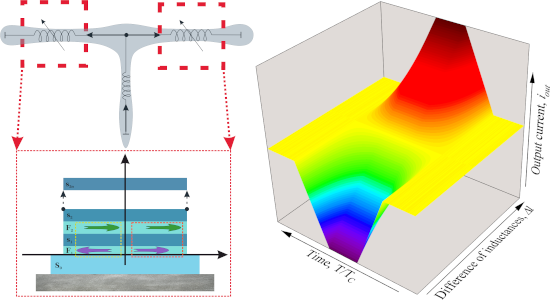
- ) heterostructures can be used for construction of tunable cryoelectronic elements, such as switches, Josephson junctions and inductors [1][2][3][4][5][6][7][8]. Here, we present theoretical and experimental investigations of an S/F “stranded wire” with a controllable proximity effect. The wire is composed of



Effect of localized helium ion irradiation on the performance of synthetic monolayer MoS2 field-effect transistors
Beilstein J. Nanotechnol. 2020, 11, 1329–1335, doi:10.3762/bjnano.11.117
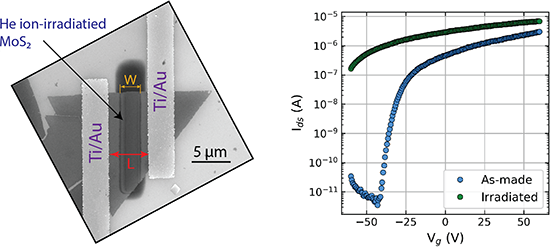
- in MoS2 [11], as well as enhanced out-of-plane charge transfer in 2D graphene/WSe2 heterostructures [12]. Energetic light ions are known to preferentially sputter chalcogen atoms from TMDs while retaining an adequate micrometer-scale structural integrity for irradiation doses up to approx. 1016 ions


Proximity effect in [Nb(1.5 nm)/Fe(x)]10/Nb(50 nm) superconductor/ferromagnet heterostructures
Beilstein J. Nanotechnol. 2020, 11, 1254–1263, doi:10.3762/bjnano.11.109
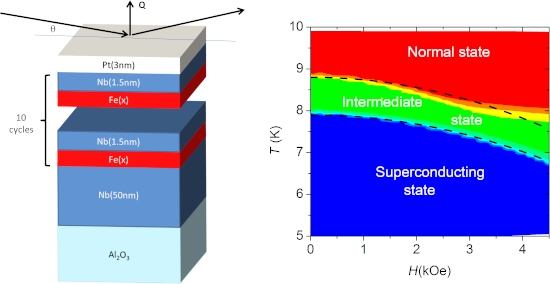
- ; superconductor; Introduction Superconductor(S)/ferromagnet(F) heterostructures are intensively studied systems, which are interesting for fundamental physics due to a big number of predicted and detected phenomena such as the appearance of non-uniform superconducting states (see reviews [1][2][3]). Among these
- . This thick superconducting layer will act as a reservoir of superconducting pairs, which will be transferred to the SL using the proximity effect. The aim of this work is the study of structural, magnetic and superconducting properties of such S/F heterostructures. Experimental Growth conditions and


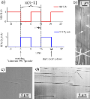
![[Graphic 13]](/bjnano/content/inline/2190-4286-11-109-i17.svg?max-width=637&scale=1.18182) ) substrate, (b) the Pt cap layer, and the Nb buffer layer grown at...
) substrate, (b) the Pt cap layer, and the Nb buffer layer grown at...


![[Graphic 16]](/bjnano/content/inline/2190-4286-11-109-i20.svg?max-width=637&scale=1.18182) (T) for the samples s4 (black) and s3 (red) in the vicinity of the superconducting transition m...
(T) for the samples s4 (black) and s3 (red) in the vicinity of the superconducting transition m...
Transition from freestanding SnO2 nanowires to laterally aligned nanowires with a simulation-based experimental design
Beilstein J. Nanotechnol. 2020, 11, 843–853, doi:10.3762/bjnano.11.69
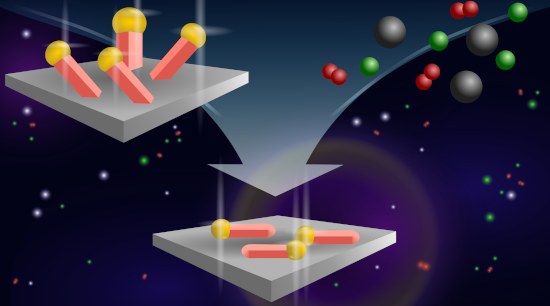
- functionalized as heterostructures with the aim to understand their growth process as well as to use their unique properties in devices [2][3][4][5][6]. Due to their respective high surface-to-volume ratio [7], NWs are highly beneficial for recognition and manipulation of surface-sensitive processes [2][8]. As a





Epitaxial growth and superconducting properties of thin-film PdFe/VN and VN/PdFe bilayers on MgO(001) substrates
Beilstein J. Nanotechnol. 2020, 11, 807–813, doi:10.3762/bjnano.11.65
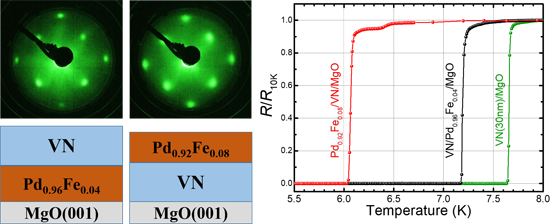
- Abstract Single-layer vanadium nitride (VN) and bilayer Pd0.96Fe0.04/VN and VN/Pd0.92Fe0.08 thin-film heterostructures for possible spintronics applications were synthesized on (001)-oriented single-crystalline magnesium oxide (MgO) substrates utilizing a four-chamber ultrahigh vacuum deposition and
- was 20 cm, and the deposition rate was 0.2 nm/min. To grow heterostructures, the samples on the molybdenum holder were moved without breaking vacuum via the UHV transfer line between the MBE and MS deposition chambers as well as the analysis chamber (SPECS, Germany). To perform a comparative study
- VN thin film has grown cube-on-cube epitaxially (for an individual Pd1−xFex film see the full crystallinity analysis in [33]). Figure 1c,d shows that the Pd0.96Fe0.04/VN and VN/Pd0.92Fe0.08 heterostructures are pass-through epitaxial. This is, first of all, due to the good lattice match between MgO


Effect of substitutional defects on resonant tunneling diodes based on armchair graphene and boron nitride nanoribbons lateral heterojunctions
Beilstein J. Nanotechnol. 2020, 11, 688–694, doi:10.3762/bjnano.11.56
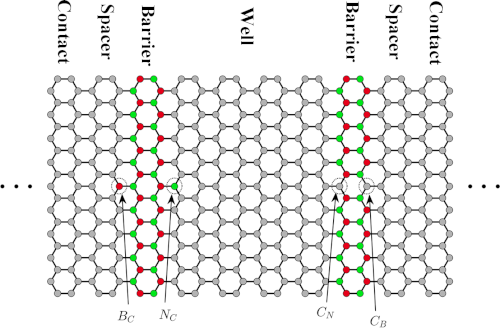
- electronic devices have been realized by heterostructures based on vertical stacking or lateral stitching of 2D materials with different electronic properties [6]. Lateral graphene/hexagonal boron nitride (Gr/hBN) heterostructures, due to very low lattice mismatch between graphene and hBN, are most suitable
- as platforms for fully two-dimensional nanoelectronic devices [7][8][9][10][11]. Resonant tunneling diodes (RTDs) are among various electronic devices realized on the platform of 2D Gr/hBN heterostructures [12][13][14][15][16]. RTDs exhibit negative differential resistance (NDR) and have a wide range
- between graphene and hBN [3]. However, inevitable interfacial defects located at the interface of Gr/hBN heterojunctions, including point defects (single vacancies and substitutional defects) and topological defects can alter the electronic properties of Gr/hBN heterostructures and, consequently, the



Observation of unexpected uniaxial magnetic anisotropy in La2/3Sr1/3MnO3 films by a BaTiO3 overlayer in an artificial multiferroic bilayer
Beilstein J. Nanotechnol. 2020, 11, 651–661, doi:10.3762/bjnano.11.51
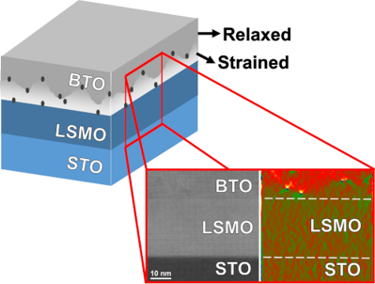
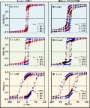
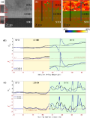
- , Universidad de Zaragoza, 50018 Zaragoza, Spain 10.3762/bjnano.11.51 Abstract We studied in detail the in-plane magnetic properties of heterostructures based on a ferroelectric BaTiO3 overlayer deposited on a ferromagnetic La2/3Sr1/3MnO3 film grown epitaxially on pseudocubic (001)-oriented SrTiO3, (LaAlO3)0.3
- ., ferromagnetic (FM) for LSMO and ferroelectric (FE) for BTO, and BTO/LSMO heterostructures have exhibited magnetoelectric coupling (MEC) [6][7][8]. They constitute a type of artificial hybrid multiferroic material that can be employed to build the next-generation sensors, multiple-state memory elements, magnetic
- improve our understanding of the mechanisms driving MEC in BTO/LSMO heterostructures. In this work, we show how the presence of a BTO layer on an LSMO film under different substrate-induced epitaxial strains can affect the magnetic anisotropy of the LSMO layer at room temperature. To strain the sample, we



Preparation, characterization and photocatalytic performance of heterostructured CuO–ZnO-loaded composite nanofiber membranes
Beilstein J. Nanotechnol. 2020, 11, 631–650, doi:10.3762/bjnano.11.50
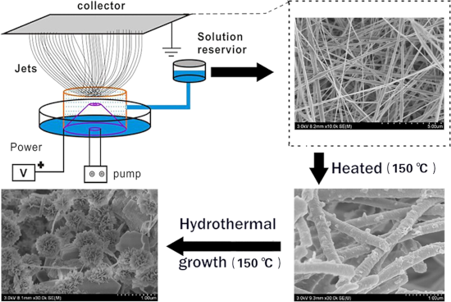
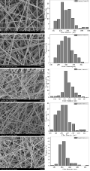
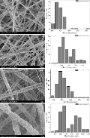
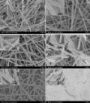
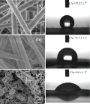
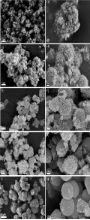
- thick pebble-like nanoparticles. When the hydrothermal temperature is 100 °C, the CuO–ZnO heterostructures similar to a honeycomb are obtained. When the hydrothermal temperatures are 120, 140 and 160 °C, the CuO–ZnO heterostructures formed were petal-like and resembled flowers. However, the
- heterostructures obtained at 120 and 140 °C are much more regular and thinner than those obtained at 160 °C. When the temperature reaches 180 °C, the nanofibers begin to shrink due to the melting of PVDF, and CuO–ZnO heterostructure do not form. Therefore, temperatures of 120–140 °C were chosen for hydrothermal
- the synthesis time is 6 h, the CuO–ZnO heterostructures are regularly stacked petal-like sheets with distinct edges and corners. After a synthesis time of 12 h, the CuO–ZnO heterostructures are also petal-like, but thicker than those after 6 h. When the synthesis time is 18 h, the CuO–ZnO











Synthesis and enhanced photocatalytic performance of 0D/2D CuO/tourmaline composite photocatalysts
Beilstein J. Nanotechnol. 2020, 11, 407–416, doi:10.3762/bjnano.11.31
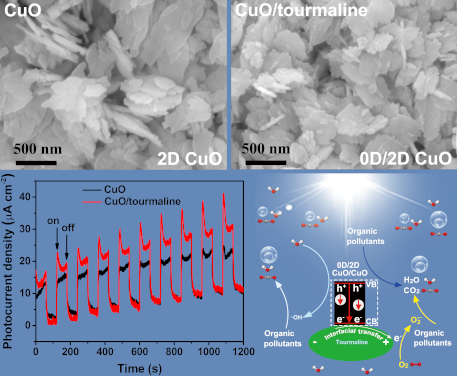
- construction of CuO-based heterostructures (e.g., 0D/2D CuO/TiO2, 0D/3D CuO/ZnO, 2D/2D CuO/Fe2O3, 0D/2D CuO/C3N4, 2D/0D CuO/Ag3PO4) [6][12][15][16][17] and the dispersion of CuO on supporting materials (e.g., graphene, carbon nanotube) [7][18] are considered to be the most effective ways to address these
- problems. However, it is difficult to obtain uniform heterostructures, and the preparation process is either complex or of high cost. Therefore, exploring low-cost and easily synthesized CuO-based materials with good photoreactive properties is still an urgent task. Especially the 0D/2D structure has been


Synthesis and acetone sensing properties of ZnFe2O4/rGO gas sensors
Beilstein J. Nanotechnol. 2019, 10, 2516–2526, doi:10.3762/bjnano.10.242
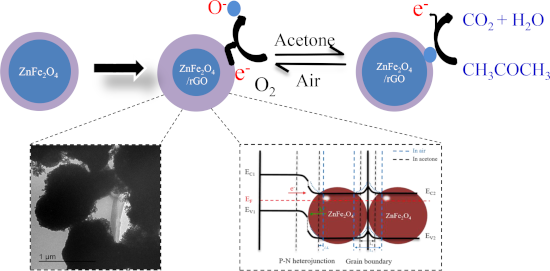
- effects in the heterostructures. This will enable corresponding gas sensors to accurately detect and monitor acetone vapor in real-time. In this view, compounding with certain organic or inorganic material could improve the gas sensing properties of ZnFe2O4 [18][19]. As a novel 2D carbon-based material




Pulsed laser synthesis of highly active Ag–Rh and Ag–Pt antenna–reactor-type plasmonic catalysts
Beilstein J. Nanotechnol. 2019, 10, 1958–1963, doi:10.3762/bjnano.10.192
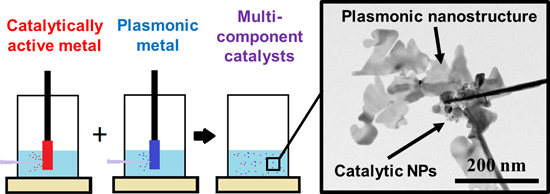
- Kenneth A. Kane Massimo F. Bertino Department of Physics, Virginia Commonwealth University, Richmond, Virginia, 23220, USA 10.3762/bjnano.10.192 Abstract Ag, Pt, and Rh monometallic colloids were produced via laser ablation. Separate Ag–Rh and Ag–Pt heterostructures were formed by mixing and
- resulted in groupings of Rh/Pt nanoparticles adsorbing to the concavities of the larger Ag nanostructures. The 400 nm Ag plasmonic absorption peak was slightly blue-shifted for Ag–Pt and red-shifted for Ag–Rh heterostructures. Catalytic activity for the reduction of 4-nitrophenol increased significantly
- –reactor; catalysis; heterostructures; laser ablation; multicomponent; nanoparticles; 4-nitrophenol; plasmonic; Pt; Rh; Introduction Metal nanoparticles can interact with visible light through an excitation of the localized surface plasmon resonance (LSPR). The LSPR is a resonant, collective oscillation


Layered double hydroxide/sepiolite hybrid nanoarchitectures for the controlled release of herbicides
Beilstein J. Nanotechnol. 2019, 10, 1679–1690, doi:10.3762/bjnano.10.163
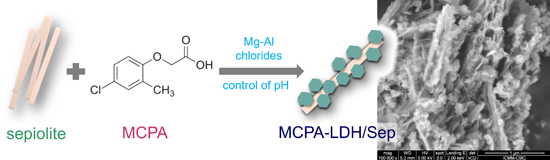
- materials, and macromolecular systems of DNA and cells [2][3][4][5]. In this context, clay-based nanoarchitectonic materials have been developed over the years, starting from classical pillared clays and porous clay heterostructures (PCH) to more innovative materials involving the assembly of different
- used strategies included wet impregnation and layer-by-layer approaches to produce diverse type of multilayer heterostructures, e.g., ZnCr-LDH/TiO2 films [30], in situ formation of the LDH in presence of other nanoparticles, e.g., sepiolite [31], and reconstruction of the LDH from parent “layered


Giant magnetoresistance ratio in a current-perpendicular-to-plane spin valve based on an inverse Heusler alloy Ti2NiAl
Beilstein J. Nanotechnol. 2019, 10, 1658–1665, doi:10.3762/bjnano.10.161
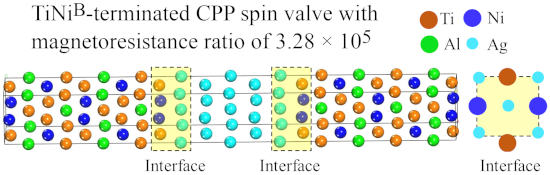
- [21]. Spin gapless semiconductor characteristics are also demonstrated in Mn2CoAl [22][23][24][25] and Ti2MnAl [26][27]. The interface characteristics of heterostructures based on inverse Heusler alloys have been studied in detail [28][29][30]. Therefore, inverse Heusler compounds exhibit exceptional


Kelvin probe force microscopy work function characterization of transition metal oxide crystals under ongoing reduction and oxidation
Beilstein J. Nanotechnol. 2019, 10, 1596–1607, doi:10.3762/bjnano.10.155
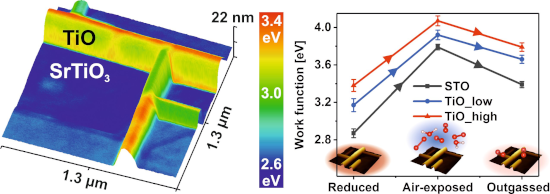
- future energy production and storage. As the majority of applications involve the use of heterostructures, the most suitable characterization technique is Kelvin probe force microscopy (KPFM), which provides excellent energetic and lateral resolution. In this paper, we demonstrate precise
- applications are nowadays based on oxide heterostructures, not only is macroscopic information of the work function needed (which may be provided by averaging techniques such as ultraviolet photoelectron spectroscopy (UPS)) but also spatial resolution on the nanoscale. Driven by its remarkable lateral and
- energetic resolution, Kelvin probe force microscopy (KPFM, also known as scanning Kelvin probe microscopy, SKPM) is the tool of choice for the precise measurement of the WF across oxide heterostructures, which is a technique that has not been fully exploited to date. In recent years, KPFM has proved to be


Unipolar magnetic field pulses as an advantageous tool for ultrafast operations in superconducting Josephson “atoms”
Beilstein J. Nanotechnol. 2019, 10, 1548–1558, doi:10.3762/bjnano.10.152
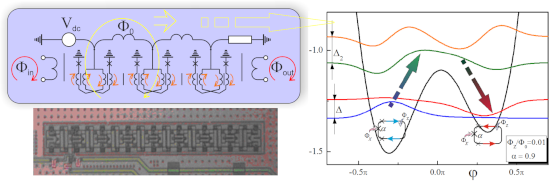
- [3]), where Josephson energies of the elements are EJos, EJos and αEJos (α = 0.9, junctions depicted as crosses). The characteristic Josephson energy EJos is 80 times larger than the characteristic Coulomb energy of the heterostructures. φ is the generalized coordinate associated with the Josephson





