Search results
Search for "nanofibers" in Full Text gives 136 result(s) in Beilstein Journal of Nanotechnology.
Structure and electrochemical performance of electrospun-ordered porous carbon/graphene composite nanofibers
Beilstein J. Nanotechnol. 2020, 11, 1280–1290, doi:10.3762/bjnano.11.112
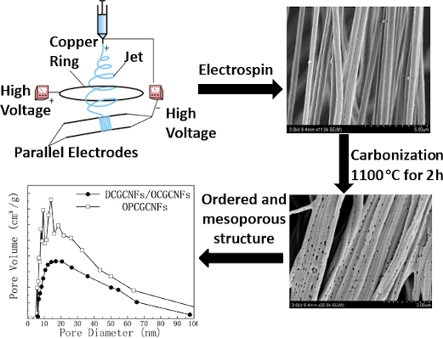
- Yi Wang Yanhua Song Chengwei Ye Lan Xu National Engineering Laboratory for Modern Silk, College of Textile and Engineering, Soochow University, 199 Ren-ai Road, Suzhou 215123, China 10.3762/bjnano.11.112 Abstract Ordered carbon/graphene composite nanofibers (CGCNFs) with different porous
- configurations were used as a material to fabricate supercapacitor electrodes. These nanofibers were synthesized by applying a modified parallel electrode to the electrospinning method (MPEM) in order to generate electrospun polyacrylonitrile (PAN) nanofibers containing graphene. After synthesis, these fibers
- surface area of CGCNFs, thereby significantly increasing their specific capacitance. In addition, the ordering of CGCNFs within the electrode improved the electron transfer efficiency, resulting in a higher specific capacitance. Keywords: carbon/graphene composite nanofibers; carbonization


A novel dry-blending method to reduce the coefficient of thermal expansion of polymer templates for OTFT electrodes
Beilstein J. Nanotechnol. 2020, 11, 671–677, doi:10.3762/bjnano.11.53
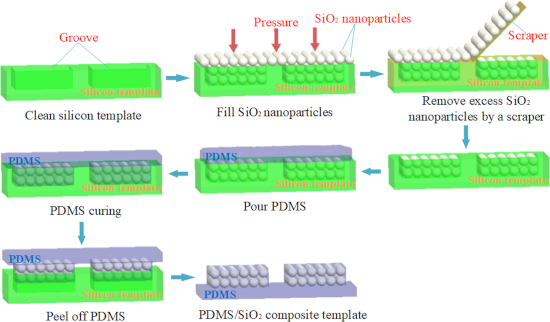
- a sol–gel precursor by adding tetraethyl orthosilicate (TEOS) to polyvinyl pyrrolidone (PVP), and then synthesized a silica/PVP nanofiber composite by electrospinning. The content of silica nanofibers in the composite is 9.1 wt %, and the CTE was decreased by ca. 40%. Jeyranpour et al. [13] studied


Preparation, characterization and photocatalytic performance of heterostructured CuO–ZnO-loaded composite nanofiber membranes
Beilstein J. Nanotechnol. 2020, 11, 631–650, doi:10.3762/bjnano.11.50
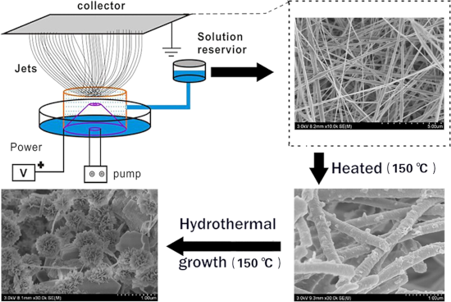
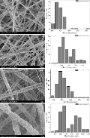
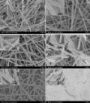
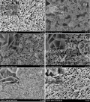
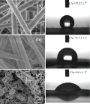
- Wei Fang Liang Yu Lan Xu National Engineering Laboratory for Modern Silk, College of Textile and Engineering, Soochow University, 199 Ren-ai Road, Suzhou 215123, China 10.3762/bjnano.11.50 Abstract Inorganic semiconductor oxides loaded on composite nanofibers (CNFs) have been widely applied in
- three times, and the degradation rate remained above 90%. Keywords: electrospinning; composite nanofibers; heterostructured CuO–ZnO; hydrothermal synthesis; photocatalysis; semiconductor oxide; Introduction Water remediation is one of the main scientific research subjects regarding environmental
- , electrical, mechanical and chemical properties, which might result in applications in photocatalysis [26]. Electrospinning is a simple and convenient method for preparing composite nanofibers (CNFs) [27][28][29][30][31]. CNFs have been widely applied as carrier material due to their outstanding











High-performance asymmetric supercapacitor made of NiMoO4 nanorods@Co3O4 on a cellulose-based carbon aerogel
Beilstein J. Nanotechnol. 2020, 11, 240–251, doi:10.3762/bjnano.11.18
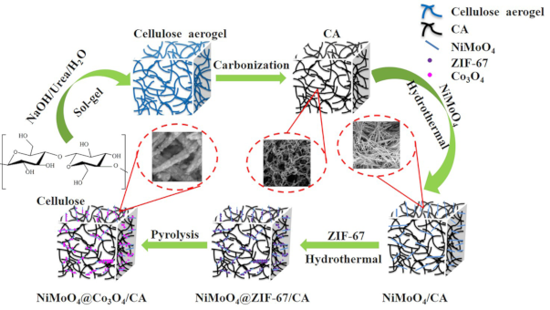
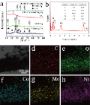
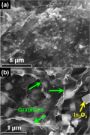
- of CA is drastically reduced compared to that of the precursor cellulose hydrogel and aerogel. The network of intertwined nanofibers of CA shown in Figure 2a was maintained from the cellulose aerogel (Figure S2, Supporting Information File 1). The diameter of the nanofibers was about 20–50 nm. The
- SEM top-view image of NiMoO4 is shown in Figure 2b indicating a homogenous distribution of interconnected nanofibers within the CA sample. The magnified SEM image (inset of Figure 2b) reveals that each carbon nanofiber of CA is surrounded by plenty of the NiMoO4 nanorods. Figure 2c confirms that the
- nanofibers of CA, which could provide diffusion channels for electrolyte ions and could be a conductive substrate to serve as a backbone; the second consists of interlaced NiMoO4 nanorods and acts as a bridge in the ternary hierarchical structure, which offers a large surface area for loading of active




Molecular architectonics of DNA for functional nanoarchitectures
Beilstein J. Nanotechnol. 2020, 11, 124–140, doi:10.3762/bjnano.11.11

- helical nanofibers [81]. The weak interactions between thymidylic acid-conjugated anthracenes and complementary oligoadenylic acid resulted in the formation of helical J-aggregates via A–T base pairing interactions. The characterizations performed using spectroscopic and microscopic methods suggested the
- produce any self-assembled structure in water. In another study, the interaction between a thymidine bolaamphiphile dTp–20–dTp and a series of oligoadenylic acids d(A)n (n = 2, 4, 6, 8, 10, 20, 40) was found to form nanofibers with a double-helical structure [83]. The binary self-assembly interaction


Four self-made free surface electrospinning devices for high-throughput preparation of high-quality nanofibers
Beilstein J. Nanotechnol. 2019, 10, 2261–2274, doi:10.3762/bjnano.10.218
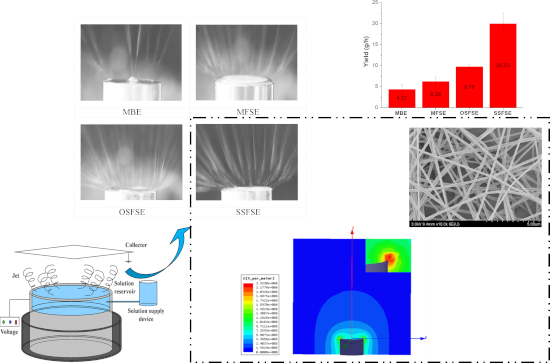
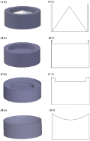
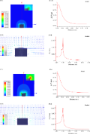
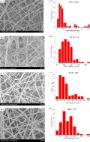
- -electrospinning (MBE), modified free surface electrospinning (MFSE), oblique section free surface electrospinning (OSFSE) and spherical section free surface electrospinning (SSFSE), designed for high-throughput preparation of high-quality nanofibers, are presented in this paper. The mechanisms of fiber
- nanofibers were experimentally investigated. The experimental data agree well with the results of the simulations and show that all four FSE devices can be used to prepare large quantities of high-quality nanofibers. A comparison of the spinning mechanisms of these four FSE devices illustrates that the SSFSE
- device performs best, providing the highest quality and yield of nanofibers. The SSFE device could yield 20.03 g/h of nanofibers at an applied voltage of 40 kV. Keywords: electric field; free surface electrospinning; high-throughput preparation; Maxwell 3D; mechanism; nanofibers; Introduction Due to







A novel all-fiber-based LiFePO4/Li4Ti5O12 battery with self-standing nanofiber membrane electrodes
Beilstein J. Nanotechnol. 2019, 10, 2229–2237, doi:10.3762/bjnano.10.215
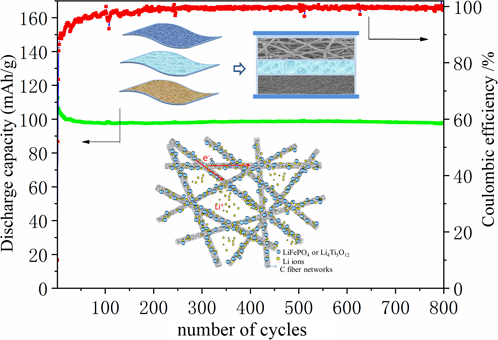
- . Nanostructures of various shapes such as nanofibers [27][28], nanoparticles [29], nanotubes [30], nanowires [31], and nanosheets [32] can greatly shorten the conduction path of Li+, thus improving the Li+ conductivity. In addition, coating or blending with conductive carbon can significantly increase the
- electronic conductivity [33]. Nanofibers combining active substances with conductive carbon as flexible electrodes not only eliminate the need for current collector and binder, but also save the coating process. Moreover, due to the continuous fiber structure, the electronic conductivity of the material is
- effective method to prepare long-range continuous nanofibers. By controlling the spinning and sintering process, nanofiber membrane materials can be easily formed with high porosity and stable structure, especially continuous conductive networks can be formed, which are very suitable for self-standing


Novel hollow titanium dioxide nanospheres with antimicrobial activity against resistant bacteria
Beilstein J. Nanotechnol. 2019, 10, 1716–1725, doi:10.3762/bjnano.10.167
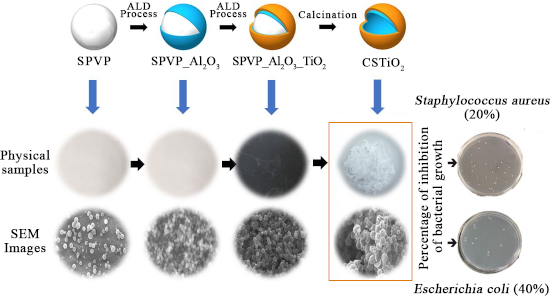
- thin layer of alumina prior to the titania deposition to physically stabilize these low weight particles. Although previous works have demonstrated the successful deposition of metal oxides on nanofibers, the morphological change to spherical particles entailed a more difficult deposition process that


Chiral nanostructures self-assembled from nitrocinnamic amide amphiphiles: substituent and solvent effects
Beilstein J. Nanotechnol. 2019, 10, 1608–1617, doi:10.3762/bjnano.10.156
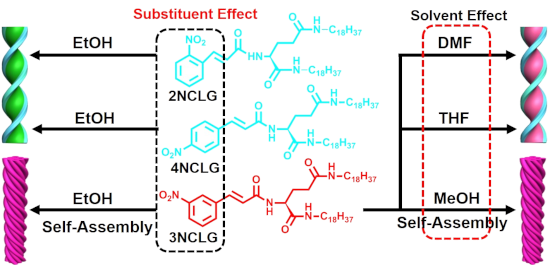
- model compounds to investigate the effect of molecular structure on the chiral sense of self-assembled structures. In our previous study [27], three isomeric pyridine-containing ʟ-glutamic amphiphiles have been found to self-assemble into different nanostructures including nanofibers, nanotwists and
- nanotubes, depending on the substituent position in the pyridine ring. However, we did not observe inversion in the helical sense of the formed self-assembled nanostructures due to the macroscopic chirality of nanofibers and nanotubes, which makes them difficult to be directly detected by a microscope. On
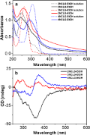
- nm, as shown in Figure 2a. As for 4NCLG assemblies, a similar right-handed helical nanofiber was obtained (Figure 2c). In contrast, a left-handed superhelical structure with a helical pitch of around 500 nm was observed in the 3NCLG system, which was formed by dozens of nanofibers. The nanohelix




Kelvin probe force microscopy work function characterization of transition metal oxide crystals under ongoing reduction and oxidation
Beilstein J. Nanotechnol. 2019, 10, 1596–1607, doi:10.3762/bjnano.10.155
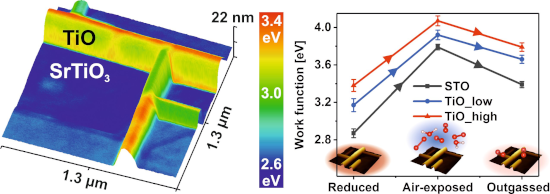
- strong response to gaseous pressures, especially oxygen and water [45]. The tool of choice that provides information on the subtle changes in the work function is KPFM, which has been employed for research on the photocatalytic activity of TiO2-based doped and undoped nanofibers [46][47] and for the


Materials nanoarchitectonics at two-dimensional liquid interfaces
Beilstein J. Nanotechnol. 2019, 10, 1559–1587, doi:10.3762/bjnano.10.153
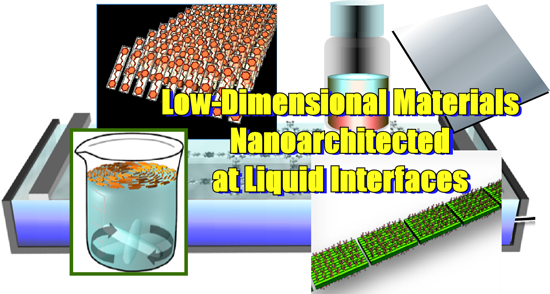
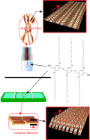
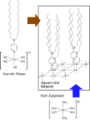
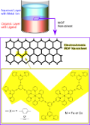
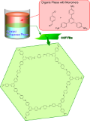
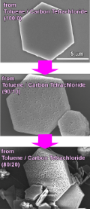
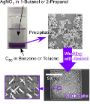
- reported by Yan, Zhao and co-workers [128]. Other one-dimensional functional structures such as porphyrin-functionalized DNA (by Stulz [129]), DNA-based complex structures for ultrasensitive mercury detection (by Govindaraju and co-workers [130]), self-assembled chiral twisted and helical nanofibers (by
- drop-casting, the long axis of oligo(p-phenylenevinylene) molecules is arranged perpendicularly to the substrate. Intra-fiber energy transfer efficiently occurs in the entangled nanofibers. Long-range excitation energy transfers are advantageous for excitation energy transfer. In contrast, the oligo(p













High-temperature resistive gas sensors based on ZnO/SiC nanocomposites
Beilstein J. Nanotechnol. 2019, 10, 1537–1547, doi:10.3762/bjnano.10.151
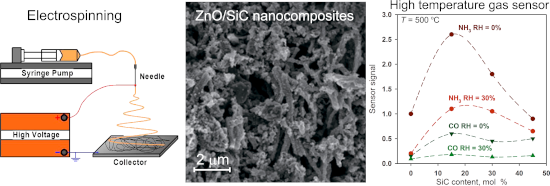
- dispersed silicon carbide (SiC). In this work, ZnO and SiC nanofibers were synthesized by electrospinning of polymer solutions followed by heat treatment, which is necessary for polymer removal and crystallization of semiconductor materials. ZnO/SiC nanocomposites (15–45 mol % SiC) were obtained by mixing
- °C. The ZnO/SiC nanocomposites were characterized by a higher concentration of chemisorbed oxygen, higher activation energy of conductivity, and higher sensor response towards CO and NH3 as compared with ZnO nanofibers. The obtained experimental results were interpreted in terms of the formation of
- materials by mixing and heat treatment of electrospun ZnO nanofibers and nanocrystalline silicon carbide of 3C-SiC polytype. The effect of silicon carbide on the structure and electrical properties of composite materials was studied using different techniques. The work is aimed at creating the resistive



Flexible freestanding MoS2-based composite paper for energy conversion and storage
Beilstein J. Nanotechnol. 2019, 10, 1488–1496, doi:10.3762/bjnano.10.147
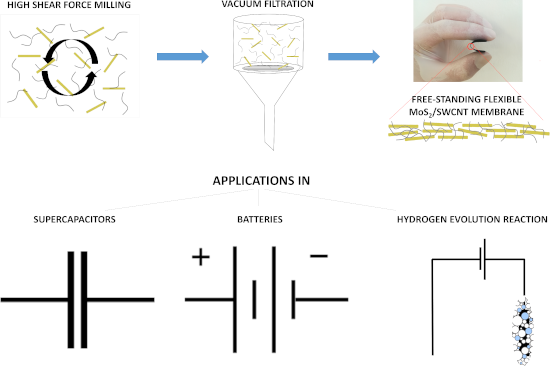
- as amorphous carbon [8], carbon nanofibers [7], carbon nanotubes [8] and graphene [9]) has already been demonstrated to be quite attractive. Typically, the electrodes are prepared by mixing these composites as active material with a polymeric binder, conductive carbon and an organic solvent to form a


Hierarchically structured 3D carbon nanotube electrodes for electrocatalytic applications
Beilstein J. Nanotechnol. 2019, 10, 1475–1487, doi:10.3762/bjnano.10.146
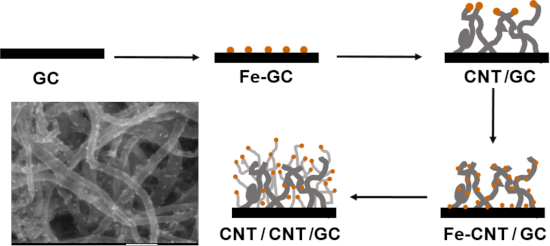
- (3D) structures by attaching other nanofibers or carbon materials. Examples are nanofibers distributed on polymer-based microfibers, CNTs grown on graphene, CNT–carbon black hybrids, graphene- or polymer-coated CNTs, and so on [45][46][47][48][49][50][51]. Another approach for hierarchical structuring





A silver-nanoparticle/cellulose-nanofiber composite as a highly effective substrate for surface-enhanced Raman spectroscopy
Beilstein J. Nanotechnol. 2019, 10, 1270–1279, doi:10.3762/bjnano.10.126
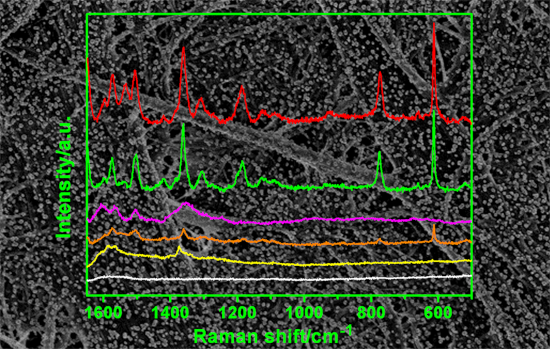
- composed of silver nanoparticles anchored on cellulose nanofibers was fabricated, which is shown to be a highly effective substrate for surface-enhanced Raman spectroscopy (SERS). SERS, a powerful molecular spectroscopy method, is widely used in the trace detection and characterization of various chemical
- nanoparticles (Ag-NPs) onto the surfaces of the cellulose nanofibers (NFs) in ordinary laboratory filter paper by means of the one-step silver mirror reaction. Both size and density of the of the silver nanoparticles on the substrates could be controlled. This paper-based silver-nanoparticle/cellulose-nanofiber
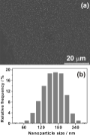
- . Results and Discussion Characterization of the Ag-NP/cellulose-NF composite The silver-nanoparticle/cellulose-nanofiber SERS substrates were fabricated by deposition of silver nanoparticles onto the surfaces of the cellulose nanofibers of ordinary laboratory filter paper by the silver mirror reaction. As


Glucose-derived carbon materials with tailored properties as electrocatalysts for the oxygen reduction reaction
Beilstein J. Nanotechnol. 2019, 10, 1089–1102, doi:10.3762/bjnano.10.109
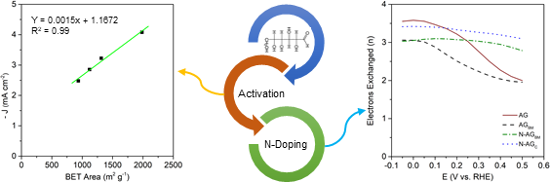
- , depends on the precursors used and the method of synthesis applied. Nitrogen-doped carbon materials have been synthesized by applying different doping methods to different types of materials, such as CNTs [12][23][26], graphene [20][25][27], carbon aerogels [15][28], carbon nanofibers [29], carbon


An efficient electrode material for high performance solid-state hybrid supercapacitors based on a Cu/CuO/porous carbon nanofiber/TiO2 hybrid composite
Beilstein J. Nanotechnol. 2019, 10, 781–793, doi:10.3762/bjnano.10.78
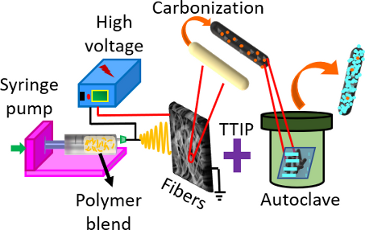
- density of 45.83 Wh kg−1 at a power density of 1.27 kW kg−1 was also realized. The developed electrode material provides new insight into ways to enhance the electrochemical properties of solid-state supercapacitors, based on the synergistic effect of porous carbon nanofibers, metal and metal oxide
- upcoming energy storage devices. Mainly porous, conductive, carbon-based materials, such as activated carbon, carbon black, carbon nanotubes, and graphene have been explored as electrode materials for EDLCs, which deliver high power density and prolonged cycle stability [10]. Among these, carbon nanofibers
- have been envisaged as a prospective electrode material due to its good mechanical strength, high surface area, relatively high conductivity [11][12]. Hence, carbon nanofibers produced by electrospinning, which is a cost-effective, simple and industry-viable technology, offer high production rate, high


Biological and biomimetic surfaces: adhesion, friction and wetting phenomena
Beilstein J. Nanotechnol. 2019, 10, 481–482, doi:10.3762/bjnano.10.48

- collected articles are devoted to surface-related effects in engineered surfaces, such as multilayered composites, carbon nanofibers, textured steel surfaces, and micropatterned elastomer surfaces. Three articles present recent work on the development of a novel fabrication technique for biomaterials and of
The effect of flexible joint-like elements on the adhesive performance of nature-inspired bent mushroom-like fibers
Beilstein J. Nanotechnol. 2018, 9, 2893–2905, doi:10.3762/bjnano.9.268
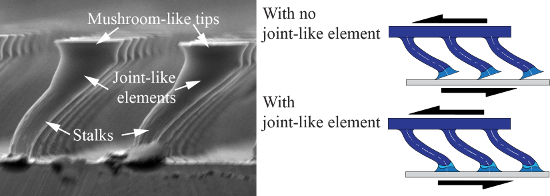
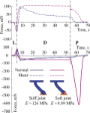
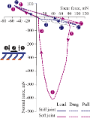
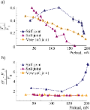
- flexible joint. A higher pull-off is recorded from the soft joint than the very soft joint fibers. The terminal ends of the nanofibers at the end of the seta form a slanted plane as opposed to a horizontal one. The deformation caused in the dragging stage rotates the setae tip such that most of the fibers






Graphene-enhanced metal oxide gas sensors at room temperature: a review
Beilstein J. Nanotechnol. 2018, 9, 2832–2844, doi:10.3762/bjnano.9.264
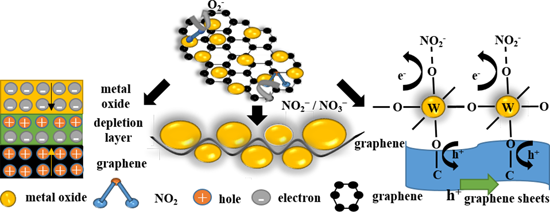
- electrons transferred from graphene to Co3O4 through the Co–O–C bonds lead to an additional increase of the width of hole accumulation layers, leading to a high sensitivity at room temperature. In another work, Feng et al. [92] developed composite nanofibers of rGO-coated Co3O4 nanocrystals by using



Nanocellulose: Recent advances and its prospects in environmental remediation
Beilstein J. Nanotechnol. 2018, 9, 2479–2498, doi:10.3762/bjnano.9.232
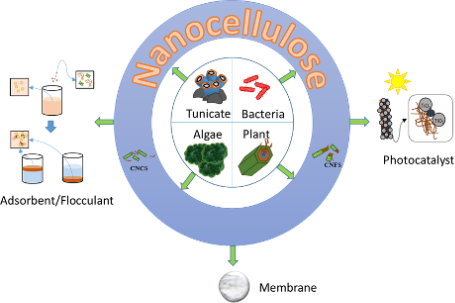
- and tunicate-based cellulose when thinner nanofibers are required for its applications [50]. According to García et al. [33], plant fibres used as cellulose sources can be classified into six groups: bast fibres, core fibres, grass and reed fibres, leaf fibres, seed fibres, and other fibres. The most
- disintegration of cellulose in a homogenizer [81]. Furthermore, nanofibers produced via enzymatic treatment using endoglucanase were proven to yield better structure in terms of average molar mass and larger aspect ratio than nanofibers produced from acid hydrolysis (chemical treatment) [82]. Several other
- with greater crystal dimensions and reduced sulphur content from cotton linter. Conversely, chemically treated banana fibres showed larger crystallinity (300%) in nanofibers than nanofibers treated with xylanase (200%) [85] since the enzyme showed difficulty in solubilizing the hemicelluloses and could


Effect of electrospinning process variables on the size of polymer fibers and bead-on-string structures established with a 23 factorial design
Beilstein J. Nanotechnol. 2018, 9, 2466–2478, doi:10.3762/bjnano.9.231
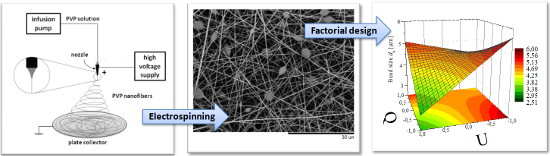
- , it is possible to obtain fibers of different structure: porous, smooth, core–shell, hollow structures and layer-by-layer stacked films or uniaxially aligned arrays [2]. Because of the variety of obtained structures that are possible, electrospun nanofibers find applications in well-established
- conditions on the surface morphology of nanofibers is the one by Deitzel et al. [7]. This work focuses on the influence of two process variables: voltage and concentration of the polymer solution of polyethylene oxide (PEO) dissolved in water. In this study it was observed that the increase in electrical
- vascular grafts made of poly(ε-caprolactone) electrospun nanofibers [27]. However, works on the implementation of the factorial design to describe bead-on-string structures have not been conducted yet. All of the dependencies, described in the abovementioned studies, are usually established empirically and


High-throughput micro-nanostructuring by microdroplet inkjet printing
Beilstein J. Nanotechnol. 2018, 9, 2372–2380, doi:10.3762/bjnano.9.222
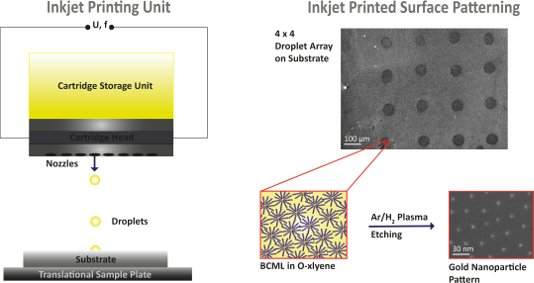
- variety of different techniques known to reduce or eliminate this effect, such as the distinct choice of solvent mixture and concentration [33] or adding nanofibers to colloidal dispersions [34]. In our BCML solution, such adaptations were not possible, partly because of the stabilization of the micellar


Electrospun one-dimensional nanostructures: a new horizon for gas sensing materials
Beilstein J. Nanotechnol. 2018, 9, 2128–2170, doi:10.3762/bjnano.9.202
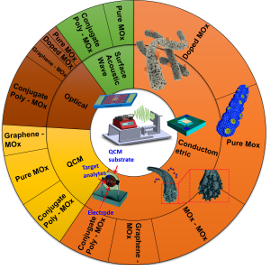
- , and larger surface-to-volume ratio [34]. The large surface-area-to-volume ratio of nanofibers (NFs), hollow nanofibers (HNFs), nanotubes (NTs) and nanowires (NWs) with micro/mesoporous surfaces results in improved adsorption and better reaction kinetics of gas-sensitive materials. Nanofibers can be
- these techniques, electrospinning is one of the most versatile and robust techniques for synthesis of functional nanofibers with unique structure and diverse properties [37][38][39][40]. The diameter of these functional fibers range between sub-micrometre to nanometre. The versatility of electrospinning
- shown in Figure 1. A nanofiber film has a surface area approximately twice that of a continuous thin film. This property means that nanofibers are excellent candidates for gas sensing applications. Moreover, nanofibers derived from a variety of materials, such as polymers, metals, metal-oxides and






Metal-free catalysis based on nitrogen-doped carbon nanomaterials: a photoelectron spectroscopy point of view
Beilstein J. Nanotechnol. 2018, 9, 2015–2031, doi:10.3762/bjnano.9.191
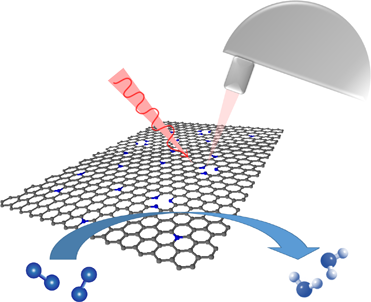
- the π-system of pyridinic N and graphene, as already reported for carbon nanofibers by Maldonado and Stevenson [102]. A more detailed study was performed by Kundu et al. [103] on N-CNTs prepared via pyrolysis of acetonitrile over cobalt catalysts. Samples were synthesized at different temperatures