Search results
Search for "rGO" in Full Text gives 77 result(s) in Beilstein Journal of Nanotechnology.
Electrostatic force spectroscopy revealing the degree of reduction of individual graphene oxide sheets
Beilstein J. Nanotechnol. 2018, 9, 1146–1155, doi:10.3762/bjnano.9.106
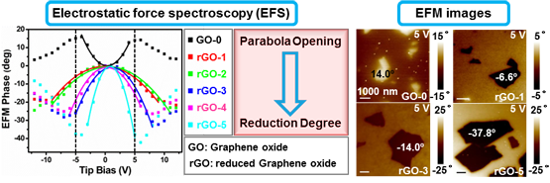
- reduced one-atom-thick GO sheets at the nanoscale. In this paper, using thermally or chemically reduced individual GO sheets on mica substrates as examples, we characterize their degree of reduction at the nanoscale using EFS. For the reduced graphene oxide (rGO) sheets with a given degree of reduction
- or valley EFM phases) and the EFM phase contrast at a certain tip bias less than the peak value can all indicate the degree of reduction of rGO samples, which is positively correlated with the dielectric constant. In addition, we gave the ranking of degree for reduction on thermally or chemically
- reduction methods with high yield. Reducing GO to reduced graphene oxide (rGO) is a key step toward the large-scale use of graphene [6]. Different reduction processes that partially restore the structure and properties result in different properties of rGO, which in turn affect the final performance of rGO


Nanoscale mapping of dielectric properties based on surface adhesion force measurements
Beilstein J. Nanotechnol. 2018, 9, 900–906, doi:10.3762/bjnano.9.84
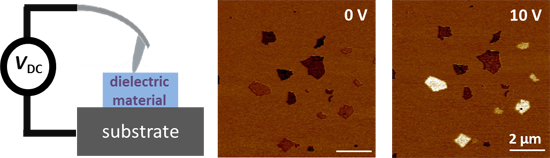
- studies and applications. Here, we report a novel method for the characterization of local dielectric distributions based on surface adhesion mapping by atomic force microscopy (AFM). The two-dimensional (2D) materials graphene oxide (GO), and partially reduced graphene oxide (RGO), which have similar
- thicknesses but large differences in their dielectric properties, were studied as model systems. Through direct imaging of the samples with a biased AFM tip in PeakForce Quantitative Nano-Mechanics (PF-QNM) mode, the local dielectric properties of GO and RGO were revealed by mapping their surface adhesion
- forces. Thus, GO and RGO could be conveniently differentiated. This method provides a simple and general approach for the fast characterization of the local dielectric properties of graphene-based materials and will further facilitate their applications in energy generation and storage devices. Keywords


Perovskite-structured CaTiO3 coupled with g-C3N4 as a heterojunction photocatalyst for organic pollutant degradation
Beilstein J. Nanotechnol. 2018, 9, 671–685, doi:10.3762/bjnano.9.62
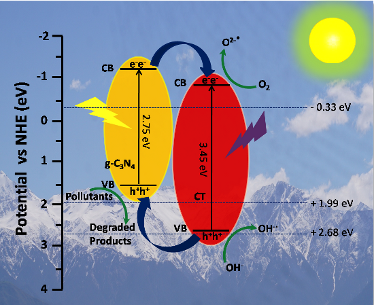
- activity is limited to UV excitation only [35]. Recently, our group has reported a novel RGO–N–CaTiO3 (RGO-NCT) bifunctional photocatalyst which comprises both adsorption and photocatalytic properties [36]. The photocatalytic activity of RGO-NCT photocatalysts was evaluated by studying the degradation of


Mechanistic insights into plasmonic photocatalysts in utilizing visible light
Beilstein J. Nanotechnol. 2018, 9, 628–648, doi:10.3762/bjnano.9.59
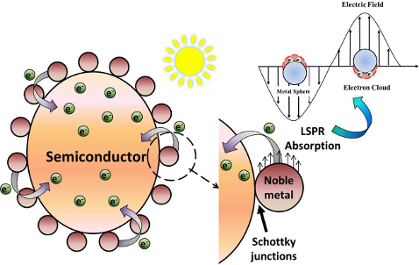
- photoreduction of graphene oxide (GO) to graphene or reduced graphene oxide (rGO) by Wu et al. Their study revealed the photocatalytic Ag NP reduction at λ > 390 nm [95]. The schematic diagram representing the interaction of GO with Ag is shown in Figure 8. The LSPR effect on the Ag NPs generated a strong





Anchoring Fe3O4 nanoparticles in a reduced graphene oxide aerogel matrix via polydopamine coating
Beilstein J. Nanotechnol. 2018, 9, 591–601, doi:10.3762/bjnano.9.55
- critical point drying [6]. During hydrogel formation, GO undergoes reduction. Therefore, after solvent removal, it forms a reduced graphene oxide (rGO) porous structure [7]. Currently, lots of research has been focused on the potential applications of rGO-based aerogels in energy storage systems (i.e., Li
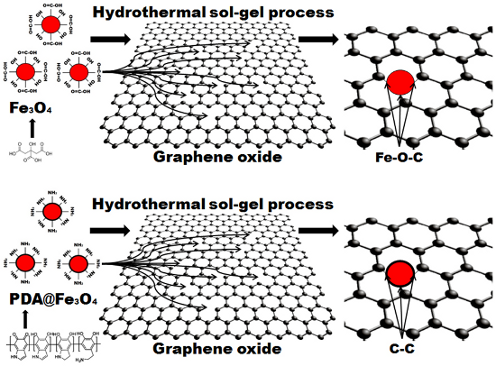
- polydopamine (PDA) anchors the particles on graphene oxide defects, immobilizes them in the porous matrix, improves the aerogel structure and, what is important, do not affect the magnetic properties of magnetite. Results and Discussion The rGO, rGO-Fe3O4 and rGO-PDA@Fe3O4 aerogels were synthesized as
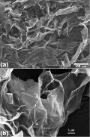
- micrographs of rGO, rGO-Fe3O4 and rGO-PDA@Fe3O4 aerogels. From the low magnification images one can determine the pore size distribution and observe interconnected 3D network of aerogel-forming rGO structures (Figure 1a–c). At higher magnification, the agglomerates of MNPs are clearly visible (Figure 1e,f


Ultralight super-hydrophobic carbon aerogels based on cellulose nanofibers/poly(vinyl alcohol)/graphene oxide (CNFs/PVA/GO) for highly effective oil–water separation
Beilstein J. Nanotechnol. 2018, 9, 508–519, doi:10.3762/bjnano.9.49
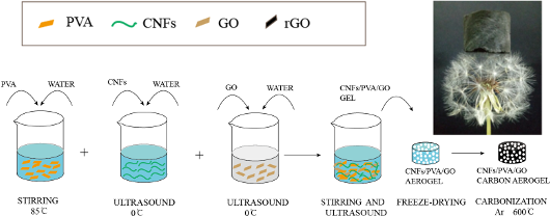
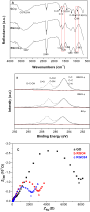
- the carbonization treatment was complete, which is in good agreement with the FTIR and Raman data. Chemical properties The FTIR spectrum of the CNFs, PVA, GO, rGO, CNF/PVA/GO and CNF/PVA/GO carbon aerogels are shown in Figure 3. The CNFs exhibit FTIR absorption bands around 3323 cm−1 (the stretching
- moieties, C–OH and C–O vibrations, respectively. As shown in the spectrum of rGO (Figure 3d), most peaks corresponding to the carbon–oxygen functional groups disappeared, which indicates the complete reduction of GO. Figure 3e shows the FTIR spectrum of the CNF/PVA/GO aerogel. Simultaneously, the
- . In previous work, a similar Raman spectrum was observed for cotton cellulose [30]. Figure 4b shows the Raman spectrum of PVA films. The strong band at 2911 cm−1 is due to symmetric and asymmetric CH2 stretching vibrations. The Raman spectra of GO and rGO are presented in Figure 4c and Figure 4d


L-Lysine-grafted graphene oxide as an effective adsorbent for the removal of methylene blue and metal ions
Beilstein J. Nanotechnol. 2017, 8, 2680–2688, doi:10.3762/bjnano.8.268
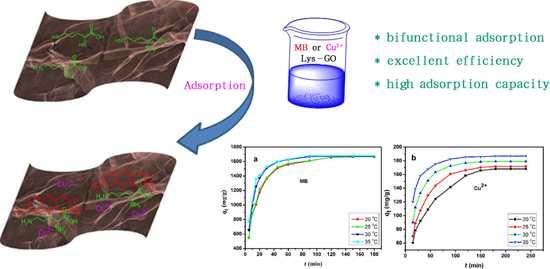
- applications for the removal of metal ions from wastewater. However, L-lysine failed to be grafted onto the reduced graphene oxide (RGO). Results showed a slightly lower absorbing capacity for copper ions (Cu2+). Herein, L-lysine was attached to the surface of GO by amidation between –COOH and –NH2 to form Lys


Two-dimensional carbon-based nanocomposites for photocatalytic energy generation and environmental remediation applications
Beilstein J. Nanotechnol. 2017, 8, 1571–1600, doi:10.3762/bjnano.8.159
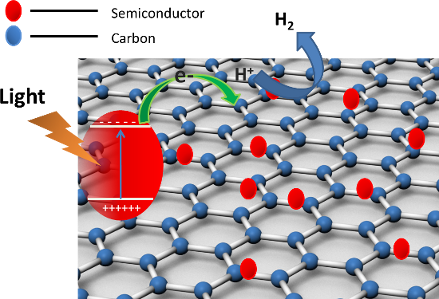
- nature and it is responsible for the easy dispersal in many solvents such as water, which is helpful for the formation of various composites [50]. The reduction of GO in various reducing conditions forms reduced graphene oxide (RGO) in which electrical conductivity is partly revived. This RGO is also
- known as chemical-modified graphene [51]. The schematic illustration of RGO preparation from graphite is shown in Figure 2. The composite formation of graphene with semiconductor materials has been reported by various methods, such as hydrothermal/solvothermal [52], sol−gel [53], self-assembly [54
- for the synthesis of inorganic nanocrystals and gives rise to highly crystalline nanostructures and also reduces GO to RGO. As the name suggests, water is the main solvent in hydrothermal synthesis method and major advantage of water as the solvent is its abundance in nature as well as its non-toxic


A biofunctionalizable ink platform composed of catechol-modified chitosan and reduced graphene oxide/platinum nanocomposite
Beilstein J. Nanotechnol. 2017, 8, 1508–1514, doi:10.3762/bjnano.8.151
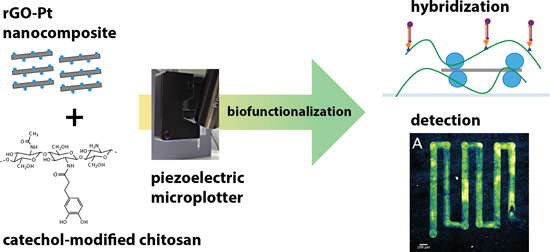
- , Szczecin, Poland 10.3762/bjnano.8.151 Abstract We present an ink platform for a printable polymer–graphene nanocomposite that is intended for the development of modular biosensors. The ink consists of catechol-modified chitosan and reduced graphene oxide decorated with platinum nanoparticles (rGO–Pt). We
- modified the chitosan with catechol groups, in order to obtain adhesive properties and improve solubility. Dispersions of rGO–Pt in ethylene glycol were admixed with an aqueous solution of modified chitosan to yield an ink that is suitable for non-contact piezoelectric printing using a commercial
- polymerase chain reaction (PCR) products and low non-specific binding. Our results demonstrate that catechol-modified chitosan/rGO–Pt nanocomposites can be used as inks for piezoelectric printing and facilitate the attachment of biorecognition elements for biosensor applications. Keywords: biosensing


Development of a nitrogen-doped 2D material for tribological applications in the boundary-lubrication regime
Beilstein J. Nanotechnol. 2017, 8, 1476–1483, doi:10.3762/bjnano.8.147
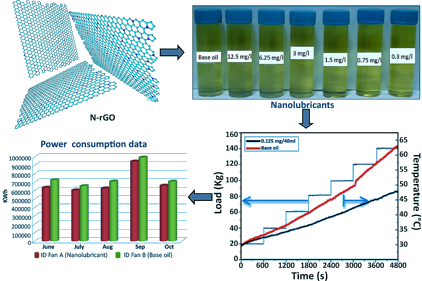
- Coating Material Laboratory, NTPC Energy Technology Research Alliance (NETRA), NTPC Ltd, E3, Ecotech II, Greater Noida 201306, Uttar Pradesh, India 10.3762/bjnano.8.147 Abstract The present paper describes a facile synthesis method for nitrogen-doped reduced graphene oxide (N-rGO) and the application of
- N-rGO as an effective additive for improving the tribological properties of base oil. N-rGO has been characterized by different characterization techniques such as X-ray diffraction, scanning electron microscopy, transmission electron microscopy, X-ray photoelectron spectroscopy and Raman
- spectroscopy. N-rGO-based nanolubricants are prepared and their tribological properties are studied using a four-ball tester. The nanolubricants show excellent stability over a period of six months and a significant decrease in coefficient of friction (25%) for small amounts of N-rGO (3 mg/L). The improvement


Fully scalable one-pot method for the production of phosphonic graphene derivatives
Beilstein J. Nanotechnol. 2017, 8, 1094–1103, doi:10.3762/bjnano.8.111
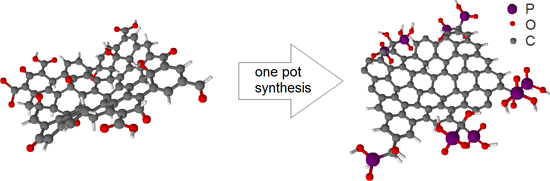
- produce phosphonated rGO. The spectroscopic and thermogravimetric analysis confirmed the successful functionalization and simultaneous reduction of GO. The electrical studies showed a substantial increase in conductivity after functionalization. The measured energy of activation equal to 0.014 eV is in
- accordance with literature reports for reduced graphene oxide (rGO). The promising uses of graphene derivatives in different fields are hindered by complicated and expensive functionalization methods, suitable only for laboratory scale. Effective functionalization by fully scalable, low-cost methods and
- cm−1. A small shift of the 2D peak, together with a decrease of its intensity can also be observed. According to the literature the frequency shift of G and 2D is connected with changes in the number of stacking layers in GO and rGO. It was proved that if the number of layers decreases, the G band


CVD transfer-free graphene for sensing applications
Beilstein J. Nanotechnol. 2017, 8, 1015–1022, doi:10.3762/bjnano.8.102
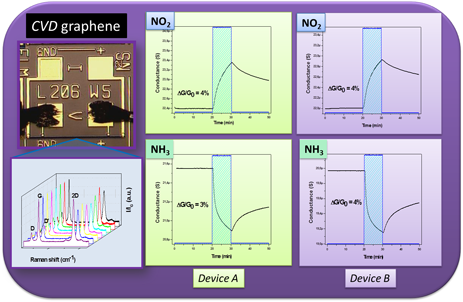
- number of publications dedicated to graphene-based sensors [2]. The gas sensor devices presented in literature are mostly based on pristine graphene, graphene oxide (GO) and reduced graphene oxide (rGO). Many approaches for the fabrication of such materials, including CVD, mechanical, chemical and


Synthesis of graphene–transition metal oxide hybrid nanoparticles and their application in various fields
Beilstein J. Nanotechnol. 2017, 8, 688–714, doi:10.3762/bjnano.8.74
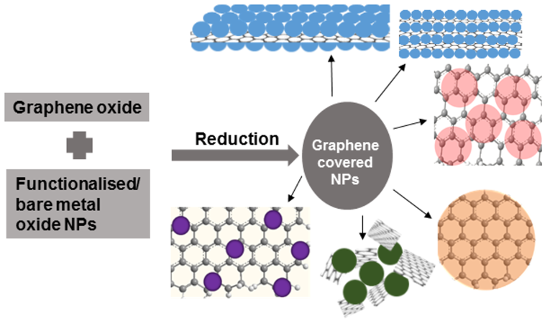
- structures are particularly interesting because after hybridisation they not only display the individual properties of graphene and the NPs, but also they exhibit further synergistic properties. Reduced graphene oxide (rGO), a graphene-like material, can be easily prepared by reduction of graphene oxide (GO
- ]. Using oxidation and exfoliation of this graphite oxide, followed by a reduction process, graphene can be achieved as highly rGO. Like graphite, GO has a layered structure, but the plane of the carbon atoms are heavily decorated by oxygen-containing groups which expand the interlayer distance and make
- different reduction processes result in different properties of graphene, which in turn affect the final product and also the performance of the material [45]. Reduced GO is chemically derived graphene, which is also referred to as functionalised graphene [46], chemically modified graphene [47], rGO [48






In situ formation of reduced graphene oxide structures in ceria by combined sol–gel and solvothermal processing
Beilstein J. Nanotechnol. 2016, 7, 1815–1821, doi:10.3762/bjnano.7.174
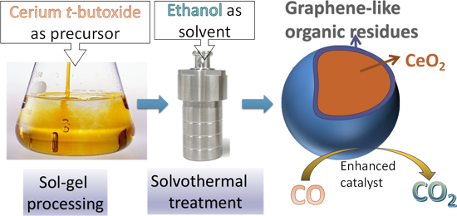
- Shanghai, P. R. China Institute of Chemical Technologies and Analytics, Vienna University of Technology, Getreidemarkt 9, 1060 Wien, Austria 10.3762/bjnano.7.174 Abstract Raman and IR investigations indicated the presence of reduced graphene oxide (rGO)-like residues on ceria nanoparticles after
- solvothermal treatment in ethanol. The appearance of such structures is closely related to cerium tert-butoxide as precursor and ethanol as solvothermal solvent. The rGO-like residues improve the catalytic CO oxidation activity. This was also confirmed by introduction of “external” graphene oxide during sol
- –gel processing, by which the rGO structures and the catalytic activity were enhanced. Keywords: ceria; CO oxidation; graphene oxide; sol–gel processing; Introduction Ceria (CeO2) has been widely studied as catalyst or catalyst support for redox reactions owing to its high oxygen storage and release




Role of RGO support and irradiation source on the photocatalytic activity of CdS–ZnO semiconductor nanostructures
Beilstein J. Nanotechnol. 2016, 7, 1684–1697, doi:10.3762/bjnano.7.161
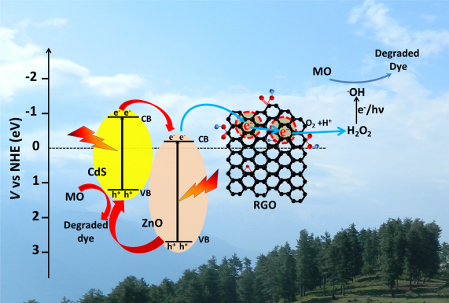
- the photocatalysts. In this work, we have investigated the role of reduced graphene oxide (RGO) support and the irradiation source on mixed metal chalcogenide semiconductor (CdS–ZnO) nanostructures. The photocatalyst material was synthesized using a facile hydrothermal method and thoroughly
- characterized using different spectroscopic and microscopic techniques. The photocatalytic activity was evaluated by studying the degradation of a model dye (methyl orange, MO) under visible light (only) irradiation and under natural sunlight. The results reveal that the RGO-supported CdS–ZnO photocatalyst
- the conduction band (CB) of CdS to that of ZnO [22][27]. The CdS–ZnO semiconductor nanostructures can be further supported on graphene/reduced graphene oxide (RGO) materials to improve their photocatalytic properties. Ideally, graphene is a single layer carbon sheet, which consists of a two




Graphene-enhanced plasmonic nanohole arrays for environmental sensing in aqueous samples
Beilstein J. Nanotechnol. 2016, 7, 1564–1573, doi:10.3762/bjnano.7.150
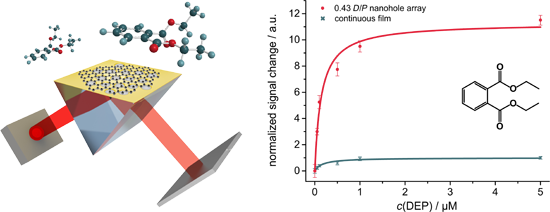
- the nanohole array surface. Furthermore, a reduced graphene oxide (rGO) sensor surface was layered over the nanohole array. Reduced graphene oxide is a 2D nanomaterial consisting of sp2-hybridized carbon atoms and is an attractive receptor surface for SPR as it omits any bulk phase and therefore
- binding capacity of the sensor surface. As a simple and environmentally highly relevant model, binding of the plasticizer diethyl phthalate (DEP) via π-stacking was monitored on the rGO gold nanohole array realizing a limit of detection of as low as 20 nM. The concentration-dependent signal change was
- studied with the best performing rGO-modified nanohole arrays. Compared to continuous gold films a diameter-to-periodicity ratio (D/P) of 0.43 lead to a 12-fold signal enhancement. Finally, the effect of environmental waters on the sensor was evaluated using samples from sea, lake and river waters spiked




A composite structure based on reduced graphene oxide and metal oxide nanomaterials for chemical sensors
Beilstein J. Nanotechnol. 2016, 7, 1421–1427, doi:10.3762/bjnano.7.133
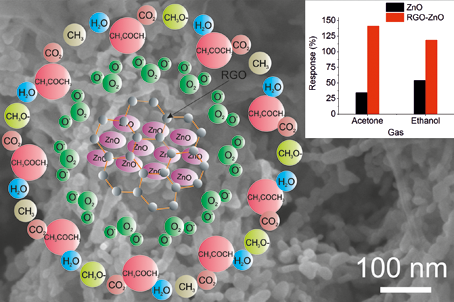
- monitoring of environmental pollutants and for the application of breath tests in assessment of exposure to volatile organic compounds. Keywords: chemical sensors; reduced graphene oxide (RGO); volatile organic compounds; zinc oxide (ZnO); Introduction Hazard analysis of critical control point (HACCP
- materials make them a suitable candidate for various applications [20][21]. Recently we have shown that the functionalization of ZnO with reduced graphene oxide (RGO) sheets improved its sensing performance for NO2 and H2 [22]. Abideen et al. also improved the response of ZnO towards H2 preparing ZnO
- nanofibers loaded with reduced graphene oxide [23]. These recent studies indicate that the combination of graphene and its modified structures with ZnO nanomaterials may open new perspectives for the fabrication of ZnO-based chemical sensors. In this paper, we describe a hybrid nanomaterial consisting of RGO


Reasons and remedies for the agglomeration of multilayered graphene and carbon nanotubes in polymers
Beilstein J. Nanotechnol. 2016, 7, 1174–1196, doi:10.3762/bjnano.7.109
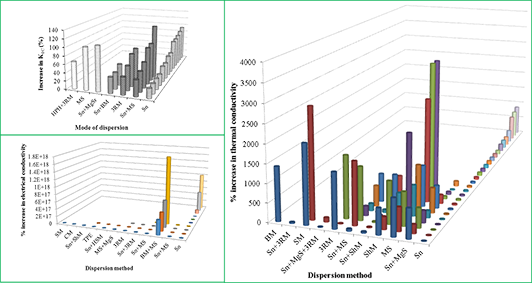
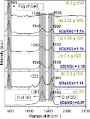
- can be attributed to the higher capability of graphene to rebound advancing cracks [11][12]. The Raman and XPS spectra of graphite, graphene oxide (GO), and thermally reduced graphene oxide (RGO) are shown in Figure 1a,b. The graphene structure can be studied by using transmission electron microscopy
- for the dispersion of MLG and CNT. Certain chemicals can be used for improved performance and to introduce various functional groups onto CNTs [40]. It is reported that ball milling shortens the aspect ratio of the filler [54]. Tang et al. produced highly dispersed and poorly dispersed RGO–epoxy
- nanocomposites using solution casting. The high dispersion of RGO in epoxy was achieved using ball milling [13]. The RGO dispersed in epoxy using sonication and not subjected to ball milling was termed as poorly dispersed. They studied the influence of graphene dispersion on the mechanical properties of the


Development of highly faceted reduced graphene oxide-coated copper oxide and copper nanoparticles on a copper foil surface
Beilstein J. Nanotechnol. 2016, 7, 1010–1017, doi:10.3762/bjnano.7.93
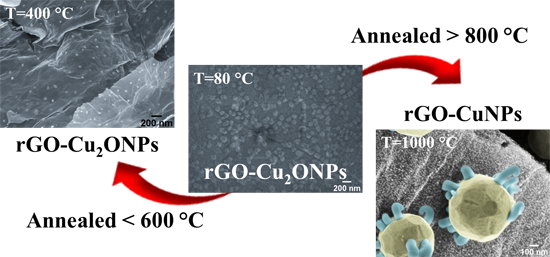
- Nanotechnology Program. Centro de Investigación y de Estudios Avanzados del IPN. Av. IPN 2508, Col. San Pedro Zacatenco, Mexico City 07360, Mexico 10.3762/bjnano.7.93 Abstract This work describes the formation of reduced graphene oxide-coated copper oxide and copper nanoparticles (rGO-Cu2ONPs, rGO-CuNPs) on the
- the particle size and shape strongly depend on the process temperature. Characterization with transmission electron microscopy and scanning electron microscopy indicates that Cu or Cu2O nanoparticles take rGO sheets from the rGO network to form core–shell Cu–rGO or Cu2O–rGO nanostructures. It is noted
- ; copper(II) oxide; core–shell; reduced graphene oxide; Introduction In the last years, graphene oxide (GO) and reduced graphene oxide (rGO) have emerged as suitable candidates to prepare graphene-based nanocomposites [1][2], including those based on GO/inorganic nanoparticles [3]. The opportunity to


Synthesis and applications of carbon nanomaterials for energy generation and storage
Beilstein J. Nanotechnol. 2016, 7, 149–196, doi:10.3762/bjnano.7.17
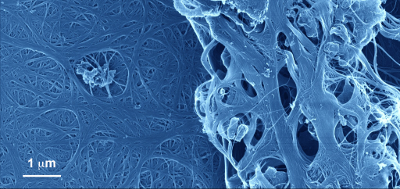
- [107]. The attractive property of GO is that it can be thermally and chemically reduced to produce graphene, usually called reduced GO (rGO) [108][109]. The name rGO is given in order to differentiate it from the pristine graphene. In fact, residual, functional groups and defects break the conjugate
- structure, decreasing the carrier mobility and concentration. Current research in rGO is not only focused on removing the functional groups but also on recovering the network of the graphene lattice [110]. In fact, rGO results in a much lower conductivity when compared to pristine graphene because of large
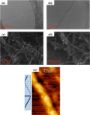
- areas of defects as demonstrated by TEM images (Figure 18) [111]. GO and rGO can be easily distinguished by standard optical observation [109]. rGO usually has an increased charge carrier concentration and mobility that results in improved light reflection when deposited onto a metallic substrate as















Fabrication of hybrid graphene oxide/polyelectrolyte capsules by means of layer-by-layer assembly on erythrocyte cell templates
Beilstein J. Nanotechnol. 2015, 6, 2310–2318, doi:10.3762/bjnano.6.237
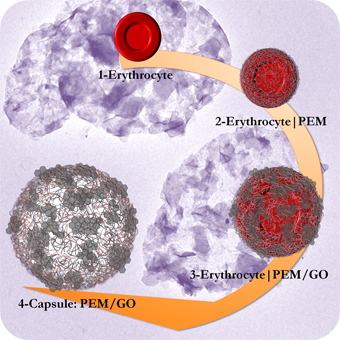
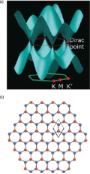
- bears a mix of sp2 and sp3 hybridized carbons in an overall planar structure. These derivatives of graphene can also possess unique and often controllable properties and have the potential to be reduced to what is called a reduced form of graphene oxide, rGO, by chemical or physical means, which can
- subsequent electrochemical reduction of the GO to rGO [18][19]. Using LbL, we explored the assembly of exfoliated GO into 3D structures and developed micrometre-sized capsules on the basis of GO and polyelectrolytes using chicken erythrocyte cells as templates. Template cells have been used in the past as
- internal volume and form planar films with nanoscale thicknesses. Such films could be used to build additional hierarchical structures or for integration into devices; moreover, by the judicious choice of reagents, the GO may be further reduced to form rGO to alter particularly the electronic, mechanical


Donor–acceptor graphene-based hybrid materials facilitating photo-induced electron-transfer reactions
Beilstein J. Nanotechnol. 2014, 5, 1580–1589, doi:10.3762/bjnano.5.170
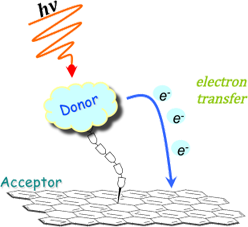
- applications. There are two main routes to overcome this hurdle. Namely, this can be accomplished by starting with water-soluble graphene oxide (GO), which can be reduced to the so-called reduced graphene oxide (rGO), followed by post-modification to acquire functionalized graphene [11]. However, the reduction
- of GO sometimes leads to amorphous carbon [12], and often the graphene sp2-network is incompletely restored. Therefore the properties of the resulting rGO significantly deviate from those of pristine graphene. Hence, this particular approach in not suitable for applications in which the novel
- [29][30] and composites thereof, for instance, Au nanoparticles [31][32] have been incorporated into graphene sheets (GO or rGO) to yield donor–acceptor systems. However, the aim of this mini-review is to highlight recent advances in the preparation of graphene-based hybrid materials with organic


Enhanced photocatalytic hydrogen evolution by combining water soluble graphene with cobalt salts
Beilstein J. Nanotechnol. 2014, 5, 1167–1174, doi:10.3762/bjnano.5.128
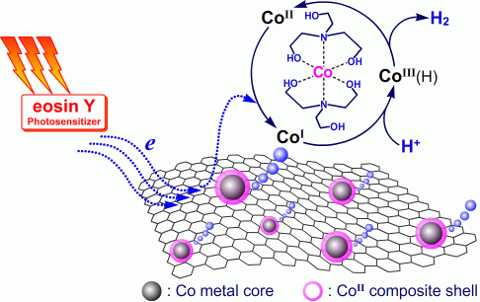
- ][27][28][29][30][31][32][33]. Specifically, graphene has been involved in photocatalytic hydrogen production systems [34], such as TiO2-(N)RGO-Pt [35][36][37][38], g-C3N4-RGO-Pt [39], CdS-RGO-Pt [40][41][42][43], MoS2-NRGO [44][45], EY-RGO-Pt [46] and BiVO4-RGO-Ru/SrTiO3:Rh [47] (RGO: reduced graphene


Highly NO2 sensitive caesium doped graphene oxide conductometric sensors
Beilstein J. Nanotechnol. 2014, 5, 1073–1081, doi:10.3762/bjnano.5.120
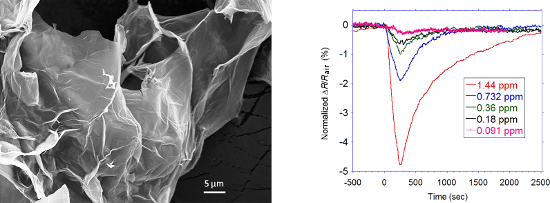
- groups have reported high gas sensing performance of conductometric devices based on GO [25][35][45], reduced GO (rGO) [15][23][24][29][46][47] and functionalized rGO [18][48][49][50]. Prezioso et al. [25] have measured the NO2 sensing performance of GO drop casted on standard interdigitated Pt
- been proven by Yuan et al. [50] that reducing the thickness of the sensing layer below 5 nm results in a significant enhancement of the sensitivity [50]; although other authors claim that very thin layers would result in a not uniform conducting path [18]. The decoration of rGO with Pd nanoparticles
- sensor a relative increase in the response (RGO-Cs) of 0.7, 1, 2, 4.4, 10, 24 and 40% was recorded for 0.18, 0.36, 0.73, 1.5, 3, 6.1 and 12.2 ppm NO2, respectively. Even at very low gas concentrations, a slope of about 3% ppm can be observed (inset of Figure 5), confirming that the as-prepared GO-Cs




Enhancement of photocatalytic H2 evolution of eosin Y-sensitized reduced graphene oxide through a simple photoreaction
Beilstein J. Nanotechnol. 2014, 5, 801–811, doi:10.3762/bjnano.5.92
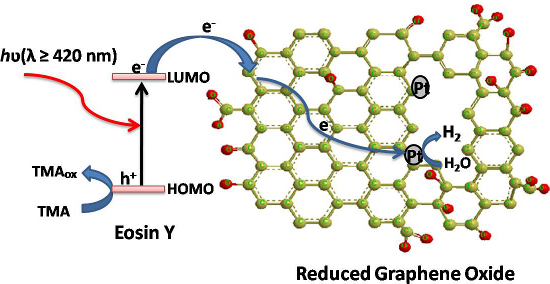
- Weiying Zhang Yuexiang Li Shaoqin Peng Xiang Cai Department of Chemistry, Nanchang University, Nanchang 330031, China 10.3762/bjnano.5.92 Abstract A graphene oxide (GO) solution was irradiated by a Xenon lamp to form reduced graphene oxide (RGO). After irradiation, the epoxy, the carbonyl and the
- hydroxy groups are gradually removed from GO, resulting in an increase of sp2 π-conjugated domains and defect carbons with holes for the formed RGO. The RGO conductivity increases due to the restoration of sp2 π-conjugated domains. The photocatalytic activity of EY-RGO/Pt for hydrogen evolution was
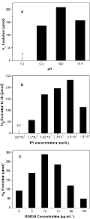
- investigated with eosin Y (EY) as a sensitizer of the RGO and Pt as a co-catalyst. When the irradiation time is increased from 0 to 24 h the activity rises, and then reaches a plateau. Under optimum conditions (pH 10.0, 5.0 × 10⁻⁴ mol L−1 EY, 10 μg mL−1 RGO), the maximal apparent quantum yield (AQY) of EY