Search results
Search for "titanium dioxide" in Full Text gives 139 result(s) in Beilstein Journal of Nanotechnology.
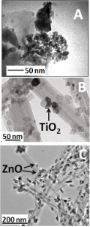
Photoactive nanoarchitectures based on clays incorporating TiO2 and ZnO nanoparticles
Beilstein J. Nanotechnol. 2019, 10, 1140–1156, doi:10.3762/bjnano.10.114
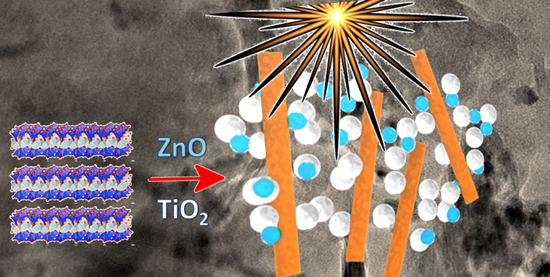
- ; nanoarchitectures; photocatalysts; titanium dioxide; zinc dioxide; Review Introduction: immobilization of nanoscale TiO2 and ZnO on clay minerals Nanoarchitectonics is a term coined by Japan's National Institute for Materials Science (NIMS), which refers to the nanoscale design of complex materials through a deep
- the “Web of Science” (WoS) [21] around 10,000 papers have been published in the last decade in connection with the topic of TiO2 NPs used as photocatalysts, indicating the high interest in the use of these materials for this type of applications. In fact, titanium dioxide (anatase phase) can be
- extensively studied clay–semiconductor systems for photocatalysis applications. Various procedures have been reported to produce kaolinite clay mineral fully coated with TiO2 NPs [94][95][96][97][98]. An example of these methods is the in situ formation of titanium dioxide and its anchorage on the external



Tailoring the stability/aggregation of one-dimensional TiO2(B)/titanate nanowires using surfactants
Beilstein J. Nanotechnol. 2019, 10, 1024–1037, doi:10.3762/bjnano.10.103
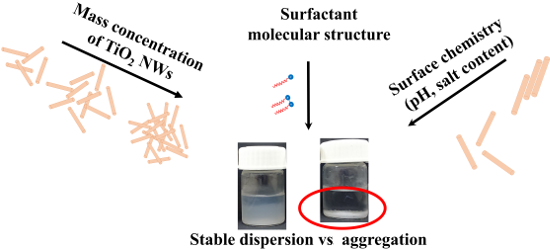
- . Keywords: 1D nanomaterials; cationic surfactants; stability; surface complexation model; titanate nanowires; Introduction Among the extensive variety of metal oxide nanomaterials, titanium dioxide nanomaterials (TNMs) (e.g., anatase, rutile, TiO2(B) and titanate) have attracted considerable attention


Rapid, ultraviolet-induced, reversibly switchable wettability of superhydrophobic/superhydrophilic surfaces
Beilstein J. Nanotechnol. 2019, 10, 866–873, doi:10.3762/bjnano.10.87
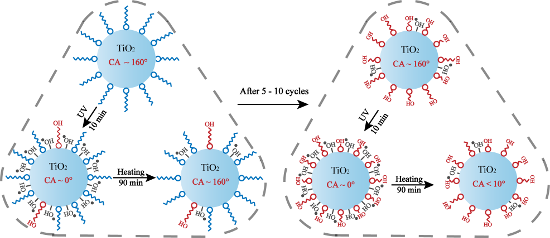
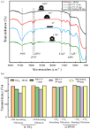
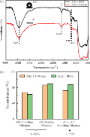
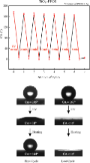
- chemicals Titanium dioxide (TiO2, rutile) with a diameter of ≈25 nm and aluminium dioxide (Al2O3) with a diameter of ≈30 nm were acquired from Shanghai Aladdin Bio-Chem Technology Corporation (Shanghai, China). 1H,1H,2H,2H-Perfluorooctyl(trimethoxy)silane (PFOS) was obtained from Shanghai Macklin



Novel reversibly switchable wettability of superhydrophobic–superhydrophilic surfaces induced by charge injection and heating
Beilstein J. Nanotechnol. 2019, 10, 840–847, doi:10.3762/bjnano.10.84
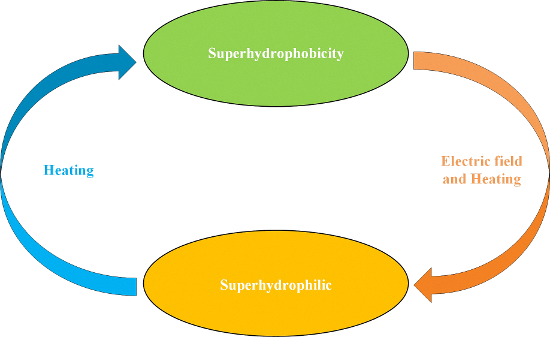
- ], temperature [12][13][14][15], pH [16][17][18], and electric field [19][20][21][22][23][24][25] stimulation. Zhang et al. [4] reported that superhydrophobic titanium dioxide surfaces become hydrophilic with a contact angle of 0° after 240 min of ultraviolet radiation. Nishimoto et al. [5] developed a method
- ] deposited thin films of titanium dioxide nanorods on glass substrates by a low-temperature hydrothermal method. The films were stored in the dark for two weeks to yield films with a contact angle of 154 ± 1.3°. Film irradiation with ultraviolet light for 2 h rendered the films superhydrophilic with a


Widening of the electroactivity potential range by composite formation – capacitive properties of TiO2/BiVO4/PEDOT:PSS electrodes in contact with an aqueous electrolyte
Beilstein J. Nanotechnol. 2019, 10, 483–493, doi:10.3762/bjnano.10.49
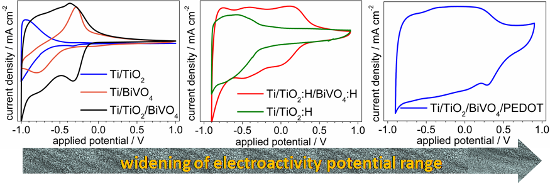
- studied by using scanning electron microscopy. The surface of the anodized titanium foil prepared according to the procedure described in the experimental part is presented in Figure 2b. Uniform coverage of titanium by titanium dioxide nanotubes was achieved. The average diameter and wall thickness of the


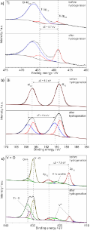


Amorphous NixCoyP-supported TiO2 nanotube arrays as an efficient hydrogen evolution reaction electrocatalyst in acidic solution
Beilstein J. Nanotechnol. 2019, 10, 62–70, doi:10.3762/bjnano.10.6
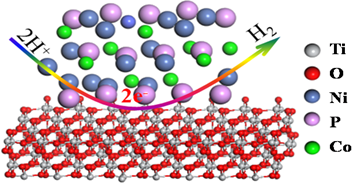
- gives a lower activity than the electrode without the titanium dioxide carrier, which may be related to the low conductivity of titanium dioxide. Thus the electrocatalytic activity can be improved effectively by improving the conductivity of the TNA support. In electrochemical HER, the bath voltage is




Graphene-enhanced metal oxide gas sensors at room temperature: a review
Beilstein J. Nanotechnol. 2018, 9, 2832–2844, doi:10.3762/bjnano.9.264
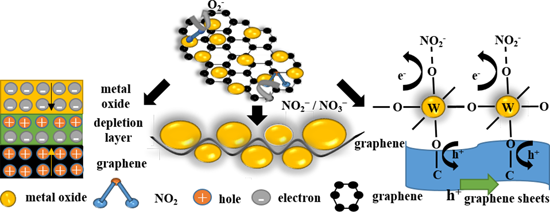
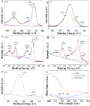
- achieved at all [19][20]. Metal-oxide semiconductors (MOS), including tin oxide (SnO2), titanium dioxide (TiO2), zinc oxide (ZnO), copper oxide (CuO), tungsten oxide (WO3), indium oxide (In2O3), ferric oxide (Fe2O3) and cobalt oxide (Co3O4) are important materials for gas sensors [21][22][23][24][25][26
- room-temperature sensor composed of a 3D graphene aerogel and SnO2 nanoparticles, synthesized via the method mentioned above, exhibited a higher response to NO2 and faster response/recovery times than a 2D SnO2–graphene sensor, fabricated by the same method without freeze-drying process. Titanium
- dioxide (TiO2), as a wide-bandgap semiconductor, has been widely used as photocatalyst, and in solar cells and gas sensors [70][71][72]. In general, its operating temperature is over 200 °C, so scholars try to prepare composites with graphene to reduce its operating temperature. However, the stability of



Non-agglomerated silicon–organic nanoparticles and their nanocomplexes with oligonucleotides: synthesis and properties
Beilstein J. Nanotechnol. 2018, 9, 2516–2525, doi:10.3762/bjnano.9.234
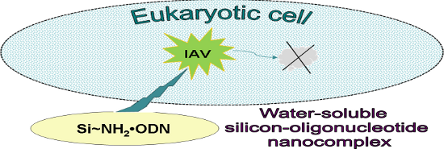
- practical medicine. Despite many efforts in this field, this problem cannot be considered as completely solved. А promising approach is the use of various nanoparticles as delivery vehicles. We have previously developed methods for immobilizing DNA fragments onto titanium dioxide nanoparticles with the


Nanocellulose: Recent advances and its prospects in environmental remediation
Beilstein J. Nanotechnol. 2018, 9, 2479–2498, doi:10.3762/bjnano.9.232
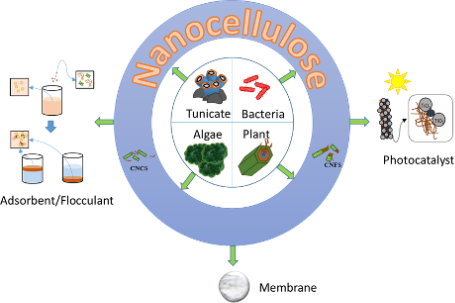
- fibrillated cellulose as a support/carrier for catalyst nanoparticles has attracted a lot of attention in recent years. For example, a study led by An et al. [125] discusses the application of CNFs as a support for titanium dioxide nanoparticles to prepare nano-fibrillated cellulose–TiO2 nanoparticle
- -absorbing materials in order to protect cellulosic fibres from UV bleaching [128]. An et al. [129] claimed that the prepared nano-fibrillated cellulose/magnetite/titanium dioxide nanocomposites had a higher photocatalytic hydrogen generation rate as compared to the nano-fibrillated cellulose/titanium
- dioxide sample. The incorporation of magnetite was able to inhibit the photodegradation of the cellulose structure during UV irradiation and this hybrid structure demonstrated high catalyst recyclability using an external magnetic field. Nanoparticles generally tend to aggregate, leading to difficulties


Droplet-based synthesis of homogeneous magnetic iron oxide nanoparticles
Beilstein J. Nanotechnol. 2018, 9, 2413–2420, doi:10.3762/bjnano.9.226
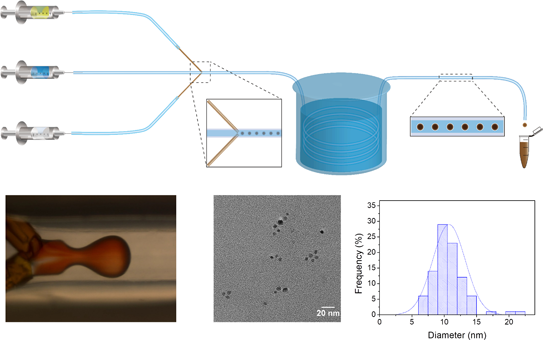
- have been synthesized in pinched flow microfluidic geometries, such as fluorescent silica particles [13], or titanium dioxide particles [27]. For these applications, the microfluidic devices were made from poly(dimethylsiloxane) (PDMS) following a soft-lithography fabrication method [28][29], or made


Electrospun one-dimensional nanostructures: a new horizon for gas sensing materials
Beilstein J. Nanotechnol. 2018, 9, 2128–2170, doi:10.3762/bjnano.9.202
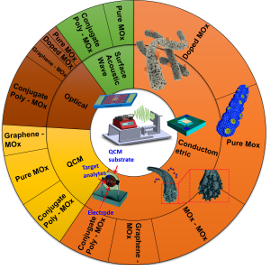
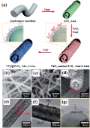
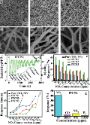
- of electrospun metal oxide (MOx) semiconductors have been used for gas sensing applications. These semiconductors include titanium dioxide (TiO2) [93][94][95], tungsten trioxide (WO3) [27][96][97][98][99][100][101][102][103][104][105][106][107][108][109][110], copper oxide (CuO) [111], NiO [112






A scanning probe microscopy study of nanostructured TiO2/poly(3-hexylthiophene) hybrid heterojunctions for photovoltaic applications
Beilstein J. Nanotechnol. 2018, 9, 2087–2096, doi:10.3762/bjnano.9.197
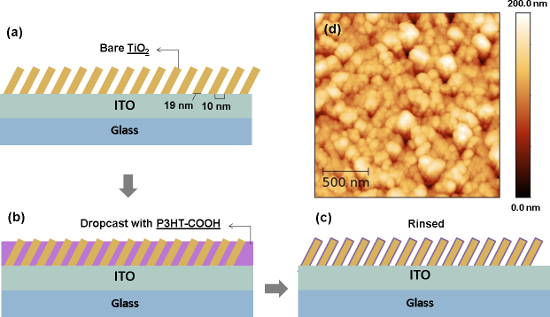
- the electron acceptor materials commonly used for DSSC and HBHJ, titanium dioxide (TiO2) is a well-known metal oxide semiconductor [6][7][8]. Depending on its nanostructure and its crystalline phase, its conductivity varies from 10−4 Ω−1·cm−1 to 10−11 Ω−1·cm−1 [9][10]. TiO2 is very valuable because it


Electromigrated electrical optical antennas for transducing electrons and photons at the nanoscale
Beilstein J. Nanotechnol. 2018, 9, 1964–1976, doi:10.3762/bjnano.9.187
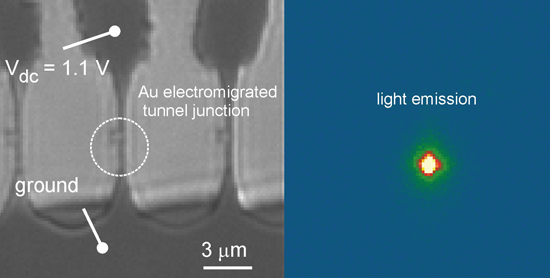
- processing. We realize the implementation of tunneling antennas on a TiO2 waveguide through a multi-step process. First, a 85 to 110 nm thick titanium dioxide layer is deposited by physical vapor deposition on a clean glass substrate. Then, the Au backbone that will subsequently define the electrically


![[Graphic 32]](/bjnano/content/inline/2190-4286-9-187-i38.svg?max-width=637&scale=1.18182) and
and ![[Graphic 33]](/bjnano/content/inline/2190-4286-9-187-i39.svg?max-width=637&scale=1.18182) are...
are...


A visible-light-controlled platform for prolonged drug release based on Ag-doped TiO2 nanotubes with a hydrophobic layer
Beilstein J. Nanotechnol. 2018, 9, 1793–1801, doi:10.3762/bjnano.9.170
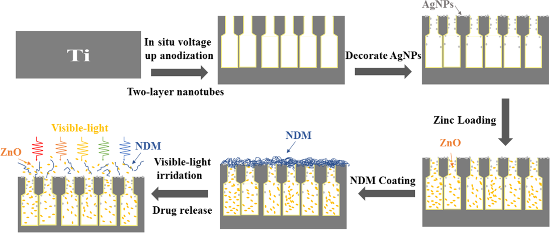
- exhibit promising application as a localized, prolonged drug delivery platform. Keywords: Ag doping; drug delivery; hydrophobic layer; prolonged drug release; TiO2 nanotubes; visible-light-controlled release; Introduction Titanium dioxide nanotubes (TNTs) are often employed as drug carriers, owing to





Controllable one-pot synthesis of uniform colloidal TiO2 particles in a mixed solvent solution for photocatalysis
Beilstein J. Nanotechnol. 2018, 9, 1715–1727, doi:10.3762/bjnano.9.163
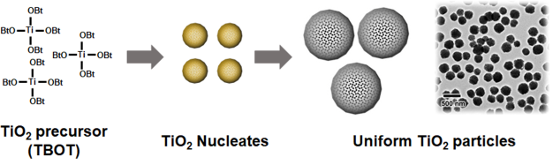
- Abstract This study reports on the controllable synthesis of uniform colloidal titanium dioxide (TiO2) particles and their photocatalytic applications toward rhodamine B (RhB) degradation. The monodispersed TiO2 particles were synthesized under mixed solvent conditions by sol–gel chemistry in a one-pot
- well as the crystalline properties and performance enhancement of TiO2 photocatalysts calcined at different temperatures. Keywords: mixed solvent; one-pot synthesis; photocatalysts; rhodamine B degradation; sol–gel synthesis; spherical TiO2 particles; Introduction Titanium dioxide (TiO2) is a widely




Sulfur-, nitrogen- and platinum-doped titania thin films with high catalytic efficiency under visible-light illumination
Beilstein J. Nanotechnol. 2018, 9, 1629–1640, doi:10.3762/bjnano.9.155
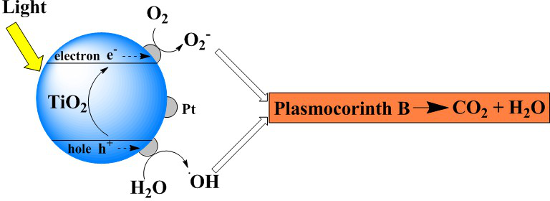
- of Novi Sad, Faculty of Technology, Bulevar cara Lazara 1, 21000 Novi Sad, Serbia 10.3762/bjnano.9.155 Abstract Titanium dioxide photocatalysts have received a lot of attention during the past decades due to their ability to degrade various organic pollutants to CO2 and H2O, which makes them
- synthesis; thin films; titanium dioxide; visible-light illumination; Introduction In recent years, titanium dioxide (TiO2) has emerged as one of the most widely investigated semiconductors [1]. Due to its favorable properties (e.g., chemical and biological stability, nontoxicity and inexpensive price) it
- is used in a variety of applications, such as photovoltaics [2], white pigments [3], electrochemistry [4], catalytic support [5], and most notably, photocatalysis [6]. Photocatalysis is used to describe a process during which a semiconductor (titanium dioxide) interacts with light to produce reactive


Cr(VI) remediation from aqueous environment through modified-TiO2-mediated photocatalytic reduction
Beilstein J. Nanotechnol. 2018, 9, 1448–1470, doi:10.3762/bjnano.9.137
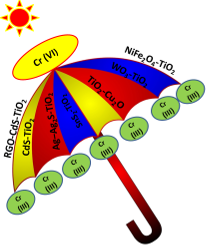
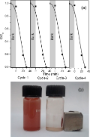
- of H2 is recognized as a green technology since it uses abundantly available water resources and inexhaustible solar energy. Therefore, substantial research in this field has been carried out since the pioneering work of Fujishima and Honda over titanium dioxide (TiO2) electrodes under irradiation of


Semi-automatic spray pyrolysis deposition of thin, transparent, titania films as blocking layers for dye-sensitized and perovskite solar cells
Beilstein J. Nanotechnol. 2018, 9, 1135–1145, doi:10.3762/bjnano.9.105
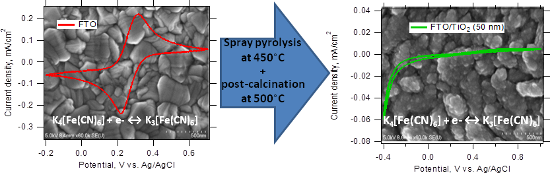
- properties that were not influenced by post-calcination. These results will surely find use in the fabrication of large-scale dye-sensitized and perovskite solar cells. Keywords: blocking films; FTO; solar cells; spray pyrolysis deposition; titanium dioxide; Introduction Dye-sensitized solar cells (DSSCs
- accompanied by the undesirable back reaction of photoinjected electrons with the hole-transporting medium or the oxidized mediator. This reaction occurs both at the TiO2 surface and at the exposed areas of the F-doped SnO2 (FTO) conducting glass that are not covered by the titanium dioxide nanoparticles. In


Room-temperature single-photon emitters in titanium dioxide optical defects
Beilstein J. Nanotechnol. 2018, 9, 1085–1094, doi:10.3762/bjnano.9.100
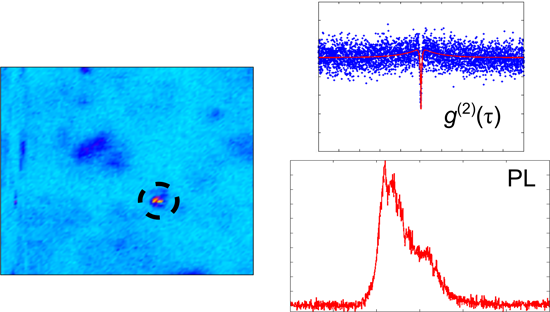
- (NAMI), Science Park, Hong Kong 10.3762/bjnano.9.100 Abstract Fluorescence properties of crystallographic point defects within different morphologies of titanium dioxide were investigated. For the first time, room-temperature single-photon emission in titanium dioxide optical defects was discovered in
- -photon source within a wide bandgap semiconductor. Keywords: fluorescence; optical defects; room temperature; single-photon emitters; titanium dioxide; Introduction Single-photon sources offer non-classical states of light [1] and are a prerequisite for future quantum technologies [2]. There are many
- emission. ZnO is the only metal oxide reported to host single-photon emitting defects at room temperature and was recently shown to exhibit stable fluorescence when uptaken into skin cells, making it a viable biomarker [11]. Titanium dioxide (TiO2) is a well-studied wide-bandgap semiconductor, its


Comparative study of antibacterial properties of polystyrene films with TiOx and Cu nanoparticles fabricated using cluster beam technique
Beilstein J. Nanotechnol. 2018, 9, 861–869, doi:10.3762/bjnano.9.80
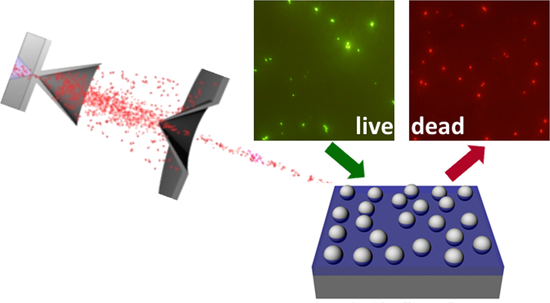
- further decreases to 0.37 after 120 min. One of the factors for the high efficiency can be related to the structure and composition of the particles, in particular, to the high fraction of titanium dioxide as found by XPS. Another reason could be the aggregation of NPs leading to relatively large 3D




Facile synthesis of a ZnO–BiOI p–n nano-heterojunction with excellent visible-light photocatalytic activity
Beilstein J. Nanotechnol. 2018, 9, 789–800, doi:10.3762/bjnano.9.72
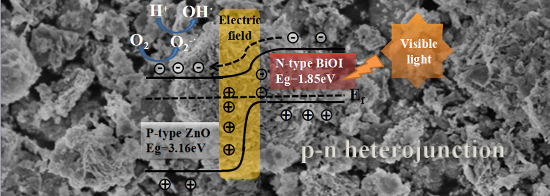
- degradation [3][4][5][6], nitrogen fixation [7][8], to solar fuel production [9]. The metal oxides, such as CdO [10], Al2O3 [11], and CuO [12][13], has attracted a lot of interest in photocatalytic applications. And among all of these metal oxides, it is titanium dioxide and zinc oxide (TiO2 and ZnO) that are


Synthesis and characterization of two new TiO2-containing benzothiazole-based imine composites for organic device applications
Beilstein J. Nanotechnol. 2018, 9, 721–739, doi:10.3762/bjnano.9.67
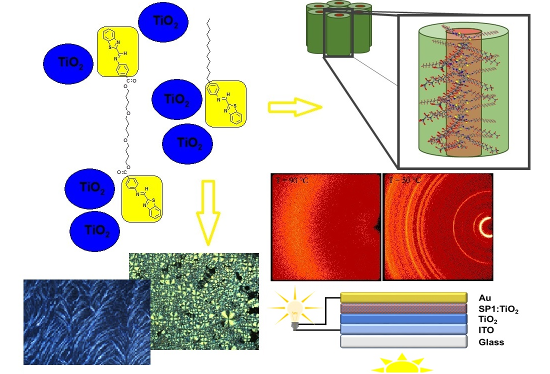
- .9.67 Abstract The effect of the presence of titanium dioxide in two new imines, (E,E)-(butane-1,4-diyl)bis(oxybutane-4,1-diyl) bis(4-{[(benzo[d][1,3]thiazol-2-yl)methylidene]amino}benzoate) (SP1) and (E)-N-[(benzo[d][1,3]thiazol-2-yl)methylidene]-4-dodecylaniline (SP2), on the properties and stability
- of imine:TiO2 composites for organic device applications were examined. The investigated titanium dioxide (in anatase form, obtained via the sol–gel method) exhibited a surface area of 59.5 m2/g according to Brunauer–Emmett–Teller theory, and its structure is a combination of both meso- and
- physical parameters of titanium dioxide TiO2 powder was prepared via the sol–gel technique using titanium(IV) isopropoxide (TIPO) as a precursor as was fully described in our previous paper [34]. The obtained TiO2 powder exhibited an anatase form, which was confirmed from X-ray diffraction (XRD






Fabrication and photoactivity of ionic liquid–TiO2 structures for efficient visible-light-induced photocatalytic decomposition of organic pollutants in aqueous phase
Beilstein J. Nanotechnol. 2018, 9, 580–590, doi:10.3762/bjnano.9.54
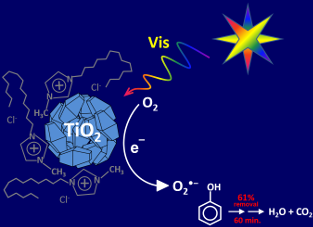
- titanium dioxide spheres results in a red-shift of absorption edge for the IL–TiO2 semiconductors. In this regard, the direct increase of the photoactivity of IL–TiO2 in comparison to pristine TiO2 was observed. The active species trapping experiments indicated that O2•− is the main active species, created
- pollutants in aqueous and gas phases requires visible-light responsive, stable materials and a basic understanding of these materials [1][2][3][4]. Although various semiconductors are considered for environmental pollution abatement, titanium dioxide (TiO2) is still the most promising due to its stability
- absorption spectrum of the titanium dioxide in the visible region. Therefore, the enhanced photocatalytic activity of IL–TiO2 can be attributed to the improved optical absorption. Moreover, the XPS data showed that the amount of carbon, nitrogen and chlorine were higher for the samples with molar ratio 1:3




Influence of the preparation method on the photocatalytic activity of Nd-modified TiO2
Beilstein J. Nanotechnol. 2018, 9, 447–459, doi:10.3762/bjnano.9.43
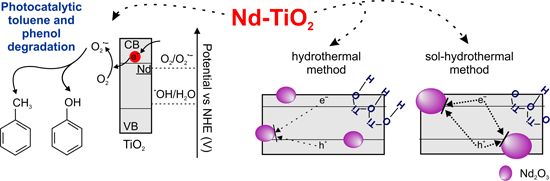
- light-induced degradation of the model pollutant in aqueous solution. Keywords: heterogeneous photocatalysis; hydrothermal method; modified TiO2; neodymium; sol–hydrothermal method; Introduction Heterogeneous photocatalysis based on titanium dioxide (TiO2) has become the focus of numerous studies due




Photocatalytic and adsorption properties of TiO2-pillared montmorillonite obtained by hydrothermally activated intercalation of titanium polyhydroxo complexes
Beilstein J. Nanotechnol. 2018, 9, 364–378, doi:10.3762/bjnano.9.36
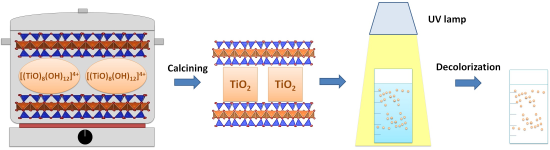
- . Keywords: adsorption; intercalation; mesoporosity; photocatalytic activity; pillared montmorillonite; titanium oxide; Introduction Titanium dioxide in its nanometer-sized form is one of the most promising modern photocatalysts [1]. However, the use of pure TiO2 nanoparticles is hindered by some
- limitations such as low adsorption capacity and possibility of particle agglomeration, which reduce its photocatalytic efficiency for the processes of purifying sewage and natural water bodies from pollutants of organic origin. To overcome these limitations, titanium dioxide nanoparticles are distributed on
- a significant cation exchange capacity. This makes it possible to efficiently intercalate various inorganic cations into the interlayer space of MM, in particular, those possessing photocatalytic activity. One of promising methods for modifying MM with titanium dioxide, called pillarization