


Search results
Search for "batteries" in Full Text gives 185 result(s) in Beilstein Journal of Nanotechnology.
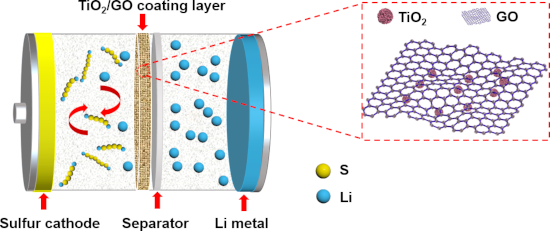
TiO2/GO-coated functional separator to suppress polysulfide migration in lithium–sulfur batteries
Beilstein J. Nanotechnol. 2019, 10, 1726–1736, doi:10.3762/bjnano.10.168
- Ning Liu Lu Wang Taizhe Tan Yan Zhao Yongguang Zhang School of Materials Science and Engineering, Hebei University of Technology, Tianjin 300130, China Synergy Innovation Institute of GDUT, Heyuan 517000, China 10.3762/bjnano.10.168 Abstract Lithium–sulfur batteries render a high energy density
- electrochemical performance of Li/S batteries. The interlayer can capture the polysulfides due to the presence of oxygen functional groups and formation of chemical bonds. The hierarchically porous TiO2 nanoparticles are tightly wrapped in GO sheets and facilitate the polysulfide storage and chemical absorption
- batteries. Keywords: dealloying; functional separator; lithium–sulfur batteries; TiO2/GO composite; Introduction The portability of handheld electronic products and successful realization of next-generation electric vehicles urgently require advanced energy storage devices with higher storage capacity and


Tuning the performance of vanadium redox flow batteries by modifying the structural defects of the carbon felt electrode
Beilstein J. Nanotechnol. 2019, 10, 1698–1706, doi:10.3762/bjnano.10.165
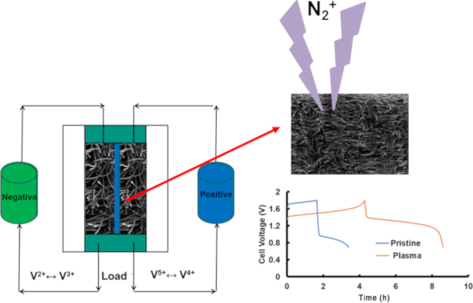
- )-based carbon felt was subjected to N2-plasma treatment to increase the heteroatom defects and reactive edge sites as a method to increase the performance in vanadium redox flow batteries (VRFBs). N-doping in the felt was mainly in the form of pyrrolic and pyridinic nitrogen. Even though the amount of
- energy sources during peak production and supply the stored energy to the grid during a depletion in the production. In this context, the all-vanadium redox flow battery (VRFB) is one of the most promising and flexible stationary electrical energy storage systems. Unlike Pb acid, Li-ion batteries or even
- flow batteries like zinc/bromine, the electrical energy in VRFBs is completely stored by the electrolyte in an external tank. Thus, in VRFB systems, the power and energy can be decoupled, that is, to store more energy, only the tank size needs to be increased. Moreover, since the system uses only a


Upcycling of polyurethane waste by mechanochemistry: synthesis of N-doped porous carbon materials for supercapacitor applications
Beilstein J. Nanotechnol. 2019, 10, 1618–1627, doi:10.3762/bjnano.10.157
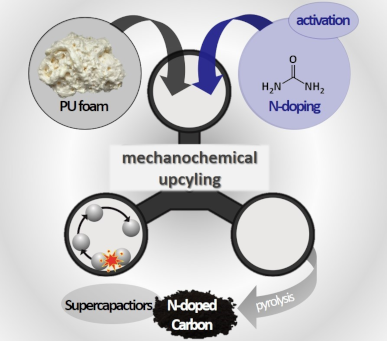
- these materials could also be extended to other energy storage systems such as Li-ion batteries or waste-water purification, wherever materials with a high surface area and improved wettability are required. Experimental Synthesis of N-doped carbon In a similar manner to [36][64], nitrogen-doped porous


Graphynes: an alternative lightweight solution for shock protection
Beilstein J. Nanotechnol. 2019, 10, 1588–1595, doi:10.3762/bjnano.10.154
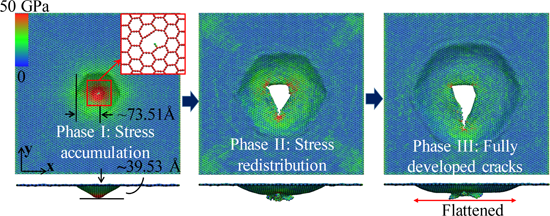
- of the absorbed light is tunable by structural modifications of GY (e.g., through increasing the length of the GY chains) [10]. GYs can also be used as Li accommodator in battery anodes, which increases service life and safety of batteries. Under biaxial tensile strain, GY accommodates more Li
- particles, which reduces the diffusion barriers of Li in batteries [11]. The understanding of the mechanical performance of GYs is critical and fundamental for the implementation of GYs. Generally, GYs exhibit low density and great structure versatility with outstanding thermal and mechanical stability [12






Flexible freestanding MoS2-based composite paper for energy conversion and storage
Beilstein J. Nanotechnol. 2019, 10, 1488–1496, doi:10.3762/bjnano.10.147
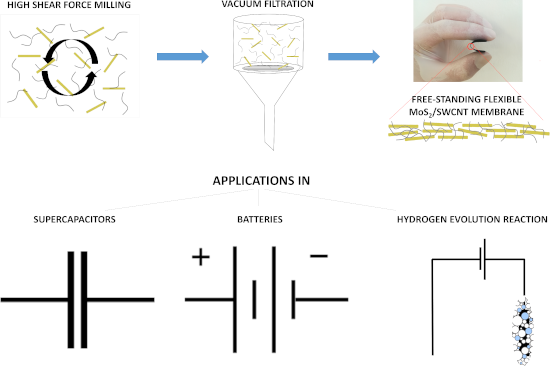
- potential was even lower (approximately −0.1 V vs RHE) after treatment with n-butyllithium, suggesting the introduction of new active sites. Finally, a potential use in lithium ion batteries (LIB) was examined. Our material can be used directly without any binder, additive carbon or copper current collector
- devices where high flexibility and mechanical strength are desired. Keywords: flexible composites; hydrogen evolution reaction (HER); lithium ion batteries (LIBs); molybdenum disulfide; nanoarchitectonics; supercapacitors; Introduction The world’s growing population has a nearly ever-increasing demand
- , energy storage and conversion continues to be an important and urgent issue [1][2]. Lithium ion batteries (LIBs) are one of the most promising energy storage devices, combining high energy density and extremely low self-discharge. Nevertheless, in order to fulfill the (prospective) requirements and to


Growth of lithium hydride thin films from solutions: Towards solution atomic layer deposition of lithiated films
Beilstein J. Nanotechnol. 2019, 10, 1443–1451, doi:10.3762/bjnano.10.142
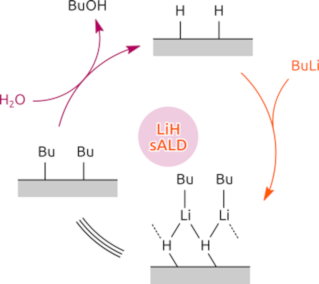
- , Dúbravská cesta 9, 845 41 Bratislava, Slovakia Saint Petersburg State University, Institute of Chemistry, Universitetskii pr. 26, 198504 St. Petersburg, Russia 10.3762/bjnano.10.142 Abstract Lithiated thin films are necessary for the fabrication of novel solid-state batteries, including the electrodes and
- correspondingly. Rechargeable, and if possible recyclable, batteries are versatile power sources for virtually all mobile devices. The advent of pocket hand-held devices places even stricter demands on the safety of rechargeable batteries. Although increased safety can be achieved using sophisticated and reliable
- charge-controller circuits, inherent safety is still desirable. Since the hazardous components in lithium-ion batteries are organic solvents used as electrolyte, their exclusion would greatly improve the inherent safety of lithium-ion batteries. Solid-state batteries that are already in use, such as the


Porous N- and S-doped carbon–carbon composite electrodes by soft-templating for redox flow batteries
Beilstein J. Nanotechnol. 2019, 10, 1131–1139, doi:10.3762/bjnano.10.113

- (CV) and electrochemical impedance spectroscopy (EIS). The N- and S-doped carbon electrodes show promising activity for the positive side reaction and could be seen as a significant advance in the design of carbon felt electrodes for use in redox flow batteries. Keywords: N- and S-doped carbon
- ; porous electrode; redox flow battery; soft-templating approach; vanadium; Introduction In recent years, vanadium redox flow batteries (VRFBs) have attracted significant attention as a promising large-scale system for storing excess energy from renewable sources like wind or solar energy [1][2][3]. The
- application in RFB batteries this could be a positive asset as this feature might generate a better contact between electrode and bipolar plate and reduce electrical resistances. All felts were covered with a visible black glossy layer. Structural characterizations A scanning electron microscope (SmartSEM



Glucose-derived carbon materials with tailored properties as electrocatalysts for the oxygen reduction reaction
Beilstein J. Nanotechnol. 2019, 10, 1089–1102, doi:10.3762/bjnano.10.109
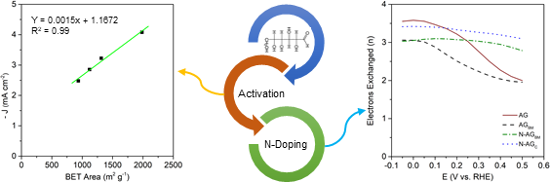
- engines, as they are able to function as long as there is fuel, and for batteries, as they have similar characteristics under load conditions [1]. The performance of a fuel cell is mainly controlled by the oxygen reduction reaction (ORR) that takes place at the cathode [2], specifically by the


Concurrent nanoscale surface etching and SnO2 loading of carbon fibers for vanadium ion redox enhancement
Beilstein J. Nanotechnol. 2019, 10, 985–992, doi:10.3762/bjnano.10.99
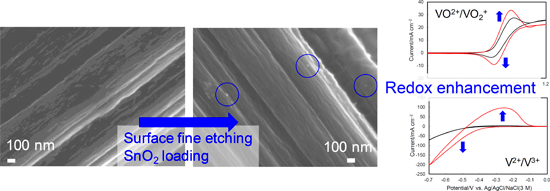
- redox reactions of electrolyte ions are required to produce efficient and low-cost redox flow batteries (RFBs). Carbon-fiber electrodes are widely used in various types of RFBs and surface oxidation is commonly performed to enhance the redox reactions, although it is not necessarily efficient. Quite
- recently, a technique for nanoscale and uniform surface etching of the carbon fiber surface was developed and a significant enhancement of the negative electrode reaction of vanadium redox flow batteries was attained, although the enhancement was limited to the positive electrode reaction. In this study
- overpotential and a stable cycling performance. A facile and efficient technique based on the nanoscale processing of the carbon fiber surface was presented to substantially enhance the activity for the redox reactions in redox flow batteries. Keywords: carbon fiber; electrode reactions; metal-oxide



In situ AFM visualization of Li–O2 battery discharge products during redox cycling in an atmospherically controlled sample cell
Beilstein J. Nanotechnol. 2019, 10, 930–940, doi:10.3762/bjnano.10.94
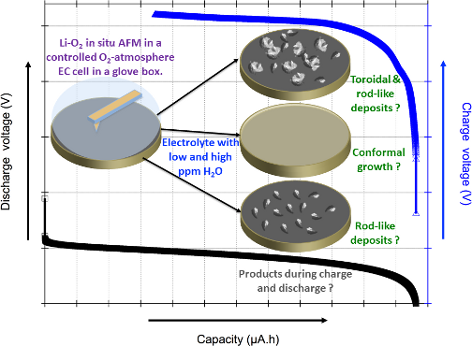
- of water in the electrolyte. In our previous attempt [25] a closed AFM cell was exposed to atmosphere during imaging and discharge with oxygen saturated solvent precluding any impedance spectroscopy and cell recharge studies. Lang et al. discussed in situ AFM studies of lithium/sulfur [26] batteries
- prior AFM studies [23][24] that have used oxygen saturated solvents. Figure 2 shows Nyquist plots prior to oxygenation, after oxygenation and after the first discharge/recharge process for Li–O2 batteries prepared from electrolytes containing <20 ppm (A) and ≈2500 ppm (B). The plot for ≈4600 ppm water


An efficient electrode material for high performance solid-state hybrid supercapacitors based on a Cu/CuO/porous carbon nanofiber/TiO2 hybrid composite
Beilstein J. Nanotechnol. 2019, 10, 781–793, doi:10.3762/bjnano.10.78
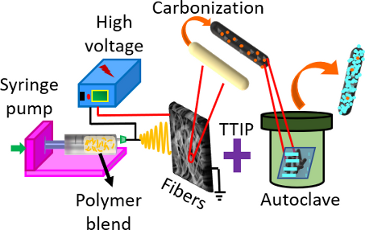
- seconds), long cycle life (>105), wide working potential and broad temperature range of operation [1][2]. The higher energy density and power density of supercapacitors are an important advantage over conventional dielectric capacitors and batteries. Supercapacitors can combine the advantages of batteries


Trapping polysulfide on two-dimensional molybdenum disulfide for Li–S batteries through phase selection with optimized binding
Beilstein J. Nanotechnol. 2019, 10, 774–780, doi:10.3762/bjnano.10.77
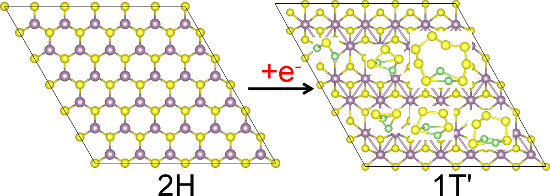
- batteries has been demonstrated as an effective way to overcome the shuttle effect and enhance the cycling stability. In this work, the anchoring effects of 2H-MoS2 and 1T'-MoS2 monolayers for Li–S batteries were investigated by using density functional theory calculations. It was found that the binding
- batteries. Keywords: Li–S batteries; molybdenum disulfide; phase transformation; Introduction To satisfy the increasing demand for high-capacity energy storage systems, rechargeable lithium–sulfur (Li–S) batteries have attracted much attention in recent years due to a high theoretical specific energy
- density of 2567 Wh/kg, a high theoretical capacity of 1672 mAh/g, low cost, non-toxicity, and the abundance of sulfur [1]. The energy density of a Li–S battery is six times higher than that of current commercially used lithium-ion batteries (387 Wh/kg) [2][3][4][5]. Typically, a rechargeable Li–S battery


Renewable energy conversion using nano- and microstructured materials
Beilstein J. Nanotechnol. 2019, 10, 771–773, doi:10.3762/bjnano.10.76

- - and microstructures for energy conversion: materials and devices” provides insights into the latest developments in the related fields. Besides a focus on solar-cell concepts [1][2][3][4][5], it also addresses light harvesting by solar fuel production [6][7], and energy storage by batteries [8
On the transformation of “zincone”-like into porous ZnO thin films from sub-saturated plasma enhanced atomic layer deposition
Beilstein J. Nanotechnol. 2019, 10, 746–759, doi:10.3762/bjnano.10.74
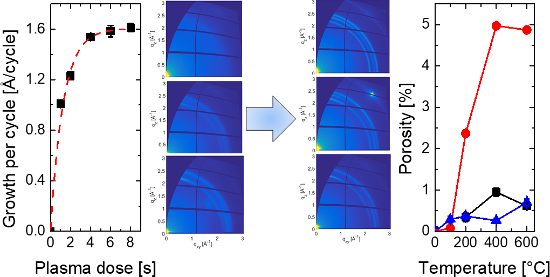
- oxides in photocatalysis [30][33] and as electrodes for lithium-ion batteries [12][18], or for protective and passivating layers [28][32][35]. In this contribution, an alternative method was adopted for the formation of Zn-alkoxide layers. While ALD is known to deliver pure dense ZnO, applied in many


Review of time-resolved non-contact electrostatic force microscopy techniques with applications to ionic transport measurements
Beilstein J. Nanotechnol. 2019, 10, 617–633, doi:10.3762/bjnano.10.62
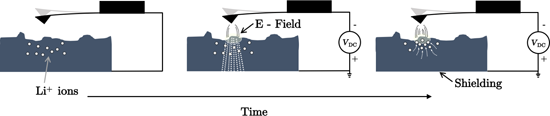
- period of the cantilever and compare and contrast it with those previously established. Keywords: atomic force microscopy; electrostatic force microscopy; ionic transport; lithium ion batteries; nanotechnology; Introduction Since the inception of the atomic force microscope (AFM) a variety of






A porous 3D-RGO@MWCNT hybrid material as Li–S battery cathode
Beilstein J. Nanotechnol. 2019, 10, 514–521, doi:10.3762/bjnano.10.52
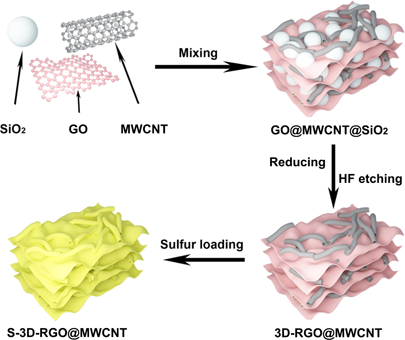
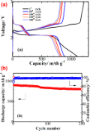
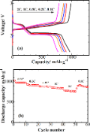
- structure. When used in Li–S batteries, the 3D porous lattice matrix not only accommodates a high content of sulfur, but also induces a confinement effect towards polysulfide, and thereby reduces the “shuttle effect”. The as-prepared S-3D-RGO@MWCNT composite delivers an initial specific capacity of 1102
- nanotubes; energy storage and conversion; Li–S batteries; nanocomposites; Introduction Li–S batteries are notable for their high theoretical specific capacity (1675 mAh·g−1) and energy density (2600 Wh·kg−1). Sulfur is an abundant element, enabling Li–S batteries to be highly competitive among the various
- battery technologies. The actual application of Li–S batteries, however, is hindered by several challenges, i.e., i) the poor conductivity of sulfur and ii) the “shuttle effect” of polysulfides (Li2Sx, 4 < x ≤ 8) [1][2][3][4]. To achieve a high specific capacity, a sulfur cathode with high electrical



Widening of the electroactivity potential range by composite formation – capacitive properties of TiO2/BiVO4/PEDOT:PSS electrodes in contact with an aqueous electrolyte
Beilstein J. Nanotechnol. 2019, 10, 483–493, doi:10.3762/bjnano.10.49
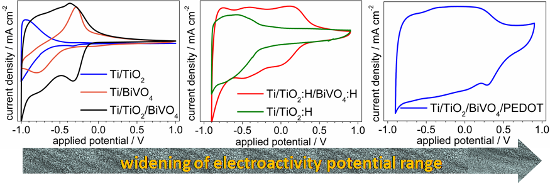
- currently important challenges. There are many ways for energy storage, among them, electrical, chemical and electrochemical storage technologies are of great interest [1][2]. Among the various energy storage devices, such as batteries [3] and supercapacitors [4], supercapacitors are the most promising




Advanced scanning probe lithography using anatase-to-rutile transition to create localized TiO2 nanorods
Beilstein J. Nanotechnol. 2019, 10, 412–418, doi:10.3762/bjnano.10.40
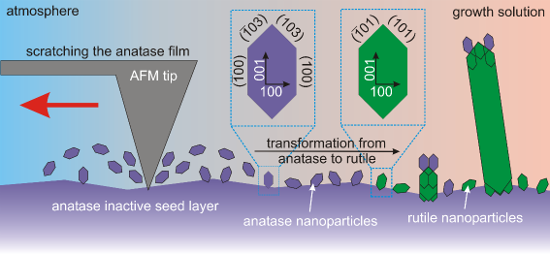
- ], fuel cells [20], lithium batteries [21][22][23][24][25][26], field-emission devices [27], data storage devices [28], gaso- and electrochromic displays [29][30], and nonlinear optical devices [31]. Even in the field of medical engineering, such structures are promising candidates for improving the


Sub-wavelength waveguide properties of 1D and surface-functionalized SnO2 nanostructures of various morphologies
Beilstein J. Nanotechnol. 2019, 10, 379–388, doi:10.3762/bjnano.10.37
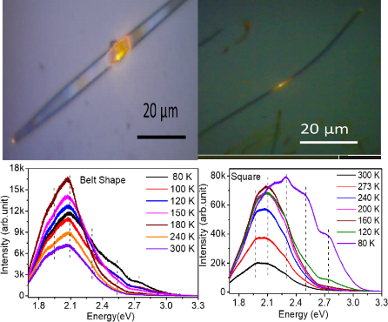
- commercial application as a gas sensor, transparent conducting electrodes, and catalyst [13][14][15]. SnO2 NSs have been used in several other areas such as sub-wavelength waveguide sensors [4], microelectronics [6], Li-ion batteries [16], and lubricants [17]. Oxygen vacancy related defects in SnO2


A Ni(OH)2 nanopetals network for high-performance supercapacitors synthesized by immersing Ni nanofoam in water
Beilstein J. Nanotechnol. 2019, 10, 281–293, doi:10.3762/bjnano.10.27
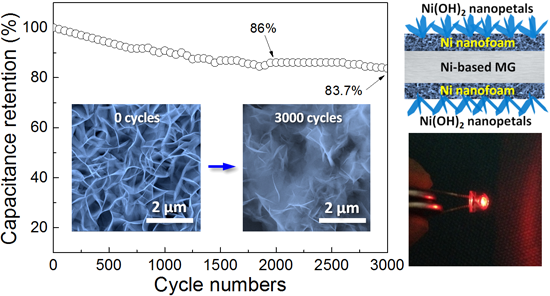
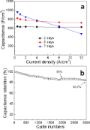
- Nowadays, environmental contamination and energy crisis require new energy storage devices. This leads to a considerable interest in the research of supercapacitors because of their higher power density, longer cycling stability and faster charge/discharge periods compared to batteries [1][2][3][4




Wet chemistry route for the decoration of carbon nanotubes with iron oxide nanoparticles for gas sensing
Beilstein J. Nanotechnol. 2019, 10, 105–118, doi:10.3762/bjnano.10.10
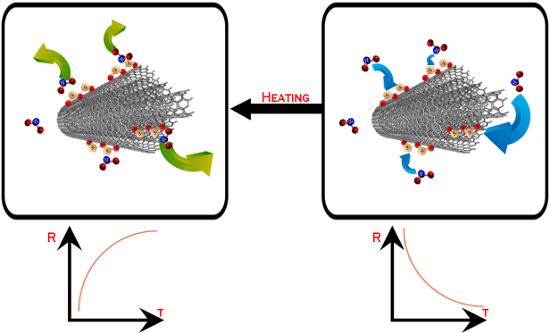
- sensors can be intrinsically low-power devices make them very attractive for their integration in ubiquitous, unattended mobile sensing nodes running on small batteries or on energy harvested from their environment [4]. Among the wide range of functionalization strategies that can be envisaged for





Improved catalytic combustion of methane using CuO nanobelts with predominantly (001) surfaces
Beilstein J. Nanotechnol. 2018, 9, 2526–2532, doi:10.3762/bjnano.9.235
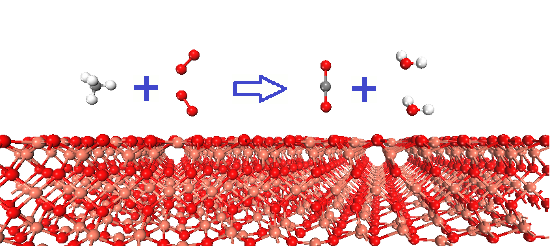
- shows high reactivity due to the high ratio of lowly coordinated oxygen – a feature that has been employed for gas sensing and Li-ion batteries [21]. Now we turn to the experimental validation, starting with the synthesis of CuO nanowires (NWs) and CuO nanobelts (NBs) comprised of predominantly (001


Hydrothermal-derived carbon as a stabilizing matrix for improved cycling performance of silicon-based anodes for lithium-ion full cells
Beilstein J. Nanotechnol. 2018, 9, 2381–2395, doi:10.3762/bjnano.9.223
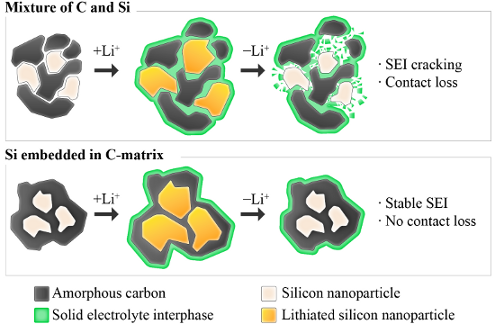
- carbon and Si, i.e., an improved specific/volumetric capacity and capacity retention compared to the single materials when applied as a negative electrode in lithium-ion batteries (LIBs). This work focuses on the influence of the Si content (up to 20 wt %) on the electrochemical performance, on the
- full cells. While prelithiation is able to remarkably enhance the initial capacity of the full cell by ≈18 mAh g−1, this effect diminishes with continued cycling and only a slightly enhanced capacity of ≈5 mAh g−1 is maintained after 150 cycles. Keywords: LIB full cell; lithium-ion batteries
- ; prelithiation; silicon/carbon composite; solid–electrolyte interphase (SEI); Introduction Since their market launch in 1991, the energy density of lithium-ion batteries (LIBs) has increased steadily. However, further improvements in terms of power density and energy density are essential to meet the rising


Metal-free catalysis based on nitrogen-doped carbon nanomaterials: a photoelectron spectroscopy point of view
Beilstein J. Nanotechnol. 2018, 9, 2015–2031, doi:10.3762/bjnano.9.191
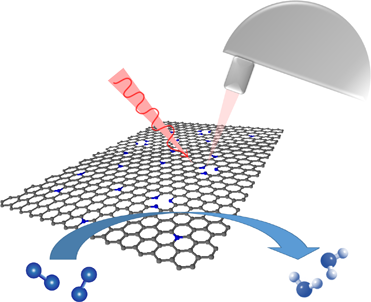
- splitting of water to molecular hydrogen via hydrogen and oxygen evolution reaction (HER and OER, respectively) are fundamental working mechanisms at the cathode of fuel cells, metal–air batteries and dye-sensitized solar cells [2]. However, the current working catalysts are based on expensive metals, such
- ]. In 2015, Zhang and co-workers synthesized a carbon foam co-doped with nitrogen and phosphorous, which was the first bifunctional electrocatalyst for both ORR and OER [49] for high-performance rechargeable zinc-air batteries. The same material was used by Xue et al. as a counter electrode in dye
- -sensitized solar cells [67]. A high-performance anode material for lithium-ion batteries was obtained using graphene co-doped with nitrogen and fluorine, which was prepared by a hydrothermal reaction of an aqueous dispersion of graphene oxide with trimethylamine trihydrofluoride [68]. In nitrogen-doped





Synthesis of carbon nanowalls from a single-source metal-organic precursor
Beilstein J. Nanotechnol. 2018, 9, 1895–1905, doi:10.3762/bjnano.9.181
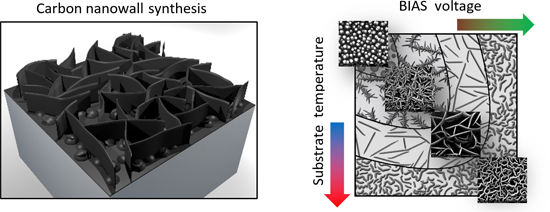
- batteries, electrochemical sensors or fuel cells [3][9][10][11][12][13][14][15]. Due to the high aspect ratio and the sharp top edges of the CNWs, a possible application could also be seen as electron field emitters [16]. Depending on the chosen deposition parameters, CNWs can have superhydrophobic or





