Search results
Search for "cell lines" in Full Text gives 141 result(s) in Beilstein Journal of Nanotechnology.
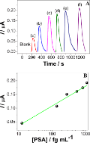
Use of data processing for rapid detection of the prostate-specific antigen biomarker using immunomagnetic sandwich-type sensors
Beilstein J. Nanotechnol. 2019, 10, 2171–2181, doi:10.3762/bjnano.10.210
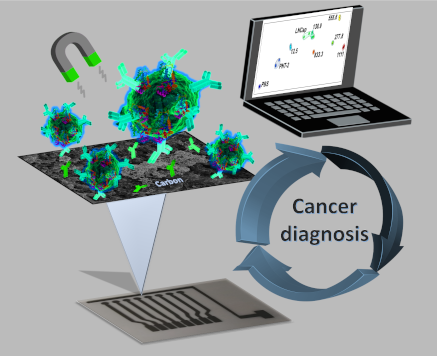
- anti-PSA antibodies were obtained from Abcam, Cambridge, UK. Graphite-based ink was obtained from Henkel Electrodag, USA (reference code 423SS), silver chloride ink was purchased from Gwent electronic materials Ltd., UK (Product code C2130905D3), the cell lines PNT-2 and LNCap were acquired from the
- cells (lineage of LNCap and PNT-2 cells, respectively). The cell lines PNT-2 and LNCap were acquired from the Banco de Células do Rio de Janeiro (BCRJ, Rio de Janeiro, Brazil). The samples were diluted to a 1:30000 ratio. The resulting conjugate, Ab2-MNP-HRP-protein, was magnetically separated and


Incorporation of doxorubicin in different polymer nanoparticles and their anticancer activity
Beilstein J. Nanotechnol. 2019, 10, 2062–2072, doi:10.3762/bjnano.10.201
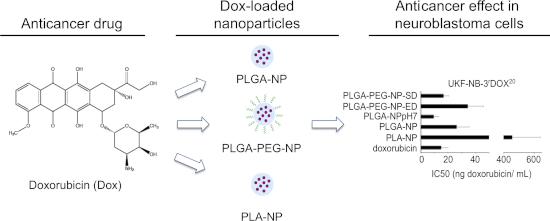
- solvent displacement and emulsion diffusion approaches and assessed their anticancer efficiency in neuroblastoma cells, including ABCB1-expressing cell lines, in comparison to doxorubicin solution. Results: The resulting nanoparticles covered a size range between 73 and 246 nm. PLGA-PEG nanoparticle
- preparations were tested for anticancer efficacy in cancer cell lines, including cell lines that express ABCB1. Results and Discussion Influence of the preparation technique on particle diameter and polydispersity index Nanoparticles based on poly(lactic-co-glycolic acid) (PLGA), a copolymer composed of
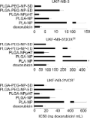
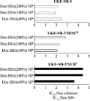
- emulsion diffusion and solvent displacement were tested for their effects on the viability of the neuroblastoma cell line UKF-NB-3, its doxorubicin-adapted sub-line UKF-NB-3rDOX20, and its vincristine-resistant sub-line UKF-NB-3rVCR1. In all three cell lines, PLA nanoparticles, PLGA nanoparticles prepared





Gold-coated plant virus as computed tomography imaging contrast agent
Beilstein J. Nanotechnol. 2019, 10, 1983–1993, doi:10.3762/bjnano.10.195
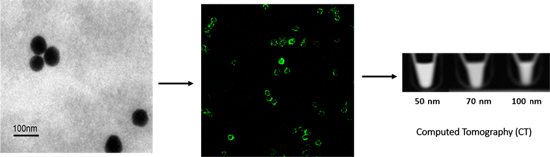
- −53.8 ± 2.4 mV upon antibody coating of the particles. The zeta potential value of VCAM1-PEG5000Au-CPMV becomes more negative [38], which is consistent with the literature [42]. In vitro fluorescent cell imaging Confocal fluorescence microscopy was performed on the cell lines to demonstrate the




Synthesis and potent cytotoxic activity of a novel diosgenin derivative and its phytosomes against lung cancer cells
Beilstein J. Nanotechnol. 2019, 10, 1933–1942, doi:10.3762/bjnano.10.189
- of that of Di [12]. Diosgenin–imidazolium salt derivatives were also synthesized and displayed significant cytotoxic activities against several human cancer cell lines [13]. One of novel 22-oxo-26-selenocyanocholestanic steroids based on Di synthesized by Fernández-Herrera et al. exhibited remarkable
- steroid structure of Di, there are abundant electrons at double-bond sites for electrophilic addition. Based on this feature, we designed and synthesized a series of Di derivatives. We investigated the cytotoxicity of these Di derivatives in different cancer cell lines and their IC50 values were
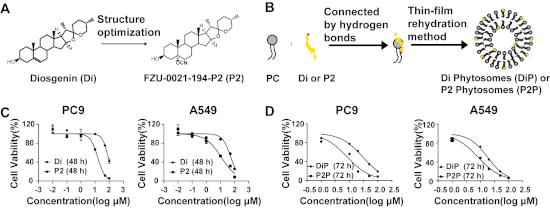
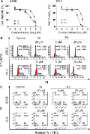
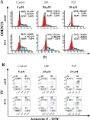
- -ray crystallographic analysis. CCDC1844665 contains the crystallographic data of P2. The data can be obtained free of charge from the Cambridge Crystallographic Data Center. Antiproliferative activity of P2 The anticancer activity of Di and its analogue P2 was tested in human lung cancer cell lines



Toxicity and safety study of silver and gold nanoparticles functionalized with cysteine and glutathione
Beilstein J. Nanotechnol. 2019, 10, 1802–1817, doi:10.3762/bjnano.10.175
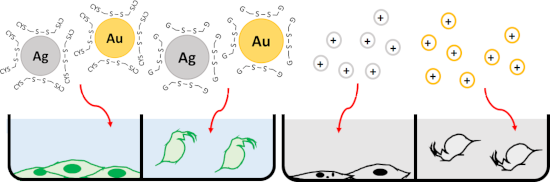
- continuous cell lines that can be properly maintained for a long time without being transformed. Daphnia magna was used as the representative aquatic organism model to evaluate ecotoxicity. The comparison of the observed results with data published on other AgNP and AuNP types, as well as the results


Doxorubicin-loaded human serum albumin nanoparticles overcome transporter-mediated drug resistance in drug-adapted cancer cells
Beilstein J. Nanotechnol. 2019, 10, 1707–1715, doi:10.3762/bjnano.10.166
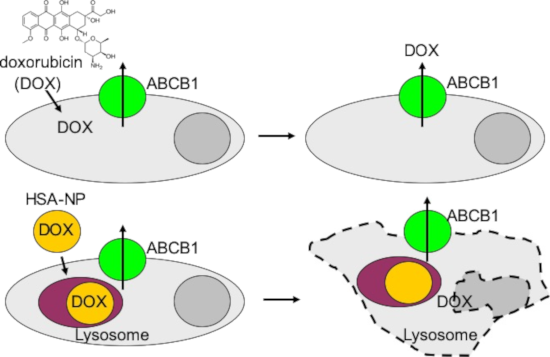
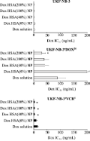
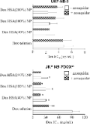
- available in HSA nanoparticles. Doxorubicin sensitivity of the used neuroblastoma cell lines The parental neuroblastoma cell line UKF-NB-3 and its doxorubicin- (UKF-NB-3rDOX20) and vincristine-adapted (UKF-NB-3rVCR1) sub-lines substantially differed in their doxorubicin sensitivity (Figure 2). UKF-NB-3
- , and vincristine-adapted cancer cell lines often display enhanced ABCB1 levels [20][22][23]. Accordingly, UKF-NB-3rVCR1 cells are sensitised by the ABCB1 inhibitor zosuquidar [2][3][4][5][6] to doxorubicin to the level of parental UKF-NB-3 cells (Supporting Information File 1, Figure S1), which


Serum type and concentration both affect the protein-corona composition of PLGA nanoparticles
Beilstein J. Nanotechnol. 2019, 10, 1002–1015, doi:10.3762/bjnano.10.101
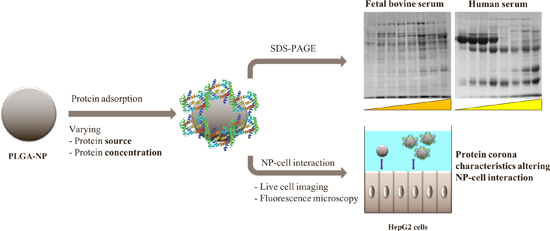
- of a protein corona. The use of two substantially different serum types further allowed us to assess the effect of the source origin on the protein adsorption. FBS is a common additive in standard cell culture media for many human cell lines and is frequently used as protein source in corona studies



The systemic effect of PEG-nGO-induced oxidative stress in vivo in a rodent model
Beilstein J. Nanotechnol. 2019, 10, 901–911, doi:10.3762/bjnano.10.91
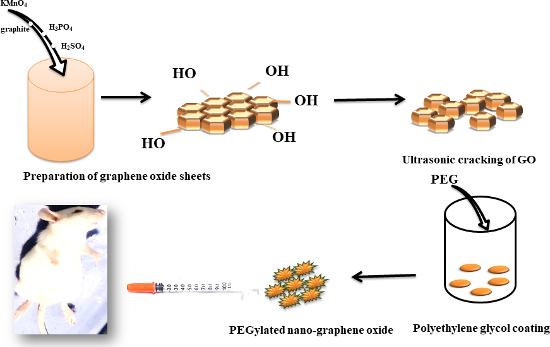
- administration and can be cleared gradually by renal and fecal excretion. Furthermore, a number of in vitro studies indicated that treatment of various cell lines, such as 3T3 and Hela, greatly reduced the cellular viability [34]. Due to the contradictory study results, the applicability of PEG-GO for drug


Polydopamine-coated Au nanorods for targeted fluorescent cell imaging and photothermal therapy
Beilstein J. Nanotechnol. 2019, 10, 794–803, doi:10.3762/bjnano.10.79
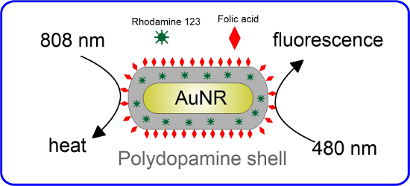
- plasmonic photothermal therapy. In this work we utilized fluorescent properties of our nanocomposites to study the folate-mediated nanoparticle uptake. Folate-positive HeLa and folate-negative HEK 293 cell lines were used as models. PEGylated AuNRs-PDA-R123-PEG particles were used as a reference to estimate


Targeting strategies for improving the efficacy of nanomedicine in oncology
Beilstein J. Nanotechnol. 2019, 10, 168–181, doi:10.3762/bjnano.10.16
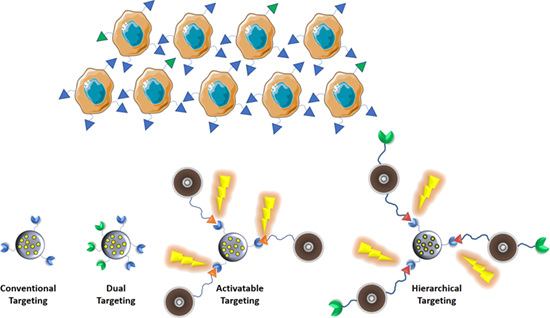
- specifically to αβ-integrin, which is usually upregulated in many different tumoral cell lines such as breast, lung or fibroblast cancer cells, and also by the epithelial cells of the tumoral blood vessels [32][33]. Ruoshlati et al. have reported that the cyclic version of RGD, CRGDKGPDC (called iRGD), which
- for cell targeting in tumoral cell lines that overexpress nucleolin [40]. The use of targeting moieties provides not only the capacity to the nanoparticles to be selectively engulfed by tumoral cells. It also allows for the localization of the nanocarriers in specific intracellular localizations or


Characterization and influence of hydroxyapatite nanopowders on living cells
Beilstein J. Nanotechnol. 2018, 9, 3079–3094, doi:10.3762/bjnano.9.286
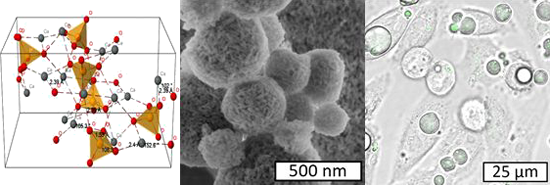
- manufacturing methods, are yet another problem to be taken into consideration. The aim of this work was to investigate the correlation between the properties of nanoscale hydroxyapatite from different synthesis methods and biological activity represented by the viability of four cell lines: A549, CHO, BEAS-2B
- significantly limits the insight of underlying mechanisms that affect living cells. There is a wide range of available cell lines to study possible organism reactions and cytotoxicity mechanisms, such as endothelial, neural, hepatic, phagocytic or cancer cells [26][27]. Still, systematic studies describing
- different properties of nanopowders and their effect on different cell lines are missing. The aim of this study was to perform a complex, multi-technique physicochemical characterization of ten types of hydroxyapatite nanopowders and to determine their property-dependent influence on living cells. This

![[Graphic 1]](/bjnano/content/inline/2190-4286-9-286-i2.svg?max-width=637&scale=1.18182) .
.



Hybrid Au@alendronate nanoparticles as dual chemo-photothermal agent for combined cancer treatment
Beilstein J. Nanotechnol. 2018, 9, 2947–2952, doi:10.3762/bjnano.9.273
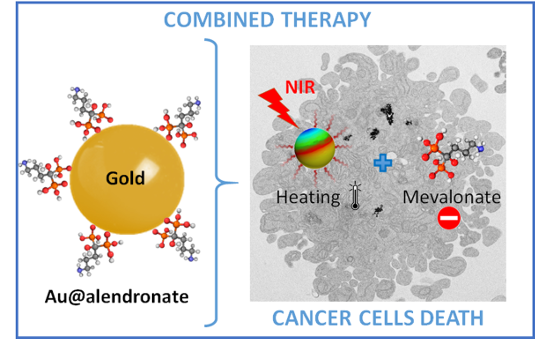
- (Figure 3a) with an IC50 equal to 100 µM for both systems whereas Au@HMBP-PEG NPs [39] do not exhibit any cytotoxicity (Supporting Information File 1, Figure S3). Under similar cell-treatment conditions, this IC50 value is consistent with values obtained for free alendronate with other cancer cell lines


Cytotoxicity of doxorubicin-conjugated poly[N-(2-hydroxypropyl)methacrylamide]-modified γ-Fe2O3 nanoparticles towards human tumor cells
Beilstein J. Nanotechnol. 2018, 9, 2533–2545, doi:10.3762/bjnano.9.236
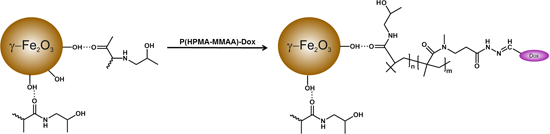
- reactive methyl ester sarcosine derivatives were not yet described as a promising coating of magnetic nanoparticles. The cytotoxic behavior of the nanoparticles with immobilized Dox was investigated in different models of murine and human tumor cell lines and compared with Dox itself and PHPMA-coated
- , various cancer cell lines (Jurkat, K562, HL-60/wt, HL-60/vinc, and B16F10/wt) were treated with the nanoparticles and their cytotoxic activity was compared to that of free Dox (Figure 6). γ-Fe2O3@P(HPMA-MMAA) nanoparticles used in different amounts (2–260 μg depending on cell line) were non-toxic for all
- these cell lines. γ-Fe2O3@P(HPMA-MMAA)-Dox nanoparticles demonstrated slightly higher toxicity (by 5–10%) towards human leukemia cells of Jurkat and HL-60/wt lines compared to free Dox, while drug-resistant HL-60/vinc cells, overexpressing P-glycoprotein, demonstrated a significantly higher sensitivity


Enhanced antineoplastic/therapeutic efficacy using 5-fluorouracil-loaded calcium phosphate nanoparticles
Beilstein J. Nanotechnol. 2018, 9, 2499–2515, doi:10.3762/bjnano.9.233
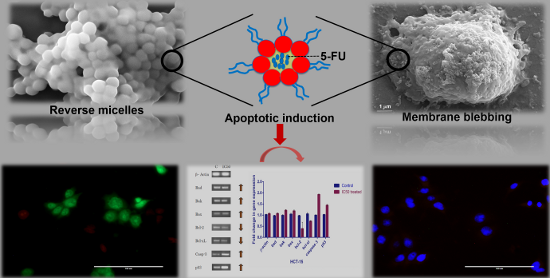
- MCF-7 cells [21]. Herein we report the synthesis of calcium phosphate nanoparticles loaded with 5-FU (CaP@5-FU NPs) with the goal of demonstrating enhanced efficacy in lung and colorectal cancer treatment in cell lines. The simple and reproducible reverse micellar microemulsion method was employed for
- CaP NPs in HCT-15 cell lines (Figure 4C). The same was found in 22.3% and 18.68% of inhibition in A549 and NIH 3T3 cell lines as demonstrated in Figure 4B and Figure 4A, respectively. The comparative low cytotoxicity of CaP NPs as a carrier (even at a higher concentration of 100 µg/mL) reveals the
- (NIH 3T3). We observed an IC50 value of 4.5 µg/mL and 6.5 µg/mL in A549 and HCT-15 cell lines, respectively (Figure 4B,C). Furthermore, upon administration of 5-FU at a concentration of 100 µg/mL, a 67.02% and 81.5% reduction in cell growth in HCT-15 and A549 cell lines was observed. CaP@5-FU NPs


Biomimetic and biodegradable cellulose acetate scaffolds loaded with dexamethasone for bone implants
Beilstein J. Nanotechnol. 2018, 9, 1986–1994, doi:10.3762/bjnano.9.189
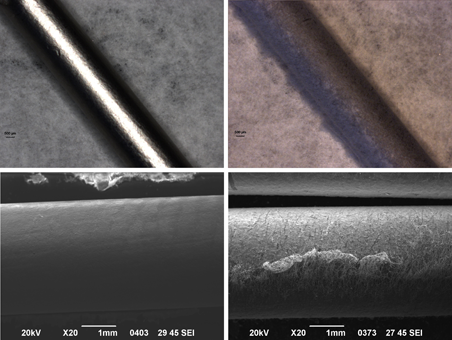
- this nanoplatform cytocompatible. In future studies, the interaction with musculoskeletal tissues will be examined with other cell lines such as mesenchymal stem cells (MSCs) or bone marrow stromal cells (BMSC) in order to evaluate the tissue specific response to our scaffolds. This cytocompatible


Green synthesis of fluorescent carbon dots from spices for in vitro imaging and tumour cell growth inhibition
Beilstein J. Nanotechnol. 2018, 9, 530–544, doi:10.3762/bjnano.9.51
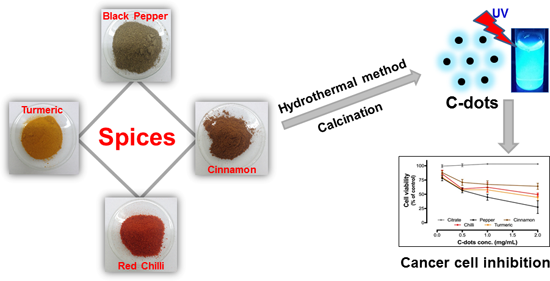
- different from LN-229 cells for all the spice-derived C-dots, results that are in agreement with those described by other researchers on other types of non-cancerous and tumour cell lines using ginger and green tea-based C-dots [27][28]. The fact that the citrate-derived C-dots did not induce any
- glucose, supplemented with 10% FBS and 100 U·mL−1 penicillin/100 μg·mL−1 streptomycin. Both cell lines (passages 5 to 12) were maintained in a humidified atmosphere with 5% CO2, at 37 °C. Cell viability test Cells were seeded in 96-well plates at a density of 10,000 cells per well. On the following day


Nanoparticle delivery to metastatic breast cancer cells by nanoengineered mesenchymal stem cells
Beilstein J. Nanotechnol. 2018, 9, 321–332, doi:10.3762/bjnano.9.32
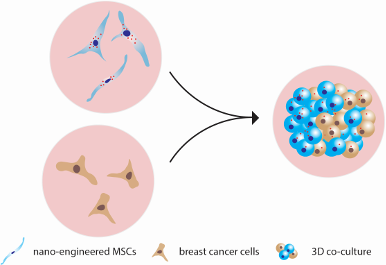
- transported between cardiac myocytes using membrane nanotubes [29]. In our study, we demonstrate that MSCs efficiently uptake QDs in serum-free conditions and then excrete the QDs, which then accumulate in MDA-MB-231 and MCF7 breast cancer cell lines in the 3D co-culture (Figure 3C,D). Noteworthy is that the
- experiments. Human breast cancer cell lines MDA-MB-231 (ATCC HTB-26™) and MCF7 (ATCC HTB-22™) were propagated in DMEM supplemented with 10% FBS and penicillin/streptomycin (100 U/mL and 100 μg/mL, respectively) (complete cancer cell medium). The cells were cultured in 25 cm2 polystyrene tissue culture flasks



Involvement of two uptake mechanisms of gold and iron oxide nanoparticles in a co-exposure scenario using mouse macrophages
Beilstein J. Nanotechnol. 2017, 8, 2396–2409, doi:10.3762/bjnano.8.239
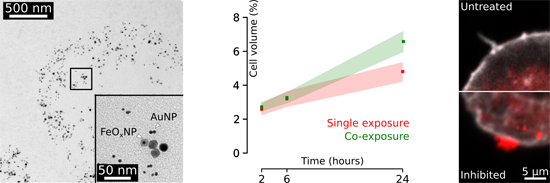
- ], potentially reflecting different agglomeration states. The uptake mechanism for one and the same NP into different cell types may even vary [10]. For instance, the uptake of fetal bovine serum-treated titanium dioxide NPs (TiO2NP) into A549 and H1299 cells, two human lung cell lines, is different, and it was



Evaluating the toxicity of TiO2-based nanoparticles to Chinese hamster ovary cells and Escherichia coli: a complementary experimental and computational approach
Beilstein J. Nanotechnol. 2017, 8, 2171–2180, doi:10.3762/bjnano.8.216
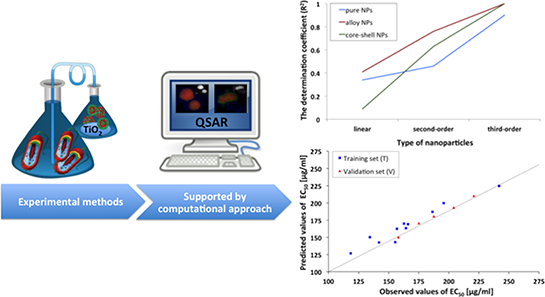
- different cell lines demonstrating that smaller NPs (1.4 nm) were more cytotoxic than bigger NPs. Previous studies also reported that a larger surface area (as a potential source of a larger number of ions or other reactive species) can contribute significantly to the higher reactivity [51][52]. The nano
- a water bath for 30 min at 37 °C. Cytotoxicity was determined using the Chinese hamster ovary cell line (CHO-K1) (ATCC® CCL-61™). The sensitivity of three different cell lines: CHO-K1 and two human lung (cancer and normal) cell lines (A549, BEAS-2B) to the tested nanomaterials was studied in a


Synthesis and functionalization of NaGdF4:Yb,Er@NaGdF4 core–shell nanoparticles for possible application as multimodal contrast agents
Beilstein J. Nanotechnol. 2017, 8, 1815–1824, doi:10.3762/bjnano.8.183
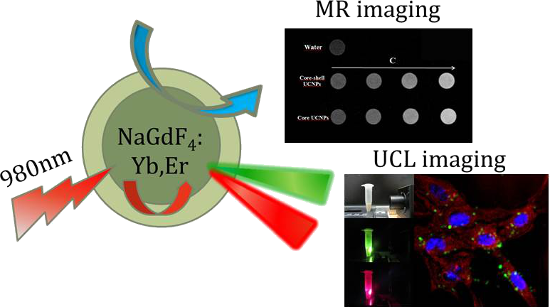
- , Tween 80-coated core–shell nanoparticles presented enhanced optical and MR signal intensity, good colloidal stability, low cytotoxicity and nonspecific internalization into two different breast cancer cell lines, which indicates that these nanoparticles could be applied as an efficient, dual-modal
- assay XTT was performed to measure the cellular metabolic activity of human breast cancer MCF-7 and MDA-MB-231 cell lines after 24 h treatment with core–shell Tween 80-coated UCNPs (Figure 6B). Untreated cells were used as a control group. After 24 h of incubation in the UCNP concentration range from 5
- uptake and cytotoxicity evaluation study showed that the UCNPs internalized into breast cancer cell lines and possessed low cytotoxicity and good biocompatibility. All these findings indicate that Tween 80-coated NaGdF4:Yb,Er@NaGdF4 UCNPs are a promising nanomaterial platform for imaging and detection in


Development of polycationic amphiphilic cyclodextrin nanoparticles for anticancer drug delivery
Beilstein J. Nanotechnol. 2017, 8, 1457–1468, doi:10.3762/bjnano.8.145
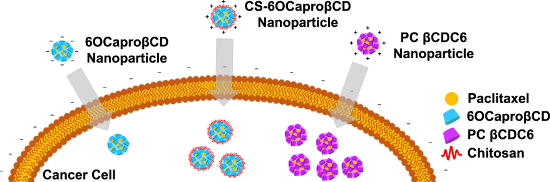
- and MCF-7 human breast cancer cell lines were used, respectively. Both cell lines were grown and incubated in appropriate conditions (see Experimental section for full experimental details). The cytotoxicity of blank amphiphilic CD nanoparticles was determined on L929 mouse fibroblast cells with MTT
- -loaded nanoparticles was determined on MCF-7 cell lines. After an incubation period, cell viability was calculated, as shown in Figure 8. According to the results of anticancer activity studies on MCF-7, PCX-loaded amphiphilic CD nanoparticles have higher cytotoxicity than PCX solution in DMSO (p < 0.05
- . Cell culture studies In order to determine safety or anticancer efficacy of blank amphiphilic CD nanoparticles, L929 mouse fibroblast cells or MCF-7 human breast carcinoma cell lines were used, respectively. Both cell lines were cultured in the same conditions as a monolayer in Dulbecco’s modified


Cationic PEGylated polycaprolactone nanoparticles carrying post-operation docetaxel for glioma treatment
Beilstein J. Nanotechnol. 2017, 8, 1446–1456, doi:10.3762/bjnano.8.144
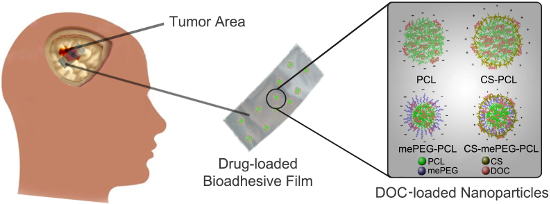
- recurrence during the first 2 days. Cell culture studies Cytotoxicity assay for blank nanoparticles Mouse fibroblast cell lines L929 (recommended by the USP for the cytotoxicity evaluation of polymeric systems) were used to determine the cytotoxicity of blank nanoparticles with MTT assay. According to MTT
- form, while blank nanoparticles were found to be nontoxic on L929 and RG-2 cell lines. It can be said that all drug-loaded nanoparticles are biocompatible, safe and effective against glioma. Our study emphasizes that polycaprolactone and PEGylated derivatives are suitable for the development of
- as this is defined as a standard method for cytotoxicity determination by United States Pharmacopoeia. After the cytotoxicity testing of blank nanoparticles, rat glioma cells RG2 were used to determine the anticancer activity of docetaxel (500 nM) incorporated nanoparticles. The cell lines were




Low uptake of silica nanoparticles in Caco-2 intestinal epithelial barriers
Beilstein J. Nanotechnol. 2017, 8, 1396–1406, doi:10.3762/bjnano.8.141
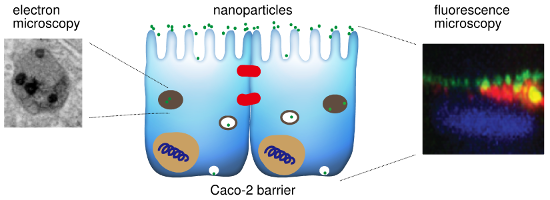
- combination of imaging, flow cytometry and transport studies. Compared to typical observations in standard cell lines commonly used for in vitro studies, silica nanoparticle uptake into well-developed Caco-2 cellular barriers was found to be very low. Instead, nanoparticle association to the apical outer
- end, model silica nanoparticles of different sizes, for which information on uptake and intracellular distribution in typical in vitro cell lines is already available [36][37], were exposed to differentiated Caco-2 barriers. In order to determine the role of molecules adsorbed on the nanoparticles



Nano-engineered skin mesenchymal stem cells: potential vehicles for tumour-targeted quantum-dot delivery
Beilstein J. Nanotechnol. 2017, 8, 1218–1230, doi:10.3762/bjnano.8.123
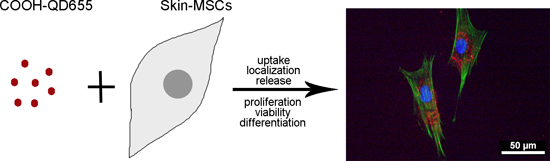
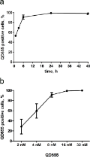
- QD uptake kinetics was calculated based on changes in fluorescence intensity. The plateau phase was reached after 24 h of incubation, consistent with observations in other cell lines [23]. The optimal incubation time for QD uptake was 6 h, after which up to 95% of the cells had incorporated QDs. Thus





Surface-enhanced Raman spectroscopy of cell lysates mixed with silver nanoparticles for tumor classification
Beilstein J. Nanotechnol. 2017, 8, 1183–1190, doi:10.3762/bjnano.8.120
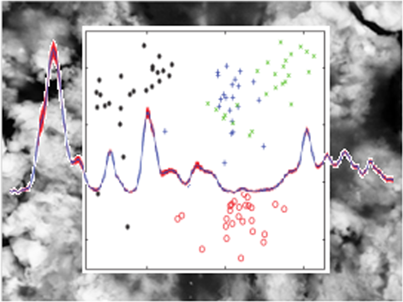
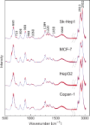
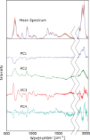
- demonstrate the principle, cell lysates were prepared by ultrasonication that disrupts the cell membrane and enables interaction of released cellular biomolecules to nanoparticles. This approach was applied to distinguish four cell lines – Capan-1, HepG2, Sk-Hep1 and MCF-7 – using SERS at 785 nm excitation
- classification models based on support vector machines. Leave-three-batches-out cross validation recognized four cell lines with sensitivities, specificities and accuracies above 96%. We conclude that this reproducible and specific SERS approach offers prospects for cell identification using easily preparable
- to allow interaction between nanoparticles and bacterial biomolecules [24]. This gave very reproducible SERS spectra. The current study transfers this SERS approach to distinguish four human cancer cell lines. These cell lines are two liver cancer cell lines (HepG2 isolated from liver tissue of a