Search results
Search for "fibers" in Full Text gives 199 result(s) in Beilstein Journal of Nanotechnology.
Atomic layer deposition for efficient oxygen evolution reaction at Pt/Ir catalyst layers
Beilstein J. Nanotechnol. 2020, 11, 952–959, doi:10.3762/bjnano.11.79
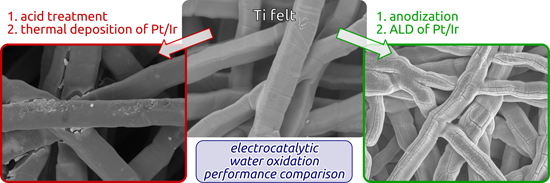
- consider here two distinct catalyst preparation methods. As a standard method used in the engineering context, we perform an acid etch of the titanium fibers (to generate surface roughness and thereby increase the specific surface area), followed by dip-coating of a noble metal salt precursor solution on
- the Ti support and subsequent thermal decomposition to the corresponding elements [16][17][18]. As an academic method yielding better control of the electrode surface geometry, we perform an “anodization” of the Ti fibers to generate an ordered porous layer, followed by atomic layer deposition (ALD
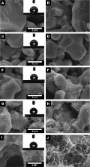
- . Finally, the samples were calcinated at 450 °C to generate the metallic catalyst. Figure 1 presents the SEM and EDX characterization of the titanium felts obtained by this method. Figure 1a presents the untreated felt, the titanium fibers of which are clearly visible. Figure 1b shows the felt after acid


A 3D-polyphenylalanine network inside porous alumina: Synthesis and characterization of an inorganic–organic composite membrane
Beilstein J. Nanotechnol. 2020, 11, 938–951, doi:10.3762/bjnano.11.78
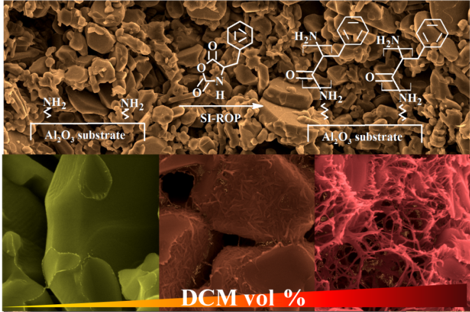
- Fores et al. The authors realized peptide hydrogels in a porous melamine foam for use in continuous flow chemistry [30]. Other polyelectrolytes such as poly(acrylic acid) were prepared using an ozone-induced grafting process for cellulose fibers [31]. Hydrophobic foams of poly(γ-benzyl-ʟ-glutamate-co-ʟ




Integrated photonics multi-waveguide devices for optical trapping and Raman spectroscopy: design, fabrication and performance demonstration
Beilstein J. Nanotechnol. 2020, 11, 829–842, doi:10.3762/bjnano.11.68
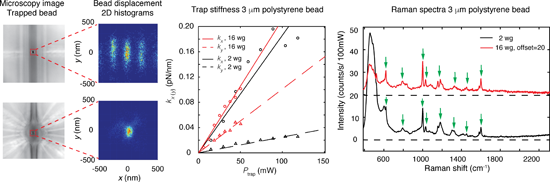
- suspension away from surfaces [2]. For on-chip trapping and Raman spectroscopy, the dual-beam trap based on fibers or integrated photonics waveguides has been studied extensively [3][4][5][6]. This trap comprises two excitation fibers or excitation waveguides, which emit counter-propagating beams into a
- spectra are induced and collected by an external spectroscopy system. This work was extended in [4] by using fibers for both trapping of single polystyrene beads and for inducing and collecting Raman signals for the trapped beads. In our previous work [5], we used integrated photonics Si3N4 waveguides of
- the facets and disturbance of its Raman spectrum due to particle–surface interaction, which are effects to be avoided. It is of interest to compare the devices described in [3][4][5][6] with the long hollow core fibers for fiber-enhanced Raman spectroscopy used in [7]. With the technique applied in [7


Hexagonal boron nitride: a review of the emerging material platform for single-photon sources and the spin–photon interface
Beilstein J. Nanotechnol. 2020, 11, 740–769, doi:10.3762/bjnano.11.61




Preparation, characterization and photocatalytic performance of heterostructured CuO–ZnO-loaded composite nanofiber membranes
Beilstein J. Nanotechnol. 2020, 11, 631–650, doi:10.3762/bjnano.11.50
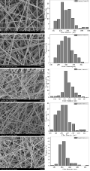
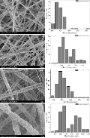
- investigated using scanning electron microscopy (SEM, Hitachi S-4800, Japan). The matrix morphology and fiber diameter distribution were determined using the Image J software (National Institute of Mental Health, Bethesda, Maryland, USA). The diameter of 100 randomly selected fibers in each sample were chosen
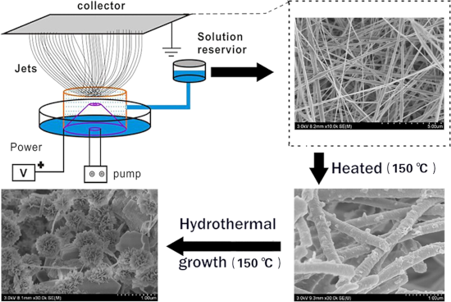
- evenly distributed on the surface of the nanofibers, which provide a seed layer for further hydrothermal growth. When the weight ratio reaches 1:1, the nanofibers the particles aggregated and the fibers become bundled. Therefore, a weight ratio of 1:2 was chosen as the optimum parameter for further











Synthesis of amorphous and graphitized porous nitrogen-doped carbon spheres as oxygen reduction reaction catalysts
Beilstein J. Nanotechnol. 2020, 11, 1–15, doi:10.3762/bjnano.11.1
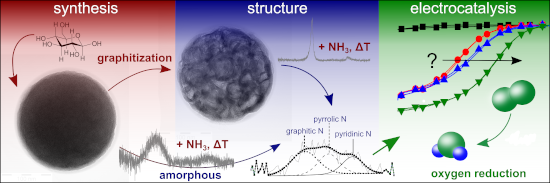
- fibers [7][8][9][10], N-doped 3D ordered (meso)porous carbon materials [11], N-doped carbon composites (e.g., carbon nanotubes/graphene) [12], and N-doped carbon spheres [13][14] to graphitic-C3N4 carbon nitride composites [15]. In the present work we report results of a systematic study on the synthesis
- (HRTEM) images of the resulting particles showed that the graphite layers are arranged along the longitudinal axis of the fibers [37]. After the acidic washing process, neither XPS nor EDX showed, for g-NCS-850 and g-NCS-1000, Fe or Fe3C particles within the spheres, which are commonly found for the Fe
- graphite layers Lc of 7.6 and 8.6 nm, respectively, which matches very well to the thickness of the carbon fibers as detected in the TEM images. The degree of graphitization, g, is calculated using the interplanar distance d002: g = (0.344 nm – d002)/(0.344 nm – 0.3354 nm), with 0.344 nm for the




Fully amino acid-based hydrogel as potential scaffold for cell culturing and drug delivery
Beilstein J. Nanotechnol. 2019, 10, 2579–2593, doi:10.3762/bjnano.10.249
- Institutional Committee of Science and Research Ethics. The number of the ethical permission is: 17458/2012/EKU. After extraction, the teeth were immediately placed into a sterile cell culture medium. The viable periodontal fibers were removed from the tooth surface, put into a sterile box with a sterile blade
- and digested in 1 mL collagenase I solution (1 mg/mL, Sigma-Aldrich, St. Louis, Missouri) for 1 h at 37 °C. The samples were vortexed every 10 min. After digestion, the fibers were mechanically loosened with needles (21G and 18G) and were centrifuged for 5 min at 250g. The PDLCs were maintained in a


Advanced hybrid nanomaterials
Beilstein J. Nanotechnol. 2019, 10, 2563–2567, doi:10.3762/bjnano.10.247

- ) was employed in “Topochemical engineering of composite hybrid fibers using layered double hydroxides and abietic acid” [27]. In this work, a composite hybrid was formed using cellulose fibers with LDH particles growing on their surface and then covered by abietic acid. The fibers were tested against
Four self-made free surface electrospinning devices for high-throughput preparation of high-quality nanofibers
Beilstein J. Nanotechnol. 2019, 10, 2261–2274, doi:10.3762/bjnano.10.218
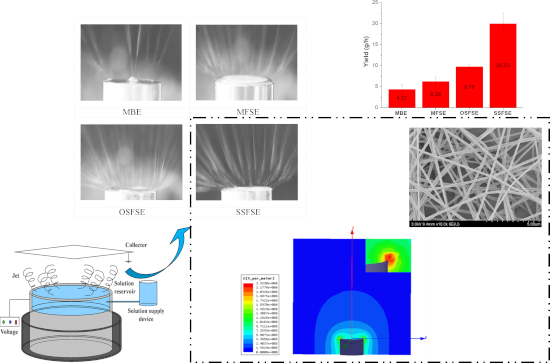
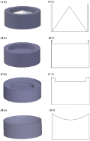
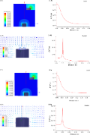
- high-throughput tipless electrospinning via a circular cylindrical electrode. Shin et al. [19] used a multiple vertical rod setup for needleless ES to fabricate submicrometer polymer fibers. Moon et al. developed a syringeless electrospinning technique with a helically probed rotating cylinder for
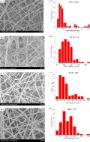
- fibers were characterized using the Image J software (National Institute of Mental Health, Bethesda, MD, USA) to study 100 randomly chosen nanofibers in 50 SEM images. The mass of the PAN nanofibers was measured as follows using a precise electronic balance (XJ120A, Precisa, Shanghai, China): where W is






A novel all-fiber-based LiFePO4/Li4Ti5O12 battery with self-standing nanofiber membrane electrodes
Beilstein J. Nanotechnol. 2019, 10, 2229–2237, doi:10.3762/bjnano.10.215
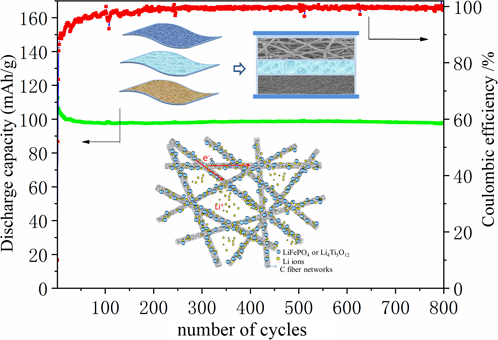
- used as self-standing electrodes for lithium-ion batteries. The structure and morphology of the fibers, and the electrochemical performance of the electrodes and the full battery were characterized. The results show that the LiFePO4 and Li4Ti5O12 fiber membrane electrodes exhibit good rate and cycle
- grains in the fibers. SEM images of LiFePO4 and Li5Ti4O12 nanofiber membranes are shown in Figure 3. It can be seen that the fiber membranes after heat treatment exhibit a 3D network structure, which is the reason for the high flexibility of the electrode. The high-magnification SEM images show uniform
- growth of crystal grains on the surface of the fibers for both LiFePO4 and Li5Ti4O12. The fiber diameter is less than 1 μm, and the grain size is between 200 and 300 nm. There are numerous channels between the fibers. This structure is beneficial for the penetration of electrolyte and the contact between


Review of advanced sensor devices employing nanoarchitectonics concepts
Beilstein J. Nanotechnol. 2019, 10, 2014–2030, doi:10.3762/bjnano.10.198
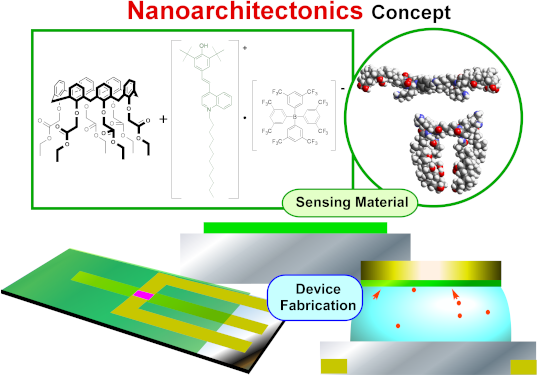
- particles [122]. Mesoporous carbons were used for sensing of tannins in acidic aqueous environment with highly cooperative adsorption in the mesochannels [123]. The nanoarchitectonic construction of carbon nanocages with high surface mesoporous structures [124] was integrated with electrospun polymer fibers





Optimization and performance of nitrogen-doped carbon dots as a color conversion layer for white-LED applications
Beilstein J. Nanotechnol. 2019, 10, 2004–2013, doi:10.3762/bjnano.10.197
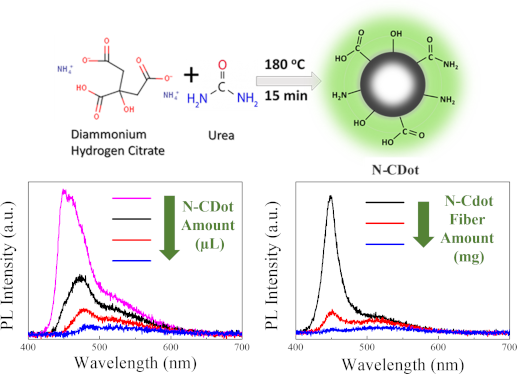
- as color conversion layers in a white-LED configuration to generate white light. In order to resolve the red deficiency of this configuration, a commercial red phosphor was integrated into the system. Moreover, the N-CDots were also processed into polymer/N-CDot composite fibers, for which we
- determined the amount of N-CDots that yielded adequate white-light properties. Finally, we showed that white light with excellent properties could be generated by employing both of the fabricated N-CDot composites either as drop-cast films or composite fibers. Hence, N-CDots provide a promising alternative
- into thin films and fibers. Throughout this study, the term “water-based” is used to emphasize that during the fabrication of the color conversion layers, the CDots and the PVP were taken from their dispersion or solution in (mainly) distilled water without introducing any toxic or organic solvents


Facile synthesis of carbon nanotube-supported NiO//Fe2O3 for all-solid-state supercapacitors
Beilstein J. Nanotechnol. 2019, 10, 1923–1932, doi:10.3762/bjnano.10.188
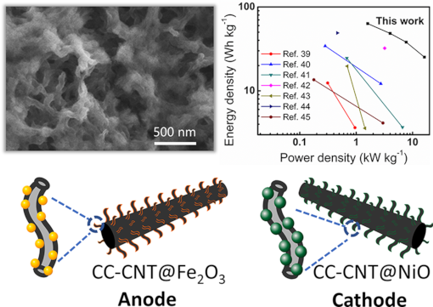
- the as-obtained CC-CNT@Fe2O3 is shown in Figure 2b, where Fe2O3 coats all carbon fibers well. The space between CNTs provides enormous room for Fe2O3 growth, and the obtained CNT@Fe2O3 are entangled with each other and sticky to the CC (Figure 2c). N2 adsorption–desorption isotherm and Barrett–Joyner


High-tolerance crystalline hydrogels formed from self-assembling cyclic dipeptide
Beilstein J. Nanotechnol. 2019, 10, 1894–1901, doi:10.3762/bjnano.10.184
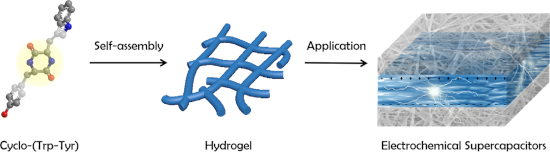
- environments. Results and Discussion Preparation and characterization of the hydrogel C-WY was chosen as a model peptide to investigate the self-assembly of CDPs. A nontransparent hydrogel with a dense network of fibers was obtained simply by mixing a solution of C-WY in DMSO (2 mg, 20 μL) with water (480 μL
- 3317 cm−1, indicating the formation of strong hydrogen bonds between C-WY molecules in the hydrogel (Figure 1B). Further characterization by scanning electron microscopy (SEM) and transmission electron microscopy (TEM) was performed to inspect the morphology of the hydrogel (Figure 1C,D). The fibers in
- the hydrogel are 100 ± 50 nm in width and dozens of micrometers in length. In addition, dense three-dimensional fibrous networks cross-linked by slender fibers were clearly observed. The cross-linked networks are beneficial to improving the stability of the hydrogels at extreme conditions [48]. The


Prestress-loading effect on the current–voltage characteristics of a piezoelectric p–n junction together with the corresponding mechanical tuning laws
Beilstein J. Nanotechnol. 2019, 10, 1833–1843, doi:10.3762/bjnano.10.178
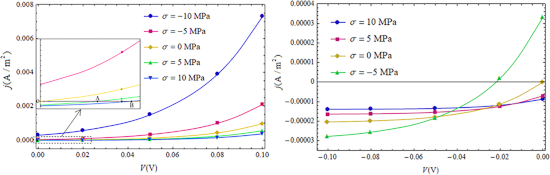
- been investigated by Dai et al. [24] and Yang and co-workers [25]. The mechanical behavior of composite fibers with piezoelectric dielectrics and non-piezoelectric semiconductors have also been studied by Cheng et al. [26] and Luo and co-workers [27]. For piezoelectric p–n junctions, it becomes




Biocatalytic oligomerization-induced self-assembly of crystalline cellulose oligomers into nanoribbon networks assisted by organic solvents
Beilstein J. Nanotechnol. 2019, 10, 1778–1788, doi:10.3762/bjnano.10.173
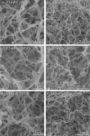
- chains [42]. In other words, a higher uniformity of the chain lengths leads to higher integrity of the crystals. Scanning electron microscopy (SEM) was used to uncover the nanomorphology of the gels. The images revealed a well-grown network structure composed of nanoribbon-shaped fibers (Figure 9), which





Novel hollow titanium dioxide nanospheres with antimicrobial activity against resistant bacteria
Beilstein J. Nanotechnol. 2019, 10, 1716–1725, doi:10.3762/bjnano.10.167
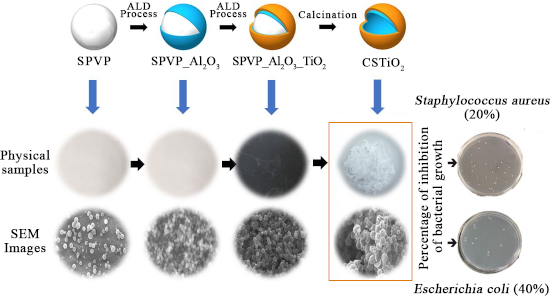
- nanostructures, such as fibers and spherical particles, through the application of a high voltage that breaks the surface tension of the droplet of a polymeric solution located at the tip of a needle [16][17]. The morphology of the resulting nanostructures is influenced by the properties of the polymeric
- ) PVP polymeric solution. Unlike the common electrospinning process, which results in fibers by the continuous stretching of the Taylor cone through the application of a voltage to a polymeric solution with high viscosity, this case was considered an “electrospraying” process, which resulted in


Tuning the performance of vanadium redox flow batteries by modifying the structural defects of the carbon felt electrode
Beilstein J. Nanotechnol. 2019, 10, 1698–1706, doi:10.3762/bjnano.10.165
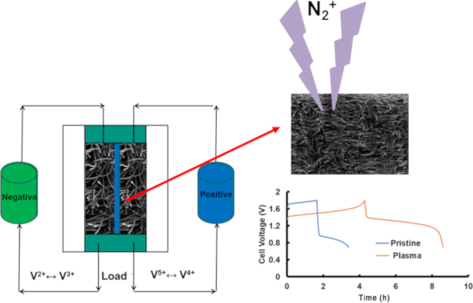
- process of the PAN fibers or simply the atmospheric ageing of the felt. It is already known from the literature that graphitization or atmospheric ageing can leave some aliphatic or polyaromatic tar-like residues on the surface of the felt [6][23]. Thus, it can be concluded that apart from inducing N
- -doping, the N2 plasma treatment also increased the apparent graphite amount on the surface by removing the aliphatic groups (C–H and C–C) from the surface of the fibers. The schematic representation of N-doping induced by the N2 plasma treatment in a graphite lattice is shown in Figure 3. From the
- scanning electron microscopy (SEM) analysis, it can be seen that the surface morphology of the fibers of both samples looked identical and thus any kind of surface roughening leading to an increase of the surface area can be ignored. This is further supported by our previous study were the BET measurements


Layered double hydroxide/sepiolite hybrid nanoarchitectures for the controlled release of herbicides
Beilstein J. Nanotechnol. 2019, 10, 1679–1690, doi:10.3762/bjnano.10.163
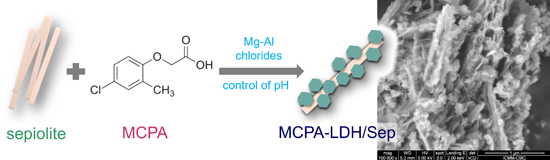
- techniques (XRD, FTIR and 29Si NMR spectroscopies, CHN analysis and SEM) that revealed interactions of LDH with the sepiolite fibers through the silanol groups present on the outer surface of sepiolite, together with the intercalation of MCPA in the LDH confirmed by the increase in the basal spacing from
- fields [13][14][15]. Sepiolite (Figure 1A) is a natural hydrated magnesium silicate with the ideal formula [Si12O30Mg8(OH,F)4](H2O)4·8H2O [16][17], which exhibits high surface area and adsorption capacity due to the presence of silanol groups on the external surface of the clay fibers. These ≡SiOH groups
- not produce true nanoarchitectonic materials. Hence, it is necessary to grow the LDH in the presence of the fibrous clay [31]. In fact, the presence of silanol groups along the external surface of the silicate fibers act as anchoring points at which the LDH grows, forming LDH particles with their


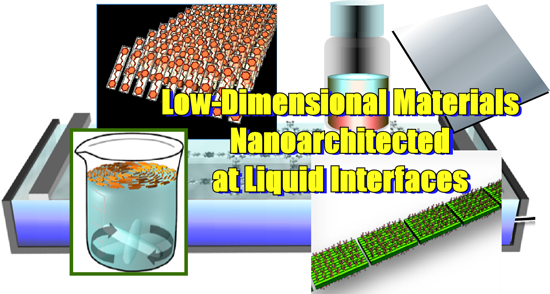
Materials nanoarchitectonics at two-dimensional liquid interfaces
Beilstein J. Nanotechnol. 2019, 10, 1559–1587, doi:10.3762/bjnano.10.153













High-temperature resistive gas sensors based on ZnO/SiC nanocomposites
Beilstein J. Nanotechnol. 2019, 10, 1537–1547, doi:10.3762/bjnano.10.151
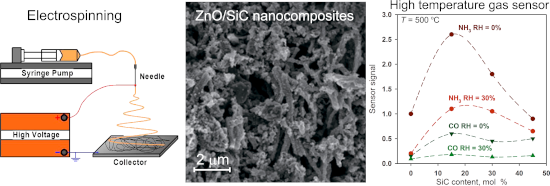
- , ultrathin fibers of SiC and metal oxides as well as MO/SiC composites from polymer solutions [16][17][18][19]. The combination of unlimited length, highly porous microstructure, and high surface area come together to create ideal gas sensor materials. In this work, we prepared ZnO/SiC nanocomposite
- Experimental part. The characteristics of the synthesized materials are summarized in Table 1. Figure 2 shows the scanning electron microscopy (SEM) micrographs of SiC (Figure 2a,c) and ZnO (Figure 2b,d) nanofibers in a polymer matrix (Figure 2a,b) and after annealing (Figure 2c,d). The polymeric fibers
- containing polycarbosilane (Figure 2a) are tapered with a width of 8–10 μm and a thickness of about 200 nm. Exposure to high temperature and pressure, which is necessary for the formation of crystalline SiC, leads to the destruction of fibers and the formation of porous powders (Figure 2c) with an average



Multicomponent bionanocomposites based on clay nanoarchitectures for electrochemical devices
Beilstein J. Nanotechnol. 2019, 10, 1303–1315, doi:10.3762/bjnano.10.129
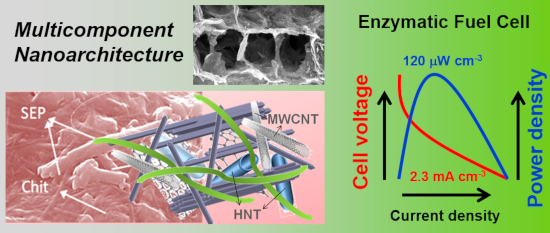
- attracting increasing attention in the development of nanoarchitectured materials in applications such as catalysis or biomedicine [8]. The presence of silanol groups at the external surface of the clay fibers allows for the easy assembly with different species facilitating the design and the build up of



A silver-nanoparticle/cellulose-nanofiber composite as a highly effective substrate for surface-enhanced Raman spectroscopy
Beilstein J. Nanotechnol. 2019, 10, 1270–1279, doi:10.3762/bjnano.10.126
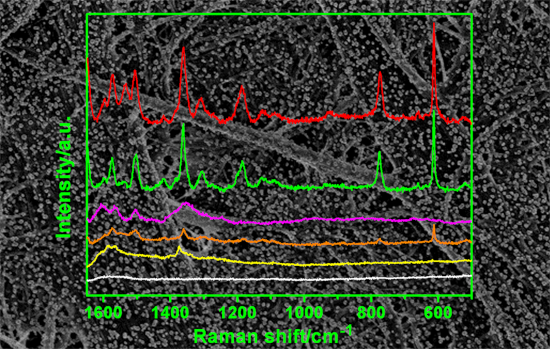
- Raman scattering (SERS) substrate was developed by facile deposition of silver nanoparticles onto cellulose fibers of ordinary laboratory filter paper. This was achieved by means of the silver mirror reaction in a manner to control both the size of the silver nanoparticles and the silver density of the
- , respectively. The field-emission scanning electron microscopy (FE-SEM) images of the Ag-NP/cellulose-NF composite sheets in Figure 1 show that the surfaces of the cellulose fibers are decorated with silver particles. The comparison with SEM images of bare filter paper (Supporting Information File 1, Figure S1
- samples Ag-NP/cellulose-NF–D (Figure 1g,h) and –E (Supporting Information File 1, Figure S2), where the cellulose fibers are fully coated with silver layers. In the samples Ag-NP/cellulose-NF–A, –B and –C (Figure 1a–f), silver nanoparticles with an average size of 46.5, 70.2, and 75.8 nm (Supporting


Tailoring the magnetic properties of cobalt ferrite nanoparticles using the polyol process
Beilstein J. Nanotechnol. 2019, 10, 1166–1176, doi:10.3762/bjnano.10.116
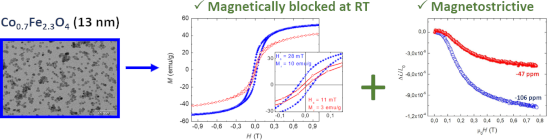
- fibers, made by electrospinning [9]. Focusing on this latter class of materials, the polymer exhibiting the most interesting ferro-and piezoelectric properties is a semi-crystalline fluoropolymer: poly(vinylidene fluoride) or PVDF. Mixing PVDF with magnetic nanoparticles leads to a higher polymer




Photoactive nanoarchitectures based on clays incorporating TiO2 and ZnO nanoparticles
Beilstein J. Nanotechnol. 2019, 10, 1140–1156, doi:10.3762/bjnano.10.114
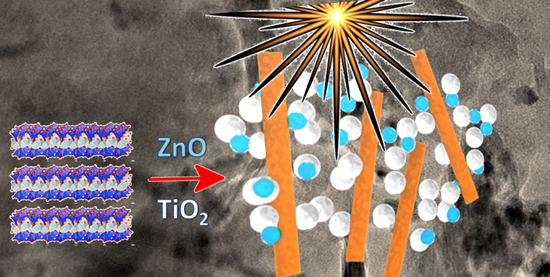
- reactivity can be modified [48][49]. TiO2 and ZnO NPs with different shapes, sizes and exposed crystal facets were assembled to yield hollow particles, fibers, nanosheets, nanowires, nanorods, nanoflowers and nanobelts through various synthesis routes including template synthesis [50][51][52][53