


Search results
Search for "staining" in Full Text gives 142 result(s) in Beilstein Journal of Nanotechnology.
Enhanced antineoplastic/therapeutic efficacy using 5-fluorouracil-loaded calcium phosphate nanoparticles
Beilstein J. Nanotechnol. 2018, 9, 2499–2515, doi:10.3762/bjnano.9.233
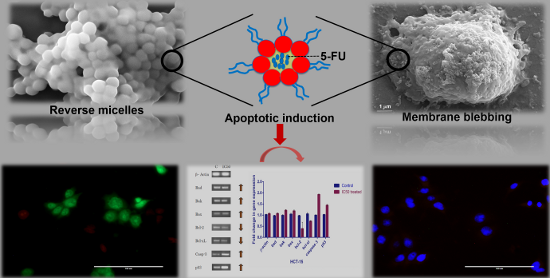
- -15) cancer cells at 48.5 μg/mL treatment. The apoptotic induction of CaP@5-FU NPs was confirmed with acridine orange/ethidium bromide (AO/EB) staining and by examining the morphological changes with Hoechst and rhodamine B staining in a time-dependent manner. The apparent membrane bleb formation was
- with dual staining of acridine orange/ethidium bromide (AO/EB) in the cells. The differential staining of the combination AO/EB reveals the different apoptotic phases. AO, with a fluorescence excitation/emission of 431/520 nm, can permeate the cells and yields a bright green fluorescence upon
- excitation. Likewise, EB, having an excitation/emission of 524/605 nm, provides an orange fluorescence upon intercalculation with dsDNA and can permeate into membrane-compromised cells only. The degree of EB staining in the cells dictates the proportion of the cell membrane compromised. During the early


Nanoscale characterization of the temporary adhesive of the sea urchin Paracentrotus lividus
Beilstein J. Nanotechnol. 2018, 9, 2277–2286, doi:10.3762/bjnano.9.212
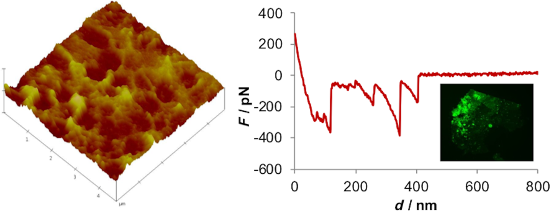
- footprints samples were imaged in each condition and representative data were selected. Histochemical staining Binding of the benzothiazole dye thioflavin-T (Sigma-Aldrich) to amyloid structures was detected by direct staining of the adhesive footprints collected on glass slides. Footprints were incubated
- ), moist (b) or under native (c) conditions. The data was obtained either with a ScanAsyst-Air probe (a, b) or a silicon nitride probe (SNL, Bruker) (c). Different coloured lines represent three independent trials. a) Histological staining of the adhesive material deposited by the tube feet of


The structural and chemical basis of temporary adhesion in the sea star Asterina gibbosa
Beilstein J. Nanotechnol. 2018, 9, 2071–2086, doi:10.3762/bjnano.9.196
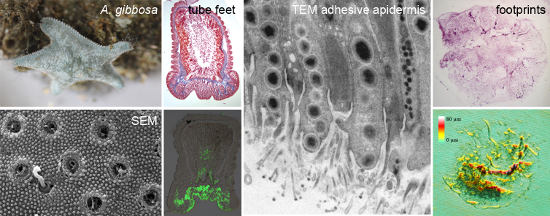
- homogenous granules. The footprints comprised a meshwork on top of a thin layer. This topography was consistently observed using various methods like scanning electron microscopy, 3D confocal interference microscopy, atomic force microscopy, and light microscopy with crystal violet staining. Additionally, we
- results, indicating the intensity of staining on the different tissues is given in Table 1. Details on the sugar moieties recognized by the lectins are listed in (Supporting Information File 1, Table S1). Out of the 24 tested lectins, 15 led to a labelling in the disc epidermis (Figure 6, Supporting
- Information File 1, Figure S2,S3). Concanavalin A (Con A) strongly reacted with most tissues of the tube feet, except the connective tissue (Figure 6A1). In the disc epidermis, the area of the gland cells was strongly labelled from the gland cell bodies to the secretory pores (Figure 6A2). This staining


Biomimetic and biodegradable cellulose acetate scaffolds loaded with dexamethasone for bone implants
Beilstein J. Nanotechnol. 2018, 9, 1986–1994, doi:10.3762/bjnano.9.189
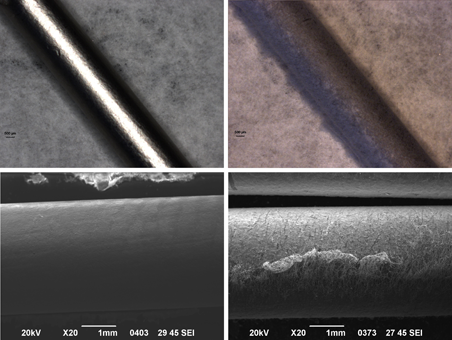
- . Cytotoxicity studies were performed by using MTT assay, methylene-blue staining and SEM fixation and showed very good cell adhesion and proliferation, indicating the cytocompatibility of these fibrous scaffolds. Drug-release kinetics was measured for the evaluation of a controllable and sustained release of
- staining: L929 mouse fibroblasts were used to examine the cytotoxicity levels due to their properties and biological characteristics (biological responses and reproducible growth rates). The samples were placed inside a well-plate and 1 mL of medium was added and the whole system was left in the incubator
- of PBS was added. Methylene blue is commonly used for the identification of cell viability as it stains the nuclei of living cells, making them more observable. The protocol for staining with methylene blue initially involves the addition of methanol to the samples, which were in the well-plates for


Preparation of micro/nanopatterned gelatins crosslinked with genipin for biocompatible dental implants
Beilstein J. Nanotechnol. 2018, 9, 1735–1754, doi:10.3762/bjnano.9.165
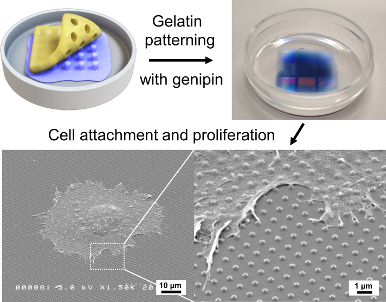
- patterns The cell viability of Saos-2 cells on the gelatin crosslinked with 20 mM genipin was easily estimated with live/dead double staining (Figure 4). The gelatin pillars, with diameters of 500 nm and heights of 500 nm, were used as gelatin patterns. The high ratio of green-stained cells on gelatin
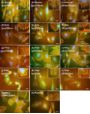
- with a width or diameters of 500 nm. Immunofluorescence staining after 1 day of culturing Immunofluorescence images of Saos-2 cells on the gelatin patterns are shown in Figure 6. Vinculin (green), F-actin (red), and nuclei (blue) of the cells were stained after 1 day of culturing. The cells were
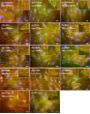
- . Immunofluorescence staining after 7 days of culturing Immunofluorescence images of Saos-2 cells on the gelatin patterns after 7 days of culturing are shown in Figure 9. The images of vinculin (green), F-actin (red), and nuclei (blue) were quite similar to the images obtained after 1 day of culturing (Figure 6






Humidity-dependent wound sealing in succulent leaves of Delosperma cooperi – An adaptation to seasonal drought stress
Beilstein J. Nanotechnol. 2018, 9, 175–186, doi:10.3762/bjnano.9.20
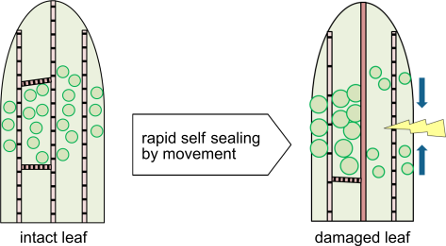
- (Technical Workshop, Institute of Biology II/III, University of Freiburg, Germany) was used to cut thin sections between 5 µm and 10 µm in thickness. Overview staining with toluidine blue (0.05% toluidine blue in distilled water) was used to give contrast to the various leaf tissues. Unlignified primary cell


Co-reductive fabrication of carbon nanodots with high quantum yield for bioimaging of bacteria
Beilstein J. Nanotechnol. 2018, 9, 137–145, doi:10.3762/bjnano.9.16
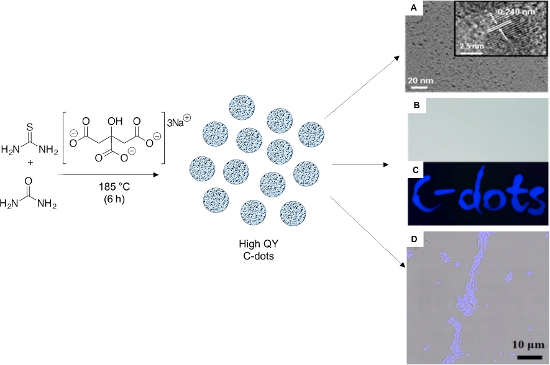
- . Currently, visual detection approaches are based on indirect methods related to bacterially secreted metabolites or imaging of bacterial colonies [4]. Furthermore, the staining techniques use either commercially available fluorescent dyes or semiconductor quantum dots [5]. Fluorescent dyes are expensive


Hyperthermic intracavitary nanoaerosol therapy (HINAT) as an improved approach for pressurised intraperitoneal aerosol chemotherapy (PIPAC): Technical description, experimental validation and first proof of concept
Beilstein J. Nanotechnol. 2017, 8, 2729–2740, doi:10.3762/bjnano.8.272
- liquid nitrogen. Analyses of in-tissue doxorubicin penetration depth (i.e., distance between luminal surface and innermost positive staining for doxorubicin accumulation) were performed by confocal laser microscopy (Leica TCS SP8, Leica Microsystems GmbH, Wetzlar, Germany) with immersion oil on ten
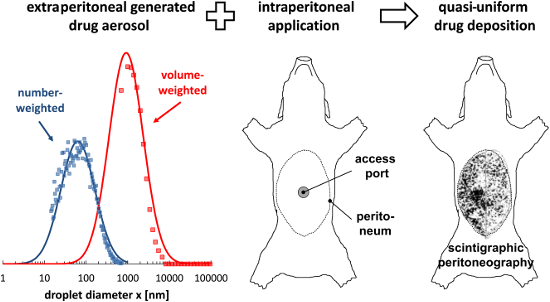
- charging. As expected, the even more homogeneously deposited ultrafine droplets of the extracavitary-charged HINAT-LAU aerosol showed neither a local methylene blue staining nor a visible staining of the whole peritoneum. In the case of intracavitary aerosol change, which goes along with an increased
- droplet deposition based on the formation of an electrical field between electrode and grounded peritoneum, a significant dye staining could be observed near the electrode as shown in Figure 10. In contrast to the extracavitary-charged HINAT-LAU aerosol, PIPAC-MIP operation with aqueous methylene blue




Involvement of two uptake mechanisms of gold and iron oxide nanoparticles in a co-exposure scenario using mouse macrophages
Beilstein J. Nanotechnol. 2017, 8, 2396–2409, doi:10.3762/bjnano.8.239
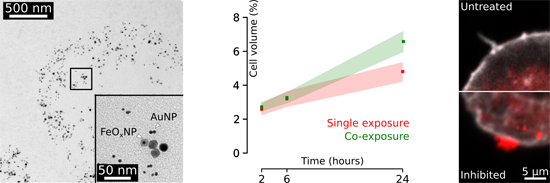
- × phosphate-buffered saline (PBS). After 1 h of staining (in the dark at RT) and three washing cycles with 1× PBS the cells were mounted using Glycergel mounting media (C0563, Dako, Baar, Switzerland). For live-cell imaging, cells were seeded in a Lab-TekTM II chambered cover glass four-well chamber (1.5
- in 0.15 M cacodylate buffer. Staining occurred with osmium tetraoxide in ddH2O. After the staining, membranes were transferred to 0.05 M maleate buffer and dehydrated with an increased ethanol series (30% and 70%). The membranes were embedded in epon and polymerized at 60 °C. The samples were



Photobleaching of YOYO-1 in super-resolution single DNA fluorescence imaging
Beilstein J. Nanotechnol. 2017, 8, 2296–2306, doi:10.3762/bjnano.8.229
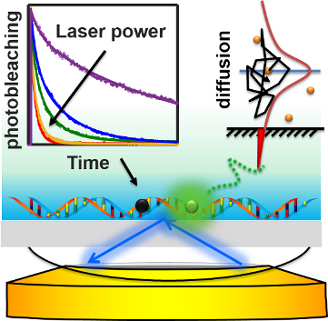
- homogeneous staining as described by Carlsson et al. [42]. Approximately 200 µL of the YOYO–DNA solution was injected into the microfluidic channel using a syringe pump (New Era Pump Systems Inc., model NE-1000) at 0.40 mL/min. YOYO–DNA adhered to the surface of the amine-modified glass through electrostatic
- fluorescence lifetime of YOYO-1 in DNA is 2–5 ns [52], that is, much shorter than the photon flux interval, all laser powers studied in this work should not be high enough for two-photon absorption to occur. Thus, the error in the experiment is due to both inhomogeneous dye staining and DNA stretching quality




Fabrication of carbon nanospheres by the pyrolysis of polyacrylonitrile–poly(methyl methacrylate) core–shell composite nanoparticles
Beilstein J. Nanotechnol. 2017, 8, 1897–1908, doi:10.3762/bjnano.8.190

- solution under stirring. After about 20 h of stirring, the mixture was then used for the preparation of samples for TEM observation. The dried copper containing the above NaSCN-treated nanoparticles was further treated with gentle water washing to remove NaSCN salt and negative staining with the PTA
- adjusting the feeding monomer ratio. TEM images The TEM micrographs of the PAN nanoparticles and the two PAN–PMMA nanoparticles are displayed in Figure 4. As disclosed by Figure 4a, the staining agent phosphate tungsic acid (PTA) molecules could diffuse into and interact with the PAN nanoparticles. Thus



Optical techniques for cervical neoplasia detection
Beilstein J. Nanotechnol. 2017, 8, 1844–1862, doi:10.3762/bjnano.8.186




Synthesis and functionalization of NaGdF4:Yb,Er@NaGdF4 core–shell nanoparticles for possible application as multimodal contrast agents
Beilstein J. Nanotechnol. 2017, 8, 1815–1824, doi:10.3762/bjnano.8.183
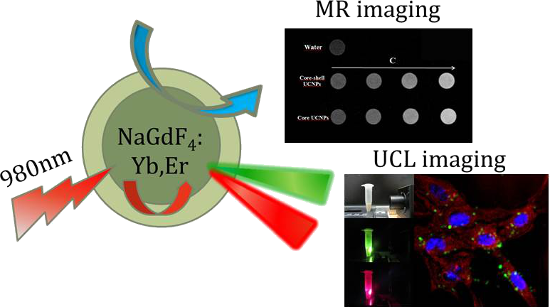
- solutions. A) Confocal images of MDA-MB-231 cells after 24 h treatment with Tween 80-coated core–shell UCNPs (10 µg/mL); UCNPs are green, DAPI staining is blue, the red color represents excitation scattering from intracellular structures. Scale bar equals 10 µm. B) Viability of MCF-7 and MDA-MB-213 cells


Collembola cuticles and the three-phase line tension
Beilstein J. Nanotechnol. 2017, 8, 1714–1722, doi:10.3762/bjnano.8.172
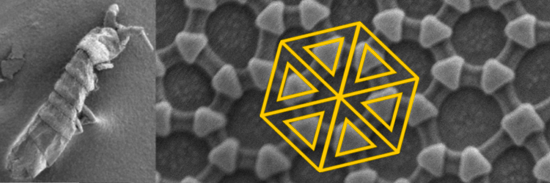
- al demonstrated a lipid layer (epicuticular wax) covering all parts of the Collembola cuticle, using time-of-flight secondary ion mass spectrometry [30]. A lipophilic dye, such as Nile Red, will bind to any part of such a layer it came into contact with, thus staining the part of a surface wetted by


![[Graphic 16]](/bjnano/content/inline/2190-4286-8-172-i22.png?max-width=637&scale=1.18182) . A system with θ0 = 105°, S = 0.1 μm a...
. A system with θ0 = 105°, S = 0.1 μm a...

Uptake and intracellular accumulation of diamond nanoparticles – a metabolic and cytotoxic study
Beilstein J. Nanotechnol. 2017, 8, 1649–1657, doi:10.3762/bjnano.8.165
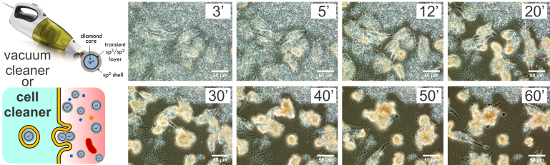
- 10 min intervals. Viability of SAOS-2 cells incubated with HPHT NDs for three concentrations as a function of the mean particle diameter after 3 days. (Upper row) results of an MTS assay, (lower row) results of cell counting after cell staining. The results are given as the mean ± SD from 3
- row) results of the MTS assay; (lower row) results of cell counting after cell staining. The results are given as the mean ± SD from 3 experiments, each performed in sextuplicate. ANOVA, Tukey HSD post-hoc test. “*” indicates a significant difference from MR-18 at a concentration of 1000 µg/mL (p
- < 0.05). Viability of SAOS-2 cells incubated with NDs at three concentrations as a function of ND type and surface treatment after 3 days. (Upper row) results of the MTS assay; (lower row) results of cell counting after nuclei staining. The results are given as the mean ± SD from 3 experiments, each


A nanocomplex of C60 fullerene with cisplatin: design, characterization and toxicity
Beilstein J. Nanotechnol. 2017, 8, 1494–1501, doi:10.3762/bjnano.8.149
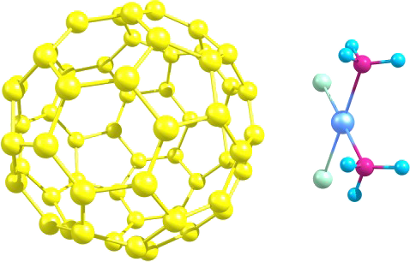
- compounds. The genotoxicity of С60 fullerene, Cis and their complex was evaluated in vitro with the comet assay using human resting lymphocytes and lymphocytes after blast transformation. The cytotoxicity of the mentioned compounds was estimated by Annexin V/PI double staining followed by flow cytometry
- determined using the image analysis software programs Comet Assay IV (Perspective Instruments, UK) and CometScore (TriTec Corp., USA). Cell-death assay Apoptosis was assessed by staining cells with Annexin V–fluorescein isothiocyanate (FITC) and counterstaining with propidium iodide (PI) with the use Annexin
- fullerene can either consume ROS or induce their generation [59]. Taking into account this fact we have hypothesized that C60 fullerene in the nanocomplex with Cis can affect mode of cell death induced by Cis. In order to testify this hypothesis, Annexin V/PI double staining of human healthy lymphocytes



Low uptake of silica nanoparticles in Caco-2 intestinal epithelial barriers
Beilstein J. Nanotechnol. 2017, 8, 1396–1406, doi:10.3762/bjnano.8.141
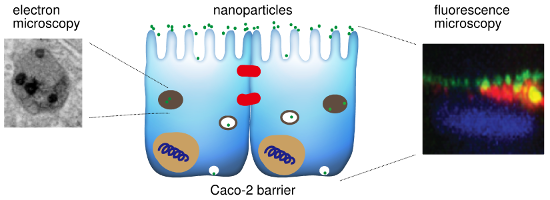
- ][50]. Lysosomal staining showed that some of the (few) internalised nanoparticles were found in the lysosomes, and this was more evident for the 50 nm SiO2-NPs in Caco-2 barriers cultured for 4 days compared to those cultured for 21 days. Transmission electron microscopy (TEM) imaging was used to



Evaluation of quantum dot conjugated antibodies for immunofluorescent labelling of cellular targets
Beilstein J. Nanotechnol. 2017, 8, 1238–1249, doi:10.3762/bjnano.8.125
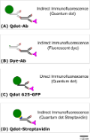
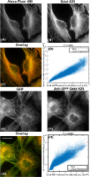
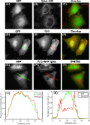
- cytosolic structures: The vast majority of studies using Qdots show tubulin staining [6][12][16][18][20], therefore we sought to label this abundant cytosolic protein in order to have a positive control for our labelling protocol. After incubation with an anti-tubulin primary antibody and a Qdot 625-Ab, we
- considers them unsuitable in their current form "… because of the lack of reproducibility of the experiments" when using these materials [35]. Interestingly, in all of our Qdot 625 images, even when the staining was non-specific, there was no labelling within the nucleus (Figure 2–6). This suggested that
- primary anti-GFP antibody and Qdot 625-Ab. Both approaches yielded homogenous labelling in the cytosol, with the Qdot signal being excluded from the nucleus (Figure 7). There was also little non-specific Qdot 625 staining in the non-transfected cells (Figures S16 and S17 in Supporting Information File 1




Nano-engineered skin mesenchymal stem cells: potential vehicles for tumour-targeted quantum-dot delivery
Beilstein J. Nanotechnol. 2017, 8, 1218–1230, doi:10.3762/bjnano.8.123
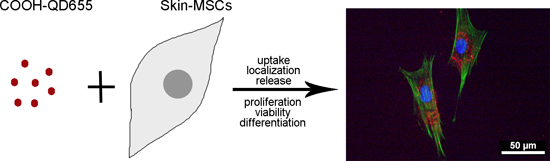
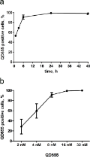
- proliferation of MSCs. The differentiation of MSCs into adipocytes, chondrocytes and osteocytes was not affected by the presence of QDs (Figure 5). Quantification assays for Alcian Blue staining and Alizarin Red S staining confirmed that QDs did not influence chondrogenesis and osteogenesis of skin MSCs (Figure
- S staining. The cells were washed with 1 mL of PBS and fixed with 4% paraformaldehyde (PFA) at room temperature for 30 min. After fixation, the cells were washed two times with distilled water and stained with a 2% Alizarin Red S solution in water (pH adjusted to 4.2 with a 0.1% solution of NH4OH
- evaluated using Oil Red O staining. Cells were washed with PBS and fixed with 4% formaldehyde for 30 min at room temperature. After fixation, cells were washed with distilled water. Prior to staining, cells were incubated for 5 min at room temperature with 60% isopropanol and subsequently stained with 180





Silicon microgrooves for contact guidance of human aortic endothelial cells
Beilstein J. Nanotechnol. 2017, 8, 675–681, doi:10.3762/bjnano.8.72
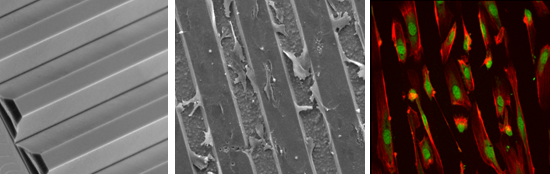
- ), as described further below. Staining on actin and nuclei and fluorescence confocal microscopy HAECs were cultured on the functionalized substrates for 2 and 7 days. After cell culture experiments, culture media were removed and cells were washed twice with PBS at 37 °C and afterwards fixed as


Innovations from the “ivory tower”: Wilhelm Barthlott and the paradigm shift in surface science
Beilstein J. Nanotechnol. 2017, 8, 394–402, doi:10.3762/bjnano.8.41

- same properties as the lotus leaves. Figure 10 shows one of these early attempts. The plate has two sides, one smooth and one covered with PTFE particles. After contaminating both sides with toner from a photocopier and the red staining powder Sudan III, the plate was briefly rinsed with water. While


Comparison of four methods for the biofunctionalization of gold nanorods by the introduction of sulfhydryl groups to antibodies
Beilstein J. Nanotechnol. 2017, 8, 372–380, doi:10.3762/bjnano.8.39
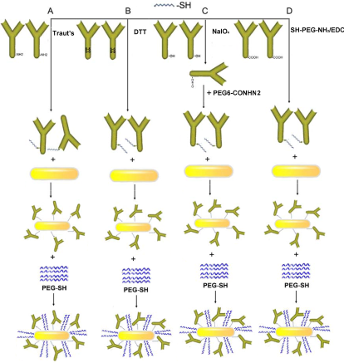
- cationic surfactant bilayer [17][24], because of the replacement of CTAB by thiolated anti-IgG [17][25]. Anti-IgG were detected in thiolation and nanoconjugates with GNRs, but not in free GNRs, by gel electrophoresis followed by Coomassie brilliant blue staining (Figure S1, Supporting Information File 1


“Sticky invasion” – the physical properties of Plantago lanceolata L. seed mucilage
Beilstein J. Nanotechnol. 2016, 7, 1918–1927, doi:10.3762/bjnano.7.183
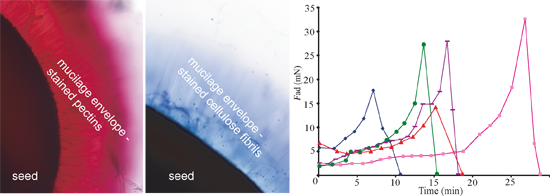
- along a dirt road in the wilderness near Wrocław, Poland. To examine the mucilage composition, staining reactions with 0.1% aqueous solution of ruthenium red (pectin staining), with 0.01% aqueous solution of methylene blue (cellulose staining) and with 0.1% aqueous solution of Direct Red 23 (specific
- analysis, and the P-value was set to P < 0.001 if one of both conditions was not achieved. Results Mucilage composition The mucilage of Plantago lanceolata contained both pectin and cellulose components, which are characteristic of cellulose mucilage. Positive staining with ruthenium red (Figure 1A
- ) revealed the presence of pectins in the mucilage. Staining with methylene blue (Figure 1B) and Direct Red 23 (Figure 1C) revealed the presence of cellulose. The cellulose fibrils kept the mass of pectins in place. The thickness of the mucilage envelope ranged from 350 to 450 μm. Cellulose fibrils were very


Facile fabrication of luminescent organic dots by thermolysis of citric acid in urea melt, and their use for cell staining and polyelectrolyte microcapsule labelling
Beilstein J. Nanotechnol. 2016, 7, 1905–1917, doi:10.3762/bjnano.7.182
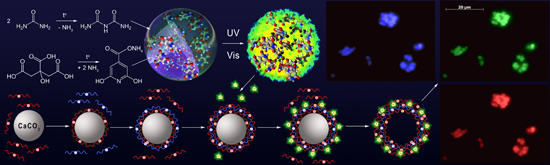
- applications of O-dots for alive/fixed cell staining and labelling of layer-by-layer polyelectrolyte microcapsules were evaluated. Keywords: cell culture; citric acid; layer-by-layer (LbL)-microcapsules; luminescence; organic dots (O-dots); staining; toxicity; Introduction Luminescent nanosized semiconductor
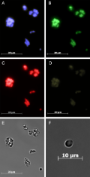
- (Supporting Information File 1, Figure S18 and Figure S19). Obviously, this was due to the low concentration of O-dots in microcapsular delivery systems, which was significantly lower than both MTC and Maxmet. Cellular staining by O-dots Results of cell staining are shown in Figure 5 and Figures S20–22
- (Supporting Information File 1) for fixed and pristine (alive) cells, respectively. It is well known that cellular staining with fluorescent carbon dots is typically more effective for pre-fixed cells [52]. Data obtained indicate that the normal intact ST-cells were stained with O-dots (50 μg/mL) diffusely




Low temperature co-fired ceramic packaging of CMOS capacitive sensor chip towards cell viability monitoring
Beilstein J. Nanotechnol. 2016, 7, 1871–1877, doi:10.3762/bjnano.7.179
- attachment of the cells on the chip, as well as LTCC, was monitored by fixing the cells with 4% paraformaldehyde 24 h after inoculation and staining the cells with a DNA binding dye (Hoechst, 33342) and anti-α-tubulin antibody. Based on the cell morphology shown in Figure 5a–f, the cells attached normally
- cells grow on top of the chip. (d–f) The cells grow on top of LTCC. In (a) and (d), the blue color indicates the cell nuclei stained with a DNA binding dye, Hoechst 33342. In (b) and (e), immunofluorescence staining was performed with anti-α-tubulin antibody and Alexa 488 secondary antibody. The green
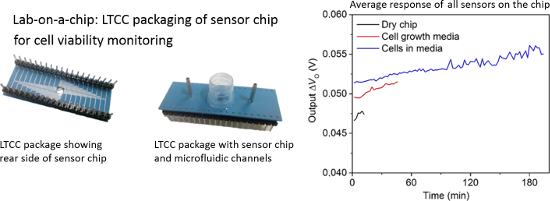
- color shows the microtubules of the cell cytoskeleton. In (c) and (f), the merged image of the nuclear staining and cytoskeleton are shown. The images were taken with a Zeiss LSM700 confocal microscope with 63× plan-apo immersion objective and appropriate filter sets. Average voltage change from the





