


Search results
Search for "NaCl" in Full Text gives 224 result(s) in Beilstein Journal of Nanotechnology. Showing first 200.
Microfluidics as tool to prepare size-tunable PLGA nanoparticles with high curcumin encapsulation for efficient mucus penetration
Beilstein J. Nanotechnol. 2019, 10, 2280–2293, doi:10.3762/bjnano.10.220
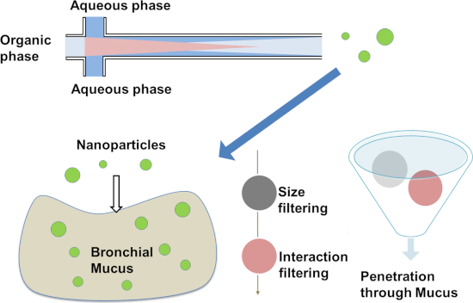
- simple model Mucin (1%) was dissolved in water containing 1% NaCl and left overnight under stirring at room temperature to form a kind of artificial mucus (AM). The sample was stored in the refrigerator (4 °C) until use. The AM was incubated with the suspension of PLGA NPs that were stabilized with


Mannosylated brush copolymers based on poly(ethylene glycol) and poly(ε-caprolactone) as multivalent lectin-binding nanomaterials
Beilstein J. Nanotechnol. 2019, 10, 2192–2206, doi:10.3762/bjnano.10.212
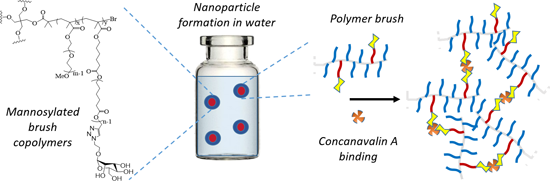
- polymers and their glyco-derivatives, once dispersed in aqueous solution. Firstly, the non-mannosylated polymers were tested in three different media (H2O, 10 mM PBS, 0.9% w/v NaCl) and at three different temperatures (10, 25 and 37 °C; concentration of 1 mg/mL, see Supporting Information File 1, Figures
- . Turbidimetric assay This assay was performed in filtered (PTFE, 0.2 μm) HEPES-buffered saline (HBS), containing 10 mM HEPES, 150 mM NaCl and 1 mM CaCl2 at pH 7.4, according to a procedure already reported in the literature [38]. The stock solution of Con A (6 μM with respect to the tetramer, MW = 104000 Da) was



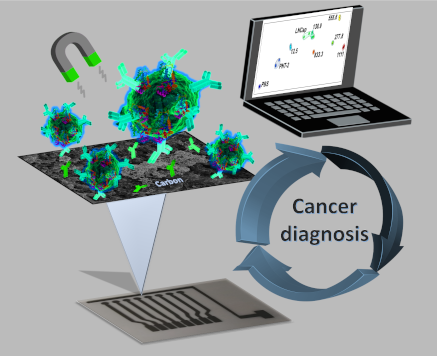
Use of data processing for rapid detection of the prostate-specific antigen biomarker using immunomagnetic sandwich-type sensors
Beilstein J. Nanotechnol. 2019, 10, 2171–2181, doi:10.3762/bjnano.10.210
- chloride hexahydrate (FeCl3·6H2O) with ≥98% purity was purchased from Sigma-Aldrich. Hydrochloric acid (HCl, 36.5–38.0% w/w) and NaCl with 99% purity were acquired from Labsynth (São Paulo, Brazil). Sodium citrate (Na3C6H5O7) with 99.8% purity was purchased from J.T Baker Chemical Company. All aqueous


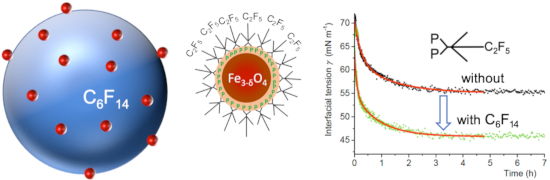
Microbubbles decorated with dendronized magnetic nanoparticles for biomedical imaging: effective stabilization via fluorous interactions
Beilstein J. Nanotechnol. 2019, 10, 2103–2115, doi:10.3762/bjnano.10.205
- )piperazine-N′-2-ethanesulfonic acid) were purchased from Sigma-Aldrich (Lyon, France). A HEPES buffer solution (20 mmol L−1) in a 150 mmol L−1 NaCl solution was prepared, and its pH was adjusted to 7.4 with 1 N NaOH. Water was purified using a Millipore system (surface tension 71.4 mN m−1 at 20 °C


Synthesis of highly active ETS-10-based titanosilicate for heterogeneously catalyzed transesterification of triglycerides
Beilstein J. Nanotechnol. 2019, 10, 2039–2061, doi:10.3762/bjnano.10.200
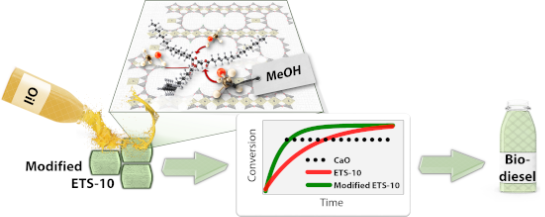
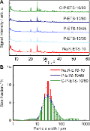
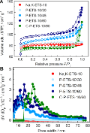
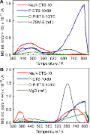
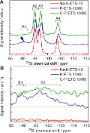
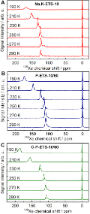
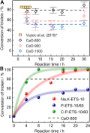
- solution was prepared by dilution of the 9.8 mL aqueous solution of 51–55 wt % Na2SiO3 with 45.2 mL of DDW in a 250 mL flask. An aqueous solution of NaCl (3.4 g of NaCl dissolved in 10.0 mL of DDW) was subsequently added into the flask with the silica-containing solution in it. A titania-containing
- solution was further added into 87.5 mL of the titania/silica-containing solution. The resulting molar composition of the obtained 90 mL solution is the following SiO2/TiO2/HCl/Na2O/NaCl/KF/H2O = 5.56:1:1.94:2.64:3.22:0.09:216. The solution was then further aged for 16 h in a flask at room temperature for








Gold-coated plant virus as computed tomography imaging contrast agent
Beilstein J. Nanotechnol. 2019, 10, 1983–1993, doi:10.3762/bjnano.10.195
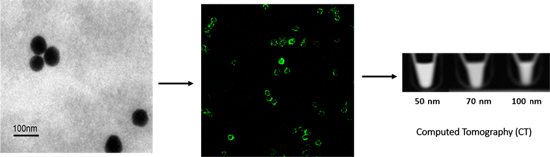
- (1 mg/mL; supplemented with 250 mM NaCl) over 5–10 min under continuous stirring at 500–800 rpm at ambient temperature. PAHCPMV particles were washed four times with DD water (15 mL each) on 50 kDa cut-off Millipore filter membranes, followed by dialysis with 12,400 molecular weight cut-off (MWCO
- NaCl; pH 7.4) was added to a solution of carboxyl-PEG 5000-SH (spacer arm length 15.8 Å, 10 mg) dissolved in DMSO (1 mL). The reaction was stirred for ca. 12 h at ambient temperature. Carboxyl-PEG5000Au-CPMV particles were dialyzed for 24 h against 100 mM sodium phosphate, 0.15 M NaCl, buffer pH 7.4




Nanoporous smartPearls for dermal application – Identification of optimal silica types and a scalable production process as prerequisites for marketed products
Beilstein J. Nanotechnol. 2019, 10, 1666–1678, doi:10.3762/bjnano.10.162
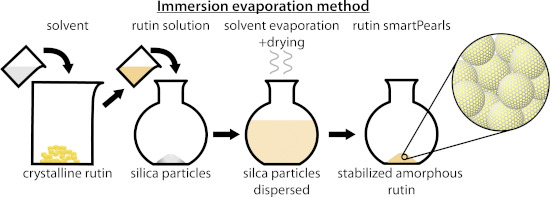
- rutin active agent powder and the rutin smartPearls was monitored over one hour in 0.15 molar NaCl solution using in situ UV–vis measurements (Sirius inForm®, UK) with a fiber optic collector and a path length of 5 mm. The 0.15 molar NaCl solution was placed in a beaker and the aqueous phase was
- baseline correction and the 0.15 molar NaCl solution used in this study also led to differences from the values reported in the literature. The assumption that nanometer-sized rutin particles are present in the raw material is supported by the fact that the measured Cs value increased from 30 to 70 µg/mL




Stationary beam full-field transmission helium ion microscopy using sub-50 keV He+: Projected images and intensity patterns
Beilstein J. Nanotechnol. 2019, 10, 1648–1657, doi:10.3762/bjnano.10.160
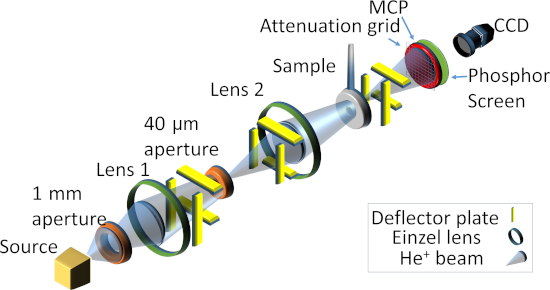
- configuration. Here, we report projection imaging and intensity patterns obtained from powder and bulk crystalline samples using stationary broad-beam as well as convergent-beam illumination conditions in THIM. The He+ ions formed unexpected spot patterns in the far field for MgO, BN and NaCl powder samples
- ] and can open new imaging modalities using transmitted He+ ions. To understand the different processes contributing to the deflected intensity of transmitted He+ ions, we investigated BN, MgO, NaCl and Si samples using an in-house built transmission helium ion microscope (THIM). In this instrument the
- #549649) and NaCl (Plano Product #46-2). A small amount (≈1 mg) of the powder was deposited either from a spatula (BN and MgO) or scratched with a scalpel blade (NaCl) onto TEM grids without any support membrane (finder grids from Ted Pella Product #79750, Maxtaform™ Style H2, 200 mesh Cu grids) moistened


Kelvin probe force microscopy work function characterization of transition metal oxide crystals under ongoing reduction and oxidation
Beilstein J. Nanotechnol. 2019, 10, 1596–1607, doi:10.3762/bjnano.10.155
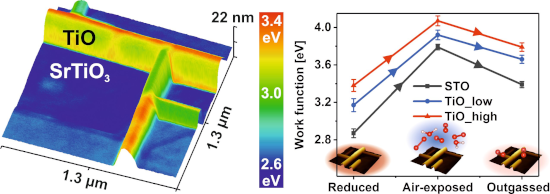
- show the properties of a bulk-like crystalline rock-salt TiO phase, unlike previous studies on the crystallography and electronic structure of TiO, which were based on defective thin films formed on various surfaces, e.g., TiC(100) [23] or TiO2(110) [24]. γ-TiO is the high-temperature phase with a NaCl


Janus-micromotor-based on–off luminescence sensor for active TNT detection
Beilstein J. Nanotechnol. 2019, 10, 1324–1331, doi:10.3762/bjnano.10.131
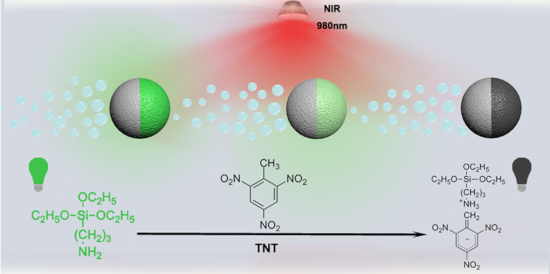
- oleic acid (OA, 90%) were obtained from Aladdin Chemistry Co. Ltd. NaOH, NH4F, ethanol, methanol, cyclohexane, trichloromethane, acetonitrile, NaCl, Na2HPO4, and NaH2PO4 were purchased from Tianjin Tianli Chemical Reagent Co. Ltd. Hydrofluoric acid (HF) and hydrogen peroxide (H2O2) were obtained from


Synthesis and characterization of quaternary La(Sr)S–TaS2 misfit-layered nanotubes
Beilstein J. Nanotechnol. 2019, 10, 1112–1124, doi:10.3762/bjnano.10.111
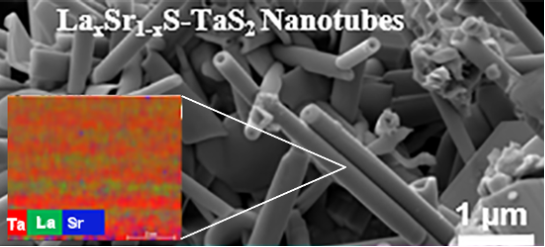
- distorted NaCl structure and the TaS2 can be indexed in a pseudo-hexagonal unit cell [35][38]. Figure 4 shows low-magnification and high-resolution HAADF-STEM images of two LaS–TaS2 (10 atom % Sr in the precursor) nanotubes. One can see the stacking of the SrxLa1−xS (indicated by green lines) and TaS2


Enhanced inhibition of influenza virus infection by peptide–noble-metal nanoparticle conjugates
Beilstein J. Nanotechnol. 2019, 10, 1038–1047, doi:10.3762/bjnano.10.104
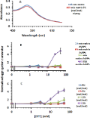
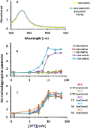
- NaCl, 3 mM KCl, l.8 mM Na2HPO4, 15 mM KH2PO4) with Tween-20 (0.1% (v/v)) pH 7.4 was added to the gold nanoparticles [26] and 10× (100 mM NaNO3, 20 mM HEPES with Tween-20 (0.1% (v/v)) pH 7.4 to the silver nanoparticles [17], vortex-mixed and the (gold or silver) nanoparticles were placed on a rotating
- nanoparticles were then applied to the column, the unbound fraction was recovered. Columns were washed with PBS and eluted with 1 M NaCl and then 2 M NaCl in 8 mM Na2HPO4, 15 mM KH2PO4, pH 7.4. Calculation of the aggregation parameter (AP) The surface plasmon absorption peak of 8.8 nm diameter gold
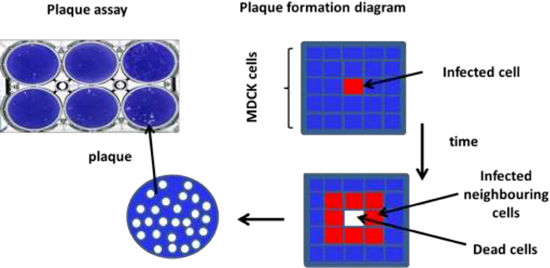
- with 2 M NaCl) fractions as a percentage of total nanoparticles applied to the column. Results are the mean ± SD (n = 3). Determination of the half maximal inhibitory concentration (IC50) of FluPep and and FluPep ligand in a plaque assay. Inhibition of plaque formation as a function of the




Correlation of surface-enhanced Raman scattering (SERS) with the surface density of gold nanoparticles: evaluation of the critical number of SERS tags for a detectable signal
Beilstein J. Nanotechnol. 2019, 10, 1016–1023, doi:10.3762/bjnano.10.102
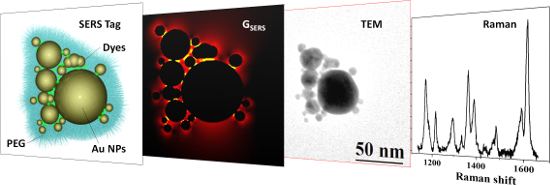
- plate placed at the bottom of a cell containing a 10−4 M NaCl solution in double distilled water [18][19][41]. Dye solutions of either hexacyanin 3 (HITC, perchlorate, Exciton), malachite green (MG, oxalate salt, Sigma-Aldrich) or malachite green isothiocyanate (MGITC, Invitrogen) were added to a 2 nM


Serum type and concentration both affect the protein-corona composition of PLGA nanoparticles
Beilstein J. Nanotechnol. 2019, 10, 1002–1015, doi:10.3762/bjnano.10.101
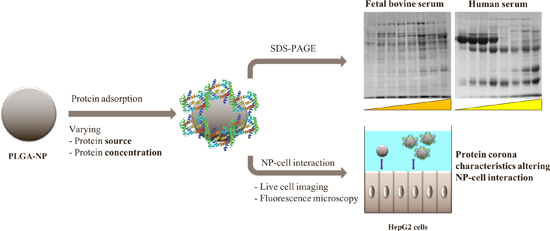
- NPs incubated with 500 µL serum was measured in pure water and 0.2 mM NaCl, respectively. After water dilution PLGA NPs and NPs incubated with 500 µL FBS or human serum show zeta potentials of −43.2 mV, −34.0 mV and −21.4 mV, respectively. As could be expected the higher ionic background of 0.2 mM
- NaCl leads to a moderate reduction of the zeta potential to −33.0 mV, −30.5 mV, and −19.4 mV, respectively, but the graduation of the zeta potential values between the different samples remains the same. In brief, the incubation of PLGA NPs with increasing concentrations of FBS enabled us to modulate



Concurrent nanoscale surface etching and SnO2 loading of carbon fibers for vanadium ion redox enhancement
Beilstein J. Nanotechnol. 2019, 10, 985–992, doi:10.3762/bjnano.10.99
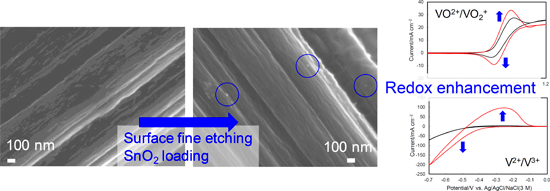
- carbon cloth (ElectroChem). The reference electrode was Ag/AgCl/NaCl (3 M) (0.212 V vs standard hydrogen electrode). The electrolytes were H2SO4 (2 M) and VOSO4 (1 M)/H2SO4 (2 M). The measurements were carried out under Ar atmosphere at 25 °C. A flow cell test was performed using three layers of 3 cm2 of
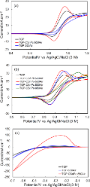
- -550Air, and TGP-550Air. Cyclic voltammograms in Ar-saturated 2 M H2SO4 at 25 °C for TGP, TGP-550Air, and TGP-CSnPc-TAir (T = 500, 550, 600 and 650 °C). The reference electrode was Ag/AgCl/NaCl (3 M). The counter electrode was carbon cloth. Scan rate: 50 mV·s−1. Cyclic voltammograms in 1 M VOSO4 + 2 M
- H2SO4 at 25 °C for (a,b) VO2+/VO2+, (c) V2+/3+ redox reactions at TGP, TGP-550Air, TGP-CSnPc-TAir (T =500, 550, 600 and 650 °C). The reference electrode was Ag/AgCl/NaCl (3 M). The counter electrode was carbon cloth. Scan rates were (a,b) 1 mV·s−1 and (c) 50 mV·s−1. Charge–discharge curves and cycling



An iridescent film of porous anodic aluminum oxide with alternatingly electrodeposited Cu and SiO2 nanoparticles
Beilstein J. Nanotechnol. 2019, 10, 735–745, doi:10.3762/bjnano.10.73
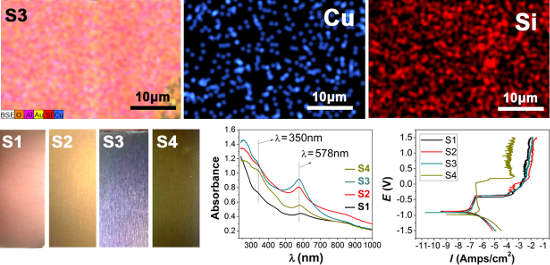
- test sample was immobilized onto a PVC tube with epoxy resin, and then naturally dried for 12 h. After that, a NaCl solution (3.5%) was poured into the PVC tube, and the level of the NaCl solution was in the range of a half to two-thirds of the tube volume. The exposed area of the PVC tube was


Widening of the electroactivity potential range by composite formation – capacitive properties of TiO2/BiVO4/PEDOT:PSS electrodes in contact with an aqueous electrolyte
Beilstein J. Nanotechnol. 2019, 10, 483–493, doi:10.3762/bjnano.10.49
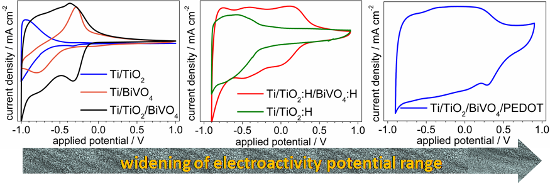
- anions originating from the electrolyte during electrooxidation/electroreduction cycles [35]. Moreover, the overpotential of EDOT oxidation is lower in NaPSS aqueous electrolyte (in comparison with, e.g., NaCl) [36]. Electrodepositon was performed using 400, short (0.2 s) potentiostatic pulses (E = 1 V




Non-agglomerated silicon–organic nanoparticles and their nanocomplexes with oligonucleotides: synthesis and properties
Beilstein J. Nanotechnol. 2018, 9, 2516–2525, doi:10.3762/bjnano.9.234
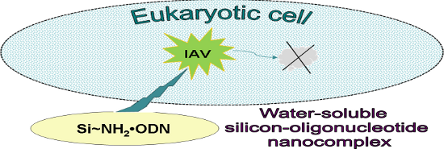
- conjugated with oligodeoxyribonucleotides (ODN) through the binding to the negatively charged internucleotide phosphate groups to form Si–NH2·ODN complexes. Like Si–NH2, the Si–NH2·ODN nanocomplexes are dissolved in aqueous solutions. The addition of NaCl did not lead to precipitation. Si–NH2 and Si–NH2·ODN
- these supernatants were precipitated by the addition of 1 µL of 3 M LiClO4 (precipitate 2). The precipitates 1 and 2 were dried at 60 °C to remove the acetone and were dissolved in 1 M NaCl. The amount of the bound (precipitate 1) and unbound (precipitate 2) oligonucleotide was evaluated
- were visualized by StainsAll (Figure 1b). In our experiments, the Si–NH2·ODN nanocomplexes were obtained by mixing 0.46 M Si–NH2 (2 µL) and ODN in 0.16 M NaCl or water (98 µL) while keeping the ratio between the amino and phosphate groups at NH2/p ≥ 10, unless otherwise specified. Formation of


SERS active Ag–SiO2 nanoparticles obtained by laser ablation of silver in colloidal silica
Beilstein J. Nanotechnol. 2018, 9, 2396–2404, doi:10.3762/bjnano.9.224
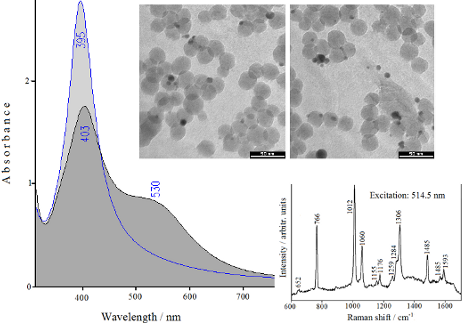
- , Ludox TM-40, pH ≈9 at 25 °C, NaCl content: 0.03 wt %) was diluted with distilled water in order to have a sample with 10 wt % as SiO2 content. Laser ablation of silver in colloidal silica was performed with the fundamental wavelength of a Q-switched Nd:YAG ns-pulsed laser (Quanta System G90-10: rep


The role of adatoms in chloride-activated colloidal silver nanoparticles for surface-enhanced Raman scattering enhancement
Beilstein J. Nanotechnol. 2018, 9, 2236–2247, doi:10.3762/bjnano.9.208
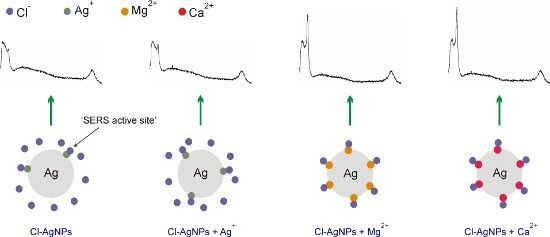
- 254 nm (Figure 2) [25][26]. It should be mentioned that none of the reagents measured separately showed an absorption band at this wavelength and that the AgCl absorption band can also be observed in the UV–vis spectrum of a mixture of only AgNO3 and NaCl (Supporting Information File 1, Figure S1
- − ions (10−8–10−7 M) are nonetheless present in the solution, since the test molecules were added as chloride salts, but not enough to observe a SERS effect. However, after adding 0.1 M NaCl to the cit-AgNPs or hya-AgNPs, intense SERS spectra of crystal violet or 9-aminoacridine were obtained (data not
- violet, we added 1 mM NaCl to activate the cit-AgNPs. However, the presence of 1 mM Cl− led only to a weak activation of the cit-AgNPs, where the SERS intensity of 10−9 M crystal violet (Figure 6C) was comparable to that recorded with the as-synthesized hya-AgNPs (Figure 6B). However, the further



Electrospun one-dimensional nanostructures: a new horizon for gas sensing materials
Beilstein J. Nanotechnol. 2018, 9, 2128–2170, doi:10.3762/bjnano.9.202
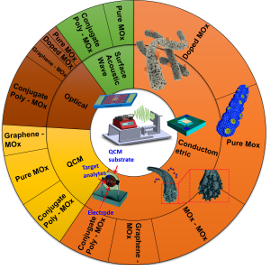


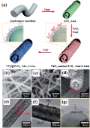


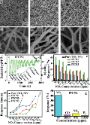


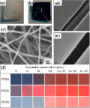
The structural and chemical basis of temporary adhesion in the sea star Asterina gibbosa
Beilstein J. Nanotechnol. 2018, 9, 2071–2086, doi:10.3762/bjnano.9.196
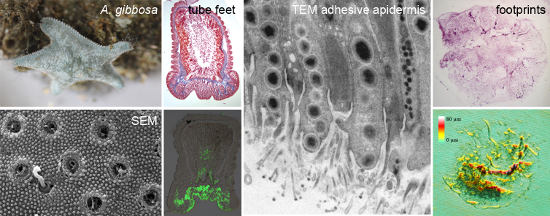
- in cacodylate buffer (0.1 M. pH 7.8, with 1.55% NaCl) for 3 h at 4 °C. The tube feet were rinsed in cacodylate buffer (0.2 M. pH 7.8, with 1.84% NaCl) and then post-fixed in 1% osmium tetroxide in cacodylate buffer (0.1 M. pH 7.8, with 2.3% NaCl). After rinsing in cacodylate buffer, the tube feet


Nanoconjugates of a calixresorcinarene derivative with methoxy poly(ethylene glycol) fragments for drug encapsulation
Beilstein J. Nanotechnol. 2018, 9, 2057–2070, doi:10.3762/bjnano.9.195
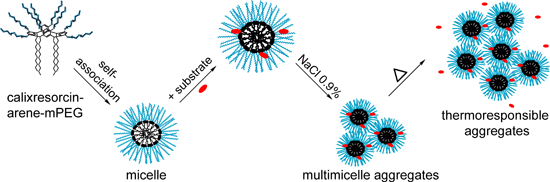
- a phase separation up to 90 °C, while solutions of 3 in a physiological solution of sodium chloride (0.9% NaCl) solution or in phosphate-buffered saline (PBS, pH 7.4) clouded at 60 °C (Figure 4a). DLS method showed that an increase of the particle size of 3 in the presence of salts occurred already
- at room temperature (Figure 4c, Figure S10, Supporting Information File 1). In the 0.9% NaCl solution a monomodal particle size distribution was observed (Table S1, Supporting Information File 1). TEM images of dried saline solution of 3 confirmed the growing of the macrocycle particle size to about
- further increase of the particles size. Thus, in aqueous solution macrocycle 3 forms micelles with a diameter of 5–10 nm, which associate into “multimicelle aggregates” in the presence of salts (0.9% NaCl, PBS) and become sensitive to a change of the solution temperature (Figure 4f). Micelles of 3 in the


Interaction-tailored organization of large-area colloidal assemblies
Beilstein J. Nanotechnol. 2018, 9, 1582–1593, doi:10.3762/bjnano.9.150
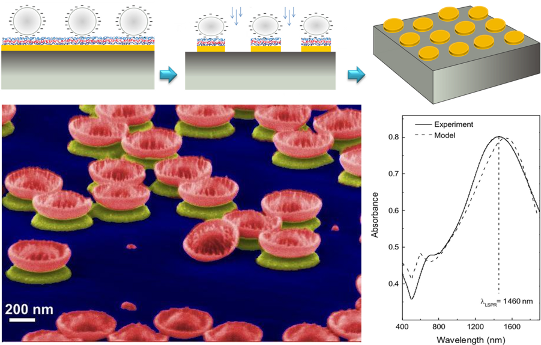
- temperature and carefully dried in a nitrogen flow; in this third (2D) assembly phase, however, (unwanted) lateral capillary forces could become relevant when the solvent film thickness approaches the particle diameter, as discussed later. As process parameters, the NaCl concentration and particle
- or L, indicating small or large spheres, respectively, upper index refers to the NaCl concentration, and the lower index indicates the particle concentration in wt %. After colloidal assembly of the polystyrene particles, gold and cobalt nanohole arrays (Figure 1b) were realized by depositing 20 nm
- (NaCl) concentration (from 0 mM to 10 mM). Figure 2a–e reports SEM images of 80 nm particle films obtained by absorbing solutions with different salt concentrations but at the same 0.2 wt % nanosphere concentration, while the relative radial distribution functions g(r) are compared in Figure 2f. The


Colorimetric detection of Cu2+ based on the formation of peptide–copper complexes on silver nanoparticle surfaces
Beilstein J. Nanotechnol. 2018, 9, 1414–1422, doi:10.3762/bjnano.9.134
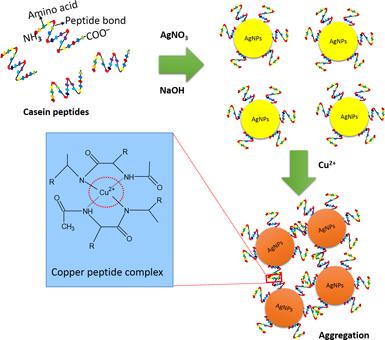
- concentration of NaCl (1.0 to 3.5 mM), revealing that the sensitivity of the analytical platform can be increased with the increase of ionic strength. Based on these results, further tests on Cu2+ were performed using distilled water, even though this method is versatile and adaptable at different pH values and
- ). NaOH and NaCl were obtained from Dae Jung Chemicals Korea. Standard solutions, including Cu2+, Mn2+, Mo3+, Na+, Cr3+, Hg2+, Ni2+, Ca2+, K+, Cs+, Li+, As+, PO43–, NH4, and NO3− were obtained from Kanto Chemicals. All reagents were of analytical grade and used without any further treatment. Ultrapure
- ), and NaCl (1.0–3.5 mM). The absorbance of the solutions was measured at 410 nm after 5 min. Then, Cu2+ (1.28 µM) was added, respectively. The solutions were again incubated for another 5 min before the absorbance of the suspensions was re-measured at 410 nm. Detection of Cu2+ concentration The casein





