


Search results
Search for "nanomaterial" in Full Text gives 210 result(s) in Beilstein Journal of Nanotechnology. Showing first 200.
Small protein sequences can induce cellular uptake of complex nanohybrids
Beilstein J. Nanotechnol. 2019, 10, 2477–2482, doi:10.3762/bjnano.10.238
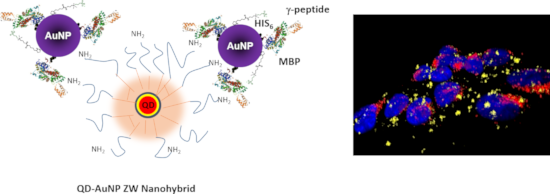
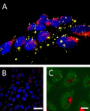
- nanostructures made of more than one component nanomaterial, combined with biomolecules is a highly sought goal in biomedical science, and can find applications in multimodal imaging and therapeutics [1][2]. Although interest in developing such hybrid nanostructures by, for example, combining plasmonic and

pH-Controlled fluorescence switching in water-dispersed polymer brushes grafted to modified boron nitride nanotubes for cellular imaging
Beilstein J. Nanotechnol. 2019, 10, 2428–2439, doi:10.3762/bjnano.10.233
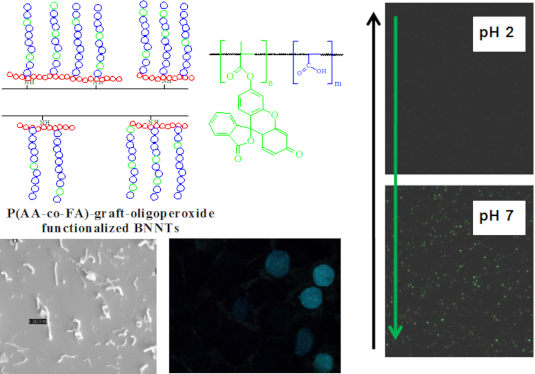
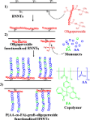
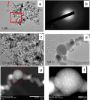
- oligoperoxide-functionalized BNNTs. With this procedure, we have created a hybrid nanomaterial for cellular imaging based on BNNTs and grafted brushes of pH-responsive fluorescent copolymer poly(acrylic acid-co-fluorescein acrylate) – P(AA-co-FA). The functionalization of BNNTs was studied with
- the excitation and emission wavelengths were selected at 490 nm and 520 nm, respectively, and the fluorescently labeled nanomaterial was viewed. Ultraviolet–visible spectrometry (UV–vis) The optical absorption spectra of the BNNT suspension were registered on a double-beam UV–vis spectrophotometer
- the nanomaterial were assumed to be 2.0 and 1.500, respectively. All size and zeta potential measurements were carried out in triplicate. All data were analyzed by using Malvern Instrument DST 5.00 software. 1 mg of sample was suspended in 1 mL of distilled water and sonicated for 2–10 min. After the



Multiwalled carbon nanotube based aromatic volatile organic compound sensor: sensitivity enhancement through 1-hexadecanethiol functionalisation
Beilstein J. Nanotechnol. 2019, 10, 2364–2373, doi:10.3762/bjnano.10.227
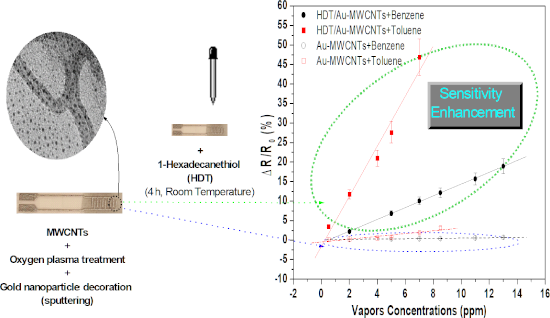
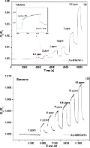
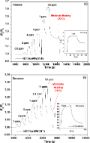
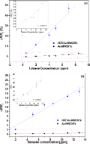
- correlated to the active sensing film/material used. Various nanomaterial-based gas sensors have been investigated to monitor the presence of aromatic VOCs. The ones mainly studied are based on metal oxides, carbon nanotubes, graphene and hybrid materials [5][6]. Carbon nanotube based gas sensors (e.g





Materials nanoarchitectonics at two-dimensional liquid interfaces
Beilstein J. Nanotechnol. 2019, 10, 1559–1587, doi:10.3762/bjnano.10.153
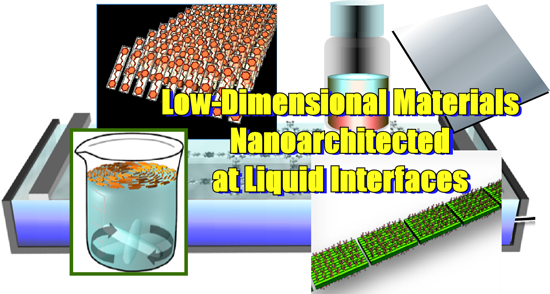
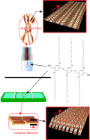
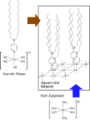
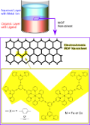
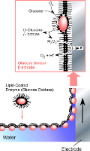
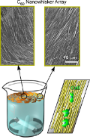
- mixing nitrogen-containing compounds such as pyridine into the original solution of the carbon nanoring molecule. The prepared nitrogen-doped carbon nanosheets exhibited a higher electrical conductivity than the non-doped ones did. It should be noted that these nanomaterial fabrications can be conducted













Development of a new hybrid approach combining AFM and SEM for the nanoparticle dimensional metrology
Beilstein J. Nanotechnol. 2019, 10, 1523–1536, doi:10.3762/bjnano.10.150
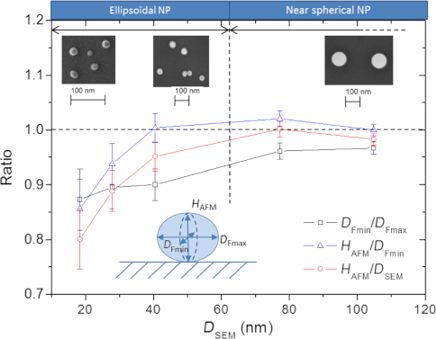
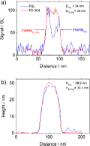
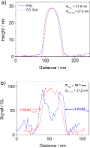
- depend on the chemical composition? Influence of the NP chemical composition on the AFM/SEM measurements In order to determine the influence of the physico-chemical properties of the nanomaterial on AFM and SEM measurements, NPs with very different chemical compositions and mechanical properties compared





Magnetic segregation effect in liquid crystals doped with carbon nanotubes
Beilstein J. Nanotechnol. 2019, 10, 1464–1474, doi:10.3762/bjnano.10.145
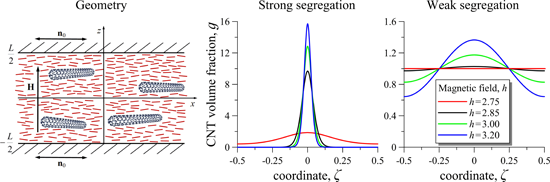
- ratio the physical properties of this carbon nanomaterial vary greatly in different directions. In this sense, the anisotropic properties of CNTs (for example, thermal and electrical conductivities) are attractive for a wide range of applications, including nanoelectronics and optics [2]. A distinctive


A highly efficient porous rod-like Ce-doped ZnO photocatalyst for the degradation of dye contaminants in water
Beilstein J. Nanotechnol. 2019, 10, 1157–1165, doi:10.3762/bjnano.10.115
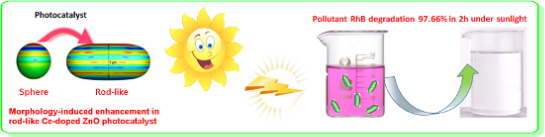
- into the solution of Zn(OAc)2·2H2O. After stirring at room temperature for 12 h, the white precipitate (ZIF-8) was centrifuged and washed thoroughly with MeOH and dried at 60 °C for 1 h [40]. After calcination at 500 °C for 3 h, the zinc oxide micro–nanomaterial was obtained. Synthesis of CZO For the


Tailoring the stability/aggregation of one-dimensional TiO2(B)/titanate nanowires using surfactants
Beilstein J. Nanotechnol. 2019, 10, 1024–1037, doi:10.3762/bjnano.10.103
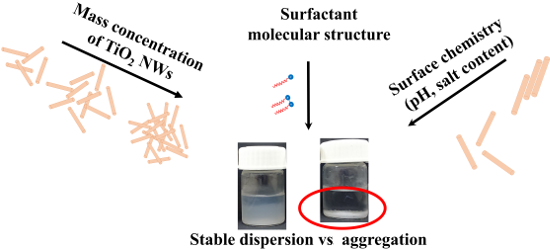
- application of TNMs has spurred numerous discussions and investigations concerning their behavior, transport and fate in aqueous environments [11][12]. The aggregation behavior, that is, the stability of nanomaterial (NM) dispersions in general, is one of the key factors for their successful application


Correlation of surface-enhanced Raman scattering (SERS) with the surface density of gold nanoparticles: evaluation of the critical number of SERS tags for a detectable signal
Beilstein J. Nanotechnol. 2019, 10, 1016–1023, doi:10.3762/bjnano.10.102
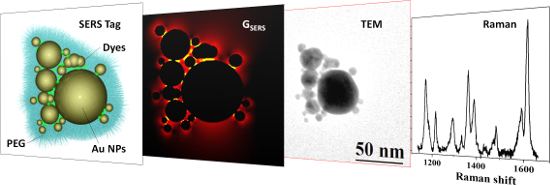
- immunosorbent assay (ELISA) tests, but the analyte may also be naturally immobilized on a surface, such as an antigen overexpressed in cancerous cell membrane [20][21][22]. SERS labels are also useful to probe the uptake of nanomaterial inside living cells [23][24][25][26]. There are many advantages connected


Structural and optical properties of penicillamine-protected gold nanocluster fractions separated by sequential size-selective fractionation
Beilstein J. Nanotechnol. 2019, 10, 955–966, doi:10.3762/bjnano.10.96
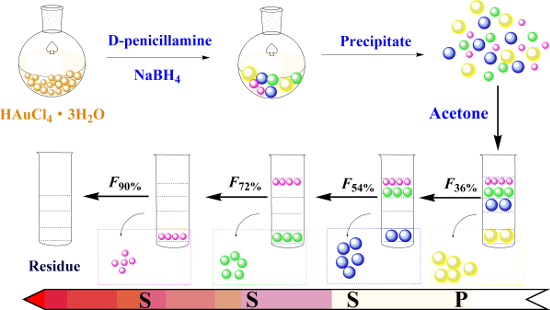
- common method that has been used to the size fraction nanomaterial dispersions such as CdS and CdSe. However, this method has been mainly carried out to separate water-insoluble nanoparticles from organic solvents. On the other hand, it is also understood that the photophysical, electrochemical and other




Self-assembly and wetting properties of gold nanorod–CTAB molecules on HOPG
Beilstein J. Nanotechnol. 2019, 10, 696–705, doi:10.3762/bjnano.10.69
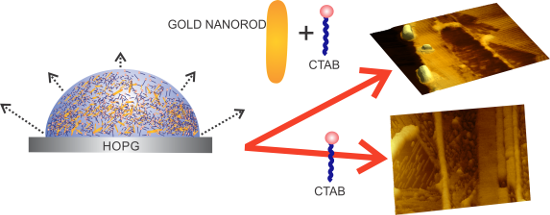
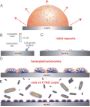
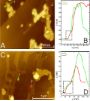
- . Although these materials show significant optical and electronic properties [1][2][3], the structural correlation between the deposited nanomaterial and where they are deposited on the surface is also of fundamental importance [4][5][6][7]. Additionally, owing to its simplicity, versatility and low cost


A carrier velocity model for electrical detection of gas molecules
Beilstein J. Nanotechnol. 2019, 10, 644–653, doi:10.3762/bjnano.10.64
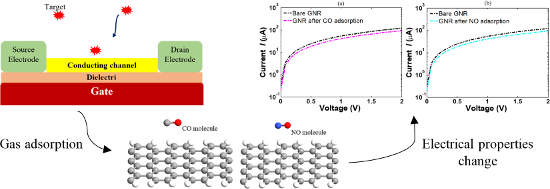
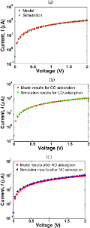
- Engineering, Universiti Teknologi Malaysia, 81310 Skudai, Johor, Malaysia 10.3762/bjnano.10.64 Abstract Nanomaterial-based sensors with high sensitivity, fast response and recovery time, large detection range, and high chemical stability are in immense demand for the detection of hazardous gas molecules




Hydrophilicity and carbon chain length effects on the gas sensing properties of chemoresistive, self-assembled monolayer carbon nanotube sensors
Beilstein J. Nanotechnol. 2019, 10, 565–577, doi:10.3762/bjnano.10.58
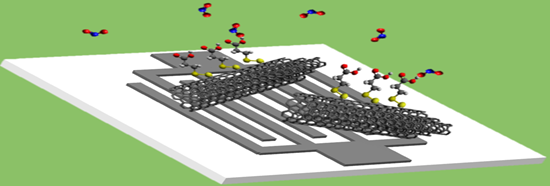
- were most responsive to nitrogen dioxide and ethanol vapors, even in the presence of ambient humidity. In particular, this nanomaterial was about eight times more sensitive to nitrogen dioxide than bare Au-decorated carbon nanotubes when operated at room temperature. This response enhancement is
- gas sensitive nanomaterial to higher temperatures [3] or to irradiate the sensor employing ultraviolet (UV) light, in order to promote surface cleaning. Despite these efforts, sometimes CNTs present irreversible resistance changes due to the chemisorption of gas molecules. In addition, other problems


Development of an anti-pollution coating process technology for the application of an on-site PV module
Beilstein J. Nanotechnol. 2019, 10, 332–336, doi:10.3762/bjnano.10.32
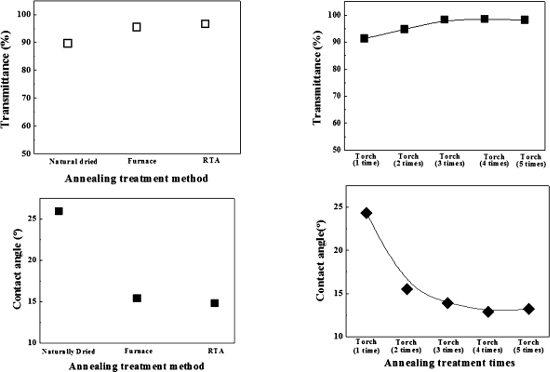
- modification. Before applying the coating technology to PV modules, glass substrates for PV modules were coated with a hydrophilic silica-based eco-friendly nanomaterial, and the coating films were thermally annealed using either a furnace, RTA or a torch. The annealing treatment that uses a torch was applied


Study of silica-based intrinsically emitting nanoparticles produced by an excimer laser
Beilstein J. Nanotechnol. 2019, 10, 211–221, doi:10.3762/bjnano.10.19
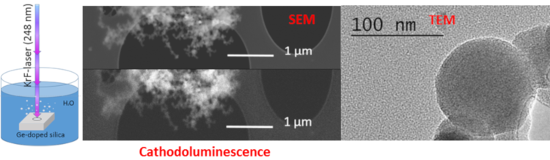
- nanoparticles can be performed using both top-down and bottom-up procedures [12]. In the first case, the procedure starts from bulk materials to obtain nanoparticles, whereas in the second case, the procedure starts from atoms and often follows a chemical procedure to build up the nanomaterial. In this paper



Surface plasmon resonance enhancement of photoluminescence intensity and bioimaging application of gold nanorod@CdSe/ZnS quantum dots
Beilstein J. Nanotechnol. 2019, 10, 22–31, doi:10.3762/bjnano.10.3
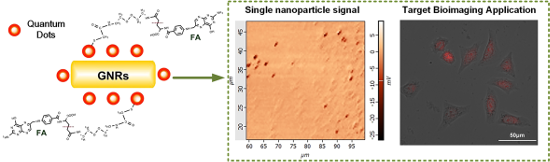
- contributed to an enhanced lifetime. To make this multifunctional nanomaterial more biocompatible and specific to the cancer cell, we conjugated the FA with GNR@CdSe/ZnS nanoparticles. Firstly, we performed a colloidal stability study in which their hydrodynamic sizes were monitored using the dynamic light
- GNR@CdSe/ZnS@FA is better than CdSe/ZnS@FA, the in vitro imaging results confirm that these nanoparticles are suitable to be used for near-infrared imaging and cancer therapy. Conclusion We have developed a multifunctional nanomaterial GNR@CdSe/ZnS and enhanced the PL intensity using the surface
- plasmon resonance of GNRs. The experimental results correlated well with the theoretical simulation. The results of the biological detection study indicated that this nanomaterial is biocompatible and that there is significant PL signal for cell imaging. This research is promising for future nanophotonics


Characterization and influence of hydroxyapatite nanopowders on living cells
Beilstein J. Nanotechnol. 2018, 9, 3079–3094, doi:10.3762/bjnano.9.286
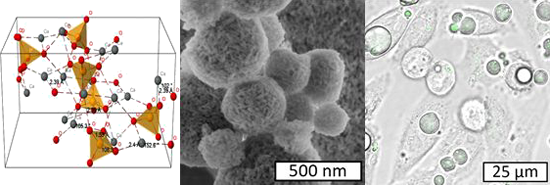
- Standardization, has defined nanoscale as a size range from approximately 1 to 100 nm. A nanomaterial is defined as a material (natural, incidental or manufactured) containing particles, in an unbound state, or as an aggregate (object composed of strongly or fused bounded particles), or as an agglomerate

![[Graphic 1]](/bjnano/content/inline/2190-4286-9-286-i2.svg?max-width=637&scale=1.18182) .
.




Layered calcium phenylphosphonate: a hybrid material for a new generation of nanofillers
Beilstein J. Nanotechnol. 2018, 9, 2906–2915, doi:10.3762/bjnano.9.269
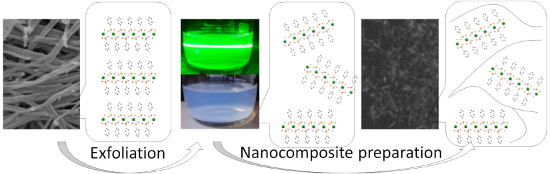
- . The addition of the nanofiller was found to influence the composite properties – the exfoliated particles were found to have a higher impact on the properties of the prepared composites than the unexfoliated particles of the same loading Keywords: exfoliation; layered phenylphosphonate; nanomaterial


Nanostructure-induced performance degradation of WO3·nH2O for energy conversion and storage devices
Beilstein J. Nanotechnol. 2018, 9, 2845–2854, doi:10.3762/bjnano.9.265
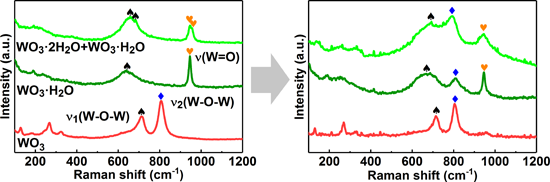
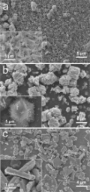
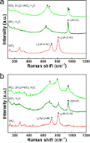
- their 3D counterparts. Herein, WO3·nH2O (n = 0, 1, 2), as the most common and important electrochemical and electrochromic active nanomaterial, is synthesized in 3D and 2D structures through a facile hydrothermal method, and the disadvantages of the corresponding 2D structures are examined. The weakness


Size-selected Fe3O4–Au hybrid nanoparticles for improved magnetism-based theranostics
Beilstein J. Nanotechnol. 2018, 9, 2684–2699, doi:10.3762/bjnano.9.251
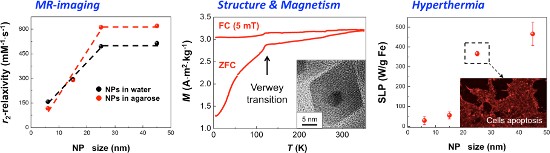
- diameters of 6–44 nm (Fe3O4) and 3–11 nm (Au) were prepared by high temperature, wet chemical synthesis. High-quality Fe3O4 nanocrystals with bulk-like magnetic behavior were obtained as confirmed by the presence of the Verwey transition. The 25 nm diameter Fe3O4–Au hybrid nanomaterial sample (in aqueous


Enhanced antineoplastic/therapeutic efficacy using 5-fluorouracil-loaded calcium phosphate nanoparticles
Beilstein J. Nanotechnol. 2018, 9, 2499–2515, doi:10.3762/bjnano.9.233
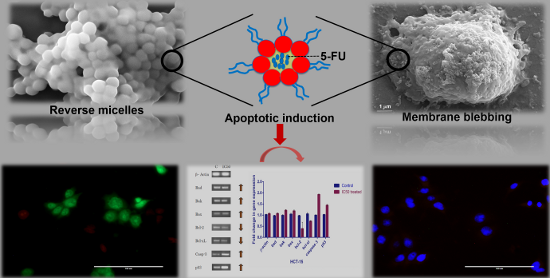
- nanomaterial was found to be toxic in some metal-based NPs (e.g., gold, silver, iron, and copper), while the bulk counterparts showed less toxicity [9]. The metal ions present at the surface of the particles were found to interact with biomolecules at a comparatively higher rate in nanoformulations compared to


Nanocellulose: Recent advances and its prospects in environmental remediation
Beilstein J. Nanotechnol. 2018, 9, 2479–2498, doi:10.3762/bjnano.9.232
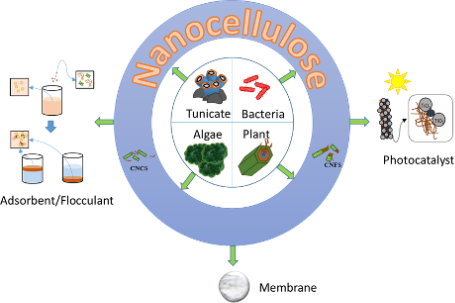
- , flocculant, and membrane are reviewed in particular. However, additional effort will be required to implement and commercialize nanocellulose as a viable nanomaterial for remediation technologies. In this regard, the main challenges and limitations in working with nanocellulose-based materials are identified
- cellulose nanomaterial. Figure 1 illustrates the difference in length of CNF and CNC alongside with a few examples of microscopic images of nanocellulose derived from plants [25][26][27][28]. However, the Technical Association of the Pulp and Paper Industry (TAPPI) and multiple concerned bodies have


Droplet-based synthesis of homogeneous magnetic iron oxide nanoparticles
Beilstein J. Nanotechnol. 2018, 9, 2413–2420, doi:10.3762/bjnano.9.226
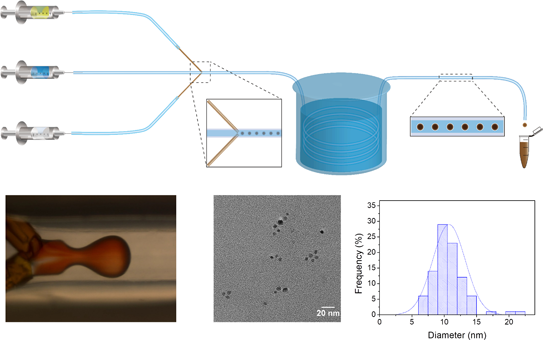
- healthcare significantly [5]. For example, a composite nanomaterial has been developed as a photosensitizer in photothermal therapy (PTT), while also acting as a contrast agent for magnetic resonance imaging (MRI) [6]. Magnetic materials are of particular interest here, as they can be used for targeting [7


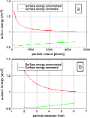
Surface energy of nanoparticles – influence of particle size and structure
Beilstein J. Nanotechnol. 2018, 9, 2265–2276, doi:10.3762/bjnano.9.211
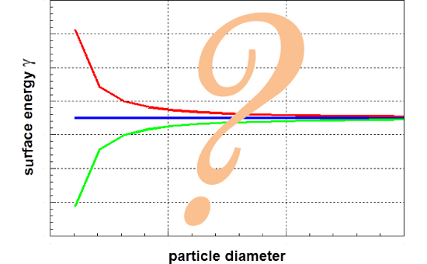
- may be recommended to use data for the bulk material when data for the equivalent nanomaterial is not available. Melting temperature of gold nanoparticles according to Castro et al. [11] and Cluskey et al. [13]. One realizes two ranges in the data of Castro et al.: Within the experimental error bar






Free-radical gases on two-dimensional transition-metal disulfides (XS2, X = Mo/W): robust half-metallicity for efficient nitrogen oxide sensors
Beilstein J. Nanotechnol. 2018, 9, 1641–1646, doi:10.3762/bjnano.9.156
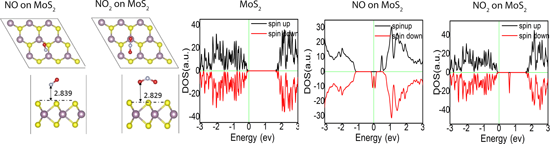
- spin-unpaired electrons are localized on the NO and NO2 molecule (insets of Figure 2b,c,e,f) [30]. The concept of Fermi-level pinning is usually used in the metal–semiconductor interface region. Zhou et al. [28] Introduced the concept of Fermi-level pinning into the field of gas/2D nanomaterial systems
- . However, they failed to point out the spin-polarized Fermi-level pinning in gas/2D nanomaterial system. Based on this, we take the single-layer WS2 as an example to elucidate the different Fermi-level pinning processes of adsorption of NO and NO2. The spin orbital-resolved band structures are simulated
- (Figure 3) and the Fermi level of the adsorbed gas (NO and NO2)/WS2 nanomaterial system is pinned around the lowest unoccupied molecular orbital (LUMO) or highest occupied molecular orbital (HOMO) of the adsorbed gas molecules. The PDOS for WS2 with adsorbed NO indicates that the W and S atoms have no





