Search results
Search for "resistivity" in Full Text gives 248 result(s) in Beilstein Journal of Nanotechnology. Showing first 200.
Filling nanopipettes with apertures smaller than 50 nm: dynamic microdistillation
Beilstein J. Nanotechnol. 2018, 9, 2181–2187, doi:10.3762/bjnano.9.204
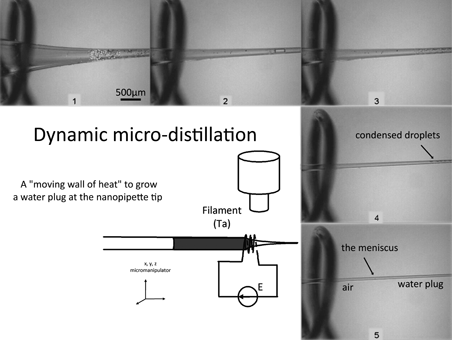
- . Results and Discussion Quartz capillaries, being of pure silica, have certain intrinsic properties (low dielectric constant, low loss factor, high volume resistivity, strength and chemical purity) that make them appropriate for the reproducible electrical measurements described below. Notably, they


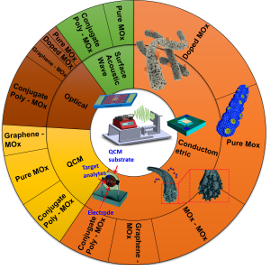
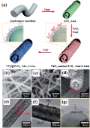
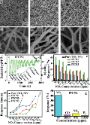
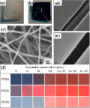
Electrospun one-dimensional nanostructures: a new horizon for gas sensing materials
Beilstein J. Nanotechnol. 2018, 9, 2128–2170, doi:10.3762/bjnano.9.202






Phosphorus monolayer doping (MLD) of silicon on insulator (SOI) substrates
Beilstein J. Nanotechnol. 2018, 9, 2106–2113, doi:10.3762/bjnano.9.199
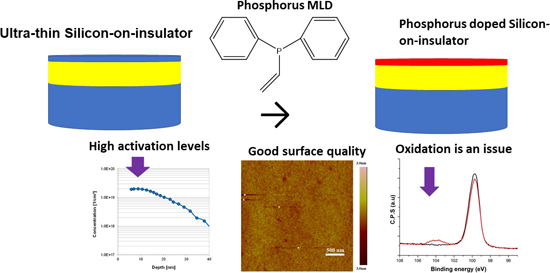
- being deemed detrimental to current and future device production. Semiconductor substrates require doping to reduce their resistivity and enable their use in electronic devices such as metal-oxide semiconductor field-effect transistors (MOSFETs). Traditionally, ex situ doping was carried out using ion
- wet-chemistry functionalization due to the precise dimensions needed for analysis. The Hall measurement system applies current and magnetic field and measures voltages and resistances. It then infers mobility and carrier properties from these measurements. The sheet resistivity (ρs) is directly
- deal with many material systems that have low mobility, high resistivity and low carrier concentrations. As well as Hall effect measurements, the HMS also performs checks for ohmic behaviour and four-point resistivity measurements, and combines all-current/field-reversal techniques, optimisation




Localized photodeposition of catalysts using nanophotonic resonances in silicon photocathodes
Beilstein J. Nanotechnol. 2018, 9, 2097–2105, doi:10.3762/bjnano.9.198
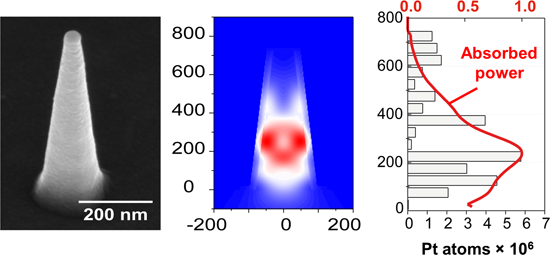
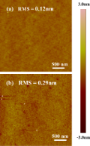
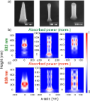
- surrounding medium was set to 1.33. The mesh size in the FDTD simulations was equal to 2 × 2 × 2 nm for all the structures. Fabrication of silicon nanostructures Silicon p-type samples (Active Business Company GmbH, <100> orientation ) 12 × 12 mm, with 1–10 Ω·cm resistivity, were used as substrates for the


Electromigrated electrical optical antennas for transducing electrons and photons at the nanoscale
Beilstein J. Nanotechnol. 2018, 9, 1964–1976, doi:10.3762/bjnano.9.187
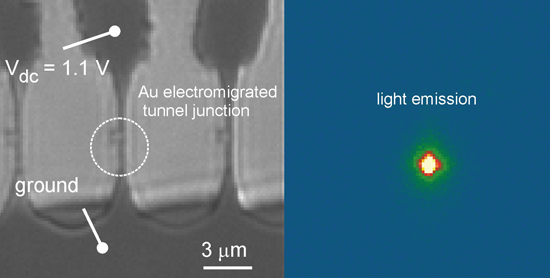
- fairly constant because Joule dissipation is not yet affecting the temperature-dependent resistivity of gold. On increasing Vdc, the temperature of the constriction grows and the conductance starts to fluctuate. The general trend is that G(t) decreases when stepping up Vdc. We also consistently observe a
- is illustrated at t = 200 s in Figure 2a. The applied bias is constant, but G(t) decays towards a stable value. This is understood from the temperature-dependent resistivity of the material: For a given Vdc the current flowing in the constriction dissipates heat and affects in return the temperature
- -dependent resistivity [35]. These conductance fluctuations are typically observed for Vdc ≤ 1.7 V and corresponds to the end of the first phase of voltage increments. When applying higher voltages, G(t) generally drops with a rate rapidly increasing with time. The process is entering a second phase. This


![[Graphic 32]](/bjnano/content/inline/2190-4286-9-187-i38.svg?max-width=637&scale=1.18182) and
and ![[Graphic 33]](/bjnano/content/inline/2190-4286-9-187-i39.svg?max-width=637&scale=1.18182) are...
are...


Defect formation in multiwalled carbon nanotubes under low-energy He and Ne ion irradiation
Beilstein J. Nanotechnol. 2018, 9, 1951–1963, doi:10.3762/bjnano.9.186
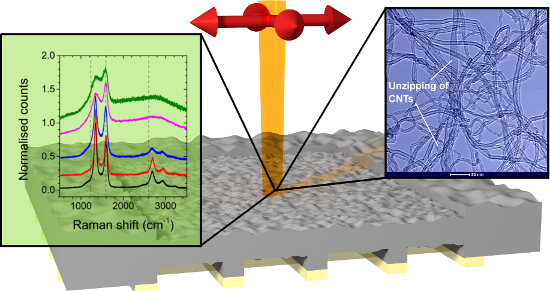
- , ion irradiation can also be used to modify the electronic properties. The presence of defects can increase the resistivity by several orders of magnitude [2][16]. When combining low-fluence ion irradiation with subsequent annealing, the electrical conductivity of SWCNTs can be improved [17]. The



A differential Hall effect measurement method with sub-nanometre resolution for active dopant concentration profiling in ultrathin doped Si1−xGex and Si layers
Beilstein J. Nanotechnol. 2018, 9, 1926–1939, doi:10.3762/bjnano.9.184
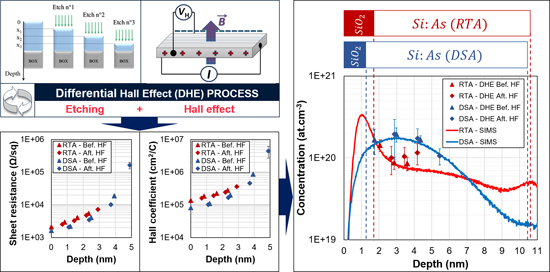
- such a small resolution. Thanks to the use of an AFM tip, 2D scanning spreading resistance microscopy (SSRM) has been shown to achieve sub-nanometre resolution [11][12]. However, in this technique, the carrier concentration is inferred from a resistivity profile under the assumption that carrier
- concentration varies ideally with mobility, which is not always the case, especially when a part of the dopant is not electrically active [13]. For this reason, reliable mobility and concentration profiling based on scanning probe techniques require a combination of resistivity measurements by SSRM with carrier
- be successfully applied to ultrathin SiGeOI layers of about 6 nm thickness, while obtaining active dopant concentrations at the surface well above 1 × 1020 cm−3. This is a promising result in view of improving contact resistivity in source/drain regions of advanced devices. Study of 11 nm arsenic


Uniform cobalt nanoparticles embedded in hexagonal mesoporous nanoplates as a magnetically separable, recyclable adsorbent
Beilstein J. Nanotechnol. 2018, 9, 1770–1781, doi:10.3762/bjnano.9.168
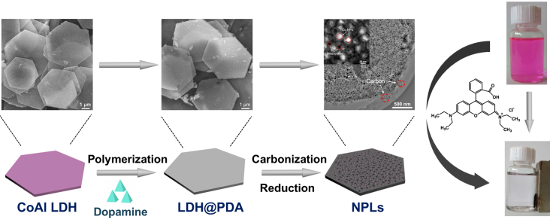
- used without any further purification. Ultrapure water with a resistivity of 18.25 MΩ·cm was used in all experiments. Synthesis of CoAl layered double hydroxide CoAl LDH was synthesized via a simple hydrothermal method using urea as the alkali source. In a typical process, CoCl2·6H2O, AlCl3·6H2O, and


Increasing the performance of a superconducting spin valve using a Heusler alloy
Beilstein J. Nanotechnol. 2018, 9, 1764–1769, doi:10.3762/bjnano.9.167
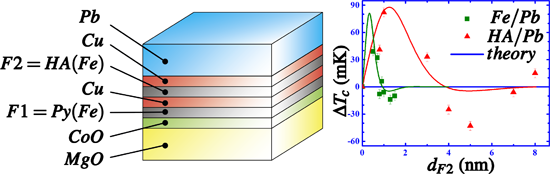
- to estimate these parameters characterizing the properties of the S layer we use our experimental data on the resistivity and on the dependence of Tc on the S-layer thickness at a large unchanged thickness of the F layer in the S/F bilayer. The residual resistivity ρS = ρ(Tc) can be determined from
- the residual resistivity ratio RRR = R(T = 300 K)/R(Tc= [ρ(300 K) + ρ(Tc)]/ρ(Tc). Since the room-temperature resistivity of the Pb layer is dominated by the phonon contribution ρph(300 K) = 21 μΩ·cm [27] we obtain the ρS values presented below in Table 1. Then with the aid of the Pippard relations [28
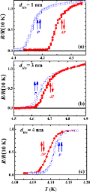

![[Graphic 4]](/bjnano/content/inline/2190-4286-9-167-i9.svg?max-width=637&scale=1.18182) on the thickness of layer F2, dF2 in the SSV heterostructures AFM/F1/N1/F2/N2/S. Tri...
on the thickness of layer F2, dF2 in the SSV heterostructures AFM/F1/N1/F2/N2/S. Tri...
Absence of free carriers in silicon nanocrystals grown from phosphorus- and boron-doped silicon-rich oxide and oxynitride
Beilstein J. Nanotechnol. 2018, 9, 1501–1511, doi:10.3762/bjnano.9.141
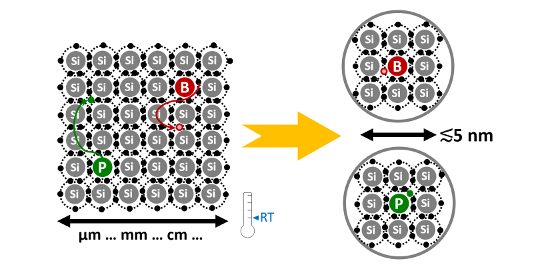
- the higher resistivity of the N-free oxide as compared to oxynitride masks the field-induce charge carrier generation from B-doped NCs. Comparing P-doped NCs in both matrices this effect was not found. Summarizing the results reported here and previously [29][30][41][52] it turns out that P- and B


Tailoring polarization and magnetization of absorbing terahertz metamaterials using a cut-wire sandwich structure
Beilstein J. Nanotechnol. 2018, 9, 1437–1447, doi:10.3762/bjnano.9.136
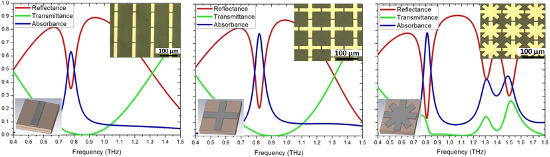
- separated by a layer of benzocyclobutane (BCB) as a dielectric substrate. The sample was fabricated on a high-resistivity thick silicon substrate with 1 mm thickness. Their simulation results showed that a peak absorptivity of 95% at 1.13 THz was reached and the fabricated structure reached a measured


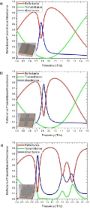


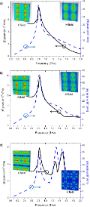


Nanoporous silicon nitride-based membranes of controlled pore size, shape and areal density: Fabrication as well as electrophoretic and molecular filtering characterization
Beilstein J. Nanotechnol. 2018, 9, 1390–1398, doi:10.3762/bjnano.9.131
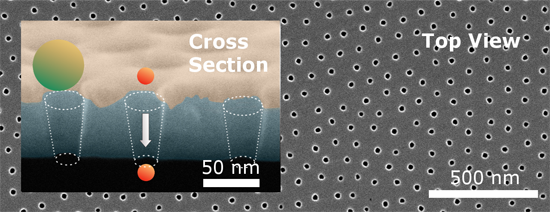
- and assuming a homogenous resistivity of the electrolyte; for further details see Supporting Information File 1. Note the following in this context: The applied RIE processes involving CHF3/CF4 plasmas have a propensity for the formation of Teflon-like CF layers which, by influencing the wettability


A novel copper precursor for electron beam induced deposition
Beilstein J. Nanotechnol. 2018, 9, 1220–1227, doi:10.3762/bjnano.9.113
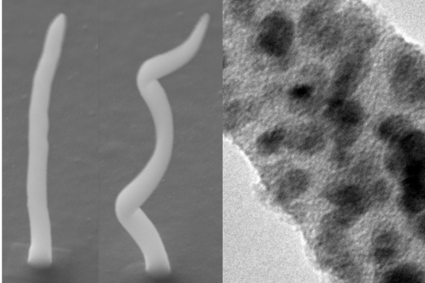
- or highly resistive behavior. The resistivity of 30 Ω·cm could be measured after thermal purification only [11][12]. Using a precursor with the additional ligand trimethylvinylsilane (vtms), namely Cu(I)(hfac)(vtms), pure freestanding copper rods were obtained after a post growth purification during
- reliability of the measurement. A room temperature four-point-probe electrical measurement yielded a conductive material with 1.26 MOhm in the as-deposited state. The estimated resistivity was 1 Ohm·cm, what is six orders of magnitude larger than the value for pure copper [16]. However, the presented
- the deposit surface, probably due to post-deposition oxidation. The room temperature resistivity was about 1 Ohm·cm showing Ohmic behavior. The permittivity of the material in the visible spectral range was determined by reflection/transmission measurements and a brute force algorithm, based on a


Semi-automatic spray pyrolysis deposition of thin, transparent, titania films as blocking layers for dye-sensitized and perovskite solar cells
Beilstein J. Nanotechnol. 2018, 9, 1135–1145, doi:10.3762/bjnano.9.105
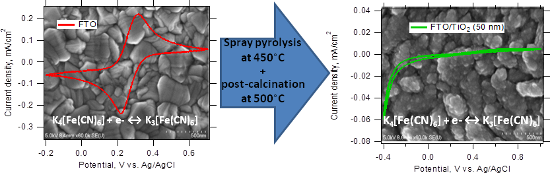
- )6] model redox probe [3]. Experimental Two types of FTO glass supports were used with the same nominal sheet resistivity (as declared by the supplier, 8 Ω/sq) and thickness (2.2 mm): TEC 8 from Libbey-Owens-Ford, labelled as FTO(A) and TEC 8 from Dyesol labelled as FTO(B). Our own measurement of the
- sheet resistivity showed 12.5 Ω/sq and 7.9 Ω/sq for FTO(A) and FTO(B), respectively. FTO glass slides were cleaned in ethanol and acetone. TiO2 layers were deposited by semi-automatic spray coating set up using two different precursors (i) an ethanolic solution of titanium diisopropoxide bis
- calculated from X-ray line broadening by the Scherrer equation was 24 nm for FTO(A) and 36 nm for FTO(B). These values are consistent with the difference in the grain size for both the FTO samples. Our own measurement of sheet resistivity provided the following values. FTO(A), TEC8, Libbey-Owens-Ford: 12.5 Ω


An implementation of spin–orbit coupling for band structure calculations with Gaussian basis sets: Two-dimensional topological crystals of Sb and Bi
Beilstein J. Nanotechnol. 2018, 9, 1015–1023, doi:10.3762/bjnano.9.94
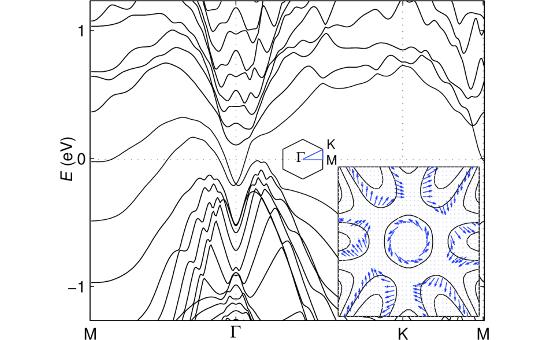
- potential applications in optoelectronics [34][35][36][37], low thermal conductance with low electrical resistivity for energy generation through thermoelectricity [38], and exotic topological features under strain [39][40][41]. However, it was not until last year that few experimental works brought all


Sensing behavior of flower-shaped MoS2 nanoflakes: case study with methanol and xylene
Beilstein J. Nanotechnol. 2018, 9, 608–615, doi:10.3762/bjnano.9.57

- electron-donor gas molecules. This increment in the electron carrier concentration can reduce the resistivity of the device. When the gas leaves the chamber, the molecules which transfer the charge from weak van der Waals interaction leave the MoS2 layer and the concentration of the carrier reduces, hence
- results indicate that the produced, flower-shaped MoS2 nanoflakes showed sensitivity towards methanol and xylene as polar and nonpolar gas molecules. We discussed changes in resistivity toward gas molecules according to a charge transfer mechanism. It was found that both gases can be detected in


Electron interactions with the heteronuclear carbonyl precursor H2FeRu3(CO)13 and comparison with HFeCo3(CO)12: from fundamental gas phase and surface science studies to focused electron beam induced deposition
Beilstein J. Nanotechnol. 2018, 9, 555–579, doi:10.3762/bjnano.9.53


Electron interaction with copper(II) carboxylate compounds
Beilstein J. Nanotechnol. 2018, 9, 384–398, doi:10.3762/bjnano.9.38
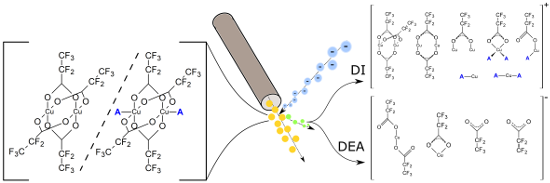
- dissociations induced via electron impact excitation [23] can be as important as DEA. Copper is an important material commonly used in the advanced metallization of microelectronic and optoelectronic devices and ultralarge-scale integrated (ULSI) circuits due to its low electrical resistivity, high stress


Review: Electrostatically actuated nanobeam-based nanoelectromechanical switches – materials solutions and operational conditions
Beilstein J. Nanotechnol. 2018, 9, 271–300, doi:10.3762/bjnano.9.29
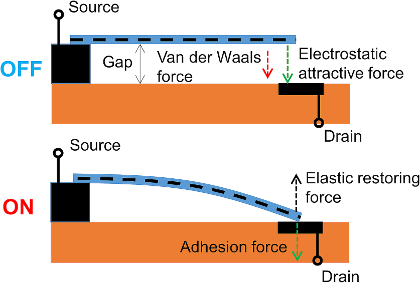
- singular switching events [23]. Ceramics Titanium and tungsten nitride ceramics: Titanium nitride (TiN) has a low electrical resistivity that is comparable to some metals, high stiffness (Young’s modulus of 427–590 GPa) and high hardness, high melting temperature (2930 °C), high corrosion resistance [140


Synthesis and characterization of electrospun molybdenum dioxide–carbon nanofibers as sulfur matrix additives for rechargeable lithium–sulfur battery applications
Beilstein J. Nanotechnol. 2018, 9, 262–270, doi:10.3762/bjnano.9.28
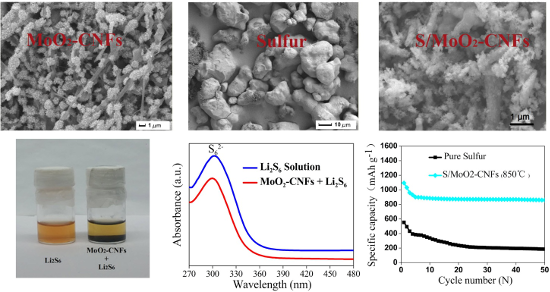
- . Molybdenum dioxide (MoO2) materials are particularly attractive among the transition-metal oxides due to their high melting point, high chemical stability and low electrical resistivity (190 S cm−1). This material has great potential for applications in several fields such as sensing, catalysis


BN/Ag hybrid nanomaterials with petal-like surfaces as catalysts and antibacterial agents
Beilstein J. Nanotechnol. 2018, 9, 250–261, doi:10.3762/bjnano.9.27
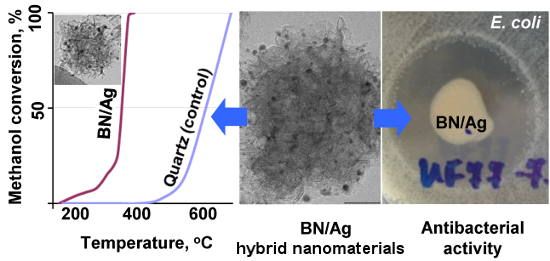
- associated with the appearance of bacterial cell resistivity to low Ag+ ion concentration. Then, the antibacterial activity of the BN/Ag HNMs was evaluated against planktonic E. coli bacteria. After incubation for 3 h, the number of CFUs in the presence of both types of BN/Ag HNMs decreased to zero (Figure





Gas-assisted silver deposition with a focused electron beam
Beilstein J. Nanotechnol. 2018, 9, 224–232, doi:10.3762/bjnano.9.24
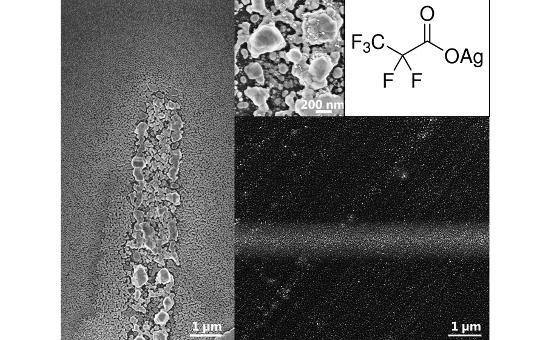
- . Four point probe resistivity measurements were conducted with a homebuilt setup containing 4 probes with a possibility of 3-axial movement, a Keithley® 2400 Source Meter nanoamperemeter and self-developed controlling software written in LabView®. Monte Carlo simulations of electron distributions were
- deposit is very short. The EDX measurements in Table 1 showing higher silver content in the halo region support this observation. Using the cross section of the line as determined by AFM measurements (Supporting Information File 1) the resistivity was calculated. The line's resistivity, given by ρ = (3.68
- cm−1, respectively. The ID/IG ratio of 0.67, which corresponds to a semi-graphitic matrix [23], can explain the decreased resistivity of our deposits compared to Endrino’s results [22], since the graphitic structure of carbon allows better conductivity. Furthermore, the strong Raman signal intensity


Combined scanning probe electronic and thermal characterization of an indium arsenide nanowire
Beilstein J. Nanotechnol. 2018, 9, 129–136, doi:10.3762/bjnano.9.15
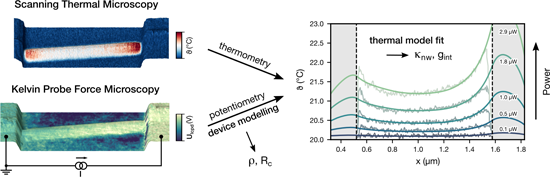
- unit length in this region (Supporting Information File 1, Figure S1 and Figure S2). Next, we determine a position-dependent resistivity by fitting synthetic data of Ulcpd(x, I) to the measured dataset. This also enables us to separate contact resistances from the channel behaviour. We assume that at
- the source electrode. The wire region is modelled as a linear chain of resistors Ri = ρ′(xi)Δx at positions xi along the nanowire equally spaced by Δx, where ρ′ is the local resistivity ρ normalized by the cross-sectional area A. While resistances Ri in the chain may in general depend on the applied
- curves of the wire resistivity ρ′(x) and to avoid overfitting, we add total variation regularization terms for ρ′ and its gradient. (A complete description of the reconstruction method is given in Supporting Information File 1.) In Figure 3 we show electrical properties of the nanowire extracted through


Comparative study of post-growth annealing of Cu(hfac)2, Co2(CO)8 and Me2Au(acac) metal precursors deposited by FEBID
Beilstein J. Nanotechnol. 2018, 9, 91–101, doi:10.3762/bjnano.9.11
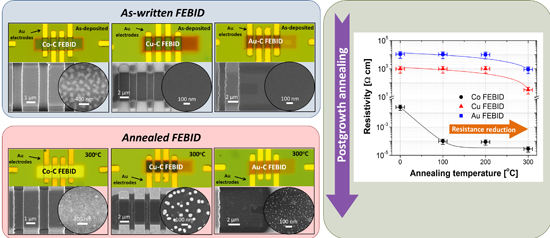
- of the resistivities with annealing temperature (Figure 4). However, while the resistivity reduction of Co–C deposits is more pronounced within the first 100 °C of annealing (from 26 mΩ·cm to 0.1 mΩ·cm), the resistivities of Cu–C and Au–C remain approximately constant at 980 Ω·cm and 11000 Ω·cm
- , respectively, within 200 °C annealing. Increasing the annealing temperature up to 300 °C, the Co–C resistivity reduces only by a factor of three. In contrast, the Cu–C and Au–C resistivities reduce by factors of 30 (down to 32 Ω·cm) and 12 (down to 900 Ω·cm), respectively. The large resistivity reduction
- that a resistivity value of ca. 105 Ω·cm is typically found in as-grown carbon material by FEBID [56]. We found, instead, values that are one and two orders of magnitude lower for Au–C and Cu–C, respectively, which may be attributed to the deposition regime which is close to electron-limited regime


Growth model and structure evolution of Ag layers deposited on Ge films
Beilstein J. Nanotechnol. 2018, 9, 66–76, doi:10.3762/bjnano.9.9
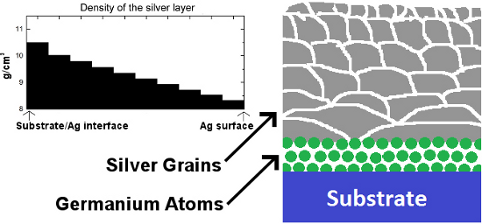
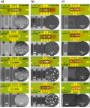
- bands in the permittivity spectrum as well as an increase in specific resistivity [24]. Moreover, a hypothesis has been stated, that these two effects are connected by a cause-and-effect relationship [4]. Here we verify this hypothesis by performing XRD and XRR measurements to obtain the mean grain size