


Search results
Search for "vacancies" in Full Text gives 248 result(s) in Beilstein Journal of Nanotechnology. Showing first 200.
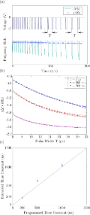
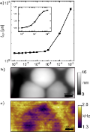
Kelvin probe force microscopy of the nanoscale electrical surface potential barrier of metal/semiconductor interfaces in ambient atmosphere
Beilstein J. Nanotechnol. 2019, 10, 1401–1411, doi:10.3762/bjnano.10.138
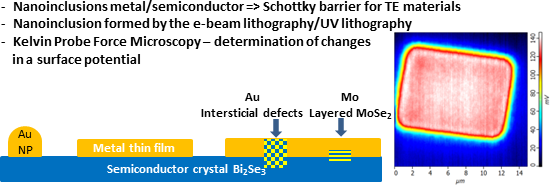
- nanometers for SiO2 on Si [51][52]). In our case it is increased by the electric field and good oxygen mobility in BiOx due to the formation of charged Bi vacancies [59][60]. This assumption is in good agreement with the observed increase of the cut-in potential barrier upon thinning of the Au layer (see


Gas sensing properties of individual SnO2 nanowires and SnO2 sol–gel nanocomposites
Beilstein J. Nanotechnol. 2019, 10, 1380–1390, doi:10.3762/bjnano.10.136
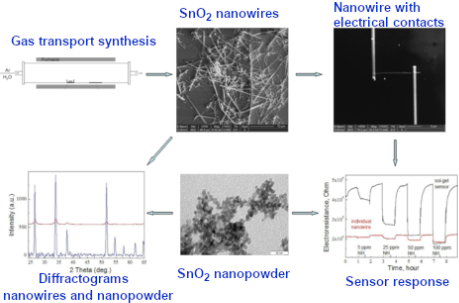
- nanowires, which is usually connected with the presence of oxygen vacancies [35][37][38]. The decrease in the half-widths and the increase in the relative intensity of the peaks for each of the features observed around 490 eV (main absorption edge of the SnO2) provides evidence for a more ordered structure
- structure density of states is typical of native SnO2-x oxide covering the surface of pure metallic tin foils [37][38] and was confirmed for SnO2 powder samples by the presence of noticeable amounts of oxygen vacancies (Figure 7). XANES oxygen lines near K-edge spectra are presented in Figure 8. The fine
- , powder particles may contain noticeable amounts of oxygen vacancies in their volume. This assumption moves the electronic structure of SnO2 powder particles close to the bulk (core) of natural SnO2-x oxides as confirmed by the XANES Sn M4,5 results (see Figure 7). After calcination, followed by




Imaging the surface potential at the steps on the rutile TiO2(110) surface by Kelvin probe force microscopy
Beilstein J. Nanotechnol. 2019, 10, 1228–1236, doi:10.3762/bjnano.10.122
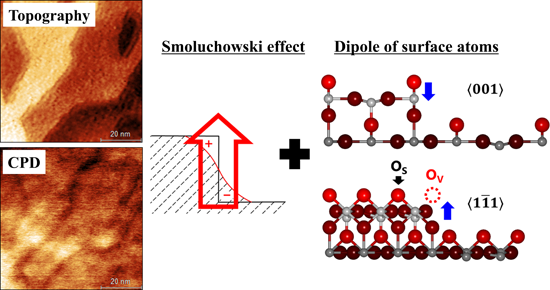
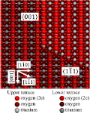
- [1][2][3][4][5][6][7]. The catalytic activity can be enhanced by the presence of defects, such as oxygen vacancies (Ov), Ti interstitials (Tiint) [8], and crystal steps. TiO2 is an n-type semiconductor because of these defects. In addition, reactive oxygen species, such as OH and H2O2 (compounds with
![[Graphic 16]](/bjnano/content/inline/2190-4286-10-122-i16.svg?max-width=637&scale=1.18182) and
and ![[Graphic 17]](/bjnano/content/inline/2190-4286-10-122-i17.svg?max-width=637&scale=1.18182) .
.

![[Graphic 38]](/bjnano/content/inline/2190-4286-10-122-i38.svg?max-width=637&scale=1.18182) and
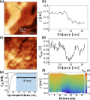
and ![[Graphic 39]](/bjnano/content/inline/2190-4286-10-122-i39.svg?max-width=637&scale=1.18182) steps. (a) Topographic image...
steps. (a) Topographic image...


![[Graphic 72]](/bjnano/content/inline/2190-4286-10-122-i72.svg?max-width=637&scale=1.18182) , b)
, b) ![[Graphic 73]](/bjnano/content/inline/2190-4286-10-122-i73.svg?max-width=637&scale=1.18182) , c) reduced
, c) reduced ![[Graphic 74]](/bjnano/content/inline/2190-4286-10-122-i74.svg?max-width=637&scale=1.18182) , and d)
, and d) ![[Graphic 75]](/bjnano/content/inline/2190-4286-10-122-i75.svg?max-width=637&scale=1.18182) steps. B...
steps. B...
Pure and mixed ordered monolayers of tetracyano-2,6-naphthoquinodimethane and hexathiapentacene on the Ag(100) surface
Beilstein J. Nanotechnol. 2019, 10, 1188–1199, doi:10.3762/bjnano.10.118
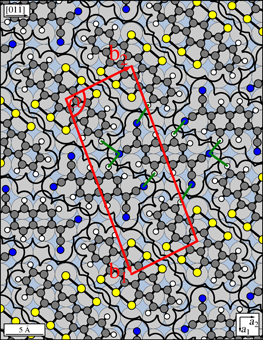
- example. The four symmetry-equivalent domains are marked by A to D. The molecular rows are well visible. The domains exhibit local defects, mostly vacancies, where single molecules are missing. For this structure, STM images of good quality with a low level of noise were obtained easily. We interpret this


Photoactive nanoarchitectures based on clays incorporating TiO2 and ZnO nanoparticles
Beilstein J. Nanotechnol. 2019, 10, 1140–1156, doi:10.3762/bjnano.10.114
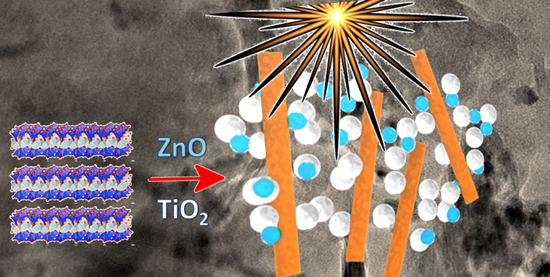
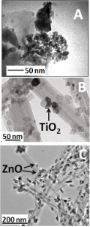
- visible wavelengths (blue and green emission at around 436–438 nm and 544–548 nm) of ZnO hybridized with CTA-smectites varies depending on the ZnO loading. This was attributed to defects, such as oxygen vacancies in ZnO, and trapped surface charges. The photoluminescence intensity of ZnO in saponite and



Quantitative analysis of annealing-induced instabilities of photo-leakage current and negative-bias-illumination-stress in a-InGaZnO thin-film transistors
Beilstein J. Nanotechnol. 2019, 10, 1125–1130, doi:10.3762/bjnano.10.112
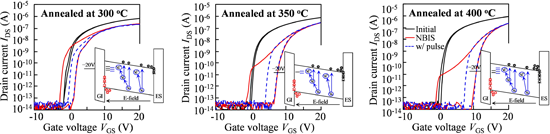
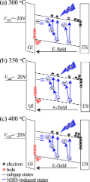
- higher-energy light irradiation, demonstrating that the generated ionized oxygen vacancies (VO+/VO2+) are neutralized by capturing electrons [8]. However, SS degradation still can be observed in the 300 °C-annealed TFT under the irradiation with short-wavelength light (below 430 nm), indicating that


Synthesis and characterization of quaternary La(Sr)S–TaS2 misfit-layered nanotubes
Beilstein J. Nanotechnol. 2019, 10, 1112–1124, doi:10.3762/bjnano.10.111
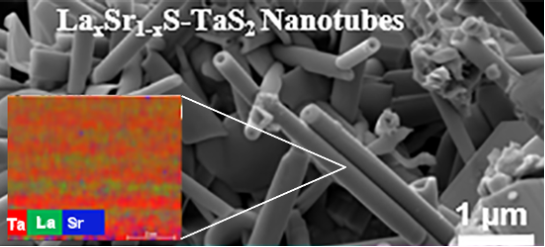
- vacancies in the parent MLC compound. For smaller amounts of lanthanum atoms (i.e., larger Sr content in the MS sublattice), the charge transfer to the CrS2 slab becomes smaller. Therefore, the hexagonal (layered) phase of CrS2 becomes unstable beyond 20 atom % Sr and the MLC vanishes. While the parent


Electronic and magnetic properties of doped black phosphorene with concentration dependence
Beilstein J. Nanotechnol. 2019, 10, 993–1001, doi:10.3762/bjnano.10.100
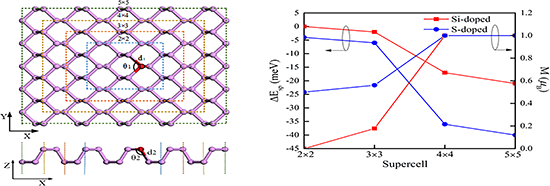
- experimentally demonstrated that substitutional doping of TMDs could be achieved by filling the vacancies observed in CVD-grown monolayer TMDs [18]. Liu et al. [19] prepared epitaxial copper-doped ZnO films and observed that the substitution of Cu for Zn and the presence of strong Cu–Zn–O bonds are necessary for


Rapid, ultraviolet-induced, reversibly switchable wettability of superhydrophobic/superhydrophilic surfaces
Beilstein J. Nanotechnol. 2019, 10, 866–873, doi:10.3762/bjnano.10.87
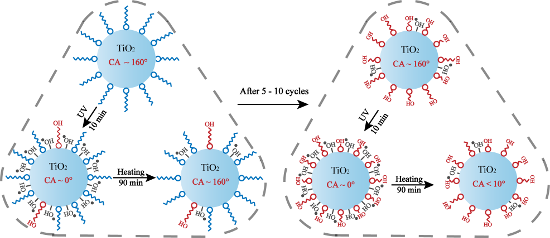
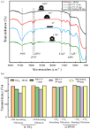
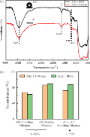
- are generated on the TiO2 surfaces under UV illumination. The holes lead to the production of oxygen vacancies to enhance the adsorption of hydroxy groups, while the hydroxy groups are replaced by oxygen atoms that have a stronger bond on the defect sites during heating process. However, the change in



On the transformation of “zincone”-like into porous ZnO thin films from sub-saturated plasma enhanced atomic layer deposition
Beilstein J. Nanotechnol. 2019, 10, 746–759, doi:10.3762/bjnano.10.74
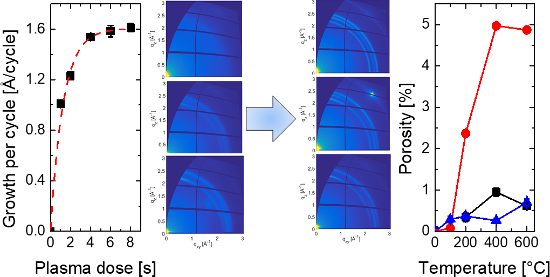
- (vacancies). The latter peak is also attributed to the formation of metal carbonates, in line with the FTIR results and the literature values [60]. Finally, the peak at 529.8 eV was attributed to lattice O–Zn bonds [56]. Increasing the plasma time led to the decrease and eventual disappearance of the pure
- spectra confirm the removal of the carbon functionalities and the calcined layers showed an O/Zn ratio of 1.0 ± 0.1 (Table 1). The oxygen peaks were decomposed into two contributions, assigned to the oxygen–zinc bonds in the oxide lattice (O–Zn, 529.8 eV), and zinc hydroxides and/or oxygen vacancies (Zn


Review of time-resolved non-contact electrostatic force microscopy techniques with applications to ionic transport measurements
Beilstein J. Nanotechnol. 2019, 10, 617–633, doi:10.3762/bjnano.10.62
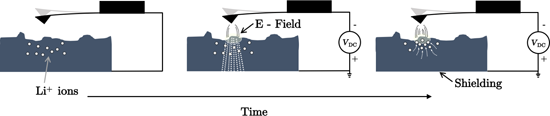
- a phase-locked loop (PLL). This was first performed by Bennewitz et al. to measure the mobility of F− vacancies in a CaF2 crystal [27]. Schirmeisen et al. later improved the technique by performing the measurements at various temperatures to extract the activation energy for ionic transport in Li





Mo-doped boron nitride monolayer as a promising single-atom electrocatalyst for CO2 conversion
Beilstein J. Nanotechnol. 2019, 10, 540–548, doi:10.3762/bjnano.10.55
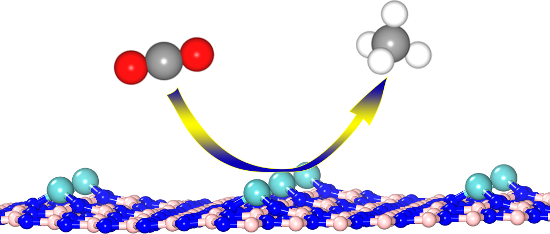
- ), including Sc to Zn, Mo, Ru, Rh, Pd and Ag, supported on a boron nitride (BN) monolayer with boron vacancies, were investigated as electrocatalysts for the CO2 reduction reaction (CRR) using comprehensive density functional theory (DFT) calculations. The results demonstrate that a single-Mo-atom-doped boron
- refractory nature [11][35][36][37][38][39][40][41]. Moreover, BN nanomaterials have been used as superior substrates for doping various transition metals by electron beam irradiation [42] or solvent exfoliation [43] to form selected point defects, which are preferred to growing specific boron vacancies [42


Choosing a substrate for the ion irradiation of two-dimensional materials
Beilstein J. Nanotechnol. 2019, 10, 531–539, doi:10.3762/bjnano.10.54
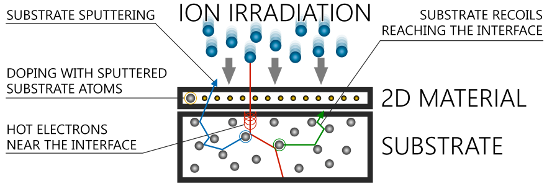
- vacancy generation event involves chalcogen atom removal) [23]. If the fluence is enough, multiple generated vacancies can subsequently merge through the migration processes [15][24], leading to a creation of more complex defects. Additionally, the incident ion can become embedded into the 2D material
Ceria/polymer nanocontainers for high-performance encapsulation of fluorophores
Beilstein J. Nanotechnol. 2019, 10, 522–530, doi:10.3762/bjnano.10.53
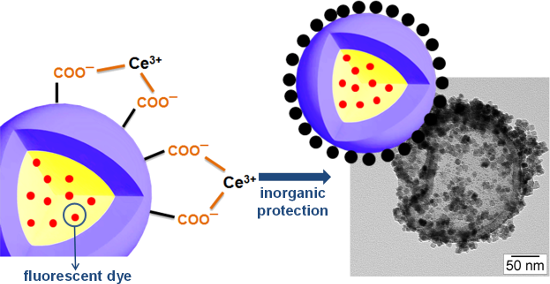
- combine biocompatibility with a high oxygen-scavenging ability. Cerium oxide is a lanthanide metal oxide with a redox potential behavior that can easily switch between cerium(IV) and cerium(III) and has the capability to leave oxygen vacancies in the crystal lattice [39]. Cerium(IV) oxide exhibits
- , which yielded the hybrid sample NC-CeO2. The fluorescence intensity is higher than for nanocapsules synthesized under ambient conditions without CeO2, but also even higher than for the sample NC(Ar) prepared under argon atmosphere. The oxygen vacancies present in the structure of cerium(IV) oxide


Sub-wavelength waveguide properties of 1D and surface-functionalized SnO2 nanostructures of various morphologies
Beilstein J. Nanotechnol. 2019, 10, 379–388, doi:10.3762/bjnano.10.37
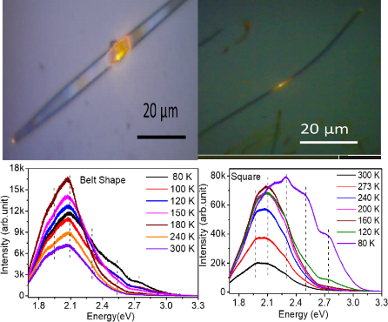
- usual yellow-red luminescence (owing to bridging oxygen vacancies; OB) of the SnO2 is significantly suppressed and the luminescence appearing around the blue spectrum (owing to in-plane O vacancies; OP) becomes strong [13]. Interestingly, with surface functionalization, luminescence tuning is
- . Then, surface passivation takes place leading to suppression of the luminescence related to the OB vacancy sites. Moreover, luminescence from OP arises at high energy relative to the luminescence OB vacancies. We previously reported a detailed study on OTS functionalization of the SnO2 NPs [19]. It is
- 2.6 eV are assigned to band edge transitions. Earlier, it was shown from DFT calculations using an all-electron Gaussian approximation that formation of an acceptor state close to 1 eV above the valence band occurs due to the stable oxygen vacancies [31]. Thus, the above mentioned studies point out


Site-specific growth of oriented ZnO nanocrystal arrays
Beilstein J. Nanotechnol. 2019, 10, 274–280, doi:10.3762/bjnano.10.26
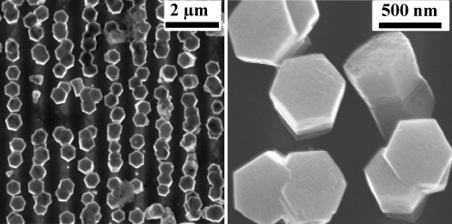
- may in turn impact the physical properties on account of the known role of oxygen vacancies and defects on electron transport behavior of ZnO [26][27]. But in our case no such high temperature processing is required at any stage. Cho et al. [17] have used a solution method with tri-potassium citrate


Zn/F-doped tin oxide nanoparticles synthesized by laser pyrolysis: structural and optical properties
Beilstein J. Nanotechnol. 2019, 10, 9–21, doi:10.3762/bjnano.10.2
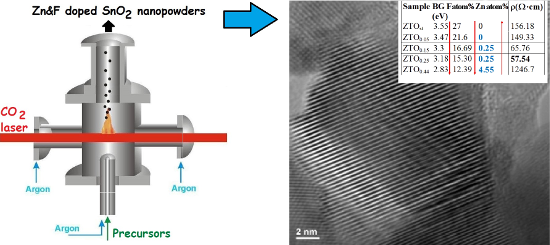
- SnO2 in its undoped form is an n-type semiconductor with a direct bandgap of 3.6 eV at room temperature. Its n-type conductivity is due to oxygen vacancies in its rutile structure. The bandgap, starting from the bulk value, increases as the size of the nanocrystal decreases, due to electron confinement



Nanostructure-induced performance degradation of WO3·nH2O for energy conversion and storage devices
Beilstein J. Nanotechnol. 2018, 9, 2845–2854, doi:10.3762/bjnano.9.265
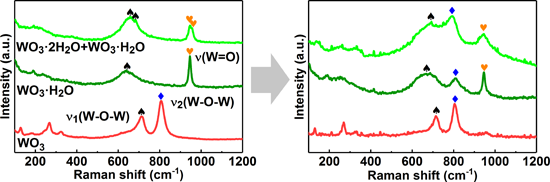
- samples originate from W5+ ions in the lattice, which reveals the formation of a few oxygen vacancies [29][46]. The O 1s spectra for all samples in Figure 5c depict two peaks with one main peak from the lattice oxygen, OL, and another from the oxygen in water molecules, OH2O [47][48]. With increasing


Graphene-enhanced metal oxide gas sensors at room temperature: a review
Beilstein J. Nanotechnol. 2018, 9, 2832–2844, doi:10.3762/bjnano.9.264
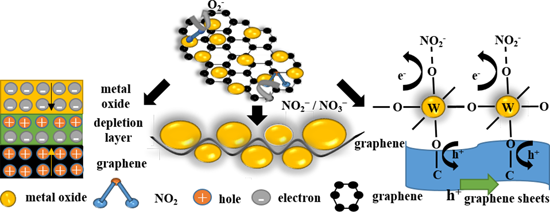
- -sensing material. Therefore, further reduction of GO is necessary and the product after reduction is called reduced graphene oxide (rGO). Some oxygen functional groups remain after the reduction, some defects and vacancies are generated during the reduction, which are beneficial for the gas adsorption [13
- concentrations of NH3 and responded dramatically, which could be ascribed to the p–n heterojunctions formed between ZnO and rGO. However, the influence of humidity on the sensor response was not negligible due to the residual oxygen (high hydrophilicity) on rGO and the active sites (oxygen vacancies) on ZnO



Variation of the photoluminescence spectrum of InAs/GaAs heterostructures grown by ion-beam deposition
Beilstein J. Nanotechnol. 2018, 9, 2794–2801, doi:10.3762/bjnano.9.261
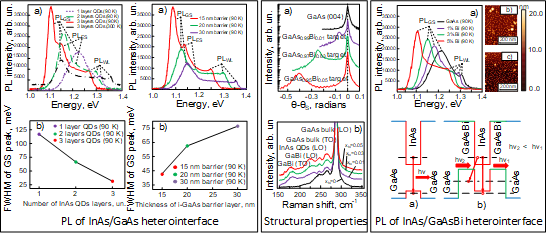
- Bi = 148 pm and In = 142 pm atoms are very close. Therefore, in the InAs QD growth process on the GaAs1−xBix surface, In adatom surface diffusion can be realized both through substituting Ga or Bi vacancies. Increase of QD heights in the InAs/GaAs0.95Bi0.05 heterosystem is an indirect demonstration


Oriented zinc oxide nanorods: A novel saturable absorber for lasers in the near-infrared
Beilstein J. Nanotechnol. 2018, 9, 2730–2740, doi:10.3762/bjnano.9.255
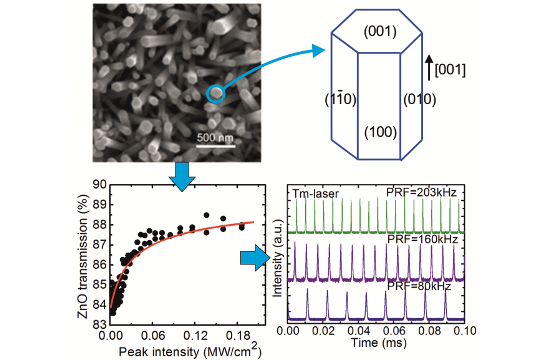
- + and O2− ions stacked along the [001]-axis. Thus, there are many options to accommodate intrinsic defects (e.g., interstitial Zn2+ ions, Zni, or O2− vacancies, VO, which are the most widespread ones), as well as external dopants (e.g., divalent transition-metal ions M2+ entering into the Td sites
- were grown hydrothermally (in oxygen-rich conditions) one can expect the presence of zinc vacancies that have a low formation energy under such conditions. The singly charged zinc vacancy (VZn−1) is typically located at 0.8–0.9 eV above the ZnO valence band (VB) [9][33][34]. This defect site can be a
- possible source for the near-IR absorption. For longer NRs, one can expect more VZn−1 vacancies and stronger near-IR absorption, in agreement with Figure 3a. In Figure 3c, we compare the small-signal absorption spectra of ZnO NRs grown for 10 h and several well-known nanostructured “fast” SAs, namely a



Disorder in H+-irradiated HOPG: effect of impinging energy and dose on Raman D-band splitting and surface topography
Beilstein J. Nanotechnol. 2018, 9, 2708–2717, doi:10.3762/bjnano.9.253

- . [35] identified the type of defects generated in different HOPG samples and were able to relate the corresponding ID/IG-vs-ID′/IG ratios to different kinds of defects. They found that ID/ID′ ≈ 13 is related to sp3-hybridized sites in fluorinated graphene, ID/ID′ ≈ 7 refers to vacancies in ion
- sub-band represents a different group of defects. Based on these results for graphene, we claim that D1, with the lowest slope (1.6 ± 0.2), could be related to boundary-like defects in HOPG, while D2, with a slope of (4.4 ± 0.2), could be associated to vacancies and armchair edges [5][12][36], and to
- work, while the dashed, dashed-dotted and dotted lines are taken from Eckmann and co-workers [35]. The symbols +, * and # refer to sp3-hybridized bonds, vacancies, and boundary defects, respectively. a) Hysteresis loops of pristine HOPG and irradiated samples with low (LD) and high (HD) H+ doses, in


Impact of the anodization time on the photocatalytic activity of TiO2 nanotubes
Beilstein J. Nanotechnol. 2018, 9, 2628–2643, doi:10.3762/bjnano.9.244
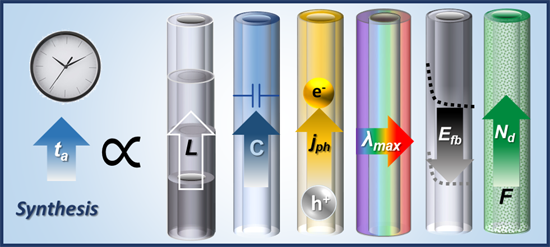
- is supported by the fact that atomic radii for O (48 pm) and F (42 pm) are similar enough to allow for the replacement of the former, effectively doping the material by creating oxygen vacancies and different energy states [29]. XPS To characterize the surface chemistry, high-resolution XPS
- ca. 20% compared to the measurement in N2-saturated electrolyte, revealing the scavenging action of dissolved oxygen. While electrons are generated and collected in the outer circuit, electron vacancies (holes, h+) are left behind in the valence band of the material, which have an elevated oxidation
- N and F. Nevertheless, some physical phenomena such as light scattering (from the top part of the TNTs) and oxygen vacancies could also create distortions in the IPCE spectra. Furthermore, the bandgap (Eg) can be obtained from the Tauc plots, Figure 7b, plotting jph as a function of the wavelength


Exploring the photoleakage current and photoinduced negative bias instability in amorphous InGaZnO thin-film transistors with various active layer thicknesses
Beilstein J. Nanotechnol. 2018, 9, 2573–2580, doi:10.3762/bjnano.9.239
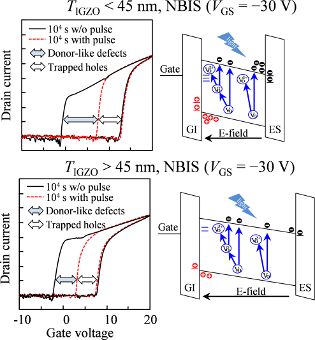
- oxygen-related defects, such as oxygen vacancies (VO), may be the origin of high-density electron traps near the EV in a-IGZO TFTs, which occupy the region near the valence band maximum with an energy width of ≈1.5 eV [26][27]. Figure 3a–d shows the variation in the transfer characteristics of a-IGZO
- required for the transition from VO to VO+ and VO2+, respectively. Moreover, the ionized oxygen vacancies of VO+ and VO2+ are located near the mid-gap and the bottom of the EC [15][29], respectively. It is sufficient to excite high-density VO defects to VO+/VO2+ and then to generate free electrons to EC
- oxygen vacancies in the bulk of the IGZO for the enhancement of electrical properties and stress stability of the TFTs, the following two aspects should be mainly considered: (i) oxidizing the densities of the defect state of oxide semiconductors to suppress charge trapping, for example by oxygen


Improved catalytic combustion of methane using CuO nanobelts with predominantly (001) surfaces
Beilstein J. Nanotechnol. 2018, 9, 2526–2532, doi:10.3762/bjnano.9.235
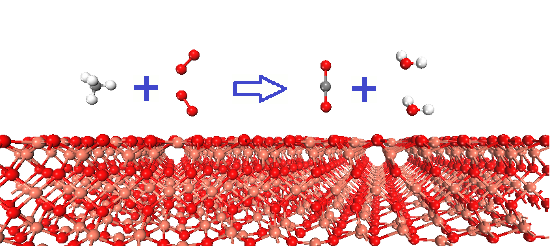
- indicates that the key role of OV is to activate O2 and release a highly active oxygen atom, although a barrier of 0.91 eV is found for O2 dissociation in the case of CuO(001), but the dehydrogenation from CHx becomes exothermic, confirming the importance of surface oxygen and oxygen vacancies, as suggested





