Search results
Search for "valence" in Full Text gives 349 result(s) in Beilstein Journal of Nanotechnology. Showing first 200.
Effect of Ag loading position on the photocatalytic performance of TiO2 nanocolumn arrays
Beilstein J. Nanotechnol. 2020, 11, 717–728, doi:10.3762/bjnano.11.59
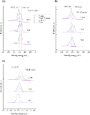
- structures were observed using a field emission scanning electron microscope (FE-SEM, FEI, Tecnai G2 F30). The elemental composition and valence distribution of the film were measured by X-ray photoelectron spectroscopy (XPS, Thermo Fisher Scientific, ESCALAB 250Xi). The photoluminescence (PL) intensity of
- the sample. Meanwhile, the two characteristic peaks of Ti 2p are located at 458.6 and 464.3 eV in Figure 5c. These peaks represent the binding energy of Ti 2p3/2 and Ti 2p1/2, which indicates that Ti is in the +4 valence state in the sample. The spacing between the two peaks of 5.7 eV is also
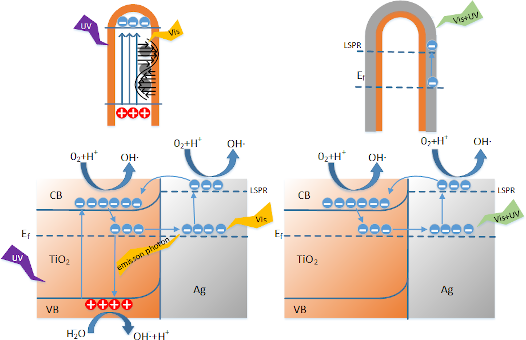
- , transfer to the conduction band of TiO2, or directly participate in the catalytic reaction [39]. Because of the wide bandgap, TiO2 can only absorb UV light. After the valence band electron absorbs the photon energy, it transitions from the valence band to the conduction band, and it takes part in the


Preparation, characterization and photocatalytic performance of heterostructured CuO–ZnO-loaded composite nanofiber membranes
Beilstein J. Nanotechnol. 2020, 11, 631–650, doi:10.3762/bjnano.11.50
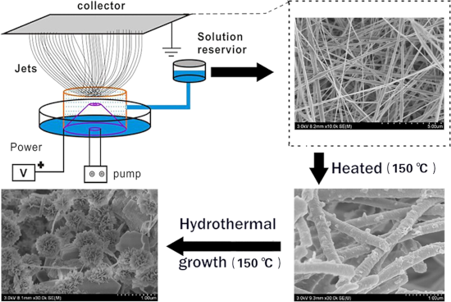
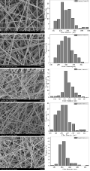
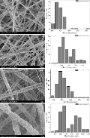
- -loaded CNFMs is illustrated in Figure 24. When the UV light irradiates the CuO-ZnO heterostructure on the CNFMs, the valence-band (VB) electrons are excited to the conduction band (CB), resulting in the formation of electron–hole pairs. Holes and electrons both act in the photocatalytic degradation of











Multilayer capsules made of weak polyelectrolytes: a review on the preparation, functionalization and applications in drug delivery
Beilstein J. Nanotechnol. 2020, 11, 508–532, doi:10.3762/bjnano.11.41
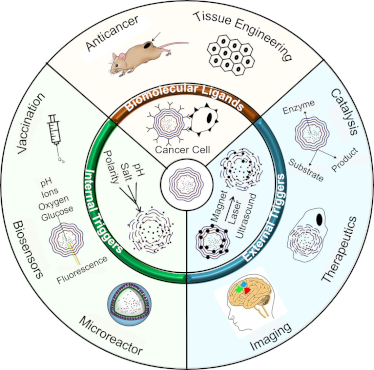
- the film erosion rate, the effect of ionic strength was largely dependent on the type and valence state of the salts [51]. Although the hydrogen bond is much weaker than the electrostatic interactions, and could be easily damaged by the dissolution processes, their stimuli responsiveness and the



Evolution of Ag nanostructures created from thin films: UV–vis absorption and its theoretical predictions
Beilstein J. Nanotechnol. 2020, 11, 494–507, doi:10.3762/bjnano.11.40
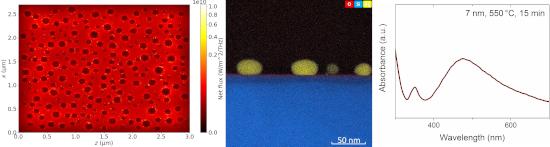
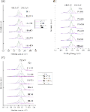
- Evolution 220 spectrophotometer in transmission mode, in a range of 200–1100 nm. For these measurements films were deposited on glass substrates. The quality of the obtained nanostructures and the valence states of Ag were measured using X-ray photoelectron spectroscopy (XPS, Omicron NanoTechnology
- the spectrum corresponding to the 3 nm layer, an additional maximum appears at about 350 nm, which is also present in the spectra of thicker samples. In metals, valence and conduction bands can overlap, which leads to a continuous spectrum of sites available for electrons. However, for inner levels
- observed using XPS. The spectral contribution of 5s and 5p electronic states to the valence band spectrum of Ag is negligible and the valence band mainly originates from 4d electronic state. The Ag 3d valence-band and Ag 4d core-level spectra are shown, respectively, in Figure 12a and Figure 12b. It should




Interfacial charge transfer processes in 2D and 3D semiconducting hybrid perovskites: azobenzene as photoswitchable ligand
Beilstein J. Nanotechnol. 2020, 11, 466–479, doi:10.3762/bjnano.11.38
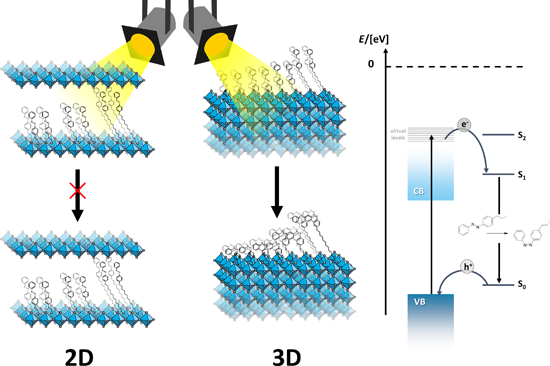
- states of naphthalene [23]. Regarding the electronic alignment of molecular orbitals, valence and conduction bands, the chromophore may serve as a quantum well [24]. The energy transfer between the semiconducting perovskite layer and the chromophore can easily be influenced by the chemical structure and
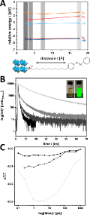
- photoswitching of azobenzene on semiconducting TiO2 is suppressed due to a sudden oxidation of the chromophore. The formation of a heterogeneous charge-transfer complex disturbs the isomerisation and no photoswitching is observed [37]. To clarify possible electronical processes, the relative energies of valence




Synthesis and enhanced photocatalytic performance of 0D/2D CuO/tourmaline composite photocatalysts
Beilstein J. Nanotechnol. 2020, 11, 407–416, doi:10.3762/bjnano.11.31
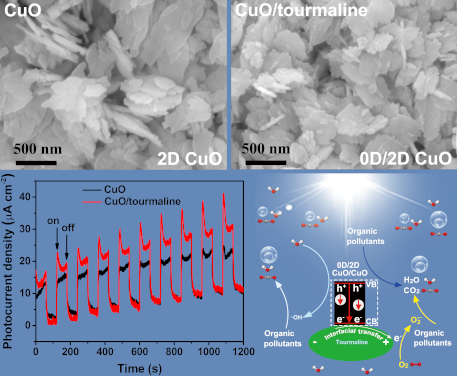
- nontoxic products. In this work, a CuO/tourmaline composite with zero-dimensional/two-dimensional (0D/2D) CuO architecture was successfully obtained via a facile hydrothermal process, and its photocatalytic activity was evaluated by the degradation of methylene blue (MB). Surface element valence state and
- ), (410), (122), (051), (232), (511), (502), (431), (303), (152), (342), (143), (063), (271), (550), (054), (713), and (505) planes of schorl (JCPDS 85-1811). No impurity peaks were detected, indicating the predominance of CuO and tourmaline in the composite. The surface element component and valence
- −. With a combination of the analyses carried out above, a plausible mechanism for strengthening the photocatalytic degradation activity of CuO with tourmaline was proposed and shown in Figure 9. The e− in the valence band (VB) of CuO was excited with the generation of e−/h+ pairs under light irradiation


DFT calculations of the structure and stability of copper clusters on MoS2
Beilstein J. Nanotechnol. 2020, 11, 391–406, doi:10.3762/bjnano.11.30
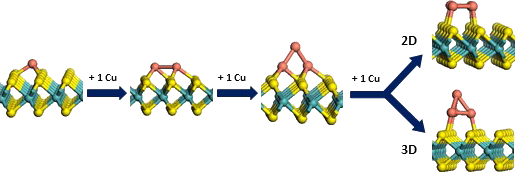
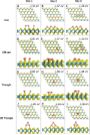
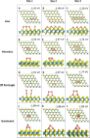
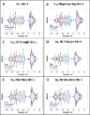
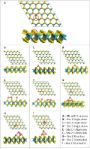
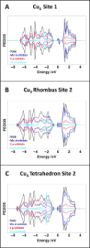
- functional [35]. The valence electrons are described explicitly using a plane wave basis set with an energy cut-off of 450 eV. The valence electron configurations used for this study are Mo = 5s14d5, S = 3s23p4 and Cu = 4s13d10. The core–valence electron interactions are described using the projector
High-performance asymmetric supercapacitor made of NiMoO4 nanorods@Co3O4 on a cellulose-based carbon aerogel
Beilstein J. Nanotechnol. 2020, 11, 240–251, doi:10.3762/bjnano.11.18
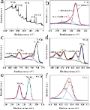
- , which agrees well with the XRD results. To investigate the chemical composition and the valence states of the NiMoO4@Co3O4/CA nanocomposite, X-ray photoelectron spectroscopy (XPS) was performed and the results are shown in Figure 4. According to Figure 4a, the elements Co, Ni, Mo, O and C can be clearly




Nonequilibrium Kondo effect in a graphene-coupled quantum dot in the presence of a magnetic field
Beilstein J. Nanotechnol. 2020, 11, 225–239, doi:10.3762/bjnano.11.17
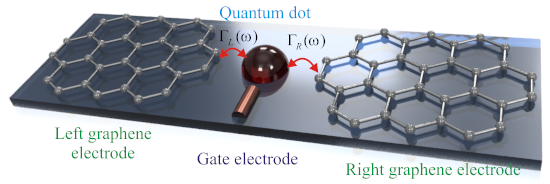
- [52]. The points where the conduction and valence bands touch each other in momentum space are the Dirac points. The Dirac points play an important role in the electronic properties of graphene because around these points low-energy excitations can be achieved. Furthermore, the motion of the charge
- Keldysh nonequilibrium Green’s function theory by Li and co-workers [67]. They found that the Kondo peak can be observed in a wide parameter range from the Kondo regime to the mixed valence regime or to the empty orbital regime, which is in agreement with the literature [68][69][70]. In the latter two


Advanced hybrid nanomaterials
Beilstein J. Nanotechnol. 2019, 10, 2563–2567, doi:10.3762/bjnano.10.247

- synthesize clusters, so-called colloidal molecules [21]. Nanospherical satellites were covalently bonded via amide groups within the dimples of valence-endowed patchy nanoparticles, allowing the tuning of their topology and self-assembling ability. Polyion complex micelles formed by complexation between poly
Semitransparent Sb2S3 thin film solar cells by ultrasonic spray pyrolysis for use in solar windows
Beilstein J. Nanotechnol. 2019, 10, 2396–2409, doi:10.3762/bjnano.10.230
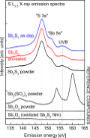
- Sb2S3 layers, the XES spectra (Figure 2) probe the chemical states in the entire Sb2S3 film. The S L2,3 XES data in Figure 2 allows three transitions for the Sb2S3 films and the reference (denoted as “S 3s”, “Sb 5s”, and UVB – upper valence band) to be clearly distinguished. These transitions stem from
- electronic transitions from valence bands into the S 2p core holes (S L2,3) created as the initial state of XES. The transition centered at 147.5 eV is predominantly due to S 3s-derived electronic valence states and appears as the main transition of sulfides [50]. Another peak, as a shoulder for the former
- , is found at 151 eV and ascribed to Sb 5s-derived states by comparison with band structure and density of states calculations [50]. Lastly, transitions from the upper valence band of Sb2S3 can be found centered at around 156 eV. These transitions were identified in line with atom-decomposed density of



Multiwalled carbon nanotube based aromatic volatile organic compound sensor: sensitivity enhancement through 1-hexadecanethiol functionalisation
Beilstein J. Nanotechnol. 2019, 10, 2364–2373, doi:10.3762/bjnano.10.227
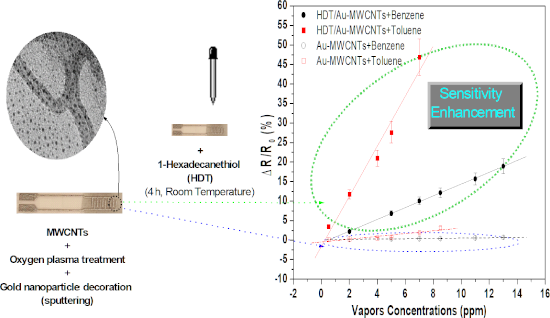
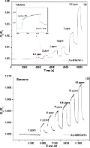
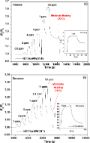
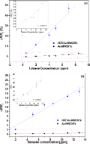
- towards the adsorbed vapour molecules. This transfer results in a decrease of the majority carriers in the valence band of the decorated carbon nanotubes, and thus the decrease of the measured conductivity [33]. Sensor performance The calibration curves, expressing the normalized sensor resistance versus





Nontoxic pyrite iron sulfide nanocrystals as second electron acceptor in PTB7:PC71BM-based organic photovoltaic cells
Beilstein J. Nanotechnol. 2019, 10, 2238–2250, doi:10.3762/bjnano.10.216
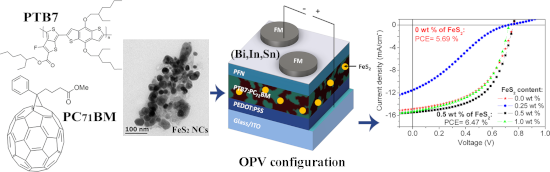
- electrochemical band gap energy, the valence and conduction band energies (EVB and ECB) were calculated using the following Equation 1 and Equation 2: and where E[onset,ox] and E[onset,red] are the onset potentials of the oxidation and the reduction relative to ferrocene/ferrocenium (Fc+/Fc), E[½(Fc)] is the half


Ultrathin Ni1−xCoxS2 nanoflakes as high energy density electrode materials for asymmetric supercapacitors
Beilstein J. Nanotechnol. 2019, 10, 2207–2216, doi:10.3762/bjnano.10.213
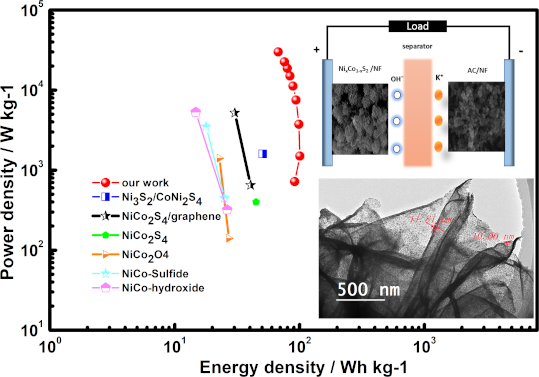
- -dispersive spectrometry (EDS) using an accelerating voltage of 15 kV, and transmission electron microscopy (TEM, JEOL 2100) were used to study the morphology, structure and elemental distributions of the samples. Elemental composition of the as-prepared materials and valence states of each element were
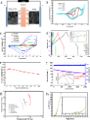
- supported by aluminium SEM sample stages. Chemical composition and valence states of each element in the material are further confirmed by using XPS. The high-resolution XPS spectra confirm the existence of nickel, cobalt, and sulfur. After fitting the XPS with the Gaussian method, the HRXPS spectrum of Ni


Improved adsorption and degradation performance by S-doping of (001)-TiO2
Beilstein J. Nanotechnol. 2019, 10, 2116–2127, doi:10.3762/bjnano.10.206
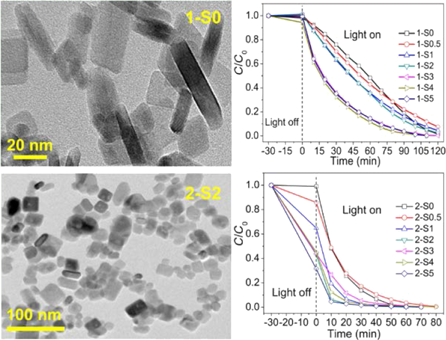
- . Wang et al. reported that TiO2 with an ideal (001) face was inert to both methanol and water, and the activity of the (001) face was only enhanced after surface reduction or reoxidation [11]. It is well known that the conduction band of anatase TiO2 is composed of the Ti 3d state and the valence band
- -S3 sample has the largest ΔR, which is consistent with the XRD results. The XP spectra do not only provide information on the binding energy of the atoms but also on the total density of states (DOS) in the valence band of TiO2 [12][49]. In order to investigate if S-doping produces energy levels
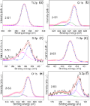
- above the valence band maximum, we measured the valence-band XP spectra of the 2-S0, 2-S0.5, 2-S1, 2-S3 and 2-S5 samples as shown in Figure 5. For all the samples, the valence band maximum is located around 2.4 eV, so S-doping does not shift the valence band maximum towards the forbidden band. Mid-gap




Improvement of the thermoelectric properties of a MoO3 monolayer through oxygen vacancies
Beilstein J. Nanotechnol. 2019, 10, 2031–2038, doi:10.3762/bjnano.10.199
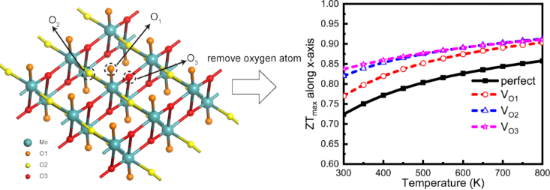
- the Γ point, while the maximum of the first valence band (VBM) appears at the S point. The indirect bandgap of the MoO3 monolayer is computed as 1.79 eV for PBE and 2.85 eV for HSE06, which is consistent with previous studies [17][31]. Since the MoO3 monolayer is a wide-gap semiconductor, it is likely


Magnetic properties of biofunctionalized iron oxide nanoparticles as magnetic resonance imaging contrast agents
Beilstein J. Nanotechnol. 2019, 10, 1964–1972, doi:10.3762/bjnano.10.193
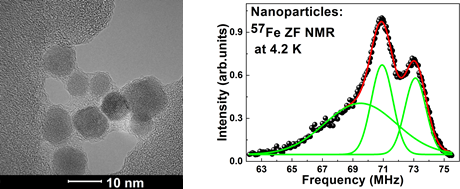
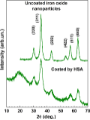
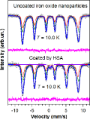
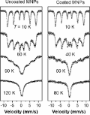
- valence Fe2.5+. At about TV = 120 K the Verwey transition occurs, which leads to changes in the magnetite crystal structure, as well as the electronic and magnetic properties [20]. Below TV the electron exchange between the Fe3+ and Fe2+ ions in the B-sites is frozen. These changes can be easily
- identified in the Mössbauer spectrum of magnetite. Mössbauer spectroscopy is a highly sensitive method with respect to the valence of iron ions in these bulk oxides, since the hyperfine parameters corresponding to Fe3+ and Fe2+ ions are well distinguishable in the spectra. For the processing of the low




First principles modeling of pure black phosphorus devices under pressure
Beilstein J. Nanotechnol. 2019, 10, 1943–1951, doi:10.3762/bjnano.10.190
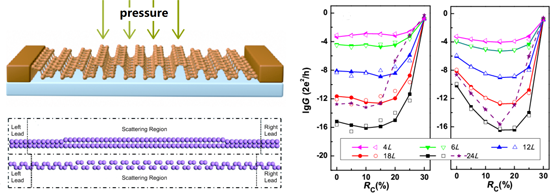
- substance of pressure-related quantum transport in pure BP devices in this paper is not changed. When RC = 15%, monolayer BP becomes an indirect bandgap semiconductor. When RC = 30%, the conduction band minimum (CBM) descends below the valence band maximum (VBM), and the monolayer BP finally becomes a
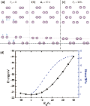
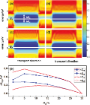
- devices with a length of the pressure region equal to 24L and RC equal to 0 and 15%, respectively. When RC = 0, the Fermi level of both leads locates in the center of conduction-band maximum (CBM) and valence-band maximum (VBM). When RC reaches 15%, both VBM and CBM are pushed towards positive energy
- both zigzag and armchair BP devices, ΔEV is always smaller than ΔEC indicating the valence band domination of quantum transport for all BP devices, especially for the armchair BP devices. More interestingly, ΔEV of the armchair BP devices increases as function of RC when RC is less than 15%, which




Charge-transfer interactions between fullerenes and a mesoporous tetrathiafulvalene-based metal–organic framework
Beilstein J. Nanotechnol. 2019, 10, 1883–1893, doi:10.3762/bjnano.10.183
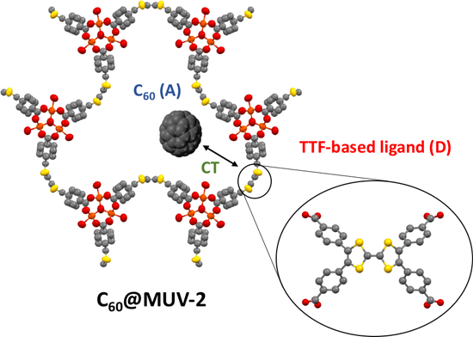
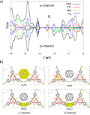
- a small bandgap calculated to be 0.90 eV in spin-up or α-channel, and 0.72 eV in spin-down or β-channel (Figure 6), slightly smaller than that predicted for pristine MUV-2 (0.86 eV in β-channel) [53]. Analysis of the projected density of states (PDoS) indicates that the valence band maximum (VBM) in




TiO2/GO-coated functional separator to suppress polysulfide migration in lithium–sulfur batteries
Beilstein J. Nanotechnol. 2019, 10, 1726–1736, doi:10.3762/bjnano.10.168
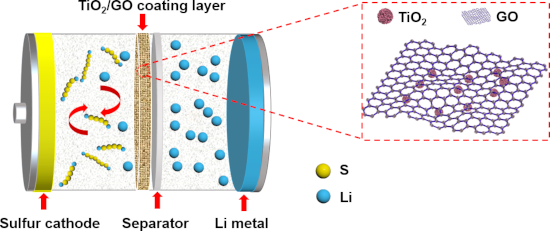
- Li2S and Li2S2 into the high valence state Li2S4–8 [42][43][44]. One should note that the Li/S batteries with a pristine separator and those with a GO-coated separator exhibit much broader redox peaks than that of the Li/S batteries with TiO2/GO-coated separator due to the high polarization and poor


Giant magnetoresistance ratio in a current-perpendicular-to-plane spin valve based on an inverse Heusler alloy Ti2NiAl
Beilstein J. Nanotechnol. 2019, 10, 1658–1665, doi:10.3762/bjnano.10.161
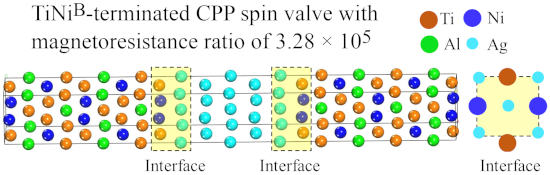
- utilizing a density functional theory (DFT)-based Vienna ab-initio simulation package (VASP) [31][32]. Ti (3d24s2), Ni (3d84s2), Al (3s23p1) and Ag (4d105s1) were chosen to be the valence electron configurations. The exchange-correlation interaction is described by the Perdew–Burke–Ernzerhof (PBE


Effects of surface charge and boundary slip on time-periodic pressure-driven flow and electrokinetic energy conversion in a nanotube
Beilstein J. Nanotechnol. 2019, 10, 1628–1635, doi:10.3762/bjnano.10.158
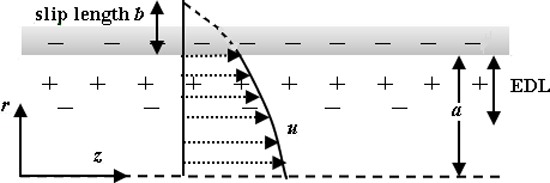
- concentration and z is the valence of ions. Taking the Debye–Hückel approximation for low zeta potential, i.e., sinh(ezφ/(kBT)) ≈ ezφ/(kBT), and utilizing Equation 3 and Equation 4 we obtain the linearized Poisson–Boltzmann equation The electric potential distribution φ satisfies where ρe = −εκ2φ is used, ζ is


Kelvin probe force microscopy work function characterization of transition metal oxide crystals under ongoing reduction and oxidation
Beilstein J. Nanotechnol. 2019, 10, 1596–1607, doi:10.3762/bjnano.10.155
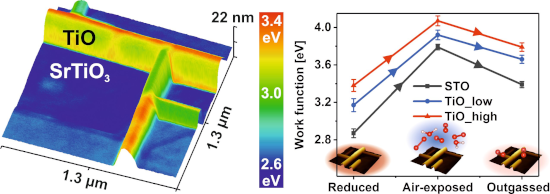
- and similarities between those two structures. Based on the electronic conduction, most transition metal oxides could be classified as insulators or semiconductors. However, due to the plethora of available valence states in which a cation can be, many transition metal oxides may also exhibit metallic
- also in various heterostructures, with exotic electronic states, e.g., a two-dimensional electron gas (2DEG) on the interface with LaAlO3 [16][17]. On the other side of the transition metal oxides spectrum lies titanium monoxide, TiO, in which the titanium atoms adopt the valence state 2+, contributing
- transformation from (1×1) to (√5×√5)R26.6°, and in the vicinity of extended defects in a crystal (dislocations) which act as easy conduction paths for electrons. Oxygen vacancy formation, and therefore Ti3+ valence, results in the appearance of new t2g electron states within Ti 3d, which are below the conduction


High-temperature resistive gas sensors based on ZnO/SiC nanocomposites
Beilstein J. Nanotechnol. 2019, 10, 1537–1547, doi:10.3762/bjnano.10.151
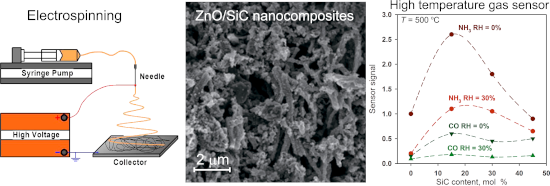
- ]. Taking into account the difference in the band gap (Eg) of 2H-SiC (Eg = 3.3 eV [39]) and 3C-SiC (Eg = 2.36 eV [40]) polytypes, and assuming that the position of the valence band for these polytypes does not vary significantly, we constructed a diagram of the band alignment for ZnO and 3C-SiC phases



Synthesis of P- and N-doped carbon catalysts for the oxygen reduction reaction via controlled phosphoric acid treatment of folic acid
Beilstein J. Nanotechnol. 2019, 10, 1497–1510, doi:10.3762/bjnano.10.148
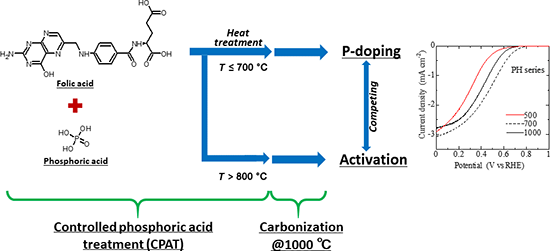
- in N, S, P-doped carbon materials [24]. The 400.5 eV peak observed in the N 1s spectra of the PH-series carbon materials has traditionally been assigned to pyrrole/pyridone-type N. The electron configuration of pyridinic N can be described as follows: Two out of five N valence electrons are used for
- σ-bond formation, two more electrons form an unshared electron pair, and the remaining electron is donated to the π-electron system. Conversely, in the case of pyrrolic N, two valence electrons are used to form C–N–C σ-bonds, one electron is used to form the N–H bond, and the remaining two electrons