


Search results
Search for "calculations" in Full Text gives 787 result(s) in Beilstein Journal of Nanotechnology. Showing first 200.
Orally administered docetaxel-loaded chitosan-decorated cationic PLGA nanoparticles for intestinal tumors: formulation, comprehensive in vitro characterization, and release kinetics
Beilstein J. Nanotechnol. 2022, 13, 1393–1407, doi:10.3762/bjnano.13.115
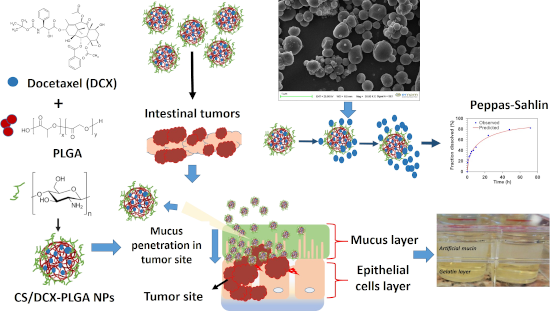
- nanoparticles for experimental studies and dose calculations [45]. EE and DL of DCX-loaded nanoparticle formulations are documented in Table 2. The EE values of DCX-PLGA and CS/DCX-PLGA were 46.18% and 69.04%, respectively (p < 0.05). CS as a coating material led to an increase in encapsulation efficiency of


Dry under water: air retaining properties of large-scale elastomer foils covered with mushroom-shaped surface microstructures
Beilstein J. Nanotechnol. 2022, 13, 1370–1379, doi:10.3762/bjnano.13.113
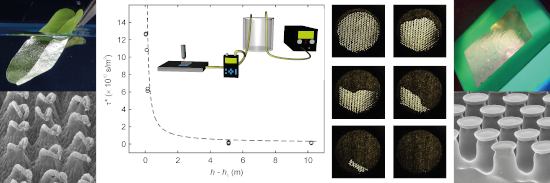
- liquids flow over solid surfaces [29][30]. The highest economic and ecological potential for this technology is the shipping industry [31]. The optimal parameters for stable air retention have been previously investigated [1][32] and theoretical calculations have been performed [33][34][35]. Four criteria
- , i.e., for immersion depth below hmax the air layer is persistent and does not vanish, above it will disappear in time τ. All following calculations were performed for a temperature of 20 °C and an atmospheric pressure patm = 1 bar. The maximum persistence depth is given by whereas σ = 72.75 mN/m is
- mushroom-shaped surface microstructures (MSM) the long-term stability of the air layers was analyzed. Calculations according to Konrad et al. [33] predicted a maximum immersion depth underwater hmax of about 2 cm for a persistent air layer kept by MSM with the given geometric dimensions and the given


Bending and punching characteristics of aluminum sheets using the quasi-continuum method
Beilstein J. Nanotechnol. 2022, 13, 1303–1315, doi:10.3762/bjnano.13.108
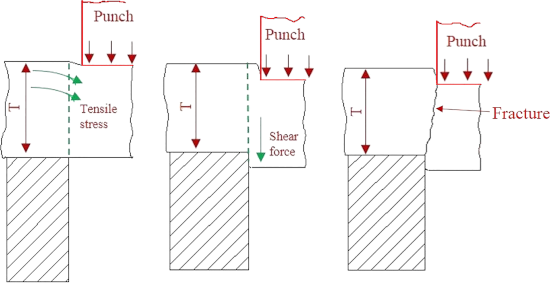
- . In order to accurately calculate the energy of the nonuniform deformation region, the EAM is used to calculate the interaction of the nonlocal atoms [55]. Moreover, to avoid repeated calculations at the coupled regions, the QC method performs continuous coupled calculations to modify the ghost force



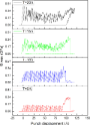


Enhanced electronic transport properties of Te roll-like nanostructures
Beilstein J. Nanotechnol. 2022, 13, 1284–1291, doi:10.3762/bjnano.13.106
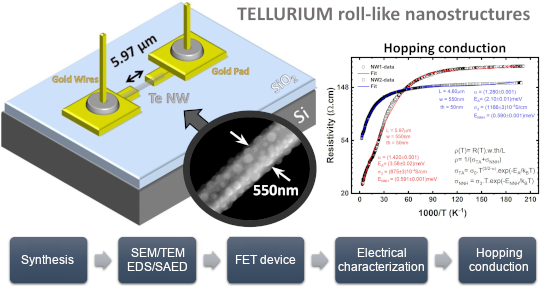
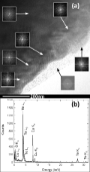
- calculations of the band structure of t-Te have been revealed that the strong spin–orbit coupling breaks the fourfold degeneracy of the valence band at the H point of the Brillouin zone, creating two non-degenerated H4 and H5 bands and a doubly degenerated H6 band. The H4 and H5 bands contribute to the
- ][27]. This model has been successfully used to analyze the electronic properties of single semiconductor NWs of different cross sections and materials such as ZnO [27], SnO2 [16][19], and GaAs [17][18][28]. In this case, the calculations were done using μh = gmL2/(VdsCox) and p = 1/(eρμh), where gm




Role of titanium and organic precursors in molecular layer deposition of “titanicone” hybrid materials
Beilstein J. Nanotechnol. 2022, 13, 1240–1255, doi:10.3762/bjnano.13.103
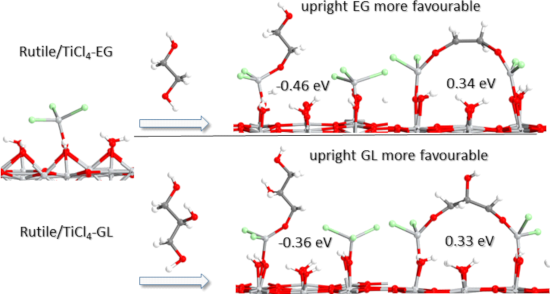
- bridging/bidentate mixed bonding mode at temperatures over 250 °C and 300 °C [32]. Many studies show that the desired properties and the target thickness of a metalcone MLD film are not actually achieved. To help understand this, first principles density functional theory (DFT) calculations have been
- . Based on the calculated energetics we propose that a low temperature rutile TiO2/TiCl4–EG process and rutile TiO2/TiCl4–GL process can lead to thicker hybrid films. Computational Methods All DFT calculations in this work were performed using the Vienna Ab initio Simulation Package (VASP) version 5.4 [49
- : 3s²3p⁵, C: 2s22p2 and H: 1s1. Calculations were performed using the Perdew–Burke–Ernzerhof (PBE) exchange–correlation functional [53]. The employed convergence criterion for the energy was 1 × 10⁻⁴ eV while that for the forces was −2 × 10⁻² eV/Å. The geometry was optimized by relaxing the ionic


Design of surface nanostructures for chirality sensing based on quartz crystal microbalance
Beilstein J. Nanotechnol. 2022, 13, 1201–1219, doi:10.3762/bjnano.13.100
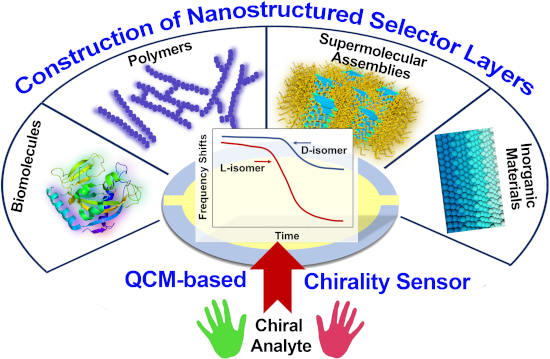
- ± 0.15, 1.81 ± 0.08, 1.37 ± 0.03, and 2.89 ± 0.09, respectively. Through further electrochemical tests, HPLC analysis, and theoretical calculations it was revealed that ʟ- and ᴅ-forms of SA-Cd exhibited mirror behaviors towards guest enantiomers, and HCP construction may enhance enantioselectivity. The
- most exposed surface of Au(324). The QCM adsorption in aqueous solutions of amino acids showed that ᴅ-type amino acids prefer to adsorb on the surface. The DFT calculations further proved that the enantioselective adsorption in this system is probably caused by the existence of chiral planes in the


Nonlinear features of the superconductor–ferromagnet–superconductor φ0 Josephson junction in the ferromagnetic resonance region
Beilstein J. Nanotechnol. 2022, 13, 1155–1166, doi:10.3762/bjnano.13.97
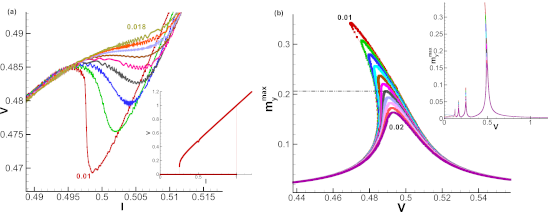
- models to explain our results in various limits. The paper is organized as follows. In section “Models and Method” we outline the theoretical model and discuss the methods of calculations. The ferromagnetic resonance and the effect of the system parameters on the anomalous damping dependence are
- , where ω = ωJ/ωF. From Equation 20 we get This equation allows one to determine analytically the frequency dependence of the amplitude. To find it, we solve Equation 21 by the Newton method. Results of the analytical calculations (blue dots), corresponding to Equation 21, and the numerical solution (red
- for αcrit as a function of Gr (Table 1). There is a good agreement between numerical and analytical results of the calculations for small products of Josephson-to-magnetic energy ratio and spin–orbit interaction. Conclusion The understanding of the nonlinear features of magnetization dynamics in


![[Graphic 14]](/bjnano/content/inline/2190-4286-13-97-i38.svg?max-width=637&scale=1.18182) at differ...
at differ...


![[Graphic 18]](/bjnano/content/inline/2190-4286-13-97-i42.svg?max-width=637&scale=1.18182) (V) on α in the damping parameter interval [0.001–0.12]....
(V) on α in the damping parameter interval [0.001–0.12]....

Recent advances in green carbon dots (2015–2022): synthesis, metal ion sensing, and biological applications
Beilstein J. Nanotechnol. 2022, 13, 1068–1107, doi:10.3762/bjnano.13.93




Numerical study on all-optical modulation characteristics of quantum cascade lasers
Beilstein J. Nanotechnol. 2022, 13, 1011–1019, doi:10.3762/bjnano.13.88
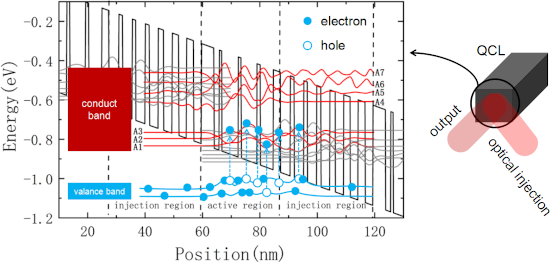
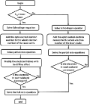
- study of the all-optical modulation of QCLs. A flow chart of the numerical calculations for the all-optical modulation of QCLs is shown in Figure 1. Here, we modify our numerical model in two cases. The first case is when modulating the laser wavelength to greater than the lower laser subband of the
- to complete the initial conditions for the calculations. Through multiple iterations during which the electron number of each subband converges, the electron distribution is approached by energy conservation and the hot electron backfilling effect which increase the lifetime of electrons in the lower
- 1550 nm always enhances the current, but at 820 nm only does so when the power of the injected light is greater than 2 mW. Finally, the calculations show that numbers of electrons and electron lifetime in the cavity are of great importance in all-optical modulation of QCLs. An algorithm for solving the


Influence of water contamination on the sputtering of silicon with low-energy argon ions investigated by molecular dynamics simulations
Beilstein J. Nanotechnol. 2022, 13, 986–1003, doi:10.3762/bjnano.13.86
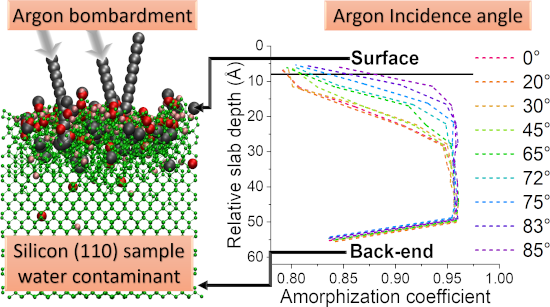
- [30]. ReaxFF force fields are specifically tuned for a set of atomic interactions. They are developed from quantum calculations and are adapted for MD simulations, providing faster calculations than pure quantum electrodynamics (QED)/density functional theory (DFT) and more information than classical




Theoretical investigations of oxygen vacancy effects in nickel-doped zirconia from ab initio XANES spectroscopy at the oxygen K-edge
Beilstein J. Nanotechnol. 2022, 13, 975–985, doi:10.3762/bjnano.13.85
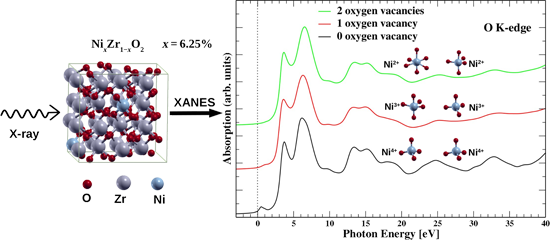
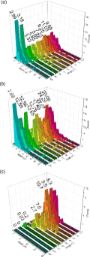
- vacancies introduces atomic disorder into the system, which may affect the oxidation state of the Ni dopant atoms. Also, XANES spectra features have been shown to be sensitive to the onset or presence of structural disorder in a crystalline structure [36][37]. Thus, we have performed calculations of the
- calculations have been performed using the single-electron DFT framework as proposed by Gougoussis and co-workers [34]. The paper is organized as follows: In the following section, we present the computational parameters and structural models used in the calculations. Then, the results of computed spectra of
- the O K-edge in nickel-doped zirconia with and without O vacancies are presented and discussed. A conclusion is given in the final section. Computational Methodology Structural relaxation First principles calculations have been performed with the Quantum-ESPRESSO code [38] using the plane waves basis


Comparing the performance of single and multifrequency Kelvin probe force microscopy techniques in air and water
Beilstein J. Nanotechnol. 2022, 13, 922–943, doi:10.3762/bjnano.13.82
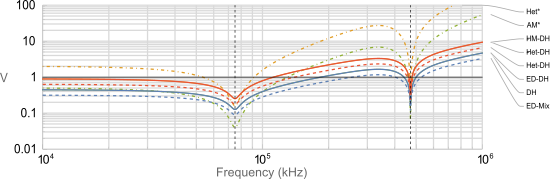
- reactions. Here, we restrict our analysis to the first two eigenmodes of a cantilever, where the SNR is highest, but these calculations could be extended to higher eigenmodes if desired [96]. Performance Characteristics of KPFM Modes In KPFM-based techniques an electrical bias is applied between a
- conditions where VAC and VCPD are standardized to values of 1.0 V and 0.1 V, respectively. Figure 5 shows the SNR calculations under these conditions for both air and water. For comparison, we include both the single-frequency and multifrequency KPFM modes. For air, we observe that no mode is capable of
- important to understand its influence. Figure 6 shows the frequency dependence of for air and water cases. Single-frequency modes are included for comparison. Note that previous calculations placed the drive frequencies such that the harmonics of the electrostatic response occurred in the desired locations
Efficiency of electron cooling in cold-electron bolometers with traps
Beilstein J. Nanotechnol. 2022, 13, 896–901, doi:10.3762/bjnano.13.80
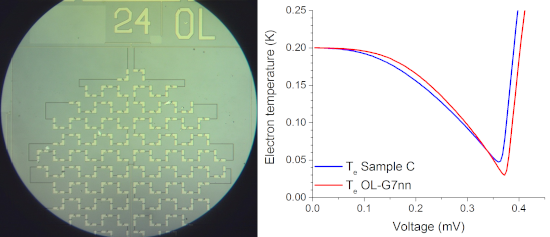
- experiments (in our previous calculations we have used the fifth power). Σ is the electron–phonon coupling constant; it has different values, depending on the electron temperature [17]. VN is the absorber volume, Pcool is the direct electron cooling power, PS is the net power transferred to the S-electrode


Numerical modeling of a multi-frequency receiving system based on an array of dipole antennas for LSPE-SWIPE
Beilstein J. Nanotechnol. 2022, 13, 865–872, doi:10.3762/bjnano.13.77
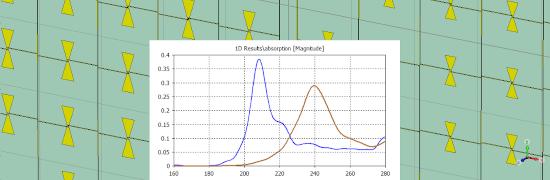
- calculations for the LSPE-SWIPE The noise-equivalent power (NEP) is a measure of a minimal signal that can be detected, and it qualifies the sensitivity of a detector. The NEP is the ratio of the total system noise (which includes both the internal noise of the detector and the photon noise of the received


Self-assembly of C60 on a ZnTPP/Fe(001)–p(1 × 1)O substrate: observation of a quasi-freestanding C60 monolayer
Beilstein J. Nanotechnol. 2022, 13, 857–864, doi:10.3762/bjnano.13.76
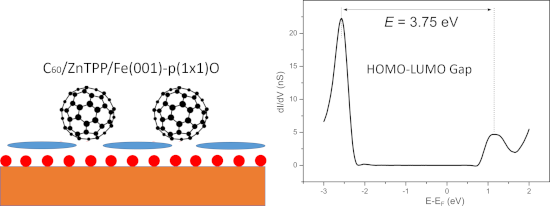
- measurements and for modeling by ab initio calculations. Periodic and compact films are generally obtained when the molecules possess enough surface mobility, that is, when the diffusion energy (Ed) is low compared to the thermal energy kBT, where T is the substrate temperature and kB is the Boltzmann constant


Ultrafast signatures of magnetic inhomogeneity in Pd1−xFex (x ≤ 0.08) epitaxial thin films
Beilstein J. Nanotechnol. 2022, 13, 836–844, doi:10.3762/bjnano.13.74
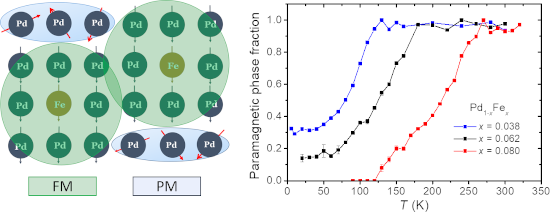
- of order-of-magnitude estimation we define the spin-diffusion velocity vs as from which Modern band-structure calculations [48][49] show that more than 95% of the electron density of states at the Fermi energy comes from the itinerant 4d electrons. The Fermi velocity of 3d electrons in iron-group


Ideal Kerker scattering by homogeneous spheres: the role of gain or loss
Beilstein J. Nanotechnol. 2022, 13, 828–835, doi:10.3762/bjnano.13.73
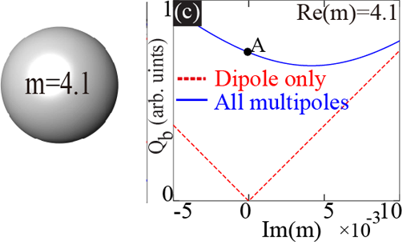
- destructive factor for demonstrations of Kerker scattering. Kerker scattering without multipole matching of any specific order We have confirmed in the last sections, by both mathematical analysis and numerical calculations, that perfect matching of multipoles of a specific order does not necessarily produce


Temperature and chemical effects on the interfacial energy between a Ga–In–Sn eutectic liquid alloy and nanoscopic asperities
Beilstein J. Nanotechnol. 2022, 13, 817–827, doi:10.3762/bjnano.13.72
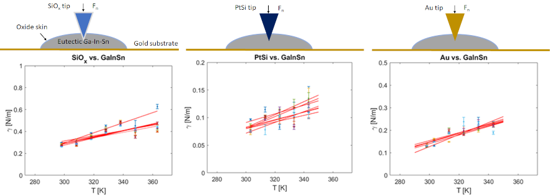
- that these contributions arose from contamination by the ambient, we excluded them from our calculations of the surface chemical composition. Figure 6 shows that the surface oxide on the melt mainly consists of gallium and tin oxides, with a minor contribution from indium oxide. After heating at 100 °C
- with Ga to form a solid Ga2O3 layer at the tip–melt interface. In this scope, the value determined in this work may have been increased by the presence of a solid Ga2O3 layer at the tip–melt interface. Our interpretation is supported by recent calculations of the surface energy of Ga2O3 in [31



Modeling a multiple-chain emeraldine gas sensor for NH3 and NO2 detection
Beilstein J. Nanotechnol. 2022, 13, 721–729, doi:10.3762/bjnano.13.64
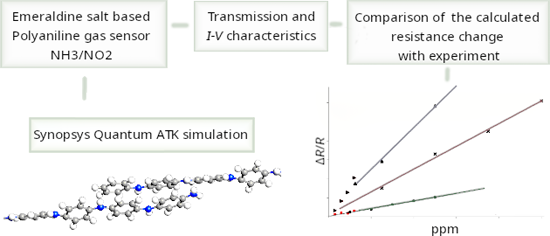
- molecular properties of polyaniline have been studied by quantum mechanical means in [4][8]. The band structure was calculated by Reis et al. [9], together with transmittance, electrical current flow, and charge density. For these calculations, density functional theory (DFT, [10]) based on the generalized
- the transmission spectrum was carried out. Transmission spectra were used to obtain relevant I–V characteristics. There were only one or two molecule chains in the calculations and only several ammonia or nitrogen dioxide molecules are affecting the PANI molecules. Therefore, the quantity of free


Design and selection of peptides to block the SARS-CoV-2 receptor binding domain by molecular docking
Beilstein J. Nanotechnol. 2022, 13, 699–711, doi:10.3762/bjnano.13.62
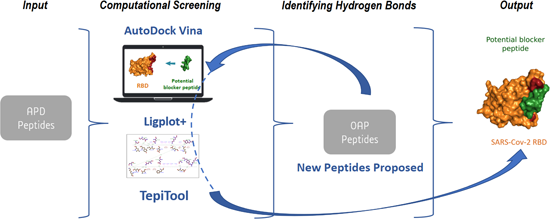
- molecular docking calculations. However, these reports did not show the binding energy of the ACE2–RBD complex. 15 OAPs surpass the energy value registered for ACE2–RBD. It is important to recall that OAPs are attached to critical RBD amino acid residues (Phe486, Tyr489, Gln493, Gly496, Thr500, and Asn501



Experimental and theoretical study of field-dependent spin splitting at ferromagnetic insulator–superconductor interfaces
Beilstein J. Nanotechnol. 2022, 13, 682–688, doi:10.3762/bjnano.13.60
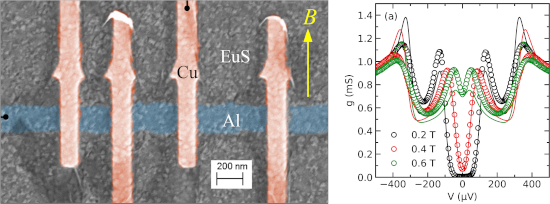
- effect at a ferromagnetic insulator–superconductor (FI–S) interface. The calculations are based on the boundary condition for diffusive quasiclassical Green’s functions, which accounts for arbitrarily strong spin-dependent effects and spin mixing angles. The resulting phase diagram shows a transition



A superconducting adiabatic neuron in a quantum regime
Beilstein J. Nanotechnol. 2022, 13, 653–665, doi:10.3762/bjnano.13.57
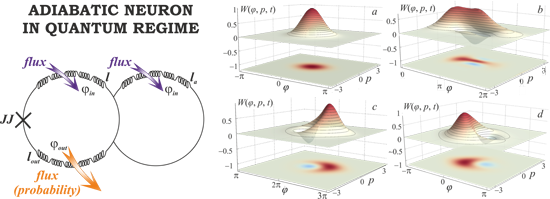
- the transfer characteristic iout(φin) of the SQ neuron Equation 3, that is, its activation function. Let us explain the idea of our calculations. We assume that the system is initialized at the initial moment of time. At cryogenic temperatures (millikelvin range) the system states are localised at


Approaching microwave photon sensitivity with Al Josephson junctions
Beilstein J. Nanotechnol. 2022, 13, 582–589, doi:10.3762/bjnano.13.50
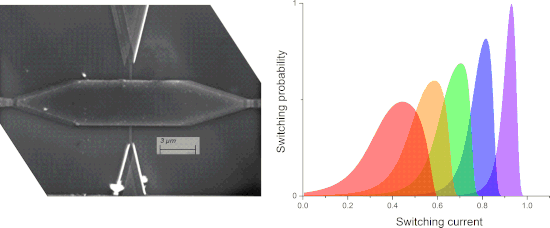
- points at 300 and 600 mK agree well with the simulation results if the parameters for numerical calculations are 401 mK, Ic = 8.536 μA and 575 mK, Ic = 8.51 μA, respectively. The normal resistance and the capacitance are RN = 29 Ω and C = 2700 fF. It is interesting to note that even the curve for 50 mK


Investigation of electron-induced cross-linking of self-assembled monolayers by scanning tunneling microscopy
Beilstein J. Nanotechnol. 2022, 13, 462–471, doi:10.3762/bjnano.13.39
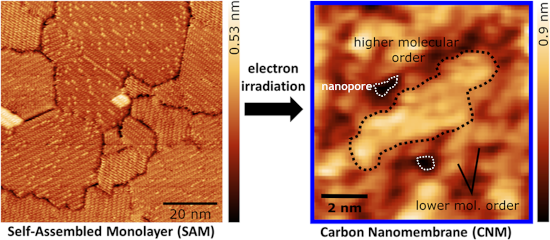
- resonance. For the irradiation dose of 0.5 mC/cm2 with 1 keV primary electrons, an areal number density of (1.7 ± 0.7) × 1013 cm−2 was obtained for secondary electrons with kinetic energies within the window of the resonance (see detailed calculations in Supporting Information File 1). When considering the
- Information File 38: Additional figures and detailed calculations. Funding Financial support from the German Federal Ministry of Education and Research (BMBF) under the grants 03X0158A and 03XP0155A, as well as through the COST action CELINA (CM1301) is gratefully acknowledged. D.A. and N.B. acknowledge


Tunable superconducting neurons for networks based on radial basis functions
Beilstein J. Nanotechnol. 2022, 13, 444–454, doi:10.3762/bjnano.13.37
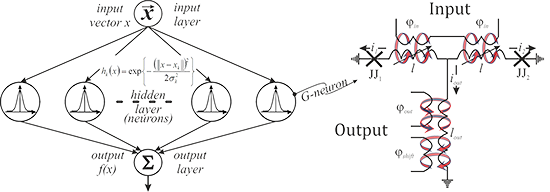
- are around 150 nm. The expression for the kinetic inductance of the structure is directly correlated with screening length [52][63], where X is the length of the strip, W is the width, and d is the thickness of the multilayer. In our calculations, we assume that the currents in the system are weak
- the total kinetic inductance. For a quantitative model, we choose the following components of the structure: The pairing source is a superconductor layer slightly thicker than the critical value at which the pair potential appears. During calculations we suppose its thickness dS = 3ξS. The spin valve
- can be implemented as a multilayer structure FM1–s–FM2–s–FM1–s–FM2 with several ferromagnetic layers FM1 and FM2 of different thicknesses dFM1,2 (dFM1 = 0.15ξ, dFM2 = 0.1ξ, exchange energy H = 100 kBTC in calculations, separated by thin spacers of a superconductor or normal metal (N) (ds = 0.5ξ for





