


Search results
Search for "porosity" in Full Text gives 261 result(s) in Beilstein Journal of Nanotechnology. Showing first 200.
Glucose-derived carbon materials with tailored properties as electrocatalysts for the oxygen reduction reaction
Beilstein J. Nanotechnol. 2019, 10, 1089–1102, doi:10.3762/bjnano.10.109
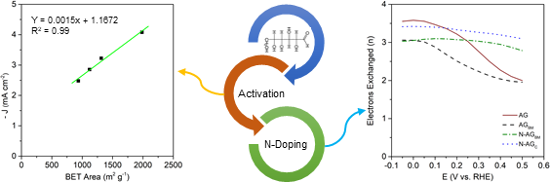
- of HTC is that the as-prepared hydrothermal carbon materials usually exhibit limited porosity and inadequate chemical properties for the ORR. To solve this problem, different strategies can be addressed: i) carbonization and activation methods to tailor the porosity and ii) the incorporation of
- nitrogen functionalities on the ORR, leaving aside the effect of porosity. In fact, although some studies suggest the importance of microporosity on the ORR [41], there is a lack of knowledge about its real effect on the ORR performance of nitrogen-doped porous carbon materials, and more specifically, of
- activation, resulting in materials with a larger volume of micropores (Supporting Information File 1, Table S1). This effect is due to the reverse Boudouard reaction, which extracts carbon atoms from the carbon structure, developing the porosity of the material [42]. Accordingly, a prolonged contact time


On the transformation of “zincone”-like into porous ZnO thin films from sub-saturated plasma enhanced atomic layer deposition
Beilstein J. Nanotechnol. 2019, 10, 746–759, doi:10.3762/bjnano.10.74
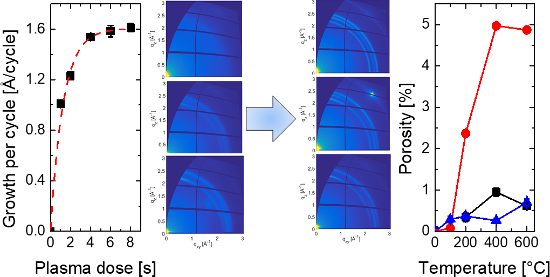
- , development of controlled porosity, and formation and growth of ZnO crystallites. The layers developed controlled nanoporosity in the range of 1–5%, with pore sizes between 0.27 and 2.00 nm as measured with ellipsometric porosimetry (EP), as a function of the plasma dose and post-annealing temperature
- crystal growth occurred, giving insights in the manufacturing of nanoporous ZnO from Zn-based hybrid materials. Keywords: calcination; PE-ALD; porosity; thin films; ZnO; Introduction Atomic layer deposition (ALD) and molecular layer deposition (MLD) are sequential self-limiting vapor-phase deposition
- the formation of porosity was investigated with ellipsometric porosimetry (EP), already shown suitable for the determination of porosity in hybrid and polymer-derived oxides [12][18][29][42][43]. In the literature, few contributions investigate the transformation of zinc-based alkoxides into porous


Outstanding chain-extension effect and high UV resistance of polybutylene succinate containing amino-acid-modified layered double hydroxides
Beilstein J. Nanotechnol. 2019, 10, 684–695, doi:10.3762/bjnano.10.68
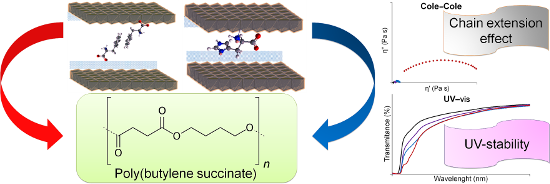
- small organic molecules used [6][7][8][9] are typically prone to migrate out of the polymer, thus creating some porosity and subsequently causing potential disruption in the polymer barrier integrity. In addition to this, the possible release of the stabilizers is a key issue in terms of health since


Commercial polycarbonate track-etched membranes as substrates for low-cost optical sensors
Beilstein J. Nanotechnol. 2019, 10, 677–683, doi:10.3762/bjnano.10.67
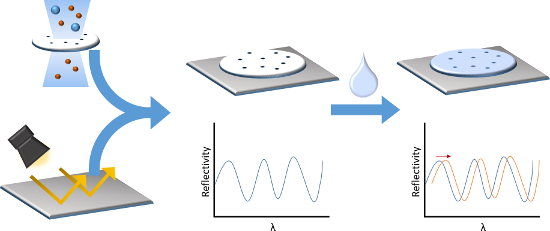
- that our sensors only have a 0.4% of porosity, while porous silicon typically has porosity in the range of 50%. However, even with such a low porosity value, we were able to clearly see the presence of ethanol in the medium. Furthermore, our porous structure presents an important advantage: it is ready


Ultrathin hydrophobic films based on the metal organic framework UiO-66-COOH(Zr)
Beilstein J. Nanotechnol. 2019, 10, 654–665, doi:10.3762/bjnano.10.65
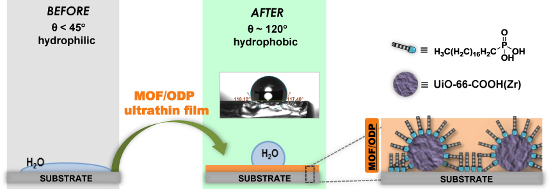
- position and cover MOF particles. Moreover, the presence of MOF particles significantly enhances the surface roughness and allows ultrathin, hydrophobic coverage to be obtained. Finally, it has been shown that the crystallinity and the porosity of the MOF remains almost unaltered in MOF/ODP films
- particles without significantly affecting the porosity or crystallinity since both properties are intimately linked in a MOF. Finally, it should also be mentioned that the CO2 adsorption capacity at 1 bar for an LB film is similar to that of drop-cast samples but the relative deviations in the measurements
- MOF/ODP mixed films. Additionally, the CO2 adsorption capacity of bare UiO-66-COOH(Zr) cast films is similar to that of mixed UiO-66-COOH(Zr)/ODP films, which reveals that the mixture with ODP allows modification of the surface of the sMPs without significantly affecting its porosity. Compared to


Ceria/polymer nanocontainers for high-performance encapsulation of fluorophores
Beilstein J. Nanotechnol. 2019, 10, 522–530, doi:10.3762/bjnano.10.53
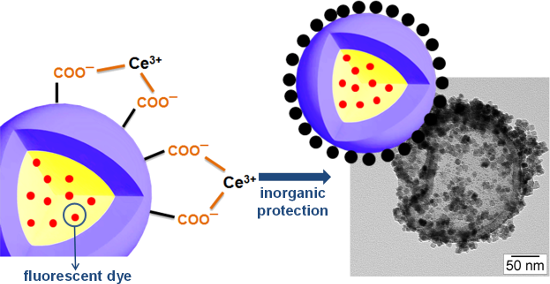
- inorganic components on the surface have attracted great interest because of the possibility to tune size, composition, porosity, stability, surface functionality, and colloidal stability [6][7][8][9][10][11][12]. Generally, fluorescent dye molecules are sensitive to the external environment, which leads to


Improving control of carbide-derived carbon microstructure by immobilization of a transition-metal catalyst within the shell of carbide/carbon core–shell structures
Beilstein J. Nanotechnol. 2019, 10, 419–427, doi:10.3762/bjnano.10.41
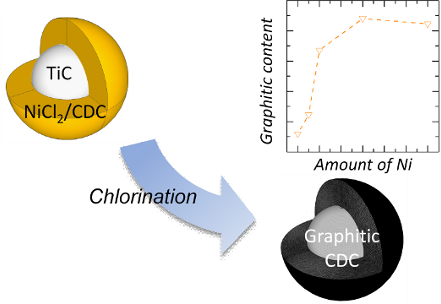
- catalysts, require the combination of the contradicting properties of graphitic microstructure and porosity. The usage of graphitization catalysts during the synthesis of carbide-derived carbon materials results in materials that combine the required properties, but controlling the microstructure during
- large specific surface area and distinct pore character. For applications in which electrical conductivity plays an important role, e.g., battery electrodes, fuel-cell catalysts or supercapacitors [14][15][16], it is necessary for carbon to not only show porosity but also to feature a graphitic
- were employed to produce carbon combining porosity and graphitic structure [17][18][19]. Among them, the carbide-derived carbon (CDC) is a promising route. CDC can be synthesized through the selective extraction of metals or metalloid atoms from metal carbides (MexC, e.g., TiC, SiC, VC, and Mo2C) by


Biocompatible organic–inorganic hybrid materials based on nucleobases and titanium developed by molecular layer deposition
Beilstein J. Nanotechnol. 2019, 10, 399–411, doi:10.3762/bjnano.10.39
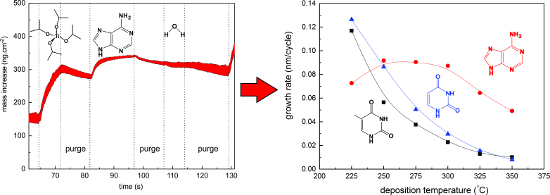
- quantifying this by porosity ellipsometry (data not shown) revealed only limited or insignificant porosity (thymine ≈4%, uracil ≈1% and adenine ≈1%). The complex nature of these films therefore remains to be further investigated. Judging from the observations that most of the nucleobases leached out during




Integration of LaMnO3+δ films on platinized silicon substrates for resistive switching applications by PI-MOCVD
Beilstein J. Nanotechnol. 2019, 10, 389–398, doi:10.3762/bjnano.10.38
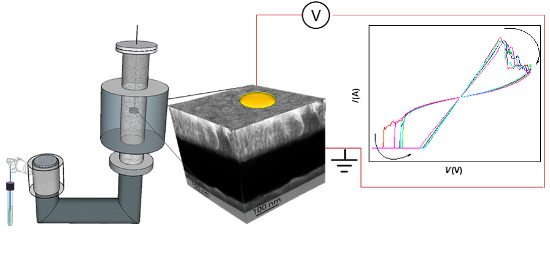
- thickness (80–100 nm) grown by strategy I (Figure 3A), strategy II (Figure 3B) and strategy III (Figure 3C). All films are polycrystalline and highly compact with average grain sizes of 15 ± 4 nm, 18 ± 4 nm, and 22 ± 4 nm, respectively. Moreover, the LMO films are homogeneous and do not exhibit porosity




One-step nonhydrolytic sol–gel synthesis of mesoporous TiO2 phosphonate hybrid materials
Beilstein J. Nanotechnol. 2019, 10, 356–362, doi:10.3762/bjnano.10.35
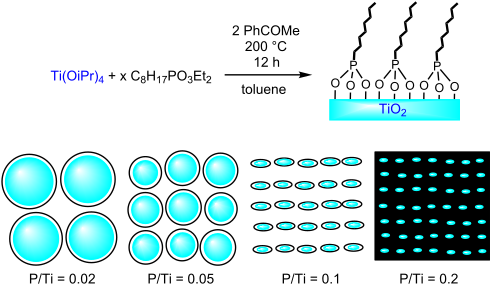
- metals, as shown by the numerous examples of metal phosphonates reported in the literature [12][13][14]. However, in the case of monophosphonate groups, metal phosphonates usually form semicrystalline layered materials with no interlayer porosity. A way to avoid the formation of a layered material is to
- which was nonporous with a negligible specific surface area. All other samples showed significant porosity. Their specific surface area increased with the P/Ti ratio, from 120 m2 g−1 for TiP0.02 to 240 m2 g−1 for TiP0.1, while their pore volume decreased, from 0.29 to 0.17 cm3 g−1 (Table 1
- well-ordered self-assembled monolayers). The mesoporosity of the hybrid materials with P/Ti ratios up to 0.1 stems from the aggregation of the grafted nanoparticles (interparticle porosity). The smaller the size of the particles, the higher the specific surface area and the lower the pore volume


pH-mediated control over the mesostructure of ordered mesoporous materials templated by polyion complex micelles
Beilstein J. Nanotechnol. 2019, 10, 144–156, doi:10.3762/bjnano.10.14
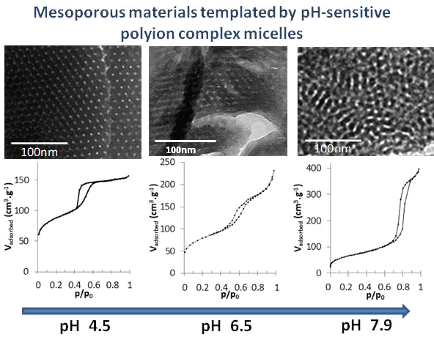
- on the 5.5 ≤ pH ≤ 6.9 isotherms (Figure S3 in Supporting Information File 1) revealed an interparticle porosity, which is consistent with the small size of the silica particles as observed on SEM images (Figure S4 in Supporting Information File 1). As reported in Table 1, the mean particle size
- us note that the low value of N/AA is associated with a significant porosity of the as-synthesized hybrid materials (see Figure S5 in Supporting Information File 1). Large mesopore volumes (Vmeso = 0.39 and 0.29 cm3·g−1 at pH 7.4 and 7.9, respectively) and large pore diameters (dpore = 9.1 and 10.2


New micro/mesoporous nanocomposite material from low-cost sources for the efficient removal of aromatic and pathogenic pollutants from water
Beilstein J. Nanotechnol. 2019, 10, 119–131, doi:10.3762/bjnano.10.11
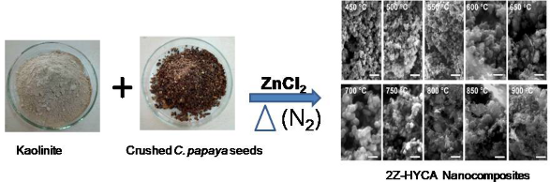
- spectrometer (Oxford INCAx-act SN detector) to determine the morphology of particles prepared in this study. The porosity analysis and specific surface area determination were performed using Autosorb-1MP and Quadrasorb-MP machines (both Quantachrome Instruments). The samples were degassed under high vacuum at
- indicates that significant porosity in the materials is generated at approximately 500 °C. Indeed, 2Z-HYCA prepared at 450 °C does not show any porosity, while materials prepared at 500 °C and higher show surface areas that remain roughly constant until a preparation temperature of 900 °C. No clear trend of
- synthesis temperature. Overall, nitrogen sorption analysis indicates that the porosity does not directly correlate with the synthesis conditions as soon as the threshold temperature of 500 °C is passed. As stated above, a high surface area is a key requirement for a material to work in water treatment. The




The nanoscaled metal-organic framework ICR-2 as a carrier of porphyrins for photodynamic therapy
Beilstein J. Nanotechnol. 2018, 9, 2960–2967, doi:10.3762/bjnano.9.275
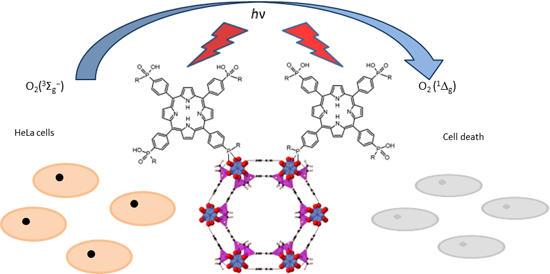
- order to avoid porphyrin aggregation various supramolecular structures have been designed [11][12][13]. In this context, porphyrin-based MOFs offer unique systems in which a regular arrangement prevents porphyrins from aggregation whereas the porosity enables fast diffusion of the ground state O2(3Σg
- Inorganic Chemistry Rez) constructed from Fe3+ and phenylene-1,4-bis(methylphosphinic acid) (PBPA) linkers [25]. ICR-2 in the microcrystalline form is stable in aqueous solutions even at high temperatures and partly retains its structure and porosity even after treatment with phosphate buffer saline (PBS


Controlling surface morphology and sensitivity of granular and porous silver films for surface-enhanced Raman scattering, SERS
Beilstein J. Nanotechnol. 2018, 9, 2813–2831, doi:10.3762/bjnano.9.263
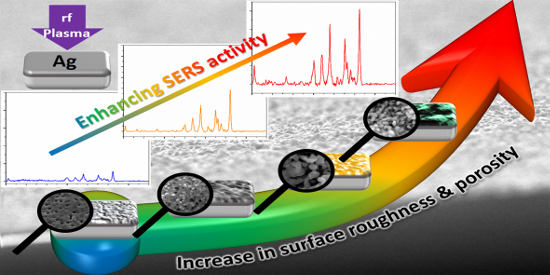
- shrinkage the film porosity increases significantly. Changing plasma treatment time, chamber pressure and plasma power of the oxygen and hydrogen plasmas allows for a further tuning of the morphology of the nanoporous silver films (Figure S13, Supporting Information File 1). Longer treatment with hydrogen






Nanocellulose: Recent advances and its prospects in environmental remediation
Beilstein J. Nanotechnol. 2018, 9, 2479–2498, doi:10.3762/bjnano.9.232
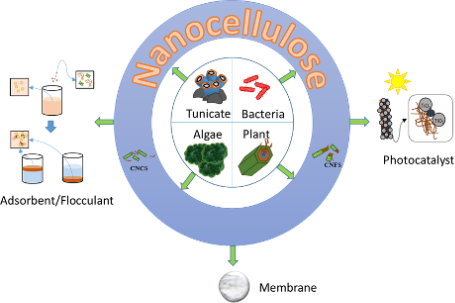
- adsorbent for wastewater treatment due to its adsorption affinity towards organic pollutants. Unlike micrometre-sized cellulose, the nanometre-sized counterparts are relatively smaller in dimensional size but also possess a larger surface area with improved porosity, which limits internal diffusion and
- of the photogenerated carriers decreased during the photochemical reaction. It was reported that electrospun cellulose acetate nanofibrous membranes with large specific surface area, high porosity, and high permeability could be an effective support for photocatalysts [122]. This could create a


Thickness-dependent photoelectrochemical properties of a semitransparent Co3O4 photocathode
Beilstein J. Nanotechnol. 2018, 9, 2432–2442, doi:10.3762/bjnano.9.228
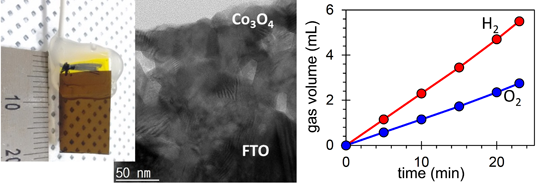
- thickness were deposited using large-area (4 inch diameter) sputtering on glass and FTO/glass substrates. Identical rapid thermal processing (RTP) oxidation was applied to these Co films to allow the formation of Co3O4 films of varying thickness and porosity. Figure 1b shows the XRD pattern of two prepared
- oxidized the Co film into a Co3O4 film with controlled thickness and porosity, which is further validated below. Figure 1c,d shows the surface morphology of both the deposited Co and the RTP-grown Co3O4 film on the glass substrate, respectively. FESEM results confirm that the deposited film contains
- crystalline Co3O4 can be applied to grade its porosity by simply varying the Co thicknesses prior to thermal oxidation. Therefore, we prepared Co3O4 samples with varying thicknesses from 70 to 230 nm, which were extensively studied with regard to their optical, electrical, interfacial, and




Hydrothermal-derived carbon as a stabilizing matrix for improved cycling performance of silicon-based anodes for lithium-ion full cells
Beilstein J. Nanotechnol. 2018, 9, 2381–2395, doi:10.3762/bjnano.9.223
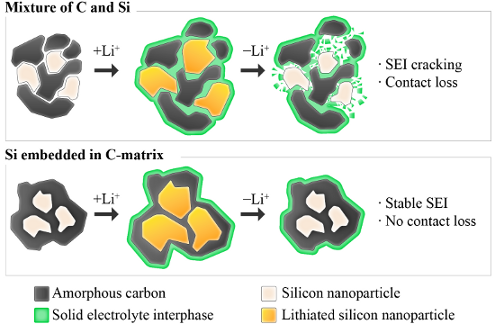
- -optimized system” might not be the optimum “reference system”, however, it clearly shows the improvement of embedding Si into the carbon matrix. Overall, many different factors (specific surface area, particle size, porosity, Si content, mass loading, etc.) of the reference system should be comparable to


Block copolymers for designing nanostructured porous coatings
Beilstein J. Nanotechnol. 2018, 9, 2332–2344, doi:10.3762/bjnano.9.218
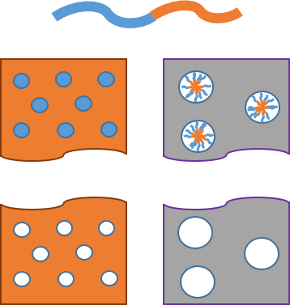
- , beer, and juices) [26], or in the selective removal of bacteria in blood [27]. Porous polymeric coatings possess the advantages of high surface area materials with a well-defined porosity [28][29], easy processability (i.e., to form molded monoliths or thin films) [30][31][32], and the possibility of
- using different synthetic routes to facilitate the incorporation of multiple chemical functionalities into the porous framework or at the pore surface [33]. The self-assembly of block copolymers is an exceptional strategy for inducing well-ordered and regular porosity in polymers [6][32]. Block
- -assembly of BCs represents an exceptional strategy for inducing well-ordered and regular porosity in polymeric structures. As already mentioned in the Introduction, BCs are macromolecules made of two (or more) blocks (i.e., series of monomeric units) of homopolymer chains, thermodynamically incompatible


Electrospun one-dimensional nanostructures: a new horizon for gas sensing materials
Beilstein J. Nanotechnol. 2018, 9, 2128–2170, doi:10.3762/bjnano.9.202
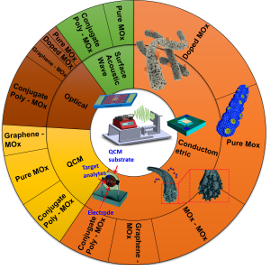
- characteristics [37][40]. Such porous nanostructures provide a fundamental property that enhances the effective analyte adsorption and increases sensitivity. Therefore, the remarkable specific surface area and high porosity (≈70–90%) [41] due to the presence of small and large pores means that electrospun
- performance of these electrospun pure MOx nanofibers. Pure metal oxides have an intrinsic response towards a specific analyte gas that is remarkably dependent on grain size and specific surface area. A high response is expected for nanofibers with smaller grain size, smaller crystallite size, high porosity
- oxides: The performance of semiconducting metal oxide gas sensors is improved by mixing two or more metal oxides to make composites. In many cases, these composites have advantageous properties of both metal oxides. Moreover, the porosity of the nanofibers can also be increased by mixing two or more


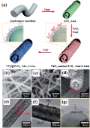


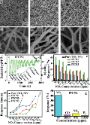


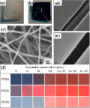
Synthesis of hafnium nanoparticles and hafnium nanoparticle films by gas condensation and energetic deposition
Beilstein J. Nanotechnol. 2018, 9, 1868–1880, doi:10.3762/bjnano.9.179
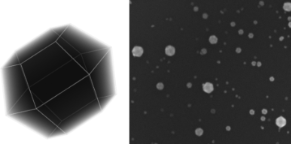
- mechanical properties can be formed, without any additional treatment. It is shown that these films can be patterned on the substrate in sub-micrometer dimensions using conventional lithography while their porosity can be well controlled. The fabrication and experimental characterization of hafnium
- crucial issue affecting the performance of NTFs is their porosity. The availability of pores in metallic or metal-oxide NTFs and the tunability of their porosity [21], affects their optical [22] and electrical [23] properties, as well as corresponding applications, which can range from sensors [24] over
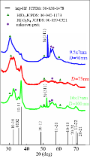
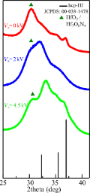
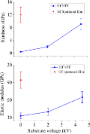
- nanoparticles upon landing on the substrate, we tune the porosity and the mechanical properties of the porous NTFs. The mechanical properties of the NTFs were investigated by nanoidentation measurements. We demonstrate this method with Hf nanoparticles but it can be applied to any metallic nanoparticles. We




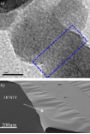


SO2 gas adsorption on carbon nanomaterials: a comparative study
Beilstein J. Nanotechnol. 2018, 9, 1782–1792, doi:10.3762/bjnano.9.169

- work is shown in Figure 1. Activated carbon, Norit R1 Extra, has an unordered pore structure (Figure 1a) and the porosity arises from the random stacking of the basic structural unit, which may be planar aromatic structures of less than 10–20 rings extending over 2–4 layers [17] or defective micro
- shown that the oxygen functionalities present on GO are in the form of hydroxy and carboxy groups [12]. The tunability of the material in terms of porosity and extent of functionalization makes GO a prototype of a hydrophilic carbon adsorbent and as such interesting for studying gas adsorption in 2D
- structure with no particular structure/ordering, which is characteristic for activated carbon materials. The pores of Norit R1 Extra are too small to be resolved by SEM. In the following, an overview of the Raman characteristics of all studied carbon materials is given, which is followed by porosity


Uniform cobalt nanoparticles embedded in hexagonal mesoporous nanoplates as a magnetically separable, recyclable adsorbent
Beilstein J. Nanotechnol. 2018, 9, 1770–1781, doi:10.3762/bjnano.9.168
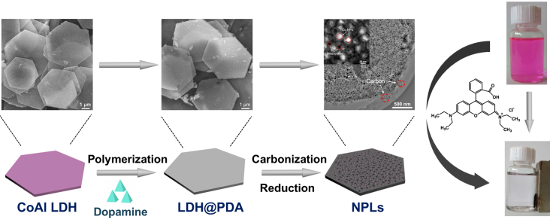
- shape and possess relatively high porosity, which is produced by the consumption of surface carbon during the thermal reduction of Co2+ ions with carbon from the carbonization of dopamine; (iii) hexagonal mesoporous NPLs show a strong magnetic response due to the well-dispersed Co nanoparticles embedded
- nitrogen adsorption–desorption isotherms are measured to confirm the porosity of the hexagonal NPLs. As shown in Figure 4A, all isotherms of the samples exhibit a capillary condensation step at relative pressure of p/p0 = 0.45–0.9, known as a type IV(a) isotherm according to IUPAC classification [35]. The
- decreasing porosity at a relatively lower carbonization temperature (Figure 1c–e and Table S2, Supporting Information File 1). The kinetics and isotherm models for the adsorption of RhB were investigated systematically. Figure 8A displays the adsorption capacity of the NPLs-2.5-800 sample at different


Preparation of micro/nanopatterned gelatins crosslinked with genipin for biocompatible dental implants
Beilstein J. Nanotechnol. 2018, 9, 1735–1754, doi:10.3762/bjnano.9.165
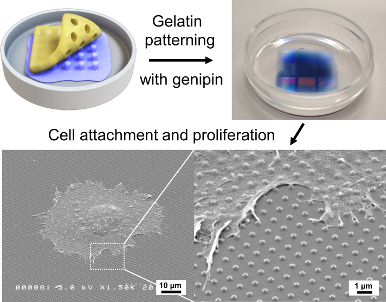
- the solubility of collagen/gelatin scaffolds. Gelatin crosslinked with low concentrations of genipin has been shown to be biodegradable [48][49]. Islam et al. have previously reported that highly porous patterned collagen scaffolds, with porosity of 0.8 to 1.5 mm, could be fabricated by crosslinking








Controllable one-pot synthesis of uniform colloidal TiO2 particles in a mixed solvent solution for photocatalysis
Beilstein J. Nanotechnol. 2018, 9, 1715–1727, doi:10.3762/bjnano.9.163
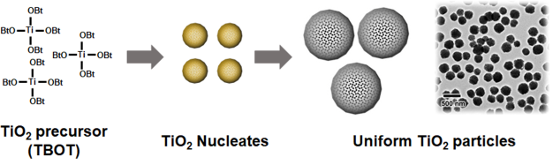
- adsorption/desorption isotherm and corresponding Barrett–Joyner–Halenda (BJH) pore size distributions of the TiO2 samples. The TiO2 sample calcined at 400 °C (TiO2-400) displayed a typical type IV isotherm with a well-developed hysteresis loop that indicated mesoscale porosity (Figure 5a). The TiO2 sample
- decreased, which indicated decreasing porosity and BET surface area, as the calcination temperature increased. When the TiO2 samples were calcined at temperatures greater than 650 °C, they showed negligible N2 adsorption volumes over all of the P/P0 range, indicating a small BET surface area (Figure 5a




Sulfur-, nitrogen- and platinum-doped titania thin films with high catalytic efficiency under visible-light illumination
Beilstein J. Nanotechnol. 2018, 9, 1629–1640, doi:10.3762/bjnano.9.155
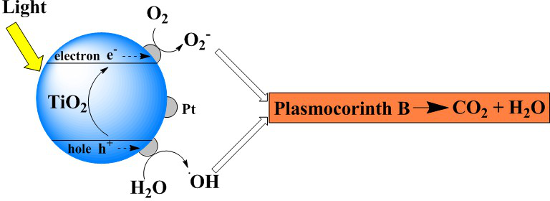
- environmental applications, such as water treatment [9][10][11] and air purification [12]. One of the important factors affecting the photocatalytic activity of TiO2 is its specific surface area. By increasing the specific surface area (porosity) of TiO2, the photocatalytic activity can be increased. One of the
- ways to increase the porosity of the material is the addition of an organic polymer. After polymer decomposition via thermal treatment, mesoporous materials with high surface area and pore volume are obtained [13][14][15]. The increase in surface area depends on the type of polymer added, the type of
- the addition of NH4NO3, the sample became more porous (surface area of 84.5 m2/g), which also explains the increased photocatalytic activity. The band gap width and porosity have not changed significantly with the addition of Pt (band gap of 3.08 eV; surface area of 83.7 m2/g). However, the PB





