


Search results
Search for "pressure" in Full Text gives 1097 result(s) in Beilstein Journal of Nanotechnology. Showing first 200.
Facile synthesis of Fe-based metal–organic frameworks from Fe2O3 nanoparticles and their application for CO2/N2 separation
Beilstein J. Nanotechnol. 2024, 15, 897–908, doi:10.3762/bjnano.15.74
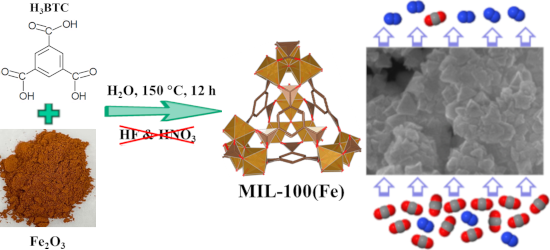
- Figure 9, all samples showed high potential for CO2/N2 separation at low pressure; at higher pressures, the separation performance gradually declined and reached plateau values. However, at the same bulk pressure, the adsorptive selectivity for CO2 over N2 of the adsorbents increased gradually because of
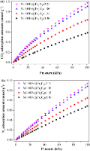
- ), the CO2 uptake was proportional to the pressure and inversely proportional to temperature, suggesting that adsorptive interactions based on physical bonds took place between CO2 molecules and M-100Fe@Fe2O3#1.80 [31][37]. To support this assertion, the Clausius–Clayperon equation was employed to





Water-assisted purification during electron beam-induced deposition of platinum and gold
Beilstein J. Nanotechnol. 2024, 15, 884–896, doi:10.3762/bjnano.15.73
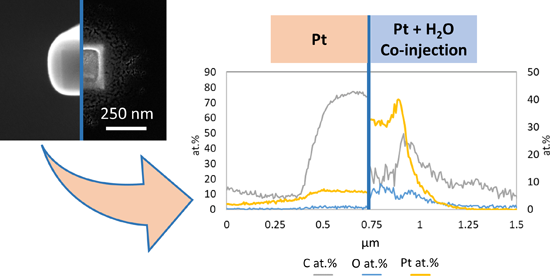
- process in a low-pressure (80 Pa) water environment. Interestingly, deformation caused by electron beam-induced post-deposition purification can intentionally be used to bend the three-dimensional structure of FEBID deposits [39]. Purification during deposition avoids some of the disadvantages of post
- 24 and 35 °C for Au deposition, and between 30 and 35 °C for Pt deposition. The pressure increase in the SEM chamber is taken as a measure of the water flux. The latter is controlled through the temperature setting of the GIS reservoir and manual adjustment of the GIS valve. Before deposition and
- patterning parameters are the patterned area size, dwell time, primary beam energy and current, pitch, number of passes, and SEM chamber pressure during deposition or chamber pressure increase during deposition. The complete parameters for the deposits presented in this work are presented in Supporting





The effect of age on the attachment ability of stick insects (Phasmatodea)
Beilstein J. Nanotechnol. 2024, 15, 867–883, doi:10.3762/bjnano.15.72

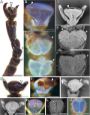
- stiffness of the cuticle of these organs and the internal pressure are important for the functionality and likely susceptible to decay during ageing [42][43]. We investigated the change in attachment ability and tarsal morphology in the species Sungaya aeta Hennemann, 2023 (Heteropterygidae). Members of
- might be results of such ageing processes. Tracheal degeneration could lead to leg tissue dying because of a lack of oxygen and, therefore, might also influence the adhesive pads and their performance. The suspected vascular insufficiency ties into the hemolymph pressure. In the insect circulatory
- system, the low pressure is kept up by the heart and muscular activity [5][79]. The legs function as a terminal end in the circulatory system and often have accessory hearts to enable hemolymph flow [79]. If age has an effect on a stick insect’s cardiac system, any impairment could additionally decrease


Investigation on drag reduction on rotating blade surfaces with microtextures
Beilstein J. Nanotechnol. 2024, 15, 833–853, doi:10.3762/bjnano.15.70
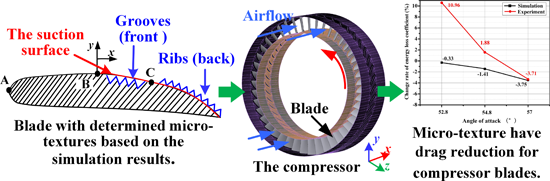
- tunnel experiment platform used to measure the drag reduction of the microtextured blades is described. Impeller The research object of this paper is the impeller of an axial flow compressor, which consists of a hub and blades [26]. In order to generate high pressure, axial flow compressors typically
- conditions (temperature and pressure) at inlet and outlet. The impeller considered in this paper has 45 blades and is designed to operate at a rotational speed of 2880 rpm. The operating environment for the impeller is at standard temperature (25 °C) and pressure (101325 Pa). Modeling of microtextures on
- treatment, which has better prediction results for rotation, boundary layer separation with large back pressure gradient, and backflow phenomena, was used for turbulence modeling in Ansys® CFX, Release 2020 R2 [28]. The boundary conditions were set according to the working conditions of the impeller, that


Intermixing of MoS2 and WS2 photocatalysts toward methylene blue photodegradation
Beilstein J. Nanotechnol. 2024, 15, 817–829, doi:10.3762/bjnano.15.68
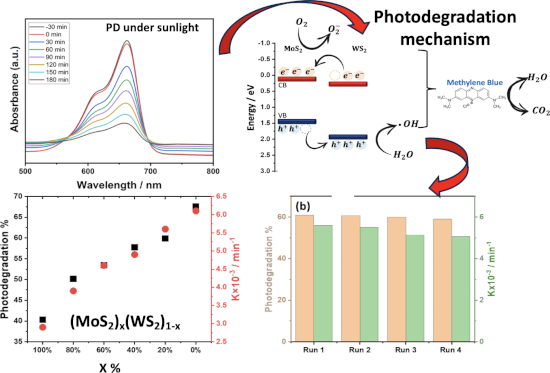
- . Experimental Both MoS2 and WS2 samples were synthesized using a one-step CVD process under atmospheric pressure. The CVD system consists of a quartz tube connected to an argon source. The furnace was gradually heated to specific processing temperatures of MoS2 and WS2, which were subsequently deposited onto


Synthesis of silver–palladium Janus nanoparticles using co-sputtering of independent sources: experimental and theorical study
Beilstein J. Nanotechnol. 2024, 15, 808–816, doi:10.3762/bjnano.15.67
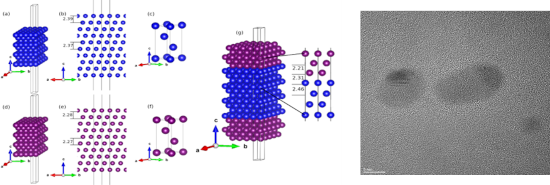
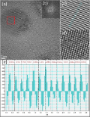
- copper grids in an argon flow at 52 sscm for 5 min at room temperature. The size of the BNPs can be modified by varying three parameters, namely, aggregation area, magnetron power, and partial pressure. The chosen parameters for both magnetrons are presented in Table 1. HRTEM micrographs were obtained




Electron-induced ligand loss from iron tetracarbonyl methyl acrylate
Beilstein J. Nanotechnol. 2024, 15, 797–807, doi:10.3762/bjnano.15.66
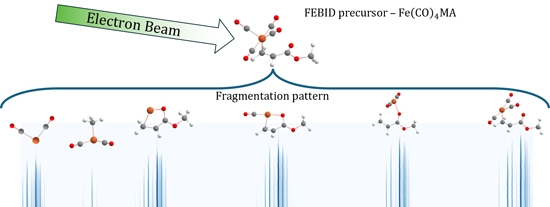
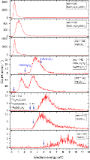
- . The energy of electrons can be varied between 0 and 70 eV. The base pressure in the chamber is 1 × 10 −8 mbar, and during the measurements the background sample pressure reaches around 4 × 10⁻⁷ mbar. Product ions were extracted from the interaction region into a reflectron time-of-flight mass



Electrospun polysuccinimide scaffolds containing different salts as potential wound dressing material
Beilstein J. Nanotechnol. 2024, 15, 781–796, doi:10.3762/bjnano.15.65
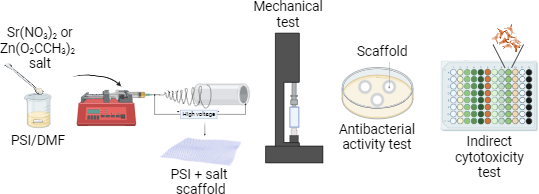
- changed from room temperature to 180 °C, and the pressure was gradually reduced to 3 mbar. The synthesis lasted 8 h. The DMF was added to the synthesized polymer, stirred at 80 rpm, and left to dissolve for 60 min. The solution was dripped into distilled water, precipitating the PSI as a pellet. The



Green synthesis of biomass-derived carbon quantum dots for photocatalytic degradation of methylene blue
Beilstein J. Nanotechnol. 2024, 15, 755–766, doi:10.3762/bjnano.15.63
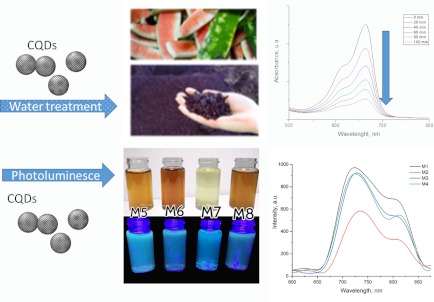
- stirred for an additional 10 min. Subsequently, the mixture was transferred to a Teflon-lined stainless steel autoclave, which was sealed under pressure using a manual press. The autoclave was then placed in a convection oven and maintained at 100°C for 2 h. After the specified time had elapsed, the


Level set simulation of focused ion beam sputtering of a multilayer substrate
Beilstein J. Nanotechnol. 2024, 15, 733–742, doi:10.3762/bjnano.15.61
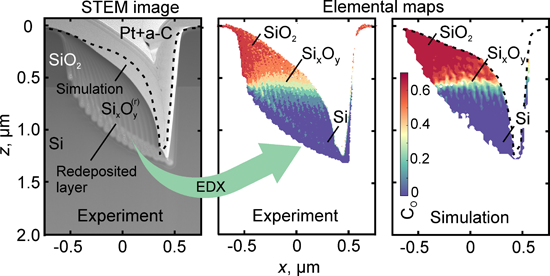
- beam workstation Helios Nanolab 650. Both types of test structures were fabricated using 30 kV accelerating voltage and an ion beam current of I = 900 pA. The chamber pressure was not higher then 10−6 mbar. A layer of platinum and amorphous carbon (Pt + a-C) was deposited onto the manufactured

![[Graphic 55]](/bjnano/content/inline/2190-4286-15-61-i68.svg?max-width=637&scale=1.18182)


Elastic modulus of β-Ga2O3 nanowires measured by resonance and three-point bending techniques
Beilstein J. Nanotechnol. 2024, 15, 704–712, doi:10.3762/bjnano.15.58
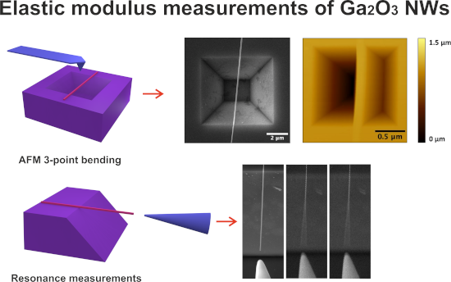
- pressure chemical vapour transport in a horizontal quartz tube reactor (18 mm inner diameter) according to the method reported in [2]. The process involved loading a ceramic boat with 0.15 g of Ga2O3 powder (99.99%, Alfa Aesar) at the centre of the quartz tube. Oxidised silicon wafers SiO2/Si (100) coated


Laser synthesis of nanoparticles in organic solvents – products, reactions, and perspectives
Beilstein J. Nanotechnol. 2024, 15, 638–663, doi:10.3762/bjnano.15.54
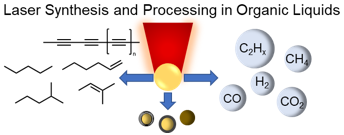
- , ethanol, isopropyl alcohol, diethyl ether, and isobutanol with nanosecond laser pulses while quantifying the formed hydrogen pressure with amperometric sensors. The organic alcohols, while having a lower number of hydrogen atoms per molecule, showed a ten times higher hydrogen evolution rate than water





Comparative analysis of the ultrastructure and adhesive secretion pathways of different smooth attachment pads of the stick insect Medauroidea extradentata (Phasmatodea)
Beilstein J. Nanotechnol. 2024, 15, 612–630, doi:10.3762/bjnano.15.52
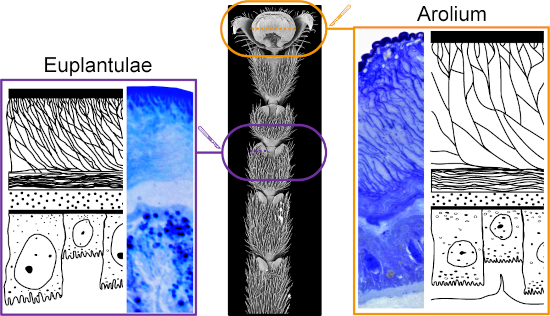
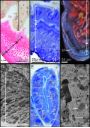
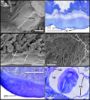
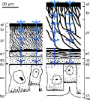
- tracheal structures (tr) and nerve bundles (nb). Notably, each of these areas possesses an individual hemolymph channel for circulatory and possible structural purposes through hydrostatic pressure (Figure 4). The septa are dyed blue by toluidine blue and show a parallel cuticle layering in SEM (Figure 4B
- tensile stress [74][75]. The more spaced fibres of the arolium consequently would bend more efficiently under pressure and easily adapt to surface irregularities increasing adhesion [44]. The euplantulae feature relatively thinner and with more densely distributed fibres enhances protection against
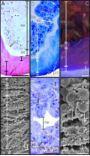
- viscoelasticity of the pad, as well as its shape due to the internal pad pressure caused by the fluid. Spherical structures between the fibres, identified via SEM, could be indications for liquid residues (Figure 7C) (similar residues have been also identified by Gorb et al. in the euplantulae of T. viridissima



AFM-IR investigation of thin PECVD SiOx films on a polypropylene substrate in the surface-sensitive mode
Beilstein J. Nanotechnol. 2024, 15, 603–611, doi:10.3762/bjnano.15.51
- ]. Experimental Materials and chemicals The substrates used were polypropylene foils (LyondellBasell, Moplen Hp640J) onto which a thin layer of SiOx was deposited by PECVD. Therefore, the samples were placed onto the grounded electrode. The basis pressure was below 5 × 10⁻⁵ mbar and the working pressure ranged
- , the partial pressure of argon was set to 0.1 mbar and the partial pressure of oxygen was set to 0.3 mbar. The monomer partial pressure was set to 0.05 mbar. The high partial pressure of oxygen in a ratio of 3:1 promotes the formation of SiOx structures. The film thickness was measured with a quartz
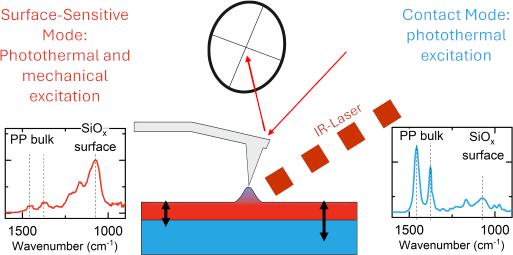
- with a 5 nm SiOx coating was used and, additionally to the AFM-IR spectra, a hyperspectral image was collected in contact mode. In addition to photothermal AFM-IR measurements in contact mode and surface-sensitive mode, the surface was analyzed with near-ambient pressure X-ray photoelectron


Directed growth of quinacridone chains on the vicinal Ag(35 1 1) surface
Beilstein J. Nanotechnol. 2024, 15, 556–568, doi:10.3762/bjnano.15.48
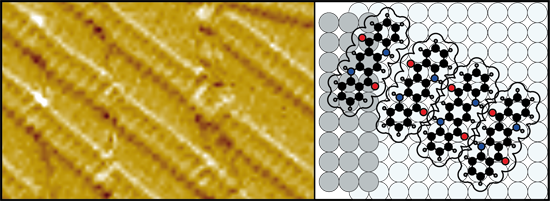
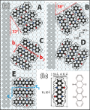
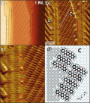
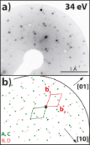
- with a base pressure of 2 × 10⁻¹⁰ mbar equipped with a beetle-type scanning tunneling microscope (STM, type UHV 300) from RHK Technology, a microchannel plate low-energy diffraction (MCP-LEED) instrument from OCI Vacuum Microenginneering Inc., and a quadrupole mass spectrometer (QMS) of the type PRISMA


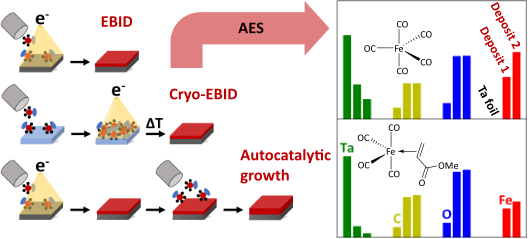
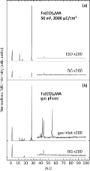
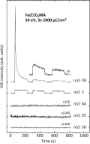
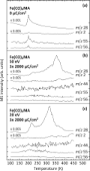
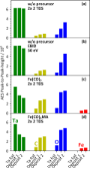
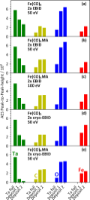
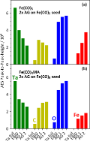
Electron-induced deposition using Fe(CO)4MA and Fe(CO)5 – effect of MA ligand and process conditions
Beilstein J. Nanotechnol. 2024, 15, 500–516, doi:10.3762/bjnano.15.45



Photocatalytic degradation of methylene blue under visible light by cobalt ferrite nanoparticles/graphene quantum dots
Beilstein J. Nanotechnol. 2024, 15, 475–489, doi:10.3762/bjnano.15.43
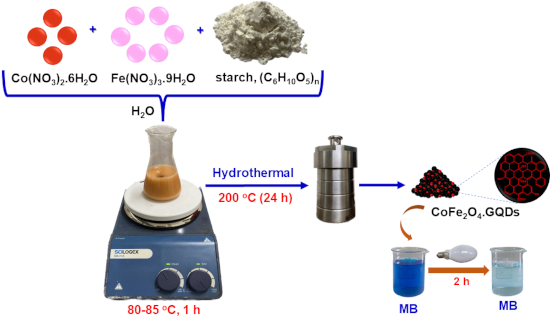
- of CoFe2O4 and CF/GQDs. All isotherm curves belong to type V according to IUPAC. At a high relative pressure (above 0.8), the hysteresis sloop indicates that the materials have micro-meso structures. The surface area of CoFe2O4 is small because of heavy agglomeration (21.0 m2·g−1). However, CF/GQDs




Superconducting spin valve effect in Co/Pb/Co heterostructures with insulating interlayers
Beilstein J. Nanotechnol. 2024, 15, 457–464, doi:10.3762/bjnano.15.41
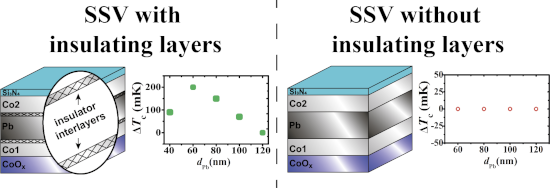
- layer to oxygen atmosphere at 100 mbar for two hours. Next, Co1 was deposited in the main deposition chamber at a vacuum pressure of the order of 10−9 mbar on top of the CoOx layer. The I1 layer was formed on the surface of Co1 in a similar way as described above in an oxygen atmosphere of ≈10−2 mbar
- for 60 s. It was shown in [43] that significant partial oxidation of a few nanometers thin metallic Co layer can be achieved by exposing it to the ambient atmospheric environment, implying that lowering the atmospheric pressure by five orders of magnitude enables one to oxidize only the surface
- its deposition, thereby, forming an insulating magnetic interlayer at the S/F interface. We consider an oxidation of the Pb layer to be unlikely because it was deposited at a low substrate temperature and exposed to a very low atmospheric pressure for a very short time, as specified above. According



![[Graphic 6]](/bjnano/content/inline/2190-4286-15-41-i6.svg?max-width=637&scale=1.18182)
Sidewall angle tuning in focused electron beam-induced processing
Beilstein J. Nanotechnol. 2024, 15, 447–456, doi:10.3762/bjnano.15.40
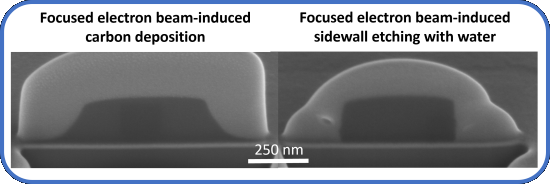
- the etching takes place is unknown. It was noticed that a small change in the pressure of water vapour led to a significant change in the etching rate, suggesting that the process is gas-limited (see Supporting Information File 1, section S3). The role of diffusion could therefore be significant. The
- using FEBIE with water [25], namely dodecane (C12H26) for the deposition of carbon and crystals of MgSO4·7H2O for etching with water. Both precursors were let into the chamber at room temperature. The base pressure in the specimen chamber was between 2 × 10⁻⁶ and 4 × 10⁻⁶ mbar. During patterning (both
- FEBID and FEBIE) the pressure was in the range of 2.5 × 10⁻⁵ and 4.5 × 10⁻⁵ mbar. Following a few hours of deposition, the chamber would take increasingly longer to pump down, and electron beam-induced sample contamination was observed to increase. This was likely due to dodecane sticking to the walls




Potential of a deep eutectic solvent in silver nanoparticle fabrication for antibiotic residue detection
Beilstein J. Nanotechnol. 2024, 15, 426–434, doi:10.3762/bjnano.15.38
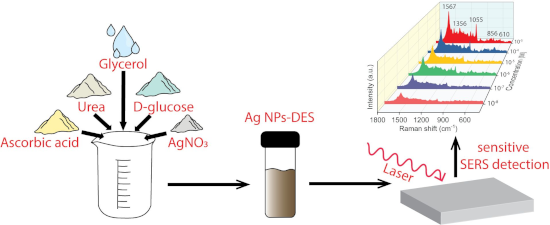
- thermal stability, high polarity, low vapor pressure, and low toxicity, which makes DESs promising candidates for the replacement of thousands of industrial solvents [24][25]. DESs are so versatile that they have been used for nanomaterials synthesis [26][27]. Regarding plasmonic materials, gold


Unveiling the nature of atomic defects in graphene on a metal surface
Beilstein J. Nanotechnol. 2024, 15, 416–425, doi:10.3762/bjnano.15.37
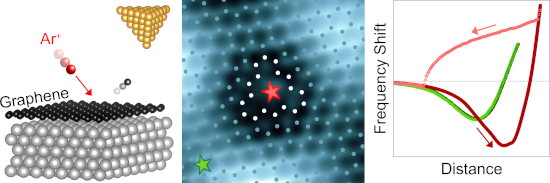
- molecular precursor C2H4 (purity: 99.9%) at a partial pressure of 10−5 Pa for 120 s [25][26]. Atomic-scale defects were created by bombarding graphene-covered Ir(111) with low-energy (140 eV) Ar+ ions (purity of the Ar gas: 99.999%) [27][28][29][30] at room temperature for 5 s followed by annealing (900 K


Classification and application of metal-based nanoantioxidants in medicine and healthcare
Beilstein J. Nanotechnol. 2024, 15, 396–415, doi:10.3762/bjnano.15.36
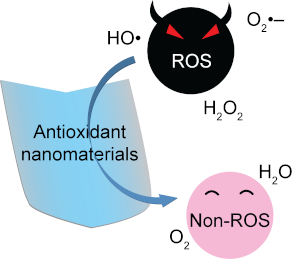
- macrophages. Moreover, AuNPs with different sizes and shapes exhibit the capability to inhibit angiogenesis, especially at 20 nm size [178][186]. In 2022, García-Rubio and colleagues introduced a novel diagnostic approach to differentiate between normal blood pressure and hypertension. This method involves


On the mechanism of piezoresistance in nanocrystalline graphite
Beilstein J. Nanotechnol. 2024, 15, 376–384, doi:10.3762/bjnano.15.34
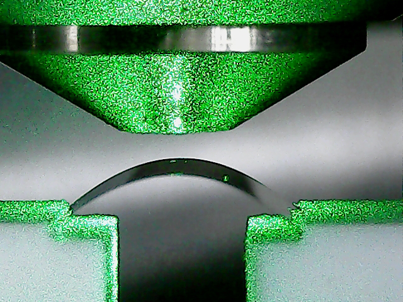
- and dislocations are currently under development [13][14]. This leads to the situation that the role of grain boundaries for graphene-based sensing of strain, pressure, and motion has not been explored and remains unresolved [15][16][17][18], although in CVD graphene the domain size is typically of
- measurements and Raman spectroscopy, is shown in Figure 1a. Two instances of zero and non-zero strain are also depicted. The setup has two stepper motors acquired from Standa Inc. The contacts on the NCG were made by gold-coated spring pressure contacts, which were then connected to a BNC connector and a


Controllable physicochemical properties of WOx thin films grown under glancing angle
Beilstein J. Nanotechnol. 2024, 15, 350–359, doi:10.3762/bjnano.15.31
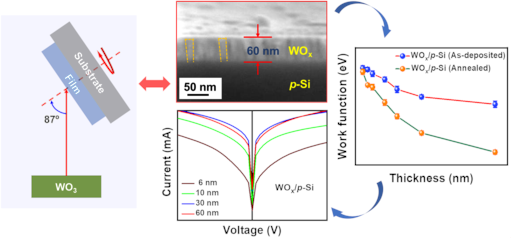
- organic contaminants. Prior to the deposition, the substrates were properly air-dried. A 99.99% pure WO3 target (5 mm thick) was used to grow the WOx films. The initial pressure in the deposition chamber was 5 × 10⁻⁷ mbar, and the WOx films were deposited at 5 × 10⁻³ mbar working pressure by injecting
- K, 1 h) used in the present study may not be sufficient to induce crystallinity in the films. Usually, the work function of polycrystalline WOx films is reported to vary between 5.7 and 6.7 eV [49]. In the present work, no O2 partial pressure was used, so it is expected that all WOx films are


Comparative electron microscopy particle sizing of TiO2 pigments: sample preparation and measurement
Beilstein J. Nanotechnol. 2024, 15, 317–332, doi:10.3762/bjnano.15.29
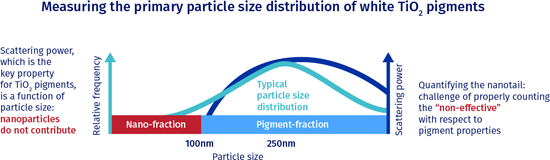
- the relative pressure range of 0.1–0.3 (pressure equilibration tolerance 0.1 mm Hg). ICP measurement method The presented results were obtained at Agilent's Waldbronn application laboratory using an Agilent 8900 ICP-MS, in collaboration with Dr. Balski from Agilent. Sample preparation took place at





