


Search results
Search for "targeting" in Full Text gives 208 result(s) in Beilstein Journal of Nanotechnology. Showing first 200.
Synthesis and potent cytotoxic activity of a novel diosgenin derivative and its phytosomes against lung cancer cells
Beilstein J. Nanotechnol. 2019, 10, 1933–1942, doi:10.3762/bjnano.10.189
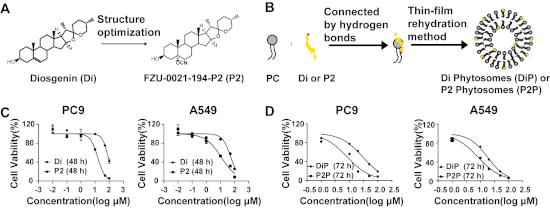
- by cholesterol have been substantially investigated as drug carriers for targeting, modulating drug pharmacokinetics, and decreasing drug toxicity [15][16]. Liposomes also can be used as solubilizing media to enhance solubility and bioavailability of insoluble drugs [17]. Di and our prepared



Engineered superparamagnetic iron oxide nanoparticles (SPIONs) for dual-modality imaging of intracranial glioblastoma via EGFRvIII targeting
Beilstein J. Nanotechnol. 2019, 10, 1860–1872, doi:10.3762/bjnano.10.181
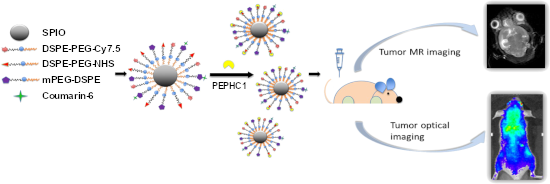
- Education, 826 Zhangheng Road, Shanghai 201203, China 10.3762/bjnano.10.181 Abstract In this work, a peptide-modified, biodegradable, nontoxic, brain-tumor-targeting nanoprobe based on superparamagnetic iron oxide nanoparticles (SPIONs) (which have been commonly used as T2-weighted magnetic resonance (MR
- construct the nanoprobe. Both in vitro and in vivo MR and optical imaging demonstrated that the as-constructed nanoprobe was effective and sensitive for tumor targeting with desirable biosafety. Given its desirable properties such as a 100 nm diameter (capable of penetration of the blood–brain barrier) and
- imaging [32][33][34]. There are many targeted probes for the diagnosis and treatment of GBM that have been constructed with high expression of EGFRvIII in the literature. Hadjipanayis and co-workers showed the specific EGFRvIII targeting and MRI contrast enhancement by means of EGFRvIII antibody




Materials nanoarchitectonics at two-dimensional liquid interfaces
Beilstein J. Nanotechnol. 2019, 10, 1559–1587, doi:10.3762/bjnano.10.153
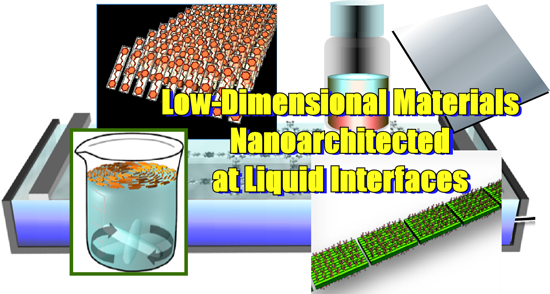
- sophisticated strategy to realize chemotherapy targeting at cancer cells using the controlled assembly and disassembly of layer-by-layer hybrid structures made of two dimensional MoS2 nanosheets with DNA [87]. The preparation of functional low-dimensional materials requires preservation of nanoscale features in













Scavenging of reactive oxygen species by phenolic compound-modified maghemite nanoparticles
Beilstein J. Nanotechnol. 2019, 10, 1073–1088, doi:10.3762/bjnano.10.108
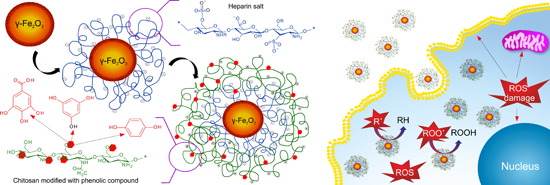
- , targeting tumor sites using an external magnetic field, MRI contrast agents, or magnetic hyperthermia. Under physiological conditions, the nanoparticle surface is exposed to the action of biomolecules, oxygen, peroxides, and radicals, which changes particle properties and behavior. Moreover, Fe2+ ions can





Enhanced inhibition of influenza virus infection by peptide–noble-metal nanoparticle conjugates
Beilstein J. Nanotechnol. 2019, 10, 1038–1047, doi:10.3762/bjnano.10.104
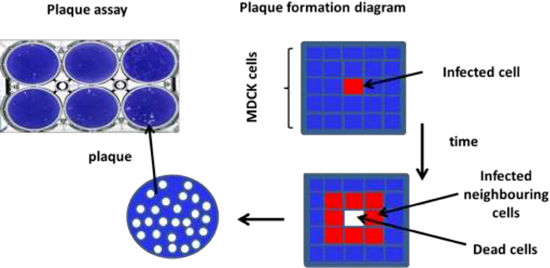
- demonstrate that conjugation of FluPep to gold and silver nanoparticles enhances its antiviral potency; the antimicrobial activity of silver ions may enable the design of even more potent antimicrobial inhibitors, capable of targeting both influenza and bacterial co-infections. Keywords: antiviral peptides
- density on the gold nanoparticles [17][22][26][30][31][32]. This can be determined by chromatography targeting specifically the grafted function, which also provides a means to purify the functionalised gold nanoparticles from those not functionalised, when the molar fraction of the functional ligand is


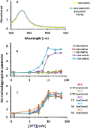


Correlation of surface-enhanced Raman scattering (SERS) with the surface density of gold nanoparticles: evaluation of the critical number of SERS tags for a detectable signal
Beilstein J. Nanotechnol. 2019, 10, 1016–1023, doi:10.3762/bjnano.10.102
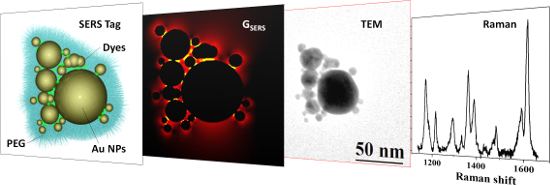
- molecules (Raman reporters) resonant at the probe wavelength, where the entire structure is embedded in a stabilizing matrix [13][16][17][18][19]. When selectivity is required, the surface of the Raman tag should expose a targeting function for binding the analyte [13][16][17]. When the analytes can be


Tungsten disulfide-based nanocomposites for photothermal therapy
Beilstein J. Nanotechnol. 2019, 10, 811–822, doi:10.3762/bjnano.10.81
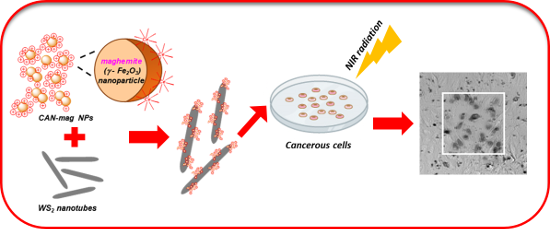
- , thereby offering the possibility of bonding of additional biologically active agents. The properties of the CAN-mag also enabled magnetism-based targeting. In order to maximize the benefit from TMDC nanostructures in different applications, their surface functionalization is important. The relative
- values of reduced aggregation, which leads to better targeting, and the possibility for attachments of additional cancer therapy agents. Experimental A schematic description of the experimental pathway leading to CAN-mag functionalized WS2 nanotubes is given in Figure 1, followed by fully detailed
- , namely increased cancerous-cell death and better targeting. Figure 7 shows zeta potential averages and distribution curves for WS2-NTs, CAN-mag, and their composites. The values for WS2-NT and CAN-mag are consistent with previous works [52][65][66]. For each composite, the zeta values reflect the






Polydopamine-coated Au nanorods for targeted fluorescent cell imaging and photothermal therapy
Beilstein J. Nanotechnol. 2019, 10, 794–803, doi:10.3762/bjnano.10.79
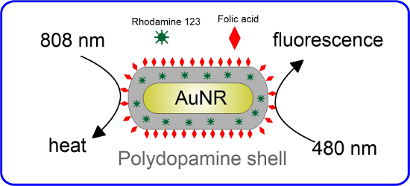
- -PDA based nanocomposites that combine fluorescent imaging modality with folate targeting and PPT ability have not been reported in the literature. Herein, we present PDA-coated NIR-absorbing AuNRs and used the potential of the PDA layer for folate surface functionalization and rhodamine 123 (R123
- ) loading, resulting in the formation of AuNR-PDA-R123-folate nanocomposites (Scheme 1). This platform demonstrates three distinct features: (1) targeting of nanocomposites with folic acid leads to enhanced cellular uptake by folate-positive cancer cells compared with PEG-coated nanorods; (2) the high
- were functionalized with folates and rhodamine 123. Folate receptors are commonly overexpressed in cancer cells, e.g., in HeLa cells, enabling an easy targeting with folic acid [44]. Rhodamine 123 was used as a fluorescent dye to control the nanocomposite interaction with cells using fluorescent


Targeting strategies for improving the efficacy of nanomedicine in oncology
Beilstein J. Nanotechnol. 2019, 10, 168–181, doi:10.3762/bjnano.10.16
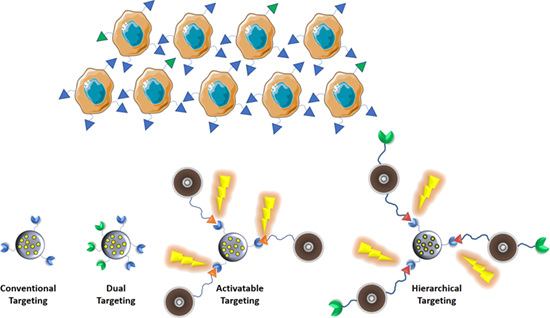
- their action specifically to the malignant cells. The selectivity improvement yielded by these nanocarriers provided a significative enhancement in the efficacy of the transported drug, while the apparition of side effects in the host was reduced. Additionally, it is possible to incorporate targeting
- moieties selective for organelles of the cell, which improves even more the effect of the transported agents. In the last years, more sophisticated strategies such as the use of switchable, hierarchical or double targeting strategies have been proposed for overcoming some of the limitations of conventional
- targeting strategies. In this review, recent advances in the development of targeted nanoparticles will be described with the aim to present the current state of the art of this technology and its huge potential in the oncological field. Keywords: antitumoral therapy; nanomedicine; smart nanocarriers


Bidirectional biomimetic flow sensing with antiparallel and curved artificial hair sensors
Beilstein J. Nanotechnol. 2019, 10, 32–46, doi:10.3762/bjnano.10.4
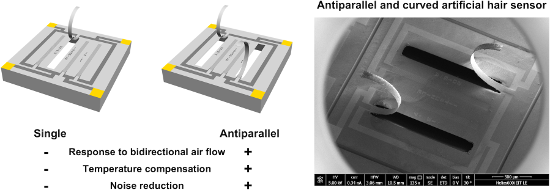
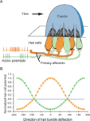
- bidirectional sensitivity to flow sensing with curved artificial hair sensors. In the short term, the presented sensor platform will be investigated in liquids as well, once the sensors are embedded in a waterproof MEMS package. For future applications, we are targeting automotive, robotics, automation and air


Surface plasmon resonance enhancement of photoluminescence intensity and bioimaging application of gold nanorod@CdSe/ZnS quantum dots
Beilstein J. Nanotechnol. 2019, 10, 22–31, doi:10.3762/bjnano.10.3
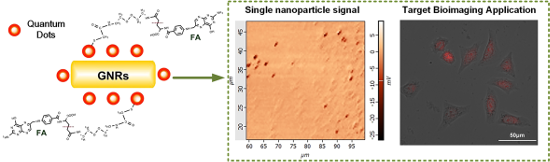
- distance using the combined strong electrostatic adsorption. Secondly, FA was conjugated with this composite nanoparticle for biological applications, where the FA renders the nanoparticle useful for the specific targeting of cancer cells [28][29]. According to current knowledge, when bulk semiconductor
- @CdSe/ZnS can be used in cell imaging studies, after conjugation with FA, we performed a MCF-7 breast cancer cell targeting imaging study, and the results as shown in Figure 8. Robust cellular uptake could be obtained from the CdSe/ZnS@FA and GNR@CdSe/ZnS@FA treated samples. The obvious luminescence and


Size-selected Fe3O4–Au hybrid nanoparticles for improved magnetism-based theranostics
Beilstein J. Nanotechnol. 2018, 9, 2684–2699, doi:10.3762/bjnano.9.251
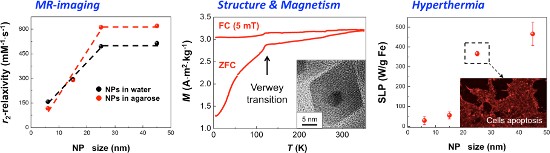
- ]. For advanced functionality under real operational conditions, various approaches have been attempted, e.g., optimization of the NP surface using targeting molecules or specific polymers [13][14][15]. From the physics point of view, the strategically tailored design of structural and magnetic


Pattern generation for direct-write three-dimensional nanoscale structures via focused electron beam induced deposition
Beilstein J. Nanotechnol. 2018, 9, 2581–2598, doi:10.3762/bjnano.9.240
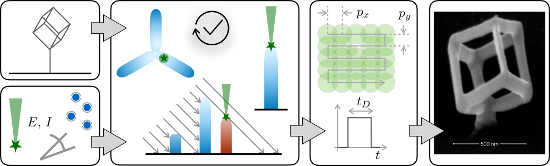
- therefore hope that our contribution may prove to be useful for a growing community of FEBID users targeting 3D nanoarchitectures for various application fields. 2 Algorithms The algorithms require the geometry definition of the target 3D structure as input, which we consider as a wireframe. The geometry is




Cytotoxicity of doxorubicin-conjugated poly[N-(2-hydroxypropyl)methacrylamide]-modified γ-Fe2O3 nanoparticles towards human tumor cells
Beilstein J. Nanotechnol. 2018, 9, 2533–2545, doi:10.3762/bjnano.9.236
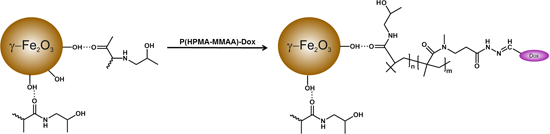
- therapeutic performance of the anticancer agents and reduced non-specific toxicity to normal cells. Moreover, the strong magnetic susceptibility of the nanoparticles enables magnetic targeting, and the accumulation of these particles can be monitored by magnetic resonance imaging (MRI). Magnetic targeting is


Enhanced antineoplastic/therapeutic efficacy using 5-fluorouracil-loaded calcium phosphate nanoparticles
Beilstein J. Nanotechnol. 2018, 9, 2499–2515, doi:10.3762/bjnano.9.233
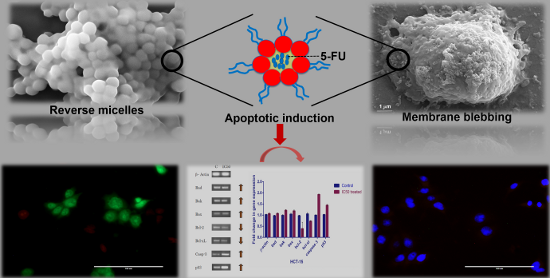
- , retention, and low toxicity, as well as surface engineering with targeting moieties, can be used as a tool in enhancing the therapeutic efficacy of current approaches. Inorganic calcium phosphate nanoparticles have the potential to increase the therapeutic potential of antiproliferative drugs due to their
- for hepatoma targeted delivery of docetaxel with lactose as the targeting molecule [7]. Curcumin-loaded organically modified silica nanoparticles (ORMOSIL) were studied to check the potential anticancer property of ORMOSIL nanocarriers [8]. However, in some instances, after nanoparticle formation, the


Droplet-based synthesis of homogeneous magnetic iron oxide nanoparticles
Beilstein J. Nanotechnol. 2018, 9, 2413–2420, doi:10.3762/bjnano.9.226
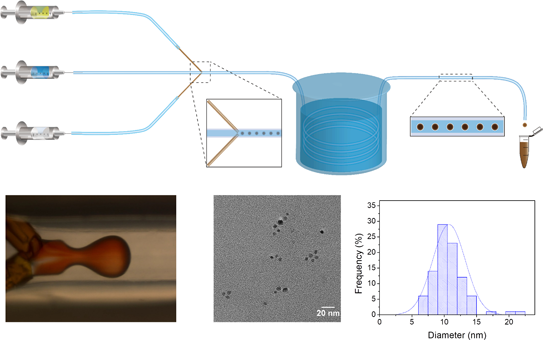
- properties. In medical applications, for example, magnetic nanoparticles can be used for targeting, imaging, magnetically induced thermotherapy, or for any combination of the three. However, it is still a challenge to obtain narrowly dispersed, reproducible particles through a typical lab-scale synthesis
- healthcare significantly [5]. For example, a composite nanomaterial has been developed as a photosensitizer in photothermal therapy (PTT), while also acting as a contrast agent for magnetic resonance imaging (MRI) [6]. Magnetic materials are of particular interest here, as they can be used for targeting [7


Induced smectic phase in binary mixtures of twist-bend nematogens
Beilstein J. Nanotechnol. 2018, 9, 1297–1307, doi:10.3762/bjnano.9.122
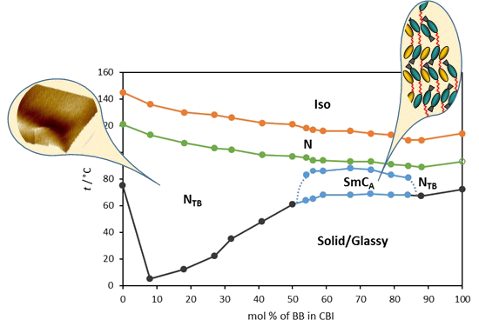
- intercalated smectic phase was unravelled by combined spectroscopic and computational methods and can be traced to conformational disorder of the terminal chains. These results show the importance of understanding the phase behaviour of binary mixtures, not only in targeting a wide temperature range but also
- compound has the desired properties for a particular application. Since the discovery that mixtures of nematic compounds could yield room-temperature nematic liquid crystals [1], the mixing of LC compounds became a very useful technique. Thus, investigation of LC mixtures is of great interest in targeting
- nematogens not only results in the extended temperature range of the NTB phase but also a phase sequence can be changed. Thus, targeting a wide operating temperature range or controlling the self-organizing processes makes understanding the phase behaviour of binary mixtures very important. Molecular




Enzymatically promoted release of organic molecules linked to magnetic nanoparticles
Beilstein J. Nanotechnol. 2018, 9, 986–999, doi:10.3762/bjnano.9.92
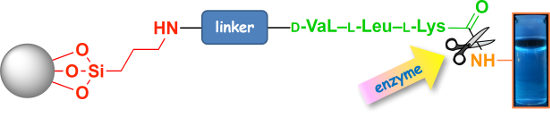
- plasminogen activator (u-PA), a protein associated with tumour invasion and metastasis [27][28]. This enzyme has been often used in TAP strategies [6][29][30][31], and the efficacy of this strategy in selective targeting of tumour cells has been demonstrated [32][33]. In this preliminary exploratory work we




Nanoparticle delivery to metastatic breast cancer cells by nanoengineered mesenchymal stem cells
Beilstein J. Nanotechnol. 2018, 9, 321–332, doi:10.3762/bjnano.9.32
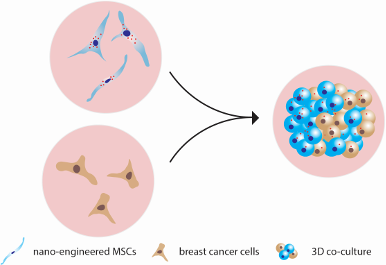
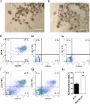
- almost twice as much QDs compared with MCF7 cells (Figure 6F–H). Thus, we demonstrated that nanoengineered MSCs could be a tool for targeting metastatic breast cancer cells. It has been reported that metastatic breast cancer cells demonstrate higher nanocarrier uptake efficiency than MCF7 due to the



Wafer-scale bioactive substrate patterning by chemical lift-off lithography
Beilstein J. Nanotechnol. 2018, 9, 311–320, doi:10.3762/bjnano.9.31
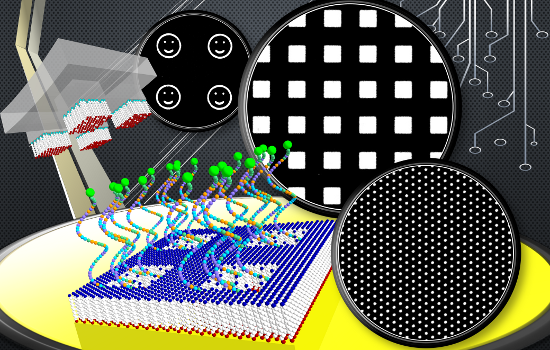
- bioactive probes (targeting Hg2+, adenosine, and cocaine) are accordingly injected into these channels for a 60 min of probe insertion duration. Finally, the PDMS device is separated from the Au surface and a multiplexed bioactive-probe-anchored substrate is created. For demonstration, this spatially


Patterning of supported gold monolayers via chemical lift-off lithography
Beilstein J. Nanotechnol. 2017, 8, 2648–2661, doi:10.3762/bjnano.8.265
- grid basis (with a grid spacing of 0.2 Å) and a linear combination of atomic orbitals basis with double-zeta polarized functions. The thermal movement of atoms was simulated using the Langevin thermostat targeting room temperature, implemented in the atomic simulation environment [88]. The thermostat


Strategy to discover full-length amyloid-beta peptide ligands using high-efficiency microarray technology
Beilstein J. Nanotechnol. 2017, 8, 2446–2453, doi:10.3762/bjnano.8.243
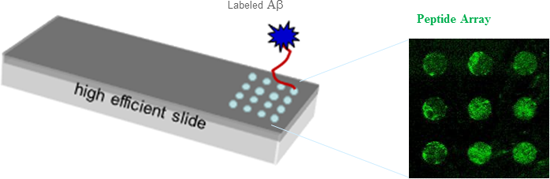
- believed to be a promising therapeutic approach to AD. Unfortunately, the short-lived intermediate structures that occur in a solution along the Aβ aggregation pathway escape conventional experimental investigations and there is urgent need of new tools aimed at the discovery of agents targeting monomeric


Optical techniques for cervical neoplasia detection
Beilstein J. Nanotechnol. 2017, 8, 1844–1862, doi:10.3762/bjnano.8.186

- a size of less than 100 nm (i.e., which are much smaller than normal human cells) with biomolecules such as receptors, enzymes, and antibodies on the cell surface and inside the cell [87]. By surface coating, functionalization, and integration with different bioconjugated targeting agents those
- unique molecular tumor marker [88]. The contrast agents consisting of a targeting agent conjugated with optically active labels (metal nanoparticles, quantum dots) can be used for in vivo imaging of this biomarker. Sokolov et al [89] reported the use of gold nanoparticles for the molecular targeted



Synthesis and functionalization of NaGdF4:Yb,Er@NaGdF4 core–shell nanoparticles for possible application as multimodal contrast agents
Beilstein J. Nanotechnol. 2017, 8, 1815–1824, doi:10.3762/bjnano.8.183
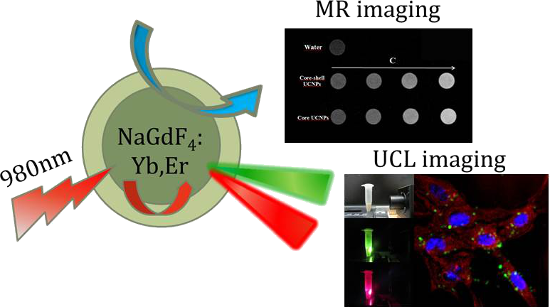
- amphiphilic polymer coating [18] have been developed in order to transfer nanoparticles with hydrophobic surfaces into aqueous media. Furthermore, the multimodal UCNP surface modification field still lacks reference materials and established protocols for functionalization and targeting. Some studies showed


Methionine-mediated synthesis of magnetic nanoparticles and functionalization with gold quantum dots for theranostic applications
Beilstein J. Nanotechnol. 2017, 8, 1734–1741, doi:10.3762/bjnano.8.174
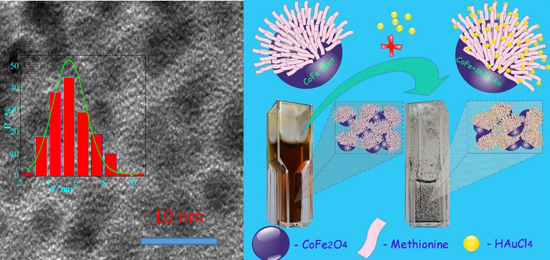
- conjugated with targeting and chemotherapy agents, such as cancer stem cell-related antibodies and the anticancer drug doxorubicin, for early detection and improved treatment. In order to verify our findings, high-resolution transmission electron microscopy (HRTEM), atomic force microscopy (AFM), FTIR
- have a dramatic effect on the formation of the surface protein corona in the bloodstream that affects CoFe2O4@Met–Au NPs passive targeting and uptake into tumor cells. The elaborated functionalization of magnetic NPs with gold QDs represents a promising multi-task platform for linking magnetic NPs with
- specific targeting ligands, such as aptamers and antibodies. This synthesis way may also be explored in future to design superparamagnetic, methionine-stabilized plasmonic magnetite NPs decorated with Au0/Au+1 QDs. Experimental Chemicals: All chemicals, including Co(II) and Fe(III) chlorides, and HAuCl4





