Search results
Search for "charge transfer" in Full Text gives 375 result(s) in Beilstein Journal of Nanotechnology. Showing first 200.
Green fabrication of lanthanide-doped hydroxide-based phosphors: Y(OH)3:Eu3+ nanoparticles for white light generation
Beilstein J. Nanotechnol. 2019, 10, 1200–1210, doi:10.3762/bjnano.10.119
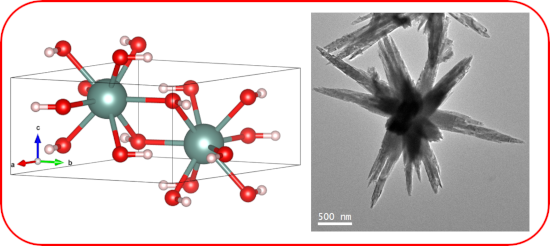
- generalized gradient approximation (GGA) in the Perdew–Burke–Ernzerhof (PBE) form was employed [48]. In order to obtain the charge transfer between the atoms, the Bader technique was used [49]. The kinetic energy cut-off for plane-wave basis set was taken as 400 eV for all the calculations. For all ionic
- electronegativity of Y, H and O are 1.22, 2.20 and 3.44, respectively. Bader charge analysis shows that the Y(OH)3 crystal structure is formed by 0.73 (0.60) e charge transfer from the Y (H) to the O atom. Possible scenarios for Eu doping in a Y(OH)3 crystal is also investigated by state-of-the-art first principles



Pure and mixed ordered monolayers of tetracyano-2,6-naphthoquinodimethane and hexathiapentacene on the Ag(100) surface
Beilstein J. Nanotechnol. 2019, 10, 1188–1199, doi:10.3762/bjnano.10.118
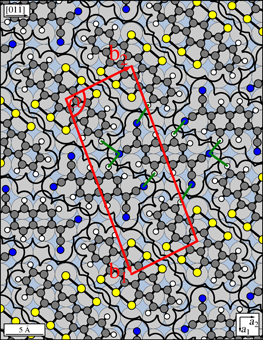
- structures are formed on a surface by molecules that are otherwise typically used for the synthesis of bulk charge-transfer materials. The layers were obtained by vacuum deposition on the Ag(100) surface and analyzed by low-energy electron diffraction (LEED) and scanning tunneling microscopy (STM). The
- a planar orientation on the surface. We discuss the influence of intermolecular charge transfer on the ordering in the mixed structure. Keywords: charge transfer; low-energy electron diffraction; hexathiapentacene; scanning tunneling microscopy; tetracyano-2,6-naphthoquinodimethane; Introduction
- planar molecules have been investigated [4][5][6][7][8]. As a result, one finds that, on metallic surfaces, indirect intermolecular charge transfer mediated by the surface plays an important role in addition to intermolecular hydrogen bonds [5]. Particularly interesting are π-conjugated molecules with


Porous N- and S-doped carbon–carbon composite electrodes by soft-templating for redox flow batteries
Beilstein J. Nanotechnol. 2019, 10, 1131–1139, doi:10.3762/bjnano.10.113
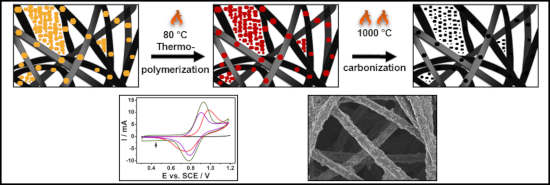
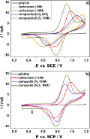
- readily on the composite electrodes than on the undoped reference materials. Additional electrochemical impedance spectroscopy was performed to study the charge transfer of the VO2+/VO2+ redox reaction. The corresponding Nyquist plots are displayed in Figure 7. In the described circuit Ru stands for the
- solution resistance, which varies with the used electrode. The CPE is the constant-phase element which could be converted into the electric double-layer capacitance (CDL), whereas Rct represents the charge transfer resistance. Compared to the carbonized samples the diameters of the semicircles of the
- composite materials are significantly reduced, directly reflecting the reduced charge transfer resistances of these electrodes (Table 4). Obviously, the addition of a porous carbon layer decreases the charge transfer resistance, so that the electrochemical reaction can proceed faster. In accordance with the



Synthesis and characterization of quaternary La(Sr)S–TaS2 misfit-layered nanotubes
Beilstein J. Nanotechnol. 2019, 10, 1112–1124, doi:10.3762/bjnano.10.111
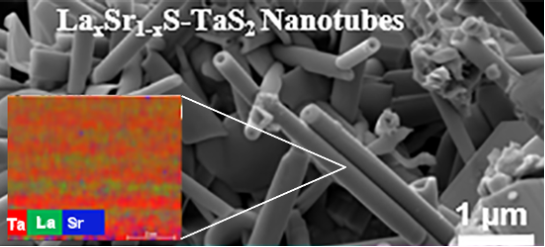
- in the yield of the nanotubes. This trend can be attributed to the reduced charge transfer between the rare earth/S unit (LaxSr1−xS) and the TaS2 layer in the MLC which destabilizes the MLC lattice. The influence of varying the Sr content in the nanotubes was systematically studied using Raman
- van der Waals forces. Frequently, the difference in the work function between the MX and TX2 slabs leads to a partial charge transfer from the MX slab to that of TX2. This charge transfer induces polar interactions between the layers juxtaposing on the van der Waals forces [29]. As the constituting
- , instead of the stable 2H-TaS2 (2H-NbS2) [35][38] polytype, the Nb-rich LaS–NbxTa1−xS2 slabs were all found to be in the 1T state, i.e., with octahedral coordination of the Ta(Nb) atoms in the NbxTa1−xS2 lattice. The charge transfer from the M (rare earth element) to the Ta atom of TaS2 in MS–TaS2 MLC has


Glucose-derived carbon materials with tailored properties as electrocatalysts for the oxygen reduction reaction
Beilstein J. Nanotechnol. 2019, 10, 1089–1102, doi:10.3762/bjnano.10.109
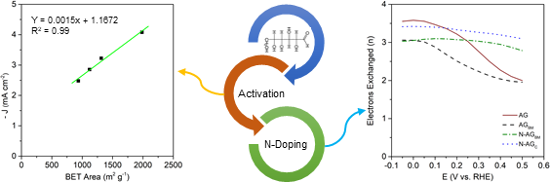
- frequencies, indicating a lower charge transfer resistance, which allows the kinetics of the ORR to increase, and consequently, a higher onset potential is observed for sample AG6h (the values of the onset potential are shown in Supporting Information File 1, Table S4). In addition, these results also suggest


Fe3O4 nanoparticles as a saturable absorber for giant chirped pulse generation
Beilstein J. Nanotechnol. 2019, 10, 1065–1072, doi:10.3762/bjnano.10.107
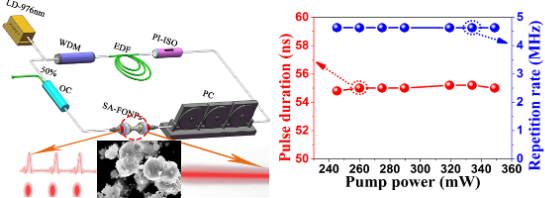
- have been found to produce a charge transfer [5]. Because of the scattering loss, the material absorbs less near infrared (NIR) laser radiation in the NIR-II wavelength range (1000–1300 nm) and the light can penetrate more deeply into the material [6]. In the NIR wavelength region, the optical


Correlation of surface-enhanced Raman scattering (SERS) with the surface density of gold nanoparticles: evaluation of the critical number of SERS tags for a detectable signal
Beilstein J. Nanotechnol. 2019, 10, 1016–1023, doi:10.3762/bjnano.10.102
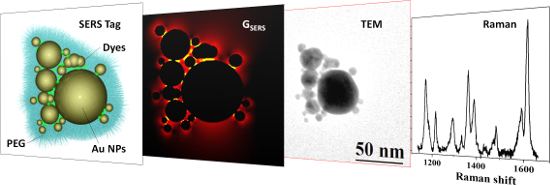
- phenomena, the local electric field enhancement due to the surface plasmon resonance of the metal nanostructure (electromagnetic enhancement) and the charge transfer between the molecule and the metal substrate (chemical enhancement) [6][7][8]. In addition, given the generally low Raman scattering cross


In situ AFM visualization of Li–O2 battery discharge products during redox cycling in an atmospherically controlled sample cell
Beilstein J. Nanotechnol. 2019, 10, 930–940, doi:10.3762/bjnano.10.94
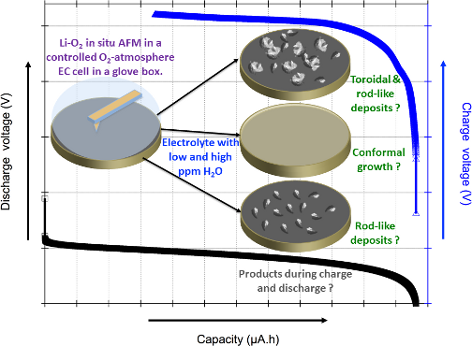
- resitance given by Rb. Addtionally, the electric representation of the passivated film contains a constant phase element, CPEb. The charge transfer resistance upon oxygenation and cycling results in a semicircle appearing in the mid-frequency region. Rct denotes this charge transfer resitance and is related
- charge transfer resistance, improves the kinetics of the reaction. Topographical observations using AFM AFM was used to monitor morphological changes on the glassy carbon cathode surface. The topography images in Figure 3 and Figure 4 each show one of the nine scanned regions at two different water


Synthesis of novel C-doped g-C3N4 nanosheets coupled with CdIn2S4 for enhanced photocatalytic hydrogen evolution
Beilstein J. Nanotechnol. 2019, 10, 912–921, doi:10.3762/bjnano.10.92
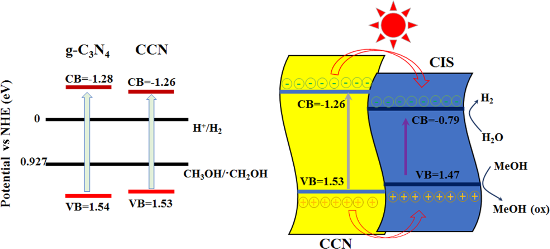
- [42]. As presented in Figure 11b, a possible mechanism of charge transfer for H2 formation has also been proposed over CISCCN heterostructured photocatalysts under visible-light irradiation. The type-I binary heterojunction interfaces can be formed because of the proper VB and CB positions for CCN and
- CIS, improving the charge transfer/separation efficiency. Upon visible-light irradiation, both CCN nanosheets and CIS can absorb photons to produce massive electron–hole pairs, then electrons in the VB of the semiconductors are able to be excited to the CB, leaving holes in the VB. Because the CB edge
- have been prepared for photocatalytic hydrogen evolution under visible-light illumination. This approach not only results in a material with a narrower bandgap but also in the efficient charge transfer and separation, realizing the synergistic effect of C-doping and composite nanostructures. It was


Fabrication of silver nanoisland films by pulsed laser deposition for surface-enhanced Raman spectroscopy
Beilstein J. Nanotechnol. 2019, 10, 882–893, doi:10.3762/bjnano.10.89
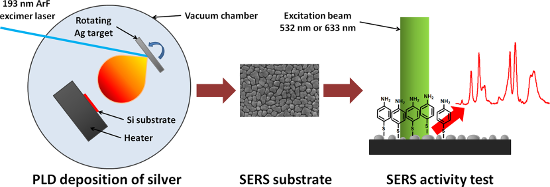
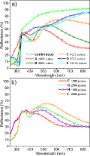
- transfer) effect. In the CT mechanism the charge transfer between the molecules of the analyte and metallic nanostructures is excited, which leads to a resonant increase in the total EF. When the laser energy matches the energy gap between the HOMO and LUMO of molecules, a direct resonant Raman scattering
- occurs. This effect is visible during excitation with 633 nm, but the enhancement becomes even more pronounced when the excitation wavelength shifts to 532 nm. As it is known, the total enhancement of the Raman scattering signal in the SERS phenomenon depends on the EM (electromagnetic) and CT (charge




Comparing a porphyrin- and a coumarin-based dye adsorbed on NiO(001)
Beilstein J. Nanotechnol. 2019, 10, 874–881, doi:10.3762/bjnano.10.88
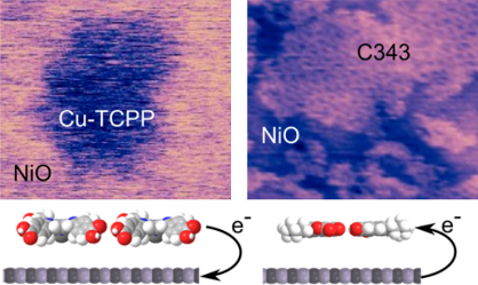
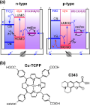
- technologies such as dye-sensitized solar cells. A key optimization parameter for such devices is the choice of the compounds in order to control the direction and the intensity of charge transfer across the interface. Here, the deposition of two different molecular dyes, porphyrin and coumarin, as single
- -layered islands on a NiO(001) single crystal surface have been studied by means of non-contact atomic force microscopy at room temperature. Comparison of both island types reveals different adsorption and packing of each dye, as well as an opposite charge-transfer direction, which has been quantified by
- ) of the semiconductor [2]. This charge transfer, which occurs from the dye molecules towards the surface of the semiconductor, offers the possibility of designing specific hybrid devices with photoactive anodes consisting of functionalized TiO2. In contrast to TiO2 [3][4][5][6][7][8][9][10][11], wide



An efficient electrode material for high performance solid-state hybrid supercapacitors based on a Cu/CuO/porous carbon nanofiber/TiO2 hybrid composite
Beilstein J. Nanotechnol. 2019, 10, 781–793, doi:10.3762/bjnano.10.78
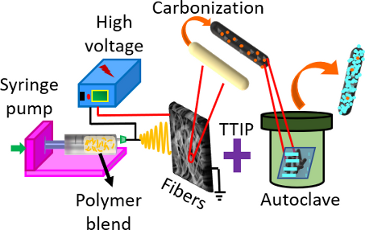
- cost, long-term thermodynamic stability, abundance in nature, ecologically friendliness, photostability, and exceptional structural stability [19][20][21]. Thus, TiO2 nanoparticles can execute faradaic charge transfer reactions and provide the high cycle stability needed to enhance the supercapacitor
- values than all other electrode materials, which was due to the addition of TiO2 nanoparticles. TiO2 nanoparticles show pseudo-capacitive behavior due to faradaic charge transfer that takes place in redox reactions. Therefore, the supercapacitor performance of the Cu/CuO/PCNF/TiO2 composite electrode
- layer interface, which provides greater capacitance to enhance the electrochemical performance. These results suggest that the fabricated SSHSC possesses higher specific capacitance, which confirms that the unique structure of the Cu/CuO/PCNF/TiO2 composite could provide a rapid charge-transfer


Features and advantages of flexible silicon nanowires for SERS applications
Beilstein J. Nanotechnol. 2019, 10, 725–734, doi:10.3762/bjnano.10.72

- weak metal affinity was facilitated through the surface immobilization via 4-MPBA [30][31]. The 4-MPBA reporter features are predominantly based on re-orientation i.e. binding of the analyte via the boronic acid group causing a symmetry breaking and activation of the charge transfer mechanism which
- of the substrate. The pH value of 100% ethanol is 7.33, while the water has a pH value equal to 7. Therefore, we do not expect a significant increase in SERS intensity due to the reorientation of 4-MPBA that could be ascribed to a small change of pH value (see the charge transfer and absorbance in


Deposition of metal particles onto semiconductor nanorods using an ionic liquid
Beilstein J. Nanotechnol. 2019, 10, 718–724, doi:10.3762/bjnano.10.71
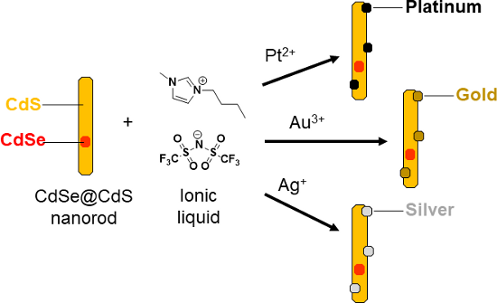
- synthesis conditions [5]. Well-defined nanorod substrates are synthesized using organic ligands to direct crystal growth [6], and these surface-bound ligands often play an important role in charge transfer at the particle/solvent interface [7][8][9][10][11]. However, these stabilizing ligands also insulate
- and diameters smaller than 10 nm. This is important for the field of chalcogenide nanomaterials where 1D (nanorod) and 0D (quantum dot) materials are interfaced with metals on sub-10 nm length scales to facilitate charge transfer and photocatalysis [26]. Herein, we demonstrate that an ionic liquid may


The effect of translation on the binding energy for transition-metal porphyrines adsorbed on Ag(111) surface
Beilstein J. Nanotechnol. 2019, 10, 706–717, doi:10.3762/bjnano.10.70
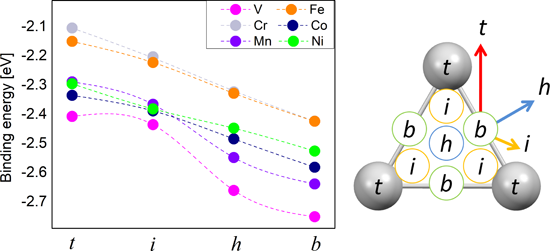
- atom on top the surface. We show that the interaction between the transition metal and silver is the result of a combination between the dispersion interaction, charge transfer and weak chemical interaction. The detailed analysis of the physical properties, such as dipolar and magnetic moments and the
- molecule–surface charge transfer, analyzed for different geometric configurations allows us to propose qualitative models, relevant for the understanding of the self-assembly processes and related phenomena. Keywords: Ag(111) surface; DFT+U; metal porphyrine; van der Waals; Introduction Metalloporphyrins
- in this model. The chemisorptive contributions to the TMPP–metal binding energy may lead to a charge transfer between molecule and surface [41]. This constitutes a local perturbation for electronic, structural [42][43] and magnetic [44][45] properties of the adsorbate as well as of the substrate


![[Graphic 1]](/bjnano/content/inline/2190-4286-10-70-i1.svg?max-width=637&scale=1.18182) , for all systems and relative molecule–surface positions. Right: symm...
, for all systems and relative molecule–surface positions. Right: symm...


![[Graphic 7]](/bjnano/content/inline/2190-4286-10-70-i7.svg?max-width=637&scale=1.18182) for selected TMPP systems (M = V, Mn, Co; red: positive values, blue: negative value...
for selected TMPP systems (M = V, Mn, Co; red: positive values, blue: negative value...
A carrier velocity model for electrical detection of gas molecules
Beilstein J. Nanotechnol. 2019, 10, 644–653, doi:10.3762/bjnano.10.64
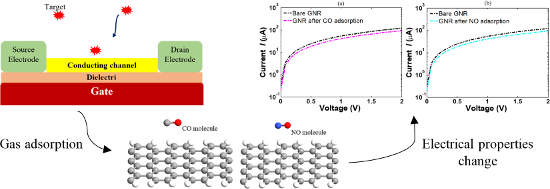
- other hand, the charge transfer between GNRs and the adsorbed target molecule can change the concentration of the carriers and modulate the conductivity of the GNR. In addition, because of the atomic forces and charge transfer, molecular adsorption can lead to modification of the energy band diagram and
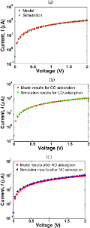
- sensors are used to develop a new gas sensor model based on the carrier velocity and I–V characteristics. In addition, a first principle simulation study is employed for the band structure analysis, to calculate the charge transfer, and to evaluate the proposed models. For the sensor structure, an
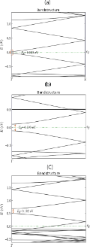
- exposed to each of these gas molecules and its band structure and I–V characteristic variations before and after gas adsorption are studied; also, the adsorption energy and charge transfer between gas molecules and the AGNR surface are calculated and discussed. In the adsorption process of CO, different




Review of time-resolved non-contact electrostatic force microscopy techniques with applications to ionic transport measurements
Beilstein J. Nanotechnol. 2019, 10, 617–633, doi:10.3762/bjnano.10.62
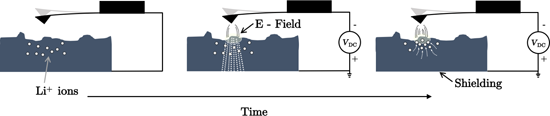
- understanding transport properties of real-world, often heterogeneous materials relevant for energy generation and storage. A number of AFM techniques have been developed to study relevant materials including time-resolved EFM to measure photoexcited charge accumulation and charge transfer [6][9][10][11], time





Hydrophilicity and carbon chain length effects on the gas sensing properties of chemoresistive, self-assembled monolayer carbon nanotube sensors
Beilstein J. Nanotechnol. 2019, 10, 565–577, doi:10.3762/bjnano.10.58
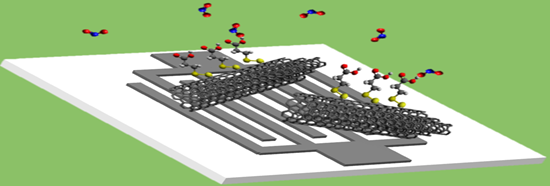
- more responsive to nitrogen dioxide than Au, Pt or Pd-decorated CNTs when operated at room temperature [10][18][40]. This was attributed to a stronger interaction and charge transfer between nitrogen dioxide and oxygenated defects in CNTs than with metal clusters. Possibly the surface of metal clusters


Quantification and coupling of the electromagnetic and chemical contributions in surface-enhanced Raman scattering
Beilstein J. Nanotechnol. 2019, 10, 549–556, doi:10.3762/bjnano.10.56
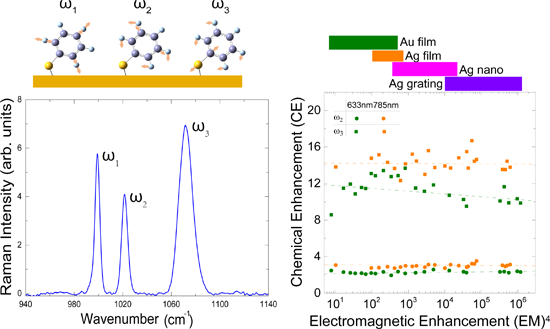
- ]. This suggests that across a charge-transfer or molecular resonance, the enhancement of the asymmetric vs symmetric mode varies. Yet, in the absence of charge-transfer contributions, all modes are equally enhanced, irrespective of excitation frequency [29]. In our work, the mode ω3 is related with the
- charge-transfer contribution, and its CE value depends on the excitation wavelength. With regards to coupling between physical and chemical enhancement [20][22], a coupling factor can be introduced to quantify how the induced polarization modifies the charge redistribution and vice versa. However, we
- polarizability derivative, which in turn is due to a change in the ground-state electronic structure when the molecule adsorbs onto a metal surface. In addition, dynamic processes contribute, which are associated with the formation of hybrid states or charge transfer excitations between the molecule and the


Mo-doped boron nitride monolayer as a promising single-atom electrocatalyst for CO2 conversion
Beilstein J. Nanotechnol. 2019, 10, 540–548, doi:10.3762/bjnano.10.55
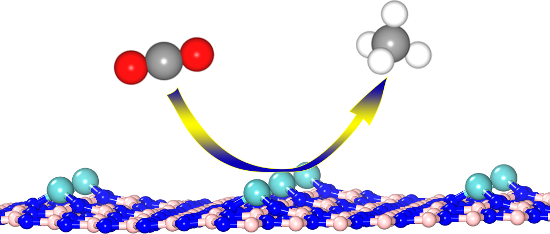
- ) is the Mo atom and the three N atoms that the Mo atom linked with, and BN monolayer (moiety 3), as shown in Figure 5a. The variation of the charge distribution is illustrated in Figure 5b. The step 0 is the charge transfer to the adsorbed CO2. The CO2 molecule and the MoN3 gain 0.482 and 0.018
- for charge transfer between the BN monolayer and moiety 1. Conclusion In conclusion, we have systematically investigated TM atoms, including Sc to Zn, Mo, Ru, Rh, Pd and Ag, anchored on the boron-defective BN monolayer as an efficient SAC for CRR, as investigated by means of DFT calculations. The
- single transition metal (TM) doped BN monolayers. (b) The length of the C–O bond of CO2 that interacts with the TM atom doped onto the BN monolayers. (c) The angle of the captured CO2 molecule. (d) The charge transfer of CO2 adsorbed on various catalysts. The red dashed lines represent values


Choosing a substrate for the ion irradiation of two-dimensional materials
Beilstein J. Nanotechnol. 2019, 10, 531–539, doi:10.3762/bjnano.10.54
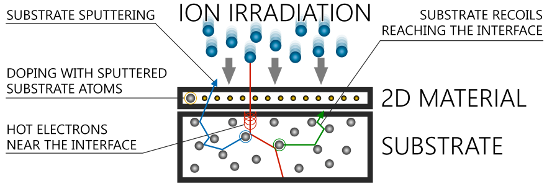
- to a peculiar doping effect, as it was shown for graphene in [1]. Besides, one cannot exclude participation of displaced recoil atoms [8] that reach the interface but remain within the substrate. Moreover, since there is a charge transfer between the substrate and the monolayer [9][10][11][12], the
- desorption in 2D material through charge transfer effects [9][10][11][12][16]. It is important to note that the electronically stimulated surface atom desorption is a mechanism that basically occurs in unsupported 2D materials under ion irradiation [13]. It principally relates to any non-central collision
A porous 3D-RGO@MWCNT hybrid material as Li–S battery cathode
Beilstein J. Nanotechnol. 2019, 10, 514–521, doi:10.3762/bjnano.10.52
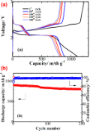
- region the x-intercept is attributed to the contact resistance (R0), and the semicircle is attributed to the charge-transfer resistance (Rct) at the electrode/electrolyte interface. Finally, the inclined slope in the low-frequency region is associated with the Warburg impedance (W) [28], which correlates
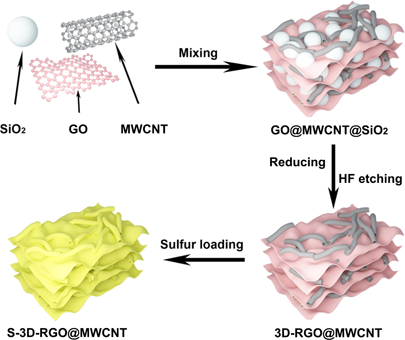
- within a MWCNT lattice matrix, was successfully synthesized. The as-prepared S-3D-RGO@MWCNT cathode exhibited a very good electrochemical performance and cycle stability. This can be attributed to i) the conductive network inherently found in the RGO sheets and MWCNTs, which ensured efficient charge
- transfer within the cathode, ii) the 3D porous spherical RGO possessing a high surface area and pore volume to accommodate a high sulfur content; and iii) the interconnected pores in the spherical RGO and the lattice matrix formed by MWCNTs, which act as polysulfide reservoirs to alleviate the shuttle



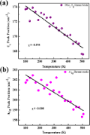
Temperature-dependent Raman spectroscopy and sensor applications of PtSe2 nanosheets synthesized by wet chemistry
Beilstein J. Nanotechnol. 2019, 10, 467–474, doi:10.3762/bjnano.10.46
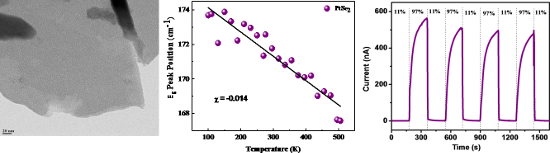
- resistance of the sensor device vs relative humidity plot. The resistance is significantly decreased from 3.75 GΩ to 0.83 MΩ. The humidity sensing mechanism for the PtSe2 sensor can be explained as follows. When the PtSe2 nanosheet sensor device was exposed to water molecules/vapors, a charge transfer



Reduced graphene oxide supported C3N4 nanoflakes and quantum dots as metal-free catalysts for visible light assisted CO2 reduction
Beilstein J. Nanotechnol. 2019, 10, 448–458, doi:10.3762/bjnano.10.44
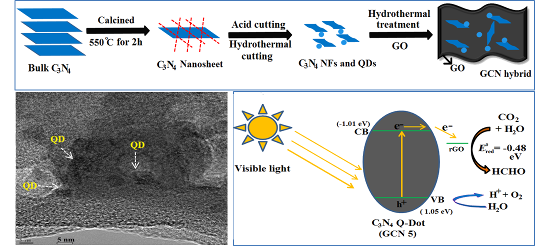
- rGO [34]. The XPS peaks of g-C3N4 and rGO are shifted slightly to higher and lower binding energies in the GCN-5 hybrid, respectively, indicating possible charge transfer between g-C3N4 and rGO in the heterostructure. Hence, the XPS results confirm the successful preparation of the composite and the





Biocompatible organic–inorganic hybrid materials based on nucleobases and titanium developed by molecular layer deposition
Beilstein J. Nanotechnol. 2019, 10, 399–411, doi:10.3762/bjnano.10.39
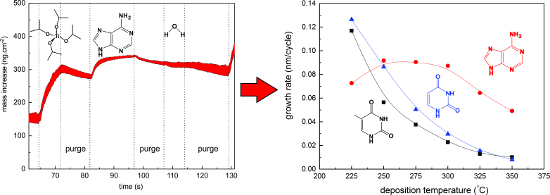
- investigated the charge transfer shake-up satellite modes corresponding to the O 2peg → Ti 3deg transition [27]. No evidence of pure Ti–N bonding could be observed directly from the Ti peaks, indicating that titanium is not found only coordinated to nitrogen. We cannot, however, rule out the possibility of Ti