


Search results
Search for "platinum" in Full Text gives 342 result(s) in Beilstein Journal of Nanotechnology. Showing first 200.
Comparative biological effects of spherical noble metal nanoparticles (Rh, Pd, Ag, Pt, Au) with 4–8 nm diameter
Beilstein J. Nanotechnol. 2018, 9, 2763–2774, doi:10.3762/bjnano.9.258
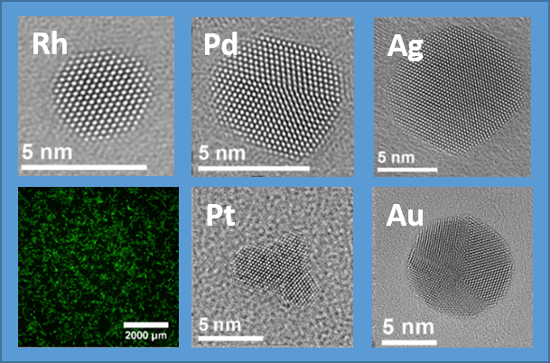
- , palladium, platinum, gold) that do not release ions are not cytotoxic under these conditions. Keywords: cytotoxicity; electron microscopy; metals; nanoparticles; nanotoxicity; Introduction Inorganic and metallic nanoparticles represent a well-established part of materials science, heterogeneous catalysis
- ]. Some authors have reported antimicrobial activity of gold, platinum, and palladium nanoparticles in the size range of 5 to 30 nm against gram-negative and gram-positive bacteria [23][24][25] and distinct adverse biological effects such as genotoxicity, induction of apoptosis and cell cycle arrest of
- = 40,000 g mol−1), sodium borohydride (Sigma-Aldrich, ≥96%, p.a.) trisodium citrate (Acros, anhydrous 98%), tannic acid (Fluka, p.a.), and D-glucose (Baker, p.a.) were all used as obtained. Aqueous solutions of H2PtCl6 or HAuCl4 (prepared by dissolution of platinum or gold in aqua regia), RhCl3, NaPdCl4


Accurate control of the covalent functionalization of single-walled carbon nanotubes for the electro-enzymatically controlled oxidation of biomolecules
Beilstein J. Nanotechnol. 2018, 9, 2750–2762, doi:10.3762/bjnano.9.257
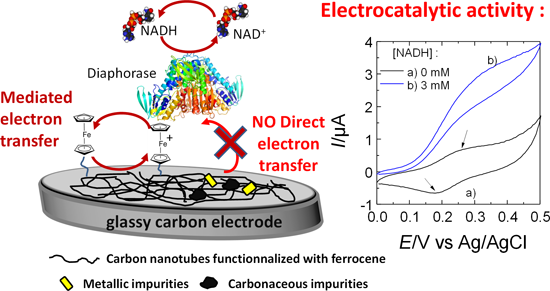
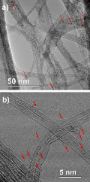
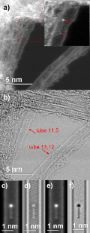
- electrolyte), and a platinum wire auxiliary electrode. A working electrode (WE) incorporating the f-SWCNTs deposited on the GCE surface. a) HRTEM micrographs of the raw HIPCO material. The arrows point out residual iron nanoparticles. b) HRSTEM BF image showing carbonaceous impurities at the surface of SWCNTs






Low cost tips for tip-enhanced Raman spectroscopy fabricated by two-step electrochemical etching of 125 µm diameter gold wires
Beilstein J. Nanotechnol. 2018, 9, 2718–2729, doi:10.3762/bjnano.9.254
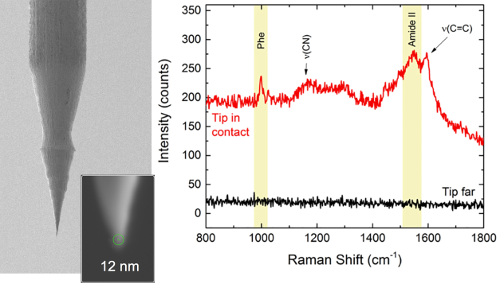
- absolute ethanol (>99.5 wt %). All the reagents used are of analytical grade. The experimental setup is shown in Figure 1. The setup includes (Figure 1a) an adjustable DC voltage generator connected to (Figure 1b) the gold wire to be etched (the anode) and to a platinum wire (500 µm diameter, Advent PT5408
- Au(III) (reactions 1 and 2), yielding a yellow precipitate. At the same time, H+ ions are reduced at the platinum wire surface, leading to H2 gas formation (reaction 3). The H2, together with O2 and Cl2 present in the solution, can cause intense bubbling when the reaction is fast enough, as for


Pattern generation for direct-write three-dimensional nanoscale structures via focused electron beam induced deposition
Beilstein J. Nanotechnol. 2018, 9, 2581–2598, doi:10.3762/bjnano.9.240
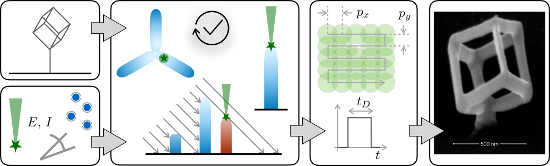
- , the pattern files for B and D with the bpPAA. Besides the fact that both A and C do not comply as nicely to the target geometry as B and D, B and D are also taller due to more efficient use of precursor. All four structures were deposited in high-resolution mode on SiO2 employing the platinum




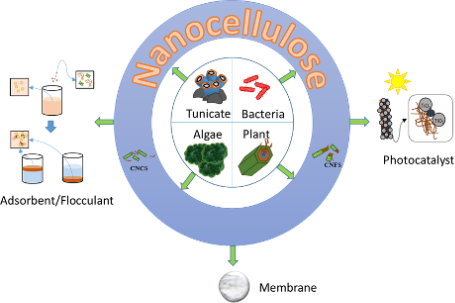
Nanocellulose: Recent advances and its prospects in environmental remediation
Beilstein J. Nanotechnol. 2018, 9, 2479–2498, doi:10.3762/bjnano.9.232


Thickness-dependent photoelectrochemical properties of a semitransparent Co3O4 photocathode
Beilstein J. Nanotechnol. 2018, 9, 2432–2442, doi:10.3762/bjnano.9.228
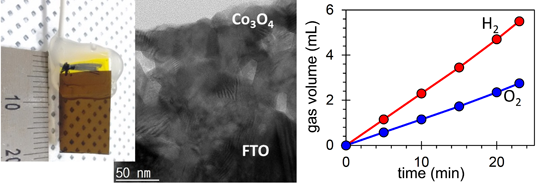
- /galvanostat (PG-stat) (WonA Tech, ZIVE SP1). Co3O4/FTO/glass, Ag/AgCl (KCl, 3 M), and platinum gauze were connected to the working, reference, and counter electrodes of the PG-stat, respectively. All PEC cell measurements were carried out in 0.1 M NaOH aqueous electrolyte pH 12.5 at room temperature. A white



Magnetism and magnetoresistance of single Ni–Cu alloy nanowires
Beilstein J. Nanotechnol. 2018, 9, 2345–2355, doi:10.3762/bjnano.9.219
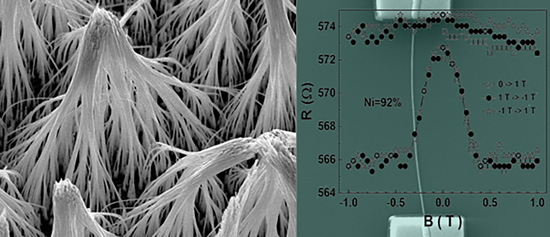
- electrode potential than Ni. Electrodeposition was performed using a potentiostat/galvanostat (PARSTAT 2276) controlled by a PC and employing a typical three-electrode configuration: a platinum foil of 1 cm2 (counter electrode), a thin film of Au covering one side of the polycarbonate membrane (working


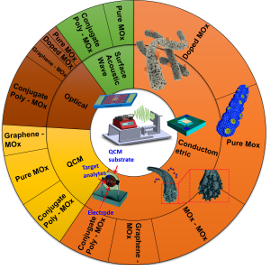
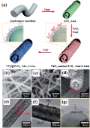
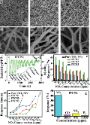
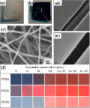
Electrospun one-dimensional nanostructures: a new horizon for gas sensing materials
Beilstein J. Nanotechnol. 2018, 9, 2128–2170, doi:10.3762/bjnano.9.202






Localized photodeposition of catalysts using nanophotonic resonances in silicon photocathodes
Beilstein J. Nanotechnol. 2018, 9, 2097–2105, doi:10.3762/bjnano.9.198
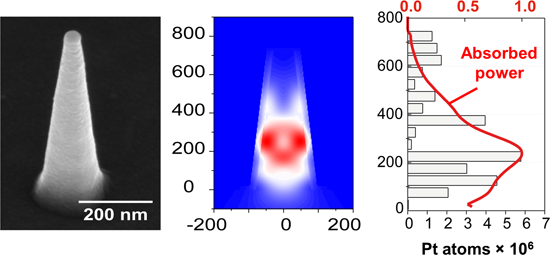
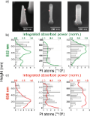
- spots”. These areas can be used for localized extraction of the photogenerated charges, which in turn could drive chemical reactions for synthesis of catalytic materials. In this work, we use these nanophotonic hot spots in vertical silicon nanowires to locally deposit platinum nanoparticles in a photo
- -electrochemical system. The tapering angle of the silicon nanowires as well as the excitation wavelength are used to control the location of the hot spots together with the deposition sites of the platinum catalyst. A combination of finite difference time domain (FDTD) simulations with scanning electron
- microscopy image analysis showed a reasonable correlation between the simulated hot spots and the actual experimental localization and quantity of platinum atoms. This nanophotonic approach of driving chemical reactions at the nanoscale using the optical properties of the photo-electrode, can be very

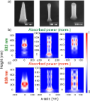

High-throughput synthesis of modified Fresnel zone plate arrays via ion beam lithography
Beilstein J. Nanotechnol. 2018, 9, 2049–2056, doi:10.3762/bjnano.9.194
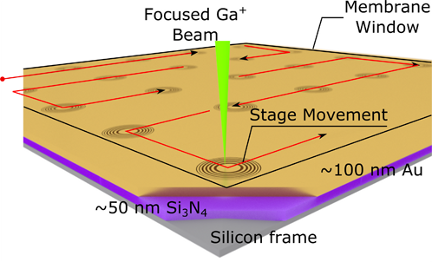
- the beam path), the current and the dwell time need to be precisely adjusted. Following the structuring of the zones, a ca. 3 µm thick beamstop was deposited in the central inactive region via focused ion beam induced deposition (FIBID) of Pt using trimethyl(cyclopentadienyl)platinum(IV), (CH3
- beamstop via FIBID. The parasitic deposition layer, where a Pt/C layer deposits unintentionally on the regions adjacent to the actual region of interest, covers the zones with a thin layer of platinum/gallium/carbon mixture (see Supporting Information File 1, Figure S3), which absorbs incident X-rays and


Metal-free catalysis based on nitrogen-doped carbon nanomaterials: a photoelectron spectroscopy point of view
Beilstein J. Nanotechnol. 2018, 9, 2015–2031, doi:10.3762/bjnano.9.191
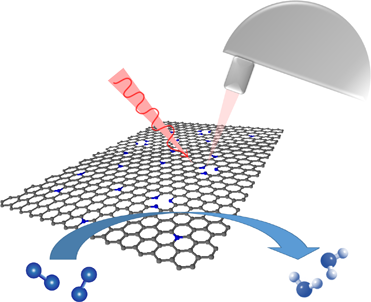
- as platinum or its alloys, or metal oxides, which affect the engineering cost of fuel cells being also energy consuming and not highly selective [3]. Therefore, research efforts have been devoted towards alternative highly active catalysts from non-precious metals [4]. Repeatedly reported potential
- vCNTs, to randomly oriented N-CNTs, and, in particular, to commercially available platinum-loaded carbon (Vulcan XC-72R), as reported in Figure 1. The electrochemical mechanism for the ORR was the same for aligned and disordered CNTs. The improved electrocatalytic performance of vCNTs was associated
- -vCNT electrode was considerable more stable toward the ORR than the platinum-loaded electrode, which showed deterioration after repeated cycles associated to migration and aggregation of the Pt nanoparticles. The electrocatalytic activity of nitrogen-doped carbon nanotubes was also reported to be




Recent highlights in nanoscale and mesoscale friction
Beilstein J. Nanotechnol. 2018, 9, 1995–2014, doi:10.3762/bjnano.9.190
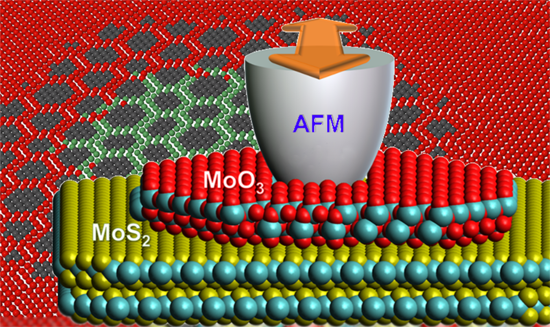
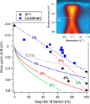
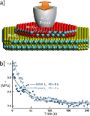
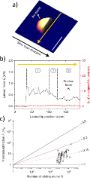
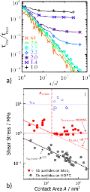
- interface [50][51]. Moreover, recent studies have highlighted that structural lubricity can also be observed for nanoparticle systems under ambient conditions. More specifically, a sublinear dependence of friction on the area was found both for gold [47] (Figure 2) and platinum particles [48] on HOPG. Ab


Synthesis of carbon nanowalls from a single-source metal-organic precursor
Beilstein J. Nanotechnol. 2018, 9, 1895–1905, doi:10.3762/bjnano.9.181
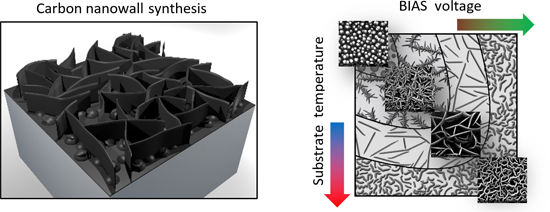
- the large surface area of the material. The high aspect ratio together with chemical stability, mechanical strength and electrical conductivity make CNWs an interesting matrix material for catalytic applications. Together with metallic nanoparticles, such as platinum, CNWs could be used in lithium-ion


Improving the catalytic activity for hydrogen evolution of monolayered SnSe2(1−x)S2x by mechanical strain
Beilstein J. Nanotechnol. 2018, 9, 1820–1827, doi:10.3762/bjnano.9.173
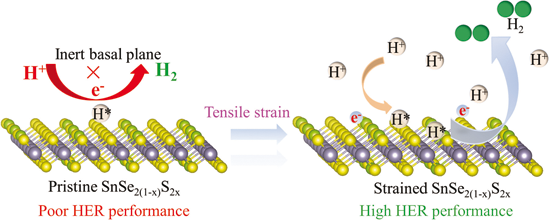
- electrolysis is a clean and “green” approach [3][4][5][6][7]. Efficient electrocatalysts for the hydrogen evolution reaction (HER) with high conversion efficiency are essential for the continuous generation of hydrogen. The platinum (Pt) group materials are regarded as the best electrocatalysts for HER


Know your full potential: Quantitative Kelvin probe force microscopy on nanoscale electrical devices
Beilstein J. Nanotechnol. 2018, 9, 1809–1819, doi:10.3762/bjnano.9.172
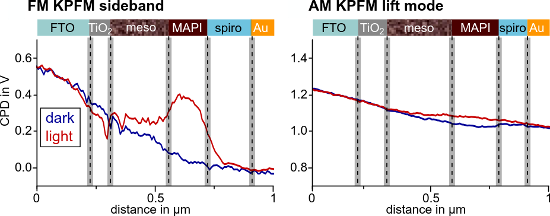
- crosstalk like reported by Polak et al. [16]. The parameters of the measurements can be found in Table 1. The feedback was optimized for = 0.5 V. The test structure was based on an interdigitated electrode array (IDA-Pt 2 μm by ALS, Japan). The pitch of the 90 nm thick platinum electrodes is 4 μm, the
- width of the electrodes is 2 μm and the length 2 mm. The electrode array consists of 65 pairs of electrodes. According to ALS-Japan the electrodes are made of pure platinum with a work function of 5.7 eV [41]. The electrodes are embedded into the glass substrate and therefore offer a low resistance


Friction force microscopy of tribochemistry and interfacial ageing for the SiOx/Si/Au system
Beilstein J. Nanotechnol. 2018, 9, 1647–1658, doi:10.3762/bjnano.9.157
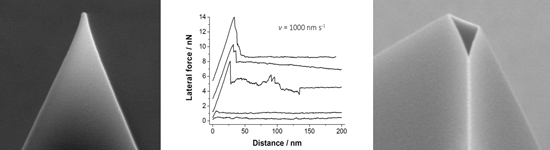
- thickness that allowed for TEM analysis. The FIB lamella was produced by first depositing a layer of platinum, starting with an electron beam at 2 kV and subsequently using the Ga ion beam at 30 kV until the platinum layer had reached a thickness of about 2.5 µm. The lamella was cut with the Ga ion beam at




Sulfur-, nitrogen- and platinum-doped titania thin films with high catalytic efficiency under visible-light illumination
Beilstein J. Nanotechnol. 2018, 9, 1629–1640, doi:10.3762/bjnano.9.155
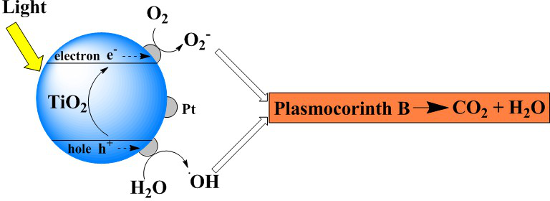
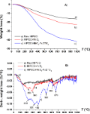
- (ammonium nitrate, urea), sulfur (thiourea) and platinum (chloroplatinic acid), coated onto glass substrates by dip-coating, and thermally treated in a muffle furnace to promote crystallization. The resulting thin films were then characterized by various techniques (i.e., TGA-DSC-MS, XRD, BET, XPS, SEM
- determined by XPS measurements. The platinum in sample S3_N0.5+0.015 M Pt was added as the final layer in the form of chloroplatinic acid by dip-coating. The last number describes molar concentrations of the deposited solution. Thermal analysis The purpose of thermal analysis measurements (TGA-DSC-MS) was to
- /2 photoelectron peak is centered at BE = 71.0 eV, confirming the presence of elemental Pt [46]. Typical surface concentration values calculated by XPS analyses are 1 atom % for S and N, whereas platinum has a concentration of 0.5 atom %. Scanning electron microscopy Figure 6 shows cross-sections of


Light extraction efficiency enhancement of flip-chip blue light-emitting diodes by anodic aluminum oxide
Beilstein J. Nanotechnol. 2018, 9, 1602–1612, doi:10.3762/bjnano.9.152
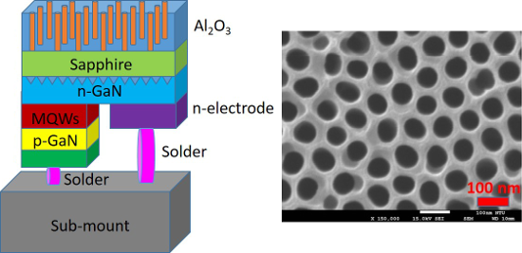
- platinum sheet was used as the cathode. The electrolysis experiment was conducted under 40 V with an electrolysis time of 45 min. Then, the system was placed in a mixed solution of 6 wt % phosphoric acid and 1.5 wt % chromic acid, and the first pore-widening process (1 h) and the second electrolysis


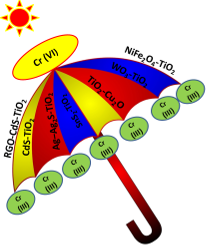
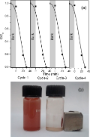
Cr(VI) remediation from aqueous environment through modified-TiO2-mediated photocatalytic reduction
Beilstein J. Nanotechnol. 2018, 9, 1448–1470, doi:10.3762/bjnano.9.137


Colorimetric detection of Cu2+ based on the formation of peptide–copper complexes on silver nanoparticle surfaces
Beilstein J. Nanotechnol. 2018, 9, 1414–1422, doi:10.3762/bjnano.9.134
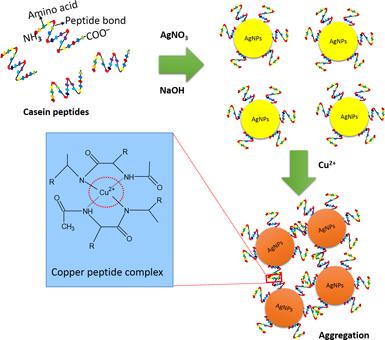
- strategies have limited practical applications due to a relatively high detection limit (3.0–20 μM) [11], which is much higher than that of fluorescence methods (0.8 μM) [5]. Recently, colorimetric methods based on gold [12], and platinum NPs have been widely reported for on-site use and analysis of multiple
- samples [13][14]. However, the use of gold and/or platinum limits the affordability of sensing probe. As exemplified in this work, cost-effective silver nanoparticles (AgNPs) having specifically modified ligands for detecting lower concentrations of Cu2+ offer a more portable and practical approach. In a


Chemistry for electron-induced nanofabrication
Beilstein J. Nanotechnol. 2018, 9, 1317–1320, doi:10.3762/bjnano.9.124

- (CO)2Cl2, the performance of treatment with atomic hydrogen is thus studied using surface science techniques [28]. Another subject covered is the fundamental chemistry of water-assisted purification processes [29], an approach that has successfully been applied to remove carbon from platinum and gold
Formation mechanisms of boron oxide films fabricated by large-area electron beam-induced deposition of trimethyl borate
Beilstein J. Nanotechnol. 2018, 9, 1282–1287, doi:10.3762/bjnano.9.120
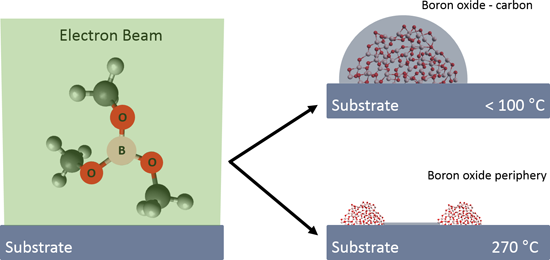
- interest include carbon, silicon, various oxides, and a wide range of metals including gold, platinum and chromium (for a comprehensive list of materials and precursors please refer to the review by Utke et al. [10]). Conventional research has shown the efficient deposition of continuous films on the scale



A novel copper precursor for electron beam induced deposition
Beilstein J. Nanotechnol. 2018, 9, 1220–1227, doi:10.3762/bjnano.9.113
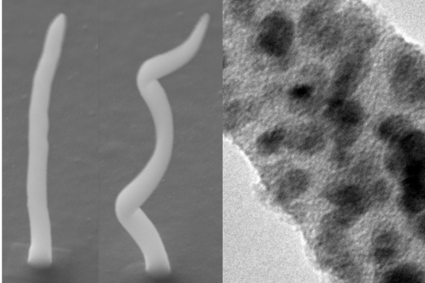
- height measured in the middle of the pads. Using this method, the high edges of the pad and the slants of the sides were neglected. The resulting volume deposition rate R = 0.026 µm3·nA−1·min−1 is comparable to the deposition rate of common platinum precursors [15]. However, it has to be pointed out that


Electrodeposition of reduced graphene oxide with chitosan based on the coordination deposition method
Beilstein J. Nanotechnol. 2018, 9, 1200–1210, doi:10.3762/bjnano.9.111
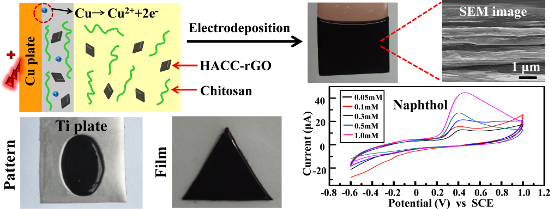
- deposition method, has been investigated. The schematic of the electrodeposition of HACC-rGO with chitosan on a copper electrode is illustrated in Figure 2a. In the electrodeposition, a copper plate was used as the anodic electrode and a platinum foil was used as the cathodic electrode, and the electrodes
- film on a glassy carbon electrode (GCE) to detect 1-naphthol (as a model analyte) was explored. The electrochemical measurements were carried out using a three-electrode system with the GCE as the working electrode, a saturated calomel electrode as the reference electrode, and a platinum wire as the
- purchased from Nantong Green Biological Co., Ltd., China. The copper plates, silver plates, titanium plates, platinum foil, glassy carbon electrode and other chemicals were obtained from various commercial sources in China. All chemicals were of analytical grade and were not purified before use. Preparation


Semi-automatic spray pyrolysis deposition of thin, transparent, titania films as blocking layers for dye-sensitized and perovskite solar cells
Beilstein J. Nanotechnol. 2018, 9, 1135–1145, doi:10.3762/bjnano.9.105
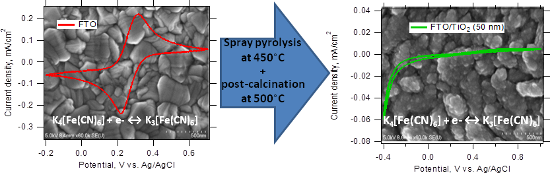
- controlled by the NOVA software. The TiO2 thin film on FTO was the working electrode, the reference electrode was Ag/AgCl (3 M KCl) and a platinum rod was used as the counter electrode. The TiO2 films were illuminated from the front side by a Hg lamp (Oriel), and the TiO2 film area (1 cm2) was defined by a





