Search results
Search for "polarization" in Full Text gives 390 result(s) in Beilstein Journal of Nanotechnology. Showing first 200.
Remarkable electronic and optical anisotropy of layered 1T’-WTe2 2D materials
Beilstein J. Nanotechnol. 2019, 10, 1745–1753, doi:10.3762/bjnano.10.170
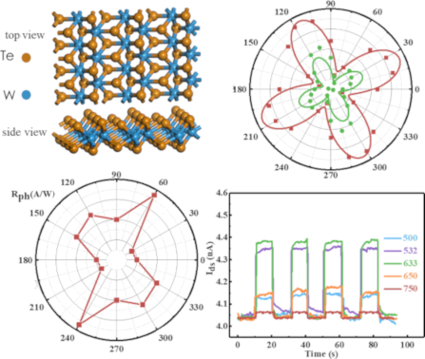
- measurements, as well as polarization-resolved and wavelength-dependent optoelectrical measurements. The electrical conductance anisotropic ratio is found to ≈103 for a thin 1T’-WTe2 film, while the optoelectronic anisotropic ratio is around 300 for this material. The polarization dependence of the photo
- and the possibility to open up new ways for applications of 2D materials for light polarization detection. Keywords: 1T’-WTe2; 2D material; anisotropic; light polarization; optoelectrical; Introduction The first exfoliation of graphene [1] attracted extensive interest in 2D materials such as black
- measure the selected two areas as shown in Figure 2a. Then the ADRDM measurement was conducted by rotating the incident angle (θ) of polarization from 0° to 360°, and the different values of N(θ) are displayed in Figure 2b as a function of incident angle. The absolute values of N were taken from the two


TiO2/GO-coated functional separator to suppress polysulfide migration in lithium–sulfur batteries
Beilstein J. Nanotechnol. 2019, 10, 1726–1736, doi:10.3762/bjnano.10.168
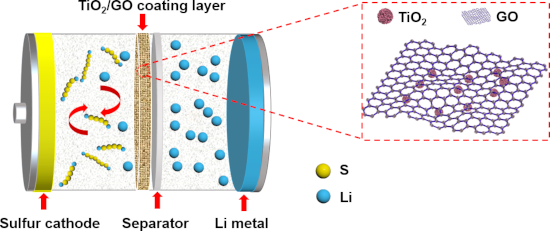
- ]. However, the development and widespread utilization of Li/S batteries is hindered by (i) the poor electronic/ionic conductivity of sulfur, causing a low reaction rate and electrochemical polarization, (ii) dissolution and the shuttle effect of intermediate polysulfides, resulting in the deposition of Li2S
- Li2S and Li2S2 into the high valence state Li2S4–8 [42][43][44]. One should note that the Li/S batteries with a pristine separator and those with a GO-coated separator exhibit much broader redox peaks than that of the Li/S batteries with TiO2/GO-coated separator due to the high polarization and poor


Tuning the performance of vanadium redox flow batteries by modifying the structural defects of the carbon felt electrode
Beilstein J. Nanotechnol. 2019, 10, 1698–1706, doi:10.3762/bjnano.10.165
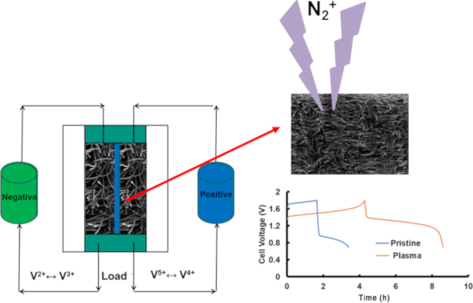
- reaction site or catalytic center in graphite is by doping it with heteroatoms such as B, N, or P. The heteroatom perturbs the electronic structure of the graphite layer subjected to doping, leading to enhanced polarization [14]. N-doped carbon-based electrodes have been successfully tested in VRFBs. For


Giant magnetoresistance ratio in a current-perpendicular-to-plane spin valve based on an inverse Heusler alloy Ti2NiAl
Beilstein J. Nanotechnol. 2019, 10, 1658–1665, doi:10.3762/bjnano.10.161
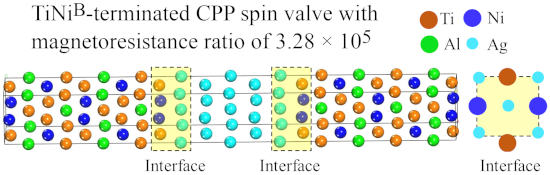
- largest interface spin polarization of ≈55%. Our study on spin-transport properties indicates that the total transmission coefficient at the Fermi level mainly comes from the contribution from the spin up electrons, which are regarded as the majority of the spin electrons. When the two electrodes of the
- metallicity, while minority spin bands possess an energy gap around the Fermi level. Such a novel band structure results in a theoretical 100% spin polarization, which is one of the most crucial parameters for CPP-SV according to the Valet–Fert model [5]. As one of the subfamilies of Heusler alloys
- presents a small negative value. Because the interface spin polarization (ISP) plays an important role in determining the performance of a spin-dependent device, the interfacial electronic structure is calculated and exhibited in Figure 3, where the left panel and right panel indicate the interfacial


Synthesis of P- and N-doped carbon catalysts for the oxygen reduction reaction via controlled phosphoric acid treatment of folic acid
Beilstein J. Nanotechnol. 2019, 10, 1497–1510, doi:10.3762/bjnano.10.148
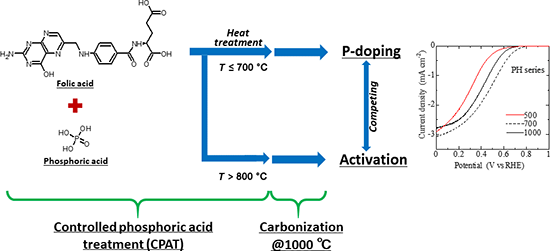
- cm2 cell was used for fuel-cell testing. Polarization curves were obtained at a cell temperature of 80 °C, a back pressure of 200 kPa, and a reactant gas relative humidity of 100% using H2 (1 L·min−1) and O2 (1 L·min−1) as anode and cathode gases, respectively. Characterization techniques The Brunauer





Superconducting switching due to a triplet component in the Pb/Cu/Ni/Cu/Co2Cr1−xFexAly spin-valve structure
Beilstein J. Nanotechnol. 2019, 10, 1458–1463, doi:10.3762/bjnano.10.144
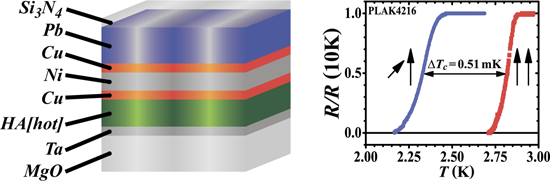
- = Co2Cr1−xFexAly with a high degree of spin polarization (DSP) of the conduction band and a Ni layer of variable thickness. The separation between the superconducting transition curves measured for the parallel (α = 0°) and perpendicular (α = 90°) orientation of the magnetization of the HA and the Ni
- contact spectroscopy [16], has a 90% polarization of the conduction band, we have chosen as a drawing layer for LRTC the HA Co2Cr1−xFexAly with a spin polarization of the conduction band of ≥70% [17] and instead of MoGe as an S layer we have used the elemental superconductor Pb. Sample Preparation and
- Experimental Results We prepared several sets of the F1/F2/S spin-valve structures containing HA = Co2Cr1−xFexAly with the high degree of spin polarization (DSP) of the conduction band standing for the F1 layer adapting the preparation method from [17]. The grown heterostructures have the following composition



Direct observation of oxygen-vacancy formation and structural changes in Bi2WO6 nanoflakes induced by electron irradiation
Beilstein J. Nanotechnol. 2019, 10, 1434–1442, doi:10.3762/bjnano.10.141
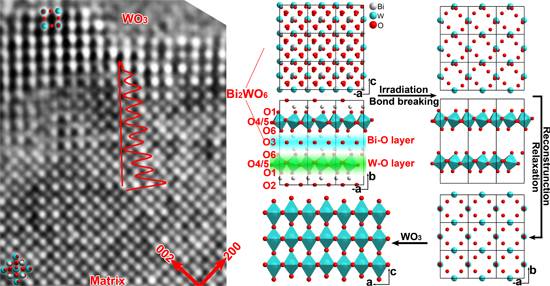
- . Keywords: bismuth tungsten oxide; electron diffraction; electron irradiation; nanoflakes; oxygen vacancies; Introduction Bi2WO6 has drawn great interest regarding its physical properties such as the piezoelectric effect and ferroelectricity with large spontaneous polarization and high Curie temperature [1


Warped graphitic layers generated by oxidation of fullerene extraction residue and its oxygen reduction catalytic activity
Beilstein J. Nanotechnol. 2019, 10, 1391–1400, doi:10.3762/bjnano.10.137
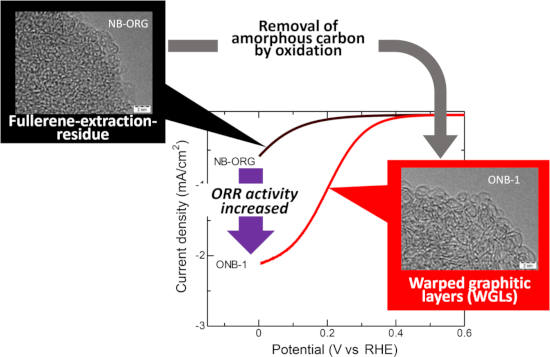
- Cu Kα X-ray source (40 kV, 30 mA) and was operated by scanning the diffraction angles from 5° to 90° at a scanning speed of 1 °/min. Corrections for atomic scattering, Lorentz, and polarization factors [44] were made to the diffraction profile for detailed analysis of the 002 diffractions. An



Janus-micromotor-based on–off luminescence sensor for active TNT detection
Beilstein J. Nanotechnol. 2019, 10, 1324–1331, doi:10.3762/bjnano.10.131
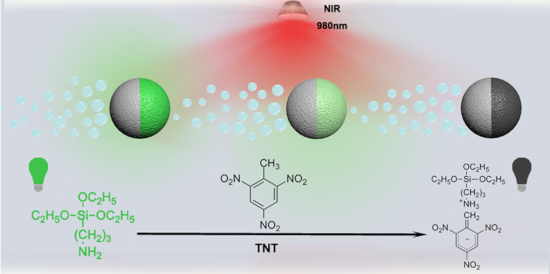
- ], surface plasmon resonance [10], molecularly imprinted polymers [6], and fluorescence polarization [11] have been proposed to detect TNT. However, most of these techniques have major limitations such as cumbersome pretreatment, complicated operation, long detection time and high cost. In recent years


Multicomponent bionanocomposites based on clay nanoarchitectures for electrochemical devices
Beilstein J. Nanotechnol. 2019, 10, 1303–1315, doi:10.3762/bjnano.10.129
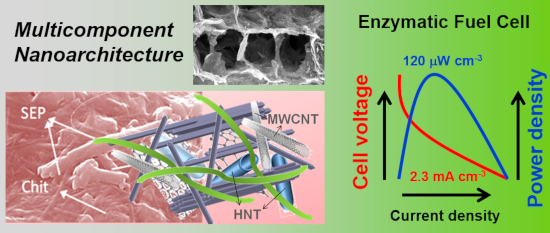
- operational stability of EBCs [37][41]. Herein, the performance of the biosensor was evaluated by cyclic voltammetry exploiting the mediated electron transfer (MET) mechanism and the power density of the assembled biofuel cell is examined through polarization curves obtained with linear sweep voltammetry in
- that can influence the electrochemical response [60]. The polarization measurements were carried out in a concentrated glucose solution (1 M) to estimate the maximum power density regardless of the glucose content [70][71]. The polarization curves for the described biofuel cell working at two different
- pH values are shown in Figure 5E. The polarization curves show the common behaviour of microbial fuel cells (MFCs) and EBCs and can be divided into three zones as shown in Figure 5E, commonly called the activation zone (I), ohmic losses (II), and the mass-transport zone (III) [72][73]. The open



Alloyed Pt3M (M = Co, Ni) nanoparticles supported on S- and N-doped carbon nanotubes for the oxygen reduction reaction
Beilstein J. Nanotechnol. 2019, 10, 1251–1269, doi:10.3762/bjnano.10.125
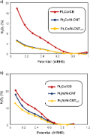
- −2, has been prepared and used as a reference. The polarization curves registered under air are reported in Figure 10. Focusing on the activation part of the curve, and as expected thanks to the RDE screening, Pt3Co/N-CNT is more active than Pt3Co/N-CNTHT and Pt3Ni/N-CNTHT. The performance obtained
- catalysts supported on CNTs [100][101]. The polarization curves recorded under O2 are shown in Supporting Information File 1, Figure S14. Even this performance is still lower than the performance of the reference MEA, 863 mW·cm−2 under air and 1118 mW·cm−2 under O2 at 1.5 A/cm2. To evidence the added value
- (EIS) were collected on single cell containing an MEA based on Pt3Co/N-CNT and Pt3Co/CB at 0.1 A/cm2, under air and in the same conditions as the polarization experiments. The high frequency resistance was 4.6 and 3.2 mΩ, respectively (see Supporting Information File 1, Figure S15). The higher value








Electroluminescence and current–voltage measurements of single-(In,Ga)N/GaN-nanowire light-emitting diodes in a nanowire ensemble
Beilstein J. Nanotechnol. 2019, 10, 1177–1187, doi:10.3762/bjnano.10.117
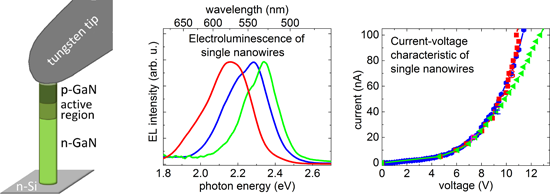
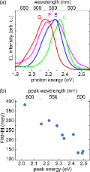
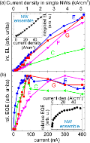
- -type base of the NW, whereas the high-energy line was linked to the superposition of the EL of the other three insertions. The variations in emission properties of single QWs were explained by different spontaneous and piezoelectric polarization fields within the different insertions, mainly caused by
- ionized donors and acceptors in the adjacent doped segments and by the non-uniform strain distribution along the active region, respectively. Also in the case of NW C in Figure 3, the comparatively strong shift of emission line 1 for currents up to 100 nA suggests the presence of strong polarization
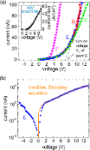
- polarization fields cause a spatial separation of electrons and holes in the QWs which in turn leads to a reduced radiative recombination rate and hence a reduced relative EQE for small injection currents. Due to the lack of temperature-dependent measurements, it was not possible to draw any hard conclusions


Fe3O4 nanoparticles as a saturable absorber for giant chirped pulse generation
Beilstein J. Nanotechnol. 2019, 10, 1065–1072, doi:10.3762/bjnano.10.107
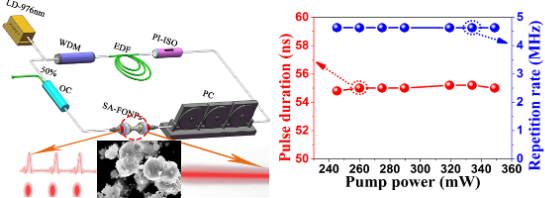
- parameter of 17 ps/nm/km. Therefore, the fiber cavity used in this experiment is dispersion-managed and lies in negative dispersion regime [42]. A polarization independent isolator (PI-ISO) is employed in the cavity to ensure the unidirectional operation of the ring cavity, and a polarization controller (PC
- are almost unchanged. As the pump power is increased to 245.2 mW, a stable pulse spectrum can be observed. Keeping the polarization state constant, a stable spectrum can be obtained over a wide pump power range from 245.2 mW to 348.8 mW. Figure 6c and 6d summarize the measured average output power and
- pulses are generated in the experiments, we implemented a laser cavity without the SA materials. It was found that only the wavelength can be tuned in the spectra and some fluctuations were observed on the oscilloscope by adjusting the polarization controllers, which is due to the birefringence and


Correlation of surface-enhanced Raman scattering (SERS) with the surface density of gold nanoparticles: evaluation of the critical number of SERS tags for a detectable signal
Beilstein J. Nanotechnol. 2019, 10, 1016–1023, doi:10.3762/bjnano.10.102
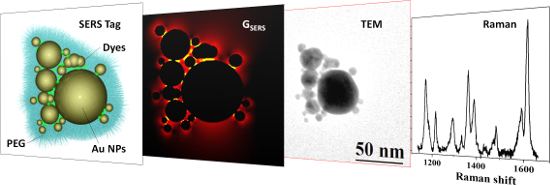
- of a real AuNT, and two different polarization directions were considered, namely parallel and perpendicular to the main axis of the nanoaggregate. For metal particles in the 2–200 nm size range, an error smaller than 10% is achieved using a number of dipoles at least of the order of 104 and using an
- changing the direction of polarization of incident light, the AuNTs always have several active hot spots, which reduces the number of “dark” tags in real operating conditions using polarized laser light sources, such as in ordinary Raman spectrometers [56]. This is demonstrated in Figure 1E, were the
- bidimensional map of GSERS in the AuNT was calculated for a different polarization direction: GSERS values span the same range as in Figure 1D, but the hot spots are mostly located at different points within the nanoaggregate. To quantify the Raman scattering intensity versus concentration of nanoparticles, the


Electronic and magnetic properties of doped black phosphorene with concentration dependence
Beilstein J. Nanotechnol. 2019, 10, 993–1001, doi:10.3762/bjnano.10.100
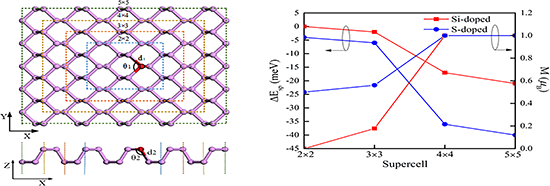
- structures of Si- and S-doped phosphorene without spin polarization always show metallic states suggesting the bandgap is insensitive to the in-plane size of the supercell and the dopant content. However, the results are fairly different once the spin polarization is taken into account. The band structures
- supercell size due to decreasing deformation and dopant content. In the following, we discuss the magnetic and electronic properties of the stable doped phosphorenes induced by the deformation and impurity concentration. Band structure without spin polarization Before investigating the magnetic properties
- , the electronic structures of the Si- and S-doped phosphorenes were calculated, first without considering spin polarization. The results are shown in Figure 2 where the magenta lines represent the impurity levels and the Fermi level is shifted to zero. The impurity states induced by the Si and S atoms


An iridescent film of porous anodic aluminum oxide with alternatingly electrodeposited Cu and SiO2 nanoparticles
Beilstein J. Nanotechnol. 2019, 10, 735–745, doi:10.3762/bjnano.10.73
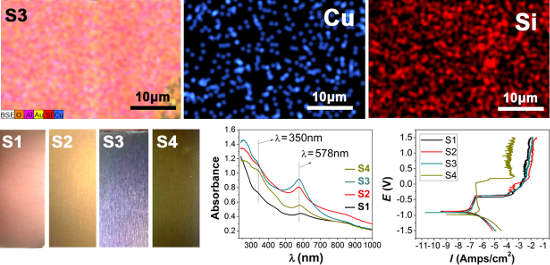
- interfacial impedance of the sample was estimated on the basis of the analysis described above, and the corrosion resistance performance was evaluated in more detail. Furthermore, the electrical polarization process of the sample in the test solution was studied by analyzing the Nyquist and Bode diagrams. The
- , respectively. Because such an electrochemical impedance measurement is sensitive to the outside interferences, the workstation was not permitted to be disrupted during the measurement, and electronic devices such as mobile phones were placed far away from the experiment. The polarization test was divided into
- potential to obtain the entire polarization curve. Since the potential of the electrode applied by the potentiostatic potential was sufficient to destroy the barrier layer of the sample to be tested, the potentiodynamic scanning must be performed after the electrical impedance test had been completed. The


Features and advantages of flexible silicon nanowires for SERS applications
Beilstein J. Nanotechnol. 2019, 10, 725–734, doi:10.3762/bjnano.10.72

- factor increases approximately as d−8 in the case of two metal nanoparticles with the polarization along the particle axis, which can be roughly applied to the case of two nanowires. However, in the reported substrates SiNWs are randomly oriented and the polarization measurement was not tested in detail


Coexisting spin and Rabi oscillations at intermediate time regimes in electron transport through a photon cavity
Beilstein J. Nanotechnol. 2019, 10, 606–616, doi:10.3762/bjnano.10.61
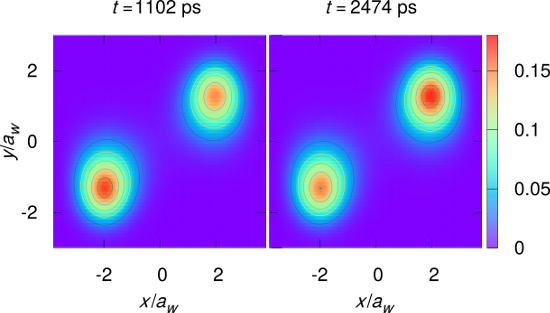
- the two states weakly through the diamagnetic interaction. We thus observed two different Rabi oscillations depending on the polarization of the cavity field [9][15][16][17]. Here, we select an asymmetric system with slightly dissimilar quantum dots located at opposite ends of the short quantum wire
- the center of the z = 0 plane. For the Coulomb gauge used here the polarization of the electric field of the cavity photons parallel to the transport in the x-direction (with the unit vector ex) is realized in the TE011 mode, or perpendicular to the transport (defined by the unit vector ey) in the
- TE101 mode. The two modes of the quantized vector potential for the cavity field can be expressed as (in a stacked notation) with the strength of the vector potential, and the electron–photon coupling constant related by leading to a dimensionless polarization tensor to be evaluated, where k = x or y


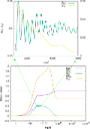
![[Graphic 40]](/bjnano/content/inline/2190-4286-10-61-i49.svg?max-width=637&scale=1.418184) and photon
and photon ![[Graphic 41]](/bjnano/content/inline/2190-4286-10-61-i50.svg?max-width=637&scale=1.418184) content in the open central system as a function of time. In additio...
content in the open central system as a function of time. In additio...
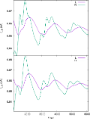
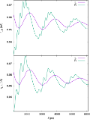
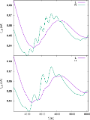
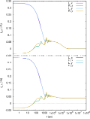

![[Graphic 60]](/bjnano/content/inline/2190-4286-10-61-i69.svg?max-width=637&scale=1.418184)
![[Graphic 61]](/bjnano/content/inline/2190-4286-10-61-i70.svg?max-width=637&scale=1.418184)
![[Graphic 62]](/bjnano/content/inline/2190-4286-10-61-i71.svg?max-width=637&scale=1.418184) and
and ![[Graphic 63]](/bjnano/content/inline/2190-4286-10-61-i72.svg?max-width=637&scale=1.418184) i...
i...
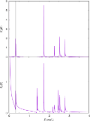
![[Graphic 76]](/bjnano/content/inline/2190-4286-10-61-i85.svg?max-width=637&scale=1.418184) in the steady state. The cavity pho...
in the steady state. The cavity pho...
Topochemical engineering of composite hybrid fibers using layered double hydroxides and abietic acid
Beilstein J. Nanotechnol. 2019, 10, 589–605, doi:10.3762/bjnano.10.60
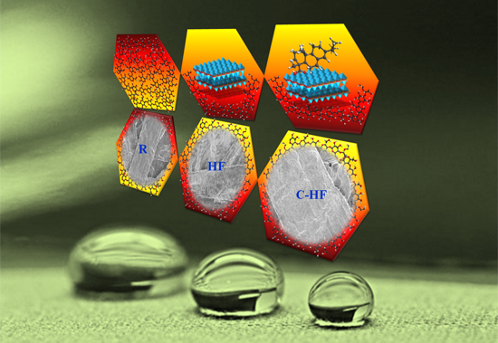
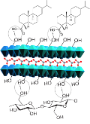
- brucite layers were already utilized to graft cellulose through cellulosic O–H polarization. Thus, LDH act as a perfect structure-directing agent in C-HF materials. The XRD spectra of C-HF show a convergence of diffraction peaks of cellulose and AA at 14–16°, a shift from 14.77° to 15.20° and enhanced




Quantification and coupling of the electromagnetic and chemical contributions in surface-enhanced Raman scattering
Beilstein J. Nanotechnol. 2019, 10, 549–556, doi:10.3762/bjnano.10.56
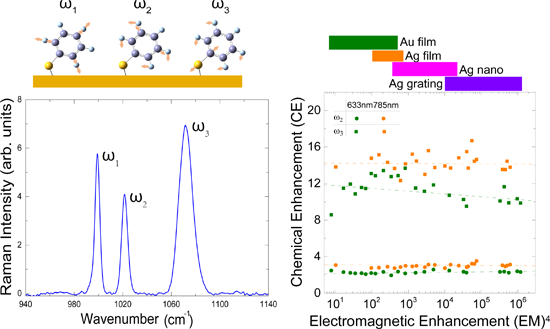
- charge-transfer contribution, and its CE value depends on the excitation wavelength. With regards to coupling between physical and chemical enhancement [20][22], a coupling factor can be introduced to quantify how the induced polarization modifies the charge redistribution and vice versa. However, we


A porous 3D-RGO@MWCNT hybrid material as Li–S battery cathode
Beilstein J. Nanotechnol. 2019, 10, 514–521, doi:10.3762/bjnano.10.52
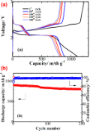
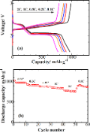
- the discharge profiles was observed at all current densities, which is consistent with the CV curves peaks (Figure 5). As the current increases from 0.1C to 2C, the polarization of the plateaus becomes higher, implying a slow decrease in the kinetic efficiency of the reaction process. This may have



Widening of the electroactivity potential range by composite formation – capacitive properties of TiO2/BiVO4/PEDOT:PSS electrodes in contact with an aqueous electrolyte
Beilstein J. Nanotechnol. 2019, 10, 483–493, doi:10.3762/bjnano.10.49
- comparison (Ti/BiVO4). Hydrogenation process Annealed titania nanotubes and titania nanotubes covered by BiVO4 were exposed to cathodic polarization in 1 M H2SO4 electrolyte. The potential of the working electrode during hydrogenation was equal to −1.5 V vs Ag/AgCl (0.1 M KCl) and the process lasted for 60 s
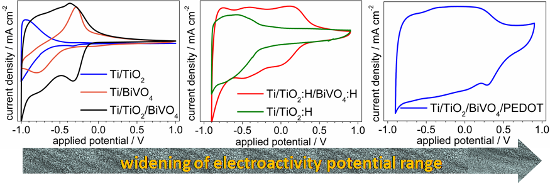
- -specific capacitance, in the present work only the areal capacitance was discussed. Conclusion This report is devoted to the design and investigation of a novel electrode material, Ti/TiO2/BiVO4/PEDOT:PSS, which is characterized by a high capacity during polarization in contact with an aqueous electrolyte
- electrodeposition of PEDOT:PSS. Finally, Ti/TiO2/BiVO4/PEDOT:PSS electrodes were electrochemically tested over a wide range of potential (ΔE = 1.8 V). The electrode showed comparable capacity values over a wide range of polarization scan rates (10–200 mV·s−1). Multiple galvanostatic charge–discharge cycles lead to




Nanocomposite–parylene C thin films with high dielectric constant and low losses for future organic electronic devices
Beilstein J. Nanotechnol. 2019, 10, 428–441, doi:10.3762/bjnano.10.42
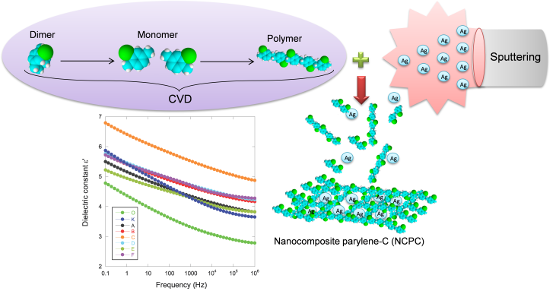
- β-relaxation [34]. The effect of plasma (sample K) results in a slight decrease in these losses over the entire frequency range. However, there is a slight increase in these losses at the lowest frequencies (less than 1 Hz) attributed to the manifestation of charge conduction or a new polarization
- -relaxation without bringing other inconveniences such as interfacial polarization mechanism or a long-range electrical conductivity induced by these nanoparticles. For this latter, we plotted the electrical ac-conductivity σ’ as a function of the frequency (Figure 9). The behavior is representative of short




Nitrous oxide as an effective AFM tip functionalization: a comparative study
Beilstein J. Nanotechnol. 2019, 10, 315–321, doi:10.3762/bjnano.10.30
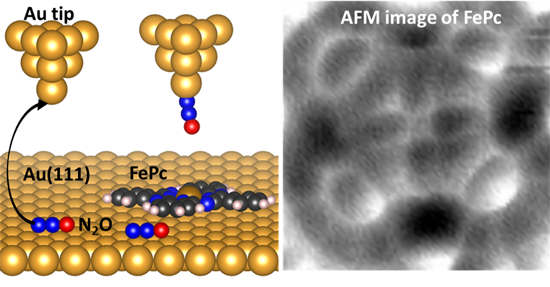
- , due to their slightly different polarization. The calculations reveal that the preferred orientation of the N2O molecules in the clusters is with the O atoms outward (Figure 1b), being 17 meV more stable than the opposite arrangement. Using the optimized geometry of the cluster obtained from DFT


A Ni(OH)2 nanopetals network for high-performance supercapacitors synthesized by immersing Ni nanofoam in water
Beilstein J. Nanotechnol. 2019, 10, 281–293, doi:10.3762/bjnano.10.27
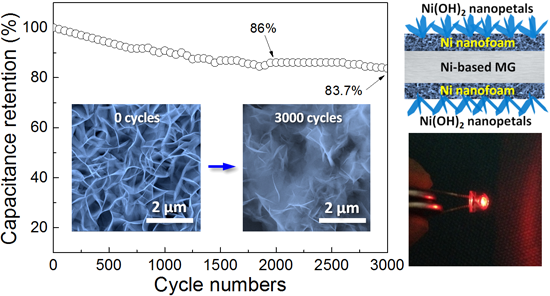
- above 20 mV/s. This phenomenon is related to electrochemical polarization, i.e., the electron flow rate not keeping pace with the electrode reaction [44]. The GCD (Figure 5d) was recorded at different current densities from 0.5 to 12 A/cm3. The nonlinear GCD curves confirm typical pseudo-capacitive