


Search results
Search for "resonance" in Full Text gives 843 result(s) in Beilstein Journal of Nanotechnology. Showing first 200.
Design of surface nanostructures for chirality sensing based on quartz crystal microbalance
Beilstein J. Nanotechnol. 2022, 13, 1201–1219, doi:10.3762/bjnano.13.100
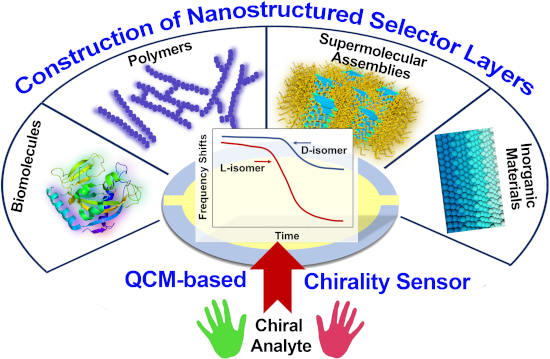
- resonance [10], Fourier transform infrared spectrometry (FTIR) [11], UV–vis absorption spectrometry [12], mass spectrometry (MS) [13], titration microcalorimetry [14], high-performance liquid chromatography (HPLC) [15], gas chromatography (GC), capillary electrophoresis (CE) [16], and electrochemical chiral
- outstanding sensing properties, with real-time, sensitive and selective chiral detection, high durability, and easy recovery. To understand the chiral recognition between calixarenes and analytes, Zoya I. Kazantseva et al. combined QCM and proton magnetic resonance spectroscopy (1H NMR) techniques to study


Nonlinear features of the superconductor–ferromagnet–superconductor φ0 Josephson junction in the ferromagnetic resonance region
Beilstein J. Nanotechnol. 2022, 13, 1155–1166, doi:10.3762/bjnano.13.97
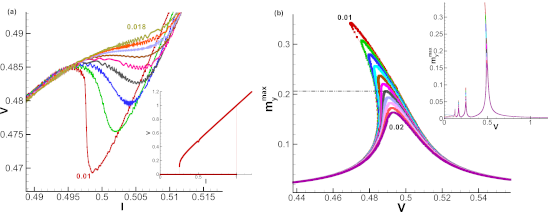
- characteristics of a φ0 Josephson junction in the ferromagnetic resonance region. We show that at small values of the system parameters damping, spin–orbit interaction, and Josephson-to-magnetic energy ratio, the magnetic dynamics is reduced to the dynamics of a scalar Duffing oscillator driven by the Josephson
- oscillations. The role of the increasing superconducting current in the resonance region is clarified. Shifting of the ferromagnetic resonant frequency and the reversal of its damping dependence due to nonlinearity are demonstrated by the full Landau–Lifshitz–Gilbert–Josephson system of equations and in its
- relation, preventing it from being antisymmetric. Such Josephson junctions are named φ0 junctions [1], and examples, such as MnSi and FeGe, exist. The second one is the nonlinear property of the system, which makes for an anomalous resonance behavior [14]. We couple such a Josephson junction to the model


![[Graphic 14]](/bjnano/content/inline/2190-4286-13-97-i38.svg?max-width=637&scale=1.18182) at differ...
at differ...


![[Graphic 18]](/bjnano/content/inline/2190-4286-13-97-i42.svg?max-width=637&scale=1.18182) (V) on α in the damping parameter interval [0.001–0.12]....
(V) on α in the damping parameter interval [0.001–0.12]....

Rapid fabrication of MgO@g-C3N4 heterojunctions for photocatalytic nitric oxide removal
Beilstein J. Nanotechnol. 2022, 13, 1141–1154, doi:10.3762/bjnano.13.96
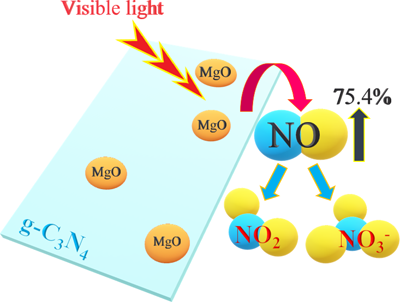
- conversion, DeNOx index, apparent quantum efficiency, trapping tests, and electron spin resonance measurements were carried out to understand the photocatalytic mechanism of the materials. The high reusability of the MgO@g-C3N4 heterojunction was shown by a five-cycle recycling test. This study provides a
- test, electron spin resonance (ESR) measurements, and other methods. This work might be helpful for the development of MgO@g-C3N4 heterojunction materials. Experimental Synthesis of MgO/g-C3N4 For the synthesis of g-C3N4, 30 g of urea was ground manually for 30 min and then placed in a 100 mL crucible





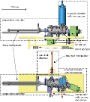
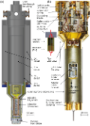
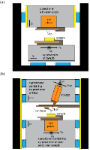
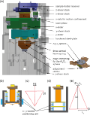
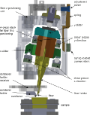
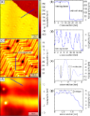
A cantilever-based, ultrahigh-vacuum, low-temperature scanning probe instrument for multidimensional scanning force microscopy
Beilstein J. Nanotechnol. 2022, 13, 1120–1140, doi:10.3762/bjnano.13.95
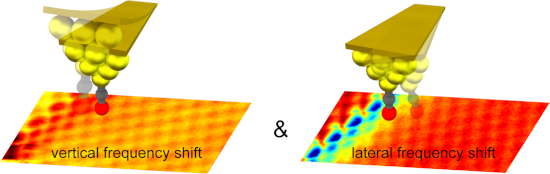
- scanning tunneling microscope (STM) can be transformed into a tuning fork-based AFM simply by replacing the rigid STM tip by a tuning fork with an attached tip and by adding an extra pre-amplifier and a PLL to drive the tuning fork oscillation and measure shifts in its resonance frequency arising from the
- tip–sample interaction. However, because of the macroscopic size of the tuning fork, the high stiffness of the sensor goes together with a low resonance frequency typically around 30 kHz. This substantially limits the minimally measurable tip–sample interaction force gradients such that very small AFM
- operational environments. For AFM performed under ambient conditions, microfabricated cantilevers can, for example, be operated in different oscillation modes [15] or at multiple frequencies [16][17][18][19][20][21][22][23] to simultaneously map different sample properties. Further, the high resonance





Recent advances in green carbon dots (2015–2022): synthesis, metal ion sensing, and biological applications
Beilstein J. Nanotechnol. 2022, 13, 1068–1107, doi:10.3762/bjnano.13.93
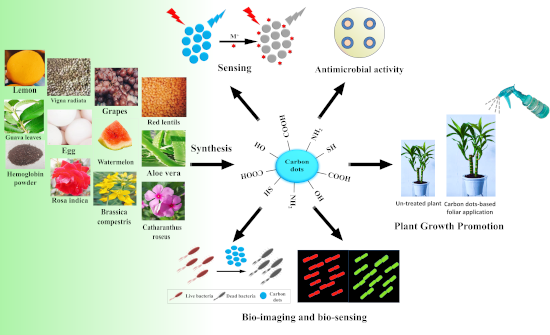
- source). They showed that luminous impurities formed as byproducts during the synthesis of CDs mostly contribute to fluorescence emission by eliminating the molecular fluorophores [133]. By using fluorescence correlation spectroscopy and time-resolved electron paramagnetic resonance spectroscopy




Spindle-like MIL101(Fe) decorated with Bi2O3 nanoparticles for enhanced degradation of chlortetracycline under visible-light irradiation
Beilstein J. Nanotechnol. 2022, 13, 1038–1050, doi:10.3762/bjnano.13.91
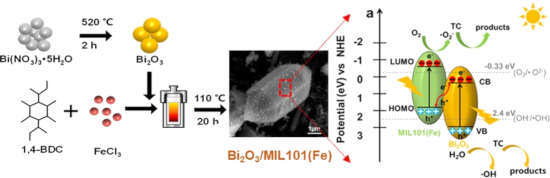
- experiment and electron spin resonance (ESR) experiment suggest that the electron transfer path between Bi2O3 and MIL101(Fe) accords with the Z-type transfer mechanism. The possible photocatalytic degradation pathways were investigated via the analysis of the intermediate products in the degradation process
- (CHIQ660D, Chenhua Instrument, China). Electronic paramagnetic resonance signals were recorded with an electron paramagnetic resonance spectrometer (Brooke A300, Germany). Results and Discussion Characterization Figure 1 shows the XRD pattern of the synthesized MIL101(Fe), Bi2O3, and BOM-20 composite. The


Numerical study on all-optical modulation characteristics of quantum cascade lasers
Beilstein J. Nanotechnol. 2022, 13, 1011–1019, doi:10.3762/bjnano.13.88
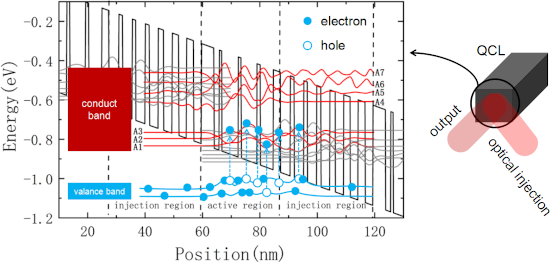
- standard 35-stage In0.52Al0.48As/In0.53Ga0.47As type-I four-level Fabry–Perot QCL based on a two-phonon-resonance design [27]. Current injection efficiency is defined as the ratio of current to total current injected into the upper subband of the QCL in the active region, which is close to 56%. The QCL


Effects of focused electron beam irradiation parameters on direct nanostructure formation on Ag surfaces
Beilstein J. Nanotechnol. 2022, 13, 1004–1010, doi:10.3762/bjnano.13.87
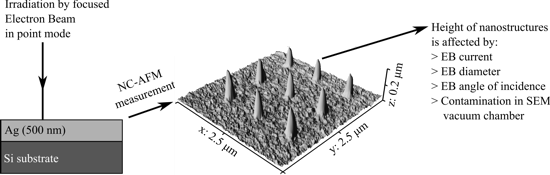
- micromechanical oscillators via EB irradiation which contradicts the model of EB-induced carbonization as a simple process of adding carbon mass to the irradiated area [32]. Doubly clamped beams made of Au85Pd15 were irradiated by EB and their resonance frequency increased with exposure time and beam current due
- to EB-induced carbonization. However, changing the position of the EB along the oscillator did not affect their resonance frequency, which should be the case if carbonization was happening locally. There is a potential for carbon and carbon-metal based nanostructured systems to be used in different




Comparing the performance of single and multifrequency Kelvin probe force microscopy techniques in air and water
Beilstein J. Nanotechnol. 2022, 13, 922–943, doi:10.3762/bjnano.13.82
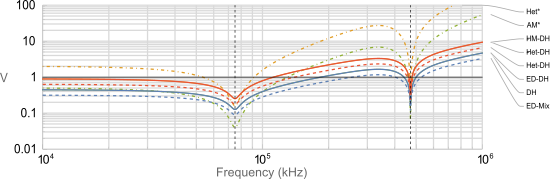
- governing the performance of single and multifrequency Kelvin probe force microscopy (KPFM) techniques in both air and water. Metrics such as minimum detectable contact potential difference, minimum required AC bias, and signal-to-noise ratio are compared and contrasted both off resonance and utilizing the
- in the response of the lever proportional to the quality factor of that mode, Qn, where n is the mode number [36][55]. KPFM techniques can be applied off resonance (ω ≠ ωn), where ∝ 1/kn, where kn is the spring constant of the n-th eigenmode. More generally, KPFM techniques are applied at, or close
- significant SNR enhancements over off-resonance techniques, higher spatial resolution due to reduced influence of the cantilever to the electrostatic forces [17][60][63], and higher bandwidth than side-band techniques [10][58]. All modes of KPFM can in principle be applied in any of these scenarios. In
Numerical modeling of a multi-frequency receiving system based on an array of dipole antennas for LSPE-SWIPE
Beilstein J. Nanotechnol. 2022, 13, 865–872, doi:10.3762/bjnano.13.77
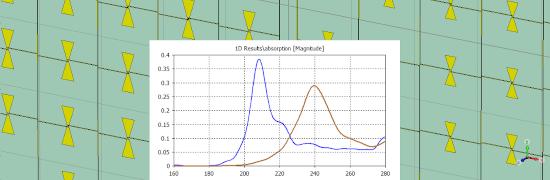
- frequency channel at the level of 0.5 is 45 GHz. At 220 GHz there is a spurious resonance that can be suppressed with a low-pass filter. Auxiliary frequency channels of the LSPE-SWIPE The cells are located within a circle with a diameter of 4.5 mm; while one half of the circle is occupied by cells for 210


Self-assembly of C60 on a ZnTPP/Fe(001)–p(1 × 1)O substrate: observation of a quasi-freestanding C60 monolayer
Beilstein J. Nanotechnol. 2022, 13, 857–864, doi:10.3762/bjnano.13.76
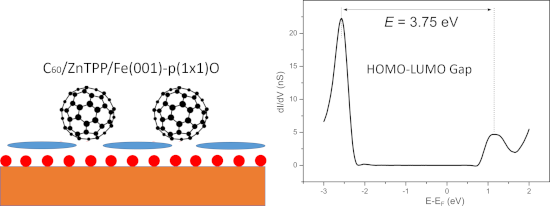
- range (filled electronic states) a strong resonance centered at about −2.60 eV is present, which we attribute to HOMO states, in excellent agreement with UPS measurements (−2.56 eV). In the positive energy range (empty states) of the STS spectrum the LUMO peak is visible at 1.15 eV, resulting in an


Ultrafast signatures of magnetic inhomogeneity in Pd1−xFex (x ≤ 0.08) epitaxial thin films
Beilstein J. Nanotechnol. 2022, 13, 836–844, doi:10.3762/bjnano.13.74
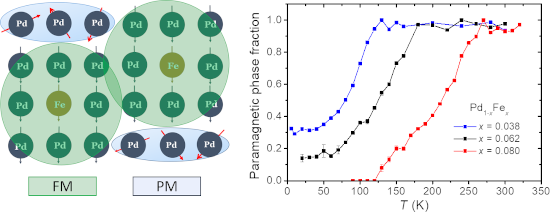
- ferromagnetic resonance techniques (the latter two, because of the large scale, yield volume-averaged signals). Resonant magnetic small-angle X-ray scattering applied to Pd1−xFex alloy films with x = 0.03–0.07 revealed static magnetic fluctuations on the lateral scale of about 100 nm attributed to the magnetic


Optimizing PMMA solutions to suppress contamination in the transfer of CVD graphene for batch production
Beilstein J. Nanotechnol. 2022, 13, 796–806, doi:10.3762/bjnano.13.70
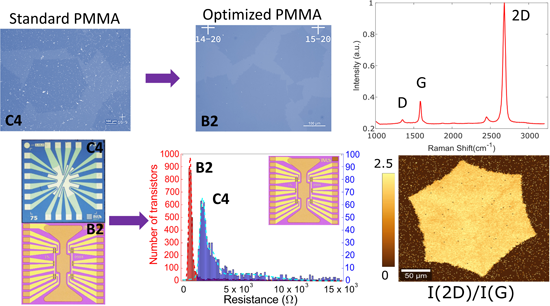
- analyzer had a pass energy of 20 eV. Atomic force microscopy The surface topographies of graphene were investigated by a Bruker Dimension Icon atomic force microscope (AFM), using PPP-NCH (NanosensorsTM) cantilevers with a tip radius smaller than 20 nm, a force constant of 42 N/m, and 250 kHz resonance




Gelatin nanoparticles with tunable mechanical properties: effect of crosslinking time and loading
Beilstein J. Nanotechnol. 2022, 13, 778–787, doi:10.3762/bjnano.13.68
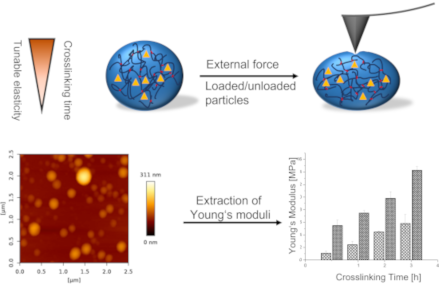
- same day. AFM measurements were carried out with a JPK NanoWizard® 3 AFM (JPK Instruments, Berlin, Germany) using the MLCT cantilever tip D (Bruker France Nano Surfaces, Wissembourg, France) with a nominal resonance frequency of 15 kHz and a spring constant of 0.03 N/m. Before each measurement, the


Direct measurement of surface photovoltage by AC bias Kelvin probe force microscopy
Beilstein J. Nanotechnol. 2022, 13, 712–720, doi:10.3762/bjnano.13.63
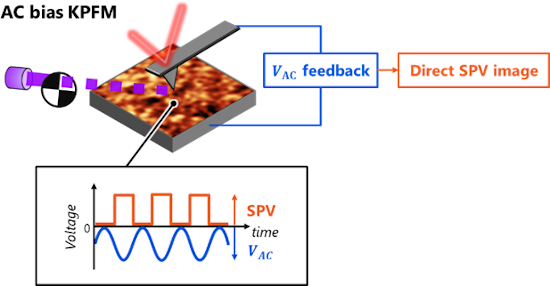
- force This signal is measured with a lock-in amplifier and compensated by VAC control, yielding the SPV value. To improve the sensitivity, ωm is usually tuned to the second (first) resonance frequency of the cantilever, while the first (second) resonance frequency is assigned to the AFM measurement [29
- ]. Since these resonance frequencies are commonly in the kilohertz to megahertz range, the time scale of the measured SPV is from microseconds to milliseconds, which is much faster than that measured by classical KPFM, which measures the slow SPV response of the order of seconds to hours because of the


Tunable high-quality-factor absorption in a graphene monolayer based on quasi-bound states in the continuum
Beilstein J. Nanotechnol. 2022, 13, 675–681, doi:10.3762/bjnano.13.59
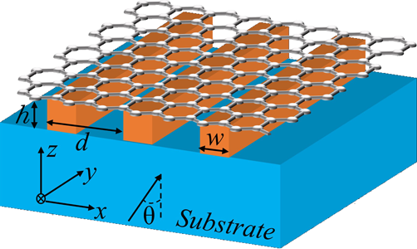
- energy conversion, while narrow-band absorbers [9][10][11][12] have great potential in sensing and monochromatic light detecting. An example is the application of narrow-band absorbers in refractive index sensing [13]. When the absorbers are surrounded by gas or liquid, the resonance wavelength will
- proposed to enhance the absorption in graphene monolayers, such as coherent perfect absorption effect [46], critical coupling effect [47], guided mode resonance effect [48], metal Tamm plasmon polaritons effect [49], and graphene Tamm surface plasmons effect [50]. In addition, the quasi-BICs mentioned
- structures without graphene monolayer for angles of 0°, 0.1°, 0.5°, 1.0°, 1.5°, and 2.0° in Figure 4a. Clearly, with the successively reduction of the incident angle from 2.0° to 0°, the bandwidth of the Fano resonance peak decreases rapidly. At θ = 0°, the bandwidth has completely vanished, indicating an


Quantitative dynamic force microscopy with inclined tip oscillation
Beilstein J. Nanotechnol. 2022, 13, 610–619, doi:10.3762/bjnano.13.53
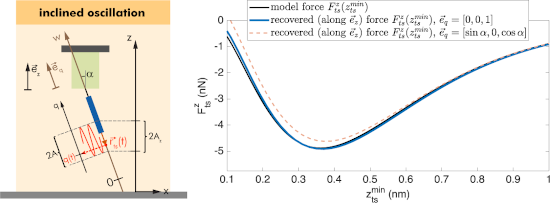
- -dependent shift in frequency, Δf(zp), of the sensor excitation frequency fexc that results when phase resonance for the sensor oscillation is maintained throughout the measurement [19]. The resulting curve Δf(zp) is a convolution of the covered part of the force curve and a kernel depending on the


![[Graphic 38]](/bjnano/content/inline/2190-4286-13-53-i79.svg?max-width=637&scale=1.18182) and the axis w....
and the axis w....


Revealing local structural properties of an atomically thin MoSe2 surface using optical microscopy
Beilstein J. Nanotechnol. 2022, 13, 572–581, doi:10.3762/bjnano.13.49
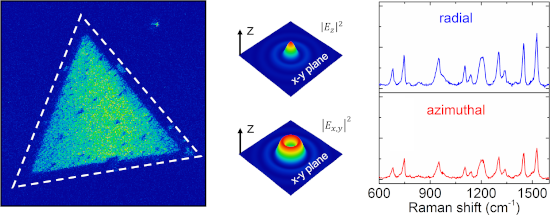
- the interaction with local dipoles in plasma-treated MoS2 [22]. Additionally, the electronic band structure of MoS2 can be significantly modified after oxygen incorporation into MoS2. The charge transfer from the valence band of partially oxidized MoS2 to the LUMO of R6G can be tuned in resonance with
- (called Q-band) from 500 to 800 nm. The absorption peaks situated at 627 and 696 nm are due to the second and the first π–π* transition of the phthalocyanine macrocycle, respectively [30]. Therefore, the Raman measurements for CuPc/MoSe2 are conducted using a 636 nm laser, which shows good resonance with


Zinc oxide nanostructures for fluorescence and Raman signal enhancement: a review
Beilstein J. Nanotechnol. 2022, 13, 472–490, doi:10.3762/bjnano.13.40
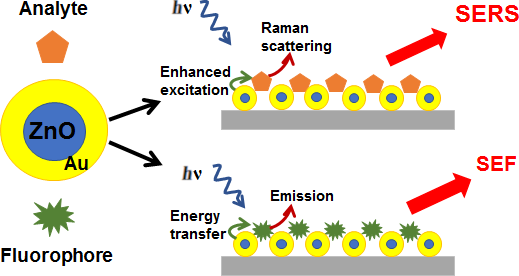
- ), respectively [63]. For pure spherical Zn NPs, on average 28 ± 5 nm in diameter, obtained by vacuum magnetron sputtering on molten quartz, the plasmonic resonance is located around 240 and 290 nm, while for ZnO NPs, the maximum is around 360 nm [64]. In addition, ZnO nanosubstrates serve as carriers of Ag or Au
- nanosubstrates. By combining Ag or Au with ZnO into core–shell NPs it is possible to tune the resonance excitation of the whole system to shorter wavelengths, due to the overlap of multiple plasmonic resonance peaks arising from different metals. Resonant excitation can be shifted to longer wavelengths by
- nanorods (NRs) and Au seeds alone. The results showed a stronger SERS signal in the case of Au–ZnO NRs compared to Au nanoscale seeds. The SERS signal enhancement is due to the increased charge transfer effect of ZnO, which is greatly improved by the localized surface plasmon resonance of Au seeds. For the




Investigation of electron-induced cross-linking of self-assembled monolayers by scanning tunneling microscopy
Beilstein J. Nanotechnol. 2022, 13, 462–471, doi:10.3762/bjnano.13.39
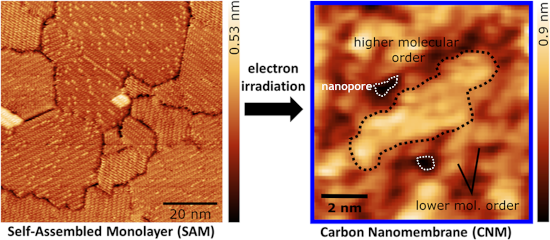
- resonance. For the irradiation dose of 0.5 mC/cm2 with 1 keV primary electrons, an areal number density of (1.7 ± 0.7) × 1013 cm−2 was obtained for secondary electrons with kinetic energies within the window of the resonance (see detailed calculations in Supporting Information File 1). When considering the


Electrostatic pull-in application in flexible devices: A review
Beilstein J. Nanotechnol. 2022, 13, 390–403, doi:10.3762/bjnano.13.32
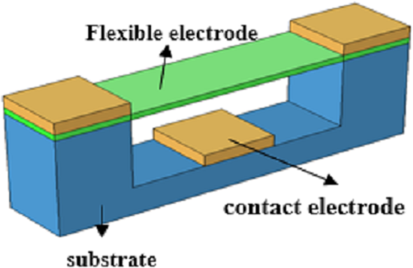
- for resonance detection of a GeSn alloy. Meija et al. [42] proposed the technique of using resonance aid to reduce the pull-in voltage of Ge0.91Sn0.09 NWs. By applying 610.8 kHz and 0.45 V AC voltage to a GeSn alloy nanowire, the pull-in voltage can be reduced from 13.8 to 5 V. This method can


Controllable two- and three-state magnetization switching in single-layer epitaxial Pd1−xFex films and an epitaxial Pd0.92Fe0.08/Ag/Pd0.96Fe0.04 heterostructure
Beilstein J. Nanotechnol. 2022, 13, 334–343, doi:10.3762/bjnano.13.28
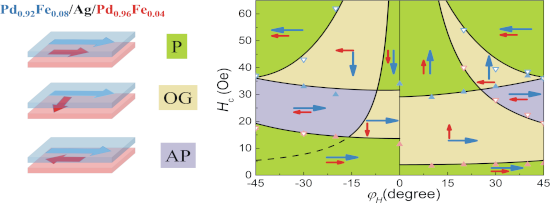
- structural studies of similar films are described in [24], the magnetic properties measured by ferromagnetic resonance (FMR) and vibrating sample magnetometry (VSM) in magnetic fields along the easy and hard magnetic axes are presented in [18][19]. In this paper, the magnetization reversal in the


A broadband detector based on series YBCO grain boundary Josephson junctions
Beilstein J. Nanotechnol. 2022, 13, 325–333, doi:10.3762/bjnano.13.27
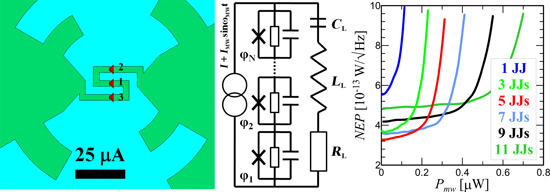
- electrodynamics is taken into account through the amplitudes of the external signal Ai followed from the previous section. A complete model of the antenna interacting with the nonlinear resonance circuit (Josephson junction) through the Y-matrix is currently being developed. This model will allow one to
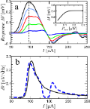
- (Z) = RL, dIm(Z)/dω = 2LL, and . For the serial resonance at 250 GHz, RL = 43 Ω, LL = 500 pH, and CL = 0.8 fF. Figure 5, right, shows the current–voltage characteristics (IVCs) of a single junction with the antenna under the influence of an external signal. A bias current regime with the optimum



Relationship between corrosion and nanoscale friction on a metallic glass
Beilstein J. Nanotechnol. 2022, 13, 236–244, doi:10.3762/bjnano.13.18
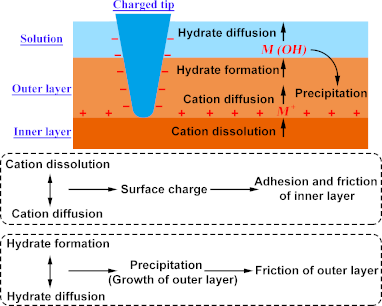
- constants of the cantilever [47]. The resonance frequency of the cantilever at the first normal oscillation mode measured in the air was used to calculate the thickness of the cantilever [47]. The AFM tip sliding velocity was 8.0 μm·s−1 and the scan field was 1.0 × 0.125 μm2. Sixteen cycles of repetitive


Surfactant-free syntheses and pair distribution function analysis of osmium nanoparticles
Beilstein J. Nanotechnol. 2022, 13, 230–235, doi:10.3762/bjnano.13.17
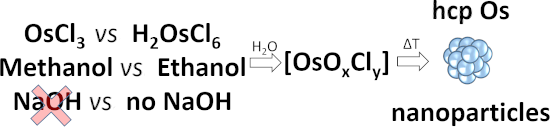
- reaction at 85 °C in nuclear magnetic resonance (NMR) tubes (volume approx. 0.2 mL). The size analysis suggests that the NPs are (a) 1.6 ± 0.4 nm and (b) 1.7 ± 0.3 nm. The size distribution is presented in (c) from the analysis of 103 and 106 NPs, respectively. PDFs obtained from three different syntheses





