Search results
Search for "thin film" in Full Text gives 521 result(s) in Beilstein Journal of Nanotechnology. Showing first 200.
Molecular architectonics of DNA for functional nanoarchitectures
Beilstein J. Nanotechnol. 2020, 11, 124–140, doi:10.3762/bjnano.11.11

- vector and provided efficient sensing of changes in the intracellular acidic pH value. In recent years, DNA thin film-based biosensors received significant interest for the detection of biologically relevant analytes, such has forensic samples [61][62]. The design of active electrochemical DNA sensors


Nanosecond resistive switching in Ag/AgI/PtIr nanojunctions
Beilstein J. Nanotechnol. 2020, 11, 92–100, doi:10.3762/bjnano.11.9
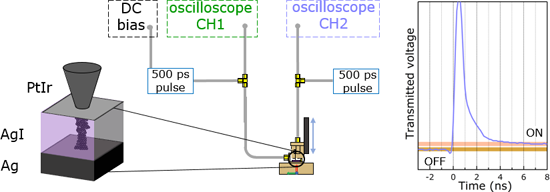
- microscope (STM) to the AgI-coated thin film structure schematically illustrated in the lower inset of Figure 1a. The photosensitive AgI layers were formed promptly before electrical characterization by exposing a 100 nm thick Ag layer to iodine vapor at 40°C and ambient pressure for 30 s in the dark
- following the method of Kumar and co-workers [36]. The Ag films were evaporated on standard Si/SiO2 wafers using a 12 nm thick Ti sticking layer. The structural characterization of the thin film samples was carried out by Rutherford backscattering spectrometry (RBS) using an ion beam of 3500 keV 4He
- structure (top to bottom) of 200 nm AgI, 22.5 nm Ag3I and 43 nm Ag after iodine exposure on the Ti/SiO2/Si substrate. Nanometer-scale Ag/AgI/PtIr nanojunctions were created by bringing the PtIr tip into direct contact with the thin-film surface while a constant bias voltage of 100 mV was applied on the
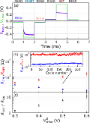


Influence of the epitaxial composition on N-face GaN KOH etch kinetics determined by ICP-OES
Beilstein J. Nanotechnol. 2020, 11, 41–50, doi:10.3762/bjnano.11.4
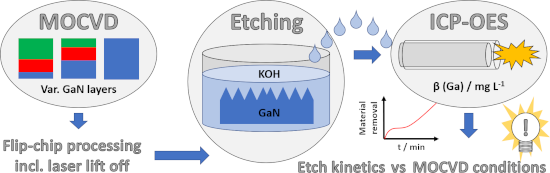
- diffraction (XRD). Thin-film processing including laser lift off (LLO) was applied. The influence of epitaxial changes on the N-face etch kinetics was determined in aqueous KOH solution at elevated temperature. Inductively-coupled plasma optical emission spectroscopy (ICP-OES) was used to measure the etch
- epitaxy stack. Thin-film technology is a common approach in industry to improve device performance. Thereby, a substrate with higher thermal conductivity, e.g., silicon or nickel, is bonded to the top p-contact of the LED structure [8]. The sapphire substrate is removed by laser lift off (LLO). This


Synthesis of amorphous and graphitized porous nitrogen-doped carbon spheres as oxygen reduction reaction catalysts
Beilstein J. Nanotechnol. 2020, 11, 1–15, doi:10.3762/bjnano.11.1
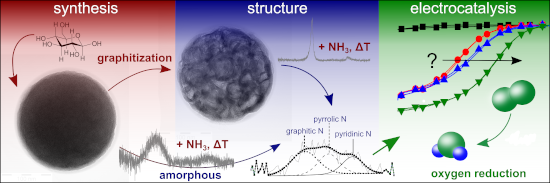
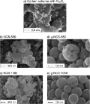
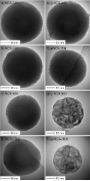
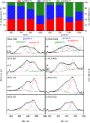
- resolution of 5 cm−1 (50 µm slit-like pinhole) with an exposure time of 5 s (10 accumulations). Electrode preparation and electrochemical measurements The catalyst thin-film electrode (catalyst loading of 0.285 mg·cm−2 for Pt-free catalyst, 140 μg·cm−2 loading (Pt loading: 28 μg·cm−2) for the 20 wt % Pt/C E
- creating additional diffusion limitations [51]. The geometric area of the electrochemically accessible part of the electrode is 0.28 cm2. For the electrochemical experiments, we used a rotating ring disk electrode (RRDE) setup (Pine Instruments Analytical Rotator, AFASRE), with the thin-film electrode on




Bombesin receptor-targeted liposomes for enhanced delivery to lung cancer cells
Beilstein J. Nanotechnol. 2019, 10, 2553–2562, doi:10.3762/bjnano.10.246
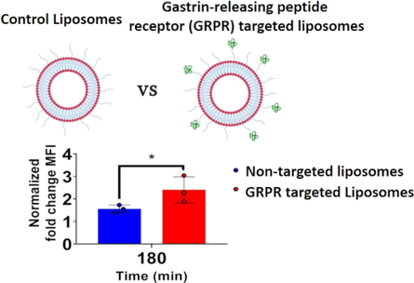
- formulations were prepared using the thin-film technique to yield small and monodisperse vesicles as judged by dynamic light scattering (DLS) analysis (Table 1). The colloidal properties of both liposomal formulations were highly similar in terms of size, polydispersity and zeta potential and consistent with
- the molar extinction coefficient for the peptide tryptophan residue (5560 AU/mmol/mL). A thin film was produced by slow evaporation of the solvent under vacuum followed by one hour under high vacuum to remove solvent traces. The film was hydrated with PBS to a final lipid concentration of 10 mg/mL

Semitransparent Sb2S3 thin film solar cells by ultrasonic spray pyrolysis for use in solar windows
Beilstein J. Nanotechnol. 2019, 10, 2396–2409, doi:10.3762/bjnano.10.230
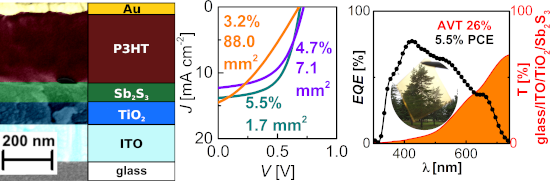
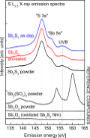
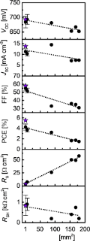
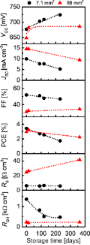
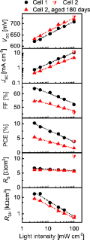
- Road, Berkeley, California, 94720, USA 10.3762/bjnano.10.230 Abstract The integration of photovoltaic (PV) solar energy in zero-energy buildings requires durable and efficient solar windows composed of lightweight and semitransparent thin film solar cells. Inorganic materials with a high optical
- building electricity demand can be produced on site [1]. Solar windows can be split into two groups: perforated grids of opaque solar cells, such as silicon, or one continuous semitransparent thin film solar cell (dye-sensitized, perovskite, quantum dot, etc.) [1]. Perforated solar windows, comprised of
- fragments of crystalline Si (c-Si) solar cells, have shown a tendency to overheat and underperform in efficiency (PCE) [2][3]. C-Si grids are also considered visually unappealing for solar windows [4]. Accordingly, thin film solar cells, even with lower PCE, are considered more promising for applications in



Integration of sharp silicon nitride tips into high-speed SU8 cantilevers in a batch fabrication process
Beilstein J. Nanotechnol. 2019, 10, 2357–2363, doi:10.3762/bjnano.10.226
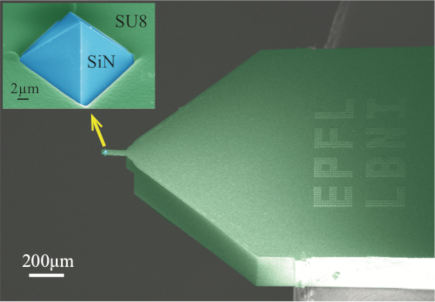
- (LSNT). Pyramidal tips are made based on an indirect tip fabrication process [28] by etching a mould into a 380 µm thick single-side polished silicon (100) wafer. Figure 1a shows the summarized process flow, outlining the important steps. (i) A 20 nm LSNT thin film is layered onto a silicon (100) wafer


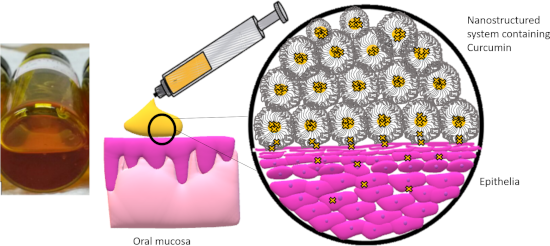
Design of a nanostructured mucoadhesive system containing curcumin for buccal application: from physicochemical to biological aspects
Beilstein J. Nanotechnol. 2019, 10, 2304–2328, doi:10.3762/bjnano.10.222


Nontoxic pyrite iron sulfide nanocrystals as second electron acceptor in PTB7:PC71BM-based organic photovoltaic cells
Beilstein J. Nanotechnol. 2019, 10, 2238–2250, doi:10.3762/bjnano.10.216
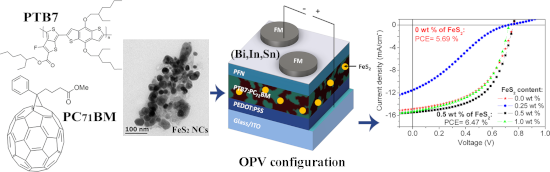
- electrodes in dye-sensitized solar cells (DSSCs) [9][12][13], as electron acceptors or donors in inorganic or hybrid solar cells [10][14][15][16][17] and as second electron acceptors in organic photovoltaic cells (OPVs) [18]. An iron pyrite thin film used as a counter electrode showed a conversion efficiency
- (8%) similar to that of a Pt counter electrode in DSSC [9], which could be due to the high catalytic activity of pyrite. When the film is doped with ethanedithiol (EDT), the conversion efficiency is increased by about 20% as compared to the pure pyrite thin film [12]. Also, FeS2 NPs of 30 nm size


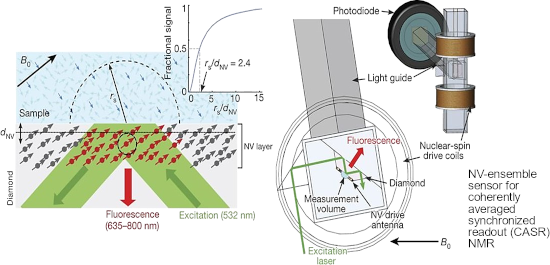
Nitrogen-vacancy centers in diamond for nanoscale magnetic resonance imaging applications
Beilstein J. Nanotechnol. 2019, 10, 2128–2151, doi:10.3762/bjnano.10.207


The importance of design in nanoarchitectonics: multifractality in MACE silicon nanowires
Beilstein J. Nanotechnol. 2019, 10, 2094–2102, doi:10.3762/bjnano.10.204
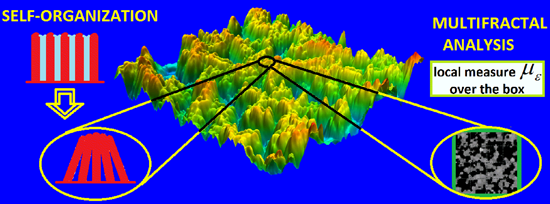
- anisotropic wet etching technique where the sculpting of the nanostructures is catalyzed by a discontinuous thin film of noble metal deposited on a substrate. The metal works as a local cathode where the reduction of oxidants occurs. The underneath semiconductor is the local anode where a charge-mediated
- Si substrate by electron beam evaporation. The conditions during the growth of the gold thin film were similar to the ones during the growth of the samples SiNW1 and SiNW2. The black regions correspond to the uncovered silicon areas, while the white region represents the deposited Au. It is evident




Ion mobility and material transport on KBr in air as a function of the relative humidity
Beilstein J. Nanotechnol. 2019, 10, 2084–2093, doi:10.3762/bjnano.10.203
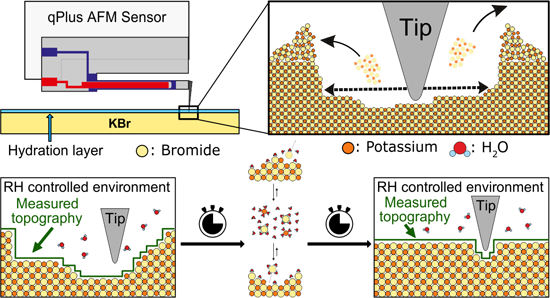
- . Typically, air is composed of different gases, a small fraction of aerosols and water vapor. The relative humidity (RH) usually ranges from about 25% to 70%, depending on weather and season. A thin film of water molecules adsorbs on every surface exposed to humid gases [1][2][3]. The thickness of these


Review of advanced sensor devices employing nanoarchitectonics concepts
Beilstein J. Nanotechnol. 2019, 10, 2014–2030, doi:10.3762/bjnano.10.198
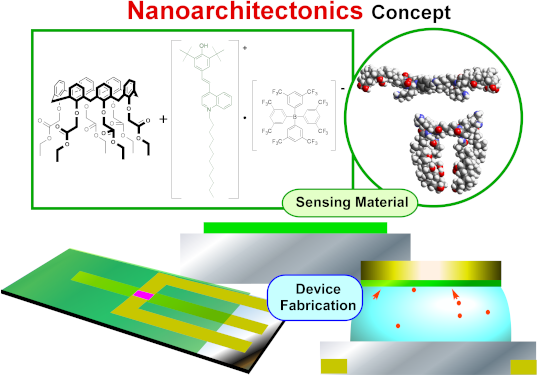
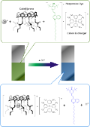
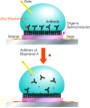
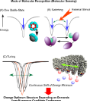
- ; nanoarchitectonics; sensor; thin film; Review Introduction Detection systems for various chemical, physical, environmental, and biological targets, so-called sensors, have been continuously explored [1][2][3][4]. Although their usefulness was recognized even in the early stages of modern science and technology, the





Synthesis and potent cytotoxic activity of a novel diosgenin derivative and its phytosomes against lung cancer cells
Beilstein J. Nanotechnol. 2019, 10, 1933–1942, doi:10.3762/bjnano.10.189
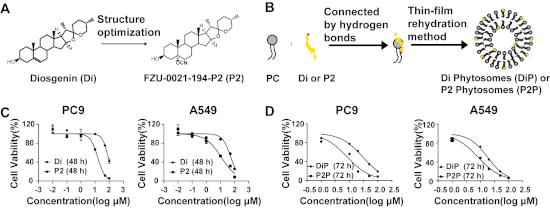
- , Di phytosomes (DiP) and P2 phytosomes (P2P) were prepared by a thin-film rehydration method (Figure 3A). Blank lipid nanoparticles without drugs (P) were also prepared with the same process. Particle size and zeta potential of the phytosomes were measured by dynamic light scattering (DLS). The
- size distribution of phytosomes seems a little broad. We used the thin-film hydration method followed by sonication to prepare the phytosomes in this study. The mean size and size distribution are significantly influenced by the sonication conditions. Further optimization of the formulation and the
- activities than Di against human non-small-cell lung cancer A549 and PC9 cells. To further improve the water solubility of Di and P2, DiP and P2P were prepared with a thin-film rehydration method. DiP and P2P exhibited particle sizes less than 100 nm with oval shape and negative charges. Compared with free



Oblique angle deposition of nickel thin films by high-power impulse magnetron sputtering
Beilstein J. Nanotechnol. 2019, 10, 1914–1921, doi:10.3762/bjnano.10.186
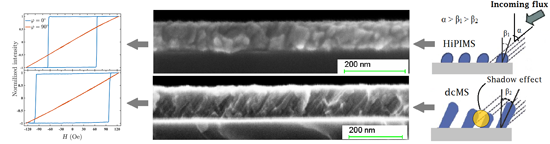
- . Vibrating sample magnetometry (VSM) was performed on 10 × 10 mm2 sized samples at 300 K. Variable magnetic fields up to ±1 T were used for magnetic measurements. Results and Discussion Thin film structure Figure 1 shows the film density, deposition rate and surface roughness of Ni films deposited by HiPIMS
- tilt angle. We believe that the smaller grain size of HiPIMS-deposited films (shown in Figure 4) is the main reason for soft magnetism of the films. Poolcharuansin et al. [64] have shown that Ni thin film deposition using an inverted gapped-target sputter magnetron results in smaller grain size and


Fabrication and characterization of Si1−xGex nanocrystals in as-grown and annealed structures: a comparative study
Beilstein J. Nanotechnol. 2019, 10, 1873–1882, doi:10.3762/bjnano.10.182
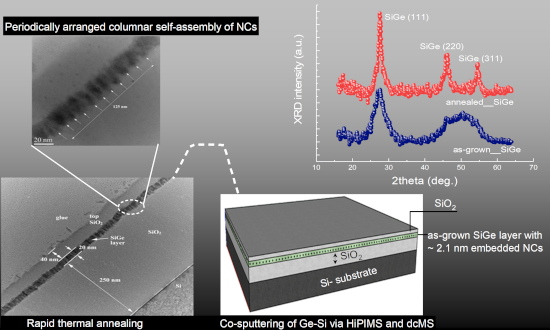
- annealing. A rather recent variation of the magnetron sputtering technique, the so-called high-power impulse magnetron sputtering (HiPIMS), provides an alternative approach. It is an ionized physical vapor deposition method and has shown great promise in thin-film processing [25][26]. During HiPIMS the


Remarkable electronic and optical anisotropy of layered 1T’-WTe2 2D materials
Beilstein J. Nanotechnol. 2019, 10, 1745–1753, doi:10.3762/bjnano.10.170
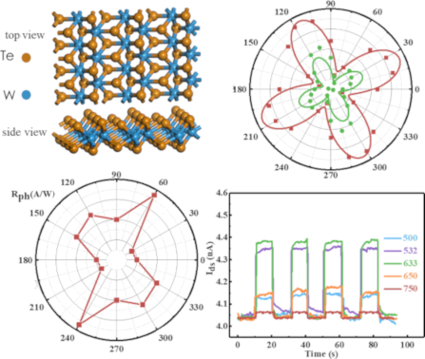
- photoelectric property in detail, showing a 300-fold improvement in the photosensitivity. Moreover, due to its attractive properties, mono- or few-layer 1T’-WTe2 was shown to be a promising, novel and fascinating material for high-performance magnetoresistance applications in thin-film electromagnetics [33][34
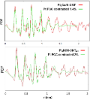
- (Figure 1a) in polar coordinates. c) Azimuth-dependent RDM images. Angle-resolved DC conductivity of a 1T’-WTe2 thin film. a) Optical image of s WTe2 flake with 12 electrodes spaced 30° apart. b) and c) are the transfer characteristic curves and the output characteristic curves, respectively. d) Angle


Hierarchically structured 3D carbon nanotube electrodes for electrocatalytic applications
Beilstein J. Nanotechnol. 2019, 10, 1475–1487, doi:10.3762/bjnano.10.146
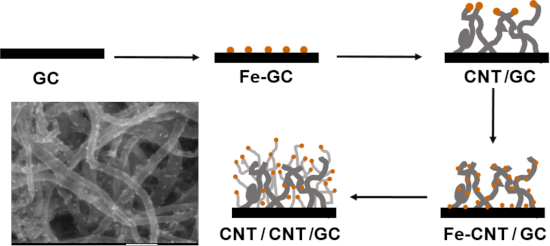
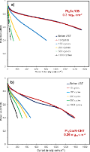
- –300 particles with the software “Lince” (TU Damstadt, Germany) [83]. Raman spectra were measured employing a Renishaw InVia spectrometer with 532 nm excitation wavelength from a Cobolt CW DPSS laser. Due to the considerably thin film of the CNT layers, and thus the low amount of Pt, XRD did not yield





Superconducting switching due to a triplet component in the Pb/Cu/Ni/Cu/Co2Cr1−xFexAly spin-valve structure
Beilstein J. Nanotechnol. 2019, 10, 1458–1463, doi:10.3762/bjnano.10.144
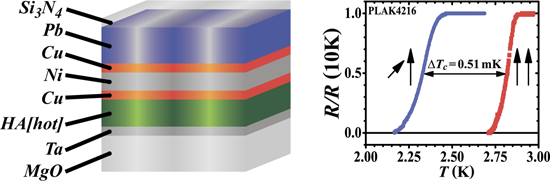
- , 5, 021019, in achieving large values of the switching effect. Keywords: ferromagnet; proximity effect; superconductor; Introduction For decades, metallic thin-film heterostructures have been in the in the focus of fundamental research in condensed matter physics and materials science. They show



Growth of lithium hydride thin films from solutions: Towards solution atomic layer deposition of lithiated films
Beilstein J. Nanotechnol. 2019, 10, 1443–1451, doi:10.3762/bjnano.10.142
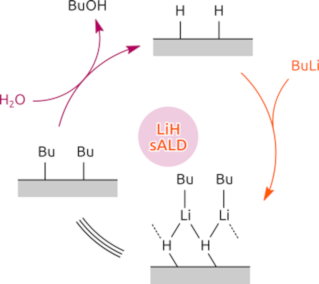
- Ivan Kundrata Karol Frohlich Lubomir Vanco Matej Micusik Julien Bachmann Institute of Electrical Engineering, SAS, Dúbravská cesta 9, 841 04 Bratislava, Slovakia Friedrich-Alexander University of Erlangen-Nürnberg, Dept. Chemie and Pharmacy, Chair ”Chemistry of Thin Film Materials”, Cauerstr. 3


Highly ordered mesoporous silica film nanocomposites containing gold nanoparticles for the catalytic reduction of 4-nitrophenol
Beilstein J. Nanotechnol. 2019, 10, 1368–1379, doi:10.3762/bjnano.10.135
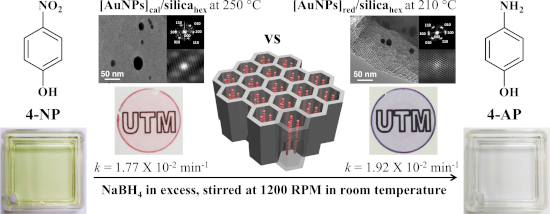
- synthesis method using discotic trinuclear gold(I) pyrazolate complex, were successfully utilized for the fabrication of thin film mesoporous silica nanocomposites containing gold nanoparticles. The material exhibited a highly ordered hexagonal structure when subjected to a thermal hydrogen reduction
- treatment at 210 °C. In contrast, when the material was subjected to calcination as a heat treatment from 190 to 450 °C, the thin film nanocomposites showed an intense d100 X-ray diffraction peak. Moreover, gold nanoparticles inside the thin film nanocomposites were confirmed by the presence of the d111
- -nitrophenol at room temperature, the highly ordered structure of the as-fabricated silica/gold nanoparticle thin film composite after thermal hydrogen reduction at 210 °C resulted in an improved catalytic activity for the reduction of 4-nitrophenol to 4-aminophenol compared to the material calcined at 250 °C


Janus-micromotor-based on–off luminescence sensor for active TNT detection
Beilstein J. Nanotechnol. 2019, 10, 1324–1331, doi:10.3762/bjnano.10.131
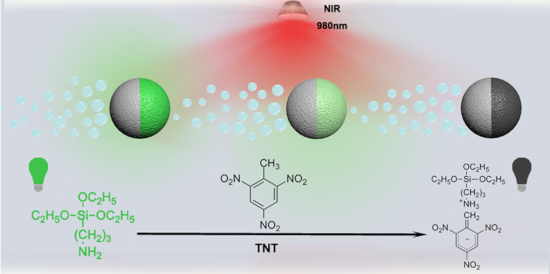
- dispersed on a glass slide to form a monolayer. After sputtering of a 20 nm thin film of Pt, the Janus UCNP-functionalized capsule motors were obtained by removing the silica cores with hydrofluoric acid. To prepare the Janus UCNP capsule motors, NaYF4:Yb3+/Er3+ UCNPs were firstly synthesized following a


Fabrication of phase masks from amorphous carbon thin films for electron-beam shaping
Beilstein J. Nanotechnol. 2019, 10, 1290–1302, doi:10.3762/bjnano.10.128
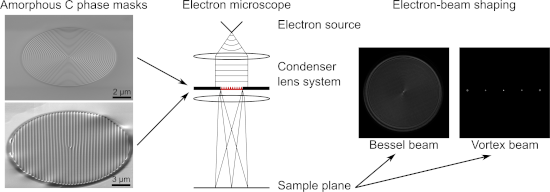
- (transmission) electron microscopy (S(T)EM). Phase-modulating thin-film devices (phase masks) made of amorphous silicon nitride are commonly used to generate a wide range of different beam shapes. An additional conductive layer on such a device is required to avoid charging under electron-beam irradiation
- an incoming electron plane wave is generated by an amorphous thin film with locally varying thickness. In general, electrons undergo a thickness-dependent phase shift in a thin, amorphous, non-magnetic material according to [15]: Here CE denotes the energy-dependent interaction constant (6.53 × 10⁻³
- rad·nm−1·V−1 for a primary electron energy of E = 300 keV), VMIP is the mean inner potential (MIP) of the material, t is the thickness of the thin film and x and y are the directions perpendicular to the incident electron beam. The underlying effect is analogous to the phase shift that is generated



Alloyed Pt3M (M = Co, Ni) nanoparticles supported on S- and N-doped carbon nanotubes for the oxygen reduction reaction
Beilstein J. Nanotechnol. 2019, 10, 1251–1269, doi:10.3762/bjnano.10.125
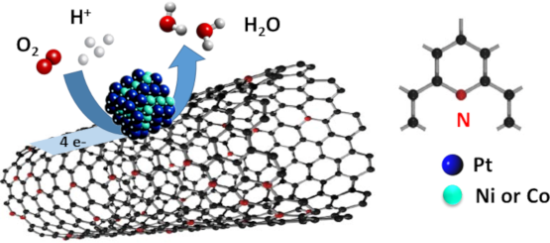
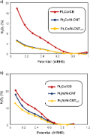
- works have shown that the ORR activities of Pt catalysts are strongly dependent on the electrolyte [54]. According to these studies, activities were found to increase from H2SO4 to HClO4 due to the specific effect of the adsorbed anion on different Pt(hkl) sites. Furthermore, the thin film RRDE method
- catalyst. The two highest ECSAs were measured for Pt3Co/N-CNT and Pt3Ni/N-CNTHT at 55.5 m2·gPt−1 and 46 m2·gPt−1, respectively. For the RRDE characterization, a thin film of the catalyst was formed at the surface of the working electrode. For each carbon support used in this study, there was a modification








Quantitative analysis of annealing-induced instabilities of photo-leakage current and negative-bias-illumination-stress in a-InGaZnO thin-film transistors
Beilstein J. Nanotechnol. 2019, 10, 1125–1130, doi:10.3762/bjnano.10.112
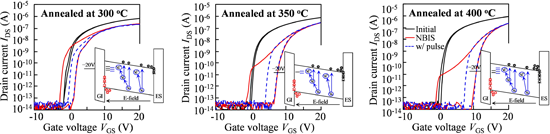
- temperature on the initial electrical characteristics and photo-induced instabilities of amorphous indium gallium zinc oxide (a-IGZO) thin-film transistors (TFTs). The extracted electrical parameters from transfer curves suggest that a low-temperature treatment maintains a high density of defects in the IGZO
- irrespective of treatment temperature. NBIS-induced critical instability occurs in the high-temperature-annealed TFT. Keywords: metal oxide; photo-induced instabilities; photon energy; thermal annealing; thin-film transistor (TFT) device; Introduction The rapid process of industrialization and
- commercialization has accelerated the development of consumption electronics and micromachining technology. One of the most successful modern-day microelectronic products are metal-oxide thin-film transistors (TFTs) that guarantee large-scale integrated circuits for applications in transparent and flexible flat