


Search results
Search for "vibration" in Full Text gives 337 result(s) in Beilstein Journal of Nanotechnology. Showing first 200.
Direct observation of the CVD growth of monolayer MoS2 using in situ optical spectroscopy
Beilstein J. Nanotechnol. 2019, 10, 557–564, doi:10.3762/bjnano.10.57
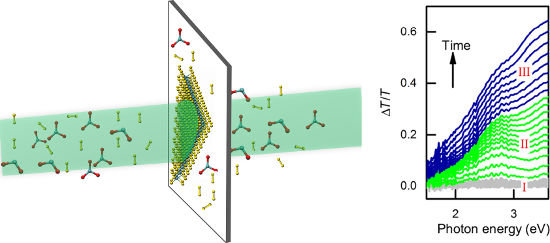
- characteristic peaks at 385.5 and 405.3 cm−1, which are attributed to the in-plane (E12g) and out-of-plane (A1g) vibration modes of the 2H MoS2 crystal. Most importantly, the interval between these two peaks is ≈ 20 cm−1, which is characteristic for the MoS2 monolayer [29]. The DR spectra measured at the


Temperature-dependent Raman spectroscopy and sensor applications of PtSe2 nanosheets synthesized by wet chemistry
Beilstein J. Nanotechnol. 2019, 10, 467–474, doi:10.3762/bjnano.10.46
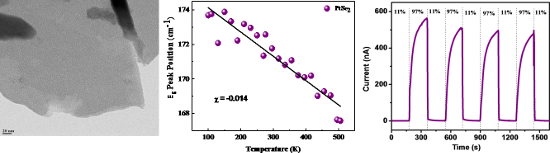
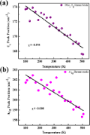
- to in-plane vibration due to the opposite motion of the upper and lower Se atoms. The A1g mode in the Raman spectra corresponds to the out-of-plane vibration of Se atoms [22][28]. Morphological investigations were carried out using scanning electron microscopy (SEM). Figure 2a–c shows SEM images of



Reduced graphene oxide supported C3N4 nanoflakes and quantum dots as metal-free catalysts for visible light assisted CO2 reduction
Beilstein J. Nanotechnol. 2019, 10, 448–458, doi:10.3762/bjnano.10.44
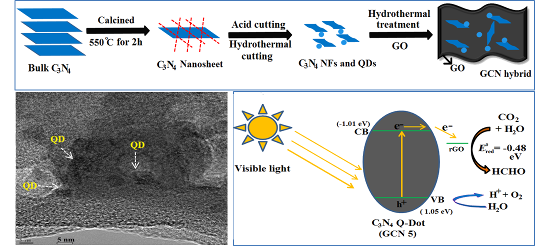
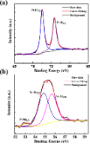
- existence of an interaction between rGO and g-C3N4 inside the composite. FTIR spectra further confirm (Figure 4) the formation of C3N4 NFs and QDs, as well as the structural changes of C3N4 nanosheets. The peaks at around 3000–3110 cm−1, 1200–1650 cm−1 and 810 cm−1 are due to the N–H stretching vibration





Biocompatible organic–inorganic hybrid materials based on nucleobases and titanium developed by molecular layer deposition
Beilstein J. Nanotechnol. 2019, 10, 399–411, doi:10.3762/bjnano.10.39
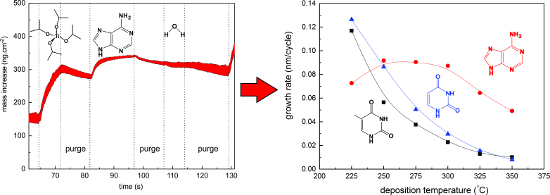
- provide information about binding sites in the organic moieties. For thymine, two very strong bands at 1741 and 1676 cm−1 are observed in the FTIR spectra of Figure 15a. The lower wavenumber has been assigned to both the stretching vibration of C=C and C4=O, and the vibrational band at 1741 cm−1
- corresponds to the vibration of C2=O. While both as-deposited Ti-thymine and thymine powder show an absorption band at 1676 cm−1, the C2=O vibration for Ti-thymine appears at a lower wavenumber than for the thymine powder (at 1730 cm−1). The FTIR spectra for the as-deposited Ti-thymine shows a number of extra
- vibrational bands compared to thymine powder [29]. In the as-deposited Ti-thymine spectra, two shoulder bands near the vibration of C2=O (at 1770 and 1760 cm−1) and one in the vicinity of the C=C and C4=O vibration band (shoulder band at 1691 cm−1) were observed. This can be an indication of a change in




Sub-wavelength waveguide properties of 1D and surface-functionalized SnO2 nanostructures of various morphologies
Beilstein J. Nanotechnol. 2019, 10, 379–388, doi:10.3762/bjnano.10.37
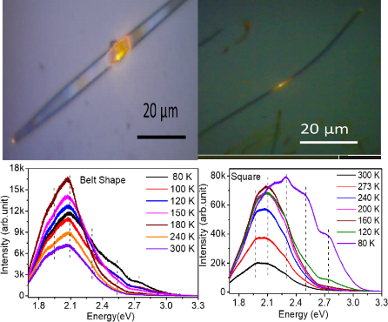
- which is indexed similar to the square NW [020] zone axes of the rutile SnO2 phase (Figure 4b). Rutile tetragonal SnO2 contains two Sn and four O atoms in a single unit cell. According to the group theory, normal vibration modes at the center of the Brillion zone are Γ = A1g + A2g + 2A2u + B1g + B2g


One-step nonhydrolytic sol–gel synthesis of mesoporous TiO2 phosphonate hybrid materials
Beilstein J. Nanotechnol. 2019, 10, 356–362, doi:10.3762/bjnano.10.35
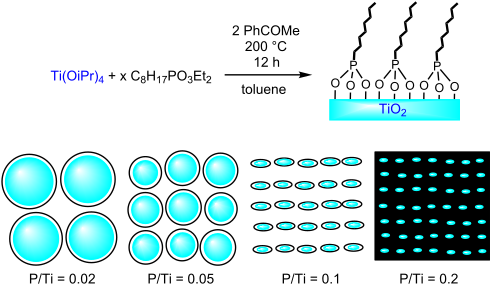
- broad vibration between 900 and 1200 cm−1 arising from vibration modes of the CPO3 tetrahedra. The intensity of this band increases with the P/Ti ratio. The absence of bands at ≈1220 cm−1 (P=O stretching vibration) and ≈950 cm−1 (P–OC stretching vibrations) [36] suggests that most of the phosphonate
- groups, as shown by the intensity of these bands which is directly related to the P/Ti ratio. The weak, broad band between 3000 and 3800 cm−1 is characteristic of O–H stretching vibrations. This band indicates the presence of a low amount of adsorbed water (confirmed by the vibration at 1620 cm−1


Intuitive human interface to a scanning tunnelling microscope: observation of parity oscillations for a single atomic chain
Beilstein J. Nanotechnol. 2019, 10, 337–348, doi:10.3762/bjnano.10.33
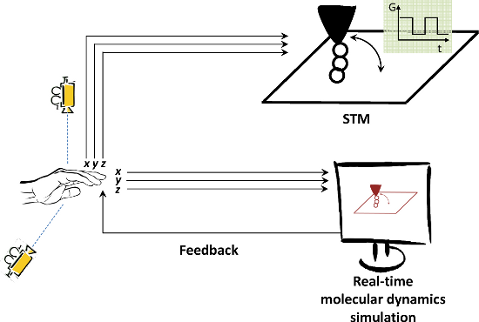
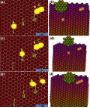
- comprise the atomic shape of the actual tip apex in the experiment, which defines the depth of the potential well on the tip in comparison to that on the surface, and moreover the inelastic excitation of vibration modes of the adatom [46][47] due to tunnelling electrons, which could promote pick up of the
- simulation the trimer (‘A–B–C’) was left on the surface once the tip was pulled up (Figure 5f). Possible reasons why the simulation behaved differently could be, as explained earlier, the unknown shape of the tip potential well in the experiment and the excitation of substrate adatom vibration modes (at 100




A Ni(OH)2 nanopetals network for high-performance supercapacitors synthesized by immersing Ni nanofoam in water
Beilstein J. Nanotechnol. 2019, 10, 281–293, doi:10.3762/bjnano.10.27
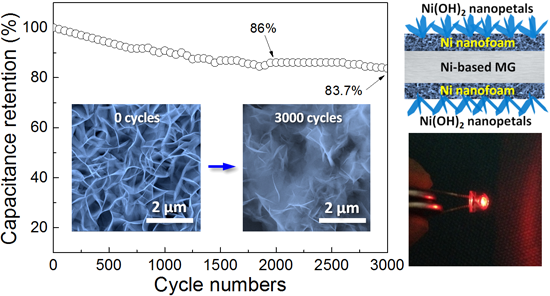
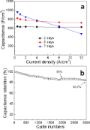
- an X-ray energy dispersive spectroscope (EDS) and a transmission electron microscopy (TEM, JEOL JEM-2100). The preparation process of the TEM sample was as follows: Firstly, the active materials were scraped off with a knife. Then the materials were dispersed in ethanol with ultrasonic vibration




Removal of toxic heavy metals from river water samples using a porous silica surface modified with a new β-ketoenolic host
Beilstein J. Nanotechnol. 2019, 10, 262–273, doi:10.3762/bjnano.10.25
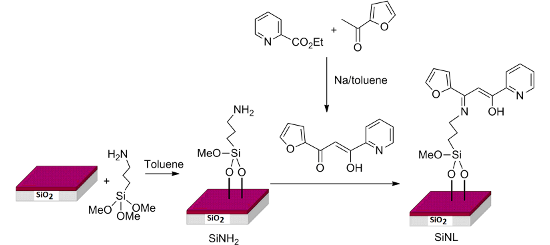
- -3-(pyridin-2-yl)prop-2-en-1-one was successful. FTIR spectra of original silica gel (SiG), SiNH2 and SiNL are shown in Figure 1. The characteristics of the precursor materials (SiG, SiNH2) are consistent with literature [44][45][46][47][48]. In the SiNL spectrum, the stretching vibration of O–H band
- of material surface was obtained at 3351 cm−1 and the peak observed at 1050 cm−1 corresponds to Si–O–Si band, the strong bands observed at 2943 cm−1 are attributed to the stretching vibration of aliphatic C–H bands. The new ν(C=C) and ν(C=N) vibrations detected at 1459 cm−1 and 1531 cm−1


Nanoporous water oxidation electrodes with a low loading of laser-deposited Ru/C exhibit enhanced corrosion stability
Beilstein J. Nanotechnol. 2019, 10, 157–167, doi:10.3762/bjnano.10.15
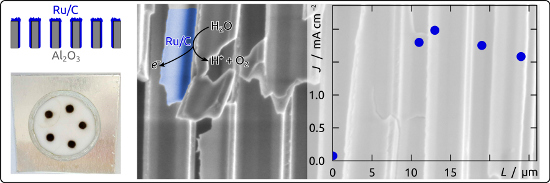
- -frequency region, the conspicuous maximum at ≈1600 cm−1 is due the stretching vibration of C=C bonds in aromatic or graphitic carbon. The peak at 1224 cm−1 corresponds to stretching vibrations of C–C and C–O single bonds (the ‘disorder’ peak usually found for graphitic material) [56][57][58][59][60][61




New micro/mesoporous nanocomposite material from low-cost sources for the efficient removal of aromatic and pathogenic pollutants from water
Beilstein J. Nanotechnol. 2019, 10, 119–131, doi:10.3762/bjnano.10.11
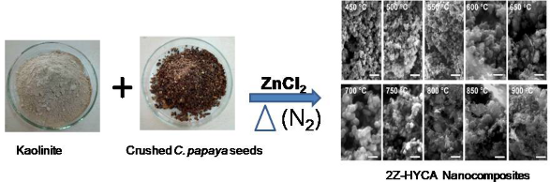
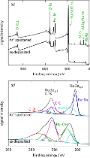
- raw kaolinite, and are no longer visible in the spectra of the 2Z-HYCA samples. This result is similar to our previous HYCA materials prepared with NaOH in air at 300 °C [1]. The broad band at approximately 3426 cm−1 in raw kaolinite clay is an –OH stretching vibration that is present in all 2Z-HYCA
- micro/mesoporous nanocomposite materials. The –OH bending vibration from adsorbed water at ≈1600 cm−1 decreases in intensity and shifts from 1624 to 1585 cm−1 with increasing reaction temperature. The bands observed in the spectra of raw kaolinite between 1000–1200 cm−1 significantly change upon heating
- presence of Si–O [33].The –OH bending vibration from absorbed water in raw kaolinite clay (1630 cm−1) shifts to lower wave numbers in 2Z-HYCA (between 1615 and 1599 cm−1) with increasing temperature. The band at approximately 1700 cm−1 is attributed to the C=O stretching vibrations of carbonyl groups




Zn/F-doped tin oxide nanoparticles synthesized by laser pyrolysis: structural and optical properties
Beilstein J. Nanotechnol. 2019, 10, 9–21, doi:10.3762/bjnano.10.2
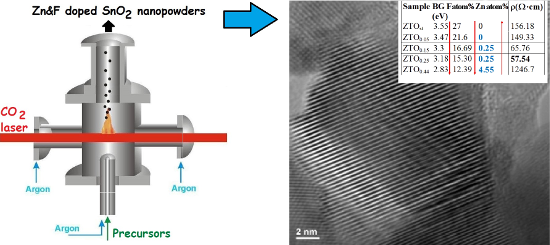
- the perpendicular plane to the c-axis. The Eg mode is related to the oxygen vibration in the direction of the c-axis [48][49]. According to Diéguez et al. [49], the band S1 located at around 570 cm−1 is linked to amorphous SnO2. The correlation between the intensity of the Raman band with the size of



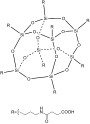
A novel polyhedral oligomeric silsesquioxane-modified layered double hydroxide: preparation, characterization and properties
Beilstein J. Nanotechnol. 2018, 9, 3053–3068, doi:10.3762/bjnano.9.284
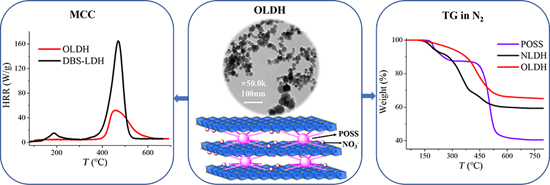
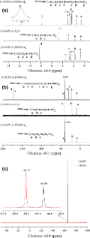
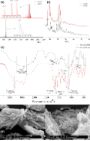
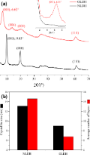
- NLDH, the strong absorption around 1381 cm−1 confirms the presence of interlayer NO3−, and the bands recorded below 800 cm−1 originate from the vibration of metal–oxygen bonds and from lattice vibrations associated with metal hydroxide sheets [15]. The introduction of OCPS anions after modification is
- confirmed by the new characteristic vibration bands detected for –COO− (C=O asymmetric stretching at 1564 cm−1 and symmetric stretching at 1409 cm−1), –NH–C=O (C=O stretching at 1638 cm−1, C–N stretching and N–H bending around 1310–1230 cm−1), alkyl (C–C–C asymmetric stretching at 1193 cm−1, C–H stretching
- at 3000–2800 cm−1), and Si–O–Si (asymmetric stretching around 1000–1200 cm−1). The disappearance of the strong stretching vibration for carboxylic acid C=O around 1701 cm−1 indicates that OCPS was almost totally converted into its ion state. Despite the possible fact that the band of residual nitrate







Apparent tunneling barrier height and local work function of atomic arrays
Beilstein J. Nanotechnol. 2018, 9, 3048–3052, doi:10.3762/bjnano.9.283
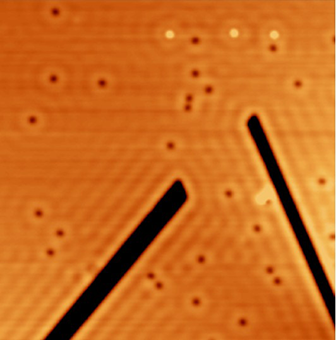
- monolayer depth with single-atom and wider width (approx. 2 atoms) are displayed. The curves are arbitrarily offset along the ordinate for clarity. The terrace data are shown with each curve for comparison. Small undulations of the data are due to low-frequency vibration of the microscope. Apparent barrier


Co-intercalated layered double hydroxides as thermal and photo-oxidation stabilizers for polypropylene
Beilstein J. Nanotechnol. 2018, 9, 2980–2988, doi:10.3762/bjnano.9.277
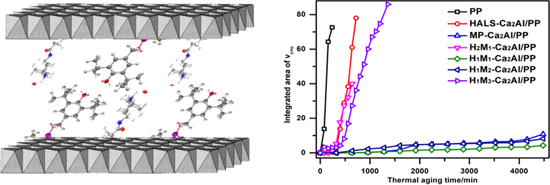
- to the co-intercalation. The results show that co-precipitation yields Ca2Al-LDHs free of CaCO3 by-product [23]. Figure 3 shows FTIR spectra of all the HnMn′-Ca2Al-LDHs. One can observe characteristic stretching-vibration bands of LDHs, for example, the broad band at ca. 3445 cm−1 associated to the
- OH groups of interlayer water molecules and brucite-like LDH layers. The band at 421 cm−1 is attributed to O–M–O lattice vibrations in LDH, which further proves the formation of a LDH platelet structure. Moreover, for HALS-Ca2Al-LDH and MP-Ca2Al-LDH, the characteristics stretching vibration bands of


Hybrid Au@alendronate nanoparticles as dual chemo-photothermal agent for combined cancer treatment
Beilstein J. Nanotechnol. 2018, 9, 2947–2952, doi:10.3762/bjnano.9.273
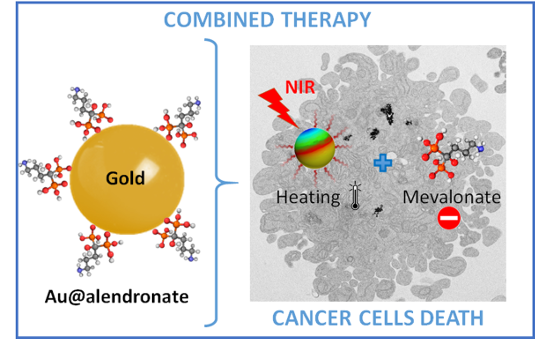
- 1113 cm−1 is characteristic for the vibrational mode for the PO3 group [32]. For Au@alendronate NPs the strong tightening of P=O and P–O vibration bands around 1000 cm−1 (red curve), which is characteristic of the chelation of phosphorus species on a metallic surface [11][16][33], suggests a
- coordination of phosphonates as chelating groups. The –NH scissoring (1564 cm−1) and bending vibration bands (1675 cm−1) for alendronate were slightly shifted in the Au@alendronate NPs confirming the multilayer formation through anion/cation interactions due to the alendronate zwitterion form. These results


Nanostructure-induced performance degradation of WO3·nH2O for energy conversion and storage devices
Beilstein J. Nanotechnol. 2018, 9, 2845–2854, doi:10.3762/bjnano.9.265
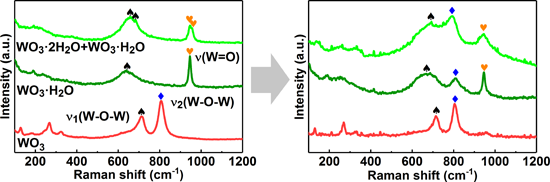
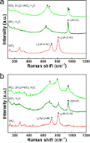
- in Figure 8a, the initial WO3 sample is characterized by two main peaks at ca. 713 and ca. 807 cm−1, which are associated with two types of W–O–W stretching vibration modes [51][52]. The ν1(W–O–W) mode also appeared in the other two initial samples. The Raman spectra of the initial WO3·H2O and WO3
- ·2H2O samples were characterized by the stretching vibration mode of their terminal W=O bonds [53][54]. In spite of their high similarity, the peaks of WO3·2H2O are shifted slightly to higher wavenumbers compared to those of WO3·H2O as indicated in the sample containing both WO3·2H2O and WO3·H2O. The
- Raman spectra presented in Figure 8b reflect the structural transformation of the samples after CV tests. The Raman spectra of both the samples synthesized at 80 and 120 °C showed a new peak from the W–O–W stretching vibration mode (ν2(W–O–W)), while the other peaks were broadened. The peaks of the ν1(W


Controlling surface morphology and sensitivity of granular and porous silver films for surface-enhanced Raman scattering, SERS
Beilstein J. Nanotechnol. 2018, 9, 2813–2831, doi:10.3762/bjnano.9.263
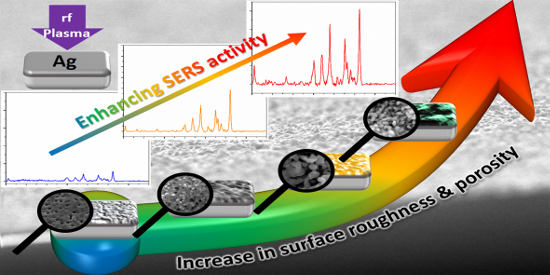
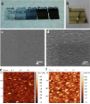
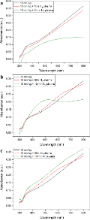
- cannot be seen when using 632.8 nm as excitation wavelength where the SERS performance does not change much with increasing argon plasma reduction time. Raman mapping of the strongest vibration mode of RhB at ν = 1650 cm−1 (–COOH) on different Ag substrates (different thicknesses and plasma treatment





Magnetic and luminescent coordination networks based on imidazolium salts and lanthanides for sensitive ratiometric thermometry
Beilstein J. Nanotechnol. 2018, 9, 2775–2787, doi:10.3762/bjnano.9.259
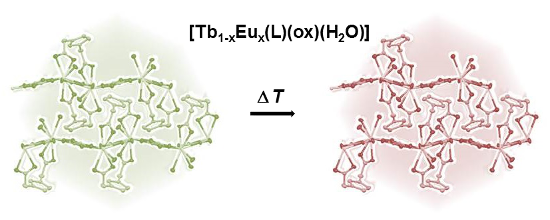
- , Supporting Information File 1). The broad band around 3250 cm−1 and the one at 1672 cm−1 are ascribed to the coordinated water (stretching and bending vibration modes, respectively). The vibration bands of the aromatic and aliphatic C–H bonds are observed in the range 3150–3050 cm−1 and 3050–2950 cm−1
- , respectively. The characteristic frequencies of the coordinating carboxylate functions are observed at 1627 and 1571 cm−1 (antisymmetric vibration bands) and at 1411 and 1431 cm−1 (symmetric vibration bands). It leads to Δν (Δν = νantisym − νsym) equal to 216 and 140 cm−1 in agreement with a bis-bidentate



Impact of the anodization time on the photocatalytic activity of TiO2 nanotubes
Beilstein J. Nanotechnol. 2018, 9, 2628–2643, doi:10.3762/bjnano.9.244
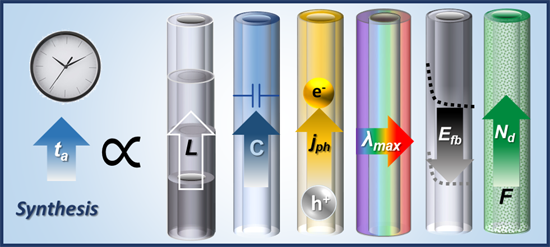
- shifts. Two small peaks centered at 501 and 660 cm−1 were obtained after an instrumental artifact was canceled out by measuring a TiO2 control sample (Figure S2, Supporting Information File 1). The vibration at 660 cm−1 has been observed in titanate nanotubes and was attributed to Ti–O anatase vibrations


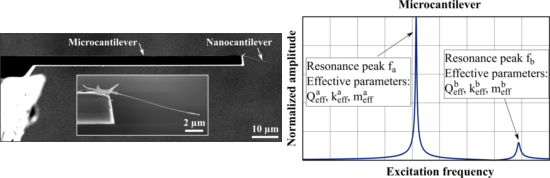
Effective sensor properties and sensitivity considerations of a dynamic co-resonantly coupled cantilever sensor
Beilstein J. Nanotechnol. 2018, 9, 2546–2560, doi:10.3762/bjnano.9.237
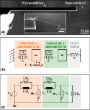
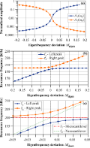
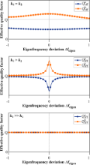
- angular natural frequency (eigenfrequency) ω0 and the angular frequency of damped vibration (resonance frequency) ωd. The former remains unchanged in case of damping as it only depends on the properties spring constant k and effective mass meff of the system itself, i.e., = k/meff. The resonance


![[Graphic 7]](/bjnano/content/inline/2190-4286-9-237-i43.svg?max-width=637&scale=1.18182) ...
...


Cytotoxicity of doxorubicin-conjugated poly[N-(2-hydroxypropyl)methacrylamide]-modified γ-Fe2O3 nanoparticles towards human tumor cells
Beilstein J. Nanotechnol. 2018, 9, 2533–2545, doi:10.3762/bjnano.9.236
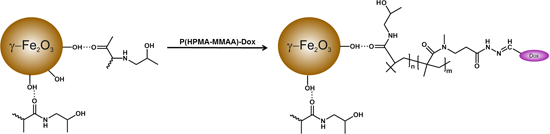
- and amide groups of MMAA, respectively. Peaks at 3083, 1649, and 889 cm−1 belonged to the CH2=, C=C stretching, and CH2= wagging vibrations of methacrylate, respectively. A strong asymmetric stretching vibration of C–O–C appeared at 1206 cm−1, while bending vibrations at 1454 and 1367 cm−1 were


Surface energy of nanoparticles – influence of particle size and structure
Beilstein J. Nanotechnol. 2018, 9, 2265–2276, doi:10.3762/bjnano.9.211
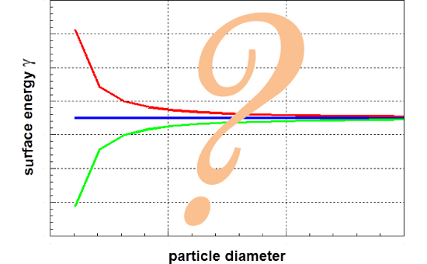
- Fermi–Dirac statistics (e.g., melting, ferromagnetism, diffusion, etc.) and s = 1 for properties related to quasi-particles following the Bose–Einstein statistics (e.g., superconductivity or vibration) [30][31][32]. Karasevskii [33] started with a different approach based on size dependent quantization





The role of adatoms in chloride-activated colloidal silver nanoparticles for surface-enhanced Raman scattering enhancement
Beilstein J. Nanotechnol. 2018, 9, 2236–2247, doi:10.3762/bjnano.9.208
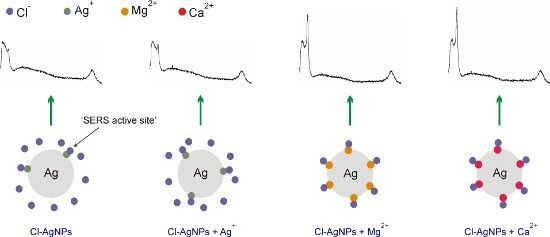
- vibration, indicating that a small proportion of Cl− ions are chemisorbed onto the silver surface. These chemisorbed Cl− ions form the SERS-active sites on the as-synthesized colloidal AgNPs which facilitate the recording of intense SERS spectra of cationic dye analytes (Figure 4). In contrast, the blank
- the Ag–Cl vibration band at 242 cm−1 is observed due to the additional chemisorption of Cl− ions onto the silver surface mediated by the Ag+, Mg2+ or Ca2+ (Figure 5A). Ag+ 10−4 M ions induce only a slight increase of the number of SERS-active sites, as can be deduced from the slight intensity increase



Nonlinear effect of carrier drift on the performance of an n-type ZnO nanowire nanogenerator by coupling piezoelectric effect and semiconduction
Beilstein J. Nanotechnol. 2018, 9, 1917–1925, doi:10.3762/bjnano.9.183
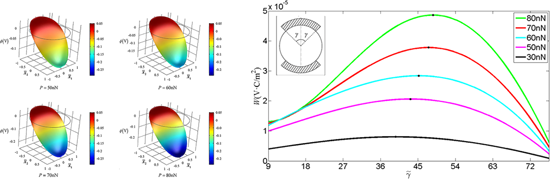
- vibration is directly proportional to the amplitude of the boundary electric charge Qe. Thus, for convenience we define the quantity W, which is directly proportional to the output power of the ZNW generator. stands for the electric potential difference between the two electrodes and θ0 = γ + 3π/2. Figure


![[Graphic 46]](/bjnano/content/inline/2190-4286-9-183-i59.svg?max-width=637&scale=1.18182) and (b) boundary electric displacement Dr at Ω for different end f...
and (b) boundary electric displacement Dr at Ω for different end f...





