


Search results
Search for "Fe" in Full Text gives 491 result(s) in Beilstein Journal of Nanotechnology. Showing first 200.
Hierarchically structured 3D carbon nanotube electrodes for electrocatalytic applications
Beilstein J. Nanotechnol. 2019, 10, 1475–1487, doi:10.3762/bjnano.10.146
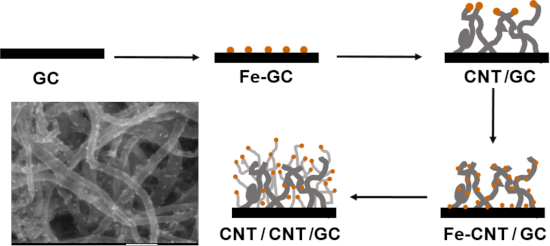
- a glassy carbon (GC) substrate in a sequence of electrodeposition and chemical vapor deposition (CVD) steps as follows: Primary CNTs are grown over electrodeposited iron by CVD followed by a second Fe deposition and finally the CVD growth of secondary CNTs. The prepared 3-dimensional CNT structures
- the preparation of hierarchically structured CNTs on glassy carbon (GC) based on a sequential CNT growth over electrodeposited Fe nanoparticles via chemical vapor deposition (CVD) with cyclohexane as the carbon precursor. Pt electrodeposition onto these hierarchical structures leads to active
- electrodes towards methanol oxidation was investigated and compared to that of Pt-CNT/GC and high activity and exceptional poisoning stability were demonstrated. Results and Discussion Preparation and characterization of hierarchically nanostructured electrodes Fe deposition In Figure 1, the individual steps





Selective gas detection using Mn3O4/WO3 composites as a sensing layer
Beilstein J. Nanotechnol. 2019, 10, 1423–1433, doi:10.3762/bjnano.10.140
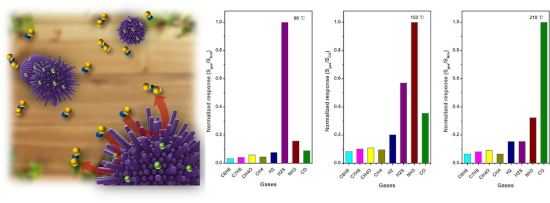
- yellow, pure WO3 and Mn3O4/WO3 composites. Apparatus and instruments X-ray power diffraction (XRD) data was collected on a Rigaku D/Max-2550 V diffractometer with Cu Kα1 radiation (= 1.54178 Å) at 25 mA and 35 kV. Field emission scanning electron microscopy (FE-SEM) images were recorded on a JEM-7100F


Warped graphitic layers generated by oxidation of fullerene extraction residue and its oxygen reduction catalytic activity
Beilstein J. Nanotechnol. 2019, 10, 1391–1400, doi:10.3762/bjnano.10.137
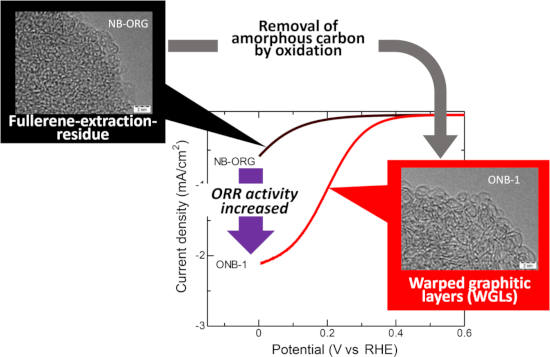
- = Fe, Co) and its analog on carbon substrates [5][6][7][8]; (2) change in the electronic distribution by doping with nitrogen and other elements [9][10][11][12][13][14][15][16][17][18][19][20][21][22]; and (3) activation of the carbon surface by encapsulated metal particles [23][24][25][26][27][28
- the amount of surface functional groups. The details of this technique are described elsewhere [45][46]. Electrochemical techniques Cyclic voltammetry was used to evaluate the heterogeneous electron transfer rate of the carbons in an aqueous solution consisting of 6 × 10⁻³ mol/L K3[Fe(CN)6] and 1 mol
- by gradual decrease. NNB did not show such a decrease. Figure 5a shows the cyclic voltammograms of the selected samples using a Fe(CN)63−/ Fe(CN)64− redox couple. The cyclic voltammograms showed two peaks, upward (oxidation to Fe(CN)63−) and downward (reduction to Fe(CN)64−). The potential difference



The effect of magneto-crystalline anisotropy on the properties of hard and soft magnetic ferrite nanoparticles
Beilstein J. Nanotechnol. 2019, 10, 1348–1359, doi:10.3762/bjnano.10.133
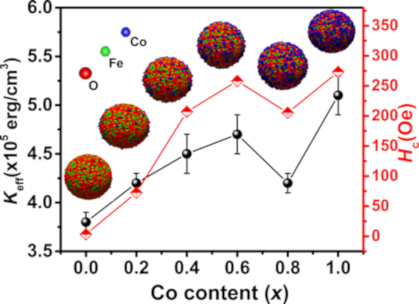
- [1][2]. In recent years, ferrite nanoparticles with the general formula of MFe2O4 (M = Fe, Co, Ni, Mn) have attracted great attention of researchers due to their potential applications in biomedicine and industry [3]. Magnetic anisotropy and interparticle interactions are important parameters that
- -0866 for Fe ferrite; no. 01-088-2152 for Fe–Co ferrites and no. 01-079-1744 for Co ferrite) indicating the formation of a cubic spinel structure with the space group Fd−3m (no. 227). Figure 1b showas that the representative (440) reflection shifts towards lower angles with cobalt ions increasingly
- content. The increase of the crystallite size is attributed to the bond energy of Co–O (397 kJ/mol), which is smaller than that of Fe–O (407 kJ/mol) [25]. The smaller bond energy speeds up the crystallization process, thus increasing the crystallite size in the samples. Microstructure and morphology In


Multicomponent bionanocomposites based on clay nanoarchitectures for electrochemical devices
Beilstein J. Nanotechnol. 2019, 10, 1303–1315, doi:10.3762/bjnano.10.129
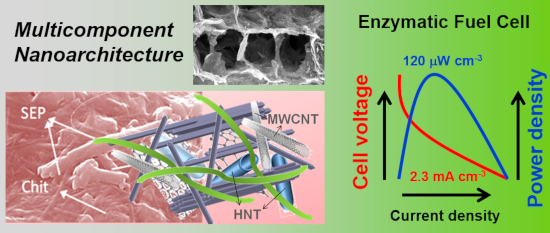
- to 50 mM glucose in phosphate-buffered solution (PBS). The intensity of the oxidation and reduction peaks of Fe(CN6)4− at 0.19 and 0.33 V, respectively, increases significantly in presence of glucose. Together with the change of the CV curve shape this confirms the catalytic behaviour of the
- electron transfer process from the enzyme to the electrode interface [70]. Therefore, in a preliminary assay, Foam-GOx was tested in the presence of Fe(CN6)4− as mediator and separated from the cathode chamber by a Nafion® membrane. A power density of 565 µW·cm−3 and 31 µW·cm−2 was generated (Figure S11



A silver-nanoparticle/cellulose-nanofiber composite as a highly effective substrate for surface-enhanced Raman spectroscopy
Beilstein J. Nanotechnol. 2019, 10, 1270–1279, doi:10.3762/bjnano.10.126
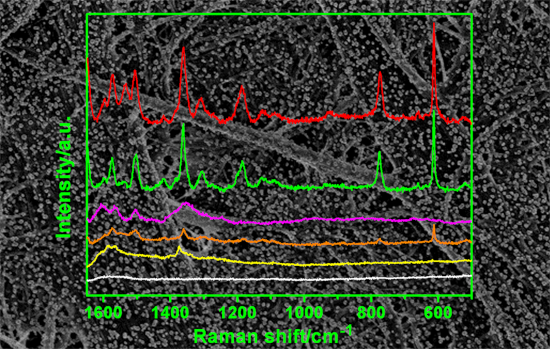
- , respectively. The field-emission scanning electron microscopy (FE-SEM) images of the Ag-NP/cellulose-NF composite sheets in Figure 1 show that the surfaces of the cellulose fibers are decorated with silver particles. The comparison with SEM images of bare filter paper (Supporting Information File 1, Figure S1
- anchored on the cellulose fibers. The amount of the silver nanoparticles observed is much less than that of the FE-SEM image (Figure 1f), which is because some nanoparticles were apparently lost from the as-prepared sample during the preparation procedure of the specimen, as noted in the Experimental
- = 38.1°, 44.3°, and 64.4° are assigned to the (111), (200), and (220) planes of metallic silver phase, respectively [60]. It is noticed that the diffraction peak intensities of metallic silver increased along with the increment of the silver content in the samples, which agrees well with the FE-SEM


Alloyed Pt3M (M = Co, Ni) nanoparticles supported on S- and N-doped carbon nanotubes for the oxygen reduction reaction
Beilstein J. Nanotechnol. 2019, 10, 1251–1269, doi:10.3762/bjnano.10.125
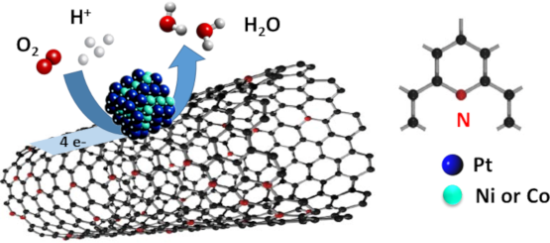
- at 650 °C on a Fe/Al2O3 catalyst in a vertical oven to produce CNTs and N-CNTs. First, the catalyst was reduced under argon/hydrogen (Ar/H2 (1.5/1): 375 mL·min−1) during 30 min at 650 °C. Undoped structures (called CNTs) were prepared from ethylene/H2 (375 mL·min−1 (1.5/1)) mixtures, N-doped








Playing with covalent triazine framework tiles for improved CO2 adsorption properties and catalytic performance
Beilstein J. Nanotechnol. 2019, 10, 1217–1227, doi:10.3762/bjnano.10.121

- compared to the industrially used K–Fe catalyst under identical conditions (550 °C, 2.8 vol % EB diluted in He, total flow rate: 30 mL/min). CTF5 outperformed the other two metal-free systems as well as the benchmark K–Fe catalyst under steady-state conditions. Despite its remarkably high N content, CTF3
- larger mesopore domains (Table 1, entry 3 vs entries 4 and 5), albeit providing a lower number of N sites (CTF4 and CTF5), show good to excellent catalyst performance. CTF4 performs similarly to K–Fe in terms of EB conversion, showing a largely superimposable profile to that of the benchmark system under
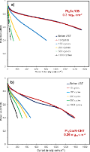
- grey spheres), CTF4 (filled blue spheres), and CTF5 (filled green spheres) along with the respective ST selectivity: ST sel. of CTF3 (open grey spheres); ST sel. of CTF4 (open blue spheres), and ST sel. of CTF5 (open green spheres). DDH performance of the benchmark K–Fe catalyst, EB conv. (filled


Tailoring the magnetic properties of cobalt ferrite nanoparticles using the polyol process
Beilstein J. Nanotechnol. 2019, 10, 1166–1176, doi:10.3762/bjnano.10.116
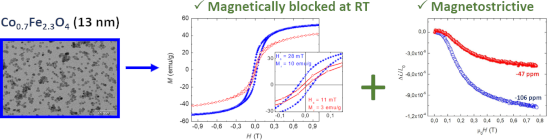
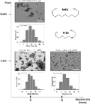
- functionalized by coupling agents such as phosphonic acids to be introduced in polymers [32][33]. Experimental Synthesis of the nanoparticles The synthesis of the CoxFe3−xO4 nanoparticles (NPs) was carried out using the polyol process [22], starting from iron and cobalt acetates, Fe(CH3COO)2 and Co(CH3COO)2·4H2O
- chemical analysis of the particles was checked by XRF, using a Panalytical MINIPAL4 X-ray fluorescence spectrometer, equipped with a rhodium X-ray tube operating at 30 kV and 87 μA current emission. Quantification was determined from pre-plotted calibration curves using standard Co and Fe solutions




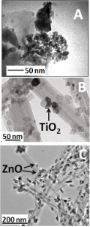
Photoactive nanoarchitectures based on clays incorporating TiO2 and ZnO nanoparticles
Beilstein J. Nanotechnol. 2019, 10, 1140–1156, doi:10.3762/bjnano.10.114
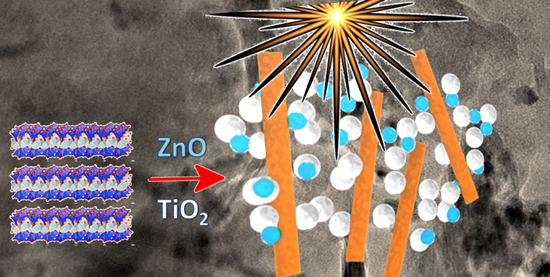
- 2.25 eV, corresponding to a light wavelength of 550 nm suitable for a photocatalyst responsive to visible light was reported. The co-doping of N and S [149] and Cu, Ag, and Fe on TiO2@bentonite has also been reported [150]. Other authors also reported the modification of the photoactivity



CuInSe2 quantum dots grown by molecular beam epitaxy on amorphous SiO2 surfaces
Beilstein J. Nanotechnol. 2019, 10, 1103–1111, doi:10.3762/bjnano.10.110
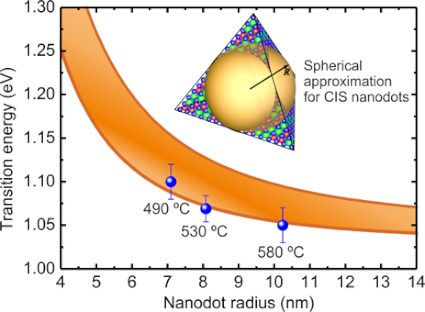
- radiative recombination of free excitons (FE) and of bound excitons (B), as well as the no-phonon line of the bound exciton (BNP) as confirmed from PL measurements performed under the same experimental conditions of a Si substrate. After the deposition of a CdS layer on top of the three as-grown nanodot


Fe3O4 nanoparticles as a saturable absorber for giant chirped pulse generation
Beilstein J. Nanotechnol. 2019, 10, 1065–1072, doi:10.3762/bjnano.10.107
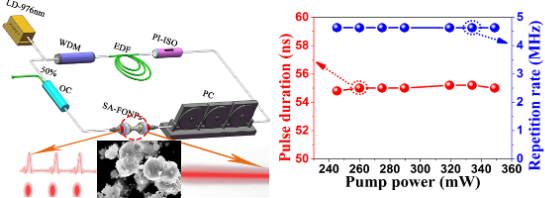
- ultrafast recovery time of 18–30 ps [3]. FONPs can be classified as a semiconductor material (with a band gap of ≈0.3 eV), which can be modulated by tuning the nanoparticle diameter [4]. For the magnetite (Fe3O4) material of anti-spinel structure, Fe(II) and Fe(III) of the octahedral position of the crystal
- /cm2, 2.5%, and 45.26%, respectively. These results confirm the applicability of the prepared FONP SA for pulsed fiber lasers. The FONP energy-dispersive spectroscopy (EDS) measurement results are shown in Figure 3a. The measured Fe and O elements represent 74.69% and 21.86%, respectively, which are


Electronic and magnetic properties of doped black phosphorene with concentration dependence
Beilstein J. Nanotechnol. 2019, 10, 993–1001, doi:10.3762/bjnano.10.100
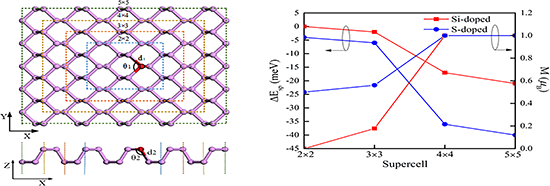
- impurity concentration were 4 × 4 × 1 and 1.56%, respectively. They found that the V, Cr, Mn and Fe impurities could change the magnetic properties of phosphorene to a dilute magnetic state. Wang et al. [26] tuned the electronic structure of phosphorene by doping with period-4 elements when the supercell


Co-doped MnFe2O4 nanoparticles: magnetic anisotropy and interparticle interactions
Beilstein J. Nanotechnol. 2019, 10, 856–865, doi:10.3762/bjnano.10.86
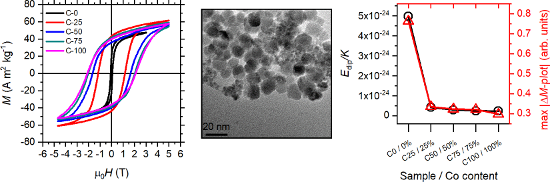
- (x = 0, 0.25, 0.5, 0.75, 1) were synthesized following a simple method based on solid-state ball milling and calcination of nitrate precursors and citric acid, discussed previously to prepare pure MnFe2O4 [22]. Manganese nitrate (Mn(NO3)2·4H2O, Merck, 99%), iron nitrate (Fe(NO3)3·9H2O, Merck, 99
- 1000 Hz. Mössbauer spectra were recorded at room temperature using a source of 57Co in Rh, in transmission geometry. The velocity scale was calibrated using a 25 μm Fe foil; the isomer shift values are referred to metal iron. The spectra were analysed as a superposition of two components with peaks of


Synthesis of MnO2–CuO–Fe2O3/CNTs catalysts: low-temperature SCR activity and formation mechanism
Beilstein J. Nanotechnol. 2019, 10, 848–855, doi:10.3762/bjnano.10.85
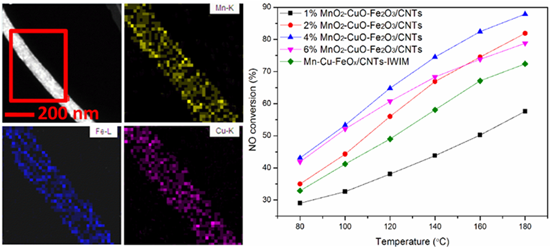
- °C. A series of Cu-based [12][13] and (Mn + Fe)-based [14][15] catalysts have been applied in the SCR reaction and presented good catalytic activity. Nevertheless, the preparation procedures of the catalysts always need high-temperature calcination or high-pressure hydrothermal reactions, which are
- , also verifying the generation of metal oxide catalysts on the CNT surface. The EDX spectrum (Figure 3d) shows signals of Mn, Cu, Fe, O and C. Clear lattice fringes of the metal oxides cannot be observed in the HRTEM images, indicating the generation of amorphous materials, which is consistent with the
- results of XRD (Figure 2). X-ray photoelectron spectroscopy The XPS spectra of the as-prepared catalysts are given in Figure 4. The elements Mn, Cu, Fe, C, and O were detected in the XPS full-scan spectrum of Figure 4A. For the Mn 2p spectrum of 4% MnO2–CuO–Fe2O3/CNTs (Figure 4B), the binding energies at




Electronic properties of several two dimensional halides from ab initio calculations
Beilstein J. Nanotechnol. 2019, 10, 823–832, doi:10.3762/bjnano.10.82
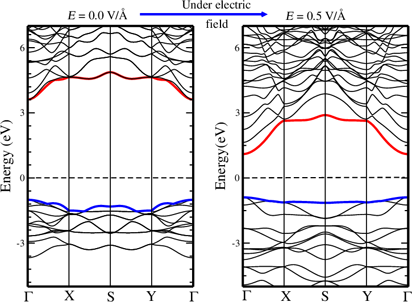
- synthesis and the photocatalytic properties of BiOX compounds under three different exposure conditions. Also, transition-metal oxychlorides MOCl (M = Sc, Ti, V, Cr, Fe) systems possess interesting electronic and magnetic properties [21][22][23][24]. Bismuth oxyhalides have been investigated as catalysts


Tungsten disulfide-based nanocomposites for photothermal therapy
Beilstein J. Nanotechnol. 2019, 10, 811–822, doi:10.3762/bjnano.10.81
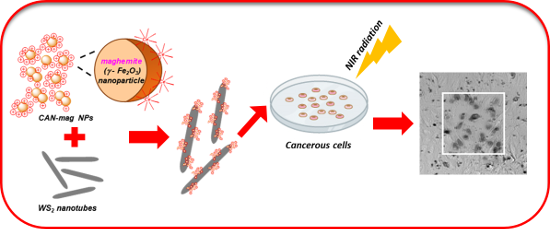
- magnetite nanoparticles into γ-maghemite (mag) nanoparticles. The cerium ion attaches to the nanoparticle, producing surface defects (an Fe–O–[CeLn] bond is formed). The cerium-doped maghemite nanoparticles are more stable than the non-doped ones, which tend to aggregate. In addition to the stabilization
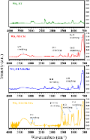
- cm−1 is characteristic of iron oxides, and represents the stretching vibration of Fe–O bond [53][54]. The peaks at 1640 cm−1 and 3400 cm−1 originate from interlayer water: the former is assigned H–O–H bending vibrations, and the latter to O–H stretching vibrations [53][54]. The peak at around 820 cm
- through carboxylate groups. In the species –COO–Fe, these are shifted to slightly higher energies compared to non-attached carboxylates [57][58]. The peaks at 2850 cm−1, 2920 cm−1, and 2960 cm−1 are assigned to C–H stretching vibrations in the PAA chain. The broad peak at 3400 cm−1 is stronger compared to






An efficient electrode material for high performance solid-state hybrid supercapacitors based on a Cu/CuO/porous carbon nanofiber/TiO2 hybrid composite
Beilstein J. Nanotechnol. 2019, 10, 781–793, doi:10.3762/bjnano.10.78
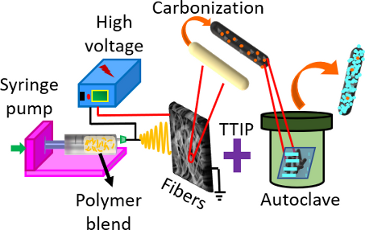
- , Cu/PCNF and Cu/CuO/PCNF/TiO2 composite nanostructures were investigated by FE-SEM (Figure 5). The FE-SEM images of the CNF nanofiber (Figure 5a and Figure 5b) carbonized at 800 °C shows smooth surfaces with no significant pores visible. Figure 5c shows the FE-SEM image of PCNF. Figure 5d shows the
- magnified image of PCNF which reveals the presence of pores in PCNF due to removal of PVDF during heat treatment. Figure 5e shows the FE-SEM image of Cu/PCNF and Figure 5f shows the magnified image of Cu/PCNF. Cu nanoparticles embedded due to the electrospinning process are visible on the surface of the Cu
- /PCNF material (Figure 5f). Figure 5g shows the FE-SEM image of Cu/CuO/PCNF/TiO2 composite and Figure 5h shows a magnified image. The uniform dispersion of TiO2 nanoparticles is clearly visible over the fiber surface after the hydrothermal treatment (Figure 5h). For energy dispersive X-ray spectroscopy


On the transformation of “zincone”-like into porous ZnO thin films from sub-saturated plasma enhanced atomic layer deposition
Beilstein J. Nanotechnol. 2019, 10, 746–759, doi:10.3762/bjnano.10.74
- materials [5][6]. In the literature, a wide array of hybrid films has been reported, adopting several metallic precursors (such as Al [7][8][9][10], Ti [11][12], Zr [11], Hf [13], Zn [14][15][16][17], V [18][19], Li [20], Fe [21][22], Mo [23] and Er [24]). Generally, the thin films comprise the metal


The effect of translation on the binding energy for transition-metal porphyrines adsorbed on Ag(111) surface
Beilstein J. Nanotechnol. 2019, 10, 706–717, doi:10.3762/bjnano.10.70
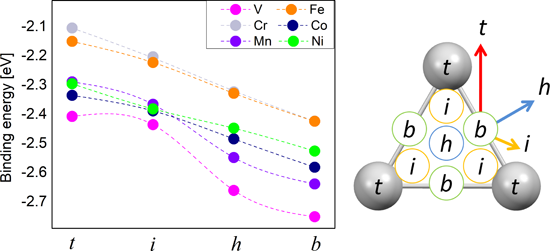
- understanding the whole process. Since the energy depends almost linearly on the position for TM = (Cr, Fe, Co and Ni) it is reasonable to assume that in these cases the process will follow similar dynamics. For VPP, and partially for MnPP, a larger gap occurs between the “i” and “h” position, suggesting that
- the geometric properties. For example, the magnetic properties of porphyrin on porous graphene-like carbon nitride gives values such 3μB for Fe, 0.91μB for Co and 1.49μB for Ni [67]. The magnetic moments obtained for the adsorbed molecules are close to those of the free molecules, with a single
- , the reduction of the oxidation state of Co and Fe in metalloporphyrins adsorbed on Ag(111) was shown experimentally [26]. The total Voronoi charges of the adsorbed molecules were calculated by summing up charges over all atoms. The last column in Table 2 show that these values are close to −0.2e, with


![[Graphic 1]](/bjnano/content/inline/2190-4286-10-70-i1.svg?max-width=637&scale=1.18182) , for all systems and relative molecule–surface positions. Right: symm...
, for all systems and relative molecule–surface positions. Right: symm...


![[Graphic 7]](/bjnano/content/inline/2190-4286-10-70-i7.svg?max-width=637&scale=1.18182) for selected TMPP systems (M = V, Mn, Co; red: positive values, blue: negative value...
for selected TMPP systems (M = V, Mn, Co; red: positive values, blue: negative value...
Ultrathin hydrophobic films based on the metal organic framework UiO-66-COOH(Zr)
Beilstein J. Nanotechnol. 2019, 10, 654–665, doi:10.3762/bjnano.10.65
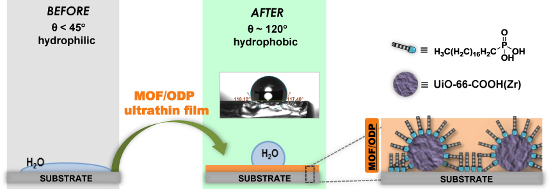
- films containing nanometric or micrometric particles of the MOF NH2-MIL88B(Fe) and a commercial polyimide, showing that it is possible to obtain ultrathin MOF–polymer hybrid films with a homogeneous distribution of MOF particles within the polymer matrix [28]. In this contribution, submicrometer
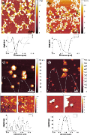
- , with WCA values in the range between 112° and 120°, compared to 10.1° and 40.8° for bare mica and glass, respectively (Table 1). These values considerably exceed the WCA obtained with NH2-MIL88B(Fe)/Matrimid® on glass (66°), mica (19.6°), polysulfone (69°) and PIM-1 (74.5°) [28]. Interestingly, even a


Enhancement in thermoelectric properties due to Ag nanoparticles incorporated in Bi2Te3 matrix
Beilstein J. Nanotechnol. 2019, 10, 634–643, doi:10.3762/bjnano.10.63
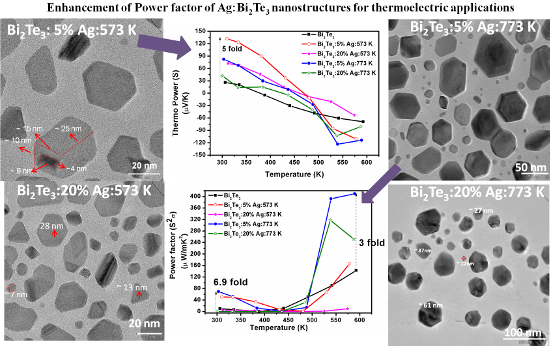
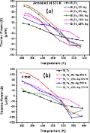
- characterized by X-ray diffraction (XRD), transmission electron microscopy (TEM), and thermoelectric measurements. XRD measurements were performed using a Bruker D8 Avance diffractometer with Cu Kα (1.5406 Å) radiation. TEM investigations were carried out using a LIBRA 200 FE HRTEM. Gatan software [22] was used
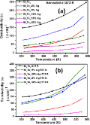
- for analysis of HRTEM images of samples. Scanning electron microscopy with energy-dispersive spectroscopy (SEM EDS) was performed using a field-emission scanning electron microscope (FE-SEM) [MIRA\\, TESCAN]. Temperature-dependent thermoelectric measurements were carried out for all samples with size



Topochemical engineering of composite hybrid fibers using layered double hydroxides and abietic acid
Beilstein J. Nanotechnol. 2019, 10, 589–605, doi:10.3762/bjnano.10.60
- stacked in a uniform fashion [17][18][19]. This makes the material employable for charge-directed self-assembly of any molecule of interest on its surface. The metals in this kind of inorganic solids, such as Ni, Mg, Zn, Al, Fe, usually have oxidation states of +2 and +3. The anions in these materials are




Biomimetic synthesis of Ag-coated glasswing butterfly arrays as ultra-sensitive SERS substrates for efficient trace detection of pesticides
Beilstein J. Nanotechnol. 2019, 10, 578–588, doi:10.3762/bjnano.10.59
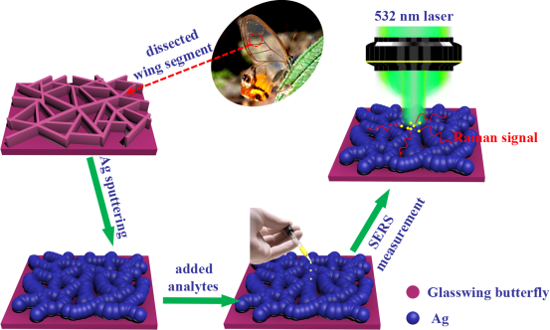
- environmental sensing. Results and Discussion Morphology characterization The morphology of neat G.b. wings was characterized by FE-SEM as shown in Figure 2a. We can observed that the surface of G.b. wings consists of interlaced vertical nanoplates with an average width of 30 ± 5 nm and an average length of 300
- close as possible to the experimental results, the simulation model of the nanostructure was extracted from FE-SEM images (Figure 4a). Figure 4b is the corresponding simulation model and a square wave with a wavelength of 532 nm was simulated to illuminate the nanostructure along the z-direction. The
- reproducibility of Raman signals. The FE-SEM image (Figure 2e) shows that the Ag nanostructures do not uniformly arrange on the G.b. wing surface, and the diameter of the laser spot was 1 μm in the Raman measurement. Therefore, the relative standard deviation (RSD) was introduced to evaluate the signal


Mo-doped boron nitride monolayer as a promising single-atom electrocatalyst for CO2 conversion
Beilstein J. Nanotechnol. 2019, 10, 540–548, doi:10.3762/bjnano.10.55
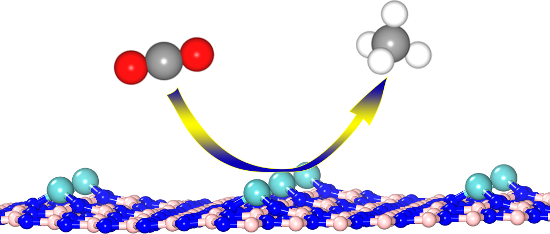
- means a stronger interaction. Therefore, it can be seen clearly from Figure 1a that there is weak adsorption between CO2 and some of the TM-doped BN monolayers, including Sc, Mn, Fe, Co, Ni, Zn, Ru, Rh, Pd and Ag, whose adsorption energy values are not negative enough to satisfy the requirements as
- ). On the other hand, the variation of the C–O bond is negligible which has weak adsorption on the TMs (Sc, Mn, Fe and so on) mentioned above (Figure 1b). In addition, it is worth noting that the C–O bond interacts with Mo, whose tensile effect is the most significant in the series of TMs we screened





