Search results
Search for "Pt" in Full Text gives 493 result(s) in Beilstein Journal of Nanotechnology. Showing first 200.
Hierarchically structured 3D carbon nanotube electrodes for electrocatalytic applications
Beilstein J. Nanotechnol. 2019, 10, 1475–1487, doi:10.3762/bjnano.10.146
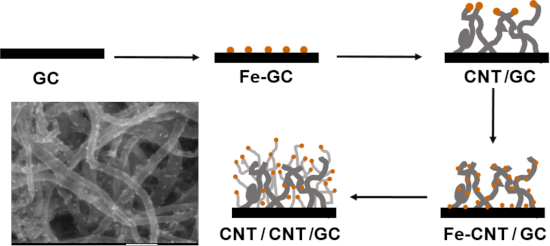
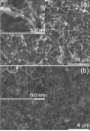
- (CNT/CNT/GC) exhibit enhanced double-layer capacitance and thus larger surface area compared to CNT/GC. Pt electrodeposition onto both types of electrodes yields a uniform and homogeneous Pt nanoparticle distribution. Each preparation step is followed by scanning electron microscopy, while the CNTs
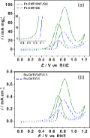
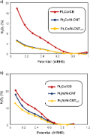
- electrocatalytic applications is demonstrated using the methanol electro-oxidation as a test reaction. The Pt mass specific activity towards methanol oxidation of Pt-CNT/CNT/GC is approximately 2.5 times higher than that of Pt-CNT/GC, and the hierarchical electrode exhibits a more negative onset potential. Both
- cathode are still major obstacles that hinder the broad market implementation of DMFCs. The slow kinetics are mainly caused by incomplete methanol oxidation accompanied by the formation of adsorbed carbonaceous reaction intermediates, which poison the Pt surface [14][15][16][17][18][19]. Most strategies





Growth of lithium hydride thin films from solutions: Towards solution atomic layer deposition of lithiated films
Beilstein J. Nanotechnol. 2019, 10, 1443–1451, doi:10.3762/bjnano.10.142
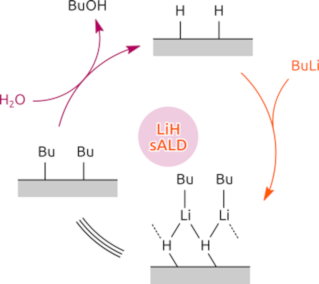
- line, and only afterwards was the chamber opened. Since the deposition took place on the entire chamber, the film deposited on the glass slide could be used for further analysis. The chamber had to be cleaned with nitric acid after every deposition. Substrates of Si with native oxide and Pt/Si were
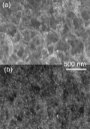
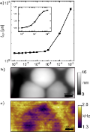
- minima correspond to the timing of the sALD process. The inset shows the formation of small plateaus before the next peak. “A” corresponds to the BuLi flow, “B” corresponds to the water flow, and “P” corresponds to the purging. SEM of the Si/Pt sample surface after deposition and exposure to atmosphere


Kelvin probe force microscopy of the nanoscale electrical surface potential barrier of metal/semiconductor interfaces in ambient atmosphere
Beilstein J. Nanotechnol. 2019, 10, 1401–1411, doi:10.3762/bjnano.10.138
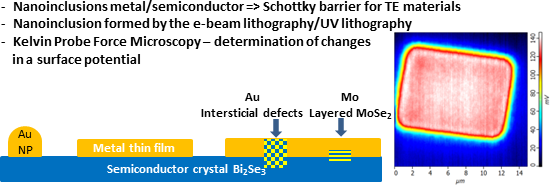
- ) were used for measuring the metal layer thickness by the scratch method and phase contrast [30][32], while conductive NSG01/TiN tips (150 kHz, 5.1 N/m) were used for Kelvin probe force measurements and contact CSG-10/Pt tips (22 kHz, 0.11 N/m) for recording I–V characteristics [33][34] for 10 replicas
- the contrast even changed for the lower lift height (see Figure 10.2 in [41]). The atypical conductive TiN coating of the tip (instead of Pt, Au Pt/Ir or Pt/Cr tips [33][41][42][43]) was used because of the higher mechanical stability of the tips and in order to eliminate diffusion and other chemical
- conductive AFM tip has to be coated with a mechanically hard and non-reacting layer as TiN. Typical Au or Pt coatings need to be avoided because the coating might diffuse into the material forced by the electric field during the interaction. iii) The I–V characteristics can be affected by oxidation and


Warped graphitic layers generated by oxidation of fullerene extraction residue and its oxygen reduction catalytic activity
Beilstein J. Nanotechnol. 2019, 10, 1391–1400, doi:10.3762/bjnano.10.137
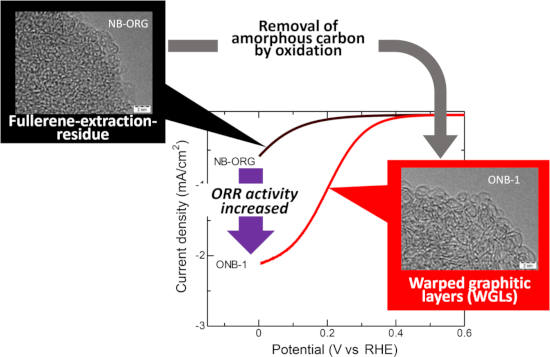
- Abstract Carbon-based oxygen reduction reaction (ORR) catalysts are regarded as a promising candidate to replace the currently used Pt catalyst in polymer electrolyte fuel cells (PEFCs); however, the active sites remain under discussion. We predicted that warped graphitic layers (WGLs) are responsible for
- activity of platinum catalysts is the most realistic approach; for example, by creating alloys [2] or core–shell structures [3] or by activating the Pt particles through metal support interactions [4]. Developing non-precious-metal catalysts is a fascinating, but ultimately speculative, technology for



Construction of a 0D/1D composite based on Au nanoparticles/CuBi2O4 microrods for efficient visible-light-driven photocatalytic activity
Beilstein J. Nanotechnol. 2019, 10, 1360–1367, doi:10.3762/bjnano.10.134
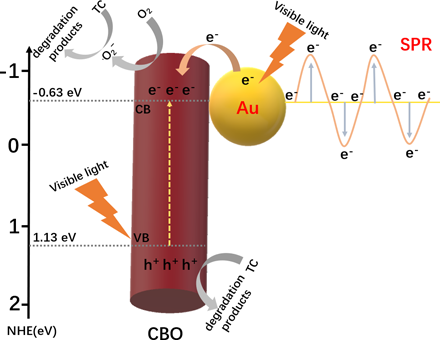
- the carriers migrating to the surface of the semiconductor to participate in the photoreactions [15]. Decorating semiconductors with noble metals, such as Ag, Au, and Pt, is a strategy to enhance the photocatalytic performance. Certain noble metals exhibiting surface plasmon resonance (SPR) can


Janus-micromotor-based on–off luminescence sensor for active TNT detection
Beilstein J. Nanotechnol. 2019, 10, 1324–1331, doi:10.3762/bjnano.10.131
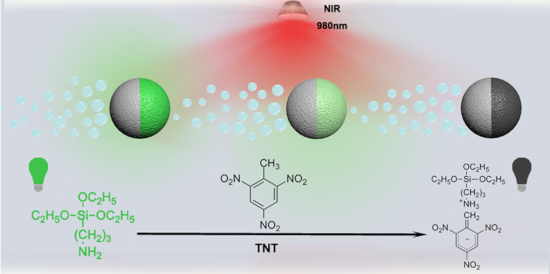
- quenching based sensors for active TNT detection. The Janus capsule micromotors were fabricated by depositing a thin platinum (Pt) film onto one hemisphere of the UCNP-functionalized hollow polyelectrolyte microcapsules. These as-prepared Janus micromotors can autonomously move by catalytic decomposition of
- dispersed on a glass slide to form a monolayer. After sputtering of a 20 nm thin film of Pt, the Janus UCNP-functionalized capsule motors were obtained by removing the silica cores with hydrofluoric acid. To prepare the Janus UCNP capsule motors, NaYF4:Yb3+/Er3+ UCNPs were firstly synthesized following a
- uniformly dispersed on the surface of the microcapsule. After Pt sputtering and removal of the silica core, the Janus UCNP capsule motors were obtained. As shown in Figure 1g, the as-prepared APTES-UCNPs were partially covered with a Pt cap, displaying a Janus structure. The scanning electron microscopy


Multicomponent bionanocomposites based on clay nanoarchitectures for electrochemical devices
Beilstein J. Nanotechnol. 2019, 10, 1303–1315, doi:10.3762/bjnano.10.129
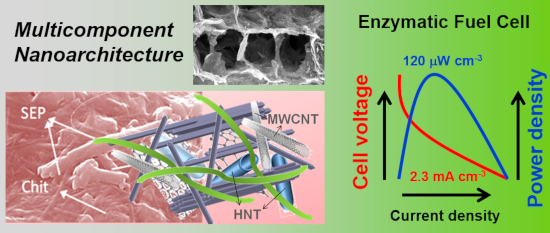
- [71]: The reaction occurring on the anode surface is: while the Pt cathode catalyses the reaction: Linear sweep voltammetry (LSV) experiments were carried out to evaluate the electrocatalytic properties of the bionanocomposite Foam-GOx as 3D bio-anode. Figure 5D displays the catalytic behaviour during
- by coupling the bioactive foam, as anode, to a Pt wire as cathode in a one-pot cell working in 0.1 M of glucose and 0.1 M PBS, at two different pH values (7 and 5.5) and saturated with air. The foam was connected to the potentiostat with a copper wire, glued with colloidal graphite and covered by an



Fabrication of phase masks from amorphous carbon thin films for electron-beam shaping
Beilstein J. Nanotechnol. 2019, 10, 1290–1302, doi:10.3762/bjnano.10.128
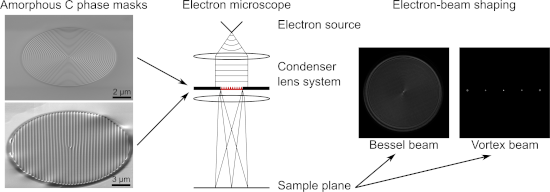
- directly (Plano, Art. No. 21529-10). To create an electron-blocking aperture, a 3.5 nm/220 nm thick Cr/Pt layer was deposited onto the SixNy via PVD (Figure 2b, Cr not shown) with Cr acting as an adhesion layer. To achieve smooth aC thin films in combination with a circular Pt aperture, we have applied two
- different approaches that yielded reproducible results (Figure 2). For the first method an aC layer was evaporated on the back side of the wafer by PVD (Figure 2c). Afterwards, FIB milling with an intermediate current of 0.75 nA was used to remove Pt and SixNy in a circular area from the top side (Figure 2d
- transition between SixNy and aC was observable. This procedure leaves a free-standing aC thin film with slight inhomogeneities (Figure 3a), which are attributed to an inhomogeneous, grain-orientation-dependent sputter rate of the nanocrystalline Pt due to ion-channeling effects [30]. The second method uses



Alloyed Pt3M (M = Co, Ni) nanoparticles supported on S- and N-doped carbon nanotubes for the oxygen reduction reaction
Beilstein J. Nanotechnol. 2019, 10, 1251–1269, doi:10.3762/bjnano.10.125
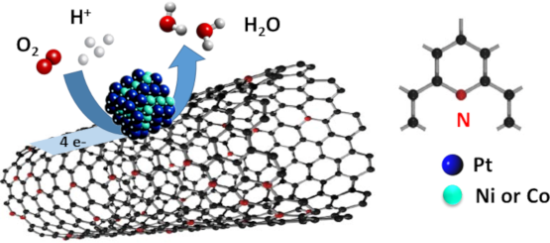
- ) alloyed nanoparticles that have a very homogeneous size distribution (in spite of the high metal loading of ≈40 wt % Pt), using an ionic liquid as a stabilizer. The electrochemical surface area, the activity for the oxygen reduction reaction and the amount of H2O2 generated during the oxygen reduction
- the performance and durability requirements for transport applications, a metal loading of 0.4 mgPt·cm−2 for the cathode side is commonly used, which explains the high cost of these systems [5]. One lever to reduce the cost of this technology is the reduction of the cathode Pt loading, but this must
- ]. This carbon corrosion modifies the mass transport properties of the active layer, especially for the water management, and accelerates the degradation of the Pt NPs [10][11]. One way to reduce the Pt content is to use more active, tailored NPs [12][13], for example, bimetallic NPs with a core–shell








Pure and mixed ordered monolayers of tetracyano-2,6-naphthoquinodimethane and hexathiapentacene on the Ag(100) surface
Beilstein J. Nanotechnol. 2019, 10, 1188–1199, doi:10.3762/bjnano.10.118
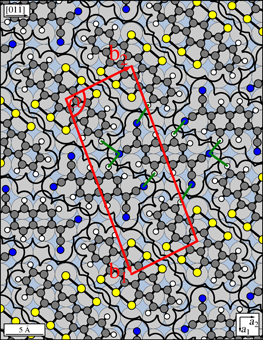
- the screen. The LEED images displayed here were numerically enhanced in contrast. The simulated LEED patterns were calculated according to kinematic theory taking into account the presence of different symmetry-equivalent domains of the adsorbate. The STM images were recorded at RT using Pt/Ir tips in


Photoactive nanoarchitectures based on clays incorporating TiO2 and ZnO nanoparticles
Beilstein J. Nanotechnol. 2019, 10, 1140–1156, doi:10.3762/bjnano.10.114
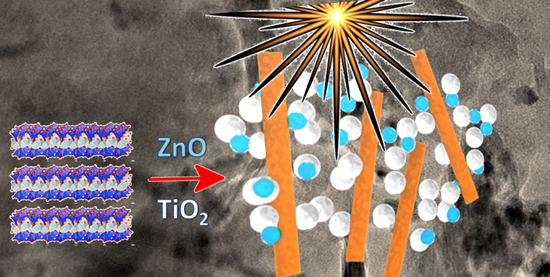
- - and Pt-doped TiO2@clay nanoarchitectures based on sepiolite and montmorillonite have been also prepared by applying two different strategies: i) in situ incorporation of the noble-metal precursor (typically acetylacetonate) in the suspension of commercial organoclays (e.g., Cloisite®30B and sepiolite
- rates of hydrogen production are obtained with the Pt-doped TiO2@sepiolite nanoarchitectures obtained by photodeposition (Figure 5B). Photocatalysts based on Ag-doped ZnO@montmorillonite reported by Sohrabnezhad and Seifi [144] are another example for the enhancement of photocatalytic activity through
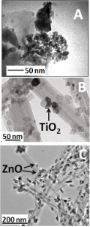
- characteristics by the deposition of metallic particles such as Ag, V, and Pt on TiO2@montmorillonite [151][152][153][154][155][156][157]. Novel TiO2–ZnO@clay nanoarchitectures have been recently prepared from diverse clay minerals with improved photoactivity in the resulting materials [158][159][160][161



CuInSe2 quantum dots grown by molecular beam epitaxy on amorphous SiO2 surfaces
Beilstein J. Nanotechnol. 2019, 10, 1103–1111, doi:10.3762/bjnano.10.110
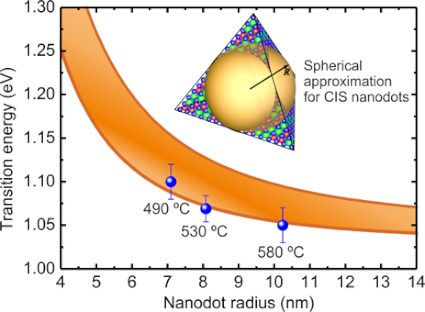
- layer prior to the protective Pt bi-layer deposition assisted by electron and ion beams. The final polishing of the lamella was done using 1 keV in energy to reduce the lateral damage and the Ga implantation effects in the lamellae. EDS was performed in the same STEM microscope in order to check the [Cu


Glucose-derived carbon materials with tailored properties as electrocatalysts for the oxygen reduction reaction
Beilstein J. Nanotechnol. 2019, 10, 1089–1102, doi:10.3762/bjnano.10.109
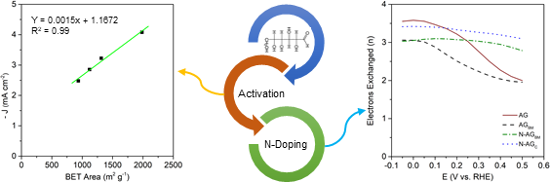
- incorporate nitrogen atoms and to modify the surface chemistry of carbon materials [39][40]. Some of these doping techniques have shown to provide materials with similar ORR performance as commercially available Pt/C electrocatalysts [39]. However, most of these studies have been focused only on the effect of


Synthesis of novel C-doped g-C3N4 nanosheets coupled with CdIn2S4 for enhanced photocatalytic hydrogen evolution
Beilstein J. Nanotechnol. 2019, 10, 912–921, doi:10.3762/bjnano.10.92
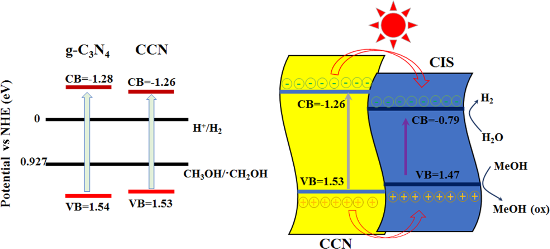
- transfer nanochannels [5]. The as-prepared g-C3N4 nanosheet@ZnIn2S4 nanoleaf structure displays an enhanced photocatalytic activity for H2 production without the addition of a Pt co-catalyst. As visible-light-active photocatalysts, ternary metal sulfide (e.g., ZnIn2S4 and CdIn2S4) have attracted great
- enhance photocatalytic activity. Accordingly, the two-step fabrication of CdIn2S4/CCN photocatalysts with different CdIn2S4 content is the target of this study. It is demonstrated that the CdIn2S4/CCN hybrid shows a superior H2 production activity without the addition of a Pt co-catalyst under visible
- use of the additive Pt co-catalyst. As shown in Figure 8, the pristine g-C3N4 presents a negligible H2 generation rate, but after introduction of the self-doped C by a simple supramolecular self-assembly method, the CCN nanosheets display a higher H2 generation rate due to the presence of the large


Fabrication of silver nanoisland films by pulsed laser deposition for surface-enhanced Raman spectroscopy
Beilstein J. Nanotechnol. 2019, 10, 882–893, doi:10.3762/bjnano.10.89
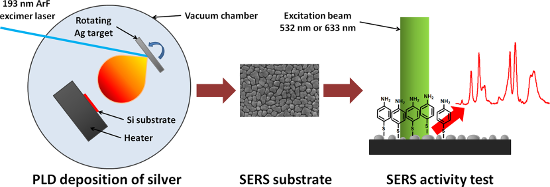
- procedure described in Supporting Information File 1. In our EF calculations we have assumed that the intensity of the Raman pMA signal on Pt increased due to the chemical factor of 102 and corrected the obtained EF values by this number [32][33]. The values of the EF of the Raman signal for SNIFs were




Novel reversibly switchable wettability of superhydrophobic–superhydrophilic surfaces induced by charge injection and heating
Beilstein J. Nanotechnol. 2019, 10, 840–847, doi:10.3762/bjnano.10.84
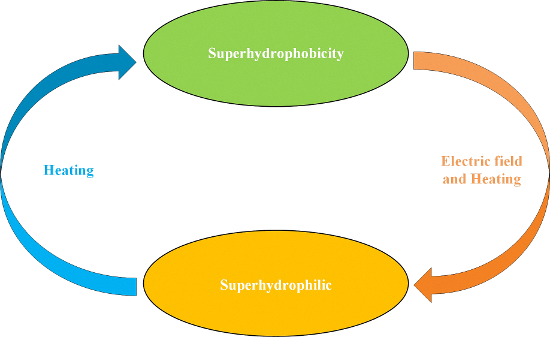
- Dongwen) was used for wettability modification of the silica surfaces. An S3000 scanning electron microscope (SEM, Japan Hitachi Group) and a Kelvin probe force microscope (Bruker Dimension Icon, Brook) with a SCM-PIT probe (Pt/Ir coated tips, 2.8 N/m, 75 kHz, Pt/Ir reflective coating) were used for


Capillary force-induced superlattice variation atop a nanometer-wide graphene flake and its moiré origin studied by STM
Beilstein J. Nanotechnol. 2019, 10, 804–810, doi:10.3762/bjnano.10.80
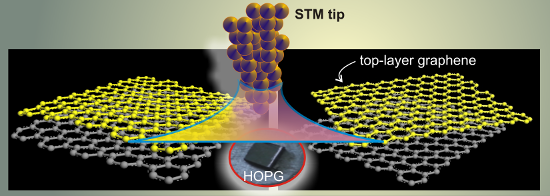
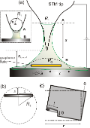
- suitable for STM operation at a solid–liquid interface. In STM experiments, the meniscus is macroscopically visible with dimensions equal to the diameter of the tip (A-side). Typical Pt/Ir tips used are 0.25 mm in diameter. The lateral spread of the liquid on the surface side (B-side) extents much beyond
- sharpened Pt/Ir 80/20% wires (Goodfellow Cambridge limited, Huntingdon, United Kingdom) were used as STM tips. The solution was drop-cast on HOPG, and the images were taken at a solution–graphite interface with a thin meniscus between the tip and the sample. By imaging the atomic structure of the bare


An iridescent film of porous anodic aluminum oxide with alternatingly electrodeposited Cu and SiO2 nanoparticles
Beilstein J. Nanotechnol. 2019, 10, 735–745, doi:10.3762/bjnano.10.73
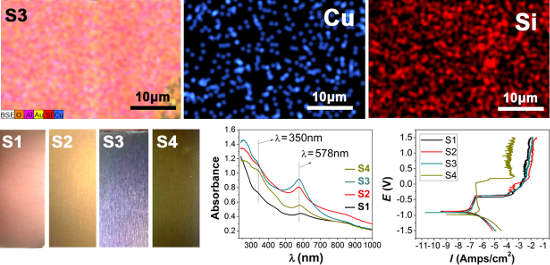
- approximately 5.7 cm2. After being allowed to stand for 24 h, the sample was exposed to the electrochemical impedance measurements. A three-electrode system was adopted for the measurements, and a Pt wire and a saturated calomel electrode (SCE) were employed as the auxiliary electrode and reference electrode


Deposition of metal particles onto semiconductor nanorods using an ionic liquid
Beilstein J. Nanotechnol. 2019, 10, 718–724, doi:10.3762/bjnano.10.71
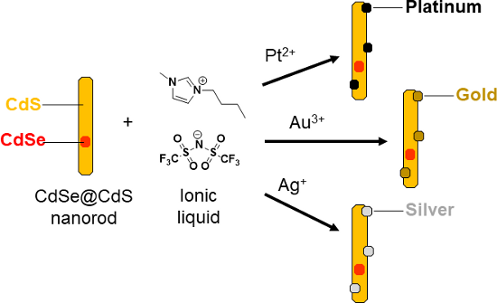
- be used to deposit nanoscopic noble metal particles onto a well-defined semiconductor nanorod substrate with diameters less than 10 nm. We found that photodeposition of platinum onto CdSe@CdS (core@shell) nanorods proceeded readily from Pt(acac)2 in the ionic liquid 1-butyl-3-methylimidazolium bis
- ionic liquid due to its facile synthesis and the hydrophobicity imparted by the fluorinated anion. For metal deposition in organic media (tol-NR, Figure 1a), CdSe@CdS nanorods were dispersed in toluene containing triethylamine and Pt(acac)2 followed by irradiation using a xenon arc lamp. For metal
- deposition using the ionic liquid, (IL-NR, Figure 1b), CdSe@CdS nanorods were dispersed in [bmim][Tf2N] containing Pt(acac)2 without addition of triethylamine as a sacrificial reducing agent, followed by irradiation using a xenon arc lamp. Nanorod powders were difficult to disperse directly in [bmim][Tf2N


Review of time-resolved non-contact electrostatic force microscopy techniques with applications to ionic transport measurements
Beilstein J. Nanotechnol. 2019, 10, 617–633, doi:10.3762/bjnano.10.62
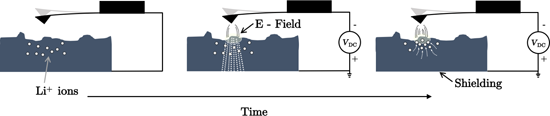
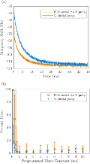
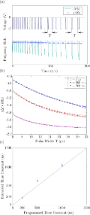
- between a Pt-coated AFM tip and a gold substrate (separated by about 20 nm) under high vacuum (ca. 10−6 mbar, Jeol JSPM-5200) to simulate ionic transport in the sample with a known decay time constant. Note that a separation ≥1 nm is necessary in general to ensure that no charge is injected into the





Hydrophilicity and carbon chain length effects on the gas sensing properties of chemoresistive, self-assembled monolayer carbon nanotube sensors
Beilstein J. Nanotechnol. 2019, 10, 565–577, doi:10.3762/bjnano.10.58
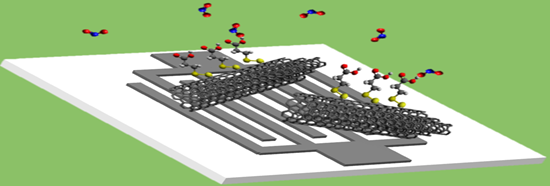
- more responsive to nitrogen dioxide than Au, Pt or Pd-decorated CNTs when operated at room temperature [10][18][40]. This was attributed to a stronger interaction and charge transfer between nitrogen dioxide and oxygenated defects in CNTs than with metal clusters. Possibly the surface of metal clusters


Mo-doped boron nitride monolayer as a promising single-atom electrocatalyst for CO2 conversion
Beilstein J. Nanotechnol. 2019, 10, 540–548, doi:10.3762/bjnano.10.55
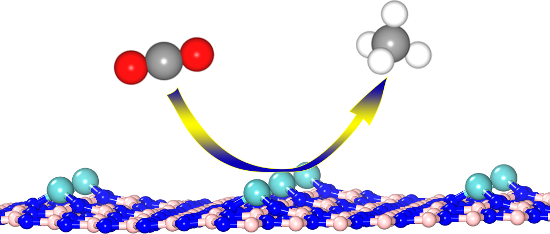
- earth, thus using Mo-doped BN monolayers as an electrocatalyst for CO2 conversion can significantly reduce the cost compared with conventional noble-metal catalysts, such Au, Ag, Pt, Pd and so on [30][33][48][49]. This work provides insight and guidance to experimentalists in search of low cost, high


Ceria/polymer nanocontainers for high-performance encapsulation of fluorophores
Beilstein J. Nanotechnol. 2019, 10, 522–530, doi:10.3762/bjnano.10.53
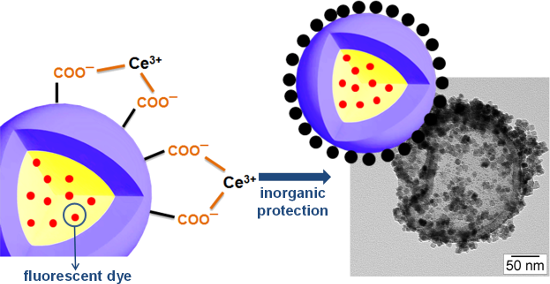
- film at the oil–water interface [32] or rose bengal embedded in a microcapsule shell [33] can also be used to protect the encapsulated dye from molecular oxygen. Incorporating oxygen-scavenging materials such as WO3 photocatalysts loaded with Pt [34], phosphonate coatings [35], organophosphates [36] or


Widening of the electroactivity potential range by composite formation – capacitive properties of TiO2/BiVO4/PEDOT:PSS electrodes in contact with an aqueous electrolyte
Beilstein J. Nanotechnol. 2019, 10, 483–493, doi:10.3762/bjnano.10.49
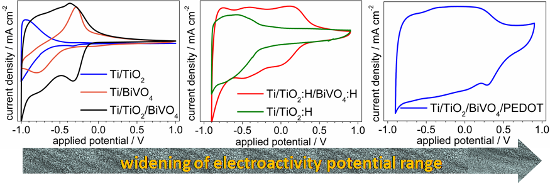
- vs Ag/AgCl (0.1 M KCl)). The charge consumed during polymerization was in the range from 0.01 to 0.1 mC·cm−2 per pulse, which is expected to deposit a conducting polymer film of 0.07 to 0.7 nm per pulse. An exemplary chronoamperometric curve (single pulse) is presented in Figure 1a. A Pt/PEDOT:PSS
- polymer, particularly PEDOT, may be used as an electrode material for supercapacitors in both aqueous [67] and nonaqueous electrolytes [68]. In Figure 4c cv curves of Ti/TiO2/BiVO4/PEDOT:PSS, Ti/TiO2/PEDOT:PSS, and Pt/PEDOT:PSS electrode materials are compared. The range of electrochemical activity is
- wider for the composite electrodes in comparison with bare PEDOT:PSS on a platinum substrate due to PEDOT overoxidation [42], which starts to occur at a potential of E = 0.7 V only in the case of the Pt/PEDOT:PSS electrode. The Ti/TiO2/BiVO4/PEDOT:PSS and Ti/TiO2/PEDOT:PSS electrodes can be safely




Temperature-dependent Raman spectroscopy and sensor applications of PtSe2 nanosheets synthesized by wet chemistry
Beilstein J. Nanotechnol. 2019, 10, 467–474, doi:10.3762/bjnano.10.46
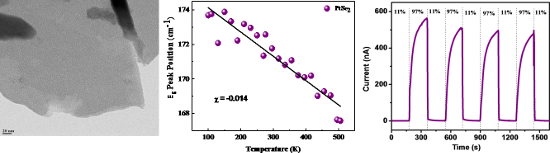
- a homogeneous solution, the mixture was carefully stirred for 15–20 s until the colour of the solution became slightly yellow; this is referred to as the Pt precursor. In another beaker 0.8 mg of Se powder was added into a 10 mL ice-cold solution of 0.1 M NaBH4 which acts as a strong reducing agent
- for the reduction of Se powder. The solution of Se was then heated in an oil bath at 90 °C for ≈20 min in order to completely reduce the Se. After complete reduction, the colour of the solution became dark brown and is referred to as the Se precursor. The Pt precursor was then slowly added into the Se
- precursor. The colour of the solution was found to suddenly change to greenish brown. The mixture was then kept undisturbed for ≈20 min. After 20 min the complex of Pt and Se was formed on the wall of the beaker. The complex was then washed several times using deionized water. First complex was transferred