Search results
Search for "electric field" in Full Text gives 398 result(s) in Beilstein Journal of Nanotechnology. Showing first 200.
Nanoantenna structures for the detection of phonons in nanocrystals
Beilstein J. Nanotechnol. 2018, 9, 2646–2656, doi:10.3762/bjnano.9.246
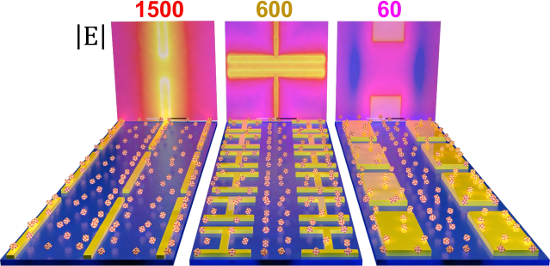
- increase of the
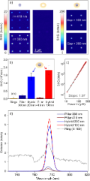
value volumetrically averaged over the antenna height within the array unit cell. When increasing LH, such augmentation is to be manifested up to some limit below which the electric field becomes too small and incapable of compensating the unit cell size decrease. This effect is
- illustrated in Figure 3 where the optimized nanoantenna length L and the averaged electric field intensity
are plotted as a function of the cross-arm length LH for the example of H-shaped nanoantennas with the LSPR energy fixed at 190 cm−1. Optimization was carried out in the ANSYS EM Suite software
- ; details of the electric field averaging procedure are described in [23]. When choosing the transverse spacing between nanoantennas Gy we exploited the condition of superposing the LSPR wavelength λLSPR and the 1st diffraction harmonics excited in a Si wafer to maximize the E-field enhancement [23]: λLSPR


Impact of the anodization time on the photocatalytic activity of TiO2 nanotubes
Beilstein J. Nanotechnol. 2018, 9, 2628–2643, doi:10.3762/bjnano.9.244
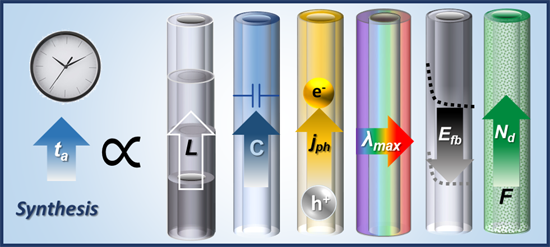
- importantly, it has been recognized that several parameters of the anodization, such as electric field strength, water content in the electrolyte, concentration of fluorine ions and pH value, have a direct influence on the electronic properties of the TNTs [20]. Nevertheless, the modification procedures for
- observe the onset potential, Eonset. The latter is a specific energy condition where the photogenerated electrons are effectively separated due to the electric field at the semiconductor/electrolyte interface and where jph becomes observable. The importance of Eonset in these experiments relies on the


Exploring the photoleakage current and photoinduced negative bias instability in amorphous InGaZnO thin-film transistors with various active layer thicknesses
Beilstein J. Nanotechnol. 2018, 9, 2573–2580, doi:10.3762/bjnano.9.239
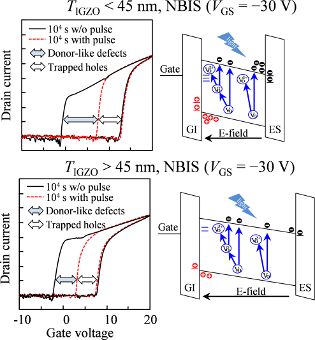
- . Simultaneously, the electron–hole pairs are photoexcited from EV, which leads to the neutralization between the ionized VO+/VO2+ and the generated electrons, contributing to free holes in EV [18]. During the NBIS duration with VGS = −30 V, a vertical electric field is exerted along the growth direction of the
- trapped holes at the front-channel interface. After the forward measurement with VGS = −10–20 V, the ionized VO+/VO2+ would be gradually neutralized by capturing electrons, and the trapped holes at the front-channel interface are completely de-trapped due to the vertical electric field induced by the
- electrons are photoexcited to EC, they are partly accumulated and trapped at the back-channel interface due to the weaker vertical electric field. As a result, the excited hole in EV and the ionized VO+/VO2+ near EF at VGS of the turn-on voltage would be neutralized by the free electrons. Therefore, after


Directional light beams by design from electrically driven elliptical slit antennas
Beilstein J. Nanotechnol. 2018, 9, 2361–2371, doi:10.3762/bjnano.9.221
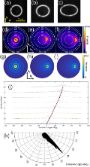
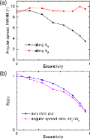
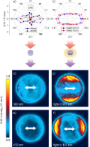
- modulus of the total electric field and its x- and y-components in the slit, i.e., in the (xy) plane, using the method described in [47][48]. Figure 9 shows the results for structures 1 (circular slit) and 7 (elliptical slit with a/b = 2, see Table 1). When SPPs are isotropically excited in the center of
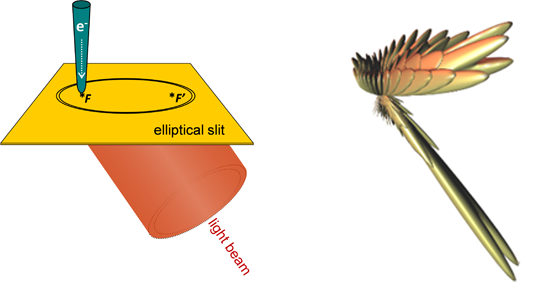
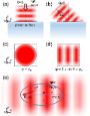
- a planar surface, the phase of the electric field of an incident light beam in (a,c) orthogonal or (b,d) oblique incidence is spatially (a,c) independent or (b,d) dependent, respectively. If this spatial phase distribution is reproduced on a planar surface, an extended planar light source can emit a
- in the slit. (a–f) Spatial distribution of the square modulus of the total electric field |E|2 = |Ex|2 + |Ey|2 + |Ez|2 and of its components |Ex|2 and |Ey|2 along the x- and y-axes, as calculated inside the slit of structures 1 (circular) and 7 (elliptical, see Table 1). The excitation is modeled as





Pinning of a ferroelectric Bloch wall at a paraelectric layer
Beilstein J. Nanotechnol. 2018, 9, 2356–2360, doi:10.3762/bjnano.9.220
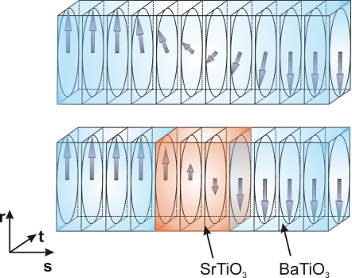
- paraelectric layer with a thickness comparable to the thickness of the domain wall itself can act as an efficient pinning layer. At the same time, such a layer facilitates the possibility to switch domain wall helicity by an external electric field or even to completely change the characteristic structure of a
- layer could be easily switched with a 0.5 kV/mm electric field, as is apparent from the quasistatic hysteresis loop shown in Figure 8 (see below). In fact, the thickness of the SrTiO3 layer can be tuned in a way that the wall passing through there is effectively in the state just below the phase
- quasistatically, from a sequence of configurations relaxed under fixed bias electric fields, similarly as in [12]. The initial state had two domain walls with opposite Pt values, as in Figure 3, then the electric field was gradually increased, decreased and increased again to form a whole polarization cycle. In

![[Graphic 2]](/bjnano/content/inline/2190-4286-9-220-i2.svg?max-width=637&scale=1.18182) -oriented 180-degree domain walls in a) pure BaTiO3, b) BaTiO3–SrTiO3 superla...
-oriented 180-degree domain walls in a) pure BaTiO3, b) BaTiO3–SrTiO3 superla...


Metal–dielectric hybrid nanoantennas for efficient frequency conversion at the anapole mode
Beilstein J. Nanotechnol. 2018, 9, 2306–2314, doi:10.3762/bjnano.9.215
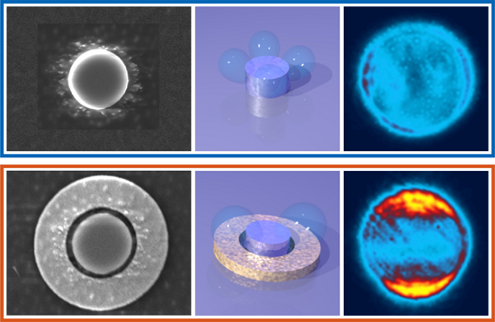
- dielectric materials the electric field penetrates deeply into the volume [16], the exploitation of large bulk nonlinearities also enables enhanced nonlinear light–matter interactions at the nanoscale. Third-harmonic generation (THG) was the first nonlinear effect observed in nanoscale semiconductors with
- . At the fundamental wavelength the plasmonic ring produces a strong electric field at its center. This allows for an improved coupling to the toroidal dipole moment inside the disk, therefore providing a more efficient excitation of the anapole mode (i.e., ED and TD moments of equal magnitude and in
- the electric field, E0, polarized along the y-axis with respect to the reference system of Figure 2a. For the dispersion of the refractive index of Al0.18Ga0.82As we used the analytical model proposed in [39]. In Figure 2b,c both the electric and magnetic field enhancements are depicted, respectively




Optimization of the optical coupling in nanowire-based integrated photonic platforms by FDTD simulation
Beilstein J. Nanotechnol. 2018, 9, 2248–2254, doi:10.3762/bjnano.9.209
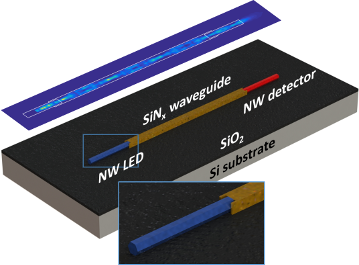
- with the same vertical profile and a various number of lobes in the lateral direction are present). The simulated electric field distributions in the horizontal and vertical cross-sections in the middle of the waveguide are shown in Figure 2. The LED-waveguide coupling yield, which is defined as the
- coupling, which increases from 55% to 77.1%. The electric field distribution in the vertical cross-section in the middle of the waveguide is shown in Figure 2e. We note that this change of the architecture is feasible for the platform fabrication: the spin-on-glass supporting layer can be removed by dry
- -component (i.e., pointing along the waveguide from the LED to the detector) of the Poynting vector was analyzed. The distribution of the Poynting vector in the different horizontal layers inside the system and the electric field distribution in the vertical cross-sectional layer in the middle of the


Lead-free hybrid perovskites for photovoltaics
Beilstein J. Nanotechnol. 2018, 9, 2209–2235, doi:10.3762/bjnano.9.207


Dumbbell gold nanoparticle dimer antennas with advanced optical properties
Beilstein J. Nanotechnol. 2018, 9, 2188–2197, doi:10.3762/bjnano.9.205
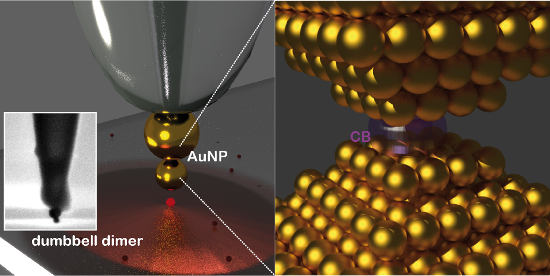
- electric field enhancement is observed for red-shifted excitation wavelengths. Fabrication strategies of optical antennas, and in particular gap antennas with an optical response in the visible to NIR regime, are versatile and are often correlated with the final application schemes. Although top-down




Localized photodeposition of catalysts using nanophotonic resonances in silicon photocathodes
Beilstein J. Nanotechnol. 2018, 9, 2097–2105, doi:10.3762/bjnano.9.198
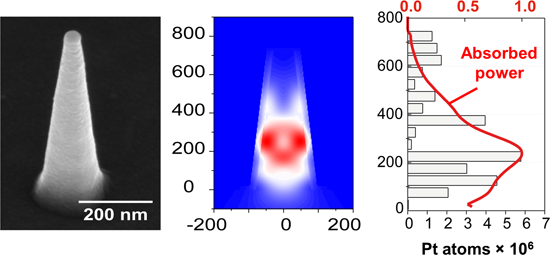
- may alter the final deposition profile from the simulated one by prohibiting the deposition at other parts of the nanostructrure. As mentioned earlier, an external electric field is applied to the samples for more efficient extraction of the photogenerated charges. This electric field is not taken


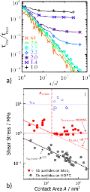
Recent highlights in nanoscale and mesoscale friction
Beilstein J. Nanotechnol. 2018, 9, 1995–2014, doi:10.3762/bjnano.9.190
- effects of molecular dipolar charges on friction were investigated in a model [121], predicting a friction peak when a suitable resonance condition is reached as a function of an applied electric field. Different anions play a complex role depending on the surface potential, and related to the steric
- to the single-particle limit. Inspired by earlier theoretical suggestions [151][152][153][154], a laser-cooled Coulomb crystal of ions, set into motion across a periodic optical lattice under the action of an external electric field, demonstrates the feasibility to control friction. By changing the


Electromigrated electrical optical antennas for transducing electrons and photons at the nanoscale
Beilstein J. Nanotechnol. 2018, 9, 1964–1976, doi:10.3762/bjnano.9.187
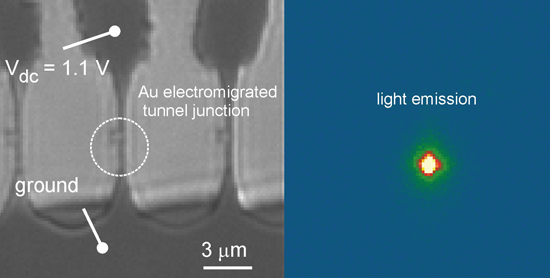
- carriers, accelerated by the electric field present at the junction, and colliding with the boundary of the gap [18]. The detected spectrum is thus the visible tail of a thermal peak located in the infrared. The position of peak is not directly related to the bias via the quantum relation cited above, but
- mode supported by the TiO2 waveguides by a two-dimensional finite element calculation (Comsol software) using published values of the refractive index of TiO2[63]. The insets of Figure 6a and Figure 6c display cross-sectional views of the norm of the electric field existing in the waveguides at a
- source is likely to be higher. We also estimated the propagation length of the slot mode using finite-element simulations. A cross-sectional view of the norm of the electric field is shown in the inset of Figure 7 for a mode existing at 800 nm. The field is mostly located in the slot and the calculated


![[Graphic 32]](/bjnano/content/inline/2190-4286-9-187-i38.svg?max-width=637&scale=1.18182) and
and ![[Graphic 33]](/bjnano/content/inline/2190-4286-9-187-i39.svg?max-width=637&scale=1.18182) are...
are...


Nonlinear effect of carrier drift on the performance of an n-type ZnO nanowire nanogenerator by coupling piezoelectric effect and semiconduction
Beilstein J. Nanotechnol. 2018, 9, 1917–1925, doi:10.3762/bjnano.9.183
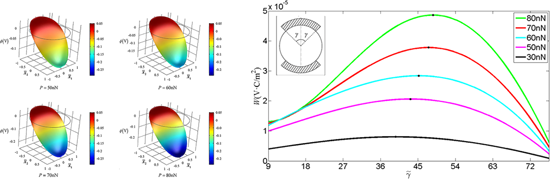
- University of Science and Technology, Wuhan 430074, China 10.3762/bjnano.9.183 Abstract In piezoelectric semiconductors, electric fields drive carriers into motion/redistribution, and in turn the carrier motion/redistribution has an opposite effect on the electric field itself. Thus, carrier drift in a
- ]. The two in-plane electric field components, E1 and E2, can be proven only to depend on x1 and x2, while the out-of-plane component E3 is zero. The electric displacements, D = (D1, D2, D3)T, in the ZNW are: with where are the compliance coefficients with cKL being the elastic constants; εij being the
- electric current expression, Ji = qnμijEj + qκijn,j, is essentially nonlinear. Since a ZNW with the crystallographic c-axis along the x3-direction is transversely isotropic, the electron mobility μij and the diffusion coefficients κij can be written as The two in-plane components of the electric field can


![[Graphic 46]](/bjnano/content/inline/2190-4286-9-183-i59.svg?max-width=637&scale=1.18182) and (b) boundary electric displacement Dr at Ω for different end f...
and (b) boundary electric displacement Dr at Ω for different end f...


Synthesis of hafnium nanoparticles and hafnium nanoparticle films by gas condensation and energetic deposition
Beilstein J. Nanotechnol. 2018, 9, 1868–1880, doi:10.3762/bjnano.9.179
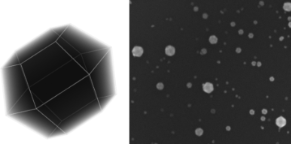
- ). The kinetic energy of the particles is governed by two terms, the pressure difference between the two chambers and the energy gained because of the applied electric field. Thus, the energy per atom equals E/N = E0/N + eVs/N. The term E0/N corresponds to the initial energy per atom due the pressure
- difference and is about 0.1 eV/atom for NPs produced by IGC [40] and eVs/N is the energy per atom gained by the electric field. Considering that the NP are approximately spherical, the number of atoms N composing a NP can be estimated by the following relation [54]: N = (RN/RWS)3 ≈ 17295 atoms/NP, where RN
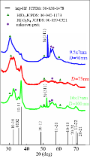
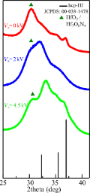
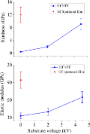
- accelerated by the electric field towards the substrate and the energy of landing can be controlled by the voltage applied on the substrate (Vs). Thus the charged nanoparticles can either soft-land on the substrate (Vs = 0 kV) or collide with a high energy (Vsub ≠ 0 kV). Depending on the impact energy






The role of the Ge mole fraction in improving the performance of a nanoscale junctionless tunneling FET: concept and scaling capability
Beilstein J. Nanotechnol. 2018, 9, 1856–1862, doi:10.3762/bjnano.9.177
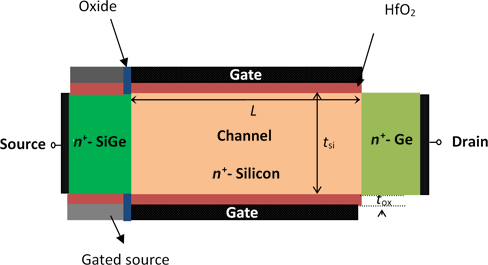
- temperatures in the current equations [25]. Moreover, models for carrier recombination (Shockley–Read–Hall (SRH), Auger and surface recombination) are also adopted [26]. In fact, the carrier mobility mainly depends on three quantities, transverse and parallel electric field, doping and temperature, which were
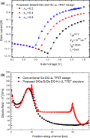
- superior control of the channel conductivity through modulating the electric field at the heterojunction interfaces. In this regard, it is of great importance to illustrate the electric field distribution for a better understanding of the physical rules governing the obtained improvements of the
- electrostatic behavior. Figure 3b compares the distribution of the electric field along the channel of the proposed Si1−xGex/Si/Ge DG-HJ-JL TFET design to that of the conventional Ge-DG-JL TFET counterpart. Clearly, a considerable change in the electric field distribution can be achieved by including the



Know your full potential: Quantitative Kelvin probe force microscopy on nanoscale electrical devices
Beilstein J. Nanotechnol. 2018, 9, 1809–1819, doi:10.3762/bjnano.9.172
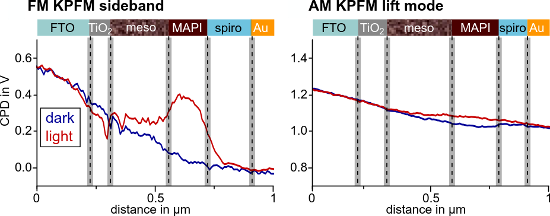
- a strong stray electric field. Due to the stronger contribution of the cantilever on the measured surface potentials in AM-KPFM, the exposure of the cantilever to a stray electric field had a strong impact both on the potential difference and on the absolute potential. With these new results, we now
- stronger lateral averaging of the AM-KPFM in lift mode and the presence of a stray electric field. Such a field could originate from gallium ions deposited into the glass substrate during the focused ion beam polishing of the cross section. Our general recommendation for quantitative device measurements is


A visible-light-controlled platform for prolonged drug release based on Ag-doped TiO2 nanotubes with a hydrophobic layer
Beilstein J. Nanotechnol. 2018, 9, 1793–1801, doi:10.3762/bjnano.9.170
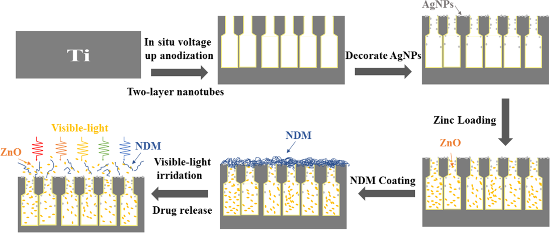
- electric field [33] and results in the generation of e− and h+ even under irradiation with lower energy light. Thus, doping with AgNPs has evidently enhanced the TiO2 photocatalysis under visible-light irradiation. However, after loading with the Zn2+-based drug and coating with the NDM layer, the





Multimodal noncontact atomic force microscopy and Kelvin probe force microscopy investigations of organolead tribromide perovskite single crystals
Beilstein J. Nanotechnol. 2018, 9, 1695–1704, doi:10.3762/bjnano.9.161
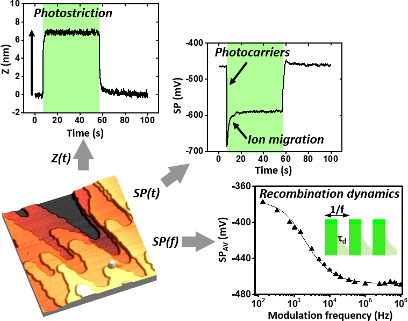
- internal electric field distribution and photocarrier recombination mechanisms in polycrystalline perovskite thin films [6][7]. However, considering the results of earlier works shows that it is sometimes difficult to draw definitive conclusions about the detrimental (or beneficial) impact of the GBs on
- single crystals [28]. Here, the band bending is due to the existence of surface states which are filled by forming a charge-depleted layer (also called a space-charge layer) beneath the surface [15]. The resulting internal built-in electric field induces a spatial separation of the photogenerated
- for systems where the bulk recombination is purely (or almost completely) bimolecular. This scenario is remarkably consistent with our previous deduction about the existence of surface states (which are here a key ingredient at the origin of the built-in electric field and photocarrier spatial


Toward the use of CVD-grown MoS2 nanosheets as field-emission source
Beilstein J. Nanotechnol. 2018, 9, 1686–1694, doi:10.3762/bjnano.9.160
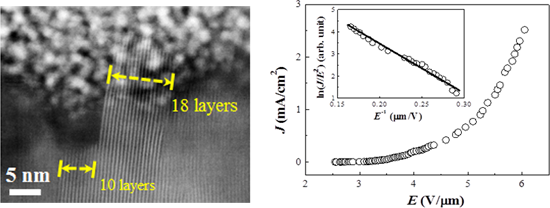
- factor) is a particular value of the principal Schottky–Nordheim barrier function U. β is the local electrical field enhancement factor. is the work function of the emitter (considered to be 4.04 eV here [29]). In Figure 6a, the current density versus electric field (J–E) curve of the transferred MoS2
- increasing of the applied electric field (Figure 6a). The turn-on field, defined at a current density of 10 µA/cm2, and the threshold field at 1 mA/cm2, are 3.1 and 5.3 V/µm, respectively. These data are found to be better than the previously reported values for MoS2 nanoflowers [13] or multilayered MoS2 [8
- geometrical morphology of the emitter surface and thus it is important to control the surface morphology for producing better field emitters [9][30][31]. The emitter surface is rough for nanomaterials deposited as a planar cathode and, therefore, for a given emission site the applied electric field varies



Nanoscale electrochemical response of lithium-ion cathodes: a combined study using C-AFM and SIMS
Beilstein J. Nanotechnol. 2018, 9, 1623–1628, doi:10.3762/bjnano.9.154
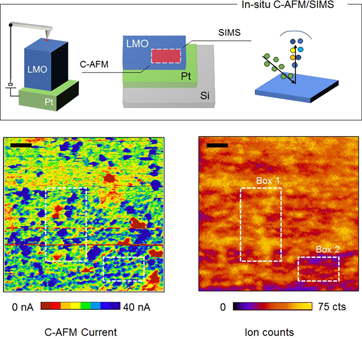
- strong and localized electric field. Second, the combination of C-AFM and SIMS is used to correlate electrical conductivity and local chemistry in different cathodes for application in ASB. Finally, a promising starting point towards quantitative electrochemical information starting from C-AFM is
- for its pristine state (Figure 1b). The different conductivity changes between MnO2 and LMO can be attributed to the presence of lithium in LMO as this can migrate and locally accumulate at the surface driven by the applied electric field. The impact of the 10 V stress is described later in the text
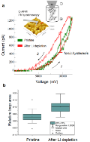
- due to the presence of a water meniscus on all the surfaces. As shown elsewhere, this water layer can act as a Li-ion reservoir and in combination with an applied electric field at the AFM tip it can induce multiple oxidation processes leading to the formation of insulating Li-compounds (e.g., Li2O


Interaction-tailored organization of large-area colloidal assemblies
Beilstein J. Nanotechnol. 2018, 9, 1582–1593, doi:10.3762/bjnano.9.150
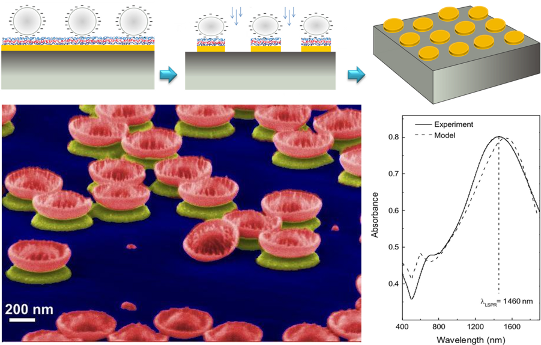
- experimentally demonstrated for nanostructured system characterized by greater average interparticle spacing, owing to the wider distribution of the electric field when the resonance conditions are satisfied [35][36]. It appears clear that, for practical purposes, a proper compromise between size and average


Evaluation of replicas manufactured in a 3D-printed nanoimprint unit
Beilstein J. Nanotechnol. 2018, 9, 1573–1581, doi:10.3762/bjnano.9.149
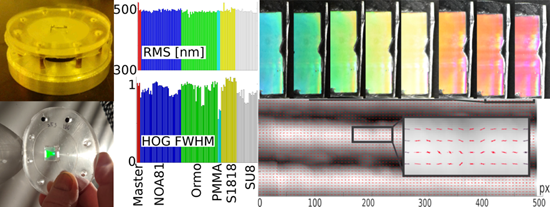
- UV-curable molds. In either case, the samples can be used as such, or undergo further processes such as chemical etching [6] or electric-field-assisted steps [7]. In recent months, we have developed a NIL system [8] using free software and public hardware designs created in a simple 3D printer. The


Correlative electrochemical strain and scanning electron microscopy for local characterization of the solid state electrolyte Li1.3Al0.3Ti1.7(PO4)3
Beilstein J. Nanotechnol. 2018, 9, 1564–1572, doi:10.3762/bjnano.9.148
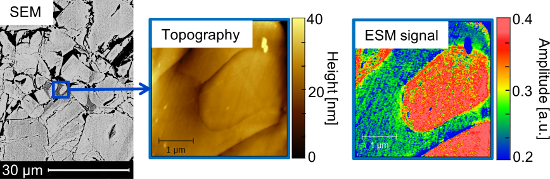
- small tip radius on the order of 15 nm. Hence, the interaction between the electric field and the local structure of the material can be studied with high spatial resolution. Mobile ions are accelerated by the electric field towards or away from the tip. Consequently, the concentration of ions changes
- . However, it is currently discussed to what extent the ESM amplitude signal can be attributed to an increased molar volume induced by the electric field in the vicinity of the tip, as proposed by Balke et al. [22]. This mechanism implies that the mobile ions in the material are attracted towards the
- to LATP as the primary phase and AlPO4 as the secondary. ESM was employed to locally identify regions of increased interaction of the material with an applied alternating electric field. It was found that the secondary phase exhibits significantly lower interaction than the primary phase. It was


Photoluminescence of CdSe/ZnS quantum dots in nematic liquid crystals in electric fields
Beilstein J. Nanotechnol. 2018, 9, 1544–1549, doi:10.3762/bjnano.9.145
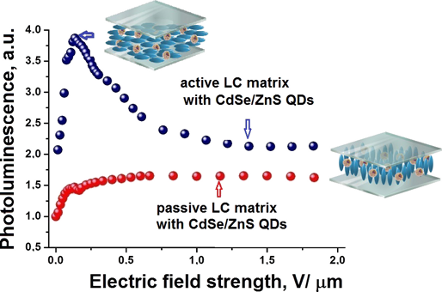
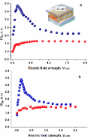
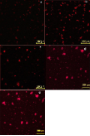
- , Russia 10.3762/bjnano.9.145 Abstract We have experimentally investigated the effect of the reorientation of a nematic liquid crystal (LC) in an electric field on the photoluminescence (PL) of CdSe/ZnS semiconductor quantum dots (QDs). To the LC with positive dielectric anisotropy, 1 wt % QDs with a core
- matrix without reorientation of the LC molecules. With increasing electric field strength, the quenching of QDs luminescence occurred in the active LC matrix, while the PL intensity did not change in the passive LC matrix. The change in the decay time with increasing electric field strength was similar
- the electric field strength. At the same time, no significant changes occurred in the passive LC matrix. With the reorientation of LC molecules from the planar in vertical position in the LC active matrix, quenching of QD luminescence and an increase of the ion current took place simultaneously. The


Optical near-field mapping of plasmonic nanostructures prepared by nanosphere lithography
Beilstein J. Nanotechnol. 2018, 9, 1536–1543, doi:10.3762/bjnano.9.144
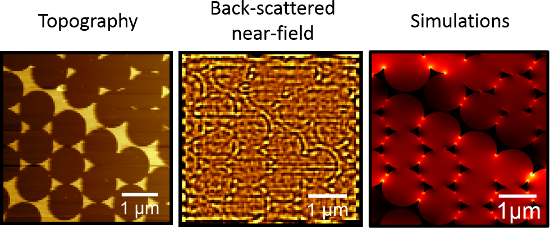
- (gold or silver) nanotriangles deposited on a glass or Si substrate, are of high interest to study plasmonics, and more specifically localised surface plasmon resonance (LSPR) [23][24]. Indeed, their geometry and their metallic nature result in the spatial confinement of the electric field at their